
未来产业

Search documents
宏观研究:“十五五”建议稿学习
China Post Securities· 2025-10-30 02:38
Group 1: Economic Outlook - The "15th Five-Year Plan" emphasizes the need for high-quality development amidst increasing external challenges and uncertainties, including geopolitical conflicts and economic protectionism[3] - The plan sets a qualitative goal for economic growth to remain within a reasonable range, with significant achievements in high-quality development[3] - Despite external pressures, China's economic foundation remains solid, with strong resilience and potential for long-term growth[9] Group 2: Policy Directions - The plan outlines 12 key tasks focusing on optimizing supply, expanding demand, ensuring safety, and balancing fairness[3] - A more proactive macroeconomic policy is highlighted, with an emphasis on developing diverse financial instruments and strengthening financial regulation[20] - The plan aims to enhance the initial income distribution mechanism, promoting a market-driven approach to compensation based on contribution[24] Group 3: Investment and Consumption - The inbound tourism market is recovering, with 15.89 million foreign visitors from January to August 2025, a 52.1% increase year-on-year, indicating a potential boost in consumer spending[17] - Infrastructure investment is expected to rise due to industrial transfers and population movements, particularly in western and northeastern regions[18] - The plan stresses the importance of consumer spending, with initiatives to cultivate international consumption centers and expand inbound consumption[17]
宏观经济点评报告:十五五《建议》和《说明》的若干核心关切
SINOLINK SECURITIES· 2025-10-29 14:08
Group 1: Planning Framework - The "15th Five-Year Plan" is based on the Central Committee's recommendations and is crucial for national economic and social development[1] - The plan emphasizes strengthening domestic circulation and promoting high-quality development as key themes[1] - The plan aims to balance development and security, addressing the increasing uncertainties in the international environment[1] Group 2: Economic Goals - The plan sets a goal for per capita GDP to reach the level of moderately developed countries by 2035, indicating a need for reasonable economic growth during the "15th Five-Year" period[5] - It acknowledges current economic pressures, aiming to increase the resident consumption rate significantly to drive economic growth[5] - The resident consumption rate is projected to be 39.9% in 2024, only a 0.6 percentage point increase from 2019, highlighting the need for reforms to boost consumption[6] Group 3: Domestic and International Circulation - The plan stresses the importance of a dual circulation strategy, focusing on enhancing domestic demand while maintaining international trade[7] - It aims to eliminate barriers to a unified national market and improve the efficiency of production and distribution channels[7] - The plan includes measures to enhance consumer rights and remove unreasonable restrictions on consumption[6] Group 4: Financial and Technological Development - The plan elevates the goal of building a strong financial system, emphasizing the need for financial services to support the real economy[8] - It highlights the importance of high-quality development, particularly in advancing technological self-reliance and modernizing the industrial system[8] - The focus is on optimizing traditional industries while fostering emerging sectors like renewable energy and advanced manufacturing[9]
“十五五”这项任务排首位 中国要靠实体经济走向未来
Zhong Guo Xin Wen Wang· 2025-10-24 06:37
Group 1 - The core message of the recent Fourth Plenary Session of the 20th Central Committee emphasizes the importance of building a modern industrial system and strengthening the foundation of the real economy as the top strategic task [1][2] - The real economy has been the cornerstone of China's economic development and will continue to be crucial for future growth, as highlighted by the National Development and Reform Commission [1][2] Group 2 - Since the 14th Five-Year Plan, China's manufacturing value added has consistently exceeded 30 trillion yuan annually, maintaining its position as the world's leading manufacturing nation for 15 consecutive years [2] - The session clarified the development direction, focusing on the real economy while promoting intelligent, green, and integrated development, aiming to build a strong manufacturing nation and maintain a reasonable proportion of manufacturing [3] Group 3 - Specific pathways to strengthen the real economy include optimizing traditional industries, nurturing emerging and future industries, and promoting high-quality development in the service sector [4][5] - The traditional industries, which account for approximately 80% of manufacturing value added, are expected to create around 10 trillion yuan in market space over the next five years, providing significant development momentum [5] Group 4 - The session proposed fostering new pillar industries in strategic sectors such as new energy, new materials, and aerospace, which could generate several trillion-yuan markets [5][6] - The development of modern infrastructure is also prioritized, with plans to enhance the integration and efficiency of existing infrastructure networks, which are already the largest in the world [7]
划重点:二十届四中全会公报对A股投资的启示
Yin He Zheng Quan· 2025-10-23 12:11
Core Insights - The report emphasizes the importance of high-quality economic development during the "15th Five-Year Plan" period, highlighting the need for significant improvements in technological self-reliance and national security [2][6] - The "15th Five-Year Plan" suggests favorable conditions for various themes and industries, including the construction of a modern industrial system, development of new quality productivity, and expansion of domestic demand [2][7] Summary by Sections 1. Main Content of the 20th Central Committee's Fourth Plenary Session - The session reviewed and approved the "Suggestions on Formulating the 15th Five-Year Plan for National Economic and Social Development" [4] 2. Deep Impact on the A-Share Market - Short-term, the session provides new policy expectations and investment clues for the A-share market, potentially boosting market confidence and attracting incremental capital [10] - Long-term, the strategic direction outlined in the session reinforces confidence in the long-term resilience of the Chinese economy, particularly in key areas like modern industrial system construction [10] 3. Theme Investment Opportunities - New Quality Productivity: The focus on enhancing technological self-reliance is a key investment theme, with technology companies that align with national strategies expected to be significant investment targets [11] - Consumption Sector: The emphasis on expanding domestic demand and promoting consumption indicates that consumer sectors, especially new consumption trends, will be critical areas for investment [12][13] - "Two Heavy" Projects: The report highlights the importance of major strategic projects and infrastructure development, which will benefit related sectors such as construction and machinery [13][14] - Anti-Overcompetition: The report discusses the need to address disordered competition, which will enhance the long-term investment value of related sectors [14] - Real Estate Chain: The focus on promoting high-quality development in real estate suggests potential trading opportunities within the real estate sector [15]
战略科学家、决策咨询专家献策“十五五”上海国际科创中心建设 布局“颠覆性创新”构建“热带雨林”
Jie Fang Ri Bao· 2025-10-22 01:40
Core Insights - The construction of the Shanghai International Science and Technology Innovation Center during the "14th Five-Year Plan" has made significant progress, with experts providing insights on future research and industrial directions for the "15th Five-Year Plan" [1] Group 1: Disruptive Innovation - Disruptive innovation is identified as a key variable for achieving leadership in technology, emphasizing the need for strategic agility in research to avoid "strategic missteps" [2] - High-risk, high-value scientific research should receive increased systematic support to foster disruptive innovation [2][3] - The role of enterprises as engines of industry is highlighted, with a focus on transforming research outputs into future industries [2] Group 2: Talent Development - The importance of attracting high-end talent to Shanghai is emphasized, with a vision to create a global talent hub [4] - Building an innovative community that links scientists, entrepreneurs, and investors is crucial for fostering disruptive innovation [5] - A comprehensive talent cultivation strategy is necessary to enhance the depth of talent reserves, focusing on nurturing young researchers and engineers [6] Group 3: Strategic Planning - Shanghai aims to leverage its internationalization to attract global talent and resources, positioning itself as a model for innovation [8] - The focus on six key future directions—future manufacturing, information, materials, energy, space, and health—will guide the construction of the international innovation center [9] - A diverse innovation ecosystem is essential, combining large enterprises with startups and fostering both original research and market-oriented development [10]
广州构建“6+X”赛道体系 加强未来产业上市培育
Shang Hai Zheng Quan Bao· 2025-10-21 18:22
Core Viewpoint - Guangzhou aims to accelerate the development of future industries by establishing a comprehensive framework and action plan to enhance innovation and market application in key sectors [1][2]. Group 1: Future Industry Development Plans - The city plans to build 10 high-energy innovation platforms, 50 concept verification centers, and 100 first-use application scenarios [1][2]. - Guangzhou will focus on six major directions: intelligent unmanned systems, embodied intelligence, cell and gene technology, future networks and quantum technology, advanced new materials, and deep-sea and deep-space technologies [1][2]. Group 2: Current Industry Landscape - Over 2,000 related enterprises and more than 180 research institutions are currently gathered in Guangzhou, with over 40 national-level innovation platforms [2]. - The city has 24 global unicorn companies, ranking fourth in the country, and the number of high-tech enterprises has surpassed 7,000, reflecting a 7.3% increase from the previous year [2]. Group 3: Financial and Support Mechanisms - Guangzhou will optimize and integrate its technology innovation fund to support early-stage, small, long-term, and hard technology investments [3]. - A multi-level, comprehensive technology financial service system is being established to guide financial resources towards future industry development [3].
广州构建“6+X”赛道体系加强未来产业上市培育
Shang Hai Zheng Quan Bao· 2025-10-21 18:18
Core Viewpoint - Guangzhou aims to accelerate the development of future industries by establishing a comprehensive framework and action plan to enhance innovation and market application in key sectors [1][4]. Group 1: Future Industry Development Plans - The city plans to build 10 high-energy innovation platforms, 50 concept verification centers, and 100 first-use application scenarios to create a "market testing ground" for future industries [1][4]. - Guangzhou will focus on six core directions: intelligent unmanned systems, embodied intelligence, cell and gene technology, future networks and quantum technology, advanced new materials, and deep-sea and deep-space exploration [1][2]. Group 2: Industry Ecosystem and Support Mechanisms - The city has over 2,000 related enterprises, more than 180 research institutions, and over 40 national-level innovation platforms, indicating a robust ecosystem for future industries [2]. - A gradient cultivation system for technology enterprises is being developed, with 24 global unicorns and over 7,000 high-tech enterprises, reflecting a 7.3% year-on-year growth [2]. Group 3: Financial and Market Support - Guangzhou is optimizing its technology innovation fund to support early-stage, small, long-term, and hard technology investments, alongside implementing technology insurance policies for startups and R&D [4]. - The financial system is constructing a multi-level, comprehensive technology finance service system to empower future industry development [5].

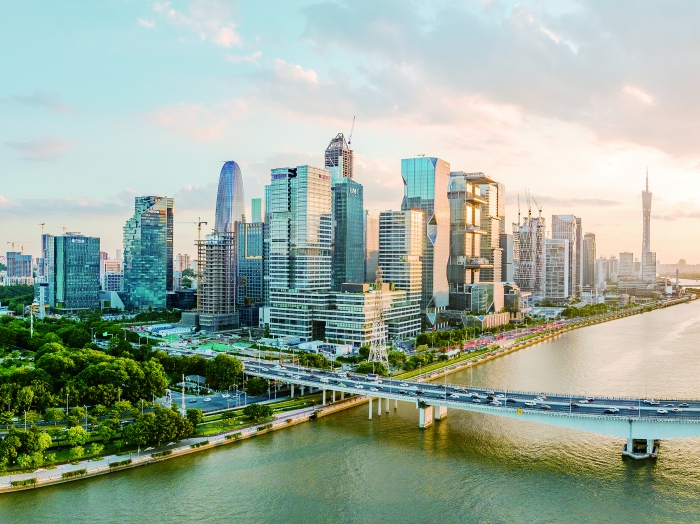
城市24小时 | “第一省会”,何以实现“关键一跃”
Mei Ri Jing Ji Xin Wen· 2025-10-21 15:55
Core Viewpoint - Guangzhou is accelerating the development of future industries, focusing on six key areas and aiming to become a global hub for future industries through strategic planning and innovation [4][5][6]. Summary by Relevant Sections Future Industry Development - The "Implementation Opinions" released by the Guangzhou government outlines a blueprint for a modern industrial system, focusing on six major future industries: intelligent unmanned systems, embodied intelligence, cell and gene technology, future networks and quantum technology, advanced new materials, and deep-sea and deep-space exploration [4][5]. - Guangzhou plans to create 10 high-energy innovation platforms, 50 concept verification centers, and 100 application scenarios to serve as "test beds" for future industries [4]. Innovation and Regulation - The city aims to innovate regulatory concepts, exploring new mechanisms for market supervision that encourage innovation and provide flexibility [4][6]. - New regulatory measures such as "observation periods," "tolerance periods," and "sandbox regulations" will be implemented to allow for experimentation and reduce traditional regulatory constraints on innovation [4][6]. Economic Goals and Industry Support - Guangzhou's GDP surpassed 3 trillion yuan in 2023, with ambitions to reach the "4 trillion club" and double its economic output by 2035, relying heavily on industrial support [5]. - The six identified future industries are expected to evolve into strategic leading industries and potentially become pillar industries for the city's economy [5][6]. Future Industry Ecosystem - Over 2,000 related enterprises have already gathered in Guangzhou, indicating a robust ecosystem for future industries [6]. - By 2029, the city aims to establish more than five leading future industry zones and cultivate 1,000 leading enterprises in these sectors [6].

“十五五”规划前瞻
Guo Tai Jun An Qi Huo· 2025-10-20 08:32
1. Report Industry Investment Rating There is no information provided in the report regarding the industry investment rating. 2. Core Viewpoints of the Report - The "15th Five - Year Plan" is expected to be gradually implemented in three steps: the core content will be announced on October 23, 2025; the full text of the Party's "15th Five - Year Plan Outline Suggestions" will be released in the following days; the full text of the "15th Five - Year Plan Outline" will be officially released after being approved by the Fourth Session of the 14th National People's Congress in March 2026. The plan will inherit and innovate on previous goals, especially in key areas such as economic growth, technological innovation, and institutional reform [1]. - Five - year plans have a profound impact on the macro - underlying logic, economic context, and capital markets. They often lead to significant stock market rallies and clearly define core investment tracks. They also affect the supply and demand of commodities, thereby influencing prices [2]. 3. Summary According to the Table of Contents 3.1 "15th Five - Year Plan" Later Implementation Process and Main Nodes - The implementation process will follow three steps: on October 23, 2025, the "Fourth Plenary Session" will release a communiqué with the core content of the "15th Five - Year Plan"; in the following days, the Party's "15th Five - Year Plan Suggestions" will be released, along with an explanation by the General Secretary; the State Council will compile the final version of the plan based on the Party's suggestions and submit it to the National People's Congress for approval in March 2026 [1][6]. 3.2 Five - Year Plan Document Framework Content Overview - The "Five - Year Plan Outline" includes a general introduction (covering economic situation judgment, guiding ideology, principles, and goals), specific area discussions (detailing key tasks in various fields), and a conclusion (emphasizing Party leadership, implementation, and guarantee mechanisms). Quantitative indicators in previous plans mainly cover five areas: economic development, people's well - being, ecological environment, innovation drive, and security [10]. 3.3 "15th Five - Year Plan" Key Content Outlook 3.3.1 Economic Growth Target Setting - Long - term growth targets require China to reach the level of a high - income country by the end of the "14th Five - Year Plan" and double its economic aggregate or per - capita income by 2035. As of 2024, China's per - capita GDP was $13,300. To reach the minimum threshold of a moderately developed country ($24,000) by 2035, the average nominal growth rate from 2026 - 2035 should be no less than 5.6% (assuming a 4.5% nominal growth rate in 2025). The actual GDP growth rate from 2026 - 2035 should be around 4%. Market expectations suggest setting a target of around 5% in 2026 and gradually reducing it to 4.8% [17][18][23]. 3.3.2 Key Work Task Deployment - The "15th Five - Year Plan" will continue to focus on economic, institutional, industrial, innovation, people's well - being, and ecological fields. Key areas include institutional reform, technological innovation, domestic demand expansion, green development, and industrial chain security. New quality productivity development is expected to accelerate, and the plan will also address issues such as effective demand shortage and international competition [24][29][30]. 3.4 Five - Year Plan's Market Impact 3.4.1 Five - Year Plans as Investment Mainlines - Five - year plans reshape the economic underlying logic, clarify development priorities, and provide clear investment tracks for the capital market. Different periods have seen different industries thrive, such as traditional cyclical industries during the "11th Five - Year Plan" and technology industries during the "12th" and "13th Five - Year Plans" [33]. 3.4.2 Stock Market Impact - Historically, stock markets have often rallied around the release of five - year plans. Currently, the technology - growth sector has outperformed the market, with some sub - themes like optical modules and AI computing power showing significant excess returns. If the "15th Five - Year Plan" has unexpected content, it will create short - term trading opportunities and support medium - term technology and reform - related investments [35][37]. 3.4.3 Commodity Market Impact - Five - year plans affect commodity supply and demand through national economic logic, industrial policies, and resource security strategies. They have led to a shift in demand from traditional commodities like steel and cement to manufacturing and new - energy - related metals. Supply - side reforms and national policies also influence commodity prices [40].
广州拟建5个以上未来产业先导区 预计到2029年培育1000家未来产业引领型企业
Nan Fang Ri Bao Wang Luo Ban· 2025-10-13 08:32
Core Viewpoint - Guangzhou is accelerating the development of future industries through the implementation of a comprehensive plan that focuses on six key sectors and aims to establish a robust innovation ecosystem by 2035 [1][2][3]. Group 1: Future Industry Development Goals - By 2029, Guangzhou plans to establish over 5 future industry pilot zones, 10 high-energy innovation platforms, 50 concept verification centers, and 100 application scenarios, while nurturing 1,000 leading future industry enterprises [2]. - By 2035, the city aims to have a complete innovation chain for future industries, producing benchmark products and services, and creating several internationally influential industry clusters [2]. Group 2: Key Actions and Initiatives - The implementation plan outlines eight main tasks, including actions for technology sourcing, infrastructure support, accelerated results transformation, enterprise cultivation, innovation scene traction, technology finance empowerment, talent gathering, and collaborative actions [3]. - Specific initiatives include the promotion of the "Human Protein Atlas" international scientific program, the establishment of a national data trading platform, and the development of a "Guangzhou model" for results transformation [3][4]. Group 3: Financial Support and Investment Strategies - Guangzhou will establish a technology innovation fund with a scale of 10 billion, focusing on early-stage, small, long-term, and hard technology investments [4]. - The city will explore a "mother fund + equity + direct investment" mechanism and enhance the operational efficiency of risk compensation funds to support future industry investments [4].