
软件

Search documents
【招商电子】博通(AVGO.O)26Q1跟踪报告:六大XPU客户业务势头强劲,27年AI芯片收入将超千亿美元
招商电子· 2026-03-06 14:33
Core Viewpoint - Broadcom (NASDAQ: AVGO) reported record revenue of $19.311 billion for FY2026 Q1, driven primarily by its AI semiconductor business, with a year-over-year growth of 29% and a quarter-over-quarter growth of 7% [2][9] Group 1: Financial Performance - FY2026 Q1 revenue reached a historical high of $19.311 billion, exceeding previous guidance of approximately $19.1 billion, primarily driven by AI semiconductor business [2][9] - The gross margin for FY2026 Q1 was 76.99%, a decrease of 2.11 percentage points year-over-year and 0.94 percentage points quarter-over-quarter, aligning with prior guidance [2][9] - Adjusted EBITDA for FY2026 Q1 was $13.1 billion, accounting for 68% of revenue, surpassing the previous expectation of 67% [2][9] Group 2: Semiconductor Division - The semiconductor segment generated $12.515 billion in revenue, a year-over-year increase of 52% and a quarter-over-quarter increase of 13%, representing 65% of total revenue [3][10] - AI business revenue reached $8.4 billion, a remarkable year-over-year growth of 106%, significantly exceeding prior expectations, with further acceleration anticipated in Q2 [3][10] - Non-AI business revenue remained flat at $4.1 billion, with growth in enterprise networking, broadband services, and storage offset by seasonal declines in wireless business [3][13] Group 3: Infrastructure Software - Infrastructure software revenue for FY2026 Q1 was $6.796 billion, reflecting a year-over-year increase of 1% and accounting for 35% of total revenue [3][14] - The gross margin for this segment was 93%, with operating expenses of $979 million and an operating profit margin of 78%, up 1.9 percentage points year-over-year [3][14] - Strong order volume continued, with total contract value exceeding $9.2 billion and annual recurring revenue (ARR) growing by 19% year-over-year [3][14] Group 4: Future Guidance - For FY2026 Q2, revenue guidance is approximately $22 billion, representing a year-over-year increase of 47% and a quarter-over-quarter increase of 14% [4][16] - Semiconductor revenue is expected to be around $14.8 billion, with AI business revenue projected at $10.7 billion, reflecting a year-over-year growth of 140% [4][16] - Infrastructure software revenue is anticipated to reach $7.2 billion, a year-over-year increase of 9% [4][16] Group 5: AI Business Outlook - The company expects AI chip revenue to exceed $100 billion by 2027, with significant contributions from its six major clients, including Google, Meta, and OpenAI [5][11] - AI network revenue grew by 60% year-over-year in Q1, expected to account for 40% of total AI revenue in Q2 [5][11] - The company has secured critical supply chain capacity through 2028, ensuring the ability to meet future demand [5][11]


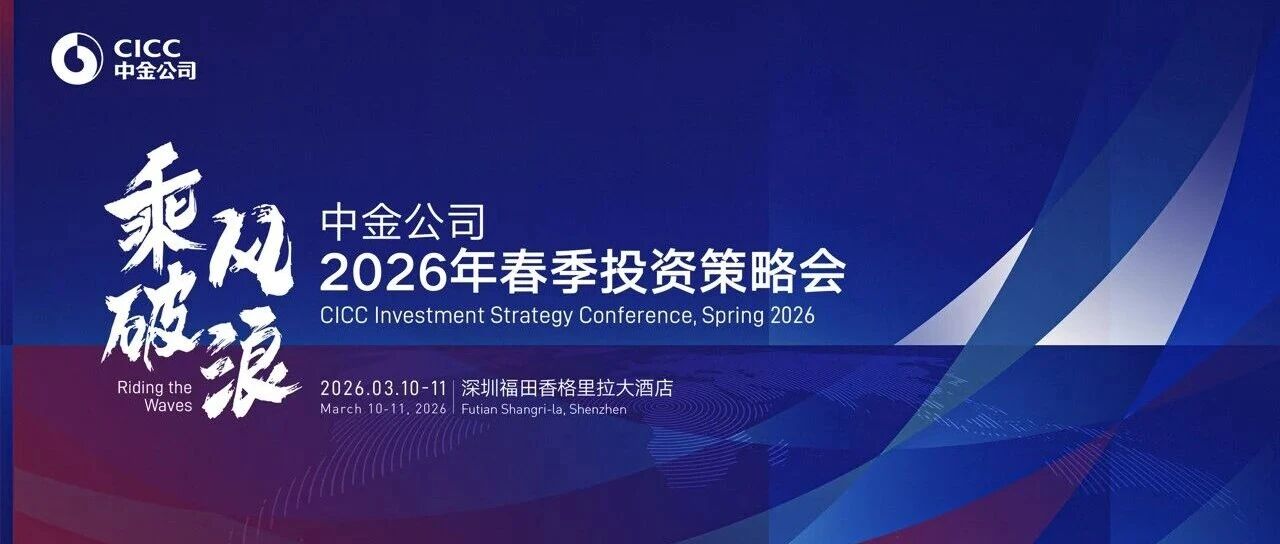
乘风破浪 | 中金公司2026年春季投资策略会
中金点睛· 2026-03-06 11:03
Core Insights - The article discusses the upcoming CICC Investment Strategy Conference scheduled for March 10-11, 2026, in Shenzhen, focusing on macroeconomic outlooks and investment opportunities across various sectors [2][3]. Group 1: Keynote Speakers and Topics - Notable speakers include Wei Lun Professor of Economics at The Chinese University of Hong Kong, the Chief Economist of CICC, and the Senior Managing Director & Chief Strategist of CICC [5][8][11]. - The conference will feature a keynote speech on the macroeconomic outlook for China and the United States, highlighting the global economic landscape [16]. Group 2: Market Outlook Sessions - Sessions will cover A-share market outlook, Hong Kong and overseas market perspectives, and major asset class forecasts [18]. - Specific discussions will address the real estate market trends, fixed income market developments, and the growth of multinational enterprises in a globalized context [19]. Group 3: Sector-Specific Discussions - The conference will include breakout sessions focusing on various sectors such as AI, telecommunications, consumer goods, and renewable energy [20][21][22]. - Topics will explore investment opportunities in the automotive industry, logistics, and the impact of AI on different sectors [21][22][31]. Group 4: Participating Companies - A range of companies from different sectors will participate, including banks, non-bank financial institutions, and technology firms [23][24][26]. - Notable participants include major banks like CITIC Bank and Minsheng Bank, as well as companies in the energy and materials sectors [23][24].
未知机构:美股行情多头平仓主导标普500指数收盘下跌56个基点报6-20260306
未知机构· 2026-03-06 02:20
Summary of Key Points from Conference Call Industry Overview - The U.S. stock market is experiencing a bearish trend, with major indices such as the S&P 500, Nasdaq 100, Russell 2000, and Dow Jones Industrial Average all closing lower, indicating a market dominated by long liquidation [1][2]. Market Performance - The S&P 500 index closed down 56 basis points at 6831 points, supported by billions in buy orders at the end of the trading session [1][2]. - The Nasdaq 100 index fell by 29 basis points to 25020 points, while the Russell 2000 index dropped 191 basis points to 2586 points [1][2]. - The Dow Jones Industrial Average decreased by 161 basis points, closing at 47955 points [1][2]. - Total trading volume across U.S. exchanges reached 22.2 billion shares, significantly higher than the year-to-date average volume of 19.45 billion shares [1][2]. Volatility and Economic Indicators - The Volatility Index (VIX) rose by 12.06% to 23.7, indicating increased market uncertainty [2]. - WTI crude oil prices increased by 6.21% to $79.33 per barrel, while the yield on the 10-year U.S. Treasury rose by 3 basis points to 4.13% [2]. - Gold prices fell by 124 points to $5075 per ounce, and the U.S. Dollar Index (DXY) increased by 28 basis points to 99.05 [2]. - Bitcoin saw a decline of 2.79%, trading at $71298 [2]. Sector Performance - The software sector led gains with a 3% increase, rebounding 15% from recent lows over four consecutive days [3]. - Key drivers for this rebound included an oversold condition and the absence of negative news suppressing stock prices, with companies like Walt Disney and Verizon reporting better-than-expected earnings [3]. - The current market sentiment is characterized by reduced selling pressure and short covering, contributing to the sector's recovery [3]. Investor Sentiment and Trading Activity - Investor confidence appears low, with asset management institutions net selling $1 billion, primarily in macro strategies and tech stocks [4]. - Hedge funds also net sold $700 million, focusing on macro strategies and communication services, while sectors related to hiring received buying support [4]. - The trading volume of equity ETFs remains high at 40%, but the stability of upper-level quotes is weak [4]. Market Strategy - The S&P 500 index experienced its narrowest daily trading range of the year, indicating ongoing market fluctuations [4]. - A strategy involving "straddle" options betting on downside movement was employed, reflecting a shift towards hedging demand with a focus on put spreads [5]. Conclusion - The current market environment is marked by volatility and mixed sector performance, with defensive sectors showing varied results and a notable shift in investor sentiment towards hedging strategies [2][4][5].
未知机构:每日复盘36油价飙升引发通胀担忧芯片股领跌美股美债四连跌美元走强-20260306
未知机构· 2026-03-06 02:20
Summary of Key Points from Conference Call Records Industry Overview - **Oil and Gas**: Geopolitical conflicts have driven oil prices up, raising inflation concerns. WTI crude oil saw a peak increase of 8%, closing at $79 after a late drop due to government intervention signals [1][2] - **Semiconductors**: Chip stocks led the decline in the U.S. market, with the semiconductor sector down by 1.2%. Notably, Nvidia managed a slight recovery, closing up 0.16% [1] - **Electricity and Energy**: Electric stocks surged while oil and gas stocks experienced significant adjustments [3] Company Highlights - **Nvidia**: Despite market trends, Nvidia's stock showed resilience with a late-session increase [1] - **Broadcom**: Post-earnings, Broadcom's stock rose by 4.8% [1] - **BYD**: The second-generation blade battery has improved energy density by 5%, with a rapid charging time from 10% to 97% in just 9 minutes [6] Government and Economic Policies - **Economic Growth Targets**: The government has set a GDP growth target of 4.5%-5% for 2026, with a CPI target of around 2% [2] - **New Strategic Initiatives**: The government report introduced new production capabilities focusing on smart technology, future energy, and satellite internet, marking a shift in industrial priorities [2][7] Emerging Technologies and Investment Opportunities - **Micro LED Technology**: Institutions suggest that Micro LED CPO solutions could significantly reduce overall energy consumption to 5% of copper cable solutions, presenting a potential investment opportunity [9] - **Smart Economy**: The government aims to develop a new smart economy, focusing on domestic computing power and AI applications, with companies like Cambricon and Zhongkong Technology highlighted as potential beneficiaries [9] - **Future Energy**: The report emphasizes the development of future energy sources, including hydrogen and controlled nuclear fusion, with companies like Xiongtao and Yihua Technology identified as key players [9] Market Reactions - **Stock Market Trends**: The A-share market saw a rebound with the total index rising by 1.08%, while the Hong Kong market showed mixed results [2][4] - **Cryptocurrency**: Bitcoin experienced a decline of nearly 3%, trading around $71,000 [1] Additional Insights - **AI and Export Controls**: The U.S. plans to extend AI chip export controls globally, indicating a tightening of regulations in the tech sector [7] - **Energy Supply Commitments**: Major tech companies, including Microsoft and Google, signed a commitment for self-sufficient power supply, highlighting the growing concern over energy shortages [9][10]


大摩闭门会-标普评级视角下的AI投资-风险与调整
2026-03-06 02:02
Summary of Key Points from Conference Call Records Industry Overview - The conference discusses the AI investment landscape, particularly focusing on capital expenditures expected to reach $4 trillion from 2025 to 2030, with power supply and model innovation as key non-linear variables [1][2] - The competitive landscape is shifting towards "multi-model parallel" strategies and chip diversification, with increased investment in self-developed ASICs to optimize costs and reduce reliance on Nvidia [1][3] Company-Specific Insights Nvidia and Broadcom - Nvidia and Broadcom are experiencing positive outlooks due to their growth outpacing the IT market, with rating upgrades typically observed within a 12-24 month period [1][4] - The core indicators for potential rating upgrades include sustainable growth and the ability to expand ecosystems [4] Oracle - Oracle's leverage is expected to peak in 2027-2028, with significant uncertainty stemming from OpenAI-related counterparties and renewal risks [1][5] - The company has been downgraded four times, and its leverage could decrease by 0.5 to 0.25 percentage points due to a recent $110 billion equity financing plan [5] - Operating leases will significantly impact Oracle's leverage, with an estimated $195 billion debt adjustment by FY 2028 [5][6] Financial Metrics and Predictions - AI capital expenditures are forecasted to be $730 billion in 2026, up by $100 billion from previous estimates, with a total of approximately $4 trillion expected by the end of the decade [2] - The leverage down-thresholds for major AI companies are set at 1x for Microsoft, Alphabet, and Meta, 1.5x for Amazon, and 4x for Oracle, indicating varying financial maneuverability [2] Risk Assessment and Management - The impact of AI on the software industry is significant, necessitating a layered risk assessment approach across different market segments [6][7] - Companies are advised to maintain a balance between investment in AI and shareholder returns, with the flexibility to adjust stock buybacks in response to capital expenditure needs [2][3] Structural Financing Arrangements - The conference highlights the trend of data center suppliers entering capital markets through structured financing arrangements with chip suppliers, which could affect their credit ratings [4] - The evaluation of these agreements will depend on the specific terms and the associated risks, which vary significantly across different transactions [4] Shareholder Returns and Market Reactions - Shareholder return behaviors are critical for rating assessments, especially for companies with strong cash flow [7] - Recent examples include Salesforce's announcement of a large stock buyback amid a 25%-30% drop in its stock price, which could impact its credit rating if financed through debt [7][8]

英伟达最强对手,还是它
半导体行业观察· 2026-03-06 00:57
Core Viewpoint - Broadcom's transformation from Avago to a successful hybrid software and hardware company is attributed to strategic acquisitions and a focus on artificial intelligence (AI) opportunities, positioning it to compete effectively in the semiconductor market [4][5]. Financial Performance - For Q1 FY2026, Broadcom reported sales of $19.31 billion, a year-over-year increase of 29.5%, with operating profit rising 36.8% to $8.56 billion and net profit increasing by 33.5% to $7.35 billion, representing 38.1% of total revenue [8]. - The semiconductor solutions segment saw a revenue increase of 54.2% to $12.52 billion, driven primarily by AI chip business [8]. - The infrastructure software group generated $6.8 billion in sales, with VMware contributing approximately $5.2 billion, reflecting a 13% growth [10]. AI Business Growth - AI chip and system revenue is projected to exceed $8.44 billion in Q1 FY2026, with significant contributions from AI networking chips and AI accelerators [15]. - Broadcom has established partnerships with six major AI clients, including Google and OpenAI, to develop custom XPU solutions, with expectations of strong demand for AI products in the coming years [16][17]. - The company anticipates AI revenue to reach a minimum of $100 billion by FY2027, with projections indicating substantial growth from $19.3 million in FY2022 to $127.4 billion in FY2024 [17]. Market Position and Competition - Broadcom aims to enhance its market position against competitors like Nvidia and AMD by focusing on custom AI hardware solutions, potentially capturing significant market share in the AI and networking sectors [5][14]. - The competitive landscape is intensifying, with companies like Astera Labs and Marvell also vying for market share in the semiconductor space [14]. Future Outlook - For Q2 FY2026, Broadcom expects sales of approximately $22 billion, a 47% year-over-year increase, with semiconductor solutions projected to grow 76% to $14.8 billion [18].
博通电话会全文&详解:2027年AI芯片营收将破1000亿美元,AI不会颠覆基础设施软件!
美股IPO· 2026-03-05 04:40
Core Viewpoint - Broadcom expects AI chip revenue to exceed $100 billion by 2027, driven by strong demand from strategic customers and a robust supply chain strategy [1][4][18] Group 1: AI Chip Revenue and Customer Base - Broadcom anticipates that AI chip revenue will surpass $100 billion by 2027, with a projected installed capacity of nearly 10 gigawatts [5][18] - The company has identified six long-term strategic customers, including Google, Meta, OpenAI, and Anthropic, who are developing custom AI chips [5][18] - The demand for custom chips is expected to grow as clients develop dedicated chips for model training and inference, indicating a long-term expansion rather than a one-time replacement of GPUs [9][35] Group 2: Network Infrastructure Growth - Network revenue is projected to grow significantly, with expectations that it will account for 33% to 40% of AI revenue in the coming quarters [10][30] - Broadcom's Tomahawk 6 switch, with a throughput of 100 Tbps, is experiencing high demand, and the company plans to launch the next-generation Tomahawk 7 in 2027 [10][30] - The company emphasizes the advantages of using direct attach copper cables for low latency and cost efficiency in data center environments [10][30] Group 3: Supply Chain and Production Capacity - Broadcom has secured critical component capacity through 2028, positioning itself as one of the first companies to lock in such long-term supply agreements [11][17] - The company has a strong inventory position, with $3 billion in inventory at the end of the first quarter, reflecting its anticipation of accelerating AI semiconductor demand [11][20] Group 4: Software Business Resilience - Broadcom's infrastructure software, particularly VMware, is expected to benefit from the growth of AI, with a 13% year-over-year revenue increase in the first quarter [12][18] - The company asserts that its infrastructure software will not be displaced by AI but will instead see increased demand as AI applications grow [12][18]
Broadcom(AVGO) - 2026 Q1 - Earnings Call Transcript
2026-03-04 23:02
Financial Data and Key Metrics Changes - Total revenue for Q1 2026 reached a record $19.3 billion, up 29% year-on-year, exceeding guidance due to strong growth in AI semiconductors [5][14] - Consolidated adjusted EBITDA hit a record $13.1 billion, representing 68% of revenue [5][14] - Q1 operating income was a record $12.8 billion, up 31% year-on-year, with an operating margin of 66.4% [14] - Free cash flow for the quarter was $8 billion, representing 41% of revenue [16] Business Line Data and Key Metrics Changes - Semiconductor Solutions segment revenue was a record $12.5 billion, with year-on-year growth accelerating to 52%, driven by AI semiconductor revenue growth of 106% to $8.4 billion [6][15] - Infrastructure Software revenue for Q1 was $6.8 billion, up 1% year-on-year, with VMware revenue growing 13% [11][15] Market Data and Key Metrics Changes - AI networking revenue grew 60% year-on-year in Q1, representing one-third of total AI revenue [9] - Non-AI semiconductor revenue for Q1 was $4.1 billion, flat year-on-year, with expectations for Q2 to be approximately $4.1 billion, up 4% year-on-year [10][11] Company Strategy and Development Direction - The company expects consolidated revenue for Q2 2026 to be approximately $22 billion, representing 47% year-on-year growth, with semiconductor revenue projected at $14.8 billion, up 76% year-on-year [13][18] - The company emphasizes deep, strategic partnerships with six key customers for AI XPUs, ensuring supply chain security through 2028 [8][60] Management's Comments on Operating Environment and Future Outlook - Management noted strong demand for compute capacity, particularly for inference in LLMs, indicating a robust outlook for AI-related products [22][23] - The company has secured supply chain components necessary for anticipated growth, with visibility into achieving AI revenue exceeding $100 billion in 2027 [10][60] Other Important Information - The company returned $10.9 billion to shareholders through dividends and share repurchases in Q1 [16] - An additional $10 billion for the share repurchase program was authorized, effective through the end of calendar year 2026 [17] Q&A Session Summary Question: Clarification on AI chip revenue forecast - Management clarified that the forecast of over $100 billion in AI chip revenue is focused on silicon content, including XPUs and switch chips [20][24] Question: Impact of customer-owned tooling (COT) initiatives - Management expressed confidence that COT initiatives would not significantly impact market share, citing the technological challenges faced by customers attempting to develop their own chips [27][31] Question: Networking differentiation and AI revenue mix - Management indicated that AI networking components are expected to represent 33%-40% of total AI revenue, driven by demand for high-bandwidth solutions [35][38] Question: Visibility on supply and growth in 2028 - Management confirmed strong visibility into supply chain components, allowing for anticipated growth in 2028 [59][61] Question: Clarification on Anthropic project revenue - Management refrained from detailing the split between chips and racks in the Anthropic project but assured that margins remain solid [66][72]
Broadcom(AVGO) - 2026 Q1 - Earnings Call Transcript
2026-03-04 23:00
Financial Data and Key Metrics Changes - Total revenue for Q1 2026 reached a record $19.3 billion, up 29% year-on-year, exceeding guidance due to strong growth in AI semiconductors [4][13] - Consolidated adjusted EBITDA hit a record $13.1 billion, representing 68% of revenue, demonstrating significant operating leverage [4][13] - Q1 operating income was a record $12.8 billion, up 31% year-on-year, with an operating margin of 66.4% [13] Business Line Data and Key Metrics Changes - Semiconductor Solutions segment revenue was a record $12.5 billion, with year-on-year growth accelerating to 52%, driven by AI semiconductor revenue growth of 106% to $8.4 billion [5][14] - Infrastructure Software revenue for Q1 was $6.8 billion, up 1% year-on-year, with VMware revenue growing 13% year-on-year [11][14] Market Data and Key Metrics Changes - AI networking revenue grew 60% year-on-year in Q1, representing one-third of total AI revenue, with expectations for it to grow to 40% of total AI revenue in Q2 [9][10] - Non-AI semiconductor revenue was flat year-on-year at $4.1 billion, with a forecast of approximately $4.1 billion in Q2, up 4% year-on-year [10][11] Company Strategy and Development Direction - The company expects to see strong demand for AI XPUs, with a forecast of AI revenue from chips exceeding $100 billion in 2027 [10][25] - The company emphasizes deep, strategic, multi-year collaborations with six key customers to develop AI XPUs, ensuring supply chain stability through 2028 [8][60] Management's Comments on Operating Environment and Future Outlook - Management noted strong demand for compute capacity, particularly for inference in LLMs, indicating a robust outlook for AI-related products [22][23] - The company is confident in its ability to maintain a competitive edge against customer-owned tooling initiatives due to its advanced technology and experience in high-volume production [30][32] Other Important Information - Free cash flow in Q1 was $8 billion, representing 41% of revenue, with $10.9 billion returned to shareholders through dividends and share repurchases [16][17] - The company has authorized an additional $10 billion for its share repurchase program through the end of calendar year 2026 [17] Q&A Session Summary Question: Clarification on AI chip revenue forecast - Management clarified that the forecast of over $100 billion in AI chip revenue is focused on silicon content, including XPUs and switch chips [20][25] Question: Impact of customer-owned tooling initiatives - Management expressed confidence that customer-owned tooling initiatives would not significantly impact market share, citing the technological challenges faced by competitors [28][30] Question: Networking differentiation and AI revenue mix - Management indicated that AI networking components are expected to represent 33%-40% of total AI revenue, driven by demand for high-bandwidth solutions [36][38] Question: Visibility on supply chain and growth - Management confirmed strong visibility into supply chain requirements through 2028, allowing for anticipated growth in AI business [58][60] Question: Clarification on Anthropic project revenue - Management refrained from detailing the specific revenue breakdown between chips and racks for the Anthropic project but assured strong margins [65][70]
招商证券:地缘成为影响A股最重要的边际变量 3月配置主线围绕两会前瞻+涨价扩散展开
智通财经网· 2026-03-04 22:48
Core Viewpoint - The A-share index is expected to be limited in space and primarily driven by structural trends in March, influenced by the upcoming Two Sessions and the release of the 14th Five-Year Plan [1][2] Market Outlook - The index is anticipated to oscillate near previous highs, with a focus on policy expectations and government investment intensity as key variables [2] - Geopolitical factors, particularly the US-Iran situation and US-China communications, are significant influences on market dynamics [2] - The market style is expected to balance between growth and value, with small-cap stocks likely to continue outperforming [3] Policy and Economic Indicators - The Two Sessions in March will reinforce expectations for stable growth policies, with a focus on traditional infrastructure and service consumption policies [2][3] - The first year of the 14th Five-Year Plan is projected to see significant project acceleration [2] Industry and Sector Recommendations - Key sectors to focus on include non-ferrous metals, basic chemicals, machinery (automation and engineering), power equipment (batteries and wind power), electronics (semiconductors), and public utilities (electricity) [3][5] - The market is positioned for a core window of policy anticipation and price increase trends [5] Liquidity and Fund Flow - Incremental capital is expected to continue net inflow in March, with attention on the dynamics between financing funds and ETF redemptions [4] - The macro liquidity environment is projected to remain stable and ample, supported by the central bank's monetary policy stance [4] Economic Performance and Profit Expectations - Recent adjustments in profit expectations indicate an upward trend, particularly in resource products, information technology, and midstream manufacturing sectors [4] - The sectors with the most significant profit growth adjustments include agriculture, coal, non-ferrous metals, steel, and power equipment [4] Market Sentiment and Trends - High sentiment areas in February were concentrated in midstream manufacturing, consumer services, and information technology, with notable improvements in machinery sales and resource prices [5] - The market is advised to focus on sectors benefiting from policy anticipation and price increases [5]
