宠物

Search documents
抖音电商萌宠消费趋势报告:细分市场驱动消费升级新需求
Xin Hua Cai Jing· 2025-08-25 14:40
Core Insights - The pet consumption market is evolving from basic needs to personalized, emotional, and refined demands, becoming a significant growth point in the consumer market [1] - The total transaction volume (GMV) for pet categories on Douyin e-commerce has increased by 95% year-on-year since 2025, with emerging brands in the pet category growing by 75% [1] - The user base for pet categories has grown by 66% since 2025, with a notable 72% increase in order volume from users aged 50 and above [1] Group 1 - The future of pet consumption is centered around "refined pet care" and diverse needs, providing new growth opportunities for businesses, particularly in nutrition and smart products [2] - Douyin's unique content ecosystem and social attributes help brands accurately reach consumer demands, driving an upgrade in consumption patterns [2] - The pet brand "Guiwei" has shifted from 70% offline revenue to 70% online revenue through live e-commerce, leveraging Douyin's traffic support and user feedback [2] Group 2 - The online pet market is expected to maintain double-digit growth in 2024, with Tmall, JD, and Douyin contributing a total sales volume of 50.231 billion yuan [3] - Among these platforms, Tmall leads in sales, while Douyin shows the fastest growth rate with a year-on-year increase of 19% [3]
宠物产业消费升级 天元宠物上半年净利润增长20.14%
Zheng Quan Shi Bao Wang· 2025-08-25 14:16
Core Insights - Tianyuan Pet reported a revenue of 1.435 billion yuan for the first half of 2025, representing a year-on-year growth of 14.59% [1] - The net profit attributable to shareholders reached 37.4594 million yuan, up 20.14% year-on-year, with basic earnings per share increasing by 23.66% to 0.3076 yuan [1] - The growth in performance is attributed to the ongoing expansion of the pet economy and the upgrading of pet industry consumption [1] Business Performance - The pet supplies segment generated 728 million yuan in revenue, a slight increase of 0.63% year-on-year [1] - The pet food segment achieved revenue of 668 million yuan, reflecting a growth of 7.26% year-on-year [1] Market Trends - According to the "2025 China Pet Industry White Paper," the urban pet (dog and cat) population is projected to reach 76.89 million by 2024, a growth of 2.4% from 2023 [1] - The market size for urban pet consumption in China is expected to be 300.2 billion yuan in 2024, marking a 7.5% increase from 2023 [1] - The number of pet dogs is anticipated to be 52.58 million, up 1.6%, while pet cats are expected to reach 71.53 million, an increase of 2.5% [1] Company Overview - Tianyuan Pet, established in 2003, focuses on pet supplies and pet food, offering a wide range of products including pet beds, cat trees, toys, clothing, smart pet products, and various pet foods [2] - The company has proprietary brands in pet food such as "New Era" and "Tianyuan It World," with products primarily in the pet snack category [2] - In pet supplies, Tianyuan Pet has five main brands, including Petstar and PPlink, focusing on various product categories [2] Strategic Initiatives - In late May, Tianyuan Pet announced plans to acquire nearly 90% of Taotong Technology for 688 million yuan to enhance its online retail business [3] - Taotong Technology is an e-commerce service provider that offers comprehensive services including brand consulting and supply chain management [3] - The company aims to strengthen its e-commerce operations and brand development, focusing on building a robust channel for its proprietary brands [3]
机构:宠物消费需求有望呈现刚性化趋势
Zheng Quan Shi Bao Wang· 2025-08-25 00:26
Group 1 - The core viewpoint is that the pet food segment has become the largest market in China's pet economy, with a projected market size of 1,668 billion yuan in 2024, representing a year-on-year growth of 7.54%, and expected to exceed 1,755 billion yuan in 2025 [1] - The domestic pet market has significant growth potential, characterized by low industry concentration [1] - The market is expanding, leading to a differentiated industry structure where leading brands are increasing their market share [1] Group 2 - The trend of refined and technological pet care is driving rapid development in China's pet industry [2] - There is a rising demand for functional pet food and snacks, such as those for fur health, stomach care, and emotional relief [2] - The demand for pet services, including daycare, boarding, dog walking, photography, and grooming, is increasing [2] - The awareness of pet health among owners is leading to a rise in demand for pet medical services [2] - The evolution of pet care needs is expected to create more niche markets, with emotional economy driving pet consumption towards human-like standards [2]
天风证券晨会集萃-20250825
Tianfeng Securities· 2025-08-25 00:15
Group 1 - The report highlights a recovery in domestic fiscal revenue and expenditure in July, with tax revenue showing a positive year-on-year growth, while non-tax revenue continues to decline [2][26] - Internationally, market expectations for interest rate cuts have increased following comments from Powell, with a 75% probability of a 25 basis point cut by September 2025 [2][27] - The report suggests focusing on sectors such as AI, consumer stocks, and the internet, emphasizing the importance of valuation in the consumer sector's recovery [2][27] Group 2 - The quantitative timing signals indicate a continued upward trend in the market, with a significant positive money-making effect, suggesting that mid-term incremental capital is likely to continue entering the market [3] - The industry allocation model recommends focusing on sectors like innovative pharmaceuticals and securities insurance, which are expected to benefit from policy-driven growth [3] - Short-term signals indicate potential rebounds for gold stocks after adjustments [3] Group 3 - The report on BYD emphasizes the establishment of a unique all-terrain racetrack, which serves as a cultural and technological bridge between the company and its users, promoting high-end product development [8] - BYD's high-end strategy is not limited to showcasing technology but aims to enhance product offerings, with several new models set to launch in the second half of 2025 [8] Group 4 - Shanghai Jahwa's H1 2025 performance shows a revenue increase of 4.75% year-on-year, with a significant profit growth of 11.66%, driven by strong performance in its beauty and personal care segments [21] - The company is focusing on brand enhancement and product innovation, with core brands showing strong growth and market positioning [21] Group 5 - The report on Wancheng Group indicates a significant revenue growth of 128% and a net profit increase of 251% in Q1 2025, driven by an expansion in store numbers and a focus on supply chain efficiency [18][20] - The company is transitioning towards a discount store model, which is expected to enhance its market presence and profitability [20]
农林牧渔行业2025年第34周周报:规模创新高,本届亚宠展有何看点-20250824
Tianfeng Securities· 2025-08-24 12:42
Investment Rating - Industry rating: Outperform the market (maintained rating) [9] Core Insights - The pet industry is experiencing significant growth, with the Asia Pet Expo showcasing over 2,600 exhibitors and 20,000 brands, indicating a thriving market driven by globalization and innovation [2][13] - China's pet food exports have shown continuous growth, with 201,000 tons exported from January to July 2025, reflecting a year-on-year increase of 6.64% [14] - The pig farming sector is facing challenges, with the average pig price at 13.82 yuan/kg, a decrease of 3.63% from the previous week, and the average weight of pigs reaching a historical high [15][16] - The dairy sector is poised for a recovery, with the original milk price expected to rebound as production capacity decreases after a prolonged period of losses [17][18] - The poultry sector is focusing on breeding gaps, with a significant decline in the import of breeding chickens due to avian influenza concerns, which may impact future supply [19][20] - The planting sector emphasizes food security and the importance of biotechnology, with a focus on high-yield and resilient crop varieties [25] - The feed sector is recommended for investment, particularly in companies like Haida Group, which is expected to benefit from market recovery and increased market share [26] Summary by Sections Pet Sector - The Asia Pet Expo has reached a record scale of 310,000 square meters, highlighting the industry's vitality and innovation potential [2][13] - Pet food exports from China have increased, with a total of 201,000 tons exported in the first seven months of 2025, showing a year-on-year growth of 6.64% [14] - Recommended companies include pet food brands like Guibao Pet, Zhongchong Co., and Petty Co. [14] Pig Sector - The average pig price is currently at 13.82 yuan/kg, with a year-to-date low in profitability for pig farming [15][16] - The average weight of pigs is at a historical high, indicating supply pressures [15] - Recommended companies include leading pig farming firms such as Wens Foodstuffs Group and Muyuan Foods [16] Dairy Sector - Yuran Dairy reported stable performance with a revenue of 10.3 billion yuan, showing a year-on-year growth of 2.3% [17] - The dairy industry is expected to see a recovery as production capacity decreases [18] - Recommended companies include Yuran Dairy and China Shengmu Organic Milk [18] Poultry Sector - The poultry sector is facing challenges with breeding imports, particularly for white chickens, due to avian influenza [19][20] - Recommended companies include Shennong Development and Yisheng Livestock [20] Planting Sector - The focus is on food security and biotechnology, with an emphasis on high-yield and resilient crop varieties [25] - Recommended companies include Longping High-Tech and Dabeinong Technology Group [25] Feed Sector - Haida Group is highlighted as a key investment opportunity due to its increasing market share and performance [26] - The animal health sector is also recommended, particularly companies like Kexin Biological [27]


新消费派丨1.87亿只“毛孩子”背后,透视宠物经济三大变化
Xin Hua Cai Jing· 2025-08-24 02:17
Core Insights - The 27th Asia Pet Expo in Shanghai highlights the booming pet economy in China, driven primarily by the younger generation, with 45.3% currently owning pets and over half having previous pet ownership experience [1][2] Market Trends - The pet market is experiencing robust growth, with a significant increase in investment across various segments such as online platforms, pet healthcare, and pet products [1][6] - The pet economy index has risen by 28.11% this year, outperforming the broader market, indicating strong investor interest [1][6] Consumer Behavior - Young pet owners are increasingly viewing pet ownership as a lifestyle choice, with a shift from basic needs to emotional, refined, and scientific consumption [3][4] - Nearly 70% of pet owners spend an average of 800 yuan per month on pet care, while higher spending brackets (801-1500 yuan and above 1500 yuan) account for 17.2% each [4] Industry Dynamics - The pet industry is evolving from a focus on quantity to value, with a notable trend towards premiumization and localization in sectors like food, healthcare, and insurance [7] - Companies are adapting their strategies to align with consumer preferences, such as collaborating with popular IPs to enhance brand visibility [3] Investment Landscape - The pet industry has seen 634 financing events, with online platforms leading at 27.3%, followed by pet healthcare and products [6] - The sector is expected to provide structural growth opportunities, with a focus on companies that demonstrate strong brand, channel penetration, and product capabilities [7]
“鸟门”走热:宠物鸟为何成年轻人“新宠”
Zhong Guo Xin Wen Wang· 2025-08-23 08:39
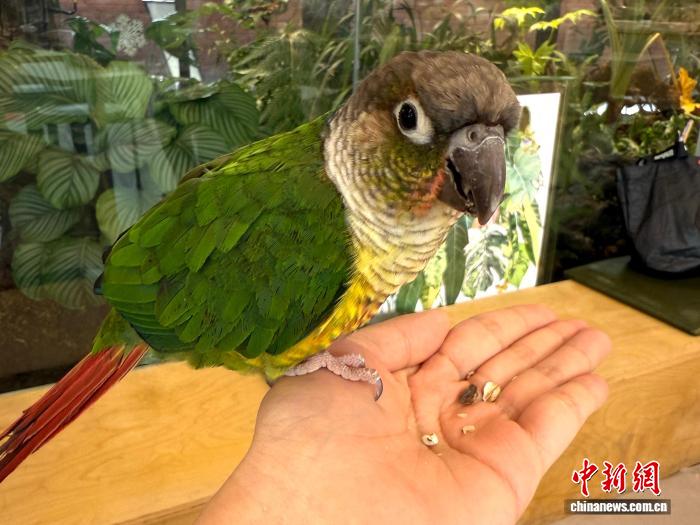
Core Insights - The trend of raising pet birds, particularly among young people, is gaining popularity, with a significant increase in orders for pet birds on platforms like Taobao, showing over 50% year-on-year growth in the last six months [1][4] - The demographic shift indicates that the "post-95" generation is becoming the main consumer group for pet birds, with female bird owners increasing at a rate eight times that of male owners [1][4] - The market for bird-related products is expanding, with a noticeable rise in sales of bird supplies and accessories, indicating a developing "bird economy" [4] Market Dynamics - Young individuals are increasingly engaging in activities such as taking their pet birds out in public or sharing their experiences on social media, which is driving demand for related products and services [2][4] - The shift in consumer behavior reflects a broader trend where young people are seeking emotional fulfillment from pets, moving from traditional companionship to more nuanced emotional connections [4] Industry Growth - The rise in interest for pet birds is leading to a burgeoning market for bird supplies, with local entrepreneurs showing interest in opening bird cafes and related businesses [4] - The domestic market for bird-related products is gradually expanding, with a notable increase in inquiries from young consumers in China, contrasting with previous trends that focused on overseas markets [4]

2025淘宝天猫宠物消费四大趋势洞察
Sou Hu Cai Jing· 2025-08-23 02:06
Core Insights - The report titled "2025 Taobao Tmall Pet Consumption Trend Insight White Paper" reveals the differentiated demands and category opportunities based on pet species, age stages, and body types [3]. Group 1: Macro Trends in the Pet Market - The relationship between humans and pets is evolving towards a pet-centric model, with pets transitioning from functional roles to becoming core family members [4]. - The mainstream pet ownership model consists of single-cat and single-dog households, accounting for 76% of pet ownership, while multi-pet households represent 14% [6][30]. - There is a significant increase in the diversity of pet types, with consumers pursuing unique, high-end pet breeds [8][32]. Group 2: Insights on Specialized Pet Needs - Specialized pet needs are gaining recognition, with cat owners focusing on age, breed, and specialized products, while dog owners prioritize body type, age, and breed [10][16]. - The report identifies a "golden triangle" of specialized needs, which includes age, body type/hair length, and breed, representing the three fundamental aspects of pet physiological needs [12][42]. - There is a notable gap in consumer education regarding specialized pet products, indicating a substantial opportunity for market growth [12][37]. Group 3: Pet Owner Demographics and Spending - The majority of cat owners are young women, with monthly spending averaging 1,799 yuan, while middle-aged cat owners spend around 2,608 yuan [15]. - Dog owners also show a similar trend, with young female dog owners spending an average of 2,155 yuan monthly [17]. - The report highlights that pet owners are increasingly willing to invest in specialized products tailored to their pets' specific needs [16][40]. Group 4: Health Issues in Pets - Common health issues for cats include parasites, gastrointestinal problems, and skin issues, with 17% of cats affected by parasites [19]. - For dogs, prevalent health concerns include joint issues, gastrointestinal problems, and parasites, with specific issues varying by age and body type [21][22]. - The report emphasizes the potential for customized nutrition plans based on the specific health needs of pets [19][21]. Group 5: Consumption Trends in Pet Products - The report indicates a growing trend towards personalized nutrition and specialized products in the pet care market, reflecting a shift towards more tailored consumer offerings [23][46]. - The analysis of pet diets and products suggests that there is a significant opportunity for brands to develop products that cater to the specific needs of different pet breeds and life stages [23][46].

宠物市场越来越大 入局淘金者越来越多
Shang Hai Zheng Quan Bao· 2025-08-23 00:34
Core Viewpoint - The Chinese pet industry is entering a new development stage, with pets transitioning from "functional companions" to "family members" [1] Industry Trends - The scale of pet ownership is increasing, leading to the growth of related sectors such as pet food, pet supplies, pet healthcare, and pet services, which are evolving towards specialization and refinement [1] - There is a rapid rise in the demand for "specialized and dedicated" products for pets [1] Market Dynamics - The booming pet economy is attracting more industrial capital into the market [1] - During the Asia Pet Expo, an increasing number of e-commerce platforms, including leading shelf e-commerce, interest e-commerce, and lifestyle platforms, have set up booths, indicating the growing appeal of the pet economy in recent years [1] - A participant who has attended the expo for five consecutive years noted that the number of e-commerce platforms and the size of their booths have both increased significantly [1]
“宠”出来的市场何止千亿级?它们带来的不仅是情绪价值!
Shang Hai Zheng Quan Bao· 2025-08-22 23:21
Industry Overview - The pet economy is rapidly growing, driven by social changes such as urbanization, smaller family structures, and an increase in single and elderly populations, leading to pets being viewed as family members and emotional companions [4][5] - The Chinese pet industry is entering a new development stage, with pets transitioning from "functional companions" to "family members," resulting in a rise in demand for specialized pet products and services [5][6] Market Size and Growth - According to the "2025 China Pet Industry White Paper," the number of pet dogs in China is projected to reach 52.58 million in 2024, a 1.6% increase from 2023, while the number of pet cats is expected to reach 71.53 million, a 2.5% increase [7] - The urban pet market in China is expected to exceed 300 billion yuan in 2024 and is projected to surpass 400 billion yuan by 2027, indicating significant growth potential compared to the U.S. pet market, which is expected to exceed 140 billion USD in 2024 [8][9] Consumer Spending Trends - Pet food constitutes a major portion of pet owners' expenses, with average monthly costs for pet care varying based on pet type and owner preferences; for example, one owner spends approximately 2,000 yuan monthly on their dog [7][8] - The rise of "self-indulgence economy" and "emotional consumption" is reshaping the pet consumption market in China, with a growing focus on high-quality pet food and services [8][9] Product and Service Innovations - Pet food brands are increasingly focusing on product quality, nutritional value, and specialized needs, with domestic brands gaining market share through insights into local consumer preferences [9][10] - The demand for diverse, intelligent, and one-stop pet services is growing, with over 30,000 businesses providing pet services on platforms like Meituan, reflecting a 24% year-on-year increase [11] Competitive Landscape - The pet industry is attracting significant investment from various sectors, with companies like Daqian Ecology and Three Squirrels entering the market to create comprehensive pet service brands [13] - The competition is intensifying, prompting companies to innovate and differentiate their offerings, such as unique pet cages and specialized pet food products [15][16]