
新能源车

Search documents
增值税发票数据显示:今年前三季度中国企业设备更新加快推进
Sou Hu Cai Jing· 2025-10-17 01:04
Group 1 - The core viewpoint of the articles highlights the acceleration of equipment updates and the effectiveness of the consumption upgrade policy in China during the first three quarters of the year [1][2] Group 2 - Industrial enterprises' procurement of machinery and equipment increased by 9.4% year-on-year in the first three quarters [1] - High-tech manufacturing maintained a strong growth momentum, with machinery and equipment procurement rising by 14% year-on-year [1] - Digital equipment procurement by Chinese enterprises grew by 18.6%, with specific high-end manufacturing sectors like shipbuilding and computing showing increases of 17.3% and 22.7% respectively [1] Group 3 - Private enterprises' procurement of machinery and equipment rose by 13% year-on-year, outperforming state-owned and foreign enterprises [1] - In the internet and smart drone sectors, private enterprises saw procurement increases of 32.8% and 70.5% respectively [1] Group 4 - Retail sales revenue for daily household appliances like refrigerators grew by 48.3%, while home audio-visual equipment like televisions saw a 26.8% increase [1] - Furniture and lighting retail sales revenue increased by 33.2% and 17.2% respectively [1] - Newly included communication devices like mobile phones experienced a retail sales revenue growth of 19.9% [1] Group 5 - New energy vehicle sales increased by 30.1% year-on-year in the first three quarters, driven by effective implementation of the vehicle trade-in policy [2]
固态电池新突破,资金加仓这些股
Zheng Quan Shi Bao Wang· 2025-10-17 00:55
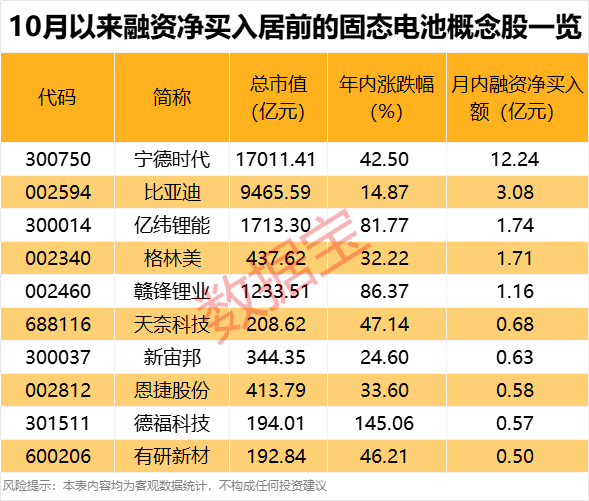
Group 1: Market Overview - The A-share market experienced fluctuations on October 16, with the Shanghai Composite Index rising by 0.1%, while the Shenzhen Component fell by 0.25%, and the ChiNext Index increased by 0.38% [1] - The coal sector saw significant gains, with major stocks like Daya Energy achieving a five-day consecutive rise [1] - The storage chip concept remained active, while sectors such as robotics, photolithography, rare earth permanent magnets, and controllable nuclear fusion faced declines [1] Group 2: Hongmeng Concept Stocks - Hongmeng concept stocks surged in the late trading session, with Changshan Beiming hitting the daily limit, and other stocks like Tuwei Information and Huiwei Intelligent rising over 5% [1] - By July 2025, the number of Hongmeng terminal devices is expected to exceed 10 million, with a notable acceleration in growth, reaching 20 million devices in just two months [1] - As of October 15, 2025, the installation numbers for Hongmeng versions of WeChat and Douyin surpassed 20.83 million and 20.34 million, respectively [1] Group 3: Solid-State Battery Breakthroughs - Chinese scientists have successfully overcome key challenges in all-solid-state lithium batteries, potentially doubling the range from 500 kilometers to over 1000 kilometers [2] - Toyota announced a partnership with Sumitomo Metal Mining to produce all-solid-state batteries, aiming for mass production between 2027 and 2028 [2] - The global solid-state battery shipment is projected to reach 642.6 GWh by 2030, with a compound annual growth rate of 133% from 2024 to 2030 [2] Group 4: Financing and Stock Performance - Solid-state battery concept stocks have seen significant price increases this year, with companies like Shanghai Washba and Xian Dao Intelligent reporting over 100% growth [3] - Notable financing activities include 162 institutional surveys for Rongbai Technology and 72 for Dosheng Technology, indicating strong interest in solid-state battery materials [3][4] - Major solid-state battery concept stocks, including CATL and BYD, have received substantial net financing, exceeding 1 billion yuan each [4][5]






影响市场重大事件:全球首个陆上商用模块式小型堆“玲龙一号”全球首堆冷试成功;固态电池新突破,新能源车续航有望翻倍
Mei Ri Jing Ji Xin Wen· 2025-10-16 22:17
Group 1: Nuclear Energy - The "Linglong No. 1," the world's first land-based commercial modular small reactor, successfully completed its cold test on October 16, 2025, marking a significant milestone in nuclear energy development [1] - Once operational, it is expected to generate 1 billion kWh annually, meeting the electricity needs of 526,000 households in Hainan and reducing carbon emissions by approximately 880,000 tons, equivalent to planting 7.5 million trees in a year [1] Group 2: Computing and Telecommunications - The Ministry of Industry and Information Technology aims to achieve a 70% coverage rate for 1-millisecond latency in urban computing by 2027, enhancing the deployment of optical networks and new technologies [2] - The initiative includes the establishment of a monitoring mechanism for medium and large computing centers to ensure low-latency access capabilities [2] Group 3: Battery Technology - Chinese scientists have made breakthroughs in solid-state battery technology, potentially doubling the range of electric vehicles from 500 kilometers to over 1000 kilometers [3] Group 4: Automotive Industry - The Ministry of Industry and Information Technology emphasizes the importance of intelligent connected vehicles as a new driving force for industrial development, focusing on technology innovation and policy framework [4] - The development of generative autonomous driving models is prioritized to enhance vehicle safety through systematic testing and data utilization [9] - Beijing is fostering innovation platforms in areas like high computing power and environmental perception to accelerate the development of the intelligent connected vehicle industry [10] Group 5: Artificial Intelligence Market - A report indicates that the AI hardware and software market is projected to reach between $780 billion and $990 billion by 2027, with an average growth rate of 40%-55%, presenting significant global opportunities for Chinese enterprises [5] Group 6: Energy Storage - In Q3 2025, China's energy storage battery shipments reached 165 GWh, a 65% year-on-year increase, with total shipments for the first three quarters exceeding 430 GWh [6] - The industry is expected to maintain a supply-demand imbalance, with total shipments projected to reach 580 GWh for the year, reflecting a growth rate of over 75% [6] Group 7: Treasury Securities - The U.S. Treasury's issuance of treasury securities has surged, prompting speculation that the Federal Reserve may consider halting its balance sheet reduction [7]
雷军演讲呼呼抵制黑公关 小米至今仍回避成都SU7事故
Zhong Guo Jing Ji Wang· 2025-10-16 13:21
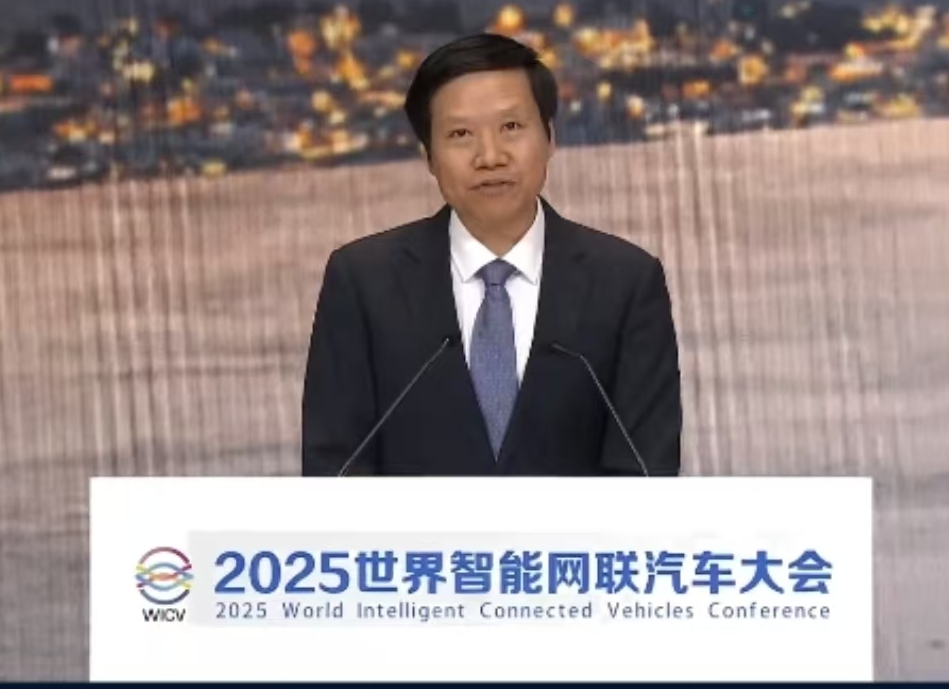
Core Viewpoint - Xiaomi Group's chairman Lei Jun delivered a speech at the "2025 World Intelligent Connected Vehicle Conference" focusing on seizing opportunities and promoting industry development, but did not address the recent "10·13 Xiaomi SU7 Chengdu explosion incident" [1][3] Group 1: Company Performance and Developments - Xiaomi has achieved a cumulative delivery of 400,000 vehicles in the 4.5 years since the establishment of its automotive division [3] - Lei Jun emphasized the company's efforts in the intelligent connected vehicle sector during his speech [3] Group 2: Recent Incident and Public Response - The "10·13 Xiaomi SU7 Chengdu explosion incident" involved a fatal accident where the vehicle's doors could not be opened during rescue efforts, leading to the driver's death [3] - The incident has raised concerns regarding the design of the Xiaomi SU7's door handles, which lack mechanical external handles and rely on an internal switch for unlocking [4] - There has been no public response from Xiaomi regarding the incident, despite significant online criticism directed at Lei Jun's social media posts following the accident [3] Group 3: Industry Safety Concerns - The incident has sparked discussions about safety standards in the automotive industry, particularly regarding hidden door handles in electric vehicles [4] - The Ministry of Industry and Information Technology has proposed new safety requirements for car door handles, mandating mechanical release functions to ensure accessibility in emergencies [4] - Other industry leaders at the conference highlighted the importance of safety in intelligent connected vehicles, with calls for prioritizing user safety alongside technological advancements [5]

新能源车买得起,但修不起了
虎嗅APP· 2025-10-16 10:31
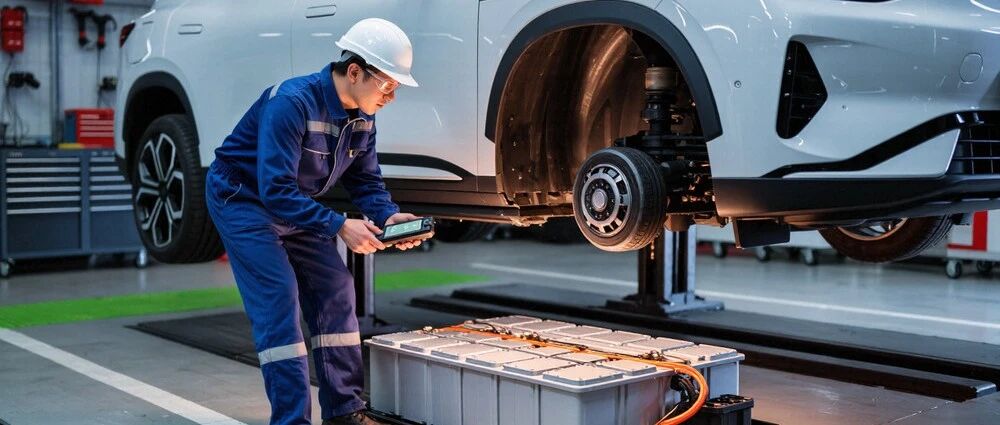
Core Viewpoint - Five Chinese car manufacturers, including BYD and Zeekr, are facing potential fines in Australia for allegedly monopolizing after-sales services by not disclosing diagnostic software and repair parameters, which hinders independent repair shops from servicing their vehicles [5][7]. Group 1: Cost of Repair for New Energy Vehicles - The repair costs for new energy vehicles (NEVs) are significantly higher than for traditional fuel vehicles, with minor accidents costing between 5,000 to 15,000 yuan for NEVs compared to 2,000 to 8,000 yuan for fuel vehicles [10]. - In severe collision cases, the repair costs for NEVs can exceed the cost of purchasing a new vehicle, while fuel vehicles can still be repaired for 50,000 to 150,000 yuan [10]. - The high repair costs are attributed to expensive parts, advanced technology, and the complexity of repairs, such as the need for specialized equipment and software access [11][30]. Group 2: Challenges in After-Sales Services - Many car manufacturers impose strict warranty conditions that require repairs to be conducted at authorized service centers, limiting options for vehicle owners and increasing repair costs [13][15]. - Authorized service centers often prefer to replace parts rather than repair them, leading to higher costs for consumers [16]. - The lack of detailed repair data from manufacturers makes it difficult for independent repair shops to standardize their processes, further complicating repairs for NEVs [19][20]. Group 3: Market Dynamics and Future Outlook - The number of independent repair shops for NEVs is significantly lower than for fuel vehicles, with only 20,000 to 30,000 such shops compared to around 400,000 for fuel vehicles in China [29]. - The repair market for NEVs is expected to remain high due to the complexity of the technology and the manufacturers' reluctance to share repair data, which may not change until a larger number of vehicles are out of warranty [30][31].

恒指收跌0.09% 恒生科技指数跌1.18%
Zheng Quan Shi Bao Wang· 2025-10-16 08:28
Group 1 - The Hang Seng Index closed down 0.09%, while the Hang Seng Tech Index fell by 1.18% [1] - The new energy vehicle sector experienced a decline, with NIO dropping nearly 9%, and both XPeng Motors and Xiaomi Group falling over 3% [1] - Sanhua Intelligent Control (002050) decreased by over 6%, and MicroPort Scientific Corporation dropped more than 5% [1] Group 2 - Jiangsu Jiajie Pharmaceutical (药捷安康) surged over 46%, and Pop Mart International (泡泡玛特) increased by more than 5% [1]
香港恒生指数收跌0.09% 恒生科技指数跌1.18%
Xin Lang Cai Jing· 2025-10-16 08:16
香港恒生指数收跌0.09%,恒生科技指数跌1.18%。新能源车板块走低,蔚来跌近9%,小鹏汽车、小米 集团跌超3%;三花智控跌超6%,微创机器人跌超5%。药捷安康涨超46%,泡泡玛特涨超5%。 ...
数览三季度税收“成绩单” “税动力”助力高质量发展提质增效
Yang Shi Wang· 2025-10-16 08:06
Core Insights - The latest data from the National Taxation Administration indicates a significant acceleration in equipment updates among enterprises in the first three quarters of the year, driven by large-scale equipment upgrades and the expansion of the old-for-new consumption policy [1] Group 1: Equipment Procurement Trends - In the first three quarters, the amount spent by industrial enterprises on machinery and equipment increased by 9.4% year-on-year, with high-tech manufacturing seeing a 14% increase and the electricity, heat, gas, and water production and supply sector experiencing a 10.5% increase [1] - The information and technology sectors showed substantial investment in equipment updates, with the information transmission, software, and IT services industry increasing procurement by 26.8%, and scientific research and technical services by 32.5% [3] Group 2: Digital Equipment Investment - There was a notable increase in the procurement of digital equipment, with a year-on-year growth of 18.6% in the first three quarters, indicating that digital transformation is becoming a key development direction for enterprises [5] - High-end manufacturing sectors are accelerating their digital investments, with shipbuilding and computer industries seeing increases of 17.3% and 22.7% respectively in digital equipment procurement [5] Group 3: Private Sector Contributions - The role of private enterprises in equipment updates has become more prominent, with a 13% year-on-year increase in machinery and equipment procurement, surpassing state-owned and foreign enterprises [7] - Innovative sectors within the private economy are maintaining strong momentum, with procurement in the internet and intelligent unmanned aerial vehicle sectors increasing by 32.8% and 70.5% respectively [7] Group 4: Consumer Goods and New Energy Vehicles - The old-for-new consumption policy has shown significant results, with retail sales of home appliances and furniture rising sharply, including a 48.3% increase in daily household appliances and a 26.8% increase in audiovisual equipment [9] - Sales of new energy vehicles have also continued to grow, with a 30.1% year-on-year increase in the first three quarters, reflecting the ongoing vitality of China's new energy vehicle industry [11]
欧洲电动车销量月报(2025年9月):9国新能源车维持高增长,英法意陆续启动电车补贴-20251016
KAIYUAN SECURITIES· 2025-10-16 06:45
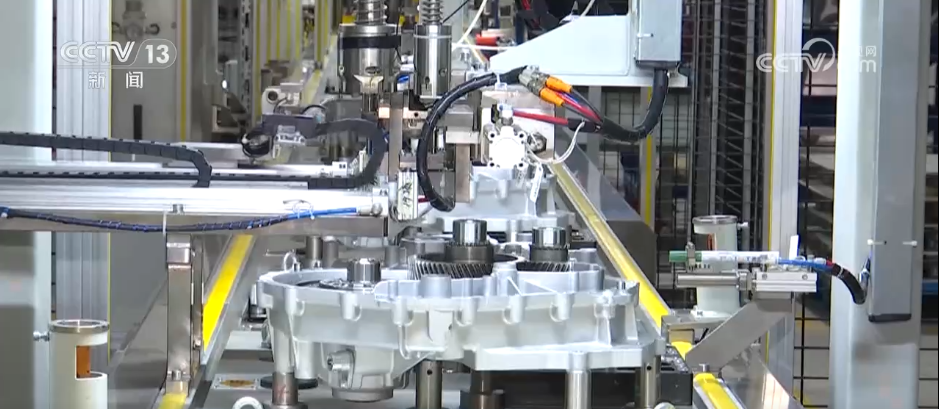
Investment Rating - The industry investment rating is "Positive" (maintained) [1] Core Insights - The report highlights a significant growth in the European electric vehicle (EV) market, with September 2025 sales reaching 307,000 units, a year-on-year increase of 34.7% [5][14] - The penetration rate of new energy vehicles in Europe has risen to 31.8%, up by 5.8 percentage points year-on-year [14] - The report emphasizes the ongoing support from government policies and subsidies across various European countries, which are expected to sustain demand for electric vehicles [15][41] Summary by Sections Electric Vehicle Sales - In September 2025, the sales of new energy vehicles in nine European countries reached 307,000 units, representing a year-on-year growth of 34.7% [5][14] - The breakdown includes 198,000 battery electric vehicles (BEV), up 22.8% year-on-year, and 108,000 plug-in hybrid electric vehicles (PHEV), which saw a remarkable increase of 63.6% [14] Country-Specific Insights - **Germany**: BEV sales reached 45,000 units in September, a year-on-year increase of 31.9%, with a penetration rate of 19.3% [16] - **United Kingdom**: BEV sales were 73,000 units, up 29.1% year-on-year, with approximately 25% of BEV models qualifying for subsidies [19] - **France**: BEV sales reached 31,000 units, a 12.8% increase year-on-year, with the highest market share of 22.3% [22] - **Italy**: PHEV sales surged by 165.8% year-on-year, with a total of 11,000 units sold [33] - **Spain**: BEV sales increased by 59.7% year-on-year, driven by new model launches and promotional activities [37] Investment Recommendations - The report recommends investments in lithium battery companies such as CATL, Yiwei Lithium Energy, and Xinwangda, as well as in lithium materials and structural components [41] - Specific beneficiary stocks include Hunan Youneng, Fu Lin Precision, and others across various segments of the electric vehicle supply chain [41][42]
越跌越买?资金为何抢筹恒生科技指数ETF
Mei Ri Jing Ji Xin Wen· 2025-10-16 06:10
Group 1 - The Hong Kong stock market experienced a decline, with the Hang Seng Technology Index dropping over 2% in the afternoon session, particularly affected by significant losses in tech and new energy vehicle stocks, including NIO which fell nearly 13% [1] - Despite recent market volatility, there has been substantial net inflow into ETFs tracking the Hang Seng Technology Index, with approximately 2.007 billion yuan net inflow recorded since October 1, bringing the total size of the largest ETF in this category to 44.447 billion yuan [1] - Analysts from China Merchants Securities predict a rebound in the Hong Kong stock market in the fourth quarter, driven by factors such as advancements in AI technology, resolution of tariff issues, and expectations of improved policies that could enhance risk appetite [1] Group 2 - Changjiang Securities believes that trade frictions will not alter the slow bull market trend in Hong Kong stocks, identifying three potential growth areas: AI technology, new consumption, and continued inflow of southbound funds [2] - The latest valuation of the Hang Seng Technology Index ETF is at 23.14 times P/E, indicating it remains in a historically undervalued range, suggesting potential for upward momentum due to its high elasticity and growth characteristics [2] - The transition from broad monetary policy to broad credit policy in China, coupled with potential interest rate cuts in the U.S., could further support the Hong Kong stock market's upward trajectory [2]