国际贸易

Search documents
平均18.3%,1934年来最高水平!美国高关税的代价是?
Sou Hu Cai Jing· 2025-08-05 21:35
Group 1 - The U.S. is set to implement a new round of tariffs on various countries, including 35% on goods from Canada, 50% from Brazil, 25% from India, and 39% from Switzerland, effective August 7 [1] - The average effective tariff rate in the U.S. has reached 18.3%, the highest level since 1934 [3] Group 2 - The new U.S. tariff policy is expected to reduce trade volume as it increases costs for imported goods, leading to a decrease in exports to the U.S. from other countries [4] - The tariffs are likely to raise domestic prices of goods in the U.S., contributing to inflation, although the extent of this impact remains uncertain [4] - The U.S. is predicted to experience a decline in its position in global trade due to the establishment of high trade barriers, which will reduce trade interactions with other countries [4] - Countries heavily reliant on exports to the U.S. will face significant impacts on their trade [4] Group 3 - Historically, the U.S. has oscillated between protectionism and liberal trade policies, with current shifts being driven by perceived national interests and challenges faced by the U.S. [5] - The U.S. has reverted to protectionist policies after a long period of advocating for trade liberalization, which may be detrimental to both the U.S. and the global economy [5]

信息量大!特朗普最新采访曝光!暂停对美关税反制后 欧盟称仍“保留重启”
Mei Ri Jing Ji Xin Wen· 2025-08-05 15:29
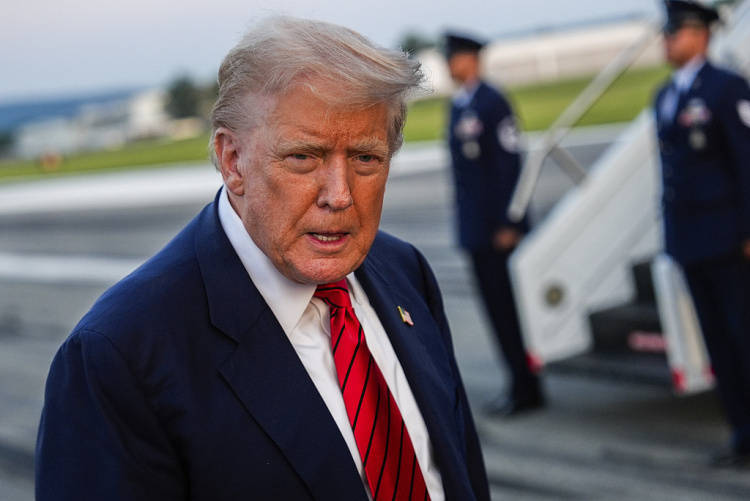
Group 1: U.S.-India Trade Relations - President Trump announced plans to "significantly" increase tariffs on goods imported from India within 24 hours, currently set at 25% [2][4] - The increase in tariffs is a response to India's continued purchase of Russian oil, which Trump claims is being sold at a profit on the open market [4] Group 2: Pharmaceutical Tariffs - Trump stated that the U.S. will impose a "small tariff" on imported pharmaceuticals, with plans to raise the rate to 150% within a year and eventually to 250% [5] - The initial tariff rate for pharmaceuticals was not disclosed [5] Group 3: Semiconductor and Chip Tariffs - Trump indicated that he will announce tariffs on semiconductors and chips in the coming week, but did not provide further details [6] Group 4: Federal Reserve Leadership - Trump mentioned that he may soon announce a new chair for the Federal Reserve, having narrowed down the candidates to four, excluding Treasury Secretary Scott Bessenet [7][8] Group 5: EU-U.S. Trade Relations - The European Union has decided to suspend retaliatory tariffs against the U.S. that were set to take effect on August 7, while retaining the option to reinstate them [9] - This decision follows ongoing discussions between the EU and the U.S. to implement a trade agreement reached last month, despite dissatisfaction among EU member states regarding the perceived leniency of the agreement [9]

全球瞭望丨马来西亚媒体:美发起关税战扰乱贸易秩序 全球南方合作向未来
Xin Hua She· 2025-08-05 13:00
世界贸易组织在1995年正式成立,标志着全球多边贸易体制迈入新阶段。以自由贸易为核心的经济 全球化为诸多发展中国家带来发展机遇。作为全球最大经济体的美国,如今却高举贸易保护主义大旗, 频频以关税作为外交和经济施压手段。这不仅扰乱了全球贸易秩序,也对众多依赖出口的国家,特别是 发展中国家的农产品与制造业领域造成沉重打击。 当前单边主义与保护主义抬头,以金砖国家为代表的多边合作平台,正尝试以多元包容的发展模式 回应全球不平等的格局。金砖国家新开发银行推动本币结算与基础设施投资,为发展中国家提供金融替 代路径,减少对西方体系的依赖。这种南南合作的新探索,展示了发展中国家共赢发展的可能性。 文章指出,美国发起的关税战让全球南方国家再次感受到当前国际秩序中的结构性不公,进一步凸 显了人类命运共同体理念的重要性与现实价值。这一理念试图打破传统的零和博弈思维,推动不同发展 阶段国家之间的合作对话,强调在多边框架下谋求共赢、共治的全球合作体系。 新华社吉隆坡8月5日电(记者王嘉伟 毛鹏飞)马来西亚《星洲日报》网站4日刊登《从关税战反思 全球共赢的出路》一文。文章指出,美国政府一意孤行地推动关税战,背离当前多边合作与共同发展的 ...
俄总统新闻秘书:胁迫各国终止与俄贸易“不合法”
Xin Hua Wang· 2025-08-05 11:30
(文章来源:新华网) 佩斯科夫说,俄罗斯听到了很多威胁言论,试图迫使各国终止与俄罗斯的经贸关系,"我方不认为这种 言论是合法的"。他强调,主权国家有权选择贸易合作伙伴,选择符合本国利益的经贸合作机制。 特朗普4日在社交媒体上发文称,由于印度购买大量俄罗斯石油并借此获利,美国将大幅提高从印度进 口产品的关税。印度外交部发言人同一天表示,美国针对印度的做法既不公正也不合理,印度将采取一 切必要措施维护国家利益和经济安全。 俄罗斯总统新闻秘书佩斯科夫5日谈及美国总统特朗普对印度的关税威胁时说,试图迫使各国终止与俄 罗斯贸易是"不合法的"。 ...
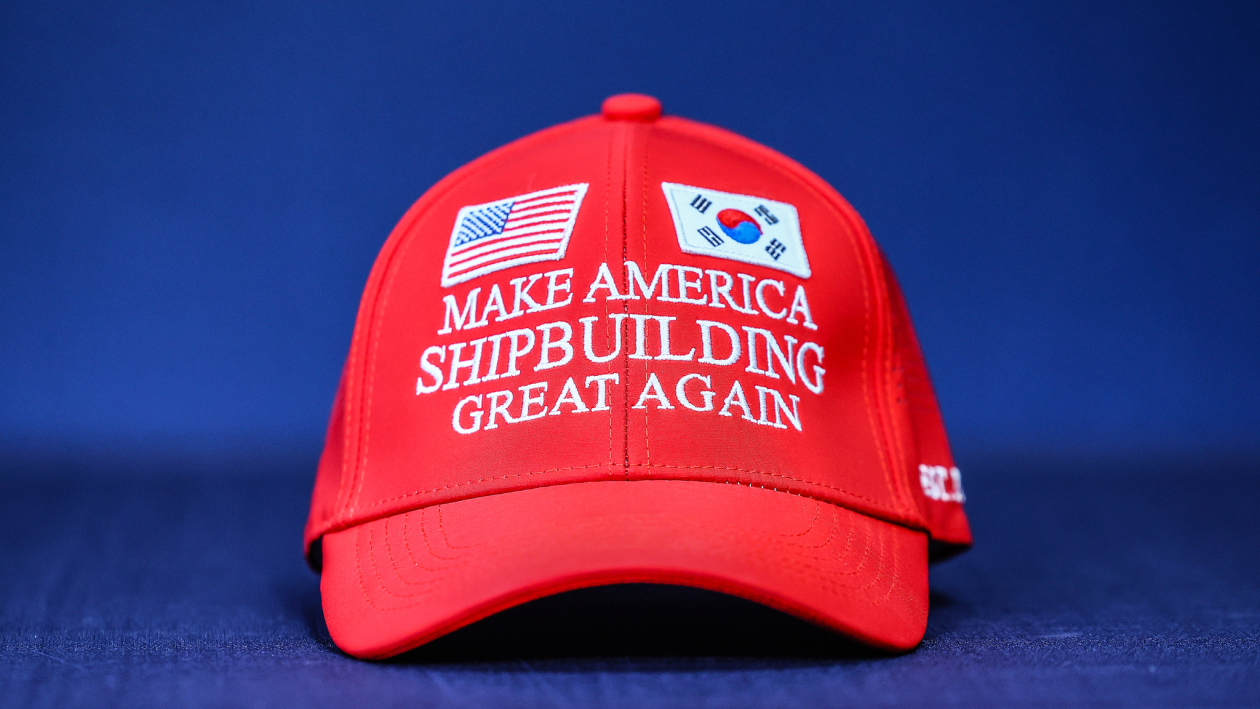
韩方披露韩美贸易谈判幕后细节:一顶红色棒球帽成关键……
Huan Qiu Wang· 2025-08-05 08:20
Group 1 - The core of the article discusses the recent trade agreement between the US and South Korea, highlighting the symbolic role of a red baseball cap labeled "Make American Shipbuilding Great Again" (MASGA) in the negotiations [1][3][4] - The MASGA project, led by the South Korean government, aims to encourage significant investments from South Korean shipbuilding companies in the US, supported by financial backing from public institutions like the Korea Export-Import Bank [3][6] - The design and production of the MASGA cap involved collaboration with local manufacturers in Seoul, and the concept was inspired by the preferences of the US President [3][4] Group 2 - The trade agreement framework includes South Korea investing $350 billion in the US and purchasing $100 billion worth of liquefied natural gas and other energy products [8] - Despite the agreement, there are concerns within South Korea regarding the implications of a 15% tariff on exports and the overall impact on the shipbuilding industry [9] - Ongoing discussions indicate that while a framework has been established, significant issues remain unresolved, particularly regarding agricultural topics and the specifics of the $350 billion investment [9]
齐鲁银行以精准服务助力区域产业过坎扬帆
Xin Lang Cai Jing· 2025-08-05 08:12
Group 1: Agricultural Financing Solutions - Qilu Bank has introduced innovative financial products like "Ginger and Garlic Loan" to address the financing difficulties faced by farmers in Laiwu, which has a significant ginger production area of 200,000 acres and an annual output of 500,000 tons [2] - The "Ginger and Garlic Loan" integrates various professional state-owned guarantee institutions, effectively solving the collateral issues for farmers and reducing the overall funding cost to below 3% [2] - By March 2025, Qilu Bank's Laiwu branch had issued nearly 100 million yuan in "Ginger and Garlic Loans," significantly boosting farmers' enthusiasm for ginger and garlic cultivation [2][3] Group 2: Support for Technological Innovation - Qilu Bank has actively supported technological innovation by providing critical credit funding to companies like Weifang Ocean Equipment Manufacturing Co., which developed a domestic underwater tree system, enhancing national energy security [4] - The bank has explored a "technology research + industrial application" approach, assisting in the transformation of major technological achievements since 2023 [4] - The growth of Jinan Xinghui CNC Machinery Technology Co., which received a tailored loan of 3 million yuan in 2008, exemplifies the bank's long-term support for innovative enterprises, leading to a revenue exceeding 300 million yuan [4] Group 3: Digital Financial Services for Trade - Qilu Bank's "Qilu Spring e-Da" online cross-border financial services have streamlined trade processes, reducing transaction times from 24 hours to 2 hours, thus saving nearly 90% of time costs for companies like Hongye Textile [5][6] - The bank has implemented a "local currency settlement first" service to help companies manage risks associated with exchange rate fluctuations, resulting in a 43% increase in RMB settlement for Shandong International Trade by Q4 2024 [6] - As of now, Qilu Bank has facilitated nearly 30 billion yuan in online cross-border transactions, significantly enhancing the efficiency and convenience of foreign trade for Shandong enterprises [6]

印度:继续向俄罗斯购买石油
Huan Qiu Wang· 2025-08-05 07:37
Core Viewpoint - Despite threats from President Trump regarding punitive measures against India's purchase of Russian energy products, India has reaffirmed its commitment to continue importing oil from Russia [1][2]. Group 1: U.S.-India Trade Relations - Trump announced a 25% tariff on Indian goods starting August 1, citing high tariffs and non-tariff barriers as reasons for the limited scale of U.S.-India trade [2]. - The U.S. Department of Commerce reported that the trade volume between the U.S. and India is approximately $128.8 billion for 2024, with India holding a trade surplus of $45.8 billion with the U.S. [2]. Group 2: India's Energy Policy - Indian officials stated that there have been no directives issued to reduce oil imports from Russia, indicating a stable energy policy despite external pressures [1]. - Trump's comments included a claim that India would cease purchasing oil from Russia, although he expressed uncertainty about the accuracy of this information [1].
上半年实际利用外资增长65.8%,投资海口磁吸效应凸显
2 1 Shi Ji Jing Ji Bao Dao· 2025-08-05 06:25
Core Insights - Haikou's economic growth is significantly driven by investment attraction, with a GDP of 1080.85 billion yuan in the first half of the year, reflecting a 5.4% year-on-year increase [1] - The city has seen a remarkable 65.8% increase in actual foreign investment, indicating strong confidence from global enterprises [1] Investment Attraction as an Economic Engine - Haikou has successfully attracted 63 key investment projects in the first half of the year, contributing directly to a 16.8% increase in industrial added value [1] - Notable projects include Bitmain, which contributed 1.62 billion yuan to local industrial added value [1] Expansion of Investment Network - Haikou's investment network is expanding, with 26 new projects in the comprehensive bonded zone and 13 investment projects signed in the national high-tech zone [2] - Significant projects include those from Indian Sun Pharmaceutical and Silver Medical, as well as investments from various regions across China [2] Regional Cooperation and Development - The establishment of the Guangdong-Hainan Advanced Manufacturing Cooperation Industrial Park has led to 74 investment trips to Guangdong, resulting in 52 projects with a total investment exceeding 12 billion yuan [3] - The park has attracted 442 enterprises, with actual investments nearing 1.4 billion yuan [3] Win-Win Situation for City and Enterprises - The investment attraction strategy has created a win-win scenario, where Haikou's GDP growth aligns with the benefits enterprises gain from the free trade port policies [4] - For instance, Taishan Sports Industry Group plans to leverage tax exemptions for importing materials to establish a high-end bicycle production base [4] Positive Feedback Loop in Economic Growth - Haikou's economic model has established a positive feedback loop: policy attracts enterprises, enterprises generate output, which optimizes the economic structure and further enhances investment attraction [5] - The city aims to attract globally competitive enterprises post-customs closure, leveraging its unique regulatory environment [5] Institutional Advantages and Future Outlook - Haikou's investment attraction has transcended geographical boundaries, creating a new institutional landscape characterized by customs facilitation and tax reforms [6] - The city is expected to experience a surge in investment projects in the upcoming months, marking a critical phase in its economic development [6]
缅甸贸易中心(海南)揭牌成立
Hai Nan Ri Bao· 2025-08-05 01:30
Core Points - The establishment of the Myanmar Trade Center (Hainan) in Haikou is a significant step in promoting trade between China and Myanmar, authorized by the Ministry of Commerce of the Republic of the Union of Myanmar [1] - The center will serve as a comprehensive service platform for trade promotion, enterprise connection, and policy interpretation, jointly operated by Chinese and Myanmar enterprises [1] Group 1 - The Myanmar Trade Center (Hainan) is the fourth trade center globally established by Myanmar, indicating the country's commitment to enhancing international trade relations [1] - The center aims to leverage the policy advantages of the Haikou Comprehensive Bonded Zone to focus on three key areas: the jade and gemstone industry ecosystem, cross-border agricultural product supply chains, and a new model for photovoltaic equipment export combined with smart energy solutions [1] Group 2 - The establishment of the center is seen as a practical response to the China-Myanmar community of shared destiny, facilitating the entry of high-quality Myanmar products into the Chinese market [1] - It will also create favorable conditions for Chinese enterprises looking to invest in Myanmar, enhancing bilateral economic cooperation [1]
报道:欧盟将对美国的贸易反制措施暂停6个月
Sou Hu Cai Jing· 2025-08-05 01:02
Group 1 - The European Union (EU) will suspend two countermeasures against U.S. tariffs for six months as part of an agreement reached with the U.S. [1] - The agreement, reached on July 27, 2025, aims to provide "stability and predictability" for citizens and businesses on both sides of the Atlantic [1] - The EU will delay the implementation of countermeasures originally set to take effect on August 7, 2025, to support the agreement's progress [1] Group 2 - The trade agreement includes a 15% tariff on EU goods entering the U.S. and a commitment from the EU to increase investments in the U.S. by $600 billion [4] - The EU is expected to purchase $7.5 billion worth of U.S. energy products and military equipment as part of the agreement [4] - The agreement has faced significant criticism from various European stakeholders, who view it as a concession to U.S. pressure and detrimental to European interests [4]