
存储芯片

Search documents
三大股指涨跌不一,创业板指跌超1%,CPO概念、英伟达概念板块领跌
Feng Huang Wang Cai Jing· 2025-12-31 07:15
Market Performance - The three major stock indices closed mixed, with the Shanghai Composite Index rising by 0.09%, while the Shenzhen Component Index and the ChiNext Index fell by 0.58% and 1.23% respectively [1] - The total trading volume in the Shanghai, Shenzhen, and Beijing markets exceeded 2 trillion yuan [1] Index Summary - The Shanghai Composite Index closed at 3968.84, with a slight increase of 0.09% [2] - The Shenzhen Component Index closed at 13525.02, down by 0.58% [2] - The ChiNext Index closed at 3203.17, decreasing by 1.23% [2] - The total market capitalization of A-shares reached nearly 109 trillion yuan, with an increase of approximately 2.3 trillion yuan during the year [2] Annual Performance - The market was active throughout the year, with daily trading volumes exceeding 1 trillion yuan becoming the norm [3] - The ChiNext Index led the annual performance with a nearly 50% increase [2] - The total trading volume in the Shanghai and Shenzhen markets surpassed 400 trillion yuan, marking a year-on-year growth of over 60% [3] Sector Highlights - Several technology leaders, including Shenghong Technology, Xinyi Sheng, and Zhongji Xuchuang, saw their stock prices increase by over three times during the year [3] - Sectors such as CPO (optical modules), storage chips, commercial aerospace, and non-ferrous metals were among the top performers [3]



长鑫招股书解读纪要
Xin Lang Cai Jing· 2025-12-31 05:37
来源:纪要逻辑社 Q:长存公司近期盈利表现如何?盈利大幅改善 的核心驱动因素是什么? A:长存公司近期盈利实现显著提升,核心驱动因素是行业景气周期下产品价格的大幅上调,推 动毛利 率和净利润快速增长。具体来看,25年 Q3毛利率已达38%,Q4预估可进一步攀升至 47%,距离海外龙 头50%-60%的水平仅一步之遥。同时,严格的成本管控和上半年资本支出缩 减带来的折旧优势,也为 盈利改善提供了支撑。 尽管前三季度净利仍亏损19.6亿,但招股书预测 全年将实现20-30亿利润,其中 25年Q4单季利润 预期高达70-80亿,产品成本刚性使得所有涨价都能直接转化为利润。 Q:长存公司未来业绩增长的核心动力有哪些? 全球存储市场格局对其有何影响? A:长存公司未来业绩增长主要依赖两大动力: 一是加速扩产以匹配市场需求,应对全球存储供 需紧 张的格局;二是客户构成多样化,目前服务器业务收入占比已从个位数跃升20%-30%,业 务结构实现 重大转变。从行业环境来看,市场分析认为未来三年全球存储供需或将持续紧张,这 一格局将支撑存 储产品价格持续看涨,为公司业绩增长提供有力支撑。此外,AI服务器需求激 增,叠加三星、美光 ...
一则大消息,“一字”涨停
Zhong Guo Zheng Quan Bao· 2025-12-31 04:52
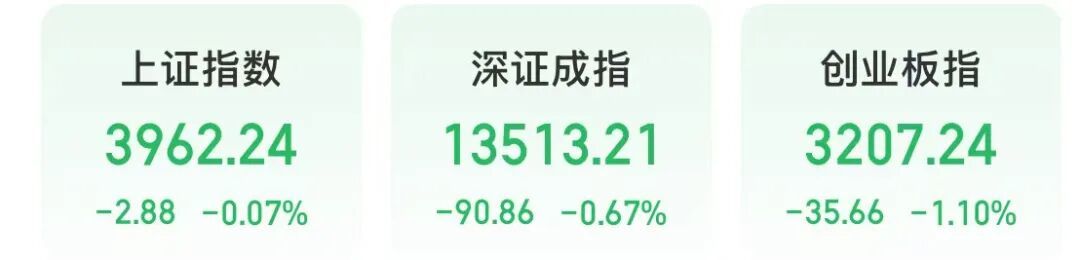
Market Overview - On the last trading day of 2025, A-shares experienced fluctuations with the three major indices declining slightly, while individual stocks showed active performance [1] - The Shanghai Composite Index fell by 0.07%, the Shenzhen Component Index decreased by 0.67%, and the ChiNext Index dropped by 1.1% [1] Key Stock Performances - Major players in the non-ferrous metals sector, Zijin Mining and Luoyang Molybdenum, both reached historical highs [1] - Nengdongguang surged by 919.31%, with intraday gains exceeding 1000% [1] - Leading humanoid robot stock, Sanhua Intelligent Control, rose by 3.75%, also hitting a historical high [1] - Hefei Urban Construction, a stock related to Changxin Technology, hit the daily limit [2] Changxin Technology IPO - Changxin Technology has submitted an IPO application to the Sci-Tech Innovation Board, aiming to raise 29.5 billion yuan for various technology upgrade projects, with a total investment of 34.5 billion yuan [2] - Following this news, stocks related to Changxin Technology, such as Hefei Urban Construction and Shifeng Cement, saw significant price increases [2] Storage Chip Market Dynamics - Recent months have seen reports of rising prices in the storage chip market, with DRAM and NAND Flash prices increasing by over 300% since September [4] - TrendForce's report indicates that DDR4, DDR5, and module prices continue to rise, driven by inventory releases from traders for year-end accounting [4] - Demand for high-bandwidth memory (HBM) and large-capacity storage is increasing, while supply constraints are pushing the market into a price upcycle [5] AI Application Sector - The AI application sector saw a broad increase, with significant gains in AI-related stocks such as AI corpus, Zhiyu AI, and Sora concepts [6] - Major catalysts for the rise in AI applications include Meta's acquisition of Manus and the Hong Kong IPO of Beijing Zhiyu Huazhang Technology [8] - Tencent's release of an open-source translation model supporting 33 languages has also contributed to the sector's strength [8] Future Outlook - The global AI model iteration is accelerating, with expectations for continued high growth in AI model usage and computational demand through 2026 [9] - Investment opportunities are suggested in AI computing power, domestic AI hardware, and AI applications, particularly as potential breakout applications emerge [9]

AI引爆存储芯片需求,铠侠股价领跑全球,中国长鑫IPO募资295亿
Sou Hu Cai Jing· 2025-12-31 03:48
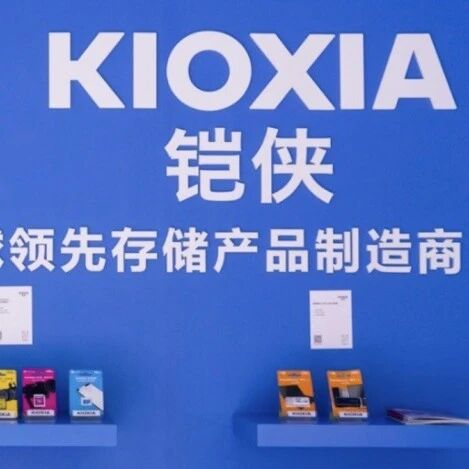
Group 1 - The core driver of the storage chip industry's growth is the surge in data storage demand due to advancements in artificial intelligence technology [1][3] - Kioxia Holdings Corp, a Japanese storage chip manufacturer, is expected to record the highest stock price increase globally by 2025, indicating strong industry demand [1] - The demand for storage chips, particularly flash memory chips produced by Kioxia, is experiencing explosive growth as global tech companies accelerate the construction of AI infrastructure [3] Group 2 - Multiple tech companies have warned of a shortage in storage chip supply, leading to expectations of significant price increases for these products [3] - According to Amir Anvarzadeh, a strategist at Asymmetric Advisors Pte, the focus of the tech sector in 2026 will primarily be on the storage chip field, as demand currently far exceeds supply [3] - The Chinese storage chip industry is making progress in self-sufficiency, with Changxin Technology Group's IPO application accepted, aiming to raise 29.5 billion yuan, and reporting revenue of 32.084 billion yuan in the first nine months of 2025 [3]

半导体设备,2026,“卖铲人”的盛宴
Jin Rong Jie· 2025-12-31 03:44
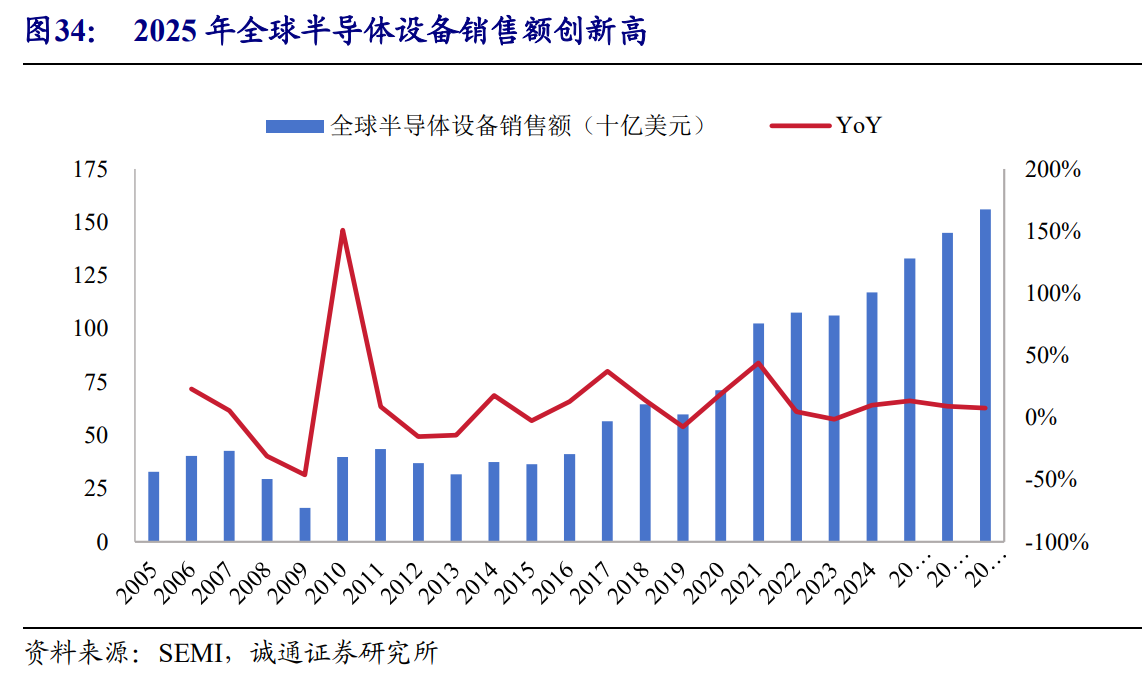
Group 1 - The core viewpoint of the news is that Changxin Technology's IPO acceptance signals a clear indication of a significant storage cycle expected in 2025-2026 [1] - The IPO aims to raise 29.5 billion yuan, focusing on upgrading manufacturing lines and DRAM technology, which will trigger a wave of equipment procurement in the upstream supply chain [1] - The AI-driven demand for computing power is expected to exacerbate the "storage wall" issue, with the DRAM market projected to see continuous revenue growth starting in 2025, potentially lasting until 2029 [1] Group 2 - The semiconductor equipment sector is positioned at a rare historical juncture, benefiting from AI innovation, inventory cycles, and domestic substitution demands across various segments [2] - The global semiconductor manufacturing equipment sales are projected to reach $133 billion in 2025, marking a 13.7% year-on-year increase, with further growth expected in subsequent years [2] - The semiconductor equipment ETF (561980) has shown strong performance, with the highest maximum increase and lowest maximum drawdown among major semiconductor indices since 2018 [5][6] Group 3 - The semiconductor equipment sector is anticipated to be a crucial technology theme in 2026, combining strong certainty and elasticity in investment opportunities [6]
存储“独角兽”长鑫科技IPO获受理:拟募资295亿元,阿里腾讯现身股东名单
经济观察报· 2025-12-31 03:25
12月30日晚间,上海证券交易所官网更新了一则IPO受理信息:长鑫科技集团股份有限公司(下 称"长鑫科技")科创板上市申请获受理,保荐机构为中金公司和中信建投。 招股书(申报稿)显示,长鑫科技拟募资295亿元,如最终实施,这一金额将刷新科创板IPO募资 规模的历史记录。 尤其值得注意的是,长鑫科技的IPO项目,是证监会在发布《关于在科创板设置科创成长层 增强 制度包容性适应性的意见》中提出试点IPO预先审阅机制后,首单落地的"预先审阅"项目,在此之 前,长鑫科技已经完成了两轮预先审阅回复。 作为国产动态随机存取存储器(DRAM)的产能与技术"链主",长鑫科技的招股书,首次完整揭 开了这家估值超千亿的"独角兽"企业的家底。 根据知名市场研究机构Omdia数据,按产能和出货量统计,长鑫科技已成为中国第一、全球第四 的DRAM厂商。招股书披露,2022年至2025年9月,长鑫科技的累计营收达736.36亿元。 在这一营收规模背后,是一个正处于技术换代和行业周期拐点的新兴存储巨头形象。 招股书显示,2024年底以来,长鑫科技自有DDR4(第四代双倍数据速率内存)产品已停止生 产,产能全面转向DDR5(第五代双倍数据速 ...

存储“独角兽”长鑫科技IPO获受理:拟募资295亿元,阿里腾讯现身股东名单
Jing Ji Guan Cha Wang· 2025-12-31 02:09
经济观察报记者 郑晨烨 12月30日晚间,上海证券交易所官网更新了一则IPO受理信息:长鑫科技集团股份有限公司(下称"长鑫科技")科创板上市申请获受理,保荐机构为中金公 司和中信建投。 招股书(申报稿)显示,长鑫科技拟募资295亿元,如最终实施,这一金额将刷新科创板IPO募资规模的历史记录。 尤其值得注意的是,长鑫科技的IPO项目,是证监会在发布《关于在科创板设置科创成长层 增强制度包容性适应性的意见》中提出试点IPO预先审阅机制 后,首单落地的"预先审阅"项目,在此之前,长鑫科技已经完成了两轮预先审阅回复。 作为国产动态随机存取存储器(DRAM)的产能与技术"链主",长鑫科技的招股书,首次完整揭开了这家估值超千亿的"独角兽"企业的家底。 根据知名市场研究机构Omdia数据,按产能和出货量统计,长鑫科技已成为中国第一、全球第四的DRAM厂商。招股书披露,2022年至2025年9月,长鑫科 技的累计营收达736.36亿元。 在这一营收规模背后,是一个正处于技术换代和行业周期拐点的新兴存储巨头形象。 招股书显示,2024年底以来,长鑫科技自有DDR4(第四代双倍数据速率内存)产品已停止生产,产能全面转向DDR5( ...
AI内存需求暴增,铠侠今年涨幅达540%,领跑全球AI股
美股IPO· 2025-12-30 16:23
Core Viewpoint - Kioxia, a Japanese memory chip manufacturer, has seen a remarkable stock price increase of 540% since its listing in December last year, surpassing all components of the MSCI World Index, with a current market capitalization of approximately $36 billion, driven by the surge in demand for storage chips due to AI infrastructure development [1][3][5]. Group 1: Market Performance - Kioxia has become the best-performing stock globally this year, with a year-to-date increase of 540%, leading the Tokyo Stock Exchange's 2025 growth rankings [3]. - The company's market capitalization has reached about 5.7 trillion yen (approximately $36 billion), with major clients including tech giants like Apple and Microsoft [5]. Group 2: Demand and Supply Dynamics - The demand for storage chips has surged as large-scale cloud service providers accelerate the construction of AI infrastructure, making these chips critical components for AI training and data centers [6][8]. - Major tech companies have warned of a tight supply of storage chips, with analysts predicting significant price increases, which supports Kioxia's stock price [7][9]. Group 3: Future Outlook - Despite concerns about valuation leading to short-term volatility, the ongoing supply tightness is expected to bolster Kioxia's prospects through 2026 [10][12]. - Analysts believe that Kioxia is well-positioned to navigate the fluctuations in the AI market due to the persistent demand for memory that exceeds supply [12].
存储芯片龙头长鑫科技递交招股书,覆盖DDR、LPDDR主流DRAM产品,研发投入188.67亿元,2022至2024年主营业务收入复合增长率72.04%
Mei Ri Jing Ji Xin Wen· 2025-12-30 16:01
Core Viewpoint - Changxin Technology, a leading domestic storage chip company, has disclosed its prospectus, highlighting its diverse product offerings in the DRAM sector and significant revenue growth projections [1] Group 1: Company Overview - Changxin Technology provides a range of DRAM products, including wafers, chips, and modules, covering major series such as DDR and LPDDR [1] - The company has successfully transitioned from DDR4 and LPDDR4X to DDR5 and LPDDR5/5X, indicating strong product development capabilities [1] Group 2: Financial Performance - From 2022 to September 2025, Changxin Technology is projected to achieve cumulative revenue of 736.36 billion yuan [1] - The compound annual growth rate (CAGR) of the company's main business revenue is expected to reach 72.04% from 2022 to 2024 [1] Group 3: Research and Development - Between 2022 and the first half of 2025, Changxin Technology's cumulative R&D investment is estimated at 188.67 billion yuan, representing 33.11% of its cumulative operating revenue [1] - This R&D investment level is significantly higher than the industry average, showcasing the company's commitment to innovation [1]
行业景气度超预期,AI与国产化双主线凸显
Datong Securities· 2025-12-30 14:05
Investment Rating - The industry rating is "Positive" (maintained) [3] Core Insights - The semiconductor industry is experiencing structural prosperity, with strong demand for mature processes and specialty technologies. Domestic wafer manufacturing leaders, represented by SMIC, are operating at full capacity and have implemented price increases, indicating robust performance in a tight supply-demand environment [3][34] - The demand for AI computing continues to drive upgrades in high-end storage, with HBM prices rising and major players competing for next-generation technologies, highlighting a high prosperity trend in advanced storage and packaging testing [4][36] - The overall focus should be on domestic wafer manufacturing leaders and their upstream and downstream supply chains, as well as the AI-driven high-end hardware industry chain, which are currently key areas of interest [4][36] Industry Data Tracking Semiconductor Industry - In October 2025, global semiconductor sales reached $72.7 billion, a year-on-year increase of 27.2%, while China's semiconductor sales were $19.5 billion, up 18.5% year-on-year, indicating sustained strong demand in the semiconductor sector [24][29] - The domestic semiconductor equipment demand remains strong as the push for domestic substitution continues [24] Storage Chip Industry - Recent trends show a strong upward movement in DRAM prices, reflecting robust demand for high-performance memory from AI servers and next-generation PCs. NAND Flash prices are stable, with a gradual increase, while the overall storage chip industry is entering a new prosperity cycle [29][33] Consumer Electronics - The smartphone market is increasingly reliant on technological innovation and stimulus policies, with a significant increase in smartphone shipments in October 2025, driven by promotional events and new product launches [18][19]
