
半导体

Search documents
港股午评:恒指跌0.17% 科指跌0.81% 汽车股普跌 石油股下挫 理想汽车跌超6%
Xin Lang Cai Jing· 2026-03-18 04:02
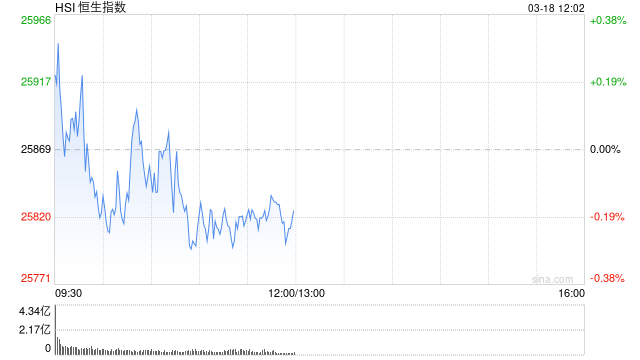
Market Overview - The Hong Kong stock market indices collectively declined, with the Hang Seng Index falling by 0.17% to 25,824.70 points, the Hang Seng Tech Index down by 0.81%, and the National Enterprises Index decreasing by 0.61% [1][9]. Sector Performance - The technology sector saw mixed results, with Bilibili rising by 4% while Kuaishou and Xiaomi both dropped over 1% [1][9]. - The semiconductor sector performed well, highlighted by a more than 10% increase in Zhaoyi Innovation [1][9]. - The automotive sector experienced a pullback, with Li Auto declining over 6% [1][5][12]. - Oil stocks fell, with CNOOC down more than 3% [1][8][12]. Semiconductor Insights - UBS noted that the current storage cycle is influenced by HBM taking up DRAM capacity and AI driving up storage value weight. Traditional price acceleration methods for predicting market peaks have low accuracy, with operating profit being a more effective leading indicator. Historically, stock prices peak in 90% of cases in sync with or ahead of profit peaks. UBS expects the current profit peak to occur in Q3 2027, suggesting a potential continuation of the semiconductor stock rally until Q2 2027 [2][10]. Automotive Sector Challenges - Automotive companies, including NIO, Li Auto, and Xiaomi, have warned about cost challenges due to rising chip prices. Chery's high-end brand announced a price increase for its ET5 model by 5,000 yuan, and there are reports of upcoming price adjustments for the Zeekr 007GT model, with increases expected between 5,000 to 8,000 yuan [5][11]. Oil Market Dynamics - Morgan Stanley warned that the current $55 price differential is due to regional inventory surplus and policy interventions, which do not reflect the true global supply tightness. If the Strait of Hormuz remains blocked, Brent and WTI prices are expected to realign upwards towards Middle Eastern spot prices [8][12].



超2700只个股下跌
第一财经· 2026-03-18 03:55
Market Overview - As of the midday session, the Shanghai Composite Index fell by 0.4%, while the Shenzhen Component Index rose by 0.05%. The ChiNext Index increased by 0.89% [3][4]. - The total trading volume in the Shanghai and Shenzhen markets reached 1.24 trillion, a decrease of 128.2 billion compared to the previous trading day, with over 2,700 stocks declining [5]. Sector Performance - The oil and gas, chemical, agriculture, and coal sectors experienced significant declines, while sectors such as semiconductor, AI applications, and computing power leasing showed activity [4][6]. - The WTI crude oil futures price dropped by 2%, reaching $93.62 per barrel [7]. Stock Movements - Notable stocks included Nvidia-related companies, which saw fluctuations, with some stocks like Zhongdian Port hitting the daily limit [7]. - The computing power leasing sector was active, with stocks like Jinkai New Energy and Aori Technology reaching their daily limit [8]. Index Performance - The ChiNext Index was reported at 3,309.14, with a rise of 0.89% [4]. - The Shanghai Composite Index was at 4,025.65, down by 0.60%, and the Shenzhen Component Index was at 13,951.96, down by 0.63% [7][11].

CPO、存储芯片概念股走强
财联社· 2026-03-18 03:52
Market Overview - The three major indices showed mixed performance, with the Shanghai Composite Index experiencing a pullback while the ChiNext Index rose over 0.8% after briefly turning negative [1] - Market volume continued to shrink, with a half-day trading volume of 1.24 trillion yuan, a decrease of 128.2 billion yuan compared to the previous trading day [1] - Over 2,700 stocks in the market declined [1] Sector Performance - The computing power hardware sector saw a strong performance across the board, with the CPO concept rebounding. Notably, Ruiskanda achieved four consecutive trading limits, and Kewan Technology hit the daily limit [3] - The liquid cooling server concept experienced a volatile rise, with Dayuan Pump Industry and Jialitu both reaching the daily limit [3] - The storage chip sector also performed well, with Baiwei Storage reaching a historical high and Langke Technology rising over 10% [3] - The synergy between computing and electricity concepts was active, with Shaoneng Co. and Guangdong Electric Power A both hitting the daily limit [3] Declining Sectors - Oil and gas stocks collectively adjusted, with companies like Intercontinental Oil and Gas, Keli Co., and Shandong Molong experiencing significant declines [4] Closing Summary - At the close, the Shanghai Composite Index fell by 0.4%, the Shenzhen Component Index rose by 0.05%, and the ChiNext Index increased by 0.89% [5]

【招商电子】英伟达GTC 2026跟踪报告:25-27年DC收入超1万亿美元,Kyber将使用铜光等多种互连形式
招商电子· 2026-03-18 03:48
Core Insights - The article discusses the key announcements made by NVIDIA during the GTC 2026 conference, focusing on advancements in AI technology, data center revenue projections, and the introduction of new products and platforms that enhance computational capabilities and AI applications. Group 1: AI Technology Advancements - cuDF and cuVS technologies are set to handle structured and unstructured data, with a significant increase in computational demand, projected to grow by 1 million times [2][3] - DLSS 5 merges 3D graphics with AI, enhancing the generation of structured data and achieving remarkable results in visual fidelity [2][3] - The introduction of the Rubin platform, which includes multiple chips and a supercomputer, is expected to increase computational power by 40 million times over the next decade [3] Group 2: Data Center Revenue Projections - NVIDIA anticipates data center orders to reach $1 trillion by 2027, up from the previously mentioned $500 billion [3][61][62] - The company derives 60% of its revenue from the top five cloud service providers, with the remaining 40% from regional and sovereign clouds [3] Group 3: New Product Launches - The Rubin+LPX system has entered mass production, featuring advanced cooling and design innovations [2][3] - The Groq LPU, now in production, is designed to enhance token processing capabilities significantly [3][5] - The introduction of the OpenClaw platform aims to revolutionize personal agent services, positioning every IT and SaaS company as an AI-as-a-Service provider [4][6] Group 4: Industry Collaborations - NVIDIA has formed partnerships with major companies like IBM and Dell to accelerate data processing for AI applications [22][24] - Collaborations with cloud service providers such as Google Cloud and AWS are enhancing the capabilities of platforms like BigQuery and SageMaker [25][29][32] Group 5: Market Trends and Future Outlook - The AI industry is experiencing explosive growth, with venture capital investments reaching $150 billion, indicating a strong demand for computational resources [52] - The shift towards generative AI is transforming traditional computing paradigms, with NVIDIA positioned to lead this change [54][55] - The company emphasizes the importance of vertical integration in AI applications across various industries, including automotive, healthcare, and finance [41][46][47]

苏姿丰和她的“去英伟达”战争
创业邦· 2026-03-18 03:40
Core Viewpoint - AMD has experienced significant growth under CEO Lisa Su, with its market value increasing from less than $3 billion in 2014 to over $315 billion today, marking a growth of more than 100 times [5] - The competition in the AI chip market has evolved into a multi-dimensional battle involving performance, cost optimization, and sustainable energy reliance, with key players like TSMC and Samsung playing crucial roles in supply chain dynamics [5] Group 1: AMD's Strategic Moves - AMD's shift towards AI began in 2018 with the launch of the Instinct series data center GPUs, marking its entry into AI workloads [9] - Lisa Su has emphasized the accelerating demand for AI, predicting a ten-year AI supercycle, and highlighted the importance of inference capabilities with the introduction of the MI300X series [9][11] - The MI350 series, announced in mid-2025, boasts a 35 times performance improvement over its predecessor, indicating AMD's commitment to advancing AI technology [11] Group 2: Partnerships and Collaborations - AMD has signed a 6-gigawatt GPU supply agreement with OpenAI, which includes warrants for AMD stock, indicating a strategic partnership that aligns both companies' interests [19] - A similar agreement was established with Meta, further solidifying AMD's position in the AI infrastructure market [19] - These partnerships are seen as transformative for AMD, accelerating procurement and ecosystem development [20] Group 3: Supply Chain and Production Capacity - AMD has secured 8% of TSMC's advanced packaging capacity, which is critical for its production of AI chips [27] - The company anticipates producing 900,000 MI400 chips in 2026, necessitating a stable supply of HBM memory, which is currently a challenge due to competition with Nvidia [27][28] - Lisa Su's upcoming visit to South Korea aims to secure memory supply agreements with key partners like Samsung, highlighting the importance of supply chain management in AMD's strategy [28][29] Group 4: Financial Performance and Future Outlook - AMD reported record revenue, net profit, and free cash flow in 2025, with data center revenue growing 39% year-over-year to $5.4 billion [30] - The company aims for a compound annual growth rate of over 35% in the next three to five years, driven by the expansion of its data center AI business [30] - AMD's strategy focuses on deepening ties with major clients, investing in future technologies, and building a robust supply chain ecosystem to reduce reliance on Nvidia [30]


信达国际控股港股晨报-20260318
Xin Da Guo Ji Kong Gu· 2026-03-18 03:30
Market Overview - The Hang Seng Index faces short-term resistance at 26,500 points due to ongoing geopolitical uncertainties and potential fluctuations in international oil prices, with capital likely to flow out of Asian markets [2] - The economic growth target for mainland China has been slightly adjusted to a range of 4.5% to 5% for this year, aligning with expectations, while the market anticipates limited stimulus measures in the short term [2] - The Hang Seng Index has formed a head-and-shoulders pattern since January, recently testing support at 25,000 points, with a potential rebound resistance at the 50-day moving average around 26,500 points [2] Company News - Alibaba (9988) launched an enterprise-level AI agent platform called "Wukong" [10] - Tencent Music (1698) reported a 25% increase in adjusted profit year-on-year, but this fell short of expectations, with a decline in active users [10] - Reading Group (0772) saw a 25% drop in adjusted profit year-on-year [10] - WanGuo Data (9698) turned a profit of 950 million RMB last year [10] - Kwan Tai Group (0148) reduced its stake in Kwan Tai Laminated Board by 8.7%, cashing out over 2.7 billion RMB [10] Macro Focus - The China Securities Regulatory Commission indicated that the dismantling of red-chip structures is a normal regulatory requirement, aiming to prevent capital outflow [8] - The National Development and Reform Commission is reportedly promoting a new batch of foreign investment projects with a total investment of 13.4 billion USD, primarily in manufacturing sectors [8] - The Chinese government is focusing on enhancing key core technology breakthroughs and developing emerging pillar industries [8] Industry Insights - AI stocks are experiencing rapid growth due to intensive upgrades in AI models, driving significant growth in the semiconductor industry [7] - The aluminum sector is facing supply disruptions due to geopolitical conflicts, leading to fluctuations in aluminum prices [7]
东海证券晨会纪要-20260318
Donghai Securities· 2026-03-18 03:23
Core Insights - The report highlights the significant impact of OpenClaw on the AI Agent trend, which is expected to drive demand for reasoning tokens and subsequently boost computing power in the AI industry. This trend is anticipated to lead to a 26.3% year-on-year growth in global wafer foundry output value in 2025, reaching a historical high of $169.5 billion [5][7][10]. Group 1: Electronic Industry Insights - OpenClaw has catalyzed a surge in AI Agent applications, with major domestic cloud service providers launching related products to capture market share. This shift is redefining human-computer interaction and necessitating upgrades in security systems [6][5]. - The global wafer foundry market is projected to grow significantly due to AI demand, with the top ten foundries expected to see a 2.6% quarter-on-quarter increase in Q4 2025, reaching approximately $46.3 billion. The overall output value for 2025 is forecasted to be $169.5 billion, driven by high demand for AI server GPUs and SoCs for new smartphones [7][10]. - The electronic sector underperformed the broader market, with the semiconductor sub-sector declining by 2.6% and the overall electronic index down by 1.23% [8][10]. Group 2: Company-Specific Insights - Shantui Co., Ltd. (000680) - Shantui Co., Ltd. reported a revenue of 14.62 billion yuan for 2025, a 2.82% increase year-on-year, with overseas revenue reaching 8.741 billion yuan, up 17.94% [12][14]. - The company achieved a net profit of 1.211 billion yuan, reflecting a 9.86% increase compared to the previous year. The 2026 revenue target is set at 16.1 billion yuan, with overseas revenue projected at 10.5 billion yuan [12][15]. - Shantui's strong performance in the construction machinery sector is attributed to robust sales, with main product sales reaching 10.95 billion yuan, a 12.15% increase, and a sales volume of 23,741 units, up 17.86% [13][14]. Group 3: Investment Recommendations - The report suggests focusing on structural opportunities in the semiconductor and AI sectors, particularly companies benefiting from strong domestic and international demand, such as Lexin Technology and others in the AIOT field [10]. - For AI innovation-driven sectors, attention is drawn to companies involved in computing chips and optical devices, as well as those in the PCB sector and storage solutions [10]. - Shantui is positioned as a global leader in bulldozer manufacturing, with a strong emphasis on globalization, electrification, and intelligence in its strategic initiatives [15].

华泰证券今日早参-20260318
HTSC· 2026-03-18 03:18
Macro Insights - The Federal Reserve is expected to maintain interest rates during the March meeting, with a downward adjustment in growth and upward adjustment in inflation forecasts, while keeping the rate cut guidance unchanged [2][3] - The geopolitical situation in the Middle East has led to rising oil prices, but it is not anticipated to significantly alter the Fed's guidance [2] Policy Insights - The recent "Two Sessions" in China have focused on modernizing the industrial system, technological innovation, and expanding domestic demand, with no explicit GDP growth target set in the 14th Five-Year Plan [2] - The State Council has outlined key tasks for 2026, emphasizing the need to respond better to external shocks and challenges [2] Technology Sector - At the GTC 2026 conference, NVIDIA's CEO announced the release of Groq 3 LPU and highlighted the unexpected demand for OpenClaw, which is expected to boost demand for devices like Mac Mini and x86 laptops [4] - The data center revenue forecast for 2025-2027 is projected to exceed $1 trillion, enhancing confidence in the growth prospects for companies like TSMC and Hon Hai [4] Consumer Sector - In January-February, China's retail sales increased by 2.8% year-on-year to 8.6 trillion yuan, driven by the long Spring Festival holiday and consumption promotion policies [5] - The government has introduced special bonds to support the replacement of consumer goods, indicating a focus on quality improvement and category upgrades [5] Transportation Sector - In January-February, domestic airlines experienced a rise in both volume and price, with passenger load factors increasing to 85.3% [6] - The industry is expected to see improved profitability as supply-demand fundamentals remain favorable, despite short-term oil price fluctuations [6] Media and Gaming Sector - Apple has reduced the commission rate for in-app purchases from 30% to 25%, which is expected to enhance profit margins for game developers [7] - This change is part of a broader trend towards lowering channel fees, benefiting the gaming industry's sustainable growth [7] Company-Specific Insights - Midea Group has been rated "Buy" with a target price of 109.42 HKD, focusing on its transformation into a technology-driven growth company [11] - Datang Power has also been rated "Buy," with a target price of 5.06 CNY, benefiting from its diversified energy operations [12] - The performance of China Light and Power is stable, with a projected dividend yield of 4.7% and a focus on capital expenditure to enhance profitability [13] - The performance of Yueda Group is under pressure, but its core IP business remains resilient, maintaining a "Buy" rating [14]




美国滞胀风险正在加强:环球市场动态2026年3月18日
citic securities· 2026-03-18 02:38
Market Overview - US inflation risks are increasing due to multiple pressures including lower base effects, oil price stabilization, potential tariff disruptions, and stabilized housing prices[5] - The Iranian conflict has exacerbated inflation risks in the US, with oil prices rebounding approximately 3% following attacks on oil tankers in the Strait of Hormuz[4][26] US Stock Market - US stock indices showed modest gains, with the Dow Jones up 0.1% to 46,993.3, S&P 500 up 0.2% to 6,716.1, and Nasdaq up 0.5% to 22,479.5[7][8] - The energy sector led gains, driven by the Iranian situation, with ExxonMobil rising 1.0% to reach a historical high[8] Asian Market Performance - Asian markets generally rose, with Thailand's index up 2.1%, followed by South Korea's KOSPI up 1.6% and Taiwan's index up 1.5%[17] - However, the Shanghai Composite Index fell 0.7%, reflecting weakness in technology stocks[14] Currency and Commodity Trends - The US dollar index decreased by 0.1% to 99.58, while the Australian dollar rose 0.5% to 0.711 following a 25 basis point rate hike by the Reserve Bank of Australia[24][26] - Gold prices remained stable, with a slight increase of 0.12% to $5,008.2 per ounce, as markets await the Federal Reserve's interest rate decision[26] Fixed Income Market - US Treasury yields showed mixed results, with the 10-year yield down 1.8 basis points to 4.20% and the 30-year yield down 2.6 basis points to 4.84%[29] - Demand for the 20-year Treasury auction was strong, with a bid-to-cover ratio of 2.76, indicating robust investor interest[29] Key Corporate Developments - Atour (ATAT US) is expected to see a slowdown in retail growth but has strong potential in its hotel segment, with a target price of $44[7] - Shanghai Bank (601229 CH) is noted for its strong dividend value and potential price catalysts from convertible bonds, with a target price of 11.7 yuan[15]
英伟达GTC2026分析总结
2026-03-18 02:31
Key Points Summary of NVIDIA GTC 2026 Analysis Industry and Company Overview - The conference focuses on NVIDIA's advancements in AI infrastructure and GPU technology, particularly the Vera Rubin platform and its implications for the AI industry [1][2]. Core Insights and Arguments - **Vera Rubin Platform**: Scheduled for mass production in H2 2026, featuring a single card performance exceeding 50 PFLOPS and HBM4 bandwidth of 1.2 TB, equipped with full liquid cooling [1]. - **LPU Chip**: Expected to ship in Q3 2026, designed for low-latency inference tasks with a first token delay of less than 0.1 seconds, supporting real-time applications [1][3]. - **Market Demand**: Global demand for GPUs and computing devices is projected to exceed $1 trillion by 2027, significantly up from the previous estimate of $500 billion [1][6]. - **AI Factory Concept**: The AI industry is transitioning from training to inference, with NVIDIA's AI factory concept dividing the industry into architecture, chips, systems, software models, and applications [2]. Product Releases and Technical Specifications - **Chip Releases**: Key products announced include: - **Vera Rubin Platform**: Mass production in 2026, with samples delivered to major clients like Adobe and Microsoft [2]. - **Feiman Architecture Chip**: Expected in 2028, utilizing 1.6 nm technology and designed for physical AI applications [2]. - **LPU**: Focused on real-time applications, featuring 230 MB SRAM and 80 TB bandwidth [3]. Innovative Workflows and Applications - **Dynamic Software Solution**: The LPU chip implements a new workflow by splitting the inference process into prefill and decode stages, enhancing efficiency in real-time applications [4]. - **Integration with Vera Rubin**: LPU can be deployed alongside Vera Rubin GPUs in a 75:25 ratio to balance high-throughput and low-latency tasks [4]. Future Product Roadmap and Technological Evolution - **Upcoming Products**: The roadmap indicates that the Rubin Ultra cabinet will be released in 2027, featuring a new design to improve density and reduce latency [5]. - **CPO and Liquid Cooling**: The introduction of CPO technology and full liquid cooling in new cabinets is expected to drive significant demand in the coming years [6]. Investment Implications and Industry Outlook - **AI Infrastructure Demand**: The demand for AI infrastructure is expected to grow substantially, with implications for related industries such as optical communication and liquid cooling [6]. - **Liquid Cooling Market**: The penetration rate of liquid cooling in new platforms is projected to reach 100%, indicating strong growth potential in this sector [6][7]. - **Valuation Opportunities**: Companies in the optical communication sector are seen as having attractive valuations, with significant upside potential as demand increases [6]. Additional Important Insights - **ASIC Liquid Cooling Supply Chain**: Progress in the supply chain for ASIC liquid cooling has been noted, with domestic manufacturers securing orders from major clients like Google [1][6]. - **Performance Enhancements**: The efficiency of AI factories has improved dramatically, with token generation capabilities increasing from 2 million to 700 million per second over two years [6].