
可再生能源

Search documents
新闻联播︱“十四五”高质量发展答卷 逐绿前行 我国构建起全球最大可再生能源体系
国家能源局· 2025-10-20 23:08
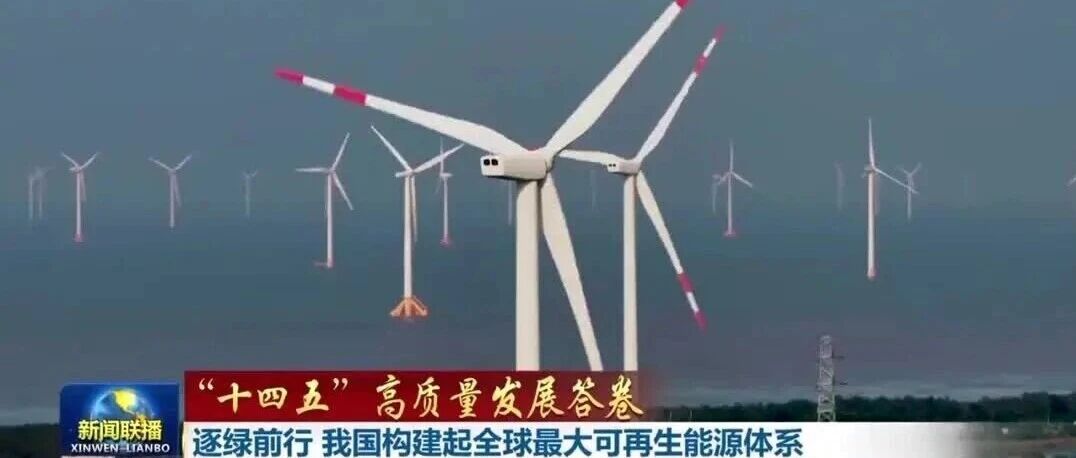
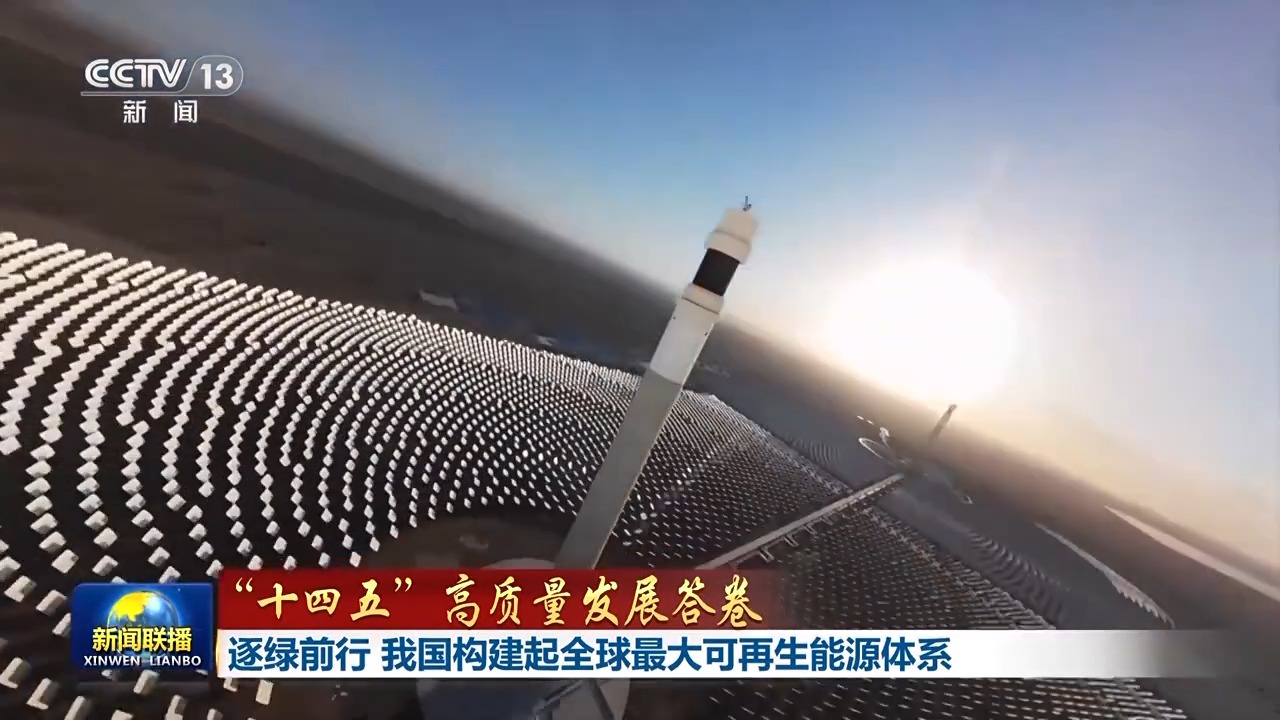
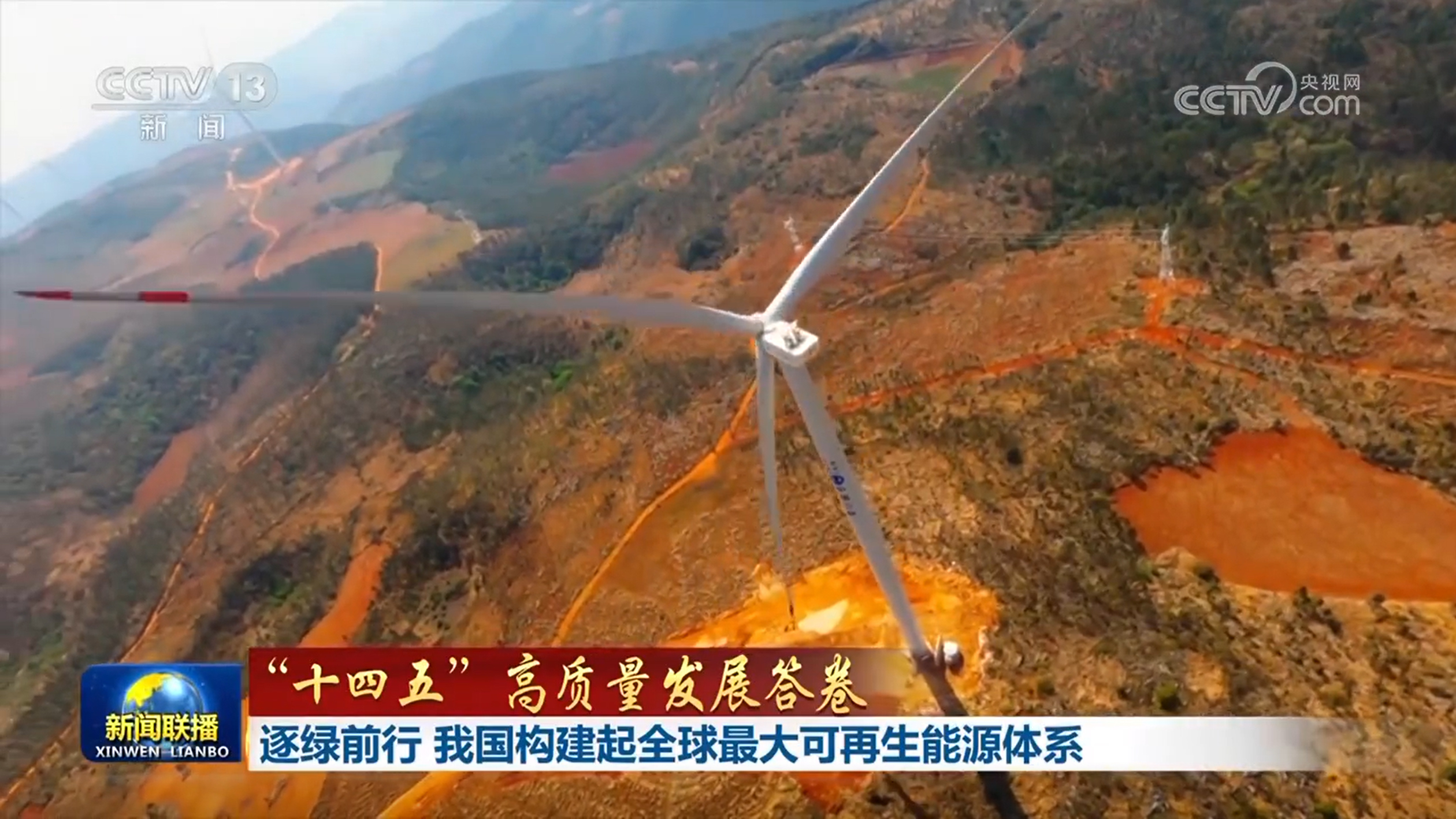
Core Viewpoint - China is undergoing a significant transformation in its energy production and consumption patterns, focusing on green energy development and achieving substantial progress in renewable energy generation since the "14th Five-Year Plan" [2][5]. Group 1: Renewable Energy Development - The transformation of barren deserts and wastelands into vast power generation fields illustrates China's commitment to green energy [2]. - The annual electricity generation from solar power in a specific area is equivalent to replacing 560,000 tons of coal [3]. - China generates over 10 trillion kilowatt-hours of electricity annually, accounting for one-third of global electricity production, with one-third of this coming from renewable sources [4]. Group 2: Infrastructure and Capacity Expansion - The construction of six large hydropower stations along the Yangtze River forms the world's largest clean energy corridor [5]. - The "14th Five-Year Plan" includes nine major clean energy bases, with seven located in western regions, highlighting the geographical focus of renewable energy development [5]. - The total area of newly added solar panels over five years could cover 530,000 football fields, and the length of newly added wind turbine blades could stretch from the easternmost to the westernmost points of China and back [5]. Group 3: Energy Transmission and Storage - The establishment of 19 ultra-high voltage transmission lines over five years has created a super network for electricity delivery, increasing the cross-regional transmission of clean energy by 70% [5]. - Renewable energy from the west now supports one-fifth of the electricity demand in the eastern and central regions [5]. - New energy storage technologies, such as gravity storage and compressed air, have been introduced in the "Five-Year Plan," playing a crucial role in managing peak electricity demand [5]. Group 4: Achievements and Goals - China has built the world's largest and most complete renewable energy industry chain, achieving the target of 20% non-fossil energy consumption as set in the "14th Five-Year Plan" [5].

“中国绿色创新既造福本国,也惠及世界”(国际人士看中国“十四五”成就)
Ren Min Ri Bao· 2025-10-20 22:01
"十四五"时期,中国生态环境持续改善,美丽中国建设迈出重大步伐,经济社会发展全面绿色转型取得 显著成效。接受本报记者采访的国际人士认为,中国经济社会发展已进入加快绿色化、低碳化的高质量 发展阶段,积极培育和壮大绿色生产力,为全球生态治理和可持续发展贡献了中国方案、中国力量,也 为共建地球生命共同体注入不竭动力。 "展现出'说到做到'的现代化治理能力" 2024年,中国地级及以上城市细颗粒物(PM2.5)浓度比2020年下降16.3%,空气质量优良天数比例比 2020年上升2.4个百分点;地表水优良水质断面比例首次超过90%;全国森林覆盖率比2020年提高约2个 百分点,成为增绿最多最快的国家。人民群众生态环境满意度连续4年超过90%。 10年来,中国推动全球风电和光伏发电成本分别下降超过60%和80%,"十四五"时期出口风电和光伏产 品累计为其他国家减少碳排放约41亿吨。"中国向其他国家提供相关服务和支持,显著提升了清洁能源 技术的可及性、可负担性。"国际能源署署长法提赫·比罗尔表示。 "塞罕坝林场几代人艰苦奋斗,将荒原变成百万亩林海;浙江'千村示范、万村整治'工程造就万千美丽 乡村、造福万千农民群众。中国正 ...
展望“十五五”|专访财政部原副部长朱光耀:未来几年中国经济增速有望保持4.5%~5%,可再生能源、人工智能等领域将成重要推动力
Mei Ri Jing Ji Xin Wen· 2025-10-20 13:16
每经记者|张蕊 每经编辑|陈星 "今年是'十四五'规划的收官之年,我坚信中国今年将实现5%左右的GDP增长目标。" 近日,财政部原副部长朱光耀在接受《每日经济新闻》记者采访时作出如上表述。他表示,"十四五"期间,中国经济的年均增长率约为5.4%。在这个基础 上,今后几年若能保持4.5%至5%的经济增长速度,就能为2035年中国基本实现社会主义现代化远景目标奠定坚实基础。 10月20日至23日召开中国共产党第二十届中央委员会第四次全体会议,研究关于制定国民经济和社会发展第十五个五年规划的建议。 对下一阶段我国的经济发展有何展望?今后可能会在哪些领域加大政策支持与资源投入?围绕这些话题,近日,朱光耀接受了《每日经济新闻》(以下简 称NBD)记者的专访。 朱光耀,长期从事国际财经外交工作,曾多次参与中美经济对话机制建立以来对话的磋商和筹备工作。 未来几年有望保持4.5%至5%的经济增速 NBD:您提到,坚信今年能够实现5%左右的GDP增长目标。实现这一目标有哪些支撑?今年是"十四五"规划收官之年,您对接下来我国的经济发展有何 展望? 朱光耀:之所以有信心,是因为前三季度,我国GDP同比增长5.2%。全年实现5%的经 ...
“十四五”高质量发展答卷丨逐绿前行 我国构建起全球最大可再生能源体系
Yang Shi Xin Wen· 2025-10-20 12:55
Core Insights - China is undergoing a significant transformation in its energy production and consumption patterns, focusing on green energy development since the "14th Five-Year Plan" [1][10] - The country has established the world's largest and most complete new energy industrial chain, achieving the target of 20% non-fossil energy consumption ahead of schedule [10] Group 1: Renewable Energy Production - China generates over 10 trillion kilowatt-hours of electricity annually, accounting for one-third of global production [5] - The energy produced from renewable sources now constitutes one-third of the total electricity consumption in the country [5] - The "14th Five-Year Plan" has laid out nine major clean energy bases, with seven located in the western regions of China [7] Group 2: Infrastructure Development - The construction of 19 ultra-high voltage transmission lines has created a super network for electricity delivery, increasing the cross-regional transmission of clean energy by 70% [8] - Renewable energy from the western regions now supports one-fifth of the electricity demand in the eastern and central regions [8] Group 3: Technological Advancements - New energy storage technologies, including gravity storage and compressed air, have been introduced in the "Five-Year Plan" and played a crucial role during peak summer demand [8] - The deployment of large-scale solar and wind energy systems has transformed previously barren lands into vast renewable energy fields [7][4]
【“十四五”高质量发展答卷】逐绿前行 我国构建起全球最大可再生能源体系
Yang Shi Wang· 2025-10-20 12:29
Group 1 - The article highlights China's significant progress in green energy transformation since the "14th Five-Year Plan," showcasing the vast development of renewable energy sources across the country [1][5] - China has achieved an annual electricity generation exceeding 10 trillion kilowatt-hours, accounting for one-third of global production, with one-third of the electricity consumed coming from renewable sources [5][10] - The construction of large-scale clean energy corridors, particularly in the western regions, has transformed previously barren lands into extensive solar and wind energy bases [6][10] Group 2 - The "14th Five-Year Plan" includes the development of 19 ultra-high voltage transmission lines, enhancing the ability to transport clean energy across regions, with a 70% increase in clean energy transmission from west to east [8] - New energy storage technologies, such as gravity storage and compressed air, have been integrated into the energy grid, playing a crucial role in managing peak electricity demand [8] - The completion of the target for non-fossil energy consumption, which is set at 20% for the "14th Five-Year Plan," indicates the establishment of the world's largest and most comprehensive renewable energy industry chain in China [10]
第五批CCER方法学出炉;可再生能源消费出新规|碳中和周报
2 1 Shi Ji Jing Ji Bao Dao· 2025-10-20 12:18
Group 1: CCER Methodology and Renewable Energy Regulations - The Ministry of Ecology and Environment released six new methodologies for CCER, bringing the total to 19, focusing on diverse areas such as building energy efficiency and agricultural waste treatment [2] - The new regulations on renewable energy consumption expand the assessment from electricity to non-electric sectors like heating and hydrogen production, creating clear market demand for related industries [3] Group 2: Renewable Energy Development and Carbon Market - China's renewable energy installed capacity is projected to account for 86% of the country's new power generation capacity in 2024, indicating a significant shift towards clean energy [4][5] - The national carbon market has achieved a milestone with over 1 trillion yuan in cleared transactions and a trading volume of 732 million tons, reflecting its effectiveness in promoting emissions reduction [8] Group 3: International Climate Cooperation and Corporate Sustainability - Despite the U.S. withdrawal from the Paris Agreement, major economies like China and the EU continue to uphold their emission reduction commitments, indicating a resilient international climate governance framework [6] - The launch of the "2025 Corporate Sustainable Brand Xi'an Initiative" emphasizes the importance of integrating sustainability into brand strategy, highlighting the growing significance of ESG standards in corporate competitiveness [10][11]
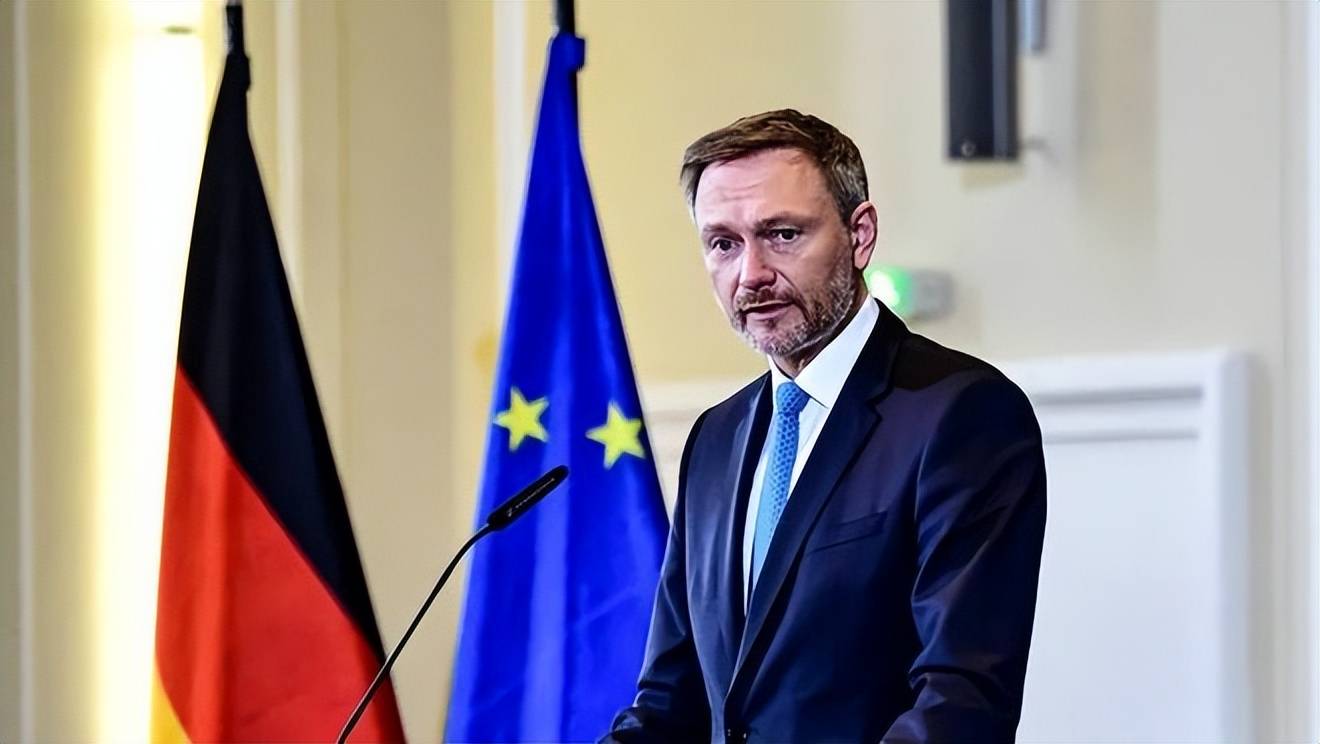
欧洲陷入稀土困局!德国财长急眼,中方举措令G7集体焦虑
Sou Hu Cai Jing· 2025-10-20 09:14
Core Insights - The article highlights the strategic dilemma Europe faces regarding its reliance on China's rare earth supply, which is critical for various industries, including defense and renewable energy [1][2][4]. Group 1: Importance of Rare Earths - Rare earths are essential materials for modern industries, impacting sectors from electric vehicles to military equipment, and Europe's industrial competitiveness heavily relies on them [2]. - China dominates the global rare earth supply chain, making any policy changes from China significantly impactful [2]. Group 2: Europe's Dual Dependency - Europe is caught in a cycle of dependency, relying on U.S. technology in the digital economy while simultaneously depending on China for critical raw materials [4]. - The current geopolitical climate poses challenges for Europe's defense and green transition, as modern military equipment and electric vehicle industries depend on rare earths from China [4]. Group 3: Historical Context - The article draws parallels to the Cold War, where technology embargoes were pivotal, but notes that the current dynamics differ significantly due to China's strong position in rare earths [5][7]. Group 4: G7 Coordination Challenges - The G7 is attempting to coordinate a response to rare earth supply risks, but internal disagreements among member countries hinder collective action [8]. - European nations face unique challenges in establishing a unified strategy due to conflicting environmental standards, industrial policies, and national interests [8]. Group 5: China's Position - China asserts that its rare earth export controls are standard industry management practices aimed at sustainable development, emphasizing prior communication with stakeholders [11]. - Experts indicate that China's advantages in the rare earth supply chain are deeply entrenched and cannot be easily altered through political maneuvers [11]. Group 6: Future Path for Europe - Analysts suggest that enhancing autonomous innovation capabilities is crucial for Europe to overcome its current predicament, as there is a notable investment gap in high-tech sectors compared to the U.S. and China [12]. - European think tanks emphasize the need to balance security and development, warning that excessive focus on "de-risking" could lead to missed market opportunities [14]. - Europe stands at a strategic crossroads, needing to decide whether to continue balancing between the U.S. and China or to carve out its own development path, which will influence its future global standing [14].
《德黑兰时报》编译版:伊朗总统宣布启动新的太阳能电站建设计划
Shang Wu Bu Wang Zhan· 2025-10-20 06:43
Core Insights - Iran has launched a new solar power plant project with a total investment exceeding $150 million, aimed at enhancing the country's renewable energy capacity [1] - The new solar power plant will have a capacity of 250 megawatts, increasing Iran's total renewable energy capacity to 2,550 megawatts upon completion [1] - Funding for the project is sourced from private sector investments, the National Development Fund, and domestic bank financing [1]

远景发布“能源大模型” 张雷提出“物理人工智能”将重构能源系统
Zheng Quan Ri Bao Wang· 2025-10-20 06:15
Core Insights - The core argument presented by Zhang Lei, Chairman of Envision Technology Group, is that artificial intelligence (AI) is evolving from a mere tool to a主体, fundamentally transforming the energy sector into an "intelligent agent" ecosystem rather than just a collection of physical assets [1][2][4] Group 1: AI's Role in Energy Systems - AI is seen as a revolutionary force that can handle the increasing complexity and market uncertainties associated with high proportions of renewable energy in the grid [2][3] - The concept of "Physical AI" is introduced, which integrates AI with physical laws and knowledge graphs, enhancing its reliability in real-world applications [2][3] Group 2: Technological Advancements - Envision has made significant breakthroughs in large models, particularly with the "Tianji" meteorological model, which improves medium to long-term weather forecasting accuracy, crucial for the reliable operation of renewable energy [3] - The "Tianshu" energy model, capable of real-time control through advanced algorithms, is successfully applied to optimize energy trading and asset investment decisions [3] Group 3: Future Competitiveness - The future competitiveness of energy companies will shift from traditional metrics like installed capacity to the scale of "AI assets" [3][4] - The industry is urged to focus on the intelligence of their models and the scale of their AI capabilities, marking a significant transition from physical to intelligent assets [3]
塔斯尼姆通讯社编译版:伊总统指示伊工业园区均须安装光伏发电装置
Shang Wu Bu Wang Zhan· 2025-10-20 06:13
Core Insights - Iran's President Pezeshkian highlighted progress in renewable energy projects driven by the Ministry of Energy and the Ministry of Oil, which has partially resolved the country's energy issues [1] - The President instructed the Ministry of Industry, Mine and Trade to guide industrial units in developing solar power generation, mandating the installation of solar panels in all industrial parks across the country [1]