生猪养殖

Search documents
2700亿“猪茅”,要港股IPO了
Sou Hu Cai Jing· 2025-12-04 06:14
Core Viewpoint - The company, Muyuan Foods, is preparing for its second listing attempt on the Hong Kong Stock Exchange after its initial application expired, with a focus on expanding its global footprint and enhancing its integrated supply chain model [2][3][29]. Group 1: Company Background and Development - Muyuan Foods, founded by Qin Yinglin and Qian Ying, began its journey in the 1990s, focusing on addressing inefficiencies in traditional pig farming [5][6]. - The company transitioned from a small operation to a large-scale enterprise, officially registering as "Nanyang Muyuan Breeding Co., Ltd." in 2000 and later becoming "Muyuan Foods Co., Ltd." in 2010 [6]. - By 2021, Muyuan had established itself as the world's largest pig farming company, achieving a global market share of 5.6% by 2024 [7][8]. Group 2: Financial Performance - Muyuan's revenue for 2022, 2023, and 2024 was reported at 124.83 billion, 110.86 billion, and 137.95 billion respectively, with a significant rebound expected in 2024 due to improved pig prices and operational efficiency [10]. - The company experienced a net profit of 14.93 billion in 2022, a net loss of 4.17 billion in 2023, and a recovery to 18.93 billion in 2024, indicating a cyclical recovery [10][11]. - As of mid-2025, Muyuan reported a revenue of 76.46 billion and a net profit of 10.79 billion, with a gross margin increase from 7.7% to 19.0% [10][26]. Group 3: Business Model and Strategy - Muyuan employs a "vertical integration" model, controlling breeding, feed production, farming, and slaughtering, which allows for better risk management and efficiency [7][28]. - The company aims to expand its international presence, particularly in emerging markets like Vietnam, while leveraging its established operational model [18][29]. - Muyuan's slaughtering and meat processing segment has grown significantly, contributing to its overall revenue and providing a buffer against market volatility [21][22]. Group 4: Market Trends and Opportunities - Global meat consumption is on the rise, driven by population growth and increasing income levels in developing countries, presenting opportunities for producers like Muyuan [17]. - The company plans to utilize funds from its Hong Kong listing to enhance its overseas market presence and invest in technology and research [19][29]. - Muyuan's strategy includes replicating its successful domestic model in international markets, aiming to position itself as a leader in global agricultural standards [32].


抓住低位发展机遇!布局畜牧板块!畜牧ETF(159867)盘中净申购3800万份
Xin Lang Cai Jing· 2025-12-04 06:06
Group 1: Swine Sector - The proportion of small-sized pigs being sold has increased, with a focus on winter disease prevention. The average price of pigs in China as of the end of November is 11.63 yuan/kg, with a loss of 111 yuan per head for self-breeding and self-raising operations. The demand side shows an increase in slaughtering activities in northern regions due to lower prices, while southern markets are driven mainly by the Sichuan-Chongqing area, with a 3.39% week-on-week increase in daily slaughtering volume [1] - The overall proportion of small-sized pigs (under 90kg) being sold is 4.83%, which is an increase of 0.34% from the previous week. The industry is expected to see a reduction in production capacity under the influence of sustained low prices and policy guidance [1] Group 2: Poultry Sector - In the white chicken segment, the price of broiler chickens has slightly increased, while uncertainties remain regarding the import of grandparent stock due to past outbreaks of avian influenza in the US and New Zealand. The total quantity of grandparent stock is expected to decline, along with changes in breed structure [2] - For yellow chickens, supply may contract, and prices are highly sensitive to marginal changes in demand. The price of yellow feathered chickens is expected to improve marginally as consumption in the second half of the year is higher than in the first half [2] - The structure of egg-laying hens shows a coexistence of domestic and imported stock, but the actual production of imported stock is significantly higher. Due to the impact of avian influenza, the domestic import quantity is expected to shrink to 41,200 birds in 2025, indicating a shift from a loose to a tight supply [2] Group 3: Feed and Animal Health - The aquaculture and feed sectors have experienced a significant exit of small and medium-sized enterprises over the past two years, with expectations for a recovery in the variety of aquaculture feeds in the coming years [2] - In animal health, traditional vaccine competition is intense, and the profitability of companies is affected by the scale of farming and cyclical fluctuations. Innovation in research and development is becoming increasingly important, with anticipation for breakthroughs in major products like non-epidemic vaccines. The pet health market is expected to expand due to aging pets and increased spending per pet, with domestic products like the three-in-one vaccine for cats being introduced [2] Group 4: Market Performance - As of December 4, 2025, the CSI Livestock Breeding Index shows mixed performance among its constituent stocks, with Haida Group leading with a 1.44% increase, while Luoniushan leads the decline [3] - The latest price for the Livestock ETF is 0.64 yuan [3] Group 5: Index Composition - The CSI Livestock Index composition shows that swine breeding accounts for 36.41%, poultry breeding for 12.45%, and feed-related industries for 36.83%. The animal health sector accounts for 12.38% [4] - The top ten weighted stocks in the CSI Livestock Index include Muyuan Foods, Wens Foodstuff, Haida Group, New Hope, and others, collectively accounting for 65.6% of the index [4]
猪价或跌到春节后?养殖户:每卖一头猪亏200元!这是行业周期性波动带来的短期压力,也是一场持续的经营挑战
Ge Long Hui· 2025-12-04 04:09
格隆汇12月4日|据中国商报,根据大宗商品分析机构卓创资讯分析师邹莹吉提供的数据,今年11月, 养殖端外购一头仔猪育肥的亏损高达308.65元,自繁自养一头生猪的亏损也达到191.72元。当前,每出 栏一头猪,对于养殖户来说,都意味着实实在在的亏损。 江西养殖散户李勇的经历颇具代表性:"养一头猪亏损近200元,这是行业周期性波动带来的短期压力, 也是一场持续的经营挑战。"在全国范围内,资金实力较弱的中小散户正在被迫退出市场。 需要注意的是,今年春节较晚,市场对"冬至前后的腌腊需求可能拉动猪价上涨"仍抱有期待。对于猪价 未来走势,邹莹吉判断,春节后,由于需求将进入"年内最低点"。 (责任编辑:宋政 HN002) 【免责声明】本文仅代表作者本人观点,与和讯网无关。和讯网站对文中陈述、观点判断保持中立,不对所包含内容 的准确性、可靠性或完整性提供任何明示或暗示的保证。请读者仅作参考,并请自行承担全部责任。邮箱: news_center@staff.hexun.com ...
建信期货生猪日报-20251204
Jian Xin Qi Huo· 2025-12-04 01:56
Report Summary 1. Report Information - Report Title: Pig Daily Report - Date: December 04, 2025 - Industry: Pig [1] 2. Investment Rating - Not provided in the report 3. Core Viewpoints - The spot market shows a situation of increasing supply and demand, but the enthusiasm of secondary fattening is weak and mainly in a wait - and - see state, so the price is mainly volatile. The supply of live pigs before the Spring Festival is expected to increase slightly. The 2601 contract still has demand elasticity, but the relatively concentrated secondary fattening and pressure on pigs in October, combined with continuous capacity release, may form double supply pressure before the Spring Festival, putting continued pressure on the 01 and 03 contracts. In the medium and long term, the trend is mainly weak and volatile, but since the price decline compared with the same period last year is already large, the frequency of bottom - range volatility may increase [9] 4. Summary by Directory 4.1 Market Review and Operation Suggestions - **Futures Market**: On the 3rd, the main 2603 contract of live pigs opened slightly lower, then rose and fell back, and closed down in the end. The highest was 11,280 yuan/ton, the lowest was 11,205 yuan/ton, and the closing price was 11,235 yuan/ton, down 0.18% from the previous day. The total open interest of the index decreased by 8,152 lots to 371,564 lots [8] - **Spot Market**: On the 3rd, the average price of ternary live pigs in the country was 11.28 yuan/kg, down 0.11 yuan/kg from the previous day [8] - **Supply Side**: In the long term, the slaughter of live pigs is expected to maintain a slight growth trend until the first half of next year. The secondary fattening and pressure on pigs were concentrated in October, and the utilization rate of secondary fattening pens is currently high, reaching the level of the same period last year, increasing the supply pressure before the Spring Festival. In the short term, the slaughter at the beginning of the month has slowed down [9] - **Demand Side**: The utilization rate of pens is at a high level, and secondary fattening is mainly in a wait - and - see state. There may still be a small amount of rolling replenishment demand in December. The continuous cooling of the weather has led to the start of curing and sausage - making in Sichuan, and the fresh sales in many northern and southern regions have also improved. The terminal consumer demand has continued to rise, and the increase in orders from slaughtering enterprises has significantly supported the slaughter volume. The slaughter rate and volume of slaughtering enterprises have increased slightly. On December 3rd, the slaughter volume of sample slaughtering enterprises was 176,700 heads, an increase of 500 heads from the previous day, 2,800 heads compared with the previous week, and 17,800 heads compared with the previous month [9] 4.2 Data Overview - **Profit**: As of the week ending November 21, the average profit per self - bred and self - raised pig was - 96.6 yuan/head, a weekly decrease of 25 yuan/head; the profit from purchasing piglets for fattening was - 273 yuan/head, a weekly increase of 2 yuan/head [19] - **Cost**: As of the week ending November 21, the cost of fattening from 110 kg to 140 kg was 14.47 yuan/kg, an increase of 0.04 yuan/kg from the previous week; the cost of fattening from 125 kg to 150 kg was 14.89 yuan/kg, an increase of 0.04 yuan/kg from the previous week [19] - **Average Slaughter Weight**: As of the week ending November 21, the average slaughter weight of live pigs was 128.81 kg, an increase of 0.33 kg from the previous week (a weekly increase of 0.26%), an increase of 0.91 kg from the previous month (a monthly increase of 0.71%), and an increase of 2.08 kg compared with the same period last year (an annual increase of 1.64%) [19]
又跌了!12月的猪市挺麻烦的!
Sou Hu Cai Jing· 2025-12-03 13:09
之前我们说几乎所有的压力与预期都给到了12月,但是真支撑不住啊。 从目前的表现来看,就是8个字:不尽人意,不及预期。 刚进12月的时候,抬了两天头,这让市场看到了点甜头,以为终于要涨了,但没涨两天,很快就跌势重现了。 下跌并不意外,因为整个11月可以说猪价都是阴跌的状态,只不过到12月接着跌罢了。 但是种种迹象表明,12月的猪市挺麻烦。 首先是供应压力板上钉钉。 第一个钉是前期能繁母猪带来的产能压力。 12月对应的就是今年2月份的产能情况,2月份是啥情况呢? 能繁母猪产能4066万头,环比1月涨幅为0.1%。而如果按各机构数据,实际产能比这个还要更多。 产能4066万头,对应到12月生猪的出栏量就低不了。 第二个钉则是年底的放量。 12月之所以被关注,也是因为12月往往是消费旺季,但很多人也忽略了12月同样也是出栏旺季。 一方面是11月阴跌,部分散户有压栏惜售的现象,但12月接着跌,还能不能扛住这就不好说了。 另一方面,集团猪厂们都是有年度目标的,所以在这最后一个月里往往会为了冲目标而放量。 而且11月规模猪场出栏本身就环比有下降,意味着这部分压力可能就会顺延到12月。 而且按往年规律来看,12月出栏都会超预 ...
【BOYAR监测】生猪市场每日简评【12.3】
Xin Lang Cai Jing· 2025-12-03 11:19
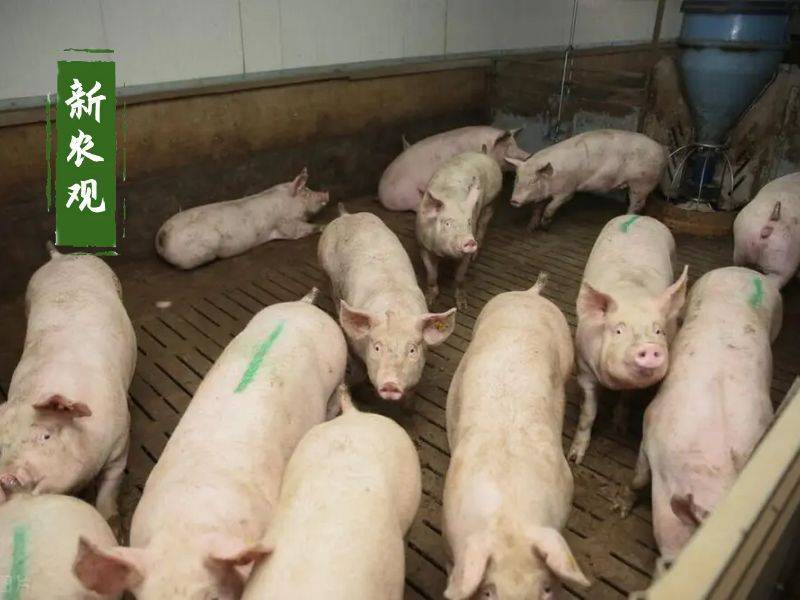
Group 1 - The average price of external three yuan live pigs in China on December 3, 2025, is 11.28 yuan/kg, a decrease of 0.11 yuan/kg from the previous day [1] - The average price of piglets is 19.24 yuan/kg, which has increased by 0.01 yuan/kg compared to the previous day [1] - The average price of white strip meat is 15.18 yuan/kg, down by 0.07 yuan/kg from the previous day [1] Group 2 - The overall market for pig prices is experiencing a weak adjustment, with a nationwide average decline of 0.11 yuan/kg, and some regions like Guizhou and Xinjiang have fallen below 11 yuan/kg [2] - Despite a slight recovery in terminal demand due to falling temperatures, the overall market remains under pressure due to a relaxed supply of live pigs [2] - The sentiment in the market is mixed, with expectations of a narrow fluctuation in pig prices in the short term, influenced by the rhythm of large-scale farm sales and the development of winter disease [3]
生猪:周期价值、成长并行 - 深耕价值沃野,布局周期新机
2025-12-03 02:12
Summary of Conference Call on Livestock Industry Industry Overview - The livestock industry, particularly the pork sector, is facing structural challenges with a projected supply gap for fresh meat in 2023-2024, making leading companies like YouRan Agriculture attractive for investment due to their market position and low valuations [1][2][4] - The swine sector is transitioning from cyclical growth to cyclical value, with a notable increase in piglet prices in Q1 2025 leading to a stock price rebound, followed by a market slowdown and a drop in pork prices below cost levels [1][6] Key Companies and Recommendations - **Pork Sector**: - **Mu Yuan Co., Ltd.**: Recommended for its value foundation, cyclical momentum, and growth potential [1][3][4] - **De Kang Agriculture**: Noted for its first-tier breeding level and third-tier valuation, considered a strategic recommendation [1][3] - **Wens Foodstuff Group**: Favored for its stability [1][3] - **Feed Sector**: - **Hai Da Group**: Achieved steady growth through dual domestic and international market drivers [1][3] - **Broiler Chicken Sector**: - **Li Hua Co., Ltd.**: Excelled in cost control [1][5] - **Sheng Nong Development**: Enhanced market competitiveness through its full industry chain advantages [1][5] Market Dynamics and Future Outlook - The pork industry is in a critical phase of capacity reduction, with policies and market forces enhancing expectations for a cyclical reversal. Leading companies like Mu Yuan maintain profitability and reduce debt while increasing dividends [4][6] - For 2026, the industry is expected to see: - Insufficient proactive capacity reduction but significant slowdown in capacity growth - Clear cost differentiation between large enterprises and small to medium-sized farms - Re-evaluation of valuations and investment value, with policies aimed at controlling production capacity becoming more stringent [6][7] Investment Strategy - The core strategy for the agricultural sector in 2026 focuses on selecting individual stocks for stable returns while waiting for broader market gains. The meat cattle sector is highlighted for its potential [2] - Specific investment recommendations include: - **Mu Yuan Co., Ltd.**: Identified as a top pick due to its excellent quality, significant market potential (valued over 300 billion), innovative technology, and strong sustainable profitability [7] - Other companies with value potential include Wens Foodstuff and De Kang Agriculture, with De Kang noted for its quality-price advantage during valuation recovery phases [7] Additional Insights - The overall livestock market is experiencing significant changes, with a nationwide reduction in production already underway and winter demand expected to support marginal demand increases [6] - The low valuations and high capital influx into the pork sector highlight its investment value [6]

宏观金融类:文字早评2025/12/03星期三-20251203
Wu Kuang Qi Huo· 2025-12-03 01:43
Report Industry Investment Ratings No relevant content provided. Core Views of the Report - In the stock index market, although the recent market rotation has accelerated and risk appetite has decreased, policies still support the capital market, and technology growth remains the main market trend. The medium - and long - term strategy for indices is to go long on dips [4]. - In the bond market, the manufacturing PMI in November showed an overall improvement in manufacturing sentiment, but the service sector was weak, and the end - of - year social financing growth rate may remain weak. The supply - demand pattern of the bond market in the fourth quarter may improve, and the market will generally maintain a volatile trend [6]. - In the precious metals market, silver is in an accelerated upward phase, and attention should be paid to the resistance level of 14,500 yuan/kg. It is recommended to take profit in time if the price weakens. It is risky to open new long positions or short at high levels. Gold is in a breakthrough pattern at the end of a triangular convergence, and it is recommended to go long on dips [8]. - In the non - ferrous metals market, copper, aluminum, lead, and other metals are expected to have relatively strong short - term trends, while zinc is expected to fluctuate widely, and nickel is expected to fluctuate in the short term [11][13][15][18]. - In the black building materials market, steel demand has entered the off - season, and the inventory pressure of hot - rolled coils remains. Iron ore is expected to operate within a volatile range. Glass and soda ash are expected to maintain a volatile trend, and it is recommended to be bearish on soda ash in the short term [30][32][34][35]. - In the energy and chemical market, the short - term view on oil prices is not overly bearish, and a range strategy of buying low and selling high is maintained. Methanol is expected to turn to a volatile adjustment after the bullish factors are realized. Urea is expected to build a bottom through fluctuations [52][53][55]. - In the agricultural products market, for pigs, it is recommended to short near - month contracts or conduct reverse spreads. For eggs, a short - term long and medium - term short strategy is recommended. For soybeans and soybean meal, they are expected to fluctuate, and for palm oil, a strategy of buying on dips is recommended [75][77][80][83]. Summaries by Relevant Catalogs Stock Index - **Market Information**: Zheng Shanjie proposed to increase the proportion of residents' income in national income distribution and the proportion of labor remuneration in primary distribution. Five departments encouraged local governments to provide convenience and discounts in computing power, algorithms, and data. Morgan Stanley raised its production forecasts for Google's TPU in 2027 and 2028 [2]. - **Strategy View**: The policy support for the capital market remains unchanged, and technology growth is the main market trend. The medium - and long - term strategy for indices is to go long on dips [4]. Treasury Bonds - **Market Information**: On Tuesday, the main contracts of TL, T, TF, and TS declined. In November 2025, the number of new A - share accounts increased, and Trump seemed to favor Hassett as the Fed chairman. The central bank conducted 1563 billion yuan of 7 - day reverse repurchase operations, with a net withdrawal of 1458 billion yuan [5]. - **Strategy View**: The manufacturing PMI in November showed an overall improvement, but the service sector was weak. The end - of - year social financing growth rate may remain weak. The supply - demand pattern of the bond market in the fourth quarter may improve, and the market will generally maintain a volatile trend [6]. Precious Metals - **Market Information**: Shanghai gold fell 0.85%, and Shanghai silver rose 1.10%. US economic data was weaker than expected, increasing the market's expectation of a Fed rate cut. Trump's hint that Hassett would be the Fed chairman affected the price of silver [7][8]. - **Strategy View**: Silver is in an accelerated upward phase, and attention should be paid to the resistance level of 14,500 yuan/kg. Gold is in a breakthrough pattern at the end of a triangular convergence, and it is recommended to go long on dips [8]. Non - Ferrous Metals Copper - **Market Information**: The offshore RMB was strong, and the domestic equity market declined. The LME copper 3M contract fell 0.78%, and the Shanghai copper main contract closed at 88,590 yuan/ton [10]. - **Strategy View**: Geopolitical factors still pose headwinds, but the market is more focused on the Fed's interest - rate meeting. The supply of copper raw materials is tight, and copper prices are expected to remain strong in the short term [11]. Aluminum - **Market Information**: Aluminum prices rose and then fell. The LME aluminum closed down 0.85%, and the Shanghai aluminum main contract closed at 21,840 yuan/ton [12]. - **Strategy View**: The inventory of domestic and LME aluminum ingots is in a downward trend, and the price center of aluminum is expected to rise further [13]. Zinc - **Market Information**: The Shanghai zinc index rose 0.69%, and the LME zinc 3S rose 24. The domestic zinc ingot social inventory decreased slightly, but the total inventory increased [14][15]. - **Strategy View**: The zinc industry's weak fundamentals do not match the strong macro - sentiment expectations. Zinc prices are expected to fluctuate widely in the medium term [15]. Lead - **Market Information**: The Shanghai lead index rose 0.75%, and the LME lead 3S rose 22.5. The domestic lead ingot inventory decreased marginally [16]. - **Strategy View**: The lead market has no major contradictions. In the Fed's rate - cut cycle, lead prices are expected to be strong in the short term [16]. Nickel - **Market Information**: Nickel prices rebounded slightly. The Shanghai nickel main contract rose 0.17%. The prices of nickel ore and nickel iron were stable [17]. - **Strategy View**: The pressure of nickel oversupply remains large, but nickel prices may fluctuate in the short term. It is recommended to wait and see [18]. Tin - **Market Information**: The Shanghai tin main contract rose 0.35%. The supply of tin concentrate has improved, but the conflict in Congo (Kinshasa) has affected transportation. The demand in traditional fields is weak, but there is long - term demand in emerging fields [19]. - **Strategy View**: Although the current demand in the tin market is weak, supply disturbances are the determining factor for short - term prices. Tin prices are likely to fluctuate strongly in the short term. It is recommended to wait and see [20]. Carbonate Lithium - **Market Information**: The MMLC carbonate lithium spot index fell 0.95%, and the LC2605 contract fell 0.39% [21]. - **Strategy View**: The short - term supply - demand contradiction is expected to ease marginally, but the medium - term demand expectation is highly divergent. It is recommended to wait and see or use options [21]. Alumina - **Market Information**: The alumina index fell 0.22%. The Shandong spot price fell 5 dollars/ton, and the import profit and loss was 22 yuan/ton [22]. - **Strategy View**: Overseas ore shipments are expected to recover, and the alumina smelting capacity is in an over - supply situation. It is recommended to wait and see in the short term [23][24]. Stainless Steel - **Market Information**: The stainless steel main contract rose 0.16%. The spot prices in Foshan and Wuxi were stable. The raw material prices were stable, and the inventory decreased [25]. - **Strategy View**: The supply is high, the demand is improving marginally, but the cost pressure is high. Stainless steel prices are expected to fluctuate widely in the short term [25]. Cast Aluminum Alloy - **Market Information**: The cast aluminum alloy price fluctuated. The AD2601 contract fell 0.14%. The domestic inventory decreased [26]. - **Strategy View**: The cost of cast aluminum alloy is relatively stable, and the supply is affected by policies. If the inventory continues to decrease, the price is expected to rise [27]. Black Building Materials Steel - **Market Information**: The rebar main contract fell 0.03%, and the hot - rolled coil main contract fell 0.06%. The export of steel to South Korea will be affected by anti - dumping duties [29][30]. - **Strategy View**: The demand for steel has entered the off - season, and the inventory pressure of hot - rolled coils remains. It is necessary to pay attention to the implementation of production cuts and important meetings [30]. Iron Ore - **Market Information**: The iron ore main contract fell 0.06%. The spot price of PB powder in Qingdao Port was 797 yuan/wet ton [31]. - **Strategy View**: The overseas iron ore shipments were stable, the demand was weak, and the inventory increased. Iron ore prices are expected to operate within a volatile range [32]. Glass and Soda Ash - **Market Information**: The glass main contract fell 0.19%, and the soda ash main contract rose 0.60%. The glass inventory decreased, and the soda ash inventory decreased [33][35]. - **Strategy View**: The glass market is in a bottom - exploring stage, and prices are expected to fluctuate widely. The soda ash price is expected to be stable in the short term, but it is recommended to be bearish before the demand improves [34][35]. Manganese Silicon and Ferrosilicon - **Market Information**: The manganese silicon main contract fell 0.03%, and the ferrosilicon main contract fell 0.33%. The black market was weak, and the iron alloy was affected [36]. - **Strategy View**: The market sentiment has improved, and it is recommended to pay attention to the turning point of market sentiment. The iron alloy is affected by the weak coke market, but there is no need to be overly pessimistic [39]. Industrial Silicon and Polysilicon - **Market Information**: The industrial silicon main contract fell 1.86%, and the polysilicon main contract fell 2.41%. The production of industrial silicon decreased, and the demand for polysilicon decreased [41][43]. - **Strategy View**: The industrial silicon market is in a weak supply - demand situation, and prices are easily affected by market sentiment. The polysilicon market has a weak supply - demand pattern, and it is recommended to short on rallies [42][44]. Energy and Chemicals Rubber - **Market Information**: Rubber prices fell, and the technical pattern was broken. The flood in Thailand receded, and the fundamentals of rubber were weak. The tire factory's operating rate was weak, and the inventory increased [46][48]. - **Strategy View**: It is recommended to wait and see or conduct short - term trading. A hedging strategy of buying RU2601 and selling RU2609 is recommended [50]. Crude Oil - **Market Information**: The INE main crude oil futures rose 0.09%, and the refined oil futures had different trends. The Chinese crude oil inventory increased, and the gasoline inventory decreased [51]. - **Strategy View**: Although the geopolitical premium has disappeared, it is not advisable to be overly bearish on oil prices in the short term. It is recommended to wait and see [52]. Methanol - **Market Information**: The methanol price in Taicang rose 14, and the 01 contract fell 4. The market stopped falling and stabilized [53]. - **Strategy View**: The potential bullish factors in Iran are being realized. The market is expected to turn to a volatile adjustment after the bullish factors are realized. It is recommended to wait and see on the single - side and pay attention to the positive spread opportunity [53]. Urea - **Market Information**: The urea spot price was stable, and the 01 contract rose 12. The market was in a bottom - building stage [54]. - **Strategy View**: The urea price is expected to gradually break out of the bottom range. It is recommended to go long on dips [55]. Pure Benzene and Styrene - **Market Information**: The price of pure benzene was stable, and the price of styrene futures rose. The supply of pure benzene was wide, and the inventory of styrene increased [56]. - **Strategy View**: The non - integrated profit of styrene is neutral to low, and there is room for valuation repair. It is recommended to go long on the non - integrated profit of styrene when the inventory reverses [57]. PVC - **Market Information**: The PVC01 contract rose 22, and the cost was stable. The supply was high, and the demand was weak [58]. - **Strategy View**: The domestic PVC market has a strong supply and weak demand. It is recommended to short on rallies [60]. Ethylene Glycol - **Market Information**: The EG01 contract fell 5, and the inventory increased. The domestic supply is expected to decrease in December, but the medium - term supply is still high [61]. - **Strategy View**: The supply - demand pattern of ethylene glycol is expected to be weak. It is recommended to short on rallies [62]. PTA - **Market Information**: The PTA01 contract fell 10, and the inventory decreased. The supply is expected to increase, and the demand is expected to be stable [63]. - **Strategy View**: The PTA processing fee has limited upward space. It is recommended to pay attention to the opportunity of going long on dips [64]. Para - Xylene - **Market Information**: The PX01 contract fell 18, and the inventory increased. The PX load is high, and the downstream demand is weak [65]. - **Strategy View**: The PX is expected to accumulate inventory slightly in December. It is recommended to pay attention to the opportunity of going long on dips [66]. Polyethylene PE - **Market Information**: The PE main contract rose 28, and the inventory decreased. The supply is limited, and the demand is in the off - season [67]. - **Strategy View**: The PE valuation has limited downward space. It is recommended to short the LL1 - 5 spread on rallies [68]. Polypropylene PP - **Market Information**: The PP main contract rose 13, and the inventory decreased. The supply pressure is high, and the demand is seasonal [69]. - **Strategy View**: The PP market has a weak supply - demand situation. It may be supported when the cost - side supply - surplus pattern changes in the first quarter of next year [72]. Agricultural Products Live Pigs - **Market Information**: The domestic pig price was weak, and the supply increased while the demand growth was limited [74]. - **Strategy View**: The supply pressure of live pigs remains, and the demand is weak. It is recommended to short near - month contracts or conduct reverse spreads [75]. Eggs - **Market Information**: The egg price was stable or fell, and the inventory increased slightly [76]. - **Strategy View**: The far - month egg price is strong, and the near - month price is affected by inventory and consumption. A short - term long and medium - term short strategy is recommended [77]. Soybean Meal - **Market Information**: The CBOT soybean price fluctuated, and the domestic soybean meal price decreased. The global soybean supply is expected to decrease, and the Brazilian soybean planting progress is good [79]. - **Strategy View**: The import cost of soybeans has a bottom support, and the soybean meal is expected to fluctuate [80]. Oils and Fats - **Market Information**: The export of Malaysian palm oil decreased, and the production was volatile. The domestic oil inventory decreased [81]. - **Strategy View**: The palm oil market may reverse if the Indonesian production decreases. It is recommended to try to go long on dips [83]. Sugar - **Market Information**: The Zhengzhou sugar futures price fell, and the spot price decreased. The production of sugar in India and Brazil increased [84]. - **Strategy View**: The global sugar supply is expected to be in surplus, and it is recommended to short on rallies [85]. Cotton - **Market Information**: The Zhengzhou cotton futures price rose, and the spot price increased. The global cotton production is expected to increase, and the domestic demand is stable [86][87]. - **Strategy View**: The Zhengzhou cotton is unlikely to have a unilateral trend, and the probability of a trend - following market is low [88].
天邦食品叫停募投项目 上市猪企集体补流“过冬”
Bei Jing Shang Bao· 2025-12-02 12:44
Core Viewpoint - The pig farming industry is experiencing a "winter" period, leading to multiple listed companies, including Tianbang Food, terminating fundraising projects to conserve cash for survival [2][4]. Company Summary - Tianbang Food announced the termination of the "Tianbang Shares Smart Pig Farm Upgrade Project" on December 1, 2023, after increasing the total investment commitment from 872 million yuan to 1.306 billion yuan [3]. - The company raised 1.187 billion yuan through a private placement in December 2023, with 872 million yuan initially allocated for the project [3]. - As of November 24, 2025, the project had only seen an investment progress of 11.19%, with a total investment of 146 million yuan [3]. - Tianbang Food plans to temporarily use 1.16 billion yuan of idle fundraising for working capital [3]. Industry Summary - The pig farming industry has seen significant capacity expansion since 2020, resulting in oversupply and persistently low pig prices [6]. - As of December 2, 2023, the prices for external and internal three-yuan pigs had decreased by 30.32% and 30.28% year-on-year, respectively, reaching 11.47 yuan/kg and 11.49 yuan/kg [6]. - Other listed pig companies, such as Tangrenshen and Yisheng, have also terminated fundraising projects and redirected funds to working capital due to similar market conditions [6][7]. - The collective strategy of "fundraising for liquidity and contraction for survival" reflects a consensus among companies that short-term pig prices are unlikely to rebound, emphasizing the importance of cash flow for survival [7].

天邦食品叫停募投项目,上市猪企集体补流“过冬”
Bei Jing Shang Bao· 2025-12-02 12:37
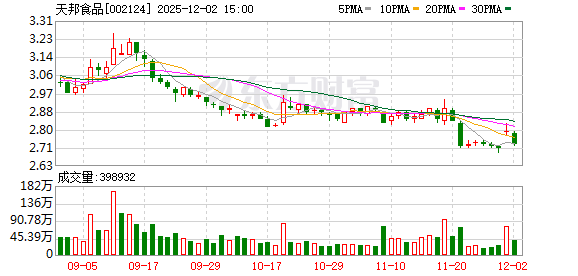
Core Viewpoint - The pig farming industry is experiencing a prolonged downturn, leading multiple listed companies, including Tianbang Food, to terminate fundraising projects and redirect funds to maintain liquidity during this challenging period [2][3][5]. Group 1: Company Actions - Tianbang Food announced the termination of the "Tianbang Co., Ltd. Intelligent Pig Farm Upgrade Project," reallocating remaining funds to supplement liquidity [2][3]. - The project saw its total investment commitment increase from 872 million yuan to 1.306 billion yuan, but only 146 million yuan had been invested by November 2025, reflecting a mere 11.19% progress [3]. - Other companies, such as Tangrenshen and Yisheng Shares, have also halted fundraising projects and redirected funds to maintain liquidity, indicating a broader trend in the industry [6][7]. Group 2: Industry Context - Since 2020, the pig farming industry has expanded significantly, resulting in oversupply and persistently low pig prices, with prices dropping by over 30% year-on-year as of December 2, 2025 [5][6]. - The industry is currently in a capacity adjustment phase, with companies facing limited capacity utilization and financial strain due to low prices [3][4]. - Analysts suggest that maintaining cash flow is crucial for survival during this downturn, as companies with sufficient liquidity can delay culling sows and wait for price recovery, while those without may be forced to sell at lower prices, exacerbating the market decline [6][7].