
养殖

Search documents
人民网评:农业根基更稳、底色更绿
Xin Lang Cai Jing· 2026-01-14 08:16
(来源:人民网) 全国绿色、有机、名特优新和地理标志农产品总数达8.6万个,我国农用化肥施用量(折纯)4988万 吨,较2020年下降5%。这些数字,既是农业绿色发展的成绩单,也清晰表明绿色发展已成为农业现代 化的核心驱动力。 农产品"含绿量"持续提升,这是农业绿色转型最直观的成果体现。当下,优质食味稻、专用小麦、高油 高蛋白大豆占比逐年提升,畜禽、水产健康养殖加快推广,优质牛羊肉、水产品供给增加,绿色农产品 在整体农产品中的比重持续提高。以蔬菜为例,农业农村部按季度开展的监测中,水生类、食用菌、芸 薹属类等各类蔬菜合格率大多在99%以上,像水生类蔬菜合格率更是达到100%。这意味着消费者挑选 蔬菜时能更加安心,"吃得安全、吃得健康"不再是一句口号,而是实实在在地成为百姓餐桌的常态。 有收无收在于水,农业用水方式已从用水大户转向节水大户。数据显示,农田灌溉水有效利用系数达到 0.580,亩均实际灌溉用水量减少14立方米,平均每年农田用水总量减少36亿立方米。在山东德州2025 年引黄灌溉用水量较"十三五"年均水平减少了3.5亿立方米,但粮食产量依然保持着"亩产过吨粮、全市 总产过百亿"的好成绩。在江苏盱眙,往 ...

海大集团(002311.SZ):公司在东南亚市场针对养殖产业链布局
Ge Long Hui A P P· 2026-01-14 00:48
格隆汇1月14日丨海大集团(002311.SZ)在投资者互动平台表示,公司在东南亚市场针对养殖产业链布 局。技术上通过种苗-饲料-动保联动,实现从源头到终端的效能最大化。服务上,一体化模式将单一 产品供应升级为一站式解决方案。成本上,依托全链条资源整合实现集中采购与当地采购,降低边际成 本并提升抗风险能力。 ...

温氏股份斩获ESG AApi评级 以绿色实践引领养殖行业高质量发展
Quan Jing Wang· 2026-01-13 11:42
Core Viewpoint - The recent ESG rating results from Hainan Green Development Credit Rating Co., Ltd. highlight that Wens Foodstuff Group (300498.SZ) achieved an AApi rating, showcasing its exemplary performance in ecological farming and responsibility empowerment, setting a replicable development model for the industry [1] Group 1: ESG Rating and Industry Context - Wens Foodstuff Group leads the industry with its dual-driven model of "ecological farming + responsibility empowerment" [1] - ESG has evolved from a supplementary aspect of corporate development to a critical requirement for high-quality growth amid stricter environmental regulations and a shift towards quality consumption [1] Group 2: Green Circular Economy Initiatives - The company is deeply responding to national strategies on food security and carbon neutrality by establishing a green farming model that creates an ecological loop, integrating waste resource utilization into the entire production chain [1] - Wens Foodstuff Group implements a low-carbon circular system across its entire industry chain, focusing on a "pig-fertilizer/water-grain-feed" model [1] Group 3: Technological Innovations and Economic Impact - In 2024, Wens Foodstuff Group developed a resource-based technology system for the unique geographical conditions of the Southwest region, achieving over 95% harmless treatment rate of biogas slurry [2] - The company has reduced nitrogen and phosphorus emissions by over 1,200 tons annually through the application of this technology in 43 breeding farms in Yunnan and the Southwest region, generating direct economic benefits of 23.37 million yuan and increasing surrounding farmers' income by 34.90 million yuan [2] Group 4: Commitment to Food Safety and Sustainable Practices - Wens Foodstuff Group has fully implemented antibiotic-free feed and drinking water in its pig farming operations, and its four egg-laying farms have achieved certification for antibiotic-free egg products, with a total production of 56,100 tons [3] - The company adheres to a sustainable development strategy, integrating pollution prevention into all operational stages and enhancing environmental governance through innovation and technological advancements [3]

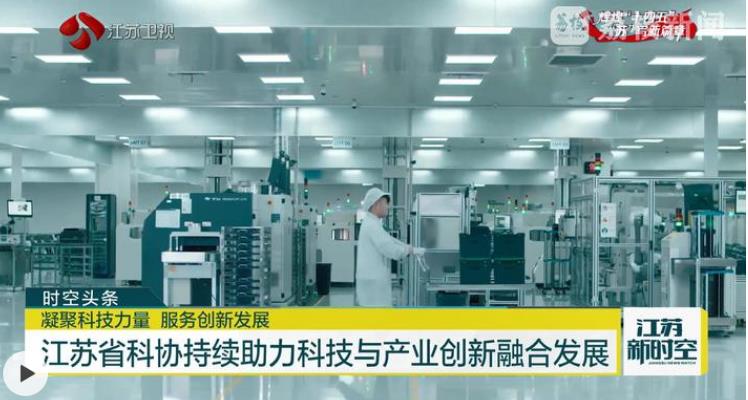
【辉煌“十四五” “苏”写新篇章】江苏省科协持续助力科技与产业创新融合发展
Xin Lang Cai Jing· 2026-01-13 09:25
Core Insights - Jiangsu Provincial Association for Science and Technology has played a pivotal role in promoting technological self-reliance and innovation over the past five years, leading initiatives that integrate technological and industrial innovation [2] - The establishment of technology small courtyards has significantly boosted agricultural productivity, with specific examples showing an increase in flower production from 300,000 to 500,000 stems [2] - The association has successfully connected research and industry, fostering the development of over ten new lily varieties and directly impacting nearly 100 households involved in the lily industry [2] Summary by Sections - **Technological Innovation and Agricultural Development** - Jiangsu has established 129 provincial-level technology small courtyards across 13 cities, covering over 30 agricultural sectors [2] - The technology small courtyards have been instrumental in enhancing agricultural practices, leading to increased economic benefits for farmers [2] - **Collaboration with National Academies** - The association has signed strategic cooperation agreements with 63 national academies, facilitating over 150 collaborations with provincial parks [2] - This initiative aims to enhance industry innovation capabilities and modernize industrial chains [2] - **Talent Development and Scientific Literacy** - Jiangsu has focused on building a talent pipeline, with 30 individuals elected as academicians in the past five years, ranking third nationally [2] - The province has supported 3,018 young talents in their research careers, contributing to a significant increase in the scientific literacy rate among citizens, now at 17.15% [2]

温氏股份增量不增利归母净利降40亿 股价萎靡市值比牧原股份少1562亿
Chang Jiang Shang Bao· 2026-01-13 03:04
2025年度,温氏股份经营业绩再度承压。近日,温氏股份发布2025年度业绩预告,公司预计全年实现归 母净利润50亿元—55亿元,较上年同期下降40.73%—46.12%;预计实现扣非净利润48亿元—53亿元, 较上年同期下降44.64%—49.86%。 2025年前三季度,温氏股份的经营业绩就表现出下滑趋势,当期营业收入约为758亿元,与上年同期基 本持平,但归母净利润下降约18%,为52.56亿元。 对比发现,业绩大滑坡出现在第四季度,如果最终经审计的归母净利润为预计数的下限,那么,2025年 第四季度,公司会出现亏损。 长江商报消息●长江商报记者 沈右荣 养殖巨头温氏股份(300498.SZ)抵御行业周期波动依旧乏力。 温氏股份的产品销量是增长的。2025年,公司销售生猪4047.69万头、肉鸡13.03亿只,分别较上年同期 增加逾千万头、上亿只。 增量不增利,核心因素是产品销售价格下降。2025年,公司的生猪和肉鸡销售价格同比均出现了下降。 过去一年,温氏股份股价表现萎靡,截至1月12日市值为1134亿元,较"猪茅"牧原股份少1562亿元。 增量不增利再现 养殖行业首份年度业绩预告出炉。温氏股份的业绩再 ...

华源证券:中国农业板块正站在周期底部与技术拐点交汇关键点 预计进入深度洗牌期
Zhi Tong Cai Jing· 2026-01-13 02:47
Core Viewpoint - The agricultural sector in China is at a critical juncture where technological advancements are reshaping cost structures, leading to a "survival of the fittest" scenario by 2026, with leading companies emerging as core assets that can navigate through cycles and focus on high-quality growth [1] Group 1: Industry Dynamics - The agricultural sector is experiencing a structural adjustment due to traditional overcapacity and capital misallocation, resulting in many inefficient entities facing debt and management crises [1] - New agricultural technologies, such as gene editing and precision feeding, are being rapidly adopted, allowing leading companies to expand market share and drive the industry towards higher efficiency and quality [1][2] - In the pig farming sector, leading companies have stabilized production costs at the lower end of the industry cost curve, while smaller firms struggle to upgrade technologically, widening the cost gap [2] Group 2: Technological Advancements - Leading companies are leveraging breeding technology to enhance efficiency, with examples including the collaboration between Muyuan and Topigs Norsvin to improve breeding performance [3] - Digital solutions, such as AI precision feeding and IoT environmental sensing, are becoming essential for large-scale farms, significantly improving production efficiency and management [4] Group 3: Market Trends and Pricing - The protein market is expected to enter a phase of capacity reduction by 2026, with structural price increases anticipated for beef and dairy products, while pork supply pressures are expected to persist [5] - The average price of feed ingredients like soybean meal and corn is at a low point, but potential upward pressure exists due to various uncertainties, impacting the midstream farming and feed sectors [6] Group 4: Capital and Investment Landscape - The capital landscape is shifting, with a significant reduction in external capital entering the industry, leading to a deep restructuring phase [7] - The industry is facing high vacancy rates and low rental costs, allowing capable companies to adopt lighter asset models and transition from production-focused to service-oriented business models [7]
温氏股份增量不增利 归母净利大降40亿 股价萎靡市值比牧原股份少1562亿
Chang Jiang Shang Bao· 2026-01-13 00:01
Core Viewpoint - The company, Wens Foodstuff Group, is facing significant pressure on its operating performance for the fiscal year 2025, with expected net profit declines of 40.73% to 46.12% compared to the previous year [1][4]. Financial Performance - For 2025, Wens expects a net profit of 5 billion to 5.5 billion yuan, down from 9.28 billion yuan in the previous year, indicating a decrease of approximately 42.8 billion to 37.8 billion yuan [4]. - In the first three quarters of 2025, the company reported revenue of approximately 758 billion yuan, which is nearly flat year-on-year, but net profit fell by about 18% to 5.256 billion yuan [1][4]. - The fourth quarter is projected to be particularly challenging, with a potential net loss if the lower end of the profit forecast is realized [5][6]. Sales and Pricing - Despite an increase in product sales, with 40.4769 million pigs and 1.303 billion chickens sold in 2025, the company is experiencing a decline in net profit due to falling sales prices [6][7]. - The average selling price for pigs decreased by 17.95% to 13.71 yuan per kilogram, while the average price for chickens fell by 9.80% to 11.78 yuan per kilogram [6]. Industry Context - The livestock industry is characterized by significant cyclical fluctuations, and Wens has struggled to mitigate these cycles effectively [8]. - The company has been implementing cost-cutting measures, but the reduction in sales prices has led to a decline in profitability despite lower production costs [9][10]. Competitive Landscape - Wens Foodstuff Group's market performance has lagged behind its competitor, Muyuan Foods, which reported a net profit of 14.779 billion yuan in the first three quarters of 2025, a 41.01% increase year-on-year [11][13]. - The gap in market capitalization between Wens and Muyuan has widened, with Wens's market value at 113.4 billion yuan, which is 156.2 billion yuan less than Muyuan's [3][13].
温氏股份增量不增利归母净利大降40亿 股价萎靡市值比牧原股份少1562亿
Chang Jiang Shang Bao· 2026-01-12 23:44
养殖巨头温氏股份(300498)(300498.SZ)抵御行业周期波动依旧乏力。 2025年度,温氏股份经营业绩再度承压。近日,温氏股份发布2025年度业绩预告,公司预计全年实现归 母净利润50亿元—55亿元,较上年同期下降40.73%—46.12%;预计实现扣非净利润48亿元—53亿元, 较上年同期下降44.64%—49.86%。 2025年前三季度,温氏股份的经营业绩就表现出下滑趋势,当期营业收入约为758亿元,与上年同期基 本持平,但归母净利润下降约18%,为52.56亿元。 对比发现,业绩大滑坡出现在第四季度,如果最终经审计的归母净利润为预计数的下限,那么,2025年 第四季度,公司会出现亏损。 如果温氏股份最终实现的归母净利润为预计数的下限,那么,公司第四季度将出现亏损。 温氏股份的产品销量是增长的。2025年,公司销售生猪4047.69万头、肉鸡13.03亿只,分别较上年同期 增加逾千万头、上亿只。 增量不增利,核心因素是产品销售价格下降。2025年,公司的生猪和肉鸡销售价格同比均出现了下降。 过去一年,温氏股份股价表现萎靡,截至1月12日市值为1134亿元,较"猪茅"牧原股份(002714)少 ...
大北农:公司饲料业务的核心在于实现产品结构与市场定位的差异化
Zheng Quan Ri Bao Wang· 2026-01-12 11:41
Group 1 - The core of the company's feed business is to achieve differentiation in product structure and market positioning, while continuously reducing production costs through raw material procurement and technical formula optimization [1] - The company's breeding business focuses on cost control as a core strategy, enhancing operational efficiency and breeding business levels through multiple measures such as breed improvement, biosecurity management, capacity efficiency enhancement, and manufacturing cost control [1]

俯则未察,仰以殊观:2026年大宗商品年度展望
Guo Tou Qi Huo· 2026-01-12 11:04
1. Report Industry Investment Rating - Not provided in the given content 2. Core Viewpoints of the Report - In 2026, the global liquidity environment will maintain a loose tone, with marginal adjustments in the pace and amplitude. China's macro - policies will remain positive, with fiscal support for "two major" construction and "new - quality productivity" and moderately loose monetary policies [17]. - The industrial capacity cycle has bottomed out, and there are signs of a turning point. In 2026, the capacity utilization rate is expected to stabilize in the first half and rise marginally in the second half [23]. - The inventory cycle is approaching its end, with domestic and overseas "de - stocking" showing signs of bottoming out [29]. - In 2026, the commodity market is expected to stabilize at the bottom and gradually shift to a "slow - bull" market. The Minsky Clock is likely to transition from "weak recovery" to "early re - inflation," benefiting stocks and commodities [30]. 3. Summary by Relevant Catalogs 3.1 Macro Outlook - The global liquidity environment in 2026 will maintain a loose tone, and China's macro - policies will continue to be positive, with fiscal support for key areas and moderately loose monetary policies [17]. 3.2 Capacity Cycle - The industrial capacity utilization rate bottomed out in Q2 2025, and the PPI has been narrowing its year - on - year decline since June 2025. In 2026, it may form the initial stage of a positive cycle [23]. 3.3 Inventory Cycle - The year - on - year growth rate of finished - product inventory has shown signs of bottoming out, indicating the end of the current inventory cycle. The US wholesalers' inventory has been decreasing since Q2, and the inventory - to - sales ratio has become less sensitive [29]. 3.4 Commodity Market Outlook - In 2026, the commodity market will operate in a pattern of "liquidity support, cycle resonance and stabilization, and structural differentiation." It may show wide - range fluctuations in the first half and a mild recovery in the second half if policies are effective [30]. 3.5 Sector and Variety Allocation Outlook 3.5.1 Precious Metals - Precious metals are expected to continue their bull market but with increased volatility. The gold - silver ratio may decline periodically [35]. 3.5.2 From AI to New and Old Energy Transition - AI's computing power demand drives the entire new - energy industry chain, causing high resonance between the stock market and commodities. New - energy materials such as lithium carbonate and polysilicon may enter a new demand cycle, and there are investment opportunities in going long on copper and short on oil [42][57]. 3.5.3 Real Estate and Related Sectors - The real - estate industry is still in a downward cycle, putting pressure on the prices of black and building - material sectors. The divergence between copper and rebar reflects the economic transformation [62]. 3.5.4 Black and Energy - Chemical Sectors - In the black sector, shorting iron ore may be cost - effective. In the energy - chemical sector, most chemicals except crude oil face supply pressure and are suitable for short - allocation [68]. 3.5.5 Agricultural Products - Livestock Sector - If the "anti - involution" policy promotes the reduction of livestock production capacity in the first half, pork and eggs may be worth long - allocation in the second half, while the fundamentals of beans may weaken [74]. 3.6 Allocation Strategy - Industrial product hedging can focus on the theme of "AI and computing power driving the acceleration of new - and old - energy transformation." Agricultural products will continue to show differentiation, with grains and oils relatively resistant to decline and livestock products potentially having a low - then - high trend [80][81]. - New - energy varieties (e.g., lithium carbonate) have demand support and profit - repair potential. Non - ferrous metals (e.g., copper) have valuation - increasing potential. Energy - chemical products are under pressure, and black products are affected by real - estate demand [82].