智能电动车

Search documents
纳斯达克100指数复盘与展望:八月震荡徘徊,九月风向渐明
Soochow Securities· 2025-09-03 05:31
Investment Rating - The report maintains an "Overweight" rating for the non-bank financial industry, indicating a positive outlook for the sector in the next six months [1]. Core Insights - The Nasdaq 100 index experienced a "high-low" trend in August, with a cumulative increase of 0.85%. The market sentiment fluctuated due to mixed macroeconomic data and Federal Reserve signals, leading to a cautious outlook for September [12][13]. - As of August 29, 2025, the Nasdaq 100 index's price-to-earnings ratio (PE-TTM) stood at 34.6, placing it in the 83.6% historical percentile since 2011, indicating a relatively high valuation dependent on interest rates and earnings performance [17]. - The technical analysis shows that the risk level of the Nasdaq 100 index has decreased to 91.54, still indicating a high level of market sentiment, with a maintained upward trend but short-term volatility risks [18]. Market Performance Review - **Trend Review**: From July 31 to August 29, the Nasdaq 100 index showed a "high-low" pattern, with a total trading volume of approximately $47.212 billion. Initial concerns arose from weak manufacturing PMI data, but the index rebounded towards the end of August due to dovish signals from the Federal Reserve [12][13]. - **Valuation Analysis**: The Nasdaq 100 index's PE-TTM ratio of 34.6 suggests a high reliance on the interest rate environment and earnings realization [17]. - **Technical Analysis**: The index remains in an upward trend, but short-term fluctuations and volatility risks are present [18]. Event-Driven Analysis - **Macroeconomic Factors**: The interplay between Federal Reserve monetary policy expectations and the resilience of tech company earnings has been central to the Nasdaq 100 index's performance. Key employment and inflation data have influenced market sentiment and policy expectations [21][23]. - **Policy Factors**: The Federal Open Market Committee (FOMC) maintained interest rates but signaled a hawkish stance, impacting growth stock valuations. Additionally, proposed semiconductor tariffs by Trump have added uncertainty to the tech sector [31][33]. - **Industry Dynamics**: The performance of major tech stocks such as Microsoft, Meta, Apple, Amazon, and Nvidia has been mixed, with earnings reports influencing market reactions significantly [36][38]. Future Outlook - **Key Events Ahead**: The Nasdaq 100 index's performance in September will be influenced by macroeconomic data, policy signals, and industry earnings. Stable inflation data could bolster expectations for interest rate cuts, benefiting high-growth tech stocks [45][46]. - **Index Performance Outlook**: The Nasdaq 100 index is expected to maintain a volatile upward trend, with caution advised due to potential short-term pullbacks. The performance of tech stocks will be critical in determining overall market direction [51]. Related ETF Products - The report highlights the Guangfa Nasdaq 100 ETF (159941.SZ), which aims to closely track the Nasdaq 100 index, with a total market value of 27.718 billion yuan as of August 29, 2025 [52][53].



小鹏加码主动安全:CEO 下场动员,想用技术成果回应外界质疑
晚点Auto· 2025-08-31 11:59
Core Viewpoint - The article emphasizes the importance of active safety technology in smart electric vehicles, highlighting Xiaopeng's advancements in this area to regain a competitive edge in the market [2][3][14]. Group 1: Active Safety Technology Developments - Xiaopeng has demonstrated its AEB (Automatic Emergency Braking) capabilities at speeds of up to 130 km/h in various challenging conditions, including night and wet roads [2][4]. - The company has redefined its active safety architecture and software, with daily updates to enhance performance and address market competition [2][3]. - Xiaopeng's AEB system is designed to operate effectively in a full speed range of 0-150 km/h, with a focus on real-world scenarios [4][5]. Group 2: Technical Innovations - Xiaopeng employs a "two-stage braking" strategy to enhance user comfort during emergency braking, initially applying a moderate deceleration before engaging full braking if necessary [5][6]. - The introduction of the AES (Automatic Emergency Steering) system allows vehicles to navigate around obstacles on slippery surfaces, utilizing a unique "single-side braking" technique [8][9]. - The company aims to tackle complex driving conditions, such as icy roads, to ensure stability and effective obstacle avoidance [9][10]. Group 3: Strategic Focus and Team Dynamics - Xiaopeng has established dedicated teams and "war rooms" to enhance collaboration and expedite the development of active safety features [15][16]. - The company has shifted its focus to prioritize active safety, responding to consumer demand for improved vehicle safety [14][18]. - The development process has been streamlined to ensure rapid iteration and effective communication among team members [16][17]. Group 4: Market Position and Future Goals - Xiaopeng's advancements in active safety are part of a broader strategy to maintain its leadership in the smart driving sector amid increasing competition [14][18]. - The ultimate goal of the active safety technology is to achieve "zero collisions" by expanding the coverage of AEB and AES systems [22][23]. - Future efforts will focus on enhancing scene coverage based on real-world collision data to prioritize high-frequency and high-severity scenarios [23][24].


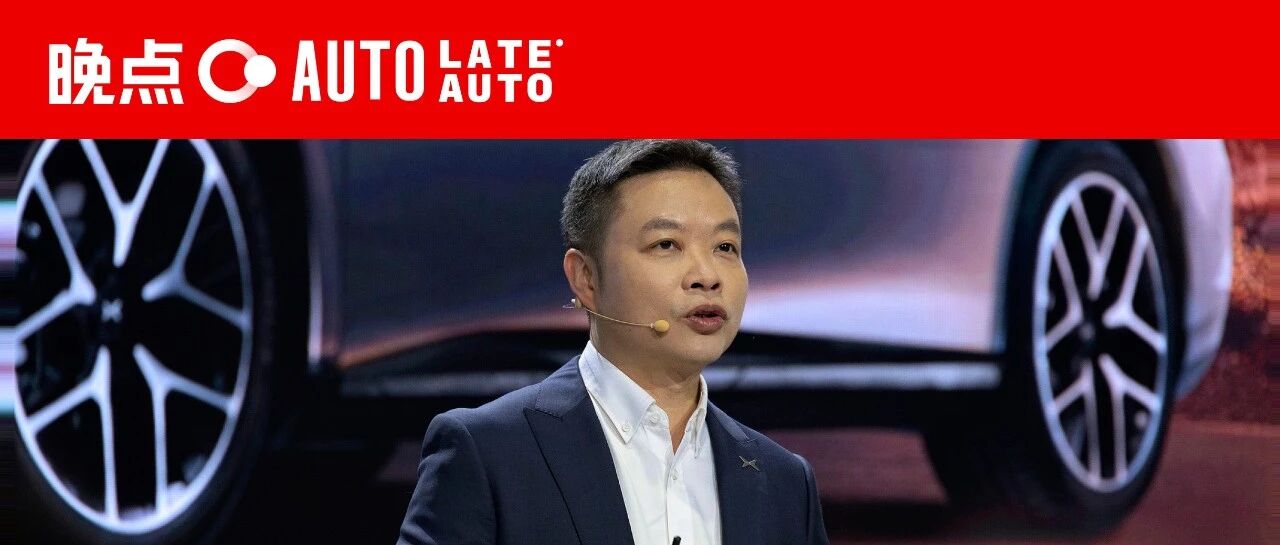
KOL调侃“追觅汽车专门扫马路”,目前高薪招整车人才,PMO岗位年薪近70万,整车销售端直指海外
Xin Lang Zheng Quan· 2025-08-29 08:29
Core Viewpoint - Chasing, a company known for its vacuum cleaners and robotic vacuums, is attempting to enter the automotive industry, raising questions about its ability to transition from home appliances to car manufacturing [1][3]. Group 1: Company Actions - Chasing has opened multiple positions related to vehicle development, including roles for vehicle R&D engineers, design engineers, and project managers, indicating a strong intent to build a car manufacturing team [2][3]. - The highest salary for a project management position is set at 50,000 yuan per month, which translates to nearly 700,000 yuan annually, reflecting the company's commitment to attracting talent [2]. Group 2: Market Perception - Social media reactions to Chasing's automotive ambitions are mixed, with some users humorously questioning the feasibility of a brand known for cleaning products entering the car market [1][3]. - The light-hearted comments highlight a general skepticism regarding Chasing's ability to compete in the complex automotive sector, which is heavily reliant on capital and technology [1][3]. Group 3: Strategic Risks - The automotive industry is characterized by a complex supply chain, long R&D cycles, and significant capital requirements, posing a challenge for Chasing as it shifts focus from its core competencies in smart home appliances [3]. - There are concerns about whether Chasing can leverage its existing technology in small electric motors to create competitive vehicles, as its primary expertise lies in home cleaning products [3].
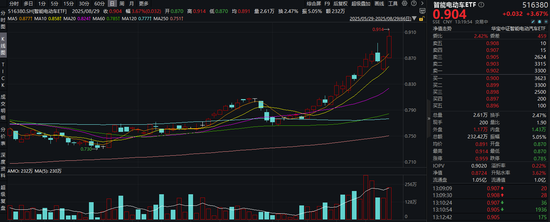
先导智能业绩引爆!固态电池概念股震荡上扬,宁德时代涨超10%,智能电动车ETF(516380)盘中拉升4.7%
Xin Lang Ji Jin· 2025-08-29 05:41
Group 1 - The smart electric vehicle ETF (516380) has seen a significant price increase, with a rise of over 4.7% during trading, currently up 3.67% [1] - Key component stocks such as XianDao Intelligent and Guoxuan High-Tech have reached their daily price limits, while other stocks like BETTERI and CATL have also shown substantial gains [1] - XianDao Intelligent reported impressive Q2 results with revenue of 3.512 billion yuan, a year-on-year increase of 43.86%, and a net profit of 375 million yuan, up 456.29% year-on-year [3] Group 2 - The lithium battery business is the main revenue source for XianDao Intelligent, with an improving order trend as domestic manufacturers expand production and battery capacity in Europe and Southeast Asia comes online [3] - The demand for new energy vehicles is projected to grow, with a report indicating that sales in China's new energy vehicle market will reach 1.262 million units in July 2025, a year-on-year increase of 27.3% [3] - The solid-state battery industry is accelerating, with significant technological advancements and commercialization progress, indicating a potential demand explosion in emerging fields such as eVTOL and humanoid robots [4] Group 3 - The automotive sector is expected to see a comprehensive valuation increase as the smart and connected vehicle segment expands, with higher penetration rates of advanced driving features into the mid-to-low-end market [4] - The integration of AI in the automotive industry is anticipated to further expand the scale of related industries, leading to rapid growth in earnings per share (EPS) for relevant sectors and stocks [4] - The smart electric vehicle ETF focuses on leading companies in both electrification and automotive intelligence, covering key sectors such as smart cockpit, intelligent driving, cameras, and automotive electronics [5]





晚点独家丨理想自研智驾芯片上车路测,部分计算性能超英伟达 Thor-U
晚点LatePost· 2025-08-28 06:09
Core Viewpoint - Li Auto's self-developed autonomous driving chip M100 has successfully passed key pre-mass production stages and is expected to be mass-produced next year, aiming to enhance efficiency and cost-effectiveness in its autonomous driving algorithms [4][6]. Summary by Sections Chip Development - Li Auto's M100 chip has completed functional and performance testing, demonstrating significant computational capabilities, such as matching the effective computing power of 2 NVIDIA Thor-U chips for large language model tasks and 3 Thor-U chips for traditional visual tasks [4][6]. - The company has allocated a budget of several billion dollars for the development of its self-research chip project, indicating the high costs associated with chip development [6]. Strategic Approach - Li Auto is adopting a dual strategy: relying on external partners like NVIDIA and Horizon for current market competitiveness while developing its own chip for future core advantages [7][8]. - The CTO of Li Auto, Xie Yan, is leading a strategy that combines hardware and software development to maximize chip performance and efficiency [6]. Market Positioning - In its current electric vehicle lineup, Li Auto is using NVIDIA's high-performance chips in flagship models, while employing a mixed strategy in its range-extended models by using either NVIDIA Thor-U or Horizon Journey 6M chips based on different autonomous driving versions [8]. - The core reason for developing its own chip is to optimize performance specifically for Li Auto's algorithms, enhancing cost-effectiveness and efficiency [8].


招银国际每日投资策略-20250820
Zhao Yin Guo Ji· 2025-08-20 02:54
Market Overview - Global markets showed mixed performance, with the Hang Seng Index down 0.58% and the Shanghai Composite Index up 0.83% [1][3] - The US markets experienced declines, particularly in technology and consumer discretionary sectors, while defensive sectors like consumer staples and utilities saw gains [3] Hong Kong Stock Performance - The Hang Seng Financial Index fell by 1.08%, while the Hang Seng Real Estate Index dropped by 1.99% [2] - Despite the overall decline, selected sectors such as essential and discretionary consumer goods showed positive performance [3] Company Insights: China Biologic Products - China Biologic Products reported a 10.7% year-on-year revenue increase to 17.57 billion yuan in 1H25, with adjusted net profit rising 101.1% to 3.09 billion yuan [4][5] - The company’s innovative product revenue grew by 27.2%, accounting for 44.4% of total revenue, indicating strong market demand [5][6] - The firm is expected to maintain double-digit growth guidance for the year, driven by its robust pipeline and market expansion [6][7] Company Insights: Hansoh Pharmaceutical - Hansoh Pharmaceutical achieved a 14.3% year-on-year revenue increase to 7.43 billion yuan in 1H25, with net profit rising 33.4% to 3.14 billion yuan [8][9] - The company confirmed strong business development (BD) income, primarily from collaborations with MSD and GSK [9][10] - Hansoh's innovative drug sales are projected to exceed 10 billion yuan in 2025, supported by a strong pipeline and ongoing clinical trials [10][11] Company Insights: Xiaomi Group - Xiaomi reported a 31% year-on-year revenue increase and a 75% rise in net profit for Q2 2025, driven by strong performance in electric vehicles and IoT [12][13] - The company is adjusting its smartphone shipment guidance downward due to rising BOM costs, but remains optimistic about long-term growth strategies [12][13] - The new target price for Xiaomi is set at 62.96 HKD, reflecting a valuation based on segment performance [12] Company Insights: XPeng Motors - XPeng Motors reported a 14.3% gross margin in Q2 2025, exceeding expectations, while net losses narrowed compared to previous quarters [13][14] - The company is focusing on cost reduction and scale effects to improve profitability, with expectations for breakeven in Q3 2025 [14][15] - XPeng's sales forecast for 2025 has been adjusted to 450,000 units, with a target price of 28 USD [14][15] Company Insights: Palo Alto Networks - Palo Alto Networks reported a 15.8% year-on-year revenue increase to 2.5 billion USD in Q4 FY25, with non-GAAP net profit rising 28.9% [15] - The company is positioned as a key beneficiary in the generative AI era, with expectations for continued revenue and profit growth [15]

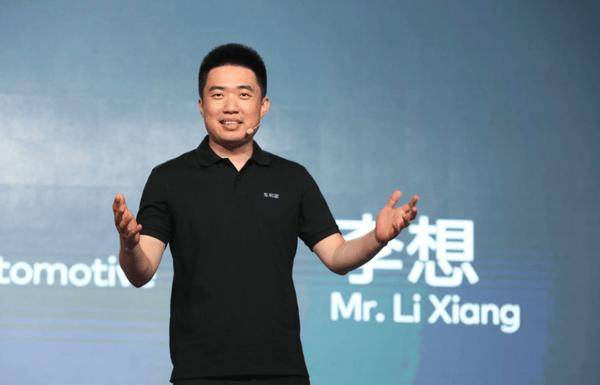
李想谈小米雷军造车:只有我们两个能做出超级产品
Sou Hu Cai Jing· 2025-08-19 08:40
Core Insights - The conversation between Li Xiang, founder of Li Auto, and Lei Jun, founder of Xiaomi, highlights mutual respect and recognition in the electric vehicle (EV) sector, with both being regarded as "super product managers" in the new wave of car manufacturing [1][3] Group 1: Industry Dynamics - Lei Jun's entry into the EV market is seen as a significant move, with Li Xiang acknowledging him as a key competitor alongside himself [1] - Both companies have recently launched their first pure electric SUV models, Xiaomi's YU7 and Li Auto's i8, which, despite differing positioning, have overlapping price points leading to direct competition [3] Group 2: Collaboration and Support - Despite the competitive landscape, Li Xiang noted that there has been positive interaction and support between the two companies, with Lei Jun and his team assisting Li Auto during challenging times [3] - Li Xiang shared a personal anecdote about a two-hour phone call with Lei Jun prior to the latter's announcement of entering the car manufacturing space, indicating a collaborative spirit [3]

马斯克火星殖民泡汤了,可以考虑入手特斯拉
Sou Hu Cai Jing· 2025-08-15 10:58
Group 1 - Elon Musk has postponed the plan to launch five unmanned spacecraft to Mars from 2026 to 2030, indicating a shift in focus away from the Mars colonization project [2] - The technical challenges of the Mars mission are significant, with previous failures of the Starship rocket and the need for AI breakthroughs to support human life on Mars [2][3] - The cost of sending one person to Mars is estimated at $100 billion, and building a base for 100 people could reach $1 trillion, highlighting the impracticality of Musk's original plans [6] Group 2 - The reliance on Chinese supply chains is becoming increasingly apparent, as Tesla's Shanghai factory plays a crucial role in the company's success, providing cost-effective production capabilities [3][10] - Tesla's sales in China have seen a decline of 8.4% in July, facing competition from local brands like Xiaomi and BYD, but the company is focusing on enhancing its supply chain efficiency [8][10] - The shift towards a more grounded approach for Musk, focusing on Tesla's core business and leveraging AI and robotics, could lead to a more stable and competitive product offering [8][10]


华望汽车启动城市招募计划,理想i8挑战交付1万辆丨汽车早参
Mei Ri Jing Ji Xin Wen· 2025-08-13 23:09
Group 1 - Li Auto aims to deliver over 8,000 units of the Li i8 in September, challenging the target of 10,000 units, showcasing the company's ability to rapidly adjust its supply chain, production, and sales processes [1] - The announcement reflects the new energy vehicle industry's competitive landscape and may lead to a reassessment of market dynamics if the delivery target is achieved, reinforcing investor expectations regarding Li Auto's organizational efficiency [1] Group 2 - GAC Group has launched the Huawang Automotive city recruitment plan, prioritizing 40 cities including Shanghai, Nanjing, Beijing, Tianjin, Guangzhou, and Chengdu, indicating a strategic move in the smart electric vehicle sector [2] - The "1+N" channel model, which includes a user center and multiple experience centers, signifies a deep collaboration between GAC and Huawei, potentially enhancing GAC's positioning in the new energy vehicle market [2] Group 3 - Tesla's Robotaxi service in Austin is set to open to the public in September, marking a significant step in the commercialization of autonomous driving technology [3] - This development may strengthen market perceptions of Tesla's technological leadership and validate the commercial prospects of its Full Self-Driving (FSD) system, prompting a reevaluation of the smart mobility industry's value chain [3] Group 4 - Porsche has revised its adjusted net profit forecast for 2025 to between €1.6 billion and €3.6 billion, down from a previous estimate of €2.4 billion to €4.4 billion, reflecting structural challenges in the luxury car market [4] - This adjustment may lead investors to reassess the profitability of European luxury automotive brands, especially in light of Volkswagen Group's concurrent earnings outlook downgrade [4]

涛涛车业(301345.SZ):已先后与K-SCALE、开普勒机器人、宇树科技等公司达成战略合作
Ge Long Hui A P P· 2025-08-11 07:37
Core Viewpoint - The company is actively embracing the wave of intelligence by strategically laying out plans in robotics and autonomous driving technologies while maintaining its core business in smart electric low-speed vehicles and special vehicles [1] Group 1: Business Development - The company aims to build a common technology platform across product lines by integrating research and development achievements from emerging fields into its core products, thereby enhancing the development of its main business [1] - The company is planning to establish a global technology research and development network, including a domestic research institute in Zhangjiang, Shanghai, and an overseas team for cutting-edge technology incubation in the United States [1] Group 2: Strategic Collaborations - The company has formed strategic partnerships with K-SCALE, Kepler Robotics, and Yushu Technology to collaborate on sales expansion, scenario applications, and product secondary development [1]