
黄酒

Search documents
会稽山(601579):鉴水酿新,稽山领航
GOLDEN SUN SECURITIES· 2025-12-29 14:33
Investment Rating - The report assigns a "Buy" rating for the company, marking its first coverage [4][6]. Core Insights - The company, Kuaijishan, is positioned as a leader in the Chinese yellow wine industry, emphasizing high-end, youthful, and national strategies to drive growth [1][4]. - In 2024, Kuaijishan is projected to achieve a record revenue of 1.631 billion yuan, reflecting a year-on-year growth of 15.6%, with a net profit of 196 million yuan, up 17.74% [1][4]. - The yellow wine industry is experiencing a gradual transformation, with a market size of 21 billion yuan in 2023, showing a slight increase of 2.1% year-on-year [2]. Summary by Sections Company Overview - Kuaijishan has a rich history of over 280 years, evolving through three key phases: initial establishment, capital integration, and innovation transformation [1][15]. - The company is recognized as a "Chinese Time-honored Brand" and has received multiple accolades, including being the designated yellow wine for significant national events [14][19]. Industry Analysis - The yellow wine market is characterized by a high concentration, with the top three companies' market share increasing from 18.46% in 2016 to 44.08% in 2023 [2]. - The number of large-scale yellow wine enterprises has decreased from 112 to 81 between 2016 and 2023, indicating a trend towards consolidation in the industry [2]. Competitive Advantages - Kuaijishan leverages its strong brand heritage and diverse product matrix to cater to both high-end and younger consumer segments [3][4]. - The company has seen significant growth in its mid-to-high-end product lines, with revenue contributions of 1.065 billion yuan in 2024, marking a 31.29% increase year-on-year [3][4]. Financial Projections - The company is expected to maintain steady growth, with projected net profits of 214 million yuan, 235 million yuan, and 260 million yuan for 2025, 2026, and 2027, respectively, reflecting year-on-year growth rates of 9.14%, 9.99%, and 10.54% [4][5].

浙江省酒业协会:今年黄酒产业产销量均有微量增长
Cai Jing Wang· 2025-12-26 05:29
Group 1 - The core viewpoint of the news highlights the performance of the Zhejiang liquor industry in 2025, indicating mixed results across different segments, with yellow wine showing a decline in sales but an increase in profit, while beer and white liquor face challenges in sales despite some growth in production and revenue [1][2]. Group 2 - In the yellow wine sector, from January to October 2025, production reached 288,971 thousand liters, a year-on-year increase of 17.07%, while sales volume decreased by 3.40% to 255,588 thousand liters. Sales revenue fell by 8.74% to 3.145 billion yuan, but total tax profit rose by 10.12% to 697 million yuan, with profit increasing by 26.67% to 440 million yuan [1]. - The beer industry in Zhejiang produced 2,569,844 thousand liters from January to October 2025, a decrease of 2.11%, but sales revenue increased by 0.49% to 7.666 billion yuan. Tax profit rose by 5.87% to 1.963 billion yuan, with tax revenue increasing by 3.86% to 1.090 billion yuan, and profit grew by 8.50% to 873 million yuan [1]. - The white liquor sector saw production rise by 37.18% to 10,113 thousand liters, but sales volume fell by 13.62% to 5,516 thousand liters. Revenue from eight white liquor companies dropped by 14.49% to 7.602 million yuan, indicating a challenging economic environment for the sector [1]. - The overall outlook for the yellow wine industry suggests slight growth in both production and sales in 2025, while the beer industry is adapting to new consumer demands with improved product structures and a focus on high-end offerings [2]. - The white liquor industry is enhancing its production capacity and market outreach, with a reported capacity increase of 9.03% year-on-year, and is actively participating in major exhibitions to boost its influence [2].
绍兴新质生产力蓄势跃升
Sou Hu Cai Jing· 2025-12-25 01:15
Core Insights - Shaoxing's industrial economy has shown significant growth, with a year-on-year increase of 9.8% in industrial added value from January to November 2025, ranking second in the province [1] - The city has implemented the "4151" plan to strengthen advanced manufacturing, integrating artificial intelligence with technological and industrial innovation to promote high-quality industrial development [1] - A total of 25 industries in Shaoxing reported positive growth, with a growth coverage of 71.4%, indicating a solid foundation for industrial growth [1] Group 1 - The new momentum in industrial growth is reflected in the robust performance of key sectors, with equipment manufacturing, strategic emerging industries, and high-tech manufacturing industries growing by 13.6%, 12.2%, and 11.8% respectively [1] - Key products such as industrial robots, integrated circuits, and electric motors saw production increases of 21.6%, 18.9%, and 5.4%, showcasing a strong shift towards new industrial structures [1] - Shaoxing has two out of five provincial-level future industry pilot zones, indicating a strong presence in strategic emerging industries [1] Group 2 - Manufacturing investment in Shaoxing increased by 18.7% year-on-year from January to November, with investments in digital economy core industries and high-tech industries growing by 39.9% and 19.3% respectively [2] - The completion rate of key internal projects in Shaoxing reached 124.7%, exceeding the overall average by 11.6 percentage points [2] - The integrated circuit industry is progressing towards a "hundred billion" scale, driven by new demands in artificial intelligence and smart driving [2] Group 3 - Traditional industries in Shaoxing are undergoing rapid renewal, with ten cases selected as typical examples of traditional advantageous enterprises evolving into new productive forces [2] - The modern textile industry has contributed to Shaoxing being recognized as a city with significant industrial influence in 2025 [2] - The yellow wine industry is accelerating its digital transformation to enhance lean management capabilities [2]
古越龙山人事变动引发市场热议,“父辈的酒”如何打动年轻人的心 换个董秘90后,能让黄酒成潮饮?
Shen Zhen Shang Bao· 2025-12-24 23:19
Core Viewpoint - The goal of the Huangjiu industry is to transform Huangjiu from a "drink of the older generation" to a "trendy drink for young people" Group 1: Management Changes - Gu Yue Long Shan appointed 90s-born Zhang Leiguang as the company secretary, aiming to bring fresh financial thinking and communication methods to engage with a new generation of investors [1] - The appointment has sparked debate among shareholders, with some expressing skepticism about whether a young executive can attract younger consumers [1] Group 2: Financial Performance - In the first three quarters of 2025, Gu Yue Long Shan reported revenue of 1.186 billion yuan, a year-on-year decline of 8.10%, while net profit grew only 0.17% to 135 million yuan [2] - Competitor Kuaijishan surpassed Gu Yue Long Shan with revenue of 1.212 billion yuan, marking a year-on-year increase of 14.12% [2] Group 3: Product Innovation - Gu Yue Long Shan launched innovative products like coffee Huangjiu and low-sugar variants, targeting young consumers' preferences for novelty and social drinking [3] - The "No High Low" product sold over 3.3 million bottles and topped sales charts on Douyin, although consumer reviews were polarized [3] - A strategic partnership with China Resources Beer led to the co-launch of "Yue Xiao Pi," a product aimed at young consumers, although its availability on major platforms was not found [3] Group 4: Industry Challenges - Industry experts noted that Gu Yue Long Shan faces challenges such as a lack of standout products, stagnant brand recognition, and delayed market impact [4] - The company must balance scale expansion with refined operations to overcome these hurdles and establish a strong market presence [4] Group 5: Competitive Landscape - Kuaijishan successfully marketed its sparkling Huangjiu, achieving sales of 50 million yuan during the 618 shopping festival and diversifying its presence across various social and entertainment platforms [5][6] - Kuaijishan's dual strategy of "premiumization + youthfulness" aims to reshape the Huangjiu industry, focusing on cultural branding and quality enhancement [6] Group 6: Learning from International Examples - The success of Japan's Dassai sake brand offers insights for Huangjiu's youth-oriented development, emphasizing the importance of brand storytelling and long-term strategic commitment [7] - Analysts suggest that the Huangjiu industry should focus on enhancing brand recognition and creating distinctive narratives, similar to Dassai's approach [7]

换个董秘90后,能让黄酒成潮饮?
Shen Zhen Shang Bao· 2025-12-24 17:27
Group 1 - The core objective of the Huangjiu industry is to transform Huangjiu from a "drink of the older generation" to a "trendy drink for young people" [2] - The appointment of 90s-born Zhang Leiguang as the secretary of the board at Guyue Longshan has sparked discussions, with some investors skeptical about whether a younger executive can attract young consumers [2][3] - Guyue Longshan's revenue for the first three quarters of 2025 was 1.186 billion yuan, a decrease of 8.10% year-on-year, while its net profit only grew by 0.17% to 135 million yuan [3] Group 2 - Guyue Longshan has launched innovative products like coffee Huangjiu and bubble ice sculpture, targeting young consumers' preferences for novelty and social drinking [4] - The "Wugao Di" product has sold over 3.3 million bottles and topped the Douyin sales charts, indicating a positive reception among young consumers [4][5] - However, consumer feedback on the "Wugao Di" product is polarized, with some praising its quality while others find it unpalatable [5] Group 3 - Competitor Kuaijishan has successfully marketed its sparkling Huangjiu, achieving sales of 50 million yuan during the 618 shopping festival and implementing a dual strategy of high-end and youth-oriented products [6] - Kuaijishan's approach includes cultural empowerment and quality upgrades, aiming to establish itself as a leader in the high-end Huangjiu market [6] Group 4 - The experience of Japan's Dassai sake brand offers insights for the Huangjiu industry, highlighting the importance of brand storytelling and long-term strategic development [7] - Dassai's sales increased from 4.6 billion yen in 2014 to 19.5 billion yen by 2024, demonstrating the potential for growth through strategic branding and market positioning [7]

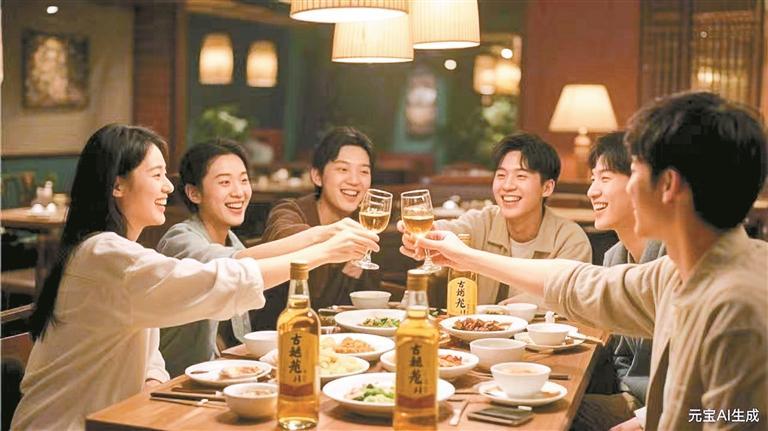
金枫酒业:推动产线自动化智能化升级,布局料酒赛道切入中高端市场
Jin Rong Jie· 2025-12-24 17:18
Core Viewpoint - The company is focusing on capacity upgrades and brand marketing to seize opportunities in the yellow wine industry amid consumer recovery. Group 1: Capacity Upgrades - The company is optimizing production line layout and promoting automation and intelligence upgrades in production lines [1] - It is accelerating the construction of an energy center to enhance the automation level of equipment such as refrigeration, air compression, boilers, wastewater, and water supply, achieving automated data collection for energy [1] Group 2: Brand Marketing - The company aims to establish brand images such as "internationalization" for Shikumen, "national trend" for Golden Years, and "traditional culture" for Hejiu [1] - It is focusing on key platforms like Douyin and video accounts to enhance brand visibility and sales conversion [1] - The company is promoting OEM customization business, with related products successfully entering mainstream retail and e-commerce platforms like Aoleqi, JD.com, Qingmei, and Dingdong [1] Group 3: Market Expansion - The company is entering the mid-to-high-end bottled cooking wine market while solidifying its existing market base [1]

会稽山(601579.SH):公司暂无规划进入文旅产业
Ge Long Hui· 2025-12-23 08:47
Core Viewpoint - The company, Kuaijishan (601579.SH), has no plans to enter the cultural tourism industry, focusing instead on a collaboration project with the Didiang Street to promote the contemporary inheritance of Shaoxing yellow wine culture [1] Group 1 - The yellow wine art street project is a collaboration between the company and Didiang Street, aligning with the overall planning for the development of specialized cultural and creative parks [1] - The project aims to provide a sustainable practical space for the contemporary transmission of Shaoxing yellow wine culture [1] - The company will consider partnerships with quality cultural tourism landmarks and service areas in the future to create iconic attractions related to yellow wine [1]
古越龙山:第十届董事会第十二次会议决议公告
Zheng Quan Ri Bao· 2025-12-18 12:42
证券日报网讯 12月18日晚间,古越龙山发布公告称,公司第十届董事会第十二次会议审议通过《选举 代表公司执行公司事务的董事的议案》《选举公司副董事长的议案》《关于选举董事会专门委员会成员 的议案》等多项议案。 (文章来源:证券日报) ...
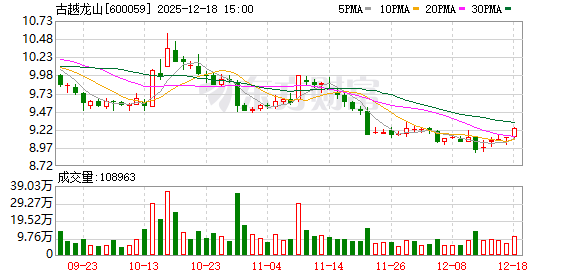
古越龙山(600059.SH):控股股东股权结构发生变动
Ge Long Hui A P P· 2025-12-18 12:42
Core Viewpoint - The article discusses the restructuring of the ownership of the Huangjiu Group, where the Shaoxing State-owned Assets Supervision and Administration Commission (SASAC) will transfer 44.1% of its shares in the Huangjiu Group to Shaoxing Guokong without compensation, resulting in a significant change in the shareholding structure while maintaining control by the Zhejiang Guyue Longshan Shaoxing Wine Co., Ltd. [1] Group 1 - The Shaoxing SASAC will transfer 44.1% of its shares in the Huangjiu Group to Shaoxing Guokong, a wholly state-owned company [1] - After the transfer, Shaoxing Guokong will hold 94.41% of the Huangjiu Group, with 50.31% held indirectly [1] - The transfer will not change the direct or indirect controlling shareholder or actual controller of Zhejiang Guyue Longshan Shaoxing Wine Co., Ltd. [1]
古越龙山:控股股东股权结构发生变动
Ge Long Hui· 2025-12-18 12:39
Core Viewpoint - The restructuring of the ownership structure of Huangjiu Group is aimed at optimizing state-owned enterprises as per the directives from the Shaoxing Municipal Government [1] Group 1: Ownership Changes - Shaoxing State-owned Assets Supervision and Administration Commission plans to transfer 44.1% of its stake in Huangjiu Group to Shaoxing Guokong without compensation [1] - After the transfer, Shaoxing State-owned Assets Supervision and Administration Commission will no longer hold shares in Huangjiu Group, while Shaoxing Guokong will directly hold 44.1% and indirectly hold 50.31%, totaling 94.41% ownership [1] - Shaoxing Guokong is a wholly-owned state company under the Shaoxing State-owned Assets Supervision and Administration Commission, and this transfer will not change the direct or indirect controlling shareholder or actual controller of Zhejiang Guyue Longshan Shaoxing Wine Co., Ltd [1]