
保险业

Search documents
新华财经晚报:国家发展改革委全年下达以工代赈中央投资355亿元
Zhong Guo Jin Rong Xin Xi Wang· 2025-12-05 10:36
Key Points - The National Development and Reform Commission has allocated a total of 35.5 billion yuan for the year, aiming to create over 1.1 million job opportunities for low-income individuals through labor-based assistance programs [2] - The People's Bank of China and the Monetary Authority of Macao have signed a bilateral currency swap agreement, increasing the swap scale from 30 billion yuan to 50 billion yuan to enhance financial stability and support bilateral trade [3] - The National Financial Regulatory Administration has announced a reduction in risk factors for various insurance company operations, including a decrease in risk factors for long-term stock holdings and export credit insurance [3] - The Ministry of Industry and Information Technology has initiated the establishment of a Quantum Information Standardization Technical Committee to enhance standardization in the quantum information sector [2] - The Wuhan Municipal Government has released a three-year action plan aiming for a retail sales total exceeding 1.07 trillion yuan by 2027, with significant growth targets in tourism and service sectors [5] - The Civil Aviation Administration of China has extended the free cancellation and modification policy for flights on Japan routes until March 28, 2026 [5]


大额存单消失记:人身险开门红获最大助攻?
Xin Lang Cai Jing· 2025-12-05 10:14
Core Viewpoint - The disappearance of large-denomination certificates of deposit (CDs) and the significant increase in the minimum purchase threshold for 3-year CDs are expected to benefit the life insurance industry, particularly through the bancassurance channel, as it may attract investors seeking alternatives to low-yielding products [2][26][31] Group 1: Market Changes - The 5-year large-denomination CDs have become unavailable, and some banks have raised the minimum purchase threshold for 3-year CDs from 200,000 to 1,000,000 yuan, with the highest yield only at 1.55% [2][24] - As of September 2023, the balance of large-denomination CDs was 23.5 trillion yuan, with 5.5 trillion yuan issued in the first quarter of 2023 [2][24] - The withdrawal of large-denomination CDs is likely to push significant funds to seek new investment avenues [26] Group 2: Impact on Life Insurance Industry - The life insurance industry is preparing for the 2026 "opening red" period, and the current market conditions may provide a boost to sales through bancassurance channels [26][31] - The recent decline in product pricing rates, with the maximum rate for participating insurance dropping to 1.75% and traditional fixed-income products to 2.0%, indicates a challenging environment for sales [27][28] - The disappearance of large-denomination CDs may reduce competition for life insurance products, allowing the industry to capture a portion of the displaced demand [28][30] Group 3: Bancassurance Channel Advantages - The bancassurance channel is positioned to benefit significantly from the changes in the market, as bank clients who can no longer invest in large-denomination CDs may be easily converted to insurance products [31][33] - Recent data shows that the new business scale of bancassurance has surpassed that of individual insurance, accounting for over 60% of the market share [34] - The growth in bancassurance premiums among major insurers contrasts with a decline in smaller companies, highlighting a K-shaped differentiation in the market [36] Group 4: Long-term Industry Concerns - The banking sector's actions signal a proactive adjustment to a long-term low-interest rate environment, which may have lasting implications for the insurance industry [37][38] - The pressure on larger companies is manageable due to their capital strength, but smaller insurers face significant challenges in maintaining competitiveness and profitability [39][40] - The potential for a wave of failures among smaller insurers could threaten the stability of the industry, with larger firms likely needing to absorb the fallout [41][42]
中国人寿长沙分公司启动“湖湘共赴,点亮爱心”公益行活动
Chang Sha Wan Bao· 2025-12-05 09:39
启动仪式上,中国人寿长沙市分公司党委委员、副总经理唐艳表示,此次公益行活动是公司积极响应国 家乡村振兴与可持续发展战略、践行金融企业社会责任的重要举措。她说,双峰驼作为新疆特色畜牧资 源与生态文化符号,其保护与发展对促进当地农牧民增收、维护生态环境具有双重意义。公司希望通 过"保险+公益"的创新模式,连接长沙客户与新疆牧场,不仅为当地特色养殖业注入活力,也为客户搭 建起参与国家边疆建设的爱心桥梁。她表示,公司将持续探索金融服务与公益实践相结合的长效机制, 以实际行动回馈社会。 长沙晚报掌上长沙12月5日讯(通讯员 陈伊歆)11月30日,中国人寿保险股份有限公司长沙市分公司在 长沙成功举办"湖湘共赴,点亮爱心——认养一头双峰驼新疆公益行活动"启动仪式,标志着这一跨越千 里的公益项目正式启航。 此次"认养双峰驼"公益行活动,是中国人寿长沙市分公司积极投身国家发展战略、履行社会责任的又一 具体实践。未来,公司将继续坚守"成己为人, 成人达己"的企业文化核心理念,持续创新公益形式, 深化公益内涵,在服务国家大局、保障民生福祉、促进共同富裕的道路上稳步前行。 ...

鼓励投保健全体系 食安险迎新机遇
Bei Jing Shang Bao· 2025-12-05 03:40
Core Viewpoint - The introduction of food safety liability insurance (referred to as "food safety insurance") is expected to be promoted significantly in response to consumer concerns about food safety issues, particularly in the context of the food production and service industry [1][2]. Group 1: Encouragement of Food Safety Insurance Participation - The State Administration for Market Regulation has revised the "National Food Safety Incident Emergency Plan (Draft for Comments)" to encourage food producers and operators to participate in food safety insurance [1]. - Food safety insurance is designed to provide civil liability coverage for food producers and sellers in the event of consumer harm due to defective food products [1]. Group 2: Current Market Situation and Trends - The food safety insurance market is still developing, with a limited number of products available, primarily focused on the takeaway food sector, often through partnerships between delivery platforms and insurance companies [2]. - Food safety insurance serves as a risk management mechanism that connects food producers and consumers, aiming to mitigate food safety incidents through insurance coverage [2]. Group 3: Impact on the Prepared Dish Industry - The introduction of food safety insurance is seen as a way to enhance safety standards in the prepared dish industry, providing economic protection against food safety issues and encouraging better management practices among producers [3]. - The long supply chain in the prepared dish sector presents significant food safety risks, and food safety insurance can act as a financial buffer while promoting improved safety management [3]. Group 4: Challenges and Development Potential - Compared to developed countries, the food safety insurance sector in China is still in its early stages, having gone through policy exploration, mandatory promotion, and now encouragement phases [4]. - There is considerable room for growth in food safety insurance, as the perceived risks covered are currently limited, and legal frameworks need to be more robust to stimulate demand for insurance [4]. - Challenges include disputes over accident recognition and compensation amounts, as well as difficulties consumers face in claiming compensation, which hinder the effectiveness of the insurance system [4]. Group 5: Recommendations for Improvement - To overcome existing challenges, insurance companies could enhance product design and service processes, potentially offering a combination of basic and additional coverage options [5]. - Implementing a dynamic premium adjustment mechanism based on food safety ratings could also incentivize participation in food safety insurance [5]. - The promotion of food safety insurance is viewed as a modern approach to food safety governance, aiming to create a robust safety network connecting government, businesses, and consumers [5].
绿色金融行业周刊:各地打出“组合拳”强化绿色金融支持,机构持续丰富产品供给
Chan Ye Xin Xi Wang· 2025-12-05 02:46
Key Policies - Henan Province's Industrial and Information Technology Department has issued policies to promote green asset pledge financing through contract energy management [1][2] - Shandong Province has released an action plan to establish a carbon footprint management system by 2027, focusing on pilot projects in various sectors [4] - The Ministry of Ecology and Environment and the People's Bank of China are establishing a guiding committee for green development investment and financing cooperation [5][6][7] Key Events - Gansu Province's governor has outlined measures to address climate change and promote green finance, emphasizing carbon emission control and market participation [8][9] - The Shanghai Stock Exchange held a seminar on the innovation and development of green bonds and ESG bonds, discussing market trends and future directions [10][11][12][13][14] - China has become the world's largest green bond market, with a 92% year-on-year increase in issuance, reaching $101.8 billion [15] - The 2025 Green Finance Ecological Conference was held in Chongqing, focusing on the role of green finance in high-quality economic development [16] - A total of 490 green bonds in China have been evaluated against the EU's sustainable finance taxonomy, with significant funding directed towards wind power and public transport [17][18] Financial Innovations - The first dual-label green loan in China, combining biomass energy and air pollution control, has been issued in Suzhou [27][28] - The National Development Bank issued 9 billion yuan in green financial bonds to support infrastructure upgrades and environmental protection [38][39] - Postal Savings Bank is providing tailored financial services to support the high-quality development of the agricultural sector [40][41][42] - Three Gorges International successfully issued its first euro-denominated green bond, marking a significant step in international capital markets [43][44] - Tianjin Bank underwrote the first "green + two new + rural revitalization" bond in China, integrating multiple strategic focuses [45][46] - Industrial Bank's Nanchang branch facilitated the issuance of green bonds for Jiangxi Ganfeng Lithium Industry, aimed at reducing fossil fuel consumption [47] ESG and Sustainability - Minmetals Trust was recognized for its ESG innovations, highlighting its commitment to sustainable finance and social responsibility [50][51][52][53][54][55][56] - China CITIC Prudential Life topped the 2025 Green Life Insurance Rankings, reflecting its focus on green investments and social responsibility [59][60]

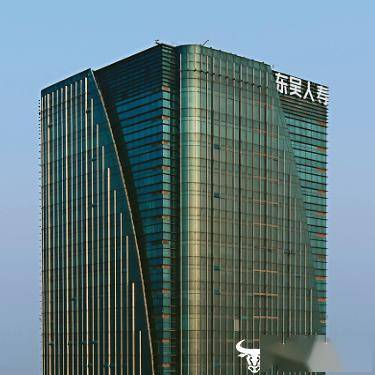
东吴人寿财务负责人张群贵上任两年了 老被董事长夸赞
Sou Hu Cai Jing· 2025-12-05 00:36
Core Viewpoint - Dongwu Life Insurance has experienced significant fluctuations in its operational performance in recent years, but managed to turn a profit in the third quarter of this year, achieving a net profit of 35.89 million yuan [1]. Financial Performance - The company reported a net profit of 0.50 billion yuan cumulatively this year, despite a loss of over 6 million yuan in the second quarter [3]. - From 2019 to 2022, Dongwu Life maintained profitability, but faced a substantial loss of 1.785 billion yuan in 2023 due to changes in the market environment [3]. - The company returned to profitability in the following year, achieving a net profit of 22 million yuan [3]. Management and Leadership - Zhang Qungui, the current financial head, has been in his position for just over two years and has previously held multiple roles within the company, including Chief Actuary and temporary financial head [3]. - The chairman, Zhao Kun, emphasized the importance of leveraging new accounting standards to enhance financial management and indicated a strategic focus on improving operational stability [4]. Strategic Initiatives - Dongwu Life has implemented three major management measures for 2024: comprehensive budget management, solvency management, and asset-liability management, aimed at increasing scale, enhancing quality, and optimizing structure [4]. - The company is recognized as the first national life insurance company established in a prefecture-level city, which provides it with a unique position in the market [4].
每日债市速递 | 央行将开展10000亿买断式逆回购
Wind万得· 2025-12-04 22:35
Open Market Operations - The central bank announced a 7-day reverse repurchase operation on December 4, with a fixed rate of 1.40% and a total amount of 180.8 billion yuan, matching the bidding amount [1] - On the same day, 356.4 billion yuan of reverse repos matured, resulting in a net withdrawal of 175.6 billion yuan [1] Funding Conditions - The interbank market in China continues to show a loose funding environment, with the D R001 weighted average interest rate slightly rising but remaining below 1.3% [3] - Overnight rates in the anonymous click (X-repo) system stabilized at 1.28%, indicating ample supply [3] - Non-bank institutions are borrowing overnight funds secured by credit bonds, with rates fluctuating between 1.43% and 1.47% [3] - In the U.S., the latest overnight financing rate is reported at 4.01% [4] Interbank Certificates of Deposit - The latest transaction for one-year interbank certificates of deposit among major banks is around 1.66%, which is an increase of over 1 basis point from the previous day [8] Government Bond Futures - The 30-year main contract fell by 1.04%, reaching a new low since November 22, 2024 [12] - The 10-year main contract decreased by 0.35% [12] - The 5-year main contract dropped by 0.24% [12] - The 2-year main contract declined by 0.05% [12] Central Bank Announcements - On December 5, the central bank will conduct a 1 trillion yuan buyout reverse repo operation with a 3-month term, matching the amount maturing on the same day [13] - The Ministry of Finance will issue an additional 7 billion yuan of government bonds in Hong Kong on December 10, including 2 billion yuan of 2-year bonds, 3 billion yuan of 3-year bonds, and 2 billion yuan of 5-year bonds [13] Fund Distribution - As of December 3, public funds have distributed dividends over 6,700 times this year, totaling 214.714 billion yuan [14] - Bond funds are the main contributors, with over 4,900 dividend distributions and a total of 155.791 billion yuan, accounting for 72.56% of the total dividends [14] Global Macro Insights - Concerns have been raised among Wall Street bond investors regarding Kevin Hassett potentially becoming the Federal Reserve Chair, fearing aggressive rate cuts to please President Trump [16] - The Bank of Japan's Governor stated that they are working to narrow the estimate range for the neutral interest rate, with expectations of another rate hike this month [16] - South Korea's Ministry of Trade reported that exports are expected to reach a record high of over 700 billion dollars in 2025, driven by strong performance in semiconductors, automobiles, and ships [16] Bond Market Events - The Hong Kong court approved Country Garden's debt restructuring plan, with creditors approving a scheme involving 9 bonds totaling over 13.7 billion yuan [18] - A rescue plan involving 8 billion yuan of common debt is in place for Suning's restructuring, with two major asset management firms planning to revitalize four ongoing projects [18]

中加基金权益周报︱利空消息扰动,长债表现承压
Xin Lang Cai Jing· 2025-12-04 09:11
Market Overview and Analysis - The issuance scale of government bonds, local government bonds, and policy financial bonds in the primary market last week was 252.2 billion, 351.4 billion, and 112.5 billion respectively, with net financing amounts of 39.1 billion, 325.9 billion, and 112.5 billion [1] - Financial bonds (excluding policy financial bonds) totaled an issuance scale of 195.7 billion with a net financing amount of 143.9 billion, while non-financial credit bonds had an issuance scale of 328.1 billion and a net financing amount of 113.5 billion [1] Secondary Market Review - The bond market showed weak performance due to concerns over bond fund redemptions and risks associated with real estate bonds, influenced by rumors of new redemption fees and the Vanke incident [2][9] Liquidity Tracking - The central bank's MLF operations released signals of support, maintaining a stable funding environment across the month, with R001 and R007 rates rising by 3.8 basis points and 2.7 basis points respectively compared to the previous week [3][11] Policy and Fundamentals - Industrial profits significantly declined in October, and the manufacturing PMI for November remained weak. High-frequency data indicates a divergence in production performance, with weak demand in real estate and exports but strong consumer spending related to travel. Prices for food and production materials have mostly rebounded [4][12] Overseas Market - Federal Reserve officials expressed dovish sentiments, and weak performance in the U.S. September PPI and sales data led to increased expectations for a rate cut in December FOMC. The 10-year U.S. Treasury yield closed at 4.02%, down 4 basis points from the previous week [5][13] Equity Market - A-shares rebounded significantly last week, influenced by gains in U.S. tech stocks, with leading increases in the communication, electronics, and non-ferrous sectors. The average daily trading volume decreased to 1.74 trillion, down 128.1 billion from the previous week, with market activity concentrated in communication and non-ferrous sectors [6][14] Bond Market Strategy Outlook - The bond market has shown weak performance since November, primarily due to the market's weak capacity to absorb long-term bonds. The duration of fiscal bond issuance has been increasing, and some banks' interest rate risk indicators are nearing regulatory limits. As year-end approaches, the ability of banks to absorb long-term bonds is further weakened, compounded by poor performance in insurance products. The bond market curve may continue to steepen, with cautious investor sentiment expected to persist [7][15]
四川:全面推行“金融链长制” 打造县域富民特色产业链
Jin Rong Shi Bao· 2025-12-04 04:14
Core Viewpoint - The People's Bank of China and the Ministry of Agriculture and Rural Affairs have initiated a "Financial Chain Leader System" to enhance financial services for rural revitalization, focusing on key agricultural industry chains in Sichuan province [1] Group 1: Financial Chain Leader System Implementation - The Sichuan branch of the People's Bank of China has fully implemented the "Financial Chain Leader System" across 51 cities and counties, establishing service mechanisms for 64 agricultural industry chains, resulting in a loan balance growth of 28.18% year-on-year [1] - This initiative supports the development of key agricultural sectors such as grain, livestock, and tea, aiding 678 leading agricultural enterprises and benefiting over 1.34 million farming households [1] Group 2: Collaborative Mechanisms - A specialized task force led by the People's Bank of China, involving agricultural, financial, and fiscal departments, has been established to facilitate the integration of agricultural industry development with financial services [2] - The implementation plan for the "Financial Chain Leader System" includes a "one chain, one leader" mechanism, designating 64 banks to act as financial chain leaders for local agricultural industries [2] Group 3: Innovative Financial Products - The Sichuan branch has introduced standardized regulations for rural property rights transactions to eliminate bottlenecks in resource confirmation, assessment, and circulation [2] - New financial products such as "Assistance for Agricultural Revitalization Loans" and models like "Re-loan + Specialty Industry" have been promoted, with a total re-loan balance of 1409.46 billion yuan, reflecting a year-on-year increase of 14.35% [2] Group 4: Targeted Financial Solutions - A project list for key agricultural industries has been created, with dedicated financial chain leaders and a consortium of banks, guarantees, and insurance institutions to provide tailored financial services [3] - Financial institutions are encouraged to develop specialized financial product packages and implement interactive financing models to support the integration of primary, secondary, and tertiary industries [3]
专访袁颖晖:储能出海的绿色保险带,背后是千亿美元新市场
2 1 Shi Ji Jing Ji Bao Dao· 2025-12-04 03:01
Core Insights - The article discusses the rapid overseas expansion of Chinese energy storage companies, highlighting that eight out of the top ten global energy storage system suppliers by shipment volume in the first three quarters of 2025 are Chinese firms [1] - The article emphasizes the emerging risks associated with this expansion, including technical hazards like lithium battery thermal runaway and the volatility of overseas policies and regulations [1] - A new market for value-added services in the energy storage sector is anticipated, with projections indicating growth from approximately $10.9 billion in 2025 to nearly $180 billion by 2035 [1][10] Company Strategy - Zhongyi Property Insurance Co., Ltd. aims to increase its green insurance business to 30%-40% of total operations within five years, positioning it as the largest business segment [2][9] - The company focuses on the green insurance sector as a strategic choice to differentiate itself in a competitive market, particularly by aligning with China's green transition goals [3][4] - The company has established a "Green Insurance Research Center" to focus on energy storage, recognizing its critical role in the renewable energy landscape [7] Market Dynamics - The traditional insurance market is saturated, while the green insurance sector presents broader opportunities with relatively smaller entry barriers for new participants [4][5] - The company leverages its parent company, Chubb Group, to provide localized risk management services for Chinese enterprises operating abroad, particularly in the context of the Belt and Road Initiative [5][6] Risk Management Innovations - The article introduces the "Risk as a Service" (RaaS) model, which is expected to reshape insurance underwriting logic by integrating long-term contracts among owners, suppliers, and insurers [10][11] - The company is developing an online risk assessment system for electrochemical energy storage stations, utilizing AI algorithms to quantify risks and generate diagnostic reports [12]