
食品饮料

Search documents
今年的消费,大有不同?
债券笔记· 2026-02-06 10:29
Core Viewpoint - The article discusses the recent positive trends in consumer spending in China, particularly during the upcoming Spring Festival, driven by government policies and extended holiday periods [3][4][5]. Group 1: Policy Support - The collaboration of nine government departments provides a strong backing for consumer spending, offering incentives such as prize invoices, subsidies for home appliances, and financial institution discounts, which encourages both consumers and investors to engage confidently in the market [4]. - The policy aims to eliminate barriers to consumption, effectively reassuring investors to participate in the consumer sector [4]. Group 2: Holiday Impact - The nine-day Spring Festival holiday is expected to unleash significant consumer demand, transforming a typical three-day spending period into a nine-day consumption peak, leading to a surge in various sectors including dining, travel, and home goods [5]. - The demand for home appliances and household goods is anticipated to increase sharply, with inbound tourism also being strategically targeted to boost spending [5]. Group 3: Comprehensive Engagement - The initiative promotes a "full coverage" approach, engaging both urban and rural markets through offline and online channels, ensuring that all consumer segments are reached [6]. - This strategy allows for diverse investment opportunities across different market segments, reducing the risk of poor investment choices [6]. Group 4: Positive Feedback Loop - The article emphasizes a sustainable cycle where government initiatives stimulate consumption, leading to increased corporate profits, which in turn drive further investment and job creation, ultimately enhancing consumer spending [7]. - The overall framework is designed to create a robust ecosystem for consumption, supported by government policies and consumer engagement [7].


消费品牌打造年轻、年味“新配方”,焕活新春新势能
Sou Hu Cai Jing· 2026-02-06 10:18
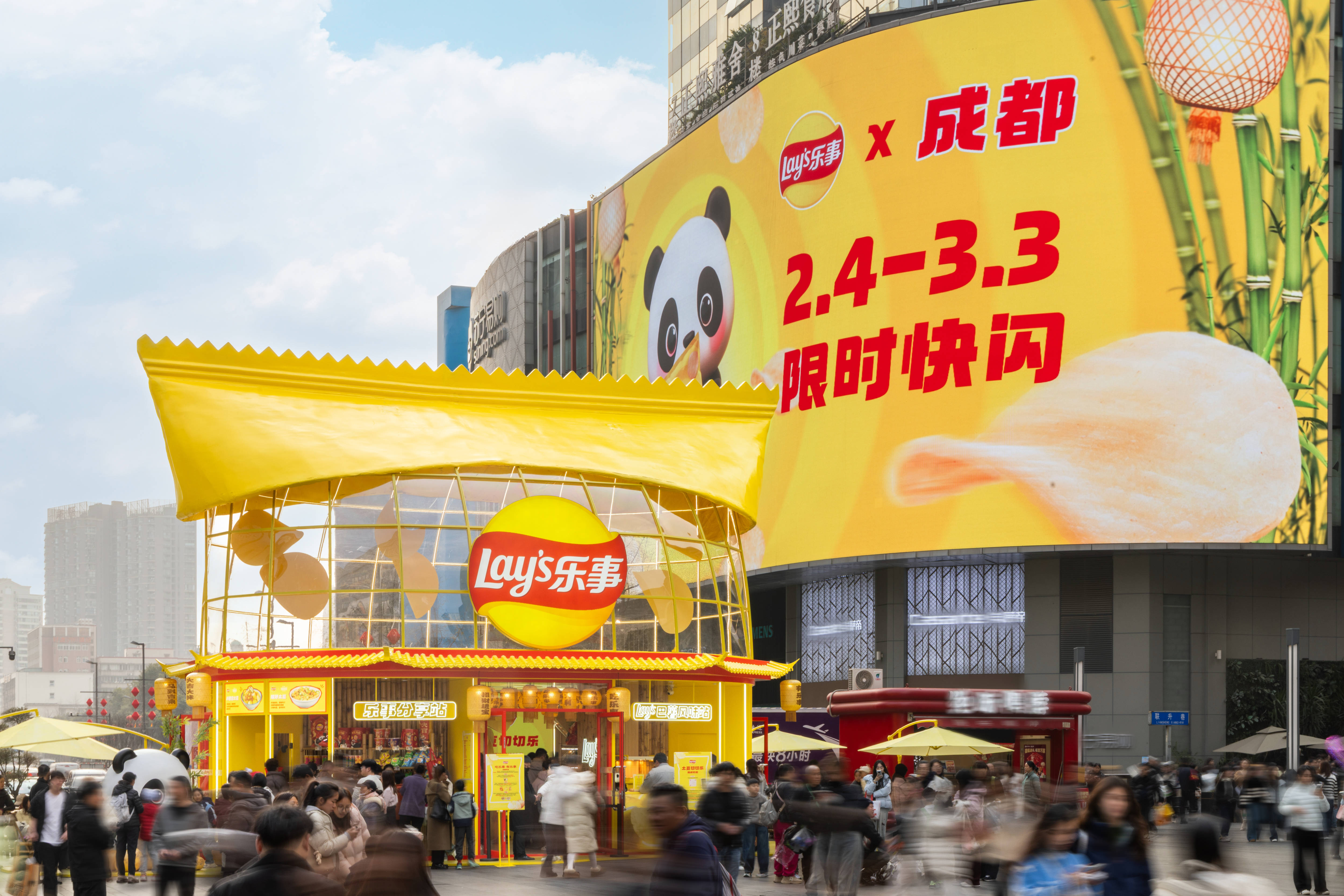
Group 1: Brand Strategies for Lunar New Year - Major brands are adopting youthful approaches to engage with Generation Z, infusing traditional Lunar New Year celebrations with fresh vitality and diversity [1] - Lays has launched a limited-time pop-up event in Chengdu, transforming the snack consumption experience through immersive scenes and interactive activities [2][6] - The event features a blend of classic brand elements with local cultural symbols, creating an immersive amusement park atmosphere for participants [6] Group 2: Consumer Engagement and Experience - Lays is shifting from being a mere "happy transmitter" of snacks to a "happy creator" that invites consumers to experience and share creative flavors [8] - The brand plans to expand similar pop-up experiences to more cities, tailoring unique flavor journeys to local cultures [8] - Samyang Foods is leveraging the concept of "spicy" as a social language and emotional connector for the Lunar New Year, integrating it into festive consumption scenarios [9][13] Group 3: Innovative Marketing and Product Offerings - Samyang Foods has introduced limited-edition products and collaborations, such as a lip gloss inspired by their spicy sauce, to enhance brand engagement during the festive season [13] - The brand is utilizing social media platforms for interactive campaigns, allowing users to participate in challenges that connect the spicy flavor with festive experiences [15]
2025年消费新潜力白皮书
魔镜洞察· 2026-02-06 09:55
Group 1: Investment Rating - The report provides a positive investment rating for the food and beverage industry, indicating a stable growth outlook for the sector [9][13]. Group 2: Core Insights - The food and beverage market in China is projected to reach a total scale of 593.67 billion yuan by 2025, with a year-on-year sales growth of 7.8%, driven by a 6.3% increase in volume and a 1.4% rise in average price [9][13]. - Health-oriented products are leading the growth in the food and beverage sector, with consumers increasingly prioritizing quality, health benefits, and functionality in their purchasing decisions [10][17]. - The snack food market is expected to grow to 132.76 billion yuan by 2025, with a growth rate of 5.8%, highlighting a significant shift towards high-protein and high-quality products [10][24]. - The beverage market is characterized by a dual structure where flavor remains the primary driver of sales, while functional and health-related attributes are gaining traction, contributing to overall market growth [11][50]. Group 3: Market Overview - The food and beverage market is experiencing a steady expansion, with significant growth in categories such as instant food, grains, and condiments, which are projected to grow by 14.5% and 13.8% respectively [13][17]. - The snack food segment is leading in sales, with beef jerky and marinated snacks showing a year-on-year growth of 13.5%, reflecting a consumer shift towards healthier and high-protein options [24][31]. - The beverage market is evolving, with a notable increase in demand for health-oriented products, including herbal and functional drinks, indicating a shift from traditional flavors to health-focused offerings [50][54]. Group 4: Emerging Trends - The trend towards health and convenience is reshaping the food and beverage landscape, with products like fresh cakes and plant-based drinks gaining popularity due to their perceived health benefits [17][40]. - The snack food market is witnessing a rise in personalized offerings, with regional and cultural specialties becoming more prominent, catering to consumer preferences for unique flavors and experiences [32][40]. - The beverage sector is moving towards a focus on functional benefits, with products aimed at specific health needs, such as digestive health and immune support, becoming increasingly popular among consumers [50][55].
市场热点出现切换!科技股退潮,消费股接棒
Sou Hu Cai Jing· 2026-02-06 09:21
本周A股随着国际金银价格大幅波动而波动,周一上证指数出现百点下跌,但此后几天A股表现平稳,周K线仅仅小幅下跌,大盘箱体震荡格局并没有改 变。 值得注意的是,市场热点出现切换趋势,科技股有退潮迹象,消费股正在接棒,这种热点转换有利于大盘稳定。 主要指数周K线收出小阴线 上证指数周一低开低走,以4079.71点开盘,直接跌破4100点大关,开盘后大盘无力回天不断下滑,最终以接近最低点4015.75点报收,下跌102.2点,跌幅 达2.48%,这是一年多来罕见的百点下跌。 上证指数周K线图 导致周一暴跌的原因就是国际金银价格跳水。黄金、白银今年1月份是全球最热的品种,黄金从4338.34美元暴涨到5598.75美元,白银涨幅更大,但上周五 出现暴跌,黄金跌破5000美元大关,白银更是暴跌26%,由此,导致周一黄金、白银股票均跌停开盘,随后是有色金属板块大跌,进一步扩大到化工、石 油、煤炭等资源股,当天跌停股票超过百只,基本上都是黄金、白银等资源股。 周一虽然跌幅大,但板块集中,并非全面性回调,周二上证指数最低跌至4002.78点,也是全周最低点,随后大盘开始回升,周三回升到全周最高点 4104.62点,但4100点 ...

好莱坞明星光环加持 有机儿童零食制造商Once Upon a Farm(OFRM.US)IPO定价18美元
Zhi Tong Cai Jing· 2026-02-06 09:01
Group 1 - Once Upon a Farm (OFRM.US), co-founded by actress Jennifer Garner, raised $198 million by issuing 11 million shares at $18 each, achieving a fully diluted market capitalization of $811 million [1] - The company specializes in organic refrigerated foods for infants and toddlers, with core product lines including cold-pressed pouch foods, oat bars, dry snacks, and frozen meals, aiming to provide convenient meal options for consumers [1] - As of September 30 last year, Once Upon a Farm reported revenues of $176.7 million and a net loss of $39.8 million, while for the same period in 2024, revenues were $107.6 million with a net loss of $11.6 million [1] Group 2 - Once Upon a Farm plans to list on the New York Stock Exchange under the ticker "OFRM," with several major banks acting as joint bookrunners for the transaction [2] - The performance of consumer-facing companies in the IPO market has been relatively subdued, with total financing of approximately $15.6 billion since 2021, compared to $17.4 billion raised that year [2] - Notable stock performance post-IPO includes significant gains for Cava Group (CAVA.US) and Athleta (AS.US), while Webtoon Entertainment (WBTN.US) has underperformed [2]
粤东西北12市2025年经济数据出炉 产业向好向新 经济稳中有增
Nan Fang Ri Bao Wang Luo Ban· 2026-02-06 08:31
工业支撑有力 发展持续向好 6市经济增速跑赢全省,10市经济增速好于去年,梅州、潮州经济增长排名全省第一、第三; 多市技改投资、基础设施投资、全社会用电量等实现较快增长,阳江、潮州等市技改增速超30%,河 源、云浮全社会用电量实现两位数增长…… 近日,粤东西北12市2025年经济数据陆续出炉,各地经济发展可圈可点,相关地市工业、投资、消费等 相关指标实现稳中有增,经济向好的基础不断巩固。 2025年,梅州、潮州、湛江、清远、汕尾、云浮6市经济增长跑赢全省3.9%的增速,分别为5.8%、 4.7%、4.5%、4.5%、4.2%、4.0%。 去年,云浮市规上工业取得5.2%的增速,贵金属行业表现良好,带动云浮采矿业实现高速增长。该市 非金属矿采选业、有色金属冶炼和压延加工业、化学原料和化学制品制造业分别增长41.3%、57.1%、 19.3%,合计拉动规上工业增加值增长5.6个百分点。 从地区生产总值上看,粤东西北12市地区生产总值分为4个梯队。其中,茂名地区生产总值达到4106.4 亿元,是粤东西北唯一GDP4000亿+城市;处在3000亿+梯队的有湛江、汕头,分别为3952.94亿元、 3023.83亿元,湛 ...
全体注意!今天市场发出一个重要信号:资金正集体“搬家”!
Sou Hu Cai Jing· 2026-02-06 08:30
Core Viewpoint - The market is experiencing a contraction with clear main lines driven by "policy" and "global pricing," focusing on sectors like oil and petrochemicals, basic chemicals, and electric power equipment [1] Group 1: Leading Sector Drivers - Oil and Petrochemicals/Basic Chemicals: The rise is not just due to price increases but a reshaping of the supply-demand landscape, driven by energy security strategies and a significant price surge in upstream raw materials [2] - Electric Power Equipment: The sector is strengthened by clear signals of new investments in the power grid, particularly due to the 2026 subsidy policy for new energy vehicles favoring charging infrastructure [3] Group 2: Market Dynamics - The contrast between the booming resource manufacturing sectors and the weak consumer sectors like food and beverage indicates a natural risk-averse behavior as the market shifts from speculative stories to sectors with clear policies, prices, and orders [4] - The market is expected to maintain a volatile but structurally opportunistic environment, with funds focusing on certainty [5] Group 3: Focus Areas - Attention should be given to the new energy vehicle supply chain, particularly high-demand lithium battery materials and charging station operations, which are expected to benefit from the 2026 subsidy policy [7] - The trend of central banks increasing gold reserves provides a long-term rationale for resource assets like precious metals, with a focus on mining companies that are closely linked to international prices and have production growth [7] - The chemical and manufacturing sectors should be explored for similar supply-demand improvements, as seen in the case of dispersed dyes driven by cost and demand recovery [7]
好时2025年营收增4.38% 归母净利润同比下滑60.2%
Jin Rong Jie· 2026-02-06 08:29
Group 1 - The core revenue for the company in the fiscal year 2025 reached $11.69 billion, approximately 81.13 billion RMB, representing a year-on-year growth of 4.38% [1] - The net profit attributable to shareholders for the same period was $883 million, about 6.13 billion RMB, showing a significant decrease of 60.2% year-on-year [1] - In Q4 2025, the company's revenue was $3.09 billion, around 21.44 billion RMB, with a year-on-year increase of 7.0%, while net profit dropped to $320 million, approximately 2.22 billion RMB, down 59.9% year-on-year [1] Group 2 - The gross margin for the entire year of 2025 was 33.5%, down from 47.3% in the previous year, and the Q4 gross margin fell by 17 percentage points to 37.0% [1] - The decline in gross margin was attributed to higher commodity costs and tariffs, along with a decrease in sales volume [1] - Cocoa price fluctuations were identified as a key factor impacting the company's profitability, with prices rising significantly from Q2 2024 and remaining high into early 2025 [1] Group 3 - The company has a positive outlook for 2026, expecting revenue growth of 4%-5% and an increase in earnings per share by 79% to 89% [1]

图数室|冬奥氪金,从夯到更夯
Xin Lang Cai Jing· 2026-02-06 08:25
Group 1 - The core idea of the article highlights the evolution of Olympic sponsorship, showcasing how it has transformed from a concentrated model to a multi-layered approach, reflecting the deep connection between the Olympics and the economic landscape of the times [2][4][11] - The number of global partners for the Olympics has increased significantly, from 6 in the 2002 Salt Lake City Winter Olympics to 12 in the 2018 PyeongChang Winter Olympics, indicating a doubling of sponsorship opportunities [2][4] - The Beijing 2022 Winter Olympics exemplified an efficient sponsorship model with only 46 sponsors generating a record revenue of $1.838 billion, averaging nearly $40 million per sponsor, compared to 86 sponsors and $649 million in revenue for the previous PyeongChang Olympics [11][15] Group 2 - The sponsorship structure for the Beijing 2022 Winter Olympics included various levels such as official partners, sponsors, and suppliers, featuring both international brands like Intel and local companies like China Post, showcasing a blend of global and local economic forces [4][5] - The upcoming 2026 Milan Winter Olympics will introduce a new "senior partner" tier, integrating national strategic enterprises, which reflects a trend of deeper collaboration between Olympic branding and local industries [7][9] - The impact of Olympic sponsorship extends beyond immediate sales, serving as a platform for brands to demonstrate technological capabilities and build long-term brand equity through consumer engagement and emotional connections [15]

食饮吾见 | 一周消费大事件(2.2-2.6)
Cai Jing Wang· 2026-02-06 08:08
Group 1 - Dongpeng Beverage listed on the Hong Kong Stock Exchange on February 3, 2026, with projected revenue for 2025 expected to be between 20.76 billion to 21.12 billion yuan, representing a year-on-year growth of 31.07% to 33.34% [1] - The company anticipates a net profit attributable to shareholders of 4.34 billion to 4.59 billion yuan, with a year-on-year increase of 30.46% to 37.97% [1] - The expected growth in net profit excluding non-recurring items is projected to be between 26.29% to 33.34% [1] Group 2 - Gaoxin Retail announced that it is currently unable to contact CEO Li Weiping, and the management responsibilities are being overseen by Chairman Hua Yunen [2] - The company confirmed that its operations are proceeding normally, with no impact on the supply of goods or services during the peak sales season [2] Group 3 - Chongqing Beer reported a revenue of 14.722 billion yuan for 2025, a year-on-year increase of 0.53%, and a net profit of 1.231 billion yuan, up 10.43% [3] - The company launched over 30 new products in 2025, including tea beer and fruit-flavored soda, to enhance its product offerings [3] - The company’s strategic initiatives included optimizing product structure and expanding into non-traditional beverage channels, contributing to a resilient business performance [3] Group 4 - Liangpinpuzi announced that its controlling shareholder, Ningbo Hanyi, received execution notices due to overdue debts totaling approximately 280 million yuan [4] - The company stated that the operational impact from this situation is currently minimal, and business activities are proceeding as normal [4] Group 5 - Yum China reported a 4% increase in total revenue to 11.8 billion USD for the fiscal year 2025, with a 9% increase in Q4 revenue to 2.8 billion USD [6] - The company opened 1,706 new stores in 2025, bringing the total to 18,101, with a focus on expanding its KPRO brand [6] - KPRO, which offers healthy food options, has seen significant sales growth, contributing to double-digit sales increases for the parent brand [6] Group 6 - Dabeinong announced the passing of its actual controller and chairman, Shao Genhuo, on February 3, 2026, with Vice Chairman Zhang Lizhong taking over the chairman's responsibilities [7] - The company confirmed that its board and management are functioning normally, and business operations continue without disruption [7] Group 7 - Sam's Club former executive Andrew Miles has joined Metro China as an advisor, effective February 2026, to enhance product competitiveness and long-term user value [8] Group 8 - Langjiu reported record high sales in January 2026, with a single-day sales peak of 270 million yuan [9] - The company noted a slight increase in distributor shipments and significant growth in membership and product launches throughout 2025 [9] Group 9 - Jinshiyuan expressed cautious optimism for the upcoming Spring Festival sales, indicating that while achieving internal expectations is possible, overall performance may decline compared to the previous year [10][11] - The company is actively preparing for the holiday season and managing inventory to balance supply and demand [11]