制造业

Search documents
12月经济数据快报
Guo Tou Qi Huo· 2026-01-20 11:47
1. Report Industry Investment Rating - No relevant information provided 2. Core Viewpoints - In 2025, China's GDP was 1,401,879 billion yuan, a 5.0% increase from the previous year. The added value of the primary, secondary, and tertiary industries increased by 3.9%, 4.5%, and 5.4% respectively. Quarterly GDP growth rates were 5.4% in Q1, 5.2% in Q2, 4.8% in Q3, and 4.5% in Q4. The Q4 GDP had a 1.2% quarter - on - quarter growth [1] - In December 2025, the year - on - year growth of industrial added value above designated size was 5.2%, 0.4 percentage points higher than the previous value, and the month - on - month growth was 0.49%, 0.05 percentage points higher than the previous value. The growth rates of mining and production and supply of electricity, gas, and water declined, while the manufacturing growth rate accelerated [1] - From January to December 2025, the year - on - year decline of national fixed - asset investment was 3.8 percentage points, with a month - on - month decline of 1.13%. Manufacturing investment increased by 0.6%, narrow - sense infrastructure investment had a growth rate of - 1.48%, and real estate development investment decreased by 17.20% [1] - In December 2025, the year - on - year growth of total retail sales of consumer goods was 0.9%, lower than the previous value of 1.3%, and the month - on - month decline was 0.40% [1] 3. Summary by Relevant Indicators GDP - The GDP quarterly year - on - year growth rates in 2025 were 5.4% in Q1, 5.2% in Q2, 4.8% in Q3, and 4.5% in Q4. The quarterly GDP growth rates were 1.0% in Q2, 1.1% in Q3, and 1.2% in Q4. The cumulative year - on - year growth rates were 5.3% in Q2, 5.2% in Q3, and 5.0% in Q4 [1] Industrial Added Value - In December 2025, the year - on - year growth of industrial added value above designated size was 5.2%, and the month - on - month growth was 0.49%. The cumulative year - on - year growth from January to December was 5.9%. Among the three major sectors, the growth rates of mining and production and supply of electricity, gas, and water declined, while the manufacturing growth rate accelerated [1] Fixed - Asset Investment - From January to December 2025, the year - on - year decline of national fixed - asset investment was 3.8 percentage points, and the month - on - month decline was 1.13%. Manufacturing investment increased by 0.6%, narrow - sense infrastructure investment had a growth rate of - 1.48%, and real estate development investment decreased by 17.20% [1] Real Estate - The cumulative year - on - year decline of real estate development investment from January to December 2025 was 17.20%. The cumulative year - on - year decline of commercial housing sales area was 8.7%. The year - on - year declines of new housing starts, housing construction, housing completion, and real estate development funds in December were 19.3%, 47.14%, 18.36%, and 28.09% respectively [1] Social Retail Sales - In December 2025, the year - on - year growth of total retail sales of consumer goods was 0.9%, lower than the previous value of 1.3%, and the month - on - month decline was 0.40%. The cumulative year - on - year growth from January to December was 3.7% [1]
伟隆股份:子公司拟与专业投资机构共同投资基金
Ge Long Hui· 2026-01-20 11:17
Core Viewpoint - Weilon Co., Ltd. (002871.SZ) has approved a proposal for its wholly-owned subsidiary, Weilon (Hong Kong) Industrial Co., Limited, to invest in a fund managed by a professional investment institution, indicating a strategic move to diversify its investment portfolio [1] Group 1 - The board of directors of Weilon Co., Ltd. held its 19th meeting of the fifth session and reviewed the investment proposal [1] - The subsidiary, Weilon (Hong Kong), plans to invest up to $5 million, equivalent to approximately 35 million RMB, in the SinoPro Global Opportunities Fund II [1] - This investment will be made using the subsidiary's own funds, reflecting the company's commitment to exploring new investment opportunities [1]

打造人才与产业融合发展的“深圳样本”
Zhong Guo Fa Zhan Wang· 2026-01-20 10:46
Core Viewpoint - Shenzhen is implementing a plan to integrate human resources services with the manufacturing industry, aiming to enhance talent support for manufacturing transformation and establish a model for talent-industry integration by 2027 [1][2]. Group 1: Objectives and Goals - By the end of 2027, Shenzhen aims to cultivate at least 5 leading human resources service institutions with annual revenues exceeding 5 billion yuan [1]. - The plan includes the recognition of no less than 15 specialized and innovative small and medium-sized enterprises, as well as the formation of at least 15 innovation consortia [1]. - The initiative targets the establishment of no fewer than 15 human resources service liaison stations and aims to achieve a total of at least 3 million service interactions on the human resources ecological service platform [1]. Group 2: Specific Measures - The plan outlines 13 specific measures focusing on collaborative mechanisms, policy support, platform construction, and talent cultivation [1]. - A collaborative service system will be established involving municipal departments, districts, human resources service institutions, manufacturing enterprises, universities, research institutes, vocational schools, and industry associations [1]. - The policy support includes accelerating the "Pengcheng i Industry" public employment service enhancement project and utilizing government investment guidance funds to implement talent assurance policies [2]. Group 3: Talent Development Initiatives - The initiative aims to attract high-end talent for the manufacturing sector through the "Talent Scout Award," encouraging social participation in high-end talent recruitment [2]. - A comprehensive vocational skills training program will be implemented, integrating job demand, skills training, skills evaluation, and employment services [2].
适度宽松的货币政策有望支撑今年M2增速|宏观晚6点
Sou Hu Cai Jing· 2026-01-20 10:18
Group 1 - The Ministry of Finance and three other departments announced a special guarantee plan for private investment with a total quota of 500 billion yuan, to be implemented over two years [1] - The plan supports loans for small and micro enterprises for various purposes, including equipment and raw material purchases, technological upgrades, and business operations [1] - The plan also covers long-term loans for sectors such as catering, health, elderly care, childcare, home services, culture, entertainment, tourism, sports, green initiatives, digital services, and retail [1] Group 2 - The Ministry of Finance and three other departments released a notice to optimize the fiscal interest subsidy policy for equipment update loans, expanding the support scope and areas [2] - The notice states that for businesses undertaking equipment updates, the central government will subsidize 1.5% of the principal on fixed asset loans for equipment update projects, with a maximum subsidy period of two years [2] Group 3 - The People's Bank of China announced that the Loan Prime Rate (LPR) has remained unchanged for eight consecutive months, with the one-year LPR at 3.0% and the five-year LPR at 3.5% [3] - These LPR rates will remain effective until the next announcement [3]


2025年12月经济数据点评:总量平稳背后的结构差异
BOHAI SECURITIES· 2026-01-20 10:07
Economic Growth - In Q4 2025, the actual GDP grew by 4.5% year-on-year, matching expectations but down from 4.8% in the previous quarter[2] - The annual economic growth for 2025 was characterized by a high start and a low finish, influenced by policy timing and demand-supply dynamics[3] Industrial Production - The industrial added value in December 2025 increased by 5.2% year-on-year, slightly above the expected 5.0%[2] - High-tech manufacturing sectors showed growth rates significantly above the overall industrial average, indicating a shift in production structure[4] Consumer Spending - Retail sales of consumer goods in December 2025 grew by only 0.9% year-on-year, below the expected 1.0% and down from 1.3% in the previous month[2] - Service consumption outperformed goods consumption, with specific sectors like cultural and communication equipment showing stronger performance[5] Investment Trends - Fixed asset investment saw a cumulative year-on-year decline of 3.8% by December 2025, worse than the expected decline of 3.1%[2] - Real estate investment dropped significantly, with a year-on-year decline of 35.8%, indicating ongoing challenges in the sector[6] Future Outlook - The first quarter of 2026 is expected to see continued structural support from net exports, with potential stabilization in government-led investment projects[3] - Further policy measures are anticipated to support consumer spending and investment recovery in 2026[5][6]
重点项目完成投资突破800亿元 湛江去年工业投资占比近六成
Nan Fang Ri Bao Wang Luo Ban· 2026-01-20 09:59
Group 1 - The core message of the news is that Zhanjiang has made significant progress in expanding effective investment and optimizing investment structure, with key projects achieving an investment of over 80 billion yuan in the past year [1] - In 2025, Zhanjiang plans to complete investments of 80.17 billion yuan across 476 key projects, with provincial key projects accounting for 56.03 billion yuan, exceeding annual targets [1] - The proportion of industrial investment in total investment has increased to 57.1%, indicating a strengthening foundation in the manufacturing sector [1] - Industrial technological transformation investment has grown by 10.3% year-on-year, maintaining positive growth for 28 consecutive months, reflecting the sustained internal momentum for industrial upgrading in Zhanjiang [1] Group 2 - Zhanjiang has achieved key breakthroughs in major strategic projects, with the feasibility study report for the Zhanhai cross-sea ferry and line project approved by the National Development and Reform Commission [1] - The Leizhou Peninsula irrigation project has also received approval from the Guangdong Provincial Development and Reform Commission, expected to bring considerable investment increments and strategic support for Zhanjiang's future development [1] - In terms of investment attraction and financing innovation, Zhanjiang organized a series of investment promotion activities last year, resulting in a 4.7% increase in the number of new projects started [1] - Zhanjiang actively sought central policy funds and established a "debt-loan linkage" mechanism, broadening financing channels for major projects [1] Group 3 - In 2026, Zhanjiang will continue to prioritize expanding effective investment as a key driver for high-quality economic development, with 256 key construction projects planned for the year and an investment target of 65.87 billion yuan [2] - The city is focusing on expediting the commencement of 77 projects, including the Leizhou Peninsula irrigation project [2]
【数据发布】2025年全国固定资产投资基本情况
中汽协会数据· 2026-01-20 09:36
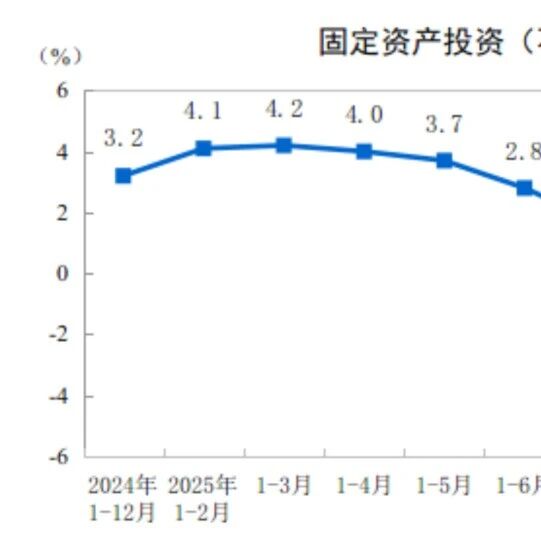
Core Viewpoint - In 2025, China's fixed asset investment (excluding rural households) reached 48,518.6 billion yuan, a decrease of 3.8% compared to the previous year, with private investment declining by 6.4% [1][3]. Investment by Industry - Investment in the primary industry was 957 billion yuan, an increase of 2.3% year-on-year [3]. - Investment in the secondary industry was 177,368 billion yuan, growing by 2.5% [3]. - Investment in the tertiary industry was 298,248 billion yuan, showing a decline of 7.4% [3]. - Within the secondary industry, industrial investment increased by 2.6%, with mining investment up by 2.5%, manufacturing investment up by 0.6%, and investment in electricity, heat, gas, and water production and supply up by 9.1% [3]. - In the tertiary industry, infrastructure investment (excluding electricity, heat, gas, and water production and supply) decreased by 2.2%, with pipeline transportation investment increasing by 36.0% and multimodal transport and agency investment increasing by 22.9% [3]. Investment by Region - Investment in the eastern region decreased by 8.4%, the central region by 2.7%, the western region by 1.3%, and the northeastern region by 15.5% [3]. Investment by Registration Type - Domestic enterprises' fixed asset investment fell by 3.8%, investment from Hong Kong, Macau, and Taiwan enterprises decreased by 2.2%, and foreign enterprises' investment dropped by 13.8% [3][5].
【数据发布】2025年12月份规模以上工业增加值增长5.2%
中汽协会数据· 2026-01-20 09:36
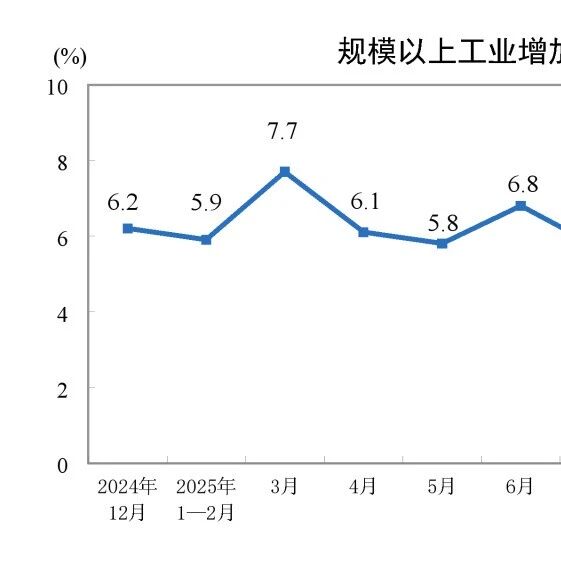
Core Viewpoint - The industrial added value of large-scale industries in December 2025 experienced a year-on-year real growth of 5.2%, with a month-on-month increase of 0.49% compared to the previous month. The total growth for the year 2025 was 5.9% compared to the previous year [1]. Group 1: Industrial Growth by Sector - In December, the mining industry saw a year-on-year growth of 5.4%, manufacturing grew by 5.7%, and the production and supply of electricity, heat, gas, and water increased by 0.8% [3]. - By economic type, state-controlled enterprises had a year-on-year growth of 3.9%, joint-stock enterprises grew by 5.8%, foreign and Hong Kong, Macao, and Taiwan-invested enterprises increased by 2.7%, and private enterprises grew by 4.2% [3][7]. - Among 41 major industries, 33 maintained year-on-year growth in added value. Notable growth was seen in coal mining and washing (6.4%), oil and gas extraction (3.7%), and the manufacturing of chemical raw materials and products (8.0%) [3][7]. Group 2: Product Output and Sales - In December, out of 623 industrial products, 325 saw a year-on-year increase in output. Steel production was 115.31 million tons (down 3.8%), cement was 144.16 million tons (down 6.6%), and ten non-ferrous metals reached 7.21 million tons (up 4.9%) [4]. - The product sales rate for large-scale industrial enterprises was 98.2%, a decrease of 0.7 percentage points year-on-year. The export delivery value reached 1,493.2 billion yuan, reflecting a nominal year-on-year growth of 3.2% [4][5]. Group 3: Key Product Performance - In December, the production of automobiles was 3.412 million units (down 2.8%), with new energy vehicles accounting for 1.791 million units (up 8.7%) [4][5]. - The output of ethylene was 3.56 million tons (up 3.0%), while the crude oil processing volume was 6.246 million tons (up 5.0%) [4][5]. - The production of industrial robots increased by 14.7% year-on-year, indicating a strong growth trend in high-tech manufacturing [7].
GDP突破140万亿,如何理解宏观增长与微观感受有“温差”?
Bei Ke Cai Jing· 2026-01-20 09:19
Economic Overview - In 2025, China's GDP reached 140 trillion yuan, marking a 5.0% increase from the previous year [4][7] - The per capita disposable income for residents was approximately 43,400 yuan, also reflecting a 5.0% growth [4][8] Employment and Income - The average urban survey unemployment rate in 2025 was 5.2%, below the target of around 5.5% [10] - The unemployment rate for urban workers aged 30-59 averaged 4.0%, which is 1.2 percentage points lower than the overall urban rate [11][12] - Per capita wage income grew by 5.3%, while per capita operating net income increased by 5.0% [9] Consumer Spending - Per capita consumer spending was about 29,500 yuan, with a nominal growth of 4.4% from the previous year [13] - Key areas of consumer spending, such as education, culture, entertainment, and healthcare, showed high growth rates [13] Structural Economic Issues - There exists a "temperature difference" between macroeconomic growth and individual experiences, attributed to structural factors and the transition between old and new economic drivers [6][15] - The growth in high-tech manufacturing (9.4%) outpaced traditional industries, contributing to the perceived economic disparity [16] Policy Recommendations - Experts suggest that government actions should focus on policy implementation to address the "temperature difference" and ensure that economic growth benefits all demographics [22][24] - The Central Economic Work Conference proposed measures to stabilize employment for key groups, such as college graduates and migrant workers, and to support the real estate market [23]

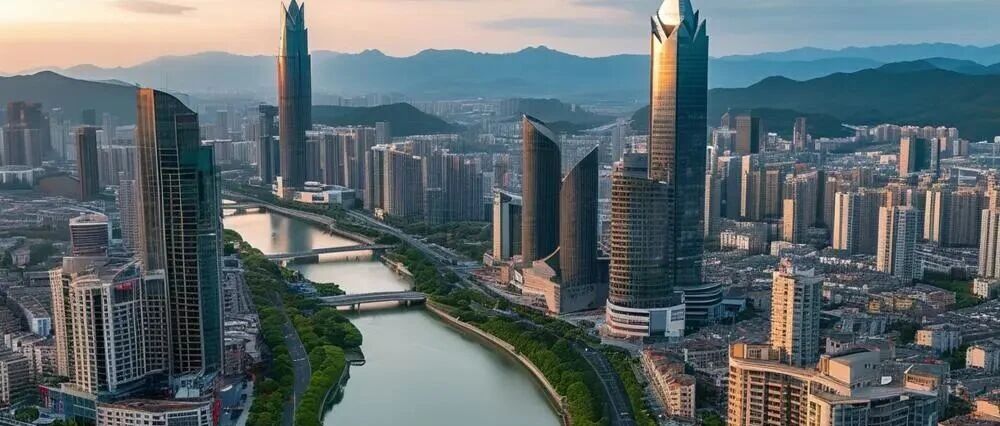
中国第28座万亿之城,来自浙江
21世纪经济报道· 2026-01-20 09:12
Core Viewpoint - Wenzhou is emerging as a "slash city" with a projected GDP exceeding 1 trillion yuan by 2025, becoming China's 28th trillion-yuan city and the third in Zhejiang province, while accelerating its development as a national "AI demonstration application first city" [1][3]. Economic Growth and Development Goals - Wenzhou's GDP has grown at an average rate of 6.5% during the first four years of the 14th Five-Year Plan, moving from 30th to 28th in national GDP rankings, and its resident population increased from 9.57 million to 9.85 million [3]. - The city aims to enhance its urban circle capabilities and establish itself as a significant regional center in the southeast coastal area, with a focus on high-quality development [3][10]. Innovation and AI Development - Wenzhou is prioritizing innovation, with R&D expenditure growing by an average of 14% annually over the past five years, and the area of incubators expanding over tenfold to exceed 10 million square meters [6]. - The city plans to embed artificial intelligence across various sectors, including manufacturing, energy, healthcare, finance, and tourism, aiming to create a nationally recognized "AI demonstration application first city" [4][8]. Strategic Planning and Implementation - The city has outlined nine key tasks for the next five years, focusing on building a modern industrial system, expanding domestic demand, and enhancing the urban circle's development [6]. - Wenzhou aims to become a leading innovation source in the southeast coastal region, with a modern industrial cluster and a significant increase in the proportion of R&D expenditure relative to GDP [6][7]. Urban Circle and Regional Integration - Wenzhou is working to enhance the integration and development of its urban circle, aiming to connect with the Yangtze River Delta and the Guangdong-Hong Kong-Macao Greater Bay Area [10][11]. - The city is leveraging its unique advantages, including a global trade network, to extend its influence into Southeast Asia and other international markets [11].