家具

Search documents
匠心家居(301061):25Q2业绩延续靓丽表现,海外自主品牌持续拓展
Guotou Securities· 2025-07-15 08:02
Investment Rating - The investment rating for the company is "Buy-A" with a target price of 98.57 CNY, maintaining the rating [5]. Core Viewpoints - The company continues to show strong performance with a projected net profit of 4.10-4.60 billion CNY for H1 2025, representing a year-on-year growth of 43.70%-61.23% [1]. - The company is actively expanding its overseas self-owned brand strategy, particularly in North America, with significant progress in the "MOTOGallery" project [2][3]. - The product structure is continuously optimized, with electric sofas showing a revenue increase of 37.13% year-on-year, contributing to overall profitability [2][4]. Summary by Sections Financial Performance - For Q2 2025, the company expects a net profit of 2.16-2.66 billion CNY, a year-on-year increase of 31.71%-62.20% [1]. - The gross profit margin for 2024 is projected at 39.35%, up 5.40 percentage points year-on-year, while the net profit margin is expected to be 26.80%, an increase of 5.60 percentage points [4]. Product and Market Development - The company has seen a significant increase in the number of direct retail customers, with the "store-in-store" model successfully implemented, providing stable channel support for growth [2]. - The company has expanded its retail network in North America, with over 500 store-in-store setups in the U.S. and 24 stores in Canada, enhancing brand influence and sales stability [2]. Customer Base and Sales Growth - The top 10 customers have shown growth in procurement amounts, with a total of 96 new customers added in 2024 and Q1 2025, all from U.S. retailers [3]. - The company’s retail channel layout in the U.S. has proven effective, with an increase in both the number of retail customers and their contribution to sales [3]. Cost Management and Efficiency - The company has maintained good control over period expenses, with a period expense ratio of 8.02% in 2024, down 3.05 percentage points year-on-year [9]. - The company’s focus on high-quality brand positioning and innovation has led to a more diversified and stable development pattern [4]. Future Projections - The company is expected to achieve revenues of 31.62 billion CNY, 38.50 billion CNY, and 46.31 billion CNY for the years 2025, 2026, and 2027, respectively, with corresponding net profits of 8.84 billion CNY, 10.36 billion CNY, and 12.32 billion CNY [11].
成都工业内外兼修!上半年3场出海+80余场供需对接实现签约130余亿
Xin Lang Cai Jing· 2025-07-15 02:29
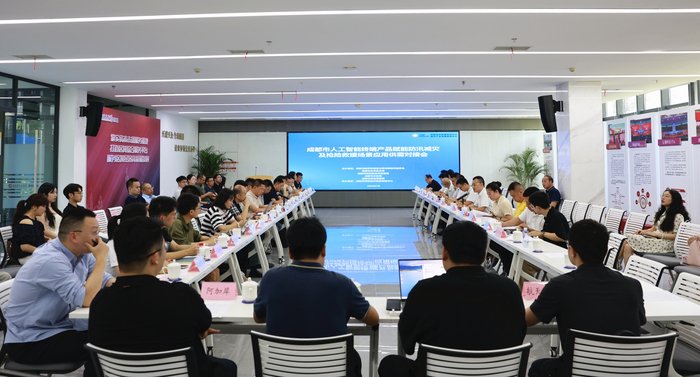
Group 1 - Chengdu's Economic and Information Bureau organized two supply-demand matchmaking meetings focusing on artificial intelligence and e-commerce platforms [1][3] - The AI meeting involved over 20 companies and resulted in collaborations with local emergency and water management departments for flood prevention and disaster relief [1] - The e-commerce meeting aimed to enhance the visibility of Chengdu's industrial products on major platforms, encouraging local businesses to embrace e-commerce as a critical channel [3] Group 2 - In the first half of the year, Chengdu's Economic and Information Bureau organized three government-enterprise delegations abroad, with intended contract amounts exceeding 6 billion yuan [3][12] - A total of over 80 supply-demand matchmaking events were held, generating intended order amounts exceeding 7 billion yuan [3][4] - The "2025 China Mobile Industry Matchmaking Conference" in April resulted in the release of 209 business opportunities worth over 150 billion yuan [4] Group 3 - Chengdu's Economic and Information Bureau has established a mechanism to regularly summarize supply-demand matchmaking activities, focusing on 11 key industrial chains [6] - The bureau has published over 1,500 supply-demand opportunity lists, covering more than 2,000 industrial enterprises [6][12] - The "布行天下" matchmaking event facilitated deep connections between fabric suppliers and local clothing brands, resulting in contracts worth over 20 million yuan [6] Group 4 - Chengdu's West Electric Company successfully shipped transformers for major projects in Saudi Arabia and Sweden, with contract values of 270 million yuan and 150 million yuan respectively [9][10] - The company is also expanding its international presence with ongoing projects in Canada and Indonesia [9] Group 5 - Chengdu's industrial enterprises are actively participating in international market expansion, with significant contracts signed during government-led delegations to Central Asia [11][12] - Companies like Kangtai Plastic Technology and Chengdu Update Furniture have secured agreements for regional representation and technology sharing, with expected sales reaching 10 million USD and investments exceeding 50 million yuan respectively [11][12] Group 6 - The Chengdu Economic and Information Bureau plans to continue its "Chengdu-made" initiatives, including further matchmaking events and promotional activities to enhance brand influence [14]


增长2.9%!市场多元韧性强 中国外贸半年报出炉
Yang Shi Xin Wen Ke Hu Duan· 2025-07-15 00:35
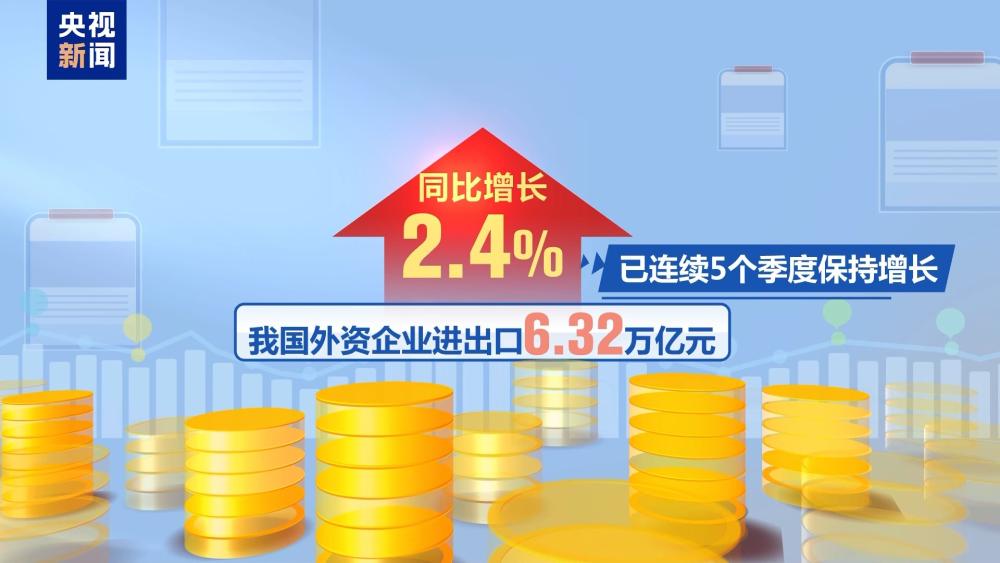
Group 1 - In the first half of the year, China's goods trade import and export reached 21.79 trillion yuan, a year-on-year increase of 2.9% [1] - Private enterprises accounted for 57.3% of China's foreign trade, with imports and exports totaling 12.48 trillion yuan, up 7.3% year-on-year [1][3] - Foreign-funded enterprises achieved 6.32 trillion yuan in imports and exports, marking a 2.4% year-on-year growth and maintaining growth for five consecutive quarters [3] Group 2 - Trade with the EU reached 2.82 trillion yuan, a 3.5% increase, averaging over 15 billion yuan in daily trade [3] - Trade with other BRICS countries and partners totaled 6.11 trillion yuan, up 3.9%, accounting for 28.1% of total imports and exports [3] - Trade with Belt and Road Initiative countries reached 11.29 trillion yuan, a year-on-year increase of 4.7%, making up 51.8% of total foreign trade [4] Group 3 - Exports of electromechanical products reached 7.8 trillion yuan, growing by 9.5% and accounting for 60% of total exports [5] - The import growth was driven by expanding domestic demand, with significant increases in imports of petrochemical, textile, and machinery equipment [7] - High-end equipment related to new productive forces grew by over 20%, while "new three types" products related to green and low-carbon initiatives increased by 12.7% [8] Group 4 - Companies in Zhejiang are leveraging technological innovation to create new products, such as advanced robots, with over 200 patents filed [12] - Traditional furniture companies are also innovating, exemplified by a smart electric sofa designed for the elderly, which has received positive market feedback [13] - The local customs have implemented measures to support high-tech enterprises in expanding their overseas markets, leading to a significant increase in exports from private high-tech companies in Zhejiang [15] Group 5 - The overall industrial system in China is complete, with key industries like equipment manufacturing experiencing rapid growth [19] - The import of mechanical and electrical products in Shandong exceeded 110 billion yuan, achieving double-digit growth [21] - To stabilize foreign trade, efforts should focus on maintaining trade volumes with major partners, exploring new trade opportunities, and enhancing the role of imports in the domestic market [22][23]
江西组织“知名会展机构媒体”对产业会展和主办创新大会进行传播
Zhong Guo Jing Ji Wang· 2025-07-13 08:08
Group 1 - The fifth China Exhibition Hosting Innovation Conference and Jiangxi Exhibition Industry Development Conference will be held from August 5 to 6 in Jingdezhen, Jiangxi [1] - The event aims to showcase Jiangxi's high-quality exhibition facilities and the potential of its exhibition economy through a media tour involving major domestic media and industry representatives [1][2] - The theme of the media tour in Jingdezhen focuses on "Cultural Empowerment and Industrial Innovation," highlighting the integration of the tea industry with cultural branding and the revival of traditional ceramics [1][2] Group 2 - In Ganzhou, the focus is on "Gannan Manufacturing" and "Fashion New City," showcasing the integration of industry and exhibitions, particularly in the furniture and textile sectors [2] - The event is organized by the Jiangxi Provincial Department of Commerce and the Jiangxi Conference and Exhibition Industry Association, aiming to enhance the visibility and anticipation for the upcoming conference [2] - The initiative seeks to build a bridge between Jiangxi's exhibition resources and national quality organizers, professional media, and related exhibition service institutions [2]
美克家居: 美克国际家居用品股份有限公司章程
Zheng Quan Zhi Xing· 2025-07-11 16:13
Group 1 - The company aims to protect the legal rights of shareholders, employees, and creditors while regulating its organization and behavior according to relevant laws [3] - The company is established as a joint-stock company in accordance with the Company Law of the People's Republic of China and other relevant regulations [3][4] - The registered capital of the company is 1,436,998,137 yuan [4] Group 2 - The company's business purpose is to meet market demand, occupy the market with high-quality products, and strive to maximize investment returns for shareholders within the legal framework [5][6] - The company's business scope includes various activities such as furniture sales, manufacturing, and internet services, among others [6] Group 3 - The company issues shares in the form of common stock, ensuring equal rights for each share of the same category [7][8] - The company has issued a total of 1,436,998,137 shares, all of which are common shares [8][9] Group 4 - Shareholders have rights to dividends, participate in shareholder meetings, supervise company operations, and transfer their shares according to the law [13][14] - The company must maintain transparency and provide necessary information to shareholders regarding their rights and the company's operations [16][17]

中高端市场为何偏爱 “贵30%” 的光明园迪?消费升级时代的需求重构
Jin Tou Wang· 2025-07-11 04:06
Core Insights - The article highlights the success of Guangming Yuandi in the children's study desk market, which has maintained a 30% higher price than competitors while being the top seller in the mid-to-high-end segment for five consecutive years. This phenomenon is attributed to a shift in parenting perspectives towards health and scientific management of children's growth, moving from basic functionality to value-based considerations [1] Product Safety and Standards - Guangming Yuandi emphasizes material safety by using E0 grade solid wood particle board, with formaldehyde release as low as 0.012mg/L, significantly below the national E1 standard limit of 0.15mg/L. The use of UV varnish on the desktop ensures durability, maintaining the original wood texture even after over 10,000 wear tests. This commitment to safety addresses parents' concerns about hidden health risks [2] Growth Adaptation System - The company has developed a growth adaptation system supported by over 500 patents, incorporating ergonomic designs that provide elbow support and adjustable desktop angles from 0° to 40°. This system is designed to accommodate children's growth from ages 3 to 18, promoting healthy sitting postures and reducing spinal pressure through scientifically backed design [3] Service Model Transformation - Guangming Yuandi has transitioned from merely selling products to offering a comprehensive growth management service. With over 1,600 stores nationwide, the company provides an immersive shopping experience and dedicated installation services, creating a closed-loop system of "product + service." Parents are willing to pay a 30% premium for a long-term health management solution that supports their children's educational journey [4]
从产品到生活方式:林氏木业“偏爱系列”重塑家居消费新体验
Jiang Nan Shi Bao· 2025-07-11 03:09
Core Viewpoint - Lin's Wood Industry is transitioning from a single furniture manufacturer to a lifestyle leader, launching the "Preference Series" to meet the evolving demands of younger consumers [1][2] Group 1: Strategic Shift - The 2024 annual strategic product launch marked the brand's first major action after upgrading to Lin's Home, emphasizing its commitment to becoming a lifestyle service provider [1] - The company identified four key lifestyle trends among its core users: vibrant health, comfortable living, outdoor enjoyment, and coexistence with pets [1][2] Group 2: Product Innovation - The "Preference Series" showcases years of research and development, featuring innovative products like the "Dynamic Island Sofa" with hidden coffee table and universal charging ports [2] - The "How to Sit Anywhere Chair" has been upgraded to version 3.0, introducing silent electromagnetic rocking technology and voice control systems [2] - Collaborations with artists, such as the partnership with French artist Eric Giriat, integrate artistic aesthetics into practical home furnishings [2] Group 3: Market Engagement - All new products are available in Lin's Wood Industry's nationwide stores and online platforms, enhancing consumer access [2] - The brand has created themed spaces featuring the "Wang Yibo's Preference Series" to allow consumers to experience fashionable home living closely [2] Group 4: Industry Impact - Lin's Wood Industry aims to drive a quality revolution in the home furnishing industry through continuous insights into consumer trends and technological innovations [2] - The transformation signifies an impending upgrade wave in the Chinese home furnishing industry, aligning with the brand's core values while expanding its market presence [2]
新消费蔚然成风,传统盘踵事增华——轻工行业2025年度中期投资策略
2025-07-11 01:13
Summary of Key Points from Conference Call Records Industry Overview - The traditional light industry investment logic is diverse, categorized into three main directions: stable growth with high dividends (e.g., Yutong Technology, Yongxin Co.), growth potential (export chain companies like Jiangxin Home), and cyclical (paper and metal packaging) [1][3][4] - The new consumption industry is currently in a high prosperity and growth phase, with opportunities particularly in information tobacco, trendy toys, and personal care sectors [2] Core Insights and Arguments - **IP Derivative Market Potential**: The market is driven by rising GDP per capita and increasing demand for spiritual consumption, with emotional, social, and collectible values propelling industry growth [1][5] - **Bubble Mart's Growth**: Expected revenue of 30 billion yuan and profit of 10 billion yuan this year, with projections of 45 to 50 billion yuan in revenue and 15 to 17 billion yuan in profit in the coming years. The company is expanding its product matrix and global market presence [1][7] - **Blucor's Short-term Decline**: The recent drop in Blucor's stock price presents a buying opportunity, with a focus on expanding its IP offerings to girls and adults, potentially increasing revenue to 8 to 10 billion yuan [1][8][9] - **Tobacco Industry Shift**: The global tobacco industry is transitioning to new tobacco products due to the decline of traditional cigarettes, with major companies like Philip Morris and British American Tobacco increasing investments in this area [1][12][13] Additional Important Insights - **Export Sector**: Companies like Jiangxin Home have significant growth potential in the U.S. market, with a focus on brand recognition and global market expansion [1][24] - **Packaging Industry**: Yutong Technology and Yongxin Co. are highlighted for their high dividend yields and international expansion strategies, with Yutong aiming for a balanced domestic and international sales ratio [1][22] - **Paper Industry Outlook**: The paper industry is currently at a historical low in pricing, with expectations for demand recovery in the coming years, particularly for companies like Sun Paper [1][21] - **Environmental Packaging**: New companies in the environmental packaging sector, such as Zhongxin Co., are emerging, with potential for significant growth if new production capacities are realized [1][25] This summary encapsulates the key points from the conference call records, providing insights into the light industry, new consumption trends, and specific company performances and strategies.
6月CPI转降为升,后续价格或出现修复性反弹
Hua Xia Shi Bao· 2025-07-10 13:22
Group 1 - The Consumer Price Index (CPI) increased by 0.1% year-on-year in June, marking the first rise after four consecutive months of decline [2][3] - The Producer Price Index (PPI) decreased by 3.6% year-on-year, indicating ongoing pressure on industrial prices, particularly in coal, electricity, and black metal smelting sectors [2][5] - The marginal improvement in CPI is attributed to the recovery in industrial consumer goods prices, which saw a reduction in the year-on-year decline from 1.0% to 0.5% [3][4] Group 2 - Food prices experienced a year-on-year decline of 0.3%, with beef prices rising by 2.7% after 28 months of continuous decline, while pork prices fell by 8.5% [3][4] - Energy prices showed a slight recovery, with gasoline prices increasing by 0.4% month-on-month, contributing to a 0.1% rise in overall energy prices [4] - The core CPI rose by 0.7% year-on-year, the highest increase in nearly 14 months, indicating a stable rise in service prices [4][5] Group 3 - Industrial prices remain under significant pressure, with coal mining and washing prices dropping by 5.5% and 3.4% respectively, primarily due to ample supply and reduced thermal power demand [5][6] - Export-oriented industries, such as computer communication equipment and textiles, are facing price declines, reflecting weak external demand and trade barriers [5][6] - Some high-tech sectors, including wearable smart devices and aerospace manufacturing, are showing positive price growth, indicating resilience in new momentum industries [6]
我们投的三家新国民品牌,年销售额都做到了50亿+
创业家· 2025-07-10 10:02
Core Viewpoint - The article discusses the emergence of a new generation of national brands that leverage innovative products and business models to gain significant market share in mature industries [4][5]. Group 1: New Generation National Brands - New generation national brands are defined as those that identify opportunities within existing large categories to create impactful new brands through innovative products and models [4]. - Three companies, October Rice Field, Yuan Shi Mu Yu, and Zhi Hu, have achieved annual sales of over 5 billion, exemplifying the success of new generation national brands [5]. - These brands can rapidly grow in mature industries, establishing effective industry positions while continuously refining their product models to create new products with a scale of 1 billion [7]. Group 2: Omnichannel Strategy - New generation national brands excel as omnichannel champions, effectively combining online and offline strategies to achieve rapid growth [8]. - By utilizing online platforms like JD.com, Tmall, and Douyin, these brands can reach a scale of 1 billion within 2-5 years and then leverage that momentum to enter offline channels, aiming for a scale of 5 billion to 10 billion [8][9]. Group 3: Case Studies October Rice Field - October Rice Field is the leading online brand in the rice category, achieving nearly 5 billion in sales last year and listing on the Hong Kong Stock Exchange [10]. - The brand's success is attributed to three advantages: high-quality sourcing from Northeast China, efficient supply chain management, and strong market share [11]. - The case of October Rice Field illustrates how traditional industries can be upgraded through product, channel, and brand innovation [12]. Yuan Shi Mu Yu - Yuan Shi Mu Yu has built its brand by addressing key issues in the furniture industry, such as health concerns and aesthetic appeal [13]. - The company capitalizes on local processing capabilities and supply chain management, offering a wide range of products at competitive prices [14]. - Yuan Shi Mu Yu achieved 1 billion in sales by starting online and expanding to offline stores, with plans to increase its store count from 900 to over 1200 [14]. Zhi Hu - Zhi Hu has rapidly grown in the tissue paper category by offering affordable products directly to consumers, targeting lower-tier cities [15]. - The brand innovated its product packaging and marketing strategies, leading to significant sales growth on platforms like Douyin [16]. - Zhi Hu's approach demonstrates the importance of consumer-centric innovation and emotional value in driving product premiumization [17].