
投资银行

Search documents
中金研究 | 本周精选:宏观、策略、大类资产
中金点睛· 2025-11-08 01:07
Group 1 - The article discusses the new dynamics of the dual circulation model in the context of changing geopolitical conditions, emphasizing the importance of innovation and domestic demand to leverage China's scale economy advantages [5][7] - It highlights the recent trends in the macroeconomic environment, including the tightening of dollar liquidity and the Federal Reserve's plans to end quantitative tightening by December 2025, which may lead to a reintroduction of balance sheet expansion [7][9] - The article analyzes the movement of foreign capital, noting a divergence in investment patterns between Asia-Pacific and Europe-America, with a projected inflow of approximately 4500-6000 million HKD from public funds and insurance into the Hong Kong stock market [9][11] Group 2 - It points out the divergence between stock market performance and macroeconomic fundamentals, suggesting that increased risk appetite among investors may be a key driver of stock market support despite weak economic indicators [12][14] - The article outlines the long-term trends affecting global markets, including the restructuring of monetary order and the AI technology revolution, which are expected to influence asset performance in 2026 [14][16] - It concludes with a strategy recommendation to maintain an overweight position in Chinese stocks and gold while standardizing investments in U.S. stocks and bonds, anticipating potential shifts in economic indicators [14][16]


凌晨03:44,千钧一发,一则消息救了世界
Xin Lang Cai Jing· 2025-11-07 23:38
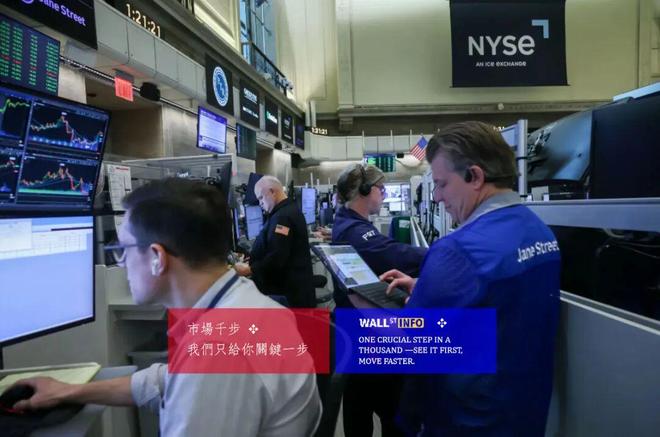
Group 1 - The U.S. stock market rebounded from a significant drop, with the Dow Jones and S&P 500 indices showing slight gains, indicating a sense of relief among investors [2] - The S&P 500 index briefly fell below 6700 points, a critical support level, which if breached could trigger a chain reaction of selling from CTA and quantitative funds [2] - The market's rebound was influenced by the Democratic Party's proposal to extend healthcare subsidies in exchange for reopening the government, despite being rejected by the Republican Party [2] Group 2 - During the government shutdown, the Treasury Department continues to collect taxes and issue bonds, leading to an accumulation of funds in the Treasury General Account (TGA), which effectively removes liquidity from the banking system [3] - If the government reopens, the cash trapped in the TGA could flow back into the banking system, potentially triggering a temporary market rebound, but this would not signify the start of a new growth cycle [3] - The upcoming week is critical as Wall Street anticipates the government reopening around mid-November, which could lead to a brief "liquidity melt-up" if the deadlock is resolved [3]
高盛CEO驳斥“人工智能将取代人类”的恐慌言论
财富FORTUNE· 2025-11-07 13:54
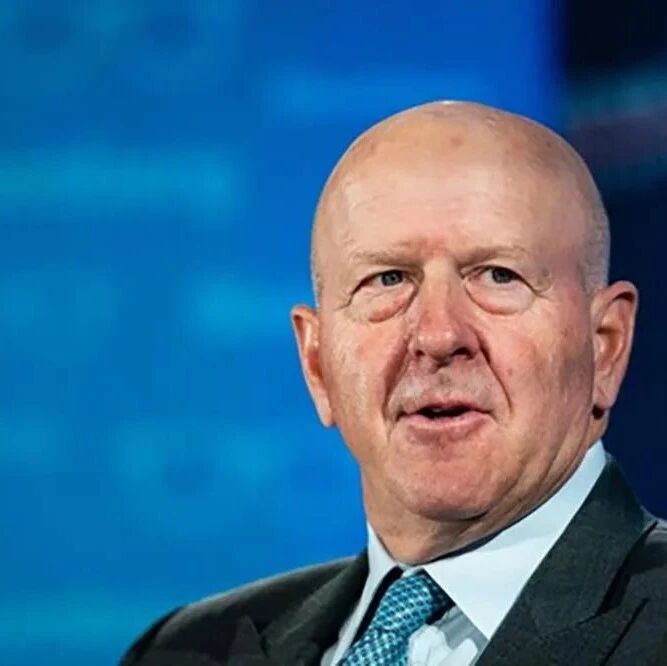
Core Viewpoint - Goldman Sachs CEO David Solomon challenges the notion that artificial intelligence (AI) will lead to widespread job loss, asserting that the economy is adaptable and will create new jobs despite technological disruptions [2][5]. Group 1: AI and Job Market - Recent layoffs related to AI include Amazon cutting 14,000 jobs, although CEO Andy Jassy clarified that these layoffs are not directly driven by AI at this time [2]. - Other companies like Meta and Salesforce have also made significant layoffs in their AI departments, with Microsoft laying off 9,000 employees earlier this year [3]. - Despite the headlines, a Goldman Sachs survey revealed that only 11% of clients have proactively laid off employees due to AI, while 37% are already using AI in their core business processes [4]. Group 2: Future of AI in Business - The trend of adopting AI tools in core business processes is expected to grow, with predictions that over half of the clients will adopt AI within the next year, and 74% within three years [4]. - Solomon acknowledges that while AI may reduce white-collar jobs, these positions will be compensated by job creation in other sectors of the economy [5]. - He warns that the enthusiasm for AI could be a double-edged sword, as not all participants in the technological wave will emerge as winners [5].

金价创新高,专家说美元会大幅贬值,滑向上世纪大萧条时代
Sou Hu Cai Jing· 2025-11-07 06:42
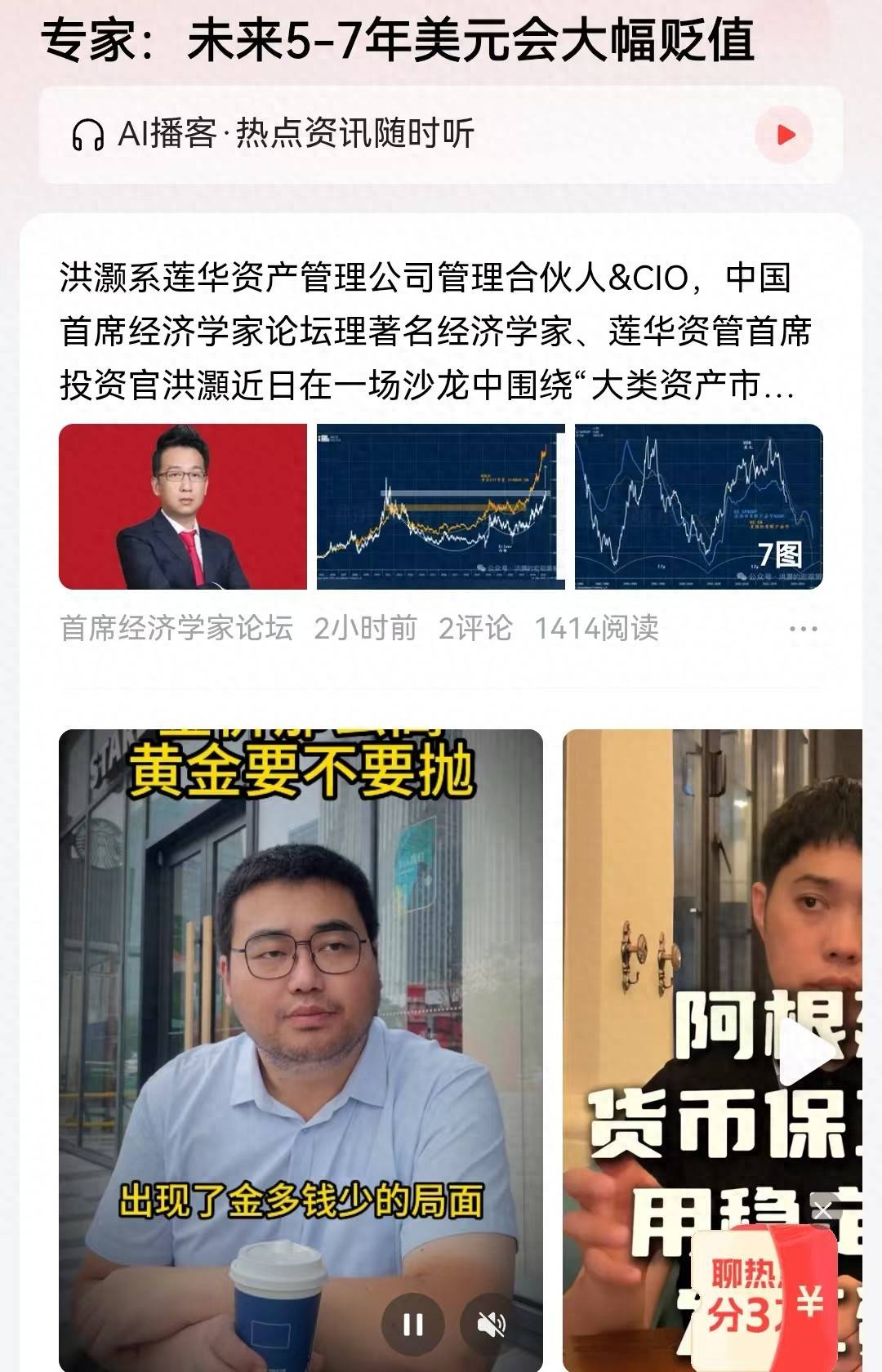
Core Viewpoint - The Federal Reserve's interest rate cuts have not led to a decrease in gold prices, which have reached new highs, indicating that monetary policy alone cannot resolve the underlying issues in the U.S. economy [1][3]. Gold Market Analysis - Goldman Sachs has reported that international gold prices have entered a bull market, projecting prices to reach $6,000 per ounce, with current prices exceeding $3,770 per ounce, reflecting a nearly 2% increase [3][4]. - The domestic price of gold jewelry has surpassed 1,100 yuan per gram, while the spot trading price has exceeded 865 yuan per gram, marking unprecedented high prices [3][4]. - Gold prices have been adjusted for inflation, surpassing historical peaks from 45 years ago, with 31 new price highs recorded in 2025 alone [3][4]. Economic Implications - The continuous rise in gold prices suggests a depreciation of the U.S. dollar against gold, with predictions of significant dollar devaluation in the next 5 to 7 years [4][5]. - The U.S. is facing increasing fiscal and trade deficits, with the potential for a fiscal crisis, which could lead to a loss of confidence in the dollar and a shift towards gold as a safe-haven asset [8][10]. - Global experts, including Ray Dalio from Bridgewater Associates, have expressed concerns about the U.S. economic policies, warning of a possible debt crisis reminiscent of the Great Depression [8][10]. Market Sentiment - The ongoing concerns regarding the U.S. economic outlook have contributed to the sustained bull market in gold, even after inflation adjustments [10]. - The political interference in the Federal Reserve's operations has raised doubts about its independence and credibility, further driving investors towards gold [12].
高盛明年将提拔638人为董事总经理,创2021年以来新高
Ge Long Hui A P P· 2025-11-07 02:12
Core Insights - Goldman Sachs is set to promote 638 employees to managing director in 2024, marking the highest number since 2021, indicating a recovery in investment banking activities [1] - The proportion of women among the newly promoted managing directors has decreased to 27%, the lowest level since David Solomon became CEO in 2018 [1] Group 1 - Goldman Sachs will have 638 employees promoted to managing director in 2024, the highest since 2021 [1] - The decrease in the percentage of women promoted to managing director is noted, now at 27% [1] - This promotion trend reflects the bank's benefits from the recovery in investment banking business [1]
深向科技股份有限公司向港交所提交上市申请书,联席保荐人为中金公司、招银国际。
Xin Lang Cai Jing· 2025-11-06 12:38
Group 1 - The company Shenxiang Technology Co., Ltd. has submitted a listing application to the Hong Kong Stock Exchange [1] - The joint sponsors for the listing are China International Capital Corporation and China Merchants International [1]

均胜电子登陆香港联交所,华兴资本担任联席账簿管理人
IPO早知道· 2025-11-06 03:24
Core Insights - HwaHsing Capital has solidified its leading position as the preferred investment banking partner for new economy enterprises in China [2][4] Company Overview - Ningbo Joyson Electronic Corp, a leader in smart automotive technology solutions, officially listed on the Hong Kong Stock Exchange on November 6, with a base issuance scale of approximately $439 million, potentially reaching up to $505 million if the over-allotment option is fully exercised [2] - Joyson Electronic focuses on the research, manufacturing, and sales of automotive components, ranking 41st globally in the automotive parts industry by revenue in 2024, and is the second-largest supplier of passive safety products in China and globally [2] Investment Banking Role - HwaHsing Capital's Hong Kong and U.S. stock team played a crucial role in successfully introducing multiple orders for Joyson Electronic, supporting the smooth completion of the issuance [3] - HwaHsing Capital's involvement as a joint bookrunner further demonstrates its comprehensive strength as a reliable capital market partner for global new economy enterprises [4] Industry Trends - The automotive industry's trends of electrification and intelligence are reshaping the global landscape, with Joyson Electronic positioned as a key player in the automotive supply chain due to its deep expertise in safety systems and electronics [4] - Joyson Electronic aims to establish itself as a "Tier 1" player in the automotive and robotics sectors, planning to create the largest real industrial scene for embodied intelligent data space, promoting innovation in robotics technology [4]

金价暴跌80美元!美政府停摆影响流动性,鲍威尔泼冷水,分析师却称长期涨势未改|大宗风云
Hua Xia Shi Bao· 2025-11-06 01:15
Core Viewpoint - Recent fluctuations in international gold prices have been influenced by the prolonged U.S. government shutdown, which has led to increased market liquidity concerns and a stronger U.S. dollar, resulting in a significant drop in gold prices [2][3][4]. Group 1: Market Conditions - On November 4, international gold futures prices fell sharply, with COMEX gold futures dropping from $4013/oz to a low of $3931.30/oz, while COMEX silver futures closed at $46.90/oz [2]. - The U.S. government shutdown has reached a historic 36 days, causing market unease and impacting liquidity, which counteracts the effects of interest rate cuts in October [3][4]. - The market's adjustment of interest rate cut expectations has led to a rise in U.S. Treasury yields and the dollar, diminishing gold's appeal as a non-yielding asset [3][4]. Group 2: Dollar Strength - The dollar index has surged past the 100 mark, supported by reduced interest rate cut expectations and the weakness of the euro and yen, as both the European Central Bank and the Bank of Japan have maintained their current policies [5]. - If the government shutdown is resolved, liquidity may improve as funds flow back into the market, potentially leading to a decrease in the dollar index [5]. Group 3: Tax Policy Impact - A new tax policy regarding gold trading, effective from November 1, 2025, aims to encourage on-exchange trading by exempting value-added tax for certain transactions, which may shift interest towards investment products like gold ETFs [6][7]. - The policy may negatively impact non-investment gold consumption due to increased costs, while the overall long-term price trajectory of gold is expected to remain stable despite short-term speculative behavior [7][8]. Group 4: Future Outlook - Analysts suggest that the recent rise in actual interest rates and the cooling of rate cut expectations are primary factors behind the recent decline in gold prices, with short-term weakness anticipated if the dollar index remains above 100.5 [9][10]. - Long-term drivers for gold prices, such as central bank purchases and the ongoing trend of dollar credit expansion, are expected to provide upward momentum for gold [10].

中金公司股价连续5天下跌累计跌幅7.12%,信达澳亚基金旗下1只基金持1500股,浮亏损失4170元
Xin Lang Cai Jing· 2025-11-05 14:27
信澳恒瑞9个月持有期混合A(020385)成立日期2024年8月23日,最新规模29.37万。今年以来收益 0.94%,同类排名7828/8150;近一年收益1.64%,同类排名7589/8043;成立以来收益1.85%。 来源:新浪基金∞工作室 11月5日,中金公司跌0.28%,截至发稿,报36.25元/股,成交6.52亿元,换手率0.61%,总市值1749.88 亿元。中金公司股价已经连续5天下跌,区间累计跌幅7.12%。 资料显示,中国国际金融股份有限公司位于北京市建国门外大街1号国贸大厦2座6层、26层、27层及28 层,香港中环港景街1号国际金融中心第1期29楼,成立日期1995年7月31日,上市日期2020年11月2日, 公司主营业务涉及中国国际金融股份有限公司主要从事投资银行、股本销售及交易、固定收益、大宗商 品及货币、财富管理及投资管理业务。该公司通过六大分部运营业务。投资银行分部从事提供投资银行 服务。股本销售及交易分部从事提供股本销售及交易服务。固定收益分部从事金融产品交易以及提供产 品结构化设计、固定收益销售及期货经纪服务。财富管理分部从事提供财富管理产品及服务。投资管理 分部从事设计及 ...
得益于市场波动和并购活动激增 华尔街奖金有望再创辉煌
Ge Long Hui A P P· 2025-11-05 12:15
Core Insights - Wall Street bonuses are expected to see significant growth for the second consecutive year, driven by market volatility and a resurgence in M&A activity [1] - The report from Johnson Associates Inc indicates that year-end incentive compensation for investment bankers, traders, and wealth management professionals is projected to increase [1] - Stock traders, particularly those assisting investors with stock positions, are anticipated to experience the largest bonus increase, potentially reaching 25% due to market fluctuations [1] - Alan Johnson, Managing Director of Johnson Associates, noted that all sectors are exhibiting unusually positive trends, benefiting from the overall good performance of the economy and financial markets [1] Industry Summary - The investment banking sector is poised to benefit from increased trading demand and a recovery in M&A activities [1] - The financial market's performance is contributing positively to the compensation landscape for financial professionals [1] - Market volatility is a key driver for the anticipated growth in bonuses, particularly for stock traders [1]