芯片制造

Search documents
华尔街发明“永动机”?英伟达、OpenAI、甲骨文实现千亿美元循环
Jin Shi Shu Ju· 2025-09-24 04:08
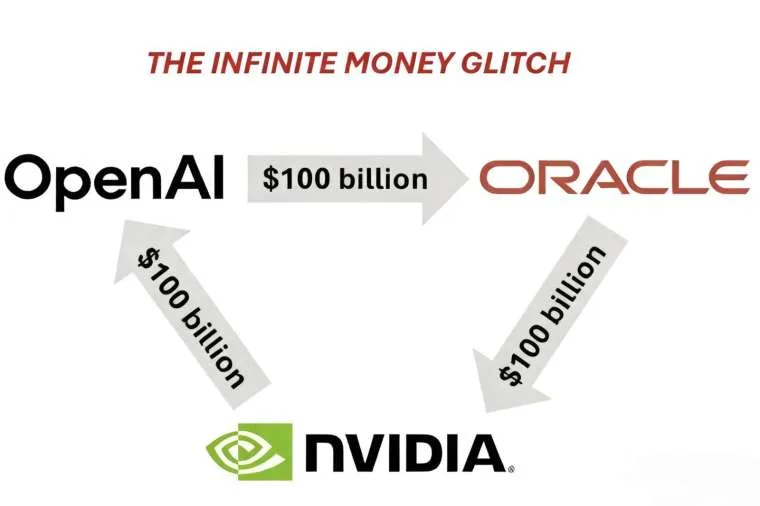
Core Insights - Nvidia is investing up to $100 billion in OpenAI and supplying millions of AI chips, raising concerns about an AI bubble [1][2] - The investment creates a closed-loop funding cycle among Nvidia, OpenAI, and Oracle, benefiting all parties involved [3][4] - There are significant risks associated with this collaboration, including OpenAI's ongoing losses and Oracle's high debt levels [7][8] Group 1 - Nvidia's investment in OpenAI is unprecedented in scale, potentially overshadowing other investments in the AI sector [2] - The partnership forms a "perpetual motion machine" where OpenAI buys cloud services from Oracle, which in turn purchases GPUs from Nvidia, creating a cycle of mutual benefit [3] - The collaboration has sparked discussions on social media about the interconnectedness of these major players in the AI space [4] Group 2 - OpenAI is valued at $100 billion but is projected to incur losses exceeding $5 billion by 2025, with annual cloud service expenses reaching $60 billion [7] - Oracle faces challenges with high debt levels, having a debt-to-equity ratio of 427%, which raises concerns about its financial stability [7] - The current AI landscape is compared to the internet bubble of 25 years ago, with analysts warning of potential irrational valuations among AI startups [8]


政策助推L3级自驾,国产厂商“烧钱”争夺汽车“大脑”
是说芯语· 2025-09-24 03:31
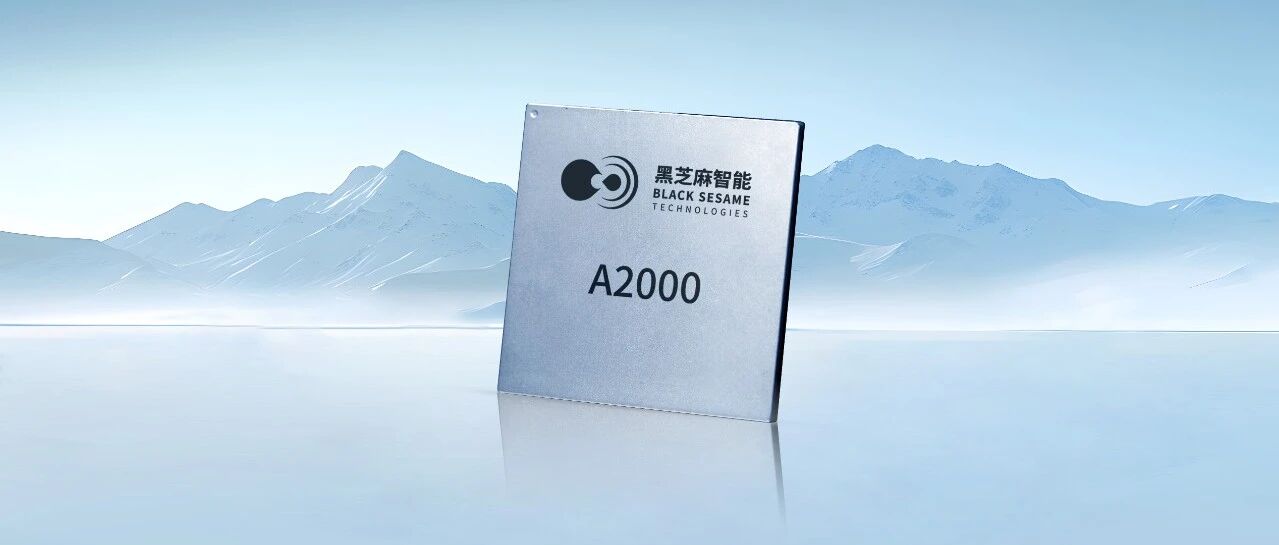
Core Viewpoint - The release of the "Automobile Industry Stabilization and Growth Work Plan (2025-2026)" by the Ministry of Industry and Information Technology and other departments marks a significant step towards the commercialization of L3 level autonomous driving, indicating a shift from the technology reserve phase to practical implementation in the intelligent driving industry [1] Group 1: Policy and Market Dynamics - The approval of L3 level vehicle production access is a crucial regulatory milestone that accelerates the development of the intelligent driving industry [1] - The intelligent driving industry is transitioning from a technology reserve phase to a practical implementation phase, driven by policy support [1] Group 2: Chip Technology and Market Players - L3 autonomous driving technology requires high-performance, low-power AI chips to process vast amounts of sensor data and run complex algorithms [3] - Major players in the autonomous driving SoC market include both domestic companies like Black Sesame Technology and Horizon Robotics, and international firms such as NVIDIA and Mobileye [3] - Black Sesame Technology reported a revenue of 253 million yuan in the first half of 2025, a year-on-year increase of 40.4%, with R&D expenses reaching 618 million yuan, resulting in an R&D expense ratio of 244% [3] Group 3: Product Development and Innovation - In 2025, Black Sesame Technology is expected to achieve significant breakthroughs in chip technology, with the launch of the new "Hua Shan" and "Wu Dang" chip families [5] - The new Hua Shan A2000 family chip has achieved a 367% increase in computing power compared to the previous generation, supporting advanced driving scenarios [6] - The Wu Dang C1200 family chip integrates multiple systems, reducing complexity and cost, and is set to be used in various new models by Dongfeng [8] Group 4: Market Expansion and Applications - Black Sesame Technology has expanded into new markets, including robotics and overseas markets, achieving significant milestones [9] - The company has partnered with Intel to enter the European and American markets, leveraging Intel's global resources [11] - The deployment of low-latency perception solutions in cities has improved traffic efficiency and reduced accident rates, contributing to national standards [12] Group 5: Conclusion and Future Outlook - The domestic automotive chip industry is undergoing a transformation similar to that of mobile chips, moving from reliance on foreign technology to achieving breakthroughs and market success [13]
小米集团董事长雷军发文预热2025年度演讲:造车同时重启造芯,把小米前十年攒下的家底全押上了,同时供家里两个孩子上大学压力巨大
Sou Hu Cai Jing· 2025-09-24 02:24
Group 1 - The core message emphasizes that Xiaomi's Chairman and CEO Lei Jun is preparing for a significant speech regarding the company's future strategies, particularly in the automotive and semiconductor sectors [1] - Lei Jun indicates that the decisions to enter the automotive market and restart semiconductor production were made simultaneously, reflecting a substantial commitment of the company's resources accumulated over the past decade [1] - He expresses the immense pressure associated with these decisions, likening it to the challenge of supporting two children in college, and reflects on the courage it took to make such bold moves [1]


纳斯达克首席经济学家:美利率或降至3.5% 企业盈利支撑美股
2 1 Shi Ji Jing Ji Bao Dao· 2025-09-24 02:17
Core Viewpoint - The Federal Reserve's recent interest rate cut reflects ongoing challenges in the labor market and inflation, with Chairman Powell indicating a cautious approach to future rate adjustments and expressing concerns over high valuations in the U.S. stock market [1][2]. Group 1: Federal Reserve Actions - The Federal Reserve announced a 25 basis point rate cut, lowering the federal funds rate target range to 4% to 4.25%, marking the first rate cut since December of the previous year [1]. - There is speculation about whether this rate cut is a "risk management" adjustment or the beginning of a new easing cycle, with expectations that rates may gradually decline to around 3.5% [2][3]. Group 2: Economic Outlook - The U.S. economy is expected to maintain growth, despite signs of a cooling labor market and inflation remaining below 3%, which is not currently a major concern for the Federal Reserve [3][5]. - The absence of large-scale layoffs and stable consumer spending, along with fiscal stimulus and regulatory easing, support the outlook for continued economic growth, albeit at a slower pace than in previous years [5]. Group 3: Stock Market Dynamics - Recent stock market gains are attributed to improved corporate earnings, particularly driven by investments in artificial intelligence, which have lowered financing costs and boosted valuations [2][6]. - The divergence in sentiment between retail investors, who are becoming more cautious, and institutional investors, who focus on fundamentals, highlights the complexity of current market dynamics [7][8]. Group 4: Consumer Confidence and Spending - Consumer confidence has weakened, with signs of financial strain among lower-income groups, which may affect investment behavior, although overall net inflows into the stock market continue [7][8]. - The ongoing decline in interest rates is expected to lower corporate financing costs and enhance profitability, providing solid support for the market [8].
中方连抛3820亿美债,准备动真格,巴菲特清空中企股票,信号特殊
Sou Hu Cai Jing· 2025-09-23 22:55
Group 1 - The core issue of the article revolves around the significant reduction of U.S. Treasury holdings by China, which has reached a new low, indicating a potential shift in investment strategies amid ongoing trade tensions [2][8][23] - In the first four months of the year, China has sold off a total of $57.3 billion in U.S. debt, with a notable $25.7 billion reduction in July alone, marking the highest reduction this year [8][6][24] - The article highlights a broader trend of "de-dollarization" among global nations, as they increasingly turn to gold and other assets to mitigate risks associated with U.S. policies [8][10][14] Group 2 - Warren Buffett's recent decision to sell all his shares in BYD, after holding them for 17 years, is interpreted as a strategic move reflecting the changing dynamics in the global electric vehicle market [15][17][20] - The electric vehicle industry is perceived to be transitioning from a phase of rapid growth to a more stable development period, prompting investors like Buffett to cash out at perceived high points [17][19] - The article suggests that the uncertainty introduced by U.S. trade policies under the Trump administration has significantly impacted investor sentiment and strategies within the automotive sector [19][22]


3亿元跨界投资光通信芯片,火腿巨头涨停,老字号们陷“守”与“变”困局
Mei Ri Jing Ji Xin Wen· 2025-09-23 14:04
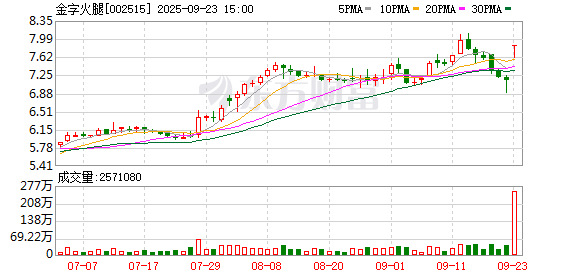
Core Viewpoint - Jinzi Ham plans to acquire up to 20% of Zhongsheng Microelectronics for no more than 300 million yuan, indicating a strategic shift towards cross-industry investment despite previous failures in similar attempts [2][4]. Group 1: Company Strategy and Performance - Jinzi Ham's revenue growth has stagnated since 2011, with a reported revenue of 170 million yuan in the first half of 2025, down 14.73% year-on-year, and a net profit of 22.92 million yuan, down 25.11% year-on-year [5]. - The company has previously attempted cross-industry ventures in sectors like rare earths and healthcare, but most have ended in failure, leading to a return to its core business [5]. - The recent acquisition attempt is seen as a response to the company's long-standing operational difficulties and a need for new growth avenues [5][4]. Group 2: Industry Challenges and Trends - Many time-honored brands, including Zhang Xiaoquan and Quanjude, are facing similar growth challenges and transformation issues, indicating a broader trend among traditional enterprises [6]. - The success of these brands historically relied on traditional craftsmanship, which is now challenged by modern consumer expectations and market dynamics [6][3]. - Experts suggest that these brands must balance preserving their unique cultural heritage while adapting to contemporary relevance to attract younger consumers [8][3]. Group 3: Recommendations for Transformation - Experts recommend that traditional brands focus on deepening their cultural narratives and aligning products with modern lifestyles to maintain relevance [8]. - It is advised that non-core businesses should operate under independent brands and teams to protect the integrity of the main brand [8]. - Successful examples include Zhang Xiaoquan, which has expanded its product lines and achieved a revenue increase of 9.80% in the first half of 2025, contrasting with the struggles of other brands like Quanjude [7][8].

美光(MU.US)财报今夜出炉,股价月涨40%后能否延续AI狂欢成焦点
Zhi Tong Cai Jing· 2025-09-23 12:48
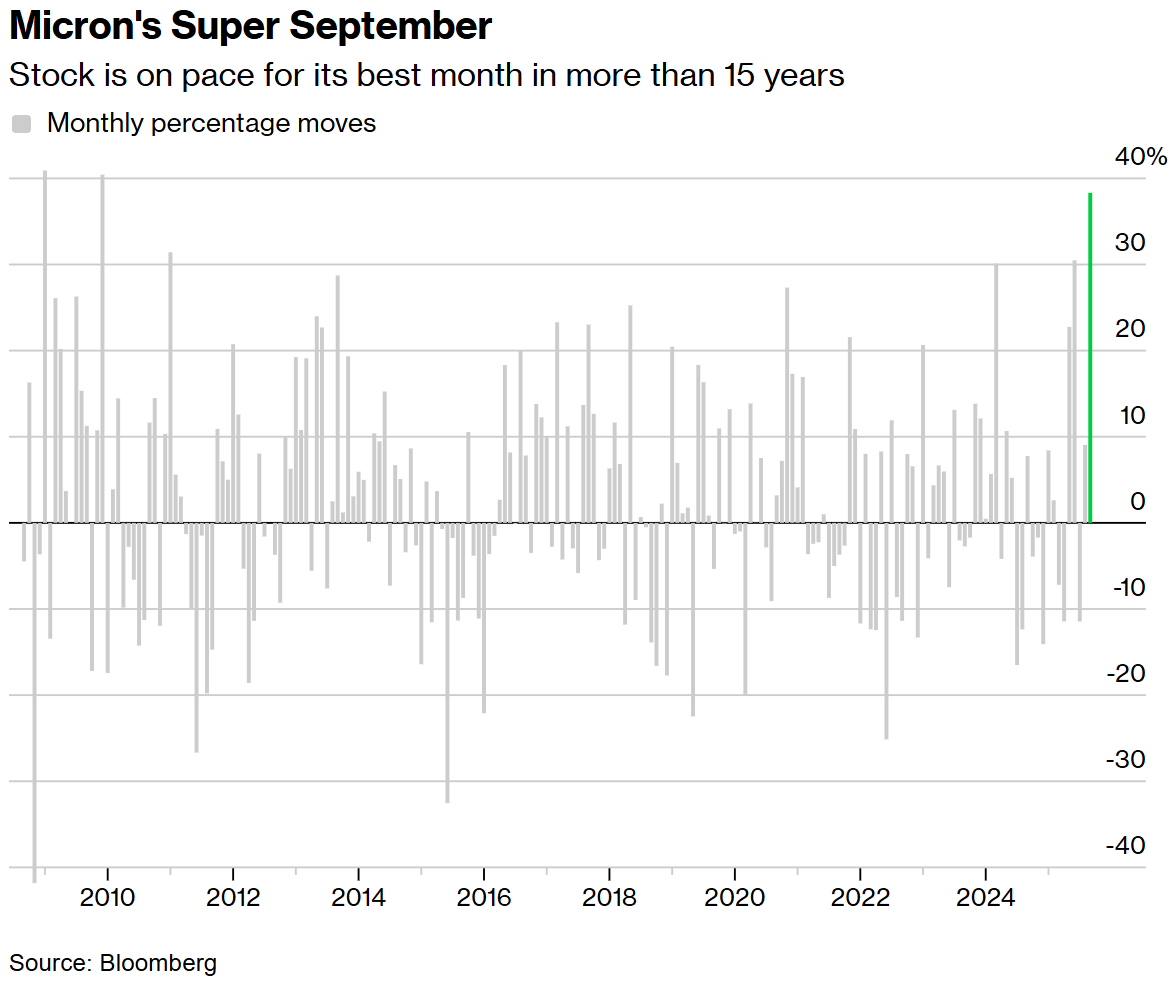
智通财经APP注意到,美光科技(MU.US)将于周二盘后公布财报,将揭示这家芯片制造商的股价在9月份上涨近40%后是否已脱离基本面。 华尔街预计,美光的业绩将包含对其高带宽内存芯片的强劲预测,该产品是人工智能基础设施建设的关键组件。这一需求增长正值甲骨文公司等主要企业明 确承诺加大AI支出,且英伟达公司正投资OpenAI以支持更多AI基础设施之际。 由此带来的结果是,存储器等通常乏人问味的科技行业板块已成为AI乐观情绪的中心,希捷、西部数据和闪迪的股价均在9月跟随美光大幅上涨。然而,这 些涨幅能否被未来的增长所验证仍有待观察。这就是投资者如此急切想听到美光前景预测的原因。"一切都在于业绩指引,任何高于市场预期的数字都会引 发全面欢呼,"Synovus Trust高级投资组合经理丹尼尔.摩根表示。该公司截至9月中旬持有约7.3万股美光股票。"存储公司的行情上涨正表明AI是如何成为催 化剂,并惠及那些通常不会从周期中受益的板块。西部数据和希捷的上涨方式进一步证实了这一趋势。" 尽管美光股价本月上涨(有望创下15年多来最大月度涨幅),但与竞争对手相比仍然便宜。该股未来12个月预期市盈率约为12倍,使其成为费城半导体 ...

印度豪掷180亿美元角逐全球芯片竞赛 半导体雄心面临多重考验
智通财经网· 2025-09-23 07:10
Core Insights - India aims to become a significant player in the global semiconductor industry but faces severe challenges, including intense competition and being a latecomer in advanced chip manufacturing [1] - The Indian government has approved 10 semiconductor projects with a total investment of 1.6 trillion rupees (approximately 18.2 billion USD) to establish a complete supply chain from design to manufacturing [1][2] - The government has introduced new policies to support the manufacturing of electronic components, addressing critical bottlenecks and creating a domestic buyer-supplier base for chip manufacturers [2] Investment and Development - The largest semiconductor project in India is a 910 billion rupee (approximately 11 billion USD) wafer manufacturing plant being built by Tata Electronics and Taiwan's Powerchip Semiconductor Manufacturing Corporation [3] - The Indian government is providing 50% cost coverage for all manufacturing plants, regardless of chip size, to stimulate growth in the semiconductor sector [2] - There is a growing interest from companies in Taiwan, the UK, the US, and South Korea to support India's semiconductor initiatives [2] Challenges and Opportunities - Experts highlight that India needs a vibrant and long-term ecosystem rather than just a few high-profile projects to support its semiconductor ambitions [1][3] - The establishment of operational silicon wafer manufacturing facilities and overcoming technical and infrastructure challenges are critical milestones for India's semiconductor goals [3][5] - The success of semiconductor testing and packaging (OSAT) presents significant opportunities for Indian mid-sized companies, but clear market access and demand channels are essential for sustained growth [5] Talent and Knowledge - India has a strong talent pool in chip design, which has been developing since the 1990s, but faces challenges in core design knowledge and intellectual property [6][7] - The government is encouraged to update intellectual property laws to protect new forms of digital content and software, which is crucial for competing with regions like the US and Taiwan that have robust IP laws [7]
电力需求前景广阔 大和证券首予Vistra(VST.US)“买入”评级
智通财经网· 2025-09-23 07:04
Core Viewpoint - Daiwa Securities analyst Dennis Ip has initiated a "Buy" rating for Vistra Energy (VST.US) with a target price of $250, following Morgan Stanley's David Arcaro raising the target price while maintaining an "Overweight" rating, highlighting Vistra's strong earnings performance and growth momentum in nuclear and renewable energy [1] Company Summary - Vistra Energy is an independent power producer with a diversified generation portfolio of 41,000 MW, serving over 5 million customers in the U.S. [1] - The company has received approval from the U.S. Nuclear Regulatory Commission to extend the operational life of its 1,268 MW nuclear power plant in Perry, Ohio, until 2046, which is a 20-year extension from the previous license [1] Industry Summary - The AI boom has positively impacted traditional sectors like utilities, with analysts predicting that data center electricity demand could rise to 10.9% of the U.S. total by 2030, up from the current 4.5%, indicating a need for more power plants, transmission lines, and infrastructure, which would benefit utility companies [1]

【立方早知道】格林美赴港上市/美凯龙前总经理解除留置/多只连板个股发声
Sou Hu Cai Jing· 2025-09-23 01:21
Focus Events - GreeMe has submitted listing materials to the Hong Kong Stock Exchange, focusing on key metal resource recycling, power lithium battery recycling, and new energy battery materials, with a net asset of 20.128 billion yuan and a market value of 38.23 billion yuan in A-shares [1] Company News - Nvidia plans to invest up to $100 billion in OpenAI and provide data center chips, with deliveries expected to start by the end of 2026 [3] - Meikailong announced the release of the detention measures against its former general manager, Che Jianxing, who had been under investigation since May [10] - Yunnan Tourism stated it currently lacks the capability for robot design or production, and the strategic cooperation with Zhejiang Humanoid Robot Innovation Center is not expected to significantly impact its financials [10] - Demingli reported that its controlling shareholders have completed their stock reduction plan, decreasing their combined shareholding from 36.91% to 35% [11] - Hangdian shares indicated that its optical communication business is currently in a loss state, while its copper foil business is still in the early stages [11] - Dayang Electric has submitted an application for H-share issuance and listing on the Hong Kong Stock Exchange [12] - JD Industrials has received approval from the China Securities Regulatory Commission for its overseas listing, planning to issue up to 253.31 million shares [13] - Baiwei Storage intends to issue H-shares to enhance its global strategy and brand image [13] - Shengxin Lithium Energy plans to acquire a 21% stake in Qicheng Mining for 1.456 billion yuan, increasing its ownership to 70% [13] - Zhongjing Electronics plans to raise up to 700 million yuan through a private placement for projects in Thailand and Huizhou [13] - Jinzi Ham announced plans to invest up to 300 million yuan to acquire a 20% stake in Zhongsheng Microelectronics, focusing on AI and optical communication [14] - Longi Green Energy reported that its HPBC 2.0 battery production line has a stable yield of over 97% [14] Industry Dynamics - The Ministry of Industry and Information Technology and the National Development and Reform Commission emphasized the development of renewable energy infrastructure, including rooftop photovoltaics and charging stations, as part of the high-quality development guidelines for industrial parks [7] - The National Sports Administration released guidelines to promote a health service system through sports by 2030, aiming for widespread implementation across provinces [7] Macro News - The Chairman of the China Securities Regulatory Commission, Wu Qing, reported that 207 companies have been smoothly delisted during the 14th Five-Year Plan period, with a focus on eliminating "bad apples" and "zombie companies" [4]