银行

Search documents
上市银行2026Q1及全年业绩展望-业绩弹性释放-关注负债成本优化和中收潜力
2026-03-19 02:39
Summary of Key Points from the Conference Call Industry Overview - The conference call discusses the outlook for the banking industry in 2026, focusing on revenue and net profit growth, which is expected to exceed 3% for the year. In Q1 2026, growth is anticipated to turn positive, reaching over 2% due to the optimization of funding costs and a low base effect from the previous year [1][2]. Core Insights and Arguments - **Credit Growth**: The total credit increment for 2026 is projected to be approximately 16.3 trillion yuan, with Q1 2026 accounting for 65% of this, equating to about 10.6 trillion yuan. The "Five Major Articles" policy areas are expected to see their loan increment share rise to 80%, with a balance growth rate of 12% [1][3]. - **Deposit Repricing**: The re-pricing of approximately 54 trillion yuan in time deposits is a key driver of performance elasticity, expected to save around 340 billion yuan in interest expenses, positively impacting the net interest margin by approximately 11.75 basis points [1][4]. - **Wealth Management Shift**: The phenomenon of "deposit migration" is expected to drive a turning point in wealth management, with total funds allocated for wealth management expected to reach 3.4 trillion yuan. The growth in agency sales is shifting from a low base effect to a scale expansion driven by this migration [1][5]. - **Financial Market Stability**: The financial market business is expected to remain stable, with Q1 2026 benefiting from a temporary strengthening of the bond market and an expanded loan-deposit gap, although duration shortening may limit excess return potential [1][6]. - **Asset Quality Improvement**: The acceleration of asset quality clearance is noted, with manageable risks in real estate and city investment. Sufficient provisions are expected to support profits, dividends, and capital consumption [1][7]. Additional Important Insights - **Bank Type Variability**: Different types of banks will experience varying degrees of benefit from deposit re-pricing, with city commercial banks and rural commercial banks expected to see greater improvements in net interest margins compared to state-owned and joint-stock banks [1][4]. - **Investment Opportunities**: The potential for growth in the wealth management sector is highlighted, with a significant shift in resident asset allocation preferences, as evidenced by the growth in bank wealth management market size and the increase in net asset value of funds sold through bank channels [1][5]. - **Risk Management**: The current risk situation in the banking sector is improving, particularly in real estate and city investment sectors, with a focus on maintaining stable non-performing loan ratios and sufficient provisions to support future capital needs [1][7]. This summary encapsulates the key points discussed in the conference call, providing a comprehensive overview of the banking industry's outlook and the factors influencing its performance in 2026.
未知机构:美股下跌美股整体行情表现标普500指数下跌-20260319
未知机构· 2026-03-19 02:35
Summary of Key Points from Conference Call Records Industry Overview - The overall performance of the US stock market showed a decline, with the S&P 500 index down by 136 basis points, closing at 6624 points, and a net buying amount of $1.4 billion at the end of the session [1][1] - The Nasdaq index fell by 143 basis points to 24425 points, while the Russell 2000 index decreased by 164 basis points to 2479 points [1][1] - The Dow Jones index also dropped by 163 basis points, closing at 46225 points [1][1] - The total trading volume in the US stock market was 19.42 billion shares, slightly below the year-to-date average daily volume of 19.53 billion shares [1][1] - The VIX, or fear index, rose by 11.31% to 24.9 points [1][1] - WTI crude oil prices increased by 250 basis points to $99 per barrel [1][1] - The 10-year US Treasury yield rose by 7 basis points to 4.27% [1][1] - Gold prices fell by 326 basis points to $4842 per ounce [1][1] Market Dynamics - The US dollar index increased by 60 basis points to 100.17 [2][2] - Bitcoin prices decreased by 515 basis points to $70695 per coin [2][2] - Institutional investors maintained a wait-and-see attitude, awaiting the Federal Reserve meeting results and further developments in geopolitical situations, which led to a collective rise in oil, volatility, the dollar, and bond yields [2][2] - Qatar Energy reported a missile attack on its Ras Laffan Industrial City, which caused significant damage but no casualties [2][2] - The Producer Price Index (PPI) data exceeded market expectations, while the core components related to the Personal Consumption Expenditures (PCE) index were slightly below expectations [2][2] Financial Sector Insights - The financial sector exhibited unusual price movements, with alternative assets and bank stocks rising due to inflation concerns, while re-inflation-related sectors faced downward pressure [2][2] - Over the past month, regional banks and financial stocks experienced the largest increase in short-selling activity among all sectors [2][2] - Financial technology and "buy now, pay later" stocks weakened due to market news about a withdrawal trend from private credit investors affecting the consumer loan sector [2][2] Company-Specific Highlights - Micron Technology (MU) reported earnings that significantly exceeded market expectations, with a midpoint EPS guidance of $19, far above the consensus estimate of $11, and projected profit margins of 81% [4][4] - FIVE's stock rose by 3% after reporting strong earnings that surpassed expectations, with the first-quarter guidance also above market consensus [4][4] - Market sentiment suggests that any pullback in FIVE's stock price would be seen as profit-taking or position adjustment, with expectations for continued upward momentum [4][4] Trading Activity and Fund Flows - Overall market activity was rated at a level 3 on a scale of 1-10, indicating moderate trading activity [4][4] - There was a significant sell-off, with net selling amounting to $3 billion, primarily affecting technology and financial sectors [4][4] - Hedge funds also exhibited net selling behavior, with a net outflow of $1 billion driven by increased supply in macro, technology, and discretionary consumer sectors [5][5] Federal Reserve Insights - The Federal Open Market Committee (FOMC) decided to maintain the federal funds rate target range at 3.5%-3.75%, aligning with market expectations [5][5] - The median forecast in the Summary of Economic Projections (SEP) indicates one rate cut each in 2026 and 2027, consistent with previous forecasts [5][5] - The Federal Reserve raised its inflation expectations for PCE and core PCE for 2026 and 2027, along with GDP growth projections for 2026-2028 [5][5] - Fed Chair Jerome Powell's hawkish comments emphasized that no rate cuts would occur without substantial improvement in inflation [6][6] Upcoming Market Events - Key economic data on initial jobless claims will be released tomorrow, serving as an important indicator for the US labor market [6][6] - This Friday marks the "Quadruple Witching Day" in the US stock market, with options and futures contracts expiring, indicating a projected volatility of 1.52% by the weekend [7][7]


永安期货股指日报-20260319
Xin Yong An Guo Ji Zheng Quan· 2026-03-19 02:16
Market Overview - The A-share market saw a slight increase, with the Shanghai Composite Index rising by 0.32% to 4062.98 points, while the Shenzhen Component increased by 1.05% and the ChiNext Index rose by 2.02%[1] - The Hong Kong market also experienced gains, with the Hang Seng Index up by 0.61% to 26025.42 points, and the Hang Seng Technology Index slightly increasing by 0.01%[1] - In contrast, all three major U.S. indices closed lower, with the Dow Jones falling by 1.63% to 46225.15 points, marking a new low for the year[1] Federal Reserve Insights - The Federal Reserve maintained interest rates, signaling a subtle hawkish shift in the dot plot, with officials raising their median expectations for inflation and economic growth[7] - Jerome Powell emphasized that no rate cuts would occur until progress is made on inflation, particularly regarding tariff-driven goods[11] - The Fed's decision to keep rates steady was supported by an 11-1 vote, with one member advocating for a 25 basis point cut[11] Geopolitical Developments - Escalating conflicts in the Middle East, particularly between Israel and Iran, have led to significant attacks on key energy facilities, causing international oil prices to surge[11] - Reports indicate that Iran has retaliated against key energy infrastructure in Qatar and other nations following Israeli airstrikes on Iranian gas fields[11] - Saudi Arabia has successfully restored over 50% of its oil exports by bypassing the Strait of Hormuz, utilizing a 1200 km pipeline to transport oil to the western port of Yanbu[11] Economic Indicators - The market is facing increased uncertainty due to geopolitical tensions, which complicates the Federal Reserve's ability to manage economic stability[11] - Brent crude oil prices have approached $110 per barrel amid these conflicts, reflecting the heightened risk in energy markets[11]
资讯早班车-2026-03-19-20260319
Bao Cheng Qi Huo· 2026-03-19 02:14
1. Report Industry Investment Rating No relevant content provided. 2. Core Viewpoints of the Report - China's asset revaluation will deepen in 2026, shifting from valuation - driven to profit - driven, with a more balanced market style. The market consensus for asset allocation is that stocks are stronger than bonds, and commodity allocation has more flexibility [14]. - The real - estate industry is entering a new stage characterized by high - quality development and stock optimization. During the "15th Five - Year Plan" period, real - estate sales are likely to stabilize, and the interest rate center may moderately rise. The real - estate market in first - tier cities has shown marginal improvement, and house prices in first - tier cities are expected to stabilize in 2027 [29]. 3. Summary by Directory 3.1 Macro Data Overview - GDP growth rate in Q4 2025 was 4.5% year - on - year, lower than the previous quarter (4.8%) and the same period last year (5.4%) [1]. - In February 2026, the manufacturing PMI was 49.0%, down from the previous month (49.2%) and the same period last year (50.2%); the non - manufacturing PMI for business activities was 49.5%, unchanged from the previous month but lower than the same period last year (50.4%) [1]. - In February 2026, the social financing scale was 238.55 billion yuan, down from the previous month (249.26 billion yuan) but higher than the same period last year (223.31 billion yuan) [1]. - In February 2026, the year - on - year growth rates of M0, M1, and M2 were 14.1%, 5.9%, and 9.0% respectively, all higher than the previous month and the same period last year [1]. - In February 2026, new RMB loans were 90 billion yuan, up from the previous month (39 billion yuan) but lower than the same period last year (101 billion yuan) [1]. - In February 2026, the CPI increased by 1.3% year - on - year, up from the previous month (0.7%) and the same period last year (- 0.7%); the PPI decreased by 0.9% year - on - year, an improvement from the previous month (- 2.2%) and the same period last year (- 2.2%) [1]. - In February 2026, the cumulative year - on - year growth rate of fixed - asset investment was 1.8%, up from the previous period (- 2.6%) but lower than the same period last year (4.1%); the cumulative year - on - year growth rate of total retail sales of consumer goods was 2.8%, down from the previous period (4.0%) and the same period last year (4.0%) [1]. - In February 2026, export and import amounts increased by 39.60% and 13.80% year - on - year respectively, both higher than the previous month and the same period last year [1]. 3.2 Commodity Investment Reference 3.2.1 Comprehensive - China and the US will continue to communicate about President Trump's visit to China [2]. - Shanghai International Energy Exchange and Shanghai Futures Exchange adjusted the hedging position limits for some contracts [2][3]. - On March 18, 36 domestic commodity varieties had positive basis, and 32 had negative basis.沪镍, 郑棉, and 铸造铝合金 had the largest basis, while 苹果, 强麦, and 普麦 had the smallest [3]. - Iran launched a missile attack on US - related oil and energy facilities in the region in retaliation for the attack on its energy infrastructure [3]. - The Fed kept the federal funds rate target range at 3.50% - 3.75%, with a dovish interest - rate cut path [3][4]. - The Fed raised inflation and economic growth forecasts, and Fed Chairman Powell denied the US economy was in stagflation [4]. 3.2.2 Metals - The price of black tungsten concentrate soared, rising 124% from the beginning of 2026 and over 600% from the beginning of 2025 [5]. - The Shenzhen Gold and Jewelry Association called on enterprises to implement real - name registration for large - value transactions [5]. - Indonesia cut nickel ore production quotas, and Guinea planned to restrict bauxite exports, which will reshape the global base - metal supply pattern [6]. - As of March 18, 2026, the holdings of the world's largest silver ETF and gold ETF decreased [6][7]. - On March 17, the inventories of some metals on the London Metal Exchange changed, with tin and copper inventories reaching multi - year highs, and aluminum inventory reaching a multi - month low [7]. 3.2.3 Coal, Coke, Steel, and Minerals - Guinea may link bauxite exports to the production levels in mining feasibility studies [8]. 3.2.4 Energy and Chemicals - Middle - East energy facilities were at high risk of being attacked. Iran announced counter - attacks, and the US and Iran's actions affected global energy supply [9][10]. - US natural gas prices rose due to stronger oil prices and expected temperature drops, but high production and rising inventories were still risks [10]. - Middle - East oil exports dropped significantly due to the conflict [10]. - Russia was considering an early gas cut - off to Europe, and the EU issued guidelines to simplify non - Russian gas imports [10]. - The global was facing the most severe energy crisis in 40 years, and the blockade of the Strait of Hormuz would have a huge impact on global energy trade [10]. - Japan's national average gasoline retail price reached a record high [11]. - US EIA crude oil inventories increased more than expected [11]. 3.2.5 Agricultural Products - The price of live - hog futures has been falling this year, and the spot - market pig price has dropped below 10 yuan/kg, leading to industry - wide losses [12]. - In March, the price of piglets continued to decline, and the profit margin was significantly compressed [12]. - The Ministry of Agriculture and Rural Affairs emphasized promoting the seed - industry revitalization action [12]. 3.3 Financial News Compilation 3.3.1 Open Market - On March 18, the central bank conducted 20.5 billion yuan of 7 - day reverse repurchase operations, with a net withdrawal of 6 billion yuan [13]. 3.3.2 Key News - Brokerage spring strategy meetings were held intensively. Institutions believed that China's asset revaluation would deepen in 2026, and the market style would be more balanced [14]. - The Fed kept the federal funds rate unchanged and predicted one interest - rate cut in 2026 [14]. - The China Securities Regulatory Commission emphasized anti - corruption and strengthening supervision in the capital market [15]. - China and the US will continue to communicate about President Trump's visit to China [15]. - Many small and medium - sized banks cut fixed - deposit interest rates in March [16]. - Henan and Hebei will issue government bonds in March [16][19]. - The Industrial and Commercial Bank of China supported the French bank BNP Paribas in issuing 5 billion yuan of panda bonds [17]. - The central government issued opinions on extending the second - round land - contract period by 30 years [17]. - Japan, China, and the UK increased their holdings of US Treasury bonds in January [18]. - Dubai's real - estate market was affected by the conflict, while Hong Kong became a preferred destination for capital flight [18][19]. - A Guizhou city - level urban investment company's debt was overdue [19]. - Tencent's Q4 2025 revenue and profit increased year - on - year, and it proposed a dividend [19]. - Some companies had major events such as lawsuits, asset freezes, and management changes [20]. - Some overseas credit ratings were adjusted [20]. 3.3.3 Bond Market Summary - The inter - bank bond market in China continued to be warm, with bond yields generally falling [21]. - Treasury - bond futures closed higher, and the money market was loose [22]. - Some bonds in the exchange - bond market rose or fell [22]. - The convertible - bond index rose, and some convertible bonds had significant price changes [23]. - Money - market interest rates showed mixed trends [23][24]. - The yields of some financial bonds and government bonds were determined through bidding [25]. - European and US bond yields rose [25][26]. 3.3.4 Foreign Exchange Market - The on - shore RMB against the US dollar rose, and the RMB central parity rate was adjusted up [27]. - The US dollar index rose, and non - US currencies generally fell [27]. 3.3.5 Research Report Highlights - Dongwu Securities analyzed the constraints and impacts of the change in China's bond - supply structure [28]. - CITIC Securities believed that the real - estate industry was entering a new stage [29]. 3.3.6 Today's Reminders - On March 19, some bonds were listed, issued, paid, and had principal and interest repaid [30]. 3.4 Stock Market News - The A - share market rebounded after a decline, with the Shanghai Composite Index rising 0.32%, the Shenzhen Component Index rising 1.05%, and the ChiNext Index rising 2.02%. The AI computing - power industry chain was active, while cyclical stocks fell [31]. - The Hong Kong stock market rose, with the Hang Seng Index rising 0.61%. Big - model concept stocks and storage - semiconductor stocks were active, and southbound funds had net purchases [31][32].




小摩:假设中东敞口或令汇丰控股(00005)及渣打集团(02888)每股盈利下降10%及14% 建议趁低买入
Zhi Tong Cai Jing· 2026-03-19 02:04
Group 1 - Morgan Stanley raised HSBC Holdings' (00005) earnings per share forecast for 2026 to 2028 by 10%, 13%, and 15% due to increased net interest income predictions [1] - The target price for HSBC was increased from HKD 165 to HKD 180, reflecting a forecasted price-to-book ratio of 2 times [1] - Standard Chartered (02888) maintained a target price of HKD 270, corresponding to a forecasted price-to-book ratio of 1.5 times, with both banks receiving an "overweight" rating [1] Group 2 - The estimated share buyback scale for HSBC from 2026 to 2028 is projected to be USD 6 billion, USD 11 billion, and USD 11 billion [1] - Both HSBC and Standard Chartered's stock prices have recently adjusted due to investor concerns regarding the impact of Middle Eastern conflicts and private credit risk exposure [1] - The bank assumes that credit losses from Middle Eastern loan exposure will lead to increased impairment expenses and additional credit costs due to global macro risks [2] Group 3 - The bank's predictions are based on assumptions of an incremental credit cost of 5 basis points, a loss rate of 10% on Middle Eastern risk exposure (which accounts for 30%), and a 20% downside risk to pre-tax profits from the Middle East [2] - The bank believes that the stock prices of HSBC and Standard Chartered have largely reflected potential downside scenarios, indicating it is an appropriate time to build positions in these stocks [2] - The long-term investment outlook remains unchanged, with total returns expected to be around 7% even under stress scenarios [2]

西部证券晨会纪要-20260319
Western Securities· 2026-03-19 01:38
Group 1: Alibaba (9988.HK) - The report predicts Alibaba's revenue for FY2026-2028 to be CNY 10,377.3 billion, CNY 11,853.8 billion, and CNY 13,308.6 billion, with year-on-year growth of +4.2%, +14.2%, and +12.3% respectively [6] - The company's net profit for the same period is expected to be CNY 977.5 billion, CNY 1,225.1 billion, and CNY 1,444.8 billion, with year-on-year changes of -24.5%, +25.3%, and +17.9% respectively [6] - Alibaba's new organizational structure enhances synergy by integrating long-distance e-commerce and local consumption, while AI and cloud services are expected to drive growth [8][7] Group 2: Bank of China Hong Kong (2388.HK) - Bank of China Hong Kong is positioned as a regional financial flagship with advantages in group platform, brand, and cross-border business, maintaining a leading ROE in the industry [9][10] - The bank's net interest margin is expected to remain stable, supported by a prudent asset quality strategy, and it aims to expand into the ASEAN market as a second growth driver [9] - The target price is set at HKD 47.46 per share, indicating a potential upside of 15% from the current price [9] Group 3: Western Mining (601168.SH) - Western Mining's subsidiary, Tibet Yulong Copper Industry, has reported a significant increase in copper resources, adding 131,420 tons of copper metal resources compared to 2018 [13] - The company is transitioning from a "cyclical resource stock" to a "growth resource stock," with plans for expansion and increased production capacity [14] - The expected net profit for 2024 is CNY 54.11 billion, with the Yulong Copper Mine contributing significantly to the overall profit [13] Group 4: Fuyao Glass (600660.SH) - Fuyao Glass achieved a revenue of CNY 457.9 billion in 2025, representing a year-on-year increase of 16.7%, with a net profit of CNY 93.1 billion, up 24.2% [16] - The company is expected to see revenue growth of CNY 525 billion, CNY 600 billion, and CNY 673 billion for 2026-2028, with net profits of CNY 106 billion, CNY 123 billion, and CNY 141 billion respectively [18] - The shift towards electric and intelligent vehicles is driving demand for high-value glass products, enhancing the company's market position [18] Group 5: Sinopec Engineering (02386.HK) - Sinopec Engineering reported a revenue of CNY 700.74 billion for 2025, with a year-on-year growth of 9.15%, although net profit decreased by 27.09% [20] - The company has a strong order backlog, with uncompleted orders amounting to CNY 2,038.50 billion, which is 2.9 times its 2025 revenue [20] - The company plans to maintain a high dividend policy, with a total dividend payout of CNY 0.358 per share for the year [22]


34股获推荐 福耀玻璃等目标价涨幅超40%|券商评级观察
Xin Lang Cai Jing· 2026-03-19 01:37
Group 1 - The core viewpoint of the article highlights the performance of various listed companies based on target price adjustments and broker recommendations on March 18 [1] - The companies with the highest target price increases include Nanjing Steel, Fuyao Glass, and Wancheng Group, with target price increases of 47.23%, 45.45%, and 43.52% respectively, belonging to the sectors of general steel, automotive parts, and general retail [1] - A total of 34 listed companies received broker recommendations on March 18, with notable mentions including China Merchants Shekou, CITIC Publishing, Fuyao Glass, and Wancheng Group, each receiving recommendations from three brokers [1] Group 2 - On the rating upgrade front, only one company saw its rating increased on March 18, with Zhongtai Securities upgrading Shanghai Bank's rating from "Hold" to "Buy" [1] - There were eight instances of first-time coverage on March 18, with companies such as Hesheng Co. receiving a "Strong Buy" rating from Huachuang Securities, and Tiangong Co. receiving an "Add" rating from Dongwu Securities [1]
双融日报-20260319
Huaxin Securities· 2026-03-19 01:24
Market Sentiment - The current market sentiment score is 57, indicating a "neutral" sentiment [6][9] - Historical trends show that when the sentiment score is below or close to 30, the market tends to find support, while scores above 80 indicate resistance [9] Sector Themes Banking Sector - The banking sector is characterized by undervaluation and high dividend yields, with half of the stocks offering yields over 4.5% [6] - In a slowing economy with increased market volatility, bank stocks are seen as stable investment options for long-term funds such as insurance and social security [6] - Relevant stocks include Agricultural Bank of China (601288) and Ningbo Bank (002142) [6] Power Equipment Sector - The demand for high-power, high-stability transformers is increasing due to the significant energy consumption of global AI data centers [6] - There is a severe supply-demand imbalance in the market, with delivery times in the U.S. extending to 127 weeks [6] - China's State Grid is expected to invest 4 trillion yuan during the 14th Five-Year Plan, focusing on new power systems, providing long-term order support for the industry [6] - Relevant stocks include China Western Power (601179) and TBEA Co., Ltd. (600089) [6] Brokerage Sector - Several brokerages have increased share buybacks, signaling confidence in the sector [6] - The consensus among institutions indicates a shift in A-share pricing logic from "liquidity-driven" to "profit-driven" [6] - The influx of capital into the financial sector is expected to enhance the strategic positioning of securities firms [6] - Relevant stocks include CITIC Securities (600030) and Guotai Junan Securities (601211) [6]
昨夜,全线跳水!美联储:不降息!鲍威尔发声
证券时报· 2026-03-18 23:48
Core Viewpoint - The Federal Reserve announced to maintain the federal funds rate unchanged in the range of 3.5% to 3.75%, amid concerns over inflation and the impact of the Middle East situation on the U.S. economy [3][4]. Group 1: Federal Reserve Decisions - The Federal Reserve's decision to keep interest rates steady reflects uncertainty regarding the economic impact of the Middle East situation [3]. - Fed Chairman Jerome Powell indicated that while energy prices are rising, the current inflation rate is only one percentage point above the target, and the economic situation is not comparable to the "stagflation" of the 1970s [3][4]. - The "dot plot" suggests that there may be room for a rate cut later this year and again in 2027, although specific timing remains uncertain [4]. Group 2: Market Reactions - Following the Fed's announcement, major U.S. stock indices fell sharply, with the Dow Jones Industrial Average dropping over 760 points, marking a new low for the year [1][6]. - The S&P 500 index saw declines across all sectors, with consumer staples and discretionary sectors leading the losses [6]. - Notably, storage concept stocks, such as SanDisk, rose against the market trend, driven by the launch of new innovative storage solutions [5][6]. Group 3: Sector Performance - Financial stocks generally declined, with major companies like Mastercard and Visa dropping over 3% [7]. - Energy stocks showed mixed performance, with some companies like Apache Oil rising over 2%, while others faced declines [7]. - Chinese concept stocks mostly fell, with the Nasdaq Golden Dragon China Index down 2.06%, although some individual stocks like New Oriental saw gains [7].


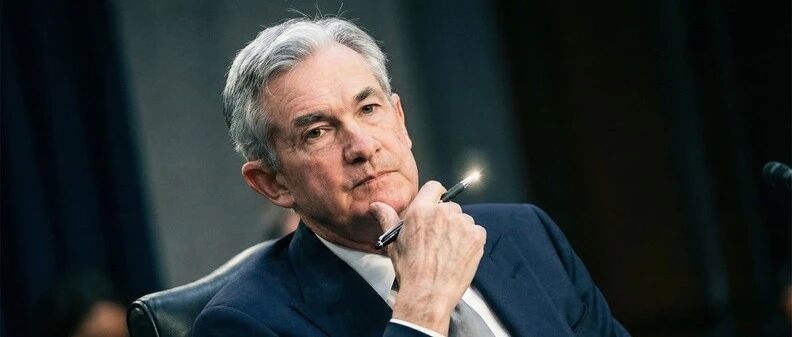
凌晨,鲍威尔重磅表态(附全文)
华尔街见闻· 2026-03-18 23:29
Group 1 - The Federal Reserve decided to maintain the federal funds rate target range at 3.50% to 3.75%, marking the second consecutive pause after three rate cuts last year [2][6] - Market expectations indicated a nearly 99% probability of no rate cut this week, with similar expectations for the next meetings in April and July [2][6] - The Fed's decision reflects caution regarding inflation and geopolitical uncertainties, particularly related to the Middle East [4][5] Group 2 - Fed Chair Powell noted a recent rise in short-term inflation expectations, while long-term expectations remain aligned with the 2% target [3][9] - Powell emphasized that no rate cuts would occur until inflation shows improvement, and discussions about potential rate hikes have been mentioned [4][15] - The Fed's economic outlook includes upward revisions to inflation and GDP growth forecasts, with inflation expectations for this year adjusted to 2.7% and 2.2% for next year [7][8] Group 3 - The Fed's statement included a new mention of the uncertain impact of the Middle East situation on the U.S. economy, indicating a cautious approach [6][10] - The dot plot revealed that seven members expect no rate cuts this year, while twelve anticipate at least one 25 basis point cut [8][7] - Powell acknowledged that the current economic environment is challenging, balancing inflation risks against employment risks [15][55] Group 4 - Powell stated that the impact of rising energy prices on overall inflation is still uncertain, and the duration and extent of this impact remain to be seen [11][12] - The Fed is closely monitoring the potential negative effects of energy shocks on consumption and overall economic activity [14][46] - Powell highlighted that the labor market remains stable, but the balance is fragile due to limited growth in labor supply [39][72] Group 5 - The Fed's current policy stance is seen as slightly restrictive, with Powell indicating the importance of maintaining this position to manage inflation risks [15][55] - The committee discussed the potential for a two-sided guidance approach, but most members do not consider it a baseline scenario [84][85] - Powell expressed that the Fed's independence is crucial for maintaining price stability and achieving maximum employment [125][126]