
银行业

Search documents
通胀降至近一年新低,英国央行3月降息大门正式开启?
智通财经网· 2026-02-18 10:24
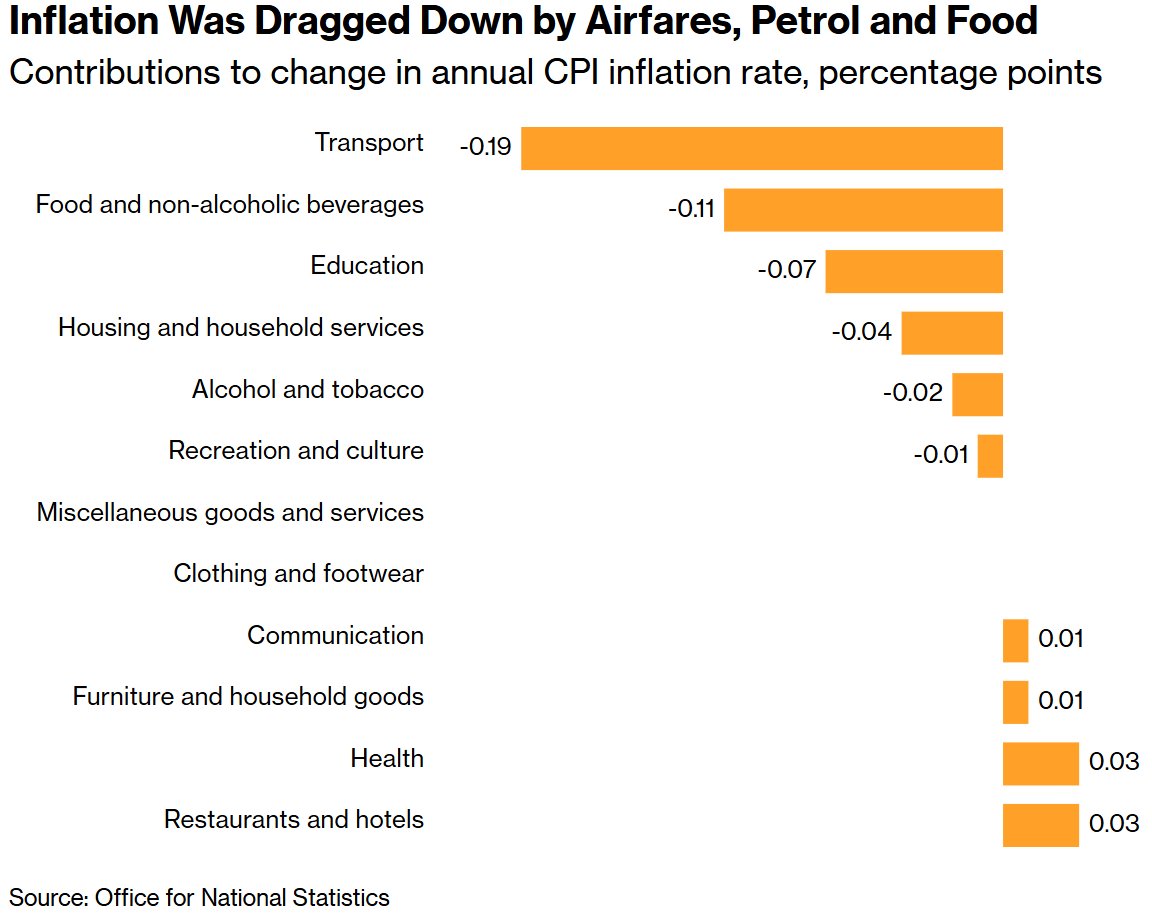
智通财经APP注意到,英国通胀率降至自2025年3月以来的最低水平,这为英国央行下月开会时降息提供了支持。英国国家统计局周三表示,1月份消费者价 格指数(CPI)同比上涨3%,低于前月的3.4%——上个月的数据因波动性成分暂时推高了通胀。 机票、汽油和食品价格的下降抑制了通货膨胀 最新数据使英国央行仍处于春季降息的轨道上。货币市场预期保持稳定,预计今年将有两次25个基点的降息,第一次最早可能在下个月发生。英镑兑美元小 幅走低0.1%,报1.356。国债市场保持平稳,10年期国债收益率为4.38%。 然而,价格压力依然存在的迹象可能会给货币政策委员会中三位立场最强硬的鹰派成员提供底气。 作为备受关注的指标,服务业通胀率降至4.4%,高于经济学家预期的4.3%,也明显高于英国央行预测的4.1%。核心通胀率升至3.1%,高于央行预测的 2.9%,尽管这已是2021年以来的最低水平。 荷兰国际集团(ING)发达市场经济学家詹姆斯·史密斯警告称,服务业通胀处于高位是由于潜在压力而非机票或假期等波动性因素造成的,这表明通胀可能更 具持久性。据他测算,央行首选的"核心服务"通胀指标已从4%回升至4.3%。 这一数据符合经济 ...

宏观调控精准施策 护航经济高质量发展|宏观经济
清华金融评论· 2026-02-18 08:42
Core Viewpoint - The article discusses the current economic transition in China, highlighting the balance between economic resilience and challenges such as domestic demand, real estate market adjustments, and bank net interest margins [2][3]. Group 1: Economic Policy and Coordination - The 2025 Central Economic Work Conference emphasizes the need for policy support and reform innovation, focusing on maximizing economic potential and ensuring effective coordination between fiscal and monetary policies [3]. - A "gradual reduction in reserve requirement and interest rates" is anticipated over the next two years, with a preference for reserve requirement cuts over interest rate reductions due to the current low net interest margins of commercial banks [5][6]. - The Chinese monetary policy framework differs from Western countries, as it relies more on reserve requirements rather than interest rates, allowing for significant room for reserve requirement cuts [7]. Group 2: Real Estate Market Stabilization - Recent policies aimed at stabilizing the real estate market have shown some effectiveness, with a narrowing decline in key indicators such as new housing sales and funding availability [10][11]. - The key to stabilizing expectations in the real estate market lies in improving liquidity and addressing employment and income expectations among residents [11][12]. Group 3: Investment in Human Capital - The article stresses the importance of investing in human capital to drive high-quality economic growth, advocating for increased fiscal spending on education, healthcare, and social services [13][14]. - The current financial structure in China, dominated by indirect financing through banks, needs to evolve towards a more direct financing model to better support innovation and new economic drivers [13]. Group 4: Consumer Demand Activation - Short-term fiscal measures, such as targeted transfer payments and consumption vouchers, are deemed more urgent and effective in boosting consumer spending compared to long-term tax reforms [16][17]. - Specific measures to guide demand towards service consumption in areas like elder care and childcare include government procurement and tax incentives for related services [18][19]. Group 5: Macro-Control Policies - The article suggests optimizing consumer subsidy policies and increasing support for service consumption in the aging population and childcare sectors to stimulate demand [21][22].
货币政策展望:“今年降准降息还有一定的空间” 如何触发
Zhong Guo Jing Ji Wang· 2026-02-18 08:24
Core Viewpoint - The central bank is expected to maintain a moderately accommodative monetary policy in 2026, with potential for both reserve requirement ratio (RRR) cuts and interest rate reductions, depending on economic conditions and financial market dynamics [1][2][3]. Group 1: Monetary Policy Outlook - The People's Bank of China (PBOC) emphasizes the need for flexible and efficient use of various policy tools, including RRR cuts and interest rate reductions, but has not signaled a strong commitment to overall easing [2][3]. - The average statutory deposit reserve ratio for financial institutions is currently at 6.3%, indicating room for RRR cuts to support fiscal efforts and stabilize bank liabilities [3]. - The weighted average interest rate for new loans has dropped to 3.15%, reflecting a historically low level, which may influence future monetary policy decisions [2]. Group 2: Economic Considerations - Economic growth and the promotion of reasonable price recovery are highlighted as key considerations for monetary policy throughout 2026 [4]. - The potential for a 25-50 basis point RRR cut and a 10 basis point interest rate reduction is anticipated, with a gradual approach to implementation [4]. - Structural policy tools are expected to continue playing a significant role, focusing on supporting domestic demand, technological innovation, and small and medium-sized enterprises [4].
MF向日本发出三重警示
Xin Lang Cai Jing· 2026-02-18 08:03
IMF指出,债务水平持续高企,叠加财政收支状况恶化,使日本经济面临一系列冲击。 针对高市提出的为期两年的"食品消费税归零"竞选承诺,IMF直言"应避免削减消费税",称"这一缺乏针 对性的措施会压缩财政空间,增加财政风险"。 这一报告发布恰逢日本首相指名选举之际。路透社称,市场密切关注高市早苗是否会反对央行进一步加 息,以及高市此前提出的为期两年的"食品消费税归零"承诺。 货币政策方面,IMF指出,日本央行保持独立性与公信力,有助于稳定通胀预期,并表示日本央行"应 继续退出货币宽松,使政策利率在2027年达到中性利率水平"。 财政政策方面,IMF认为,短期内财政政策不宜进一步宽松。这一点与高市提出的"负责任的积极财 政"相悖。IMF认为,日本目前虽有一定财政空间,但仍需保持财政克制,以稳固财政缓冲、维持应对 冲击的能力。IMF预测,长期看日本政府财政赤字将扩大,支出压力将增加,公共债务总额将进一步增 长。 国际货币基金组织(IMF)17日发布报告,警示日本政府应保持日本央行独立性,控制财政扩张,避免 以削减消费税方式应对民生问题。 ...
新春跨境消费实现“丝滑”扫码,解锁人民币“走出去”的进阶密码
Sou Hu Cai Jing· 2026-02-18 07:39
Core Insights - The article discusses the transformation of cross-border payments, highlighting the smooth integration of the Renminbi (RMB) in both domestic and international consumption and trade scenarios, driven by advancements in financial infrastructure [1][5]. Group 1: Cross-Border Payment Innovations - Cross-border payment systems are evolving, with features like outbound QR code payments and inbound convenient payments, enhancing the usability of RMB in daily life [1][5]. - In Thailand, Chinese tourists can easily use RMB for payments through various domestic payment apps, indicating a growing acceptance of RMB abroad [3]. - The "QINGDAO PASS" digital RMB wallet is introduced in Qingdao, providing foreign tourists with efficient payment options across multiple consumption scenarios [3]. Group 2: Corporate Settlement Benefits - A foreign trade company in Shantou successfully completed its first cross-border digital RMB settlement with zero fees, showcasing the efficiency and cost-effectiveness of the new payment systems [5]. - The article emphasizes that these innovations in payment systems are designed to alleviate financial pressures on businesses, allowing for more investment in research and market expansion [5]. Group 3: Financial Infrastructure Support - The implementation of revised rules for the RMB cross-border payment system (CIPS) starting February 1, 2026, aims to enhance management and risk control, further supporting RMB internationalization [5][6]. - By the end of 2025, the CIPS is expected to cover 189 countries and regions, with a projected processing amount of approximately 175 trillion yuan, reflecting a 43% year-on-year growth [5]. Group 4: Challenges and Future Prospects - Despite the progress, challenges remain, such as limited payment share and insufficient use of RMB in non-trade areas, particularly in financial investments and commodity pricing [8]. - The article notes the need for continued expansion of RMB usage in various scenarios to achieve a network effect, ultimately making RMB a common choice for cross-border transactions [6][8].

美联储再加息欲收割全球财富,中国加速减持美债,连日本也在抛售
Sou Hu Cai Jing· 2026-02-18 07:29
在美债抛售的过程中,与美元霸权彻底撕破脸的俄罗斯,已经将其持有的美债从数千亿美元大幅削减至 当前的数百亿美元。与此同时,人民币和卢布在美元霸权的围剿下,逐渐站稳脚跟,开始共同揭开全球 货币体系的新篇章。 自今年四月以来,中国便开始加速减持美债,至今已降至2010年以来的最低水平。今年四月,中国减持 美债约360亿美元,目前的美债持有量约为1万亿美元。而作为美国最大外部债权国的日本,也在悄然减 少美债的持有,其持有量目前降至两年来的最低水平,约为1.2万亿美元。美债,作为美国信用的象 征,是美元发行的基础之一。然而,随着美国经济面临衰退,美元霸权的持续施压已经使得全球经济日 益难以承受。美债所带来的系统性风险也在不断积累,减持美债已经成为全球多国普遍采取的趋势。 然而,美元依旧在全球贸易中扮演着至关重要的角色,因此,减持美债的过程不宜过于剧烈,以免给全 球金融市场带来过大冲击。从某种程度上讲,去美元化的进程应当与人民币国际化的步伐,以及全球各 区域自贸区建设的推进同步进行。虽然美元的毒性越来越明显,但在没有新鲜血液替代之前,过早的排 毒可能会造成全球经济的缺血,甚至伤害到经济的基本运行。人民币国际化的稳步发展显 ...

俄美秘密交易曝光,俄重返SWIFT结算,美元提死回升?欧洲破防
Sou Hu Cai Jing· 2026-02-18 07:22
Group 1 - The core message of the article revolves around the implications of a leaked Kremlin document suggesting Russia's willingness to re-engage with the US dollar, which has sparked intense reactions from Western media, interpreting it as a sign of Russia's economic capitulation [1][3] - The timing of the leak coincides with a concerning economic forecast for the US, predicting a national debt surge to $64 trillion over the next decade, indicating a dire financial situation that may have prompted the US to seek cooperation with Russia [3][5] - The article highlights that the supposed Russian capitulation is more of a strategic maneuver by the Trump administration to stabilize the dollar amidst fears of its decline, rather than a genuine surrender by Russia [5][15] Group 2 - The document reveals Russia's willingness to collaborate with the US in key energy sectors and even consider rejoining the dollar settlement system, but under stringent conditions such as lifting sanctions and returning frozen assets [5][7] - The article suggests that this negotiation is not a sign of weakness from Russia but rather a calculated move to leverage its position, as it has alternatives to the dollar, including trading in gold and other currencies [11][13] - The potential re-engagement of Russia with the dollar system could have significant implications for Europe, which may find itself at a disadvantage as it has already cut off cheap energy from Russia and faces economic stagnation [9][17] Group 3 - The article discusses the broader context of global economic shifts, noting that countries are increasingly looking to diversify away from the dollar, with examples such as Saudi Arabia experimenting with yuan settlements and Brazil advocating for a BRICS currency [17][18] - It emphasizes that even if Russia returns to the SWIFT system, the underlying trust issues and the potential for future sanctions will remain, indicating a long-term trend towards de-dollarization [18][19] - The narrative concludes that the current geopolitical landscape is characterized by a transition from a unipolar world dominated by the US to a more multipolar one, where Russia and China are finding ways to operate outside the dollar system [19]

全球第二大国家将与第四大国家合并?一旦成功,领土比俄罗斯还大
Sou Hu Cai Jing· 2026-02-18 06:25
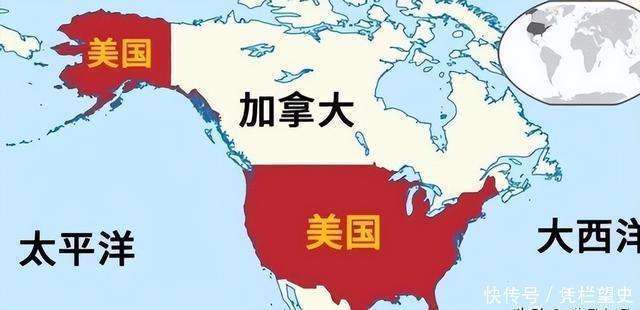
Core Viewpoint - The proposal by former President Trump to make Canada the 51st state of the U.S. stems from discussions with Canadian Prime Minister Trudeau, primarily focused on trade and tariffs, suggesting that joining the U.S. could alleviate economic pressures from high tariffs [1][3]. Group 1: Economic Implications - Trump argues that if Canada were to join the U.S., it could help reduce the U.S. debt burden and eliminate import tariffs, thereby enhancing U.S. energy independence [5][11]. - Canada’s economy is heavily reliant on the U.S. market, with 90% of its exports going to the U.S., which Trump believes provides leverage to impose tariffs [11][18]. - The merger would significantly increase the U.S. economic scale, potentially surpassing Europe and solidifying its status as a superpower [16][22]. Group 2: Political Reactions - Canadian officials, including Trudeau and former Bank of Canada Governor Mark Carney, have firmly rejected the proposal, emphasizing Canada’s sovereignty and political independence [3][7]. - The Canadian Parliament has engaged in heated debates regarding national sovereignty, with a consensus that it is non-negotiable [11][15]. - Trump's comments have sparked a strong backlash in Canada, with many viewing the proposal as an insult to their national identity [7][20]. Group 3: Historical Context - The idea of annexing Canada has historical roots, dating back to the War of 1812, but Canada has since established itself as a strong independent nation [13][22]. - The historical context of U.S.-Canada relations highlights a long-standing alliance, yet the current proposal has raised tensions and concerns about sovereignty [13][20]. Group 4: Future Outlook - The renegotiation of the USMCA in 2026 will be crucial, as Trump may seek to modify or abolish existing agreements, putting further pressure on Canada [22]. - Canada is pivoting towards Pacific trade partners to reduce reliance on the U.S., indicating a strategic shift in its economic policy [18][20]. - The ongoing trade conflict, despite the absence of military confrontation, underscores the fragility of U.S.-Canada relations and the potential for future disputes [18][22].
美联储宣布近30年最大力度加息,中国大幅减持美债,日本选择跟进
Sou Hu Cai Jing· 2026-02-18 05:51
Group 1 - The core point of the article highlights the economic pressure on the Biden administration due to the higher-than-expected CPI index in May, leading to a significant interest rate hike by the Federal Reserve [1] - The Federal Reserve announced a 75 basis point rate hike, marking the largest single increase since 1994, following previous hikes of 25 and 50 basis points earlier in the year [1] - The U.S. stock market experienced volatility with a sharp drop followed by a rebound after the announcement of the rate hike [1] Group 2 - Despite the Fed's aggressive rate hike, there is a concerning trend in U.S. Treasury bonds, with China reducing its holdings to $1.003 trillion, the lowest in 12 years, indicating a decrease of over $36 billion [3] - Japan, the second-largest holder of U.S. debt, has also begun to reduce its holdings, although it still holds $1.218 trillion [3] - The article suggests that the U.S. is losing control over its economic situation, as inflation rates remain high while other major economies, like China, maintain lower inflation rates [5] Group 3 - The article discusses the cyclical nature of financial crises and how the U.S. capitalizes on these cycles to reinforce its financial dominance globally [7] - It points out that the U.S. is facing significant economic pressure due to various factors, including the pandemic and geopolitical conflicts, which have led to soaring raw material prices [9] - The rising prices of materials, such as a 71% increase in plastic and a 76% increase in steel in the U.S., are contributing to inflation, while the U.S. trade deficit continues to widen [9]
李迅雷:马年对中国经济要有信心 A股将稳中向好
Zhong Guo Jing Ji Wang· 2026-02-18 05:14
Core Viewpoint - The article emphasizes the optimistic outlook for China's economy in 2026, highlighting the support from foreign investment banks and the potential for capital inflow into Chinese markets, particularly A-shares and Hong Kong stocks [1]. Economic Growth and Market Outlook - China's economic growth rate of around 5% is still among the highest globally, despite a slowdown since 2010 due to the increasing size of the economy [2][3]. - The focus on domestic demand as a key task for 2026 is crucial, given the unpredictable external environment and the large domestic market [3]. Monetary Policy and Currency - There is an expectation for moderate monetary easing, including potential interest rate cuts, but significant reductions are not anticipated [3]. - The Chinese yuan is expected to appreciate against the US dollar and slightly against a basket of currencies in 2026 [3]. Price Stability and Consumer Spending - The article discusses the need for policies to address cyclical issues and improve consumer spending, emphasizing the importance of increasing residents' income to boost consumption [4]. - Stabilizing housing prices and improving property income are also seen as vital for enhancing consumer confidence and spending [4]. Investment Opportunities - The A-share market is expected to show structural opportunities, particularly in the technology sector, as 2026 marks the beginning of the "14th Five-Year Plan" with numerous goals set for high-tech industries [5]. - Despite potential adjustments in US tech stocks impacting domestic sectors, the long-term outlook for technology, especially AI, remains positive [5].