核能

Search documents
专家详解美欧贸易协议:无法律约束力 暗藏“恐怖平衡”
Di Yi Cai Jing· 2025-07-30 14:14
Core Points - The recent US-EU trade agreement has sparked public backlash in Europe, with the US imposing a 15% tariff on most EU products while the EU commits to significant purchases of US energy and military equipment [1][2] Group 1: Agreement Details - The agreement reached on July 27 includes a 15% tariff cap on EU goods, applicable to nearly all EU exports subject to reciprocal tariffs, with exceptions for certain products [5][6] - The US will maintain a 15% tariff cap on future tariffs for pharmaceuticals and semiconductors until a decision is made under Section 232 [5] - The EU plans to procure $750 billion (approximately €700 billion) worth of US liquefied natural gas, oil, and nuclear products over the next three years [6][10] Group 2: Legal and Political Implications - The agreement is described as a framework or political agreement, lacking legal binding force, which raises questions about the enforceability of commitments made [3][7] - The use of terms like "intends" and "interested" in the EU's commitments has led to skepticism regarding the actual execution of these promises [10] - The EU and US are expected to negotiate further to solidify the agreement, with a non-binding joint statement anticipated before August 1 [9][10] Group 3: Economic Context - In 2024, trade between the US and EU is projected to exceed €1.6 trillion, with daily exchanges of over €4.2 billion in goods and services [10] - The investment between US and EU companies reached €5.3 trillion in 2022, highlighting the significance of the economic relationship [10]
海乐行国际联会与乌尔巴冶金厂携手布局核燃料产业链
Sou Hu Wang· 2025-07-30 07:47
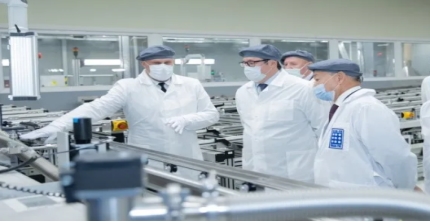
本次海乐行国际联会与 UMP 签署的战略意向书,不仅延续了 UMP 在原有中广核合作基础上的扩展, 还融入新时代国际交流的新机制,特别强调投融资与市场运作、人才培养与技术转化、绿色供应链与第 三国推广、以及"一带一路"背景下的国际合作等全局层面的协同。这一点在意向书的"合作机制设计"章 节中得以体现:一是成立由双方联合派驻的项目工作小组,负责统筹推进签约后各项工作;二是在中国 境内设置联合运营办公室,便于技术对接、质量跟踪与市场推广;三是双方在哈萨克斯坦和中国境内进 行重点人才交流,包括核材料生产管理、物流仓储、防护技术、标准化工程设计等领域;四是拟配合国 家绿色低碳发展战略评估核燃料全生命周期碳排放与安全控制路径,支持供给侧结构性改革与绿色产业 升级。 从国家战略层面来看,此次合作意向恰逢中哈两国在核能战略互信提升的关键节点。近年来,两国在能 源领域的合作持续深化:中哈双方不仅在铀资源开采与供应链建设保持密切合作,也在核电站运营建 2025年7月,北京——在第六届"一带一路"国际合作高峰论坛的重要环节中,中国当代国际商务与产业 桥梁组织——海乐行国际联会与哈萨克斯坦国家原子能工业公司旗下的乌尔巴冶金厂(UM ...

创世界记录!中国“人造太阳”取得重大突破,无限能源或成现实
Sou Hu Cai Jing· 2025-07-30 06:27
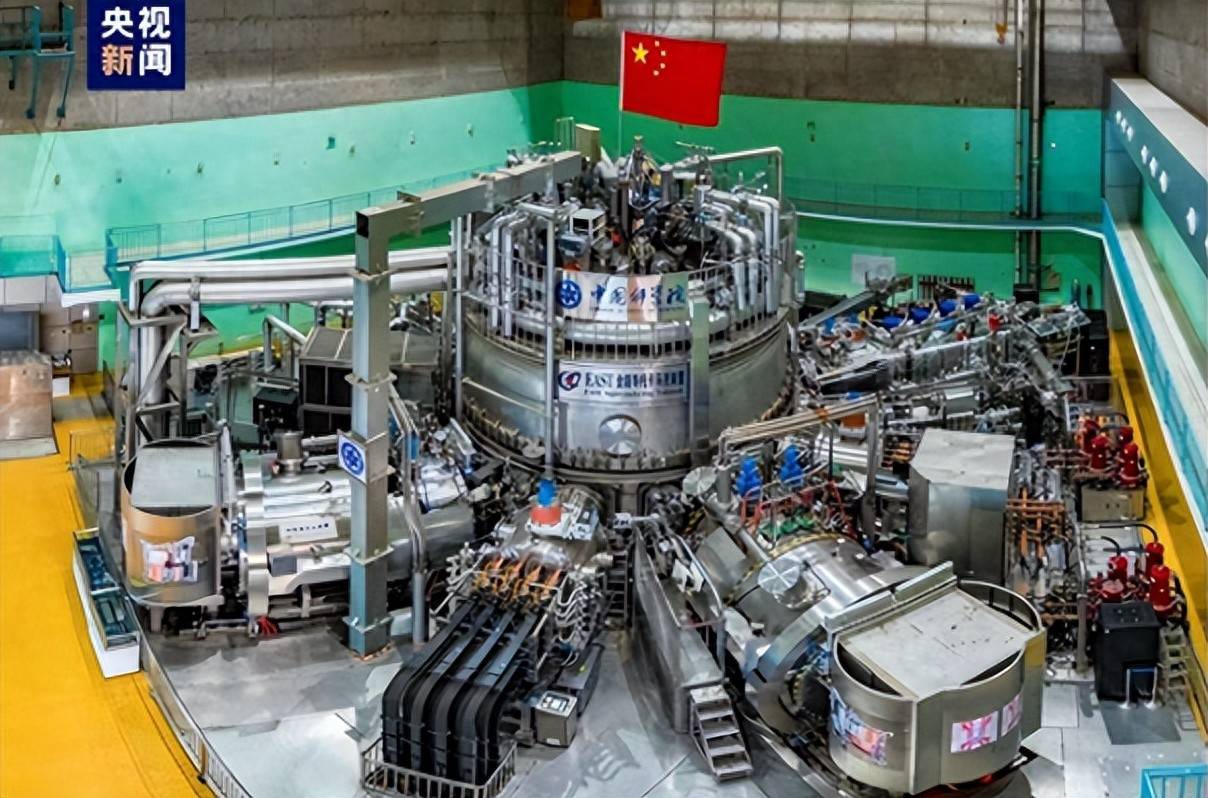
Core Viewpoint - The article discusses the potential of nuclear fusion, referred to as the "artificial sun," to alleviate energy concerns and reshape the future of energy consumption and production in China and globally [3][22]. Group 1: Energy Dependency and Security - China's reliance on foreign oil exceeds 70%, raising concerns about energy security and sustainability [10][3]. - The shift from traditional energy sources to nuclear fusion could allow China to regain control over its energy supply [10][3]. Group 2: Nuclear Fusion Technology - Nuclear fusion mimics the sun's energy production by fusing hydrogen nuclei at extremely high temperatures, resulting in helium and releasing vast amounts of energy without harmful waste [7][8]. - The fuel for fusion, deuterium, is abundant in seawater, with one liter of seawater potentially yielding energy equivalent to 300 liters of gasoline [8]. Group 3: Scientific Advancements in China - China has made significant strides in nuclear fusion research, with facilities like the "Eastern Super Ring" (EAST) in Hefei achieving world records in plasma stability [18][16]. - The "Chinese Circulation Three" (HL-3) in Chengdu has developed advanced magnetic field structures to better control the fusion process [21]. Group 4: Future Implications of Nuclear Fusion - Successful implementation of nuclear fusion could lead to a new era of energy availability, drastically reducing energy costs and enabling advancements in technology such as artificial intelligence and quantum computing [23][25]. - The transition to fusion energy could also lead to environmental benefits, such as cleaner air and water, and innovations in agriculture and space exploration [25][26]. Group 5: Strategic Goals - China has outlined a clear "three-step" strategy aimed at achieving commercial nuclear fusion energy by the middle of this century, indicating a strong commitment to this transformative technology [29][27].
FXGT: 美国可再生能源受限 能源格局或重塑
Xin Lang Cai Jing· 2025-07-30 04:37
Core Viewpoint - The Trump administration's new policies are aimed at tightening federal approval processes for solar and wind energy projects, which may hinder investment in renewable energy and shift focus back to fossil fuels and nuclear energy [1][2] Group 1: Policy Changes - The Trump administration announced plans to restrict the development of solar and wind energy projects by tightening federal approval processes [1] - The final review authority for energy projects has been transferred to Interior Secretary Doug Burgum, who will oversee all approval stages for solar and wind projects [1] - The new regulations are intended to create a "level playing field" for coal and natural gas industries, countering the previous advantages given to renewable energy [1] Group 2: Impact on Renewable Energy - The combination of the new policies and the recently passed "One Big Beautiful Bill Act" is expected to slow down the development of renewable energy projects by reducing financial incentives and increasing administrative hurdles [1][2] - The removal of certain tax incentives and market support for renewable energy is likely to decrease the financial attractiveness of solar and wind projects [2] - Concerns have been raised that these changes could lead to a significant slowdown in the growth of the fastest-growing electricity sources in the U.S. [1][2] Group 3: Future Energy Supply Concerns - The new regulations may create pressure on the future electricity supply in the U.S., as demand for electricity continues to rise due to emerging technologies like artificial intelligence [2] - The policies are feared to make it difficult for the U.S. to meet the increasing electricity demand, potentially leading to a shift in the energy structure back towards fossil fuels and nuclear energy [2]
1.3亿弄出 “人造太阳”,中国民企怎样超越200亿国际项目?
3 6 Ke· 2025-07-29 12:10
Core Insights - The article discusses the rapid advancements in China's private nuclear fusion projects, highlighting the shift from state-controlled nuclear energy to private sector involvement, exemplified by companies like Energy Singularity and New Energy Group [3][5][12]. Group 1: Industry Developments - China's private nuclear fusion projects have gained momentum in the past two years, with significant breakthroughs in technology and engineering capabilities [3][5]. - Energy Singularity's "Honghuang 70" device is set to become the world's first fully high-temperature superconducting tokamak, achieving a magnetic field of 22.4 Tesla, breaking previous records held by U.S. companies [5][19]. - New Energy Group's "Xuanlong-50U" spherical ring hydrogen-boron fusion device has also made significant progress, achieving high-temperature, high-density plasma currents [5][21]. Group 2: Impact of U.S. Export Restrictions - In June, the U.S. Department of Commerce announced a suspension of export licenses for critical nuclear power components to China, affecting major suppliers like Westinghouse and Emerson [8][10]. - This restriction has inadvertently benefited private fusion companies in China, allowing them to bypass reliance on traditional nuclear fission components and focus on fusion technologies that can be developed domestically [11][12]. Group 3: Technological Advancements - The precision required for components in nuclear fusion, such as high-temperature superconducting magnets, has improved significantly, allowing Chinese companies to produce these parts domestically at lower costs and higher speeds [15][28]. - The article emphasizes the importance of engineering efficiency and cost-effectiveness in the current climate, where the urgency for clean energy solutions is increasing due to climate change [22][25]. Group 4: Competitive Landscape - The article compares the progress of Chinese private companies in nuclear fusion with that of U.S. firms, noting that while both are making strides, Chinese companies are currently ahead in terms of technological breakthroughs and project timelines [35][37]. - The main fusion routes being explored include tokamak and inertial confinement fusion, with various sub-paths being tested by different companies, leading to a competitive "race" in the industry [19][40].

建设现代化产业体系,赢得战略主动(高质量发展故事汇·第9期)
Ren Min Ri Bao· 2025-07-28 22:30
Core Viewpoint - The construction of a modern industrial system is crucial for promoting high-quality economic development and is a strategic focus in national competition. The system has achieved significant progress since the 18th National Congress of the Communist Party of China, forming a large-scale, comprehensive, and competitive industrial framework. The goal is to advance the system towards higher levels through intelligent, green, and integrated development [4][5][8]. Group 1: Industrial System Development - The industrial system's intelligent transformation is essential for leveraging the new wave of technological revolution and building a modern industrial framework [4][5]. - The green transformation of the industrial system is a key pathway for achieving high-quality development and carbon neutrality goals. By the end of 2024, there will be 6,430 national-level green factories, contributing to approximately 20% of the total output value of the manufacturing industry [5][6]. - The integrated development of the industrial system enhances overall efficiency, with over 15,000 "5G + industrial internet" projects covering all 41 industrial categories [6][8]. Group 2: Technological Innovation and Resource Integration - Technological innovation is pivotal for driving industrial innovation, focusing on independent innovation and addressing "bottleneck" technologies [9][10]. - A multi-level financial service system is being established to nurture innovative enterprises, promoting collaboration among various innovation entities [9][10]. - The optimization of the business environment is crucial for high-quality construction of the modern industrial system, ensuring protection for private enterprises and fostering a conducive environment for innovation [10]. Group 3: Case Studies - Audi FAW New Energy Vehicle Co., Ltd. has established a comprehensive supply chain, with over 70% of parts sourced locally, showcasing the rapid development of China's automotive industry [11][12]. - At Nanjing Steel Group, AI models are utilized to optimize steel production processes, transitioning from experience-driven to intelligent decision-making [13]. - The "Heqi No. 1" nuclear energy project has successfully expanded the use of nuclear energy beyond electricity generation to industrial steam supply, significantly reducing carbon emissions [14]. - The development of seawater rice in Xinjiang has transformed saline-alkali land into productive agricultural areas, with yields increasing from 450 kg to 853 kg per mu [15].
巨额承诺 vs. 市场现实:欧盟7500亿能源采购难兑现?
智通财经网· 2025-07-28 12:28
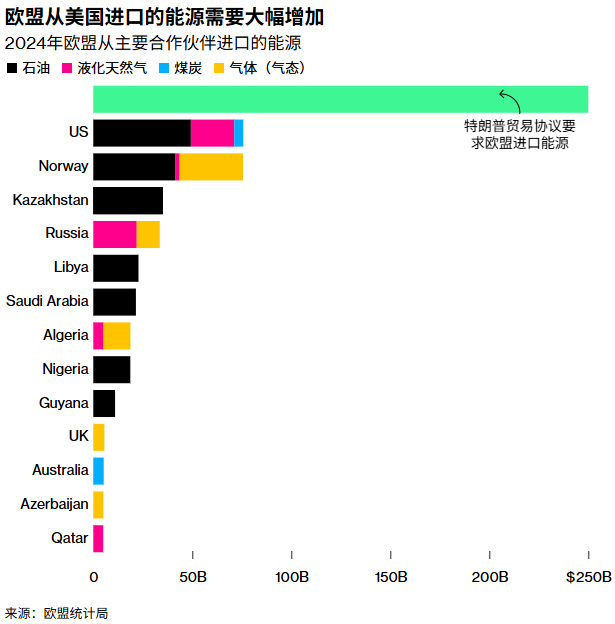
Group 1 - The EU has committed to importing $750 billion worth of energy from the US over three years, which is crucial for a trade agreement with President Trump, but actual implementation faces significant challenges [1] - The agreement requires the EU to purchase $250 billion worth of natural gas, oil, and nuclear technology annually, based on plans to reduce reliance on Russian fossil fuels and buy "more economically efficient" LNG from US producers [1][4] - Last year, the EU imported less than $80 billion in energy from the US, indicating a substantial gap between current imports and the ambitious targets set by the EU [1][2] Group 2 - The scale of the current agreement is much larger than previous commitments made during the 2022 energy crisis, where a short-term increase of 15 billion cubic meters of LNG was agreed upon [2] - Analysts suggest that the $750 billion target is overly ambitious and lacks clarity on which specific energy sources will be included, potentially requiring long-term negotiations based on the EU's future energy needs [4] - The US, as the largest LNG producer, is expected to release new capacities in the coming years, with the Trump administration focusing on securing new supply agreements with European buyers to facilitate project financing and job creation [5] Group 3 - The EU is currently the second-largest natural gas supplier to Europe, but competition with Asian customers remains a challenge for securing LNG supplies [8] - The EU's joint procurement platform has seen limited success, and specific transaction details are still unclear [5] - The nuclear energy sector may provide a breakthrough, with the EU planning to invest approximately €241 billion ($280 billion) in nuclear expansion to achieve its 2050 climate neutrality goals [10]
从日本到欧盟,美国开启“关税换投资”模式,6000亿美元投资如何落地?
Di Yi Cai Jing· 2025-07-28 11:02
Core Points - The recent trade agreements between the US and EU, as well as the US and Japan, involve significant investment commitments, but analysts express skepticism about the actual implementation of these commitments [1][3][6] - The investment commitments from the EU and Japan are seen as a response to tariff threats from the US, but the sustainability of these investments is questioned [6][7] Investment Commitments - The US will impose a 15% tariff on EU products, while the EU is expected to invest $600 billion and purchase $750 billion worth of US energy [1] - Japan has committed to invest $550 billion in the US, which is linked to a reduction in tariff rates from 25% to 15% [1][3] - Analysts suggest that the actual investment amounts may be significantly lower than promised, with concerns about the clarity and feasibility of these commitments [3][5] Sector-Specific Insights - Potential investment areas include pharmaceuticals, automotive, nuclear energy, renewable technologies, infrastructure, and critical minerals [4] - The automotive sector may have limited collaboration opportunities due to existing production facilities in the US [4] - Nuclear energy is highlighted as a priority investment area due to high demand in the US, with individual projects potentially costing billions [4] Economic Environment - The current investment climate in the US is described as uncertain, which may deter large-scale investments from Europe [5] - Historical data indicates that foreign direct investment (FDI) from Europe to the US has been declining, with 2023 seeing a drop to the lowest level in a decade [7] - The effectiveness of tariff policies in attracting investment is debated, with past experiences showing that such strategies may lead to temporary spikes rather than sustained investment [6][7]

可控核聚变系列研究(一):终极能源?投资在东方欲晓时
Huachuang Securities· 2025-07-28 10:44
Investment Rating - The report maintains an investment recommendation for the controllable nuclear fusion sector, indicating a positive outlook for future developments in this area [1]. Core Insights - The report emphasizes that controllable nuclear fusion is seen as a potential ultimate energy solution, with significant advancements expected in the coming years as the industry transitions from experimental to engineering phases [4][14]. - Domestic projects are progressing beyond expectations, with increased capital investment from various sectors, indicating a robust growth trajectory for the industry [18][22]. - Internationally, countries like the United States are accelerating their nuclear fusion initiatives, which could further enhance the global market for fusion energy [23][24]. Summary by Sections 1. Controllable Nuclear Fusion: A Frontier Technology - Controllable nuclear fusion is highlighted as a solution to energy challenges, with abundant fuel reserves and sustainability potential [14][15]. - The report outlines the four key stages of nuclear fusion development: scientific feasibility verification, engineering feasibility verification, demonstration reactors, and commercial application reactors [27][30]. 2. Investment Opportunities - The report forecasts a capital expenditure exceeding 145.5 billion yuan in the next 3-5 years, with annual investments potentially reaching close to 10 billion yuan [6][45]. - Key components of the nuclear fusion technology, such as magnets, vacuum chambers, and power systems, are identified as high-value segments within the industry [7][49]. 3. Industry Chain Analysis - The industry chain is segmented into upstream strategic materials, midstream high-end manufacturing, and downstream operational management [8]. - Specific companies are recommended for investment, including China Nuclear Power, Lianchuang Optoelectronics, and Sihua Electronics, which are involved in various aspects of nuclear fusion technology [8][46]. 4. Key Company Introductions - China Nuclear Power is noted for its investment in China Fusion Energy Company, positioning itself for long-term growth in the nuclear sector [8]. - Lianchuang Optoelectronics is recognized for its advancements in high-temperature superconducting magnets and participation in significant projects like the Spark-1 [8]. - Sihua Electronics is highlighted for its successful bids in key projects, indicating strong market positioning in the nuclear fusion space [8].


可控核聚变:0-1产业落地可期
HUAXI Securities· 2025-07-28 08:59
Investment Rating - The report indicates a positive outlook for the controlled nuclear fusion industry, suggesting that companies with leading technologies and core component supply capabilities are likely to benefit first as fusion devices are deployed [3]. Core Insights - Controlled nuclear fusion is viewed as a clean, safe, and sustainable ultimate energy source, with significant potential for large-scale commercialization in the future [4][8]. - The report highlights the importance of the Lawson criterion and the Q factor in achieving sustainable fusion reactions, emphasizing that meeting these conditions is crucial for commercialization [17][18]. - The global landscape for fusion energy is rapidly evolving, with multiple countries, including the US, UK, Germany, and Russia, actively pursuing fusion power projects expected to come online in the 2030s [34][36]. Summary by Sections 1. Development Window for Controlled Nuclear Fusion - The report notes that the domestic and international fusion energy sector is entering a critical development phase, with significant projects underway [5][34]. - Key projects include the Hefei BEST project in China, which aims to be the world's first to conduct steady-state deuterium-tritium combustion by 2027 [52]. 2. What is Controlled Nuclear Fusion? - Controlled nuclear fusion is characterized by high energy release efficiency, safety, abundant fuel sources, and minimal environmental pollution [4][8]. - The primary fuels for fusion are deuterium and tritium, with deuterium being readily available from water and tritium produced through lithium reactions [8][11]. 3. Technical Pathways for Controlled Nuclear Fusion - Magnetic confinement is identified as the most effective method for achieving fusion energy, with the Tokamak design being the most widely researched and developed [18][19]. - The report discusses advancements in high-temperature superconductors and AI technology that enhance plasma control and reduce the size and cost of fusion devices [26][27]. 4. Progress in Controlled Nuclear Fusion - The report outlines significant international efforts, including the ITER project, which aims to demonstrate the feasibility of fusion energy by achieving a Q factor greater than 10 [38][43]. - Various countries are ramping up investments in fusion energy, with the US planning to build the world's first fusion power plant by 2028 [34][35]. 5. Beneficiary Companies - The report identifies several companies poised to benefit from the growth of the fusion energy sector, including those involved in magnet systems, high-temperature superconductors, vacuum chambers, and other supporting technologies [3].