房地产开发

Search documents
缓解库存压力!多城开始收购二手房用于保租房
Sou Hu Cai Jing· 2026-02-14 01:05
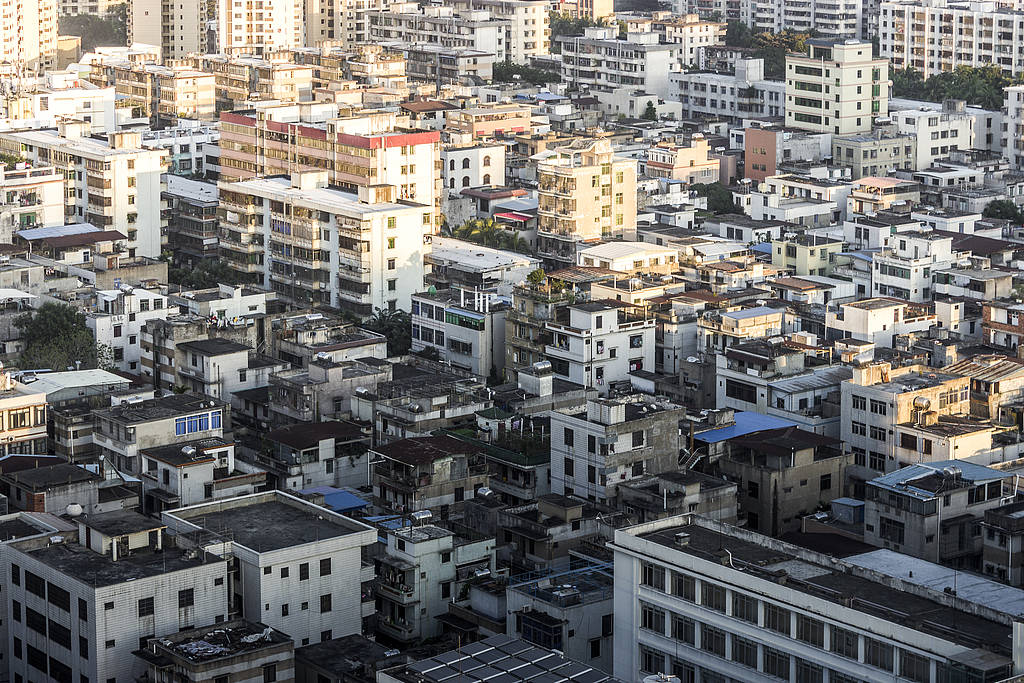
三湘都市报·新湖南客户端全媒体记者 卜岚 通讯员 刘时羽 近日,上海浦东新区、静安区、徐汇区正式启动首批试点,通过收购二手房扩充保障性租赁住房供给, 此举迅速引发全国房地产市场关注。 事实上,此前郑州、长沙等城市已率先开展相关探索,不过大多采用"以旧换新"的模式。而上海此次跳 出传统"以旧换新"框架,采用了现金收购与房票置换并行的方式。这一新模式是否会在全国推广? 多地试水存量房收购,长沙已有政策铺垫 日前,中国建设银行上海市分行宣布,将对上海市试点收购二手住房用于保障性租赁住房项目提供全周 期金融支持。浦东新区、静安区、徐汇区作为试点区,首批拟收购房源聚焦房型匹配、配套成熟等特 征,重点对接新市民、青年人及大学毕业生的租赁需求。 值得注意的是,上海收购对象为总价低的"老破小",例如,浦东新区将优先收购内环内2000年以前、单 套面积70平方米以下、总价不高于400万元、产权清晰的二手房。 相较于上海此次针对性的试点举措,长沙在存量商品房收购领域的探索早已启动。不过与上海这次试点 不同,长沙重点将存量商品房转化为保障房或人才住房,也就是房地产市场中待消化的现有房源。 2025年7月,长沙市住建局等12部门联合 ...
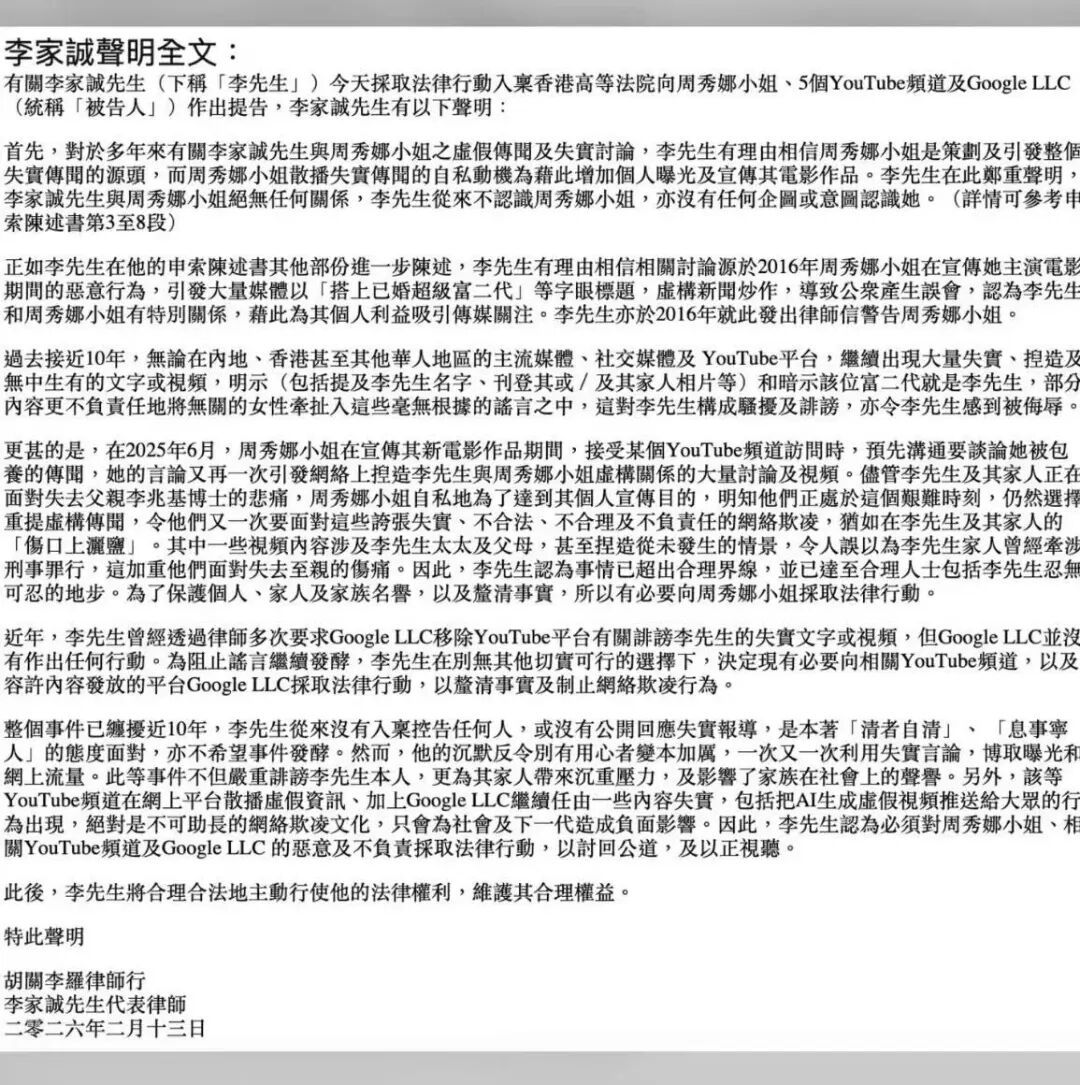
李家诚,控告演员周秀娜
Xin Lang Cai Jing· 2026-02-14 00:57
Core Viewpoint - Li Ka-shing, chairman of Henderson Land Development, has filed a lawsuit against actress Zhou Xun and several social media accounts, claiming they have spread false rumors about him for nearly a decade [1][2]. Group 1: Legal Action - Li Ka-shing believes that Zhou Xun is the source of false rumors and discussions regarding their relationship, which he asserts are untrue [2]. - He has emphasized that he has no relationship with Zhou Xun and has never intended to know her [3]. - The lawsuit aims to clarify the facts and protect his personal and family reputation [7]. Group 2: Impact of Rumors - Li Ka-shing has stated that the false reports have caused significant pressure on his family and have affected their social reputation [5]. - He has remained silent on the matter for nearly ten years, but believes that this silence has allowed malicious individuals to escalate the situation [5]. Group 3: Background Information - Zhou Xun, born in 1985, gained fame through modeling and acting, and has received nominations for film awards [7]. - Li Ka-shing, born in 1971, is a well-known entrepreneur in Hong Kong and the son of the late Li Ka-shing, founder of Henderson Land Development [7]. - The company has seen a significant increase in stock price, rising over 40%, as it actively pursues new projects, including the $8.1 billion "Central Plaza" office and retail complex [10].


泉州鲤城红梅新村超87亩地块3月将出让!可售住宅不限价…
Sou Hu Cai Jing· 2026-02-14 00:48
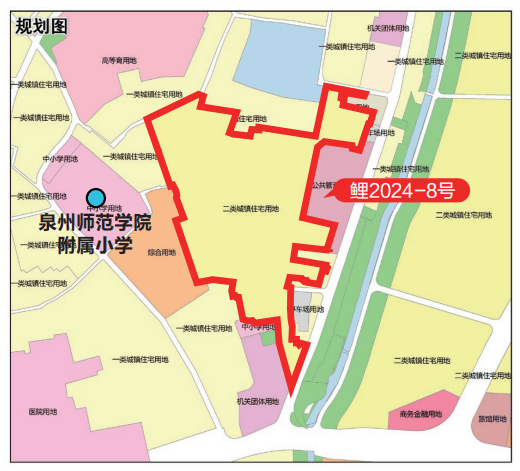
Core Viewpoint - The Quanzhou city center will auction a land parcel (Bidding No. Li 2024-8) with a total area of 58,380.86 square meters (approximately 87.57 acres) on March 3, 2026, with no maximum sales price for residential units, allowing the winning bidder to set prices based on market conditions [1][2][5]. Group 1: Land Parcel Details - The land parcel is designated for urban residential (Type II) and community service facilities with a usage period of 70 years, and commercial services for 40 years [5][7]. - The starting price for the land is set at 45,390 million yuan, with a bidding deposit of 9,100 million yuan required [5][7]. - The land is located in the northeastern part of the ancient city area of the Li District, west of Chongfu Road [5][7]. Group 2: Bidding Requirements - Bidders must possess real estate development qualifications and are required to construct public service facilities, including community management service rooms and medical service stations [8][9]. - The winning bidder must sign a purchase agreement for designated price residential units and commercial spaces, with the residential area estimated at 72,000 square meters and commercial space at 2,000 square meters, priced at 6,700 yuan per square meter [9][10]. - Bidders must provide proof of self-funding for the land purchase and comply with various financial regulations to avoid disqualification [10][12]. Group 3: Auction Process - The auction will follow a "highest bidder wins" principle without a reserve price [13]. - Bidders must pay 50% of the total transaction price within 30 days of winning, with the remaining balance due within three months [16][17]. - The winning bidder is required to commence construction within one year and complete it within three years, with penalties for delays [17][18].
多地收购二手房作保租房,“老破小”有救了?
Sou Hu Cai Jing· 2026-02-14 00:48
Core Viewpoint - The recent initiative by local governments in cities like Shanghai, Jinan, Hangzhou, and Chongqing to purchase second-hand homes for use as rental housing signals a shift in policy aimed at revitalizing the housing market and addressing the challenges faced by homeowners looking to upgrade their properties [1][2]. Group 1: Government Actions - Local governments are focusing on acquiring second-hand homes, particularly those that are older, smaller, and located in desirable areas, to convert them into affordable rental housing [1][2]. - In Shanghai, specific criteria have been established for the types of properties eligible for purchase, including those built before 2000, with a maximum price of 4 million yuan and a size of less than 70 square meters [1]. Group 2: Market Implications - The government's intervention is seen as a way to facilitate the "old for new" housing policy, which aims to improve the liquidity of the second-hand housing market and stimulate new home sales [2]. - Concerns about potential price suppression in the second-hand market due to government purchases are considered overstated, as the government will not force purchases and will operate under similar conditions as regular transactions [2]. Group 3: Challenges and Considerations - The acquisition of second-hand homes presents more complexities compared to purchasing new developments, as it involves negotiating with individual homeowners, which increases time and resource costs [3]. - The variability in pricing based on location, type, and age of the properties complicates the valuation process for the government, which currently lacks detailed guidelines for these transactions [6]. - Financial constraints may limit the ability of local governments to fund these purchases, especially in smaller cities where the second-hand market is less active [7].
央行开展万亿逆回购操作,国产大模型节前集体上新 | 财经日日评
吴晓波频道· 2026-02-14 00:39
Monetary Policy - The People's Bank of China conducted a 1 trillion yuan buyout reverse repurchase operation with a 6-month term, marking a net liquidity injection of 600 billion yuan for February, which is an increase of 300 billion yuan compared to the previous month [2][3] - The central bank's continued use of quantity-based tools indicates a reduced likelihood of interest rate cuts or reserve requirement ratio reductions in the short term [2][3] Real Estate Market - In January, new home prices in first-tier cities fell by 0.3% month-on-month, while second-tier cities saw a smaller decline of 0.2%, indicating a narrowing of price drops in these areas [4][5] - The overall trend shows an increase in cities with declining new home prices compared to late 2022, with the year-on-year decline in first-tier cities expanding to 2.1% [4][5] Automotive Industry - The State Administration for Market Regulation released guidelines to clarify legal risks in the automotive industry, aiming to promote healthy competition and compliance among manufacturers [6][7] - The guidelines address various pricing behaviors that could lead to legal issues, emphasizing the need for a clear competitive framework in the automotive sector [6][7] AI Industry - Anthropic raised $30 billion in its latest funding round, achieving a valuation of $380 billion, which is double its previous valuation [10][11] - The competition in the AI sector is intensifying, with major players like OpenAI and Anthropic attracting significant investments, indicating a growing interest in AI commercialization [10][11] Commodity Funds - Recent fluctuations in international oil prices have led to strict purchase limits on commodity funds, with some funds allowing purchases as low as 1 yuan [12] - The volatility in commodity markets has prompted fund companies to implement tighter risk control measures, reflecting a heightened speculative atmosphere [12] Stock Market - The A-share market experienced a decline, with the Shanghai Composite Index falling by 1.26% and trading volume decreasing by 161.8 billion yuan compared to the previous day [13][14] - The market is transitioning from an overheated phase to a more rational state, with the index seeking a new consolidation platform above 4000 points [14]


房地产日报广东辖内银行已为1929个白名单项目提供1.21万亿元授信
Tai Ping Yang Zheng Quan· 2026-02-14 00:35
Investment Rating - The industry rating is optimistic, expecting overall returns to exceed the CSI 300 Index by more than 5% in the next six months [11] Core Insights - As of February 12, 2026, banks in Guangdong have provided credit for 1,929 "white list" projects amounting to 1.21 trillion yuan, with a disbursed amount of 911.9 billion yuan, leading the nation in project count, credit amount, and disbursed funds [5] - The real estate sector saw a mixed performance, with the Shanghai and Shenzhen stock indices rising by 0.05% and 0.51% respectively, while the Shenwan Real Estate Index fell by 0.68% [3] - Notable individual stock performances included Hefei Urban Construction and Jingji Zhino, which rose by 10.03% and 3.50% respectively, while Shahe Co. and Jingtou Development saw declines of -5.14% and -3.88% [4] Market Trends - The report highlights the ongoing support from financial institutions in Guangdong, which is part of a broader strategy to mitigate risks in the real estate sector and implement the "white list" and "financial sixteen measures" policies [5] - The introduction of new residential projects in Zhuhai, with a total investment of 3.427 billion yuan, aims to set benchmarks for smart residential designs [6]
要回农村过年了,才猛然感觉到城市化的迅速
虎嗅APP· 2026-02-14 00:28
Core Viewpoint - The article discusses the rapid urbanization process in China, highlighting the unique characteristics and challenges associated with it, particularly in relation to the real estate industry and housing quality [9][10][12]. Group 1: Urbanization Process - China's urbanization rate increased from 30% to 70% in just 40 years, a pace unmatched globally [9][10]. - The urbanization rate is projected to rise from 37.66% in 2001 to 67.89% by 2025, indicating a significant shift in population dynamics [9]. - The gap between the permanent resident urbanization rate and the registered population urbanization rate was 18.49 percentage points in 2020, affecting approximately 261 million people [12]. Group 2: Land Reform and Urbanization - The urbanization process in China is characterized by a "land-driven" model, influenced by three key land reforms: the 1994 tax-sharing reform, the 1998 housing market reform, and the 2003 land auction system [12][15]. - These reforms have created a system where local governments are incentivized to generate revenue through land sales, leading to rapid urban expansion [15]. Group 3: Housing Development Stages - The article outlines the evolution of housing in China, from the initial focus on basic needs in the 1980s to the current emphasis on quality and additional value in housing [18][20]. - The average living space per urban resident increased from 6.7 square meters in 1978 to approximately 40 square meters by 2022, reflecting significant improvements in living conditions [18]. - The transition from welfare housing to market-oriented housing began in the late 1990s, leading to a surge in housing quality and diversity [20][22]. Group 4: Current Trends and Future Directions - The real estate market is undergoing a structural transformation, with a shift from investment-driven demand to a focus on living quality and sustainability [24][30]. - The "fourth generation" of housing emphasizes high-quality living environments, with over 60% of buyers prioritizing comfort over location and investment potential [24]. - Future reforms aim to enhance public services and housing quality, addressing the mismatch between urban resources and population mobility [30].

盛松成:宏观调控精准施策 护航经济高质量发展
Shang Hai Zheng Quan Bao· 2026-02-14 00:09
Group 1 - The current economic operation is at a critical stage of transformation and upgrading, with a generally stable economic foundation and persistent resilience, but issues such as domestic demand stimulation and deep adjustments in the real estate market still need to be addressed [3][21] - The Central Economic Work Conference in December 2025 emphasized the need to fully tap economic potential, combining policy support with reform and innovation, and focusing on both investment in physical assets and human capital [3][21] - The coordination of fiscal and monetary policies is crucial, with a preference for reserve requirement cuts over interest rate reductions, as the latter is more suitable for the current national context [4][5][21] Group 2 - The "gradual reduction in reserve requirements and interest rates" approach is recommended due to high uncertainty, suggesting a "small steps" model for monetary policy [4][22] - The Chinese monetary policy framework differs fundamentally from Western countries, which primarily use interest rates for monetary control, as China's system still relies heavily on reserve requirements [5][23] - The People's Bank of China has begun to innovate structural monetary policy tools to enhance credit supply and demand, particularly in supporting small and medium-sized enterprises and key sectors [6][24] Group 3 - Recent measures to stabilize the real estate market include adjusting housing purchase restrictions and lowering housing provident fund loan rates, which have led to a narrowing decline in key real estate indicators [8][26] - The key to stabilizing expectations in the real estate market lies in improving liquidity and addressing employment and income expectations, which are critical for releasing policy effects [9][27] - Long-term reforms in land supply and fiscal structure are necessary to shift from a land-based development model to a more integrated approach that considers housing, land, and finance [9][27] Group 4 - The financial structure needs optimization, with a shift from indirect financing to direct financing to better support technological innovation and new production capabilities [10][28] - "Investment in people" focuses on directing more fiscal resources towards improving public services and human capital, which is essential for sustainable economic growth [10][29] - Key measures include implementing income increase plans for urban residents and increasing government spending on education, healthcare, and social services [11][30] Group 5 - Short-term fiscal transfer payments, such as consumption vouchers and targeted subsidies, are deemed more urgent and effective for boosting consumption in the current economic environment [13][31] - The government can stimulate demand in service sectors like childcare and elderly care through procurement and tax incentives, which will encourage investment in these areas [15][33] - The silver economy and childcare sectors present significant opportunities for consumption growth, with projections indicating substantial increases in their economic contributions by 2035 [16][36]
华侨城A“开年黑”!1月地产合同销售金额腰斩
Shen Zhen Shang Bao· 2026-02-13 23:16
Sales Performance - In January 2026, the company achieved a contracted sales area of 45,000 square meters, a decrease of 45% year-on-year; the contracted sales amount was 590 million yuan, down 53% year-on-year [1] - For the full year of 2025, the company reported a total contracted sales area of 1.21 million square meters, a decrease of 30% year-on-year; the contracted sales amount was 17.73 billion yuan, down 33% year-on-year [1] Tourism Business - In January 2026, the company's tourism enterprises received a total of 5.54 million visitors, a decrease of 15% year-on-year, primarily due to the timing difference of the Spring Festival holiday [1] - For the full year of 2025, the company’s tourism enterprises received a total of 79.7 million visitors, a decrease of 1% year-on-year, with December 2025 seeing 5.71 million visitors, down 6% year-on-year [1] Financial Outlook - The company expects a net loss attributable to shareholders of 13 billion to 15.5 billion yuan for the year 2025; the net loss after excluding non-recurring items is projected to be between 13.2 billion and 15.7 billion yuan [1] - This marks the fourth consecutive year of losses for the company, following a loss of 10.9 billion yuan in 2022, with the loss in 2025 being larger than the previous year [2]

“整个事件已缠扰近10年”,恒基地产主席李家诚控告女星周秀娜骚扰诽谤
Mei Ri Jing Ji Xin Wen· 2026-02-13 22:56
Core Viewpoint - Mr. Li Ka-shing has taken legal action against actress Chrissie Chau for defamation and harassment due to false rumors linking them, asserting that he has no relationship with her and believes she is the source of these rumors for personal publicity [2][5][15]. Group 1: Legal Action and Allegations - Mr. Li has filed a lawsuit in the Hong Kong High Court against Chrissie Chau and five social media channels for defamation and harassment, aiming to clarify facts and protect his family's reputation [2][12]. - The lawsuit is based on allegations that Chau has been spreading false rumors about a relationship with Mr. Li, which he claims has been ongoing for nearly a decade [15][17]. - Mr. Li believes that Chau's actions are motivated by a desire to increase her personal exposure and promote her film projects, particularly during a difficult time for his family following the death of his father [5][16]. Group 2: Financial Background - Mr. Li Ka-shing is the son of the late Li Shau-kee, founder of Henderson Land Development Company, and currently serves as the chairman and managing director of the company alongside his brother [8][12]. - According to the latest Forbes list, the Li brothers rank second among Hong Kong's wealthiest individuals, with a shared net worth of $34.9 billion (approximately 241.1 billion RMB) [12]. - Since 2025, Henderson Land's stock price has increased by 48.6%, currently trading at HKD 32.4 per share, with a total market capitalization of HKD 156.9 billion [12].