
长租公寓

Search documents
年轻人的生活圈,能盘活商业地产吗?
Hu Xiu· 2025-07-04 00:15
Core Insights - The transformation of "space contentization" signifies a shift in commercial real estate, where the ability to produce "emotional value" becomes the new currency as hardware premiums fade [1][16] - The emergence of new types of community living spaces, such as co-living and digital nomad communities, reflects a growing emphasis on social interaction and human connections in residential real estate [4][7] Group 1: Market Trends - Xiaomi has launched youth apartments in Beijing and Nanjing with a rental price of 1999 yuan, indicating a strategic move into the real estate sector to address housing challenges faced by young professionals [1][2] - The rise of new community living formats, such as "youth retirement homes," highlights a shift from traditional rental models to more socially engaging environments [4][7] Group 2: Economic Dynamics - The decline in hardware-driven value propositions has led to a situation where high rental prices do not equate to desirable living conditions, turning standardized rooms into "delicate cages" [5][12] - The current economic climate has resulted in lower commercial property rents compared to residential rents, prompting landlords to adopt flexible leasing strategies to attract tenants [10][16] Group 3: Innovative Business Models - New community concepts are exploring the integration of living and commercial spaces, such as community kitchens and cultural activity areas, to enhance the living experience and create additional revenue streams [13][15] - Companies are increasingly focusing on community operations and user engagement, with examples like Longfor's "799 yuan for 7 days" rental package and Huazhu's localized social ecosystems [15][16] Group 4: Future Outlook - The market is expected to see a surge in long-term rental opportunities by 2025, as borrowing costs decrease and real estate valuations stabilize, creating a favorable environment for innovative players [15][16] - The successful transformation of rental businesses into value-creating entities will be crucial for navigating competitive pressures in the evolving real estate landscape [16]


只独居不独处,年轻人开始一种很新的“租房社交”
和讯· 2025-06-30 09:55
Core Viewpoint - The article emphasizes that young people living alone are finding joy and fulfillment in their independent lives, transforming solitude into a creative and enriching experience [1][2]. Group 1: Living Alone as a Journey - Living alone is portrayed as a self-healing journey for young people, where they curate their living spaces to create a personal sanctuary that balances everyday life with artistic expression [3][14]. - Young individuals are increasingly personalizing their living environments, using decor and organization to enhance their emotional well-being and create a sense of belonging [5][7][10]. Group 2: Companionship in Solitude - The article discusses how young people are redefining solitude, viewing it not as isolation but as a balanced state between loneliness and social interaction, often finding companionship in pets [15][20]. - The trend of pet ownership among young people is highlighted, with statistics showing that 41.2% of pet owners are born in the 1990s, and 25.6% are from the 2000s, indicating a growing reliance on pets for emotional support [15][17]. Group 3: Addressing Anxiety through Living Solutions - The article outlines how traditional rental models create anxiety for young professionals, but companies like Longfor Crown Apartment are alleviating this by offering well-designed, multifunctional living spaces that cater to their needs [26][29]. - Longfor Crown Apartment's initiatives, such as the "Dream Living Plan," provide tailored benefits for graduates, including monthly rent payments and exclusive discounts, helping over 540,000 graduates settle into their new lives [29].

万科:将动员各方力量,推动公司重归健康发展的轨道
Guan Cha Zhe Wang· 2025-06-30 09:48
Core Viewpoint - Vanke acknowledges facing operational difficulties in 2024 but expresses confidence in overcoming these challenges due to supportive policies and strong operational performance [1][2] Financial Performance - In 2024, Vanke achieved revenue exceeding 340 billion, with comprehensive residential business sales surpassing 240 billion, maintaining a sales collection rate of 100% and delivering over 180,000 high-quality homes [1] - In Q1 2025, Vanke reported nearly 38 billion in revenue and around 35 billion in sales, with a collection rate exceeding 100% [2] - Vanke's debt management includes 948 billion in new financing and refinancing in 2024, with a comprehensive cost of 3.54% [2] Debt Management - Vanke completed the repayment of approximately 197 billion in domestic and foreign public bonds in 2024, with over 160 billion repaid since 2025 [2] - As of 2025, Vanke has 14 bonds maturing within a year, totaling approximately 285.4 billion [2] Business Development - Vanke has developed a systematic approach to revitalizing existing resources, generating over 200 billion in new sales from revitalized sellable assets worth over 700 billion [3] - The property management segment generated over 36 billion in revenue, with a year-on-year growth of 8.9% [3] Property Management and Rental Business - Vanke's rental housing management scale reached 262,000 units, with a rental rate of 95.6% and a customer satisfaction rate exceeding 95% [4] - The company has successfully revitalized over 14,600 units through a "sale to rent" strategy [4] Commercial and Logistics Performance - Vanke's commercial segment opened over 10 million square meters of retail space, with a 94% presence in first and second-tier cities [5] - The logistics and warehousing segment achieved 39.7 billion in revenue, with a high-standard warehouse occupancy rate of 87% [6]

长租公寓成“非住”最稳健资产
3 6 Ke· 2025-06-25 02:19
Core Insights - The real estate industry is currently in a destocking cycle, with various segments seeking new models amid a transformation period and increasing market competition [1] - Non-residential asset values are influenced by operational efficiency, with significant differentiation observed across various segments [2] Non-Residential Asset Value Differentiation - Asset value changes are closely related to three factors: maturity of operational models, stability of operational efficiency, and clarity of exit channels [2] - Long-term rental apartments and commercial assets are favored due to mature operational models and stable returns, while office buildings and industrial parks are negatively impacted by economic downturns, leading to high vacancy rates and declining rents [2] Long-Term Rental Apartments Performance - Long-term rental apartments have emerged as one of the most stable segments in the real estate industry, with high occupancy rates [5] - In the past five years, the occupancy rate of concentrated apartments in core cities has remained above 85%, with cities like Guangzhou, Shenzhen, Wuhan, and Nanjing exceeding 93% [5] - REITs (Real Estate Investment Trusts) related to long-term rental apartments have shown strong performance, with underlying asset occupancy rates exceeding 91% [5][8] Policy and Market Trends - The government is promoting high-quality housing supply and integrating rental housing into the "good housing" system, which may impact the personal rental market [12] - Major cities are adopting various strategies to enhance rental housing quality, such as implementing green building standards and offering incentives for compliant projects [12] - The market is witnessing a dual-track development of market-oriented and guaranteed rental housing, particularly in cities like Shanghai and Shenzhen [15] Investment Landscape - The long-term rental apartment market is increasingly recognized for its stability, attracting diverse investors, including funds and insurance capital, which now account for 50% of the market, up from 40% in 2023 [15] - The market is entering a long cycle of asset value differentiation and revaluation, making it suitable for investors seeking stable long-term returns [15]
如何通过精细化财务管理降低公寓运营成本?
Sou Hu Cai Jing· 2025-06-23 23:37
Core Insights - The core issue highlighted is the significant profit erosion faced by individual operators in the long-term rental market due to uncontrolled costs, with over 60% experiencing a situation of "income without profit" [1][3] - The lack of systematic financial management and cost control leads to hidden costs and inefficiencies, resulting in many properties being rented at a loss without timely detection [3][4] Cost Structure Analysis - The cost structure in the long-term rental sector can be categorized into three types: explicit costs (e.g., owner rent, property fees, taxes), implicit costs (e.g., labor input, collection costs, opportunity costs from tenant turnover), and sunk costs (e.g., depreciation from renovations, losses from delayed maintenance) [6][7] - A comprehensive cost management system covering "income—expenditure—efficiency—risk" is essential for achieving a true profit cycle [7] Solutions for Cost Management - Implementing "smart finance and data dashboards" can help operators track the real profitability of each property through integrated income and expenditure management, allowing for clear visibility of financial flows [8] - Tools can automate rent income synchronization, categorize expenses, generate real-time profit and cash flow reports, and trigger alerts for underperforming properties [8][9] Dynamic Cost Analysis - Systematic tools enable operators to track cost trends, compare expenses across regions, assess tenant compliance, and provide cash flow management suggestions [10] - For instance, a company identified excessive maintenance costs in a specific area, leading to a 25% reduction in annual maintenance expenses after addressing the root cause [10] Automation of Settlement Processes - Automation in financial processes can significantly reduce human error and labor requirements, with features like automatic reconciliation among owners, companies, and tenants, and streamlined refund processes [11][12] - A specific case showed that a landlord reduced the need for two full-time financial staff to just one, achieving near-zero error rates through automated settlement functions [12] Conclusion - Success in the competitive long-term rental market relies on effective cost management and data-driven decision-making rather than merely the volume of properties owned [13] - Adopting advanced financial management systems can transform landlords from mere rent collectors to strategic operators, enabling sustainable growth in the future [13]

一线城市长租公寓租金下调,打工人“抄底换租”吗?
3 6 Ke· 2025-06-19 01:53
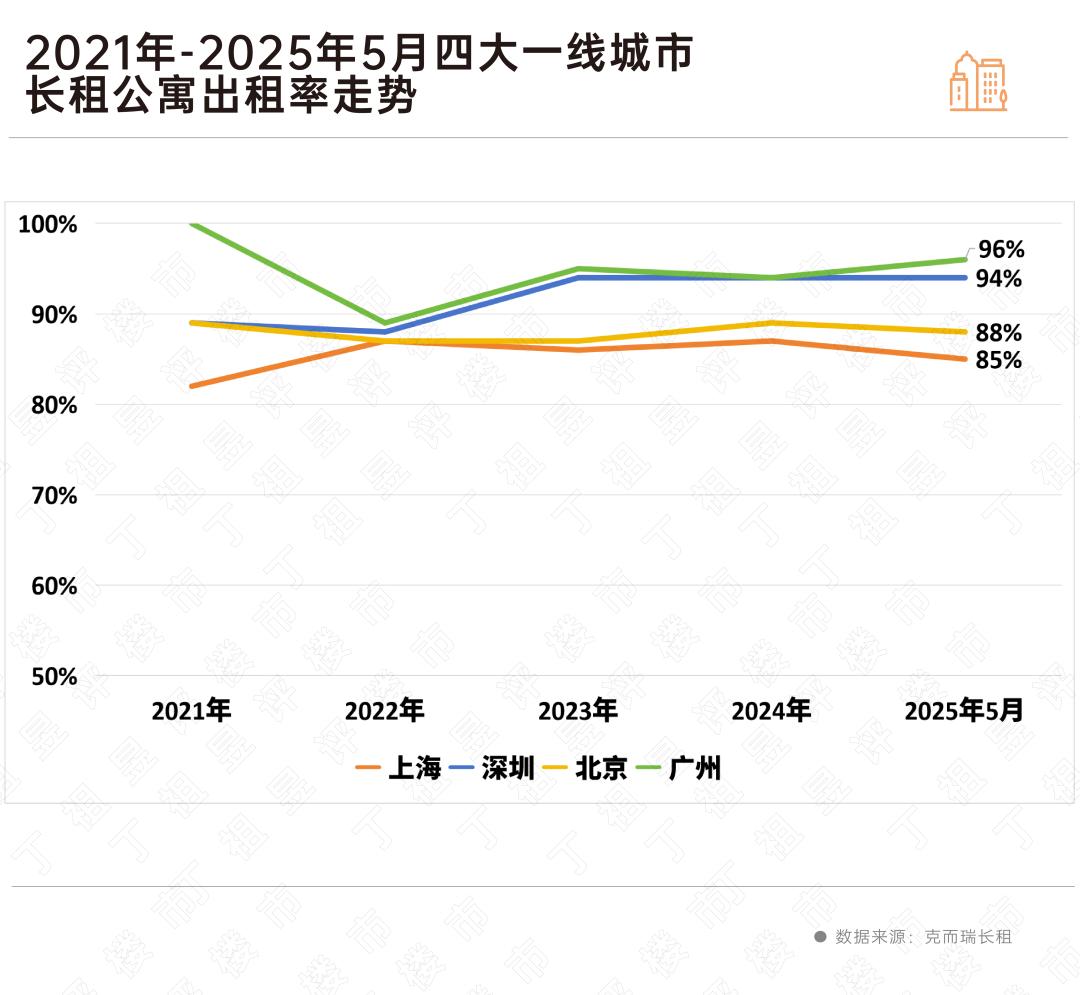
Core Insights - The long-term rental market in first-tier cities is experiencing a phenomenon of high occupancy rates alongside declining rental prices since 2025 [1][2] - The high occupancy rates, exceeding 85% in major cities, indicate strong rental demand, particularly from the "Z generation" who prefer long-term leases [2][8] - The decline in rental prices is primarily driven by the large-scale entry of affordable rental housing, which has a downward effect on overall market rents [7][11] Rental Market Overview - The occupancy rates for long-term rental apartments in Beijing, Shanghai, Shenzhen, and Guangzhou have consistently exceeded 85% [2][8] - Guangzhou leads with a 96% occupancy rate, followed by Shenzhen at 91%, Beijing at approximately 88%, and Shanghai at 85% [2][8] - Rental prices in Beijing, Shanghai, and Shenzhen have decreased by 1% to 5%, while Guangzhou saw a slight increase of 2.08% [4][11] Factors Influencing Rental Prices - The introduction of affordable rental housing has significantly impacted the average rental prices, particularly in Shanghai where new affordable units are priced about 30% lower than the market average [7][11] - Increased market competition has forced rental companies to adjust their pricing strategies, contributing to the overall decline in rental prices [7][11] City-Specific Trends - In May, Beijing had the highest rental price at 189.3 CNY per square meter, with a slight increase of 0.16% month-on-month [8] - Guangzhou had the lowest rental price at 88.5 CNY per square meter, while Shanghai's rental price decreased by over 5% compared to 2024 [4][8] - Shenzhen's rental prices have returned to 2022 levels, with a current price of 101.7 CNY per square meter, reflecting a continuous decline over three years [11] Market Evolution - The rental market is transitioning from "having a place to live" to "living well," indicating a maturation of the market [13] - This shift suggests that the long-term rental industry will enter a phase of "quality competition and precise matching" [13] - Tenants are currently in a favorable position to negotiate better rental terms, especially in non-core areas, with potential discounts of 5% to 10% [13]
阿里巴巴江苏总部迁入后,南京河西南惊现地铁纯新盘,只租不售!
Sou Hu Cai Jing· 2025-05-21 17:00
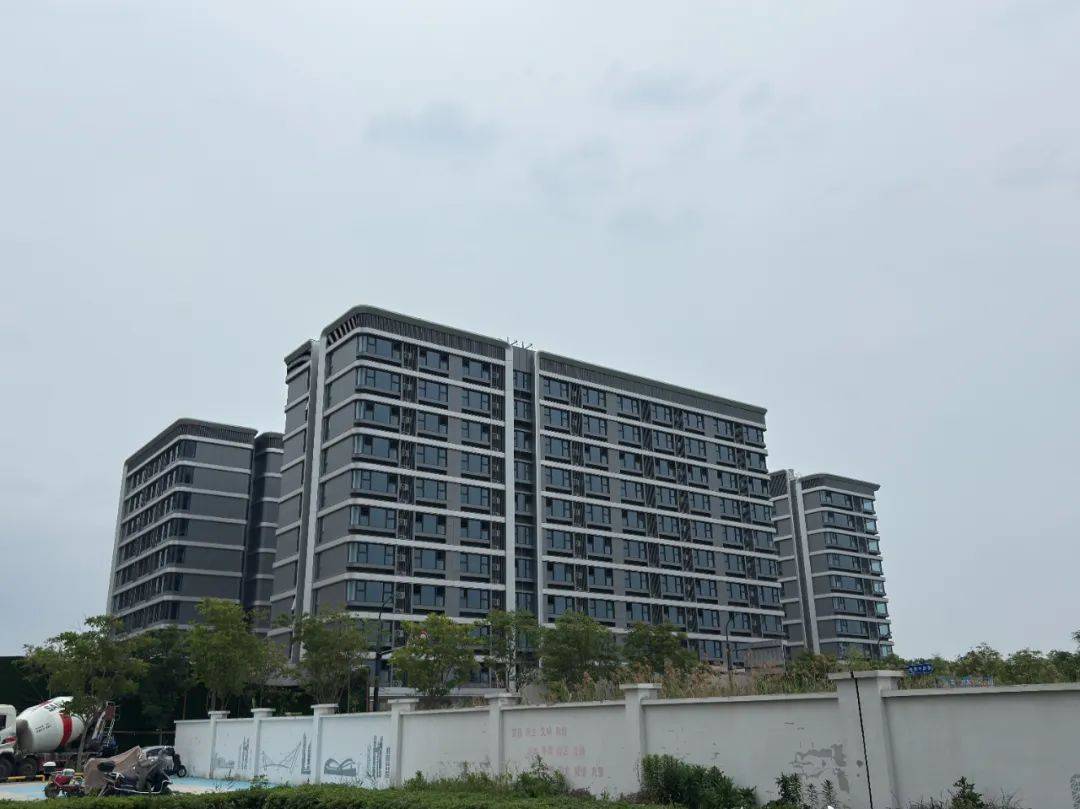
目前,项目仍在围挡施工中,但整体已经基本完工。与街对面早一代的河西南"星八客"相比,G116南京河西南租赁社区采用了灰色为主、白色为辅的铝 板外墙装饰,线条简洁流畅,更显高级感、品质感。 与周边的大体量社区不同,G116南京河西南租赁社区仅有3幢11层住宅楼,总体量在400多套左右,显得"小而美"。走近项目,可以看见不少工人正在进 行装饰收尾工作,主要是一层底商部分和周边道路。 地铁房+河景房 河西南上新"只租不售"新项目 5月20日,新苏商记者来到项目所在。刚走出地铁2号线青莲街站1号口,便可看到G116南京河西南租赁社区。 文/新苏商记者耿朴凡 就在南京建邺河西南板块,又有400多套民用水电的地铁房上新,但只租不售。 近期,有市民发现南京地铁2号线青莲街站附近,有3幢现代简约风格的住宅楼已经基本完工,正在进行装饰收尾工作。与其他住宅项目相比,这里并没有 华丽的售楼处,绿色围挡上"保障性租赁住房"的烫金大字,透露这里的与众不同。 新苏商了解到,该项目正是瓴寓国际在南京打造的高品质综合型租赁社区——G116南京河西南租赁社区,预计将于今年7月投入运营。 瓴寓长租房基金落地的首个项目 自"租购并举"政策提出,长 ...
3年未露面的林中,能否靠旭辉瓴寓打赢“生死战”?
Sou Hu Cai Jing· 2025-05-20 08:45
Core Viewpoint - CIFI Holdings is focusing on restructuring its debt and transitioning to a business model centered on commercial property leasing, self-developed projects, and real estate asset management to survive and thrive in the current market [1][2]. Group 1: Debt Restructuring - CIFI Holdings announced a debt restructuring plan involving approximately $6.8 billion in principal, covering 12 bonds and 13 loans, aiming to improve its capital structure and balance sheet [1][2]. - The restructuring is critical for CIFI, as it will reduce its credit debt scale by over 50% to within 30 billion yuan and extend the debt maturity to 9-10 years with interest rates below 3% [2]. - The CFO indicated that the restructuring would inject 49 billion yuan in liquidity, essential for the company's survival and future investment capabilities [2]. Group 2: Business Transformation - CIFI Holdings plans to adopt a "low debt, light asset, high quality" strategy, focusing on three core business areas: stable rental income, self-development, and real estate asset management [3]. - The company has a competitive advantage in multi-faceted operations, having established a rental platform, Lingyu International, which manages 130,000 units and ranks among the top four in the industry [3][4]. - CIFI aims to learn from American developers and enhance its asset management capabilities, with Lingyu International positioned as a pioneer in this transformation [3]. Group 3: Lingyu International's Role - Lingyu International, launched in 2016, has grown to manage over 130,000 rental units, becoming a crucial part of CIFI's strategy amid declining sales in residential properties [4][5]. - The long-term goal for Lingyu International includes achieving 200,000 units and preparing for an IPO, which is seen as a potential growth driver for CIFI [5][14]. - Lingyu International has begun to show profitability in some projects, indicating a positive trend despite the overall challenges faced by the rental market [8][9]. Group 4: Market Position and Future Directions - CIFI Holdings is strategically positioned to capitalize on the growing demand for rental housing, particularly among younger generations, as the market shifts towards a focus on rental communities [10][14]. - The company is exploring partnerships with state-owned enterprises and government platforms to enhance its rental community projects, aiming for a balanced approach between light and heavy asset models [12]. - Future developments may include further asset securitization and the establishment of REITs to improve liquidity and capitalize on the rental market's potential [16].
科技新贵和地方国企抄底,多处亿级大宗资产“易主”
第一财经· 2025-05-20 08:42
Core Viewpoint - The commercial real estate market in China is experiencing a surge in large-scale transactions, particularly in first-tier cities, driven by various buyers including tech companies, local state-owned enterprises, and leaders in niche medical sectors [3][10]. Group 1: Market Activity - As of April 2025, the total listing price for large commercial properties in 32 cities in mainland China reached approximately 3.49 trillion yuan, reflecting a 3.9% increase month-on-month and an 84% increase year-on-year [3][11]. - The number of large asset listings continues to rise, with significant transactions occurring in major cities like Beijing, Shanghai, and Shenzhen [3][10]. - In the first quarter of 2025, Shanghai recorded 24 asset transactions totaling 11.46 billion yuan, marking a 20% increase from the previous quarter [12]. Group 2: Notable Transactions - The Silicon Valley SOHO-2 building in Beijing was sold for 215 million yuan, with a unit price of 9,880 yuan per square meter, representing a 64% discount from its assessed value [4][5]. - In Shanghai, the Zhongjun Tianyue Fangyu apartment was sold for approximately 200 million yuan, reflecting a one-third discount from its previous listing price of 300 million yuan [5][6]. - Aier Eye Hospital acquired a 60% stake in Guangsheng Digital Technology for 650 million yuan, intending to use the asset for long-term medical purposes [7][8]. Group 3: Buyer Motivations - Buyers are motivated by the need for self-use and to hedge against market volatility, with many local state-owned enterprises actively purchasing core office assets in first-tier cities [10][11]. - Tech companies like Lexin Technology are also purchasing properties to accommodate future business expansion and mitigate rental risks [8][9]. - The demand for long-term rental apartments is increasing, with significant investments from both domestic and international players in this sector [13][14]. Group 4: Market Trends - The commercial real estate market is seeing a shift towards long-term rental apartments, which accounted for 34% of transaction volume in Shanghai in the first quarter of 2025, surpassing office assets for the first time [14]. - The core office assets in first-tier cities remain scarce and are considered to have high investment value, driven by companies' rental cost considerations [14]. - The combination of proactive fiscal policies and moderately loose monetary policies is expected to enhance market liquidity and stimulate internal market dynamics [14].

浙江旅投集团打造数字化长租公寓—— 重塑“沉睡资产”价值
Jing Ji Ri Bao· 2025-05-16 21:56
Core Insights - The transformation of the former Juhua Hotel into the "Zhecai Xiangyu" smart apartment reflects a successful asset revitalization strategy by the Zhejiang Provincial Tourism Investment Group, focusing on digitalization and intelligent management [1][3] - The project has achieved high customer satisfaction, with a reported 98% satisfaction rate and a 60% increase in repurchase rates year-on-year, indicating strong market acceptance [2][3] Group 1: Project Overview - "Zhecai Xiangyu" is a modern, digitalized apartment aimed at attracting young talents from government and enterprises, located in Hangzhou's urban center [1] - The project involved significant renovations, including the merging of smaller rooms into spacious apartments and the introduction of smart technologies like robot delivery and self-check-in [2] Group 2: Operational Strategy - The hotel has implemented a dual rental model of long-term and short-term leases to optimize cash flow and meet diverse tenant needs, while also focusing on cost control through scale operations and long-term supplier relationships [3] - A smart cloud platform has been established to monitor real-time usage of resources and adjust rental strategies dynamically, leading to a 30% increase in gym usage through data analysis [2][3] Group 3: Policy and Support - The success of "Zhecai Xiangyu" is supported by local government policies aimed at attracting high-level talent, including rental subsidies and priority access for qualified individuals [2] - The project has revitalized over 500 million yuan in state-owned assets, showcasing a model for asset management and urban development in the context of state-owned enterprises [3]