
保险

Search documents
中东局势升级,已有保险公司协助首批企业客户从“危险区”撤离
第一财经· 2026-03-04 14:12
Core Viewpoint - The article highlights the increasing concern for the safety of Chinese citizens and institutions in the Middle East due to escalating regional tensions, with insurance companies actively assisting in evacuation efforts [3]. Group 1: Evacuation Efforts - China Ping An has successfully assisted two corporate clients in evacuating from a "danger zone" in the Middle East within 24 hours [3]. - A large Chinese state-owned group, focused on the research and manufacturing of new energy drones, requested assistance from Ping An after their employees faced disrupted commercial flights due to the conflict [3]. - The evacuation involved a land transfer of approximately 400 kilometers from Dubai to Muscat International Airport in Oman, taking between 8 to 11 hours during the conflict [3]. - Currently, three additional Chinese companies have approached Ping An for evacuation plans from the Middle East [3]. Group 2: Insurance Company Responses - Several insurance companies were contacted regarding evacuation requests, with some indicating they had not yet received any reports or requests for assistance [4].



必看,保险大佬们的最新十大观点
表舅是养基大户· 2026-03-04 13:33
Core Viewpoint - The article emphasizes the importance of a long-term perspective in investment strategies, particularly in the context of the insurance asset management industry and its outlook for 2026 [1]. Group 1: Interest Rate Projections - The forecast for 10-year government bonds is between 1.8% and 1.9%, while 30-year bonds are expected to yield between 2.2% and 2.4% [6][9]. - Approximately 70-80% of institutions predict that 10-year bonds will remain below 2%, with a significant portion expecting 30-year bonds to stay within the 2.2%-2.4% range [9]. - The yield on AAA-rated credit bonds is projected to be between 2% and 2.5%, influencing the actual risk-free rate for residents [12]. Group 2: Asset Allocation Trends - A significant trend is the shift from non-standard to standardized assets, with a notable increase in allocations towards bonds and equities, while deposits and other non-standard investments are being reduced [13][15]. - The majority of institutions (over 70%) plan to increase their allocations to stocks, indicating a strong preference for equity investments [15]. Group 3: Insurance Liability and Product Trends - The reform in insurance liabilities is leading to a rise in the popularity of participating insurance products, which in turn reduces the demand for long-duration bonds [19][21]. - The shift towards participating insurance products is resulting in a higher allocation to equities compared to traditional insurance products [21]. Group 4: Factors Influencing A-Share Market - Three main factors are identified as influencing the A-share market in 2026: corporate profit recovery, liquidity environment, and industrial policy along with technological growth [22][26]. - 90% of institutions believe that corporate profit recovery is the most critical factor affecting market performance [26]. Group 5: Preferred Investment Indices - The most favored indices among insurance asset management institutions are the Sci-Tech 50, CSI 300, and A500, with 80%, 60%, and nearly 50% of institutions respectively selecting them [29][33]. - The preference for these indices is partly due to regulatory changes that have adjusted risk factors for insurance companies investing in stocks [33]. Group 6: Industry Focus Areas - The consensus among institutions highlights several key industry sectors: non-ferrous metals, electronics, computers, power equipment, telecommunications, chemicals, pharmaceuticals, and military industry [34][39]. - The intersection of preferences from both insurance asset management and insurance companies reveals a strong interest in semiconductor, AI computing, and defense sectors [39]. Group 7: Investment Vehicles - Secondary bond funds are becoming a primary vehicle for insurance capital entering the market, with a notable increase in their allocation among insurance companies [41]. - The demand for overseas investments, particularly in Hong Kong stocks, remains high, while the interest in US dollar bonds has significantly decreased [45][49].

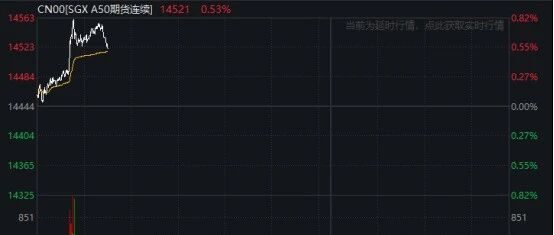
刚刚!A50,直线拉升!重要调整,20日生效→
证券时报· 2026-03-04 12:48
Core Viewpoint - FTSE Russell announced adjustments to the FTSE China Index Series, effective after market close on March 20, 2026, which reflects changes in the composition of the FTSE China A50 Index and other indices, potentially attracting passive investment funds and increasing overseas interest in Chinese assets [2][21]. Group 1: FTSE China A50 Index Adjustments - The FTSE China A50 Index will include China Shipbuilding, Tianfu Communication, and Wanhua Chemical, while excluding Everbright Bank, CRRC, and Shanxi Fenjiu [5][6]. - The index is composed of the 50 largest stocks by market capitalization from the Shanghai and Shenzhen stock exchanges, serving as a key indicator for international investors assessing the Chinese market [5][21]. Group 2: Other Index Adjustments - The FTSE China 50 Index will add Xinhua Insurance and Weichai Power, while removing Minsheng Bank and ZTE Corporation [8][9]. - The FTSE China A150 Index will incorporate 19 stocks including Sanhuan Group and China Giant Glass, while excluding Gujing Distillery and WanTai Biology [10][11]. - The FTSE China A200 Index will add 16 stocks including Sanhuan Group and China Giant Glass, while removing Gujing Distillery and WanTai Biology [13][14]. - The FTSE China A400 Index will include 54 stocks such as Aerospace Development and Guangku Technology, while excluding Aima Technology and Sanhuan Group [16][17]. Group 3: Market Implications - The adjustments are expected to attract passive investment funds, enhancing the appeal of Chinese assets amid increasing global economic uncertainty [21][22]. - Analysts indicate that the ongoing restructuring of international order and domestic industrial innovation trends are key drivers for the current A-share market rally and the revaluation of Chinese assets [22].
24小时极速救援!中国平安协助首批企业客户从中东“危险区”撤离
Zhong Guo Ji Jin Bao· 2026-03-04 12:24
Core Viewpoint - China Ping An has actively responded to the recent Middle East crisis by providing evacuation assistance and risk warnings to its clients, demonstrating its commitment to ensuring the safety of Chinese citizens abroad [1][2]. Group 1: Evacuation Efforts - Ping An has issued a total of 59 risk warning messages and published 23 risk analysis reports, while responding to 52 client inquiries and successfully assisting two corporate clients in evacuating from a "danger zone" in the Middle East within 24 hours [1]. - The company coordinated a complex evacuation for a large Chinese group focused on renewable energy, which involved a 400-kilometer land journey from Dubai to Muscat, Oman, taking 8 to 11 hours due to the ongoing conflict [1]. - The evacuation plan included securing local security forces, cross-border transport resources, and coordinating with border officials to ensure a safe passage for clients [1]. Group 2: Service Philosophy - Unlike traditional insurance models that focus on post-incident compensation, Ping An emphasizes a proactive service approach, providing risk management and support before incidents occur [2]. - The company had already issued high-risk alerts regarding the Middle East situation as early as January 12, allowing for timely risk assessments and resource coordination for evacuations [2]. Group 3: Track Record and Commitment - Ping An has a proven track record of assisting clients in cross-border evacuations, having successfully helped 14 companies evacuate 74 Chinese citizens from a conflict zone during the 2025 Israel-Palestine conflict, with a total safety guarantee amount of 43.85 million and compensation of 1.21 million [3]. - The company's global emergency rescue service network covers 233 countries and regions, having provided assistance to over 100,000 individuals in various international emergencies [3]. - Ping An remains committed to monitoring high-risk areas and ensuring rapid response to client needs, offering assistance to anyone in need, regardless of their affiliation with the company [3].

富时中国50指数调整:纳入新华保险、潍柴动力,剔除民生银行、中兴通讯
Zhi Tong Cai Jing· 2026-03-04 10:48
Group 1 - FTSE Russell announced changes to the FTSE China Index Series during its quarterly review, with adjustments effective after market close on March 20, 2026 [1] - The FTSE China 50 Index will include new constituent stocks and remove certain Hong Kong stocks [1] - A new list of candidate stocks for the upcoming season of the FTSE China 50 Index has been published, featuring several Hong Kong companies [1]

金融参考之一:从存款搬家到资产重置
CMS· 2026-03-04 09:31
Investment Rating - The report maintains a recommendation for the industry [6] Core Insights - The concept of "deposit migration" is often misunderstood; it refers to the reallocation of existing deposits into other asset types, reflecting changes in residents' asset allocation rather than a significant decrease in total deposits [2][17] - Historical data shows that total deposits in China have consistently increased, from 120 trillion yuan in 2015 to 327 trillion yuan by the end of 2025, with household deposits rising from 51 trillion to 166 trillion during the same period [2][16] - The report identifies a structural shift in deposit behavior, with a notable transition from corporate and government deposits to household deposits, and from large banks to small and medium-sized banks [3][21] - The trend of increasing time deposits has begun to slow down since 2025, indicating a potential shift towards a decrease in time deposits, similar to trends observed in Japan [3][4][30] Summary by Sections 1. Long-term Characteristics of Deposit Evolution - Domestic deposit balances have shown a consistent upward trend, with periodic fluctuations in growth rates. The structure of deposits has changed significantly, with household deposits increasing their share at the expense of corporate and government deposits [18][25] - The share of deposits held by large banks has decreased from approximately 70% before 2015 to nearly 50% currently, indicating a migration of deposits towards smaller banks [21][25] - The trend of increasing time deposits has slowed down since May 2025, with the proportion of time deposits dropping from 56.4% to 54.7% [21][25] 2. International Comparison of Household Deposits - The report draws parallels between the deposit evolution in China and Japan, noting that both countries have high savings rates and significant reliance on time deposits as a financial asset [34][35] - Japan experienced a long-term trend of deposit de-maturation, with time deposits decreasing significantly due to narrowing interest rate spreads, a phenomenon that may also occur in China [29][30][34] 3. Savings as the Main Driver of Retail Asset Management Growth - The retail asset management industry is projected to grow significantly, with estimates suggesting that by the end of 2026, the net financial assets of residents will reach 26 trillion yuan, closely aligning with the anticipated growth in retail asset management [4][65] - The report forecasts that funds will continue to flow into insurance, wealth management, and public funds, driven by the relatively higher returns compared to traditional deposits [41][50]

大崩溃 | 谈股论金
水皮More· 2026-03-04 09:08
Market Overview - The A-share market experienced a collective decline, with the Shanghai Composite Index falling by 0.98% to close at 4082.47 points, the Shenzhen Component down 0.75% to 13917.75 points, and the ChiNext Index dropping 1.41% to 3164.37 points. The total trading volume in the Shanghai and Shenzhen markets was 238.82 billion, a decrease of 76.98 billion from the previous day [3][5]. Key Influences - The significant drop in the South Korean market, with a 12% decline in one day and an 18% drop over two days, has had a substantial negative impact on the Hang Seng Index and, consequently, the A-share market. The protective funds that previously supported the market have largely exited, indicating a need for market risk and panic to be fully released before re-entering [5][7]. Sector Performance - Traditional protective sectors such as banking, insurance, and telecommunications experienced collective declines, contributing to the overall market downturn. Notably, the performance of the "three oil giants" showed significant divergence, with Sinopec and CNOOC experiencing notable declines, while PetroChina initially rose by about 5% before hitting a trading halt and eventually closing slightly up by 0.68% [5][6]. Commodity Market Dynamics - Internationally, oil prices continued to rise, while gold prices have seen consecutive declines, with silver dropping by 10%. This reflects a market dynamic where precious metals are under pressure while oil prices remain elevated due to ongoing geopolitical tensions, particularly in the Strait of Hormuz [6]. Market Sentiment and Future Outlook - The Shanghai Composite Index has fallen below 4100 points, approaching the 4000-point value center, which may become a new support level. The potential for protective funds to re-enter the market is contingent on the reduction of panic and selling momentum [7][8]. - Key observations for the near term include developments in the Iranian situation and the performance of global markets, particularly the U.S. stock market, which could influence A-shares. The market showed signs of adjustment, with 1655 stocks rising and approximately 3500 declining, indicating a significant contraction in trading volume to 2.3 trillion [8][9].

国家创投引导基金区域基金增资,险资重磅入场
母基金研究中心· 2026-03-04 09:01
Core Viewpoint - The article discusses the expansion of the National Venture Capital Guidance Fund and the increasing participation of insurance capital in venture investments, highlighting the supportive policies and the strategic alignment of insurance funds with long-term investment needs in the technology sector [1][3][5]. Group 1: Fund Expansion and Participation - The three regional funds under the National Venture Capital Guidance Fund have completed capital expansion, each exceeding 50 billion yuan, with the Beijing-Tianjin-Hebei regional fund's registered capital increasing from 29.646 billion yuan to 50 billion yuan [1][2]. - New investors in the Beijing-Tianjin-Hebei regional fund include three insurance institutions: Xinhua Insurance, Zhonghui Life, and Zhongzai Life, marking the first participation of insurance capital in these regional funds [2]. Group 2: Policy Support for Insurance Capital - Recent policies from multiple government departments emphasize the need to enhance support for venture investments, encouraging insurance institutions to increase funding for venture capital focused on cutting-edge technology [3][5]. - The "Technology Insurance Opinions" document outlines 20 policy measures aimed at strengthening insurance support for technology-driven small and medium enterprises and venture investments [4][5]. Group 3: Insurance Capital in Private Equity - Insurance capital has become a significant player in private equity investments, with over 100 billion yuan contributed by insurance funds to private equity funds in 2025 [6]. - The increase in insurance capital participation is attributed to favorable policies and the need for long-term stable investment returns, particularly in sectors like healthcare and emerging industries [8]. Group 4: Regulatory Changes and Investment Focus - A recent notification increased the maximum investment ratio of insurance companies in single venture capital funds from 20% to 30%, providing substantial support for the equity investment industry [7]. - Insurance capital is primarily focusing on sectors closely related to its core business, such as elderly care and health, as well as key areas supported by national strategy, including new infrastructure and renewable energy [8]. Group 5: Challenges and Opportunities - Despite the positive trends, insurance capital still faces strict requirements regarding registered capital and asset management, leading to a limited number of general partners (GPs) able to secure funding [10]. - GPs that can effectively balance risk, return, and liquidity are more likely to attract insurance capital, with a preference for those with stable performance and strong backgrounds [10].

金融大家评 | 奚国华:发挥金融和实业并举优势 为中国式现代化贡献中信力量
清华金融评论· 2026-03-04 08:13
Core Viewpoint - The article emphasizes the strategic direction of China CITIC Group in alignment with the 14th Five-Year Plan, focusing on high-quality development, enhancing financial capabilities, and expanding international cooperation to support national economic goals [2]. Group 1: Financial Core Functions - China CITIC Group possesses comprehensive financial resources with an asset management scale of nearly 11 trillion yuan, serving over 200 million clients and supporting over 1,200 technology innovation enterprises [3]. - The company aims to enhance its core functions across six major financial sectors: banking, securities, trust, insurance, financial assets, and financial leasing, while implementing a financial "strong core" project [3]. - Key initiatives include developing a differentiated inclusive finance system, promoting green finance, and integrating digital technology with comprehensive financial services [3]. Group 2: Risk Management - The company is establishing a financial risk prevention and resolution system, focusing on early detection and management of risks, particularly in real estate and local debt sectors [4]. - A comprehensive financial compliance management initiative is being implemented to enhance regulatory adherence and risk management practices [4]. - The company is innovating its financial model to improve capital management and risk isolation, ensuring effective asset utilization and brand strength [4]. Group 3: Industrial Development - China CITIC Group is involved in advanced manufacturing, materials, and new consumption sectors, with a focus on technological innovation to drive industrial upgrades [5]. - The company is committed to upgrading traditional industries through high-end, intelligent, and green transformations, enhancing productivity and value chains [5]. - New industries are being developed through strategic investments in key areas such as artificial intelligence, new energy, and advanced equipment [5]. Group 4: Internationalization and Open Economy - The company is leveraging its global presence in over 150 countries to enhance its international business strategy, focusing on a comprehensive service platform for "going out" and "bringing in" [8]. - Initiatives include supporting the internationalization of the renminbi and enhancing cross-border financial services [8]. - The company aims to strengthen its role in the Belt and Road Initiative by promoting infrastructure projects and fostering international cooperation [9]. Group 5: Party Leadership and Governance - China CITIC Group emphasizes the integration of party leadership into corporate governance, ensuring that political advantages translate into competitive advantages [10]. - The company is enhancing its organizational structure to align with party directives and improve decision-making processes [11]. - A focus on discipline and legal compliance is being reinforced to ensure ethical governance and operational integrity [12].


量化大势研判202603:3月核心推荐预期成长风格
Guolian Minsheng Securities· 2026-03-04 07:27
Quantitative Models and Construction Methods - **Model Name**: Quantitative Market Trend Judgment Framework **Model Construction Idea**: The model aims to identify the dominant market style by comparing asset characteristics and prioritizing superior assets based on their intrinsic attributes. It incorporates a bottom-up quantitative approach to analyze the lifecycle of industries and their corresponding asset styles[6][10][17] **Model Construction Process**: 1. Define five asset style stages: external growth, quality growth, quality dividend, value dividend, and bankruptcy value[6] 2. Use a priority framework of $g > ROE > D$ to evaluate assets based on growth expectations, profitability, and dividend yield[6][7] 3. Compare mainstream assets (expected growth, actual growth, and profitability) and secondary assets (quality dividend, value dividend, and bankruptcy value) based on their crowding levels and fundamental factors[10][17] 4. Allocate industries using equal weights within each strategy, selecting five industries per strategy per period[17] **Model Evaluation**: The framework has demonstrated strong explanatory power for A-share market style rotations since 2009, achieving an annualized return of 27.81%[17] Quantitative Factors and Construction Methods - **Factor Name**: Expected Growth ($gf$) **Factor Construction Idea**: Measures the expected growth rate of industries based on analysts' forecasts, regardless of the lifecycle stage[7] **Factor Construction Process**: 1. Calculate the expected net profit growth rate ($g_{f,ttm}$) for each industry 2. Rank industries based on $g_{f,ttm}$ and select the top-performing ones[7][23] **Factor Evaluation**: The factor has shown consistent performance in identifying high-growth industries, with significant excess returns since 2019[37] - **Factor Name**: Actual Growth ($g$) **Factor Construction Idea**: Focuses on industries with the highest performance momentum ($\Delta g$), particularly during transition and growth phases[7] **Factor Construction Process**: 1. Calculate the actual net profit growth rate ($g_{ttm}$) for each industry 2. Identify industries with the highest $\Delta g$ values[7][27] **Factor Evaluation**: The factor has delivered strong excess returns in growth-dominated environments[38] - **Factor Name**: Profitability (ROE) **Factor Construction Idea**: Targets industries with high ROE and low valuation under the PB-ROE framework, focusing on mature phases[7] **Factor Construction Process**: 1. Calculate the PB-ROE residuals for each industry 2. Rank industries based on residuals and select the top-performing ones[7][41] **Factor Evaluation**: The factor performed well from 2016 to 2020 but weakened from 2021 to mid-2024[41] - **Factor Name**: Quality Dividend (DP+ROE) **Factor Construction Idea**: Combines dividend yield (DP) and ROE to identify high-quality industries, focusing on mature phases[7] **Factor Construction Process**: 1. Calculate DP and ROE for each industry 2. Combine the two metrics into a composite score and rank industries[7][44] **Factor Evaluation**: The factor has shown significant excess returns in 2016, 2017, and 2023[44] - **Factor Name**: Value Dividend (DP+BP) **Factor Construction Idea**: Combines dividend yield (DP) and book-to-price ratio (BP) to identify undervalued industries, focusing on mature phases[7] **Factor Construction Process**: 1. Calculate DP and BP for each industry 2. Combine the two metrics into a composite score and rank industries[7][47] **Factor Evaluation**: The factor has delivered strong excess returns in 2009, 2017, and 2021-2023[47] - **Factor Name**: Bankruptcy Value (PB+SIZE) **Factor Construction Idea**: Targets industries with low PB and small size, focusing on stagnation and recession phases[7] **Factor Construction Process**: 1. Calculate PB and SIZE for each industry 2. Combine the two metrics into a composite score and rank industries[7][50] **Factor Evaluation**: The factor has shown significant excess returns in 2015-2016 and 2021-2023[50] Model Backtesting Results - **Quantitative Market Trend Judgment Framework**: - Annualized return: 27.81% since 2009 - Significant excess returns in 2017, 2020, 2021, and 2022[17][20] Factor Backtesting Results - **Expected Growth ($gf$)**: - Recent performance: Top industries include automotive sales, lithium battery equipment, and tungsten, with mixed returns over the past three months (e.g., -4.47% for automotive sales, +0.25% for lithium battery equipment)[37] - **Actual Growth ($g$)**: - Recent performance: Top industries include photovoltaic equipment and insurance, with mixed returns over the past three months (e.g., -8.92% for photovoltaic equipment, -6.04% for insurance)[39] - **Profitability (ROE)**: - Recent performance: Top industries include agriculture and garden engineering, with mixed returns over the past three months (e.g., -4.19% for agriculture, -2.07% for garden engineering)[41] - **Quality Dividend (DP+ROE)**: - Recent performance: Top industries include forestry and lithium battery equipment, with mixed returns over the past three months (e.g., +1.21% for forestry, +0.25% for lithium battery equipment)[44] - **Value Dividend (DP+BP)**: - Recent performance: Top industries include security and buses, with mixed returns over the past three months (e.g., +6.09% for security, +12.65% for buses)[47] - **Bankruptcy Value (PB+SIZE)**: - Recent performance: Top industries include automotive sales and textile products, with mixed returns over the past three months (e.g., -4.47% for automotive sales, +4.09% for textile products)[50]