汽车

Search documents
让财务官当CEO,利润全球第一的丰田也缺钱了?
虎嗅APP· 2026-03-03 14:21
Core Viewpoint - Toyota's net profit for the third quarter of the 2026 fiscal year dropped by 43% year-on-year, leading to a significant leadership change with CFO Kenta Kon appointed as CEO to tighten financial management [2][3][8]. Financial Performance - In the third quarter of the 2026 fiscal year (October-December 2025), Toyota reported a net profit of 1.26 trillion yen, a decrease of 0.93 trillion yen compared to the same period in the previous fiscal year [2][8]. - The primary reason for the profit decline was the impact of U.S. tariff policies, which alone caused a loss of 1.2 trillion yen [8]. - Toyota's R&D investment for the entire year of 2025 was 1.37 trillion yen (approximately 690 billion RMB), which is significantly higher than the total profit of the top ten Chinese car companies, which was only about 450 million RMB [14]. Leadership Change - Kenta Kon, with 35 years of financial experience at Toyota, is expected to bring a financial perspective to the CEO role, marking the first time a financial executive has taken the position in Toyota's 89-year history [3][5]. - The leadership change is seen as a move to address financial pressures while maintaining a balance between innovation and cost management [6][15]. Strategic Challenges - Toyota faces a dilemma of needing to invest in R&D to secure its future in various technological fields while managing current financial pressures [9][10]. - The previous CEO, Koji Sato, emphasized a "Multi-Pathway" strategy, which led to extensive investments across multiple technologies, stretching the company's financial resources [8][13]. - Investors express concerns that a focus on financial management might lead to a loss of brand differentiation and innovation, reminiscent of past mistakes made by General Motors [18][20][21]. Future Outlook - Kenta Kon's mission includes establishing a revenue structure that supports ongoing investments while navigating the complexities of a changing global landscape [17][25]. - The challenge remains for Toyota to balance financial stability with the need for innovation in software, AI, and autonomous driving technologies [23][27].



全国人大代表、广汽集团董事长冯兴亚:加快完善农村补能网络
Zheng Quan Ri Bao Zhi Sheng· 2026-03-03 13:45
Group 1 - The core focus of GAC Group's chairman, Feng Xingya, includes "high-quality industrial development, global automotive layout, and social welfare" to promote the high-quality development of the automotive industry and build a strong automotive nation [1] - In the energy ecosystem, there is a proposal to improve rural charging and battery swapping networks and promote the high-quality development of battery swapping models to address energy supply bottlenecks [3] - The penetration rate and ownership of new energy vehicles are increasing, making charging efficiency and safety essential for development. The battery swapping model is entering a phase of scale development, and there is a call to establish a unified national standard for battery swapping [4] Group 2 - The potential of the rural new energy vehicle market is significant, and there is a suggestion to enhance the rural energy supply network, improve after-sales service points, and optimize financial support to fully unleash consumption potential [4] - The automatic driving sector is seen as a strategic high ground in the new technological revolution and industrial competition, with a recommendation to accelerate the establishment of relevant laws and regulations and a unified national standard for automatic driving [4]

小米集团-W(01810):行业环境波动,持续高端化探索
GOLDEN SUN SECURITIES· 2026-03-03 13:40
Investment Rating - The report maintains a "Buy" rating for Xiaomi Group [3][5] Core Views - The report highlights that Xiaomi's smartphone shipments in Q4 2025 were approximately 37.8 million units, a year-on-year decline of 11.4%, with a market share of 11.2%, placing it among the top three globally [1] - Xiaomi's high-end product strategy is expected to mitigate the pressure from rising storage costs, with the Xiaomi 17 series achieving strong sales [1] - The automotive segment is projected to deliver over 410,000 units in 2025, with a target of 550,000 units for 2026, indicating a positive growth trajectory [2] - The report anticipates Xiaomi's revenue for 2025-2027 to be 457.8 billion, 541.8 billion, and 644.4 billion CNY respectively, with non-GAAP net profits of approximately 38.6 billion, 37 billion, and 45 billion CNY [3][4] Financial Summary - Revenue for 2023 is projected at 270.97 billion CNY, with a year-on-year growth rate of -3%, followed by 365.91 billion CNY in 2024, representing a 35% increase [4][12] - Non-GAAP net profit is expected to rise from 19.27 billion CNY in 2023 to 38.58 billion CNY in 2025, reflecting a growth rate of 42% [4][12] - The report forecasts a decline in smartphone gross margin to over 8% in Q4 2025 due to increased storage costs, despite an overall positive contribution from product structure optimization [1][3] Market Position - Xiaomi's market share in the Chinese smartphone market is reported at 13.2%, ranking it among the top five [1] - The company is recognized as a leader in the industry, with a strong focus on high-end product offerings, which is expected to enhance its competitive position in the long term [3]

吉利稳住了20万辆大关,比亚迪的海外销量首次超过国内,中国汽车行业的增长逻辑变了丨每经热评
Mei Ri Jing Ji Xin Wen· 2026-03-03 13:19
Core Viewpoint - The Chinese automotive market is experiencing a downturn post-Spring Festival, with 76.8% of dealers reporting February sales below expectations, indicating a competitive and challenging environment for many brands [2][4]. Group 1: Market Performance - 76.8% of dealers reported that February sales did not meet expectations, leading to several automakers delaying the release of sales data, which is unusual [2]. - Geely managed to maintain sales above 200,000 units, driven by strong performances from its Zeekr and Lynk & Co models, which saw year-on-year growth of 70% and 59% respectively [4]. - BYD achieved a historic milestone with overseas sales exceeding 100,000 units in February, marking a 41.4% year-on-year increase, surpassing domestic sales for the first time [5]. Group 2: Industry Dynamics - The automotive market is characterized by a stark division: while some brands are thriving, many others are struggling to manage inventory amid fierce competition [4][8]. - The shift in BYD's strategy from merely exporting products to establishing a comprehensive sales and service presence abroad signifies a fundamental change in the growth logic of the Chinese automotive industry [6]. - The ability to succeed in international markets is becoming a critical indicator of a company's resilience in the domestic market, as evidenced by BYD and Chery's simultaneous global expansion [6]. Group 3: Future Outlook - The current market conditions are seen as a "survival battle" for struggling brands, while successful companies like Geely and BYD are engaged in a "global breakthrough" [8]. - The increasing differentiation among automotive brands may ultimately benefit the industry, as it highlights the emergence of Chinese automotive companies as significant players on the global stage [8].


吉利稳住了20万辆大关,比亚迪的海外销量首次超过国内,中国汽车行业的增长逻辑变了
Mei Ri Jing Ji Xin Wen· 2026-03-03 13:10
Core Insights - The Chinese automotive market is experiencing a downturn, with 76.8% of dealers reporting February sales below expectations, indicating a competitive "elimination match" among brands [1][2] - However, two companies, Geely and BYD, have shown significant resilience, with Geely maintaining sales above 200,000 units and BYD's overseas sales surpassing domestic sales for the first time [1][2] Group 1: Market Performance - Geely's success is attributed to the strong performance of its Zeekr and Lynk & Co models, with year-on-year growth of 70% and 59% respectively, alongside over 80,000 units from its fuel vehicle series [2] - BYD achieved a historic milestone in February, with overseas sales exceeding 100,000 units, marking a 41.4% year-on-year increase, highlighting a shift in focus towards international markets [2][3] Group 2: Strategic Shifts - The shift from merely exporting products to establishing a comprehensive sales and service presence in overseas markets signifies a fundamental change in the growth logic of the Chinese automotive industry [4] - The ability to thrive in international markets enhances domestic resilience, as brands like BYD and Chery expand globally while navigating domestic challenges [5] Group 3: Industry Dynamics - The current market data reflects a stark division within the industry, with some brands facing existential challenges while others, like Geely and BYD, engage in a global expansion strategy [6][7] - This differentiation may ultimately benefit the industry, as it indicates a transition where Chinese automotive brands are becoming significant players on the global stage, moving away from being merely competitive in domestic markets [6][7]
现代、起亚、丰田、日产,集体大跌
第一财经· 2026-03-03 12:54
2026.03. 03 本文字数:700,阅读时长大约2分钟 作者 | 第一财经 葛慧 受中东地缘政治紧张局势持续升级影响,日韩股市周二(3月3日)遭遇显著抛售,现代汽车、起亚 汽车、丰田汽车、日产汽车、铃木汽车等主要车企股价集体重挫。 截至收盘,韩国综合指数收盘大跌逾7%,创2024年8月5日以来最大单日跌幅。日经225指数收跌 超3%。 汽车板块成为重灾区。现代汽车和起亚汽车收盘跌幅均超11%。日本市场方面,丰田汽车盘中跌幅 超过6%,创下近17个月最大单日跌幅;日产汽车和铃木汽车跌幅均超7%。 市场分析认为,此次日韩汽车股集体下挫是油价冲击、宏观压力、行业景气度与市场情绪共振的结 果。 首先,地缘政治风险持续升温,上周末以来中东局势急剧恶化,市场对航道受阻与供给中断的担忧升 温。其次,原油价格飙升预期对日韩两国构成直接冲击,作为全球主要石油进口国,两国经济高度依 赖能源进口,油价上涨将推高企业生产成本并恶化贸易条件,对出口导向型行业形成明显压制。 日韩汽车产业对出口较为依赖。公开数据显示,2025年,韩国国内汽车产量为410万辆,连续第三 年维持在400万辆以上水平,其中,出口量超270万辆,占其国内产 ...

全球最牛股市大跌7%,挂钩ETF涨幅大幅缩水
21世纪经济报道· 2026-03-03 12:54
Core Viewpoint - The South Korean stock market experienced a significant drop of 7.24% on March 3, attributed to geopolitical tensions and inflation concerns, particularly due to the impact of the U.S. and Israel's actions against Iran, which raised fears of supply chain disruptions in the semiconductor industry [4][5]. Market Performance - The KOSPI index closed at 5791.91 points, marking a historical single-day drop of 452.22 points, the largest since August 5, 2024 [4][5]. - Prior to the drop, the KOSPI had reached a high of 6244.13 points, with a year-to-date increase of 44.89%, making it one of the best-performing markets globally [8][9]. Key Drivers of Market Movement - The decline was driven by several factors: geopolitical crises, rising oil prices leading to inflation fears, and significant foreign capital outflows due to volatile currency rates [5]. - The blockade of the Strait of Hormuz could disrupt helium supplies critical for South Korea's semiconductor industry, affecting major players like Samsung and SK Hynix [5][11]. Impact on Major Companies - Major companies such as Samsung Electronics and SK Hynix saw their stock prices drop by 8.8% and 11.5%, respectively, with other significant players like Hyundai and LG Electronics also experiencing declines exceeding 11% [5][6]. - Despite the downturn, the South Korean semiconductor ETF fell by 7.87%, but still maintained a premium of 17.28% [6]. Future Outlook - Analysts believe that while the market may face short-term volatility due to emotional reactions, the fundamental demand for AI hardware remains strong, suggesting that South Korean tech stocks could rebound once geopolitical risks stabilize [11]. - The South Korean government has implemented reforms to attract foreign investment, including easing restrictions and reducing transaction taxes, which could support market recovery in the long term [11].

中观行业比较月报(2026年2月):把握景气有支撑的周期涨价、科技制造两大主线-20260303
Ping An Securities· 2026-03-03 12:36
Group 1 - The report highlights two main investment themes: cyclical price increases supported by economic recovery and the technology manufacturing sector [1] - In February, the A-share market experienced a volume contraction with small-cap and dividend stocks outperforming, while the technology sector shifted focus from AI to advanced manufacturing [8][4] - The report indicates that the semiconductor price increase trend continues, with the DXI index rising by 6.1% month-on-month and over 12 times year-on-year [2][3] Group 2 - In the upstream cyclical sector, prices for non-ferrous metals are fluctuating at high levels, while most petrochemical products are experiencing price increases [12][14] - The report notes that the cost pressure in the midstream manufacturing sector, particularly in new energy materials, is easing, but the recovery of domestic demand remains to be observed [17][2] - In the consumer sector, overall domestic demand is still weak, but there are optimistic signals in certain industries such as liquor and second-hand housing [3][11] Group 3 - The valuation comparison shows that the cyclical, manufacturing, and electronic sectors are experiencing valuation expansion, currently at historically high levels [5][6] - The report suggests that macroeconomic events and fundamental impacts will increase in March, with recommendations to focus on cyclical price increases and technology manufacturing as key investment themes [4][5] - The report emphasizes the importance of monitoring the recovery of domestic demand and the performance of specific sectors like innovative pharmaceuticals and second-hand housing [3][11]
【财闻联播】美议员提议征收年度财富税,马斯克首年或缴420亿美元!国内商家紧急调整中东货运航线
券商中国· 2026-03-03 11:15
Macro Dynamics - The People's Bank of China announced a net injection of 300 billion yuan through the Medium-term Lending Facility (MLF) in February 2026, with other monetary policy tools showing varied net injections [2] - In February, the net injection from open market operations included a net purchase of government bonds of 500 billion yuan and a net withdrawal of 1,205 billion yuan through 7-day reverse repos [2] Industry Development - The Guangdong-Hong Kong-Macao Greater Bay Area is accelerating its development, with significant achievements in integration, including the joint hosting of the 15th National Games and the implementation of the "Yue Car Southbound" policy [3] - The innovation index of the Shenzhen-Hong Kong-Guangzhou cluster has reached the top globally, while the Zhuhai-Macao cluster has been ranked among the world's top 100 for two consecutive years [3] Company Dynamics - Gree Electric Appliances' chairman, Dong Mingzhu, stated that the company will maintain its dividend payout this year, emphasizing the importance of talent in enhancing industrial efficiency [14] - GAC Group's chairman, Feng Xingya, highlighted the potential for growth in the rural electric vehicle market and the need for Chinese electric vehicles to establish global standards as they expand internationally [15] - Oriental Securities received approval from the China Securities Regulatory Commission to issue up to 6 billion yuan in technology innovation corporate bonds [10]
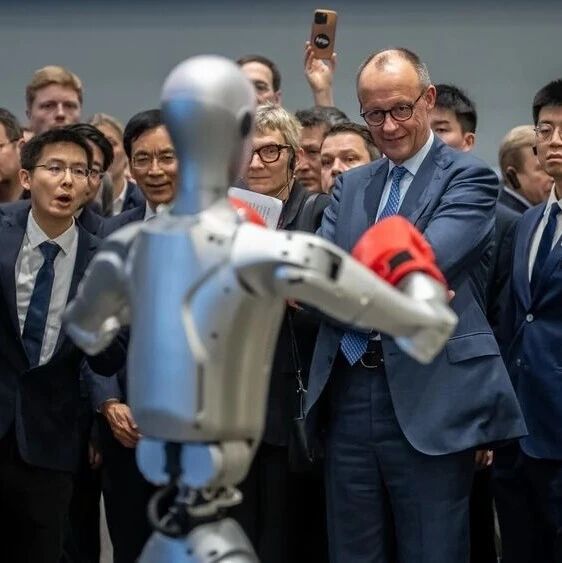
学对了吗?在中国转了一圈,默茨就说德国人得加班了
虎嗅APP· 2026-03-03 10:28
Core Viewpoint - The article discusses the competitive dynamics between Chinese and German manufacturing, emphasizing that simply increasing work hours is not a viable solution for Germany to compete with China's rapid production capabilities and innovative manufacturing networks [4][6][27]. Group 1: Manufacturing Dynamics - China has developed a "distributed manufacturing network" that traditional Western economic theories struggle to explain, leading to misconceptions about China's production efficiency being solely due to low labor costs and government subsidies [8][9]. - The iterative speed of product development in China is significantly faster than in the West, with examples showing that prototyping in Shenzhen can take one week and cost less than 10,000 RMB, compared to a month and over $10,000 in Silicon Valley [9][10]. - The concept of "implicit process knowledge" in China's manufacturing ecosystem allows suppliers to provide insights and optimizations based on extensive experience, which is not captured in traditional Western models [13]. Group 2: Comparative Analysis - The article contrasts the Western manufacturing approach, likened to a high-frequency CPU that processes complex tasks sequentially, with China's GPU-like model that allows for parallel processing and rapid iteration [15][18]. - The risk tolerance in European companies is low, leading to extensive planning and meetings to avoid failures, while Chinese companies embrace rapid prototyping and feedback loops, significantly reducing trial and error costs [20][21]. - Communication efficiency is highlighted, with physical proximity in Chinese manufacturing hubs allowing for immediate feedback and rapid adjustments, unlike the lengthy processes in Europe [24][25]. Group 3: Strategic Implications - The article suggests that Germany's approach of simply increasing work hours will not suffice; instead, a strategic integration of German precision with Chinese speed and flexibility is necessary for competitive advantage [27][39]. - The emergence of a new "win-win" model is proposed, where both Chinese and German companies can leverage their respective strengths—Germany's engineering rigor and China's agile manufacturing—to enhance global competitiveness [38][40]. - The potential for collaboration is illustrated through examples of German companies investing in Chinese startups and adapting their strategies to incorporate local innovation cycles, thus creating a more synergistic relationship [39][42].