
汽车

Search documents
吉利汽车:2026年销量稳健开局-20260303
GUOTAI HAITONG SECURITIES· 2026-03-03 10:25
Investment Rating - The investment rating for Geely Automobile is "Buy" [1] Core Views - The report anticipates that Geely Automobile will exceed its sales target of 3.45 million units for 2026, with significant improvements in profitability driven by high-end vehicles and exports [2][9] - The "Smart Geely 2025" strategy is expected to enhance the company's global competitiveness, leading to higher achievements [9] Sales Performance - In February 2026, Geely's sales reached 206,000 units, a year-on-year increase of 1%. New energy vehicle sales accounted for 117,000 units, with pure electric vehicles at 68,000 units (down 6%) and plug-in hybrids at 50,000 units (up 89%) [9] - For January-February 2026, total sales were 476,000 units, also a 1% increase year-on-year. New energy vehicle sales were 242,000 units, with pure electric vehicles at 136,000 units (down 11%) and plug-in hybrids at 106,000 units (up 57%) [9] Financial Summary - Total revenue is projected to grow from 179.2 billion RMB in 2025 to 350.2 billion RMB in 2026, representing a growth rate of 45.8% [8] - Net profit is expected to increase from 17.1 billion RMB in 2025 to 23.2 billion RMB in 2026, reflecting a growth rate of 35.5% [8] - The report estimates earnings per share (EPS) to be 1.58 RMB in 2025 and 2.14 RMB in 2026 [11] Valuation - The target price for Geely Automobile is set at 36.61 HKD for 2026, based on a price-to-earnings (PE) ratio of 15 times [9] - The current market capitalization is approximately 170.81 billion HKD [4]
荣耀机器人“太空步”秀巴展,小米机器人上岗汽车工厂,小鹏升级自动驾驶,比亚迪颠覆技术,谁会走得更远?
3 6 Ke· 2026-03-03 09:59
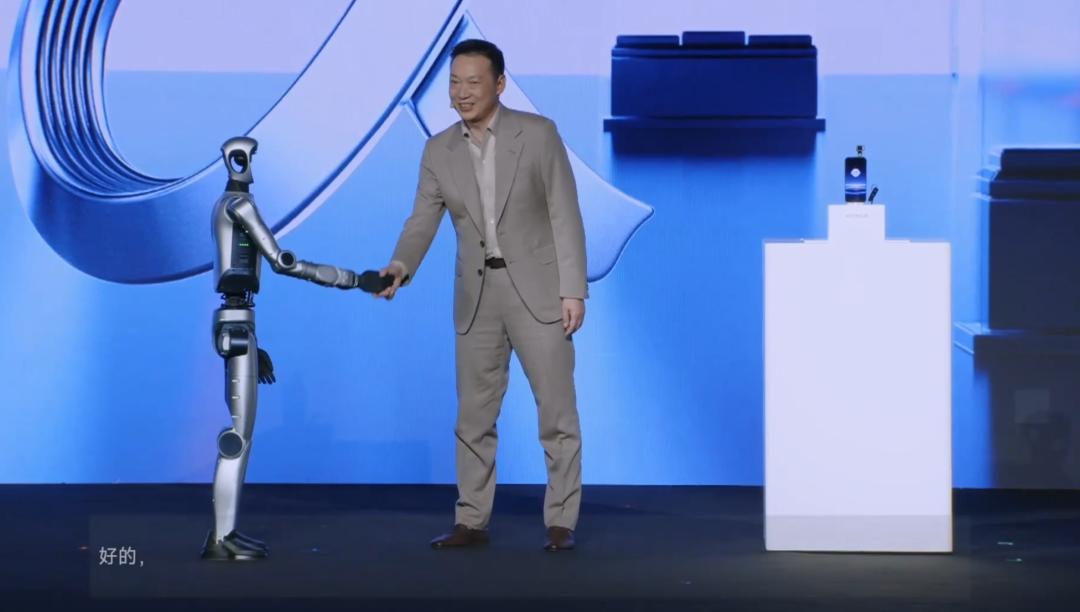
Core Viewpoint - The technology industry is increasingly characterized by cross-industry collaboration, particularly in the robotics sector, where major players from various fields are entering the market, driven by advancements in AI and robotics technology [2][4]. Group 1: Robotics Market Trends - The robotics market is expected to see significant growth, with companies like Yushu Technology, ZhiYuan Robotics, and others becoming key players following their successful launches in 2025 [2]. - The 2026 Spring Festival Gala featured performances incorporating robots, further boosting interest and investment in the robotics market [2]. - Industry leaders from various sectors, including mobile, automotive, and internet, are predicted to join the robotics market, indicating a competitive landscape [2][4]. Group 2: Company Innovations - Honor launched its humanoid robot, marking its entry into the consumer humanoid robotics market, and aims to integrate smartphone technology with robotics for enhanced user experience [4][6]. - Xiaomi has begun deploying its humanoid robots in automotive manufacturing, showcasing practical applications of robotics in production environments [10][15]. - Xiaopeng Motors announced the upcoming release of its second-generation VLA model, aimed at achieving fully autonomous driving within the next 1-3 years, with plans for global testing and deployment [18][20]. Group 3: Upcoming Developments - BYD is set to unveil a "disruptive technology" on March 5, 2026, with expectations that it may involve advancements in battery technology or smart driving [21]. - Predictions suggest that BYD may also introduce new robotics products based on its electric vehicle technology [24].




东北固收专题报告:韩国系列专题2:成也财阀,败也财阀
NORTHEAST SECURITIES· 2026-03-03 09:45
1. Report Industry Investment Rating There is no information about the report industry investment rating in the provided content. 2. Core View of the Report The report analyzes the formation, development, and influence of Korean chaebols, as well as their similarities with Japanese keiretsus. It points out that although chaebols and keiretsus played important roles in economic development in specific periods, their negative impacts gradually emerged over time, leading to issues such as economic stagnation and innovation inhibition [1][3]. 3. Summary According to Relevant Catalogs 3.1 Korea's Chaebols: Origin and Impact on Korea's Development - **Birth of Korean Chaebols**: Chaebols are products of the military - government era, resulting from post - war power and resource allocation, meeting the needs of Korea's post - war economic development [10]. - **Significance of Chaebols at Different Stages**: - 1945 - 1963 was the "embryonic stage," with a form of "crony capitalism" where enterprises relied on political patronage [14][15]. - 1963 - late 1980s was the stage when the chaebol model was established and promoted. The government supported large enterprises, helping Korea achieve economic take - off [15]. - After the 1990s, chaebols gradually gained national control, and their negative impacts, such as squeezing SMEs, reducing market vitality, and inhibiting innovation, became evident [16]. 3.2 Relationship between the Korean Government and Chaebols: From Control to Being Controlled - **Changing Political Landscape**: Politicians are often representatives of interest groups. After the end of the authoritarian era, Korean presidents have been deeply controlled by chaebol groups [17][18]. - **Chaebols Becoming the "Deep Government"**: After the democratic transformation, the relationship between chaebols and the elected government reversed. Chaebols formed a closed interest community and controlled the government, and attempts at chaebol reform by presidents failed [21][23]. - **Limited Role of the President in Economic Development**: Whether a president is a democrat or a chaebol - supporter, their governance has negative impacts on the economy [24]. 3.3 The End of the Han River Economic Miracle The Han River Miracle's prime time was before 1980. After the 1990s, the chaebol - driven economy pursued monopoly profits, leading to misallocation of credit resources and a negative impact on social development, ultimately causing the end of the economic miracle [28]. 3.4 Stagnation of Technological Development in Japan and Korea - **Similarities between Korean Chaebols and Japanese Keiretsus**: Both are products of "planned economy," inheriting the core logic of the wartime mobilization system and achieving economic growth and industrial breakthroughs [33]. - **Failure of the Model**: After the democratic reform in Korea in 1988 and the end of Japan's "1940 system," the chaebol and keiretsu models became ineffective, and the Asian financial crisis in 1997 and the bursting of the economic bubble in the 1990s exposed their flaws [34]. - **Inhibition of Innovation**: After the 1990s, chaebols and keiretsus focused on profit - seeking rather than original innovation, leading to a slowdown in technological development and a loss of advantages in emerging fields [40].
东北固收专题报告:韩国系列专题1:韩国社会为何如此压抑?
NORTHEAST SECURITIES· 2026-03-03 09:45
1. Report Industry Investment Rating There is no information about the report industry investment rating in the provided content. 2. Core Viewpoints of the Report - Korea has achieved rapid economic development and industrial transformation, but it is facing severe structural problems, including low fertility rate, aging population, monopoly of chaebol groups, and complex international relations. However, the Korean stock market has become active since 2025 [11]. - The "Abandoned Generation" in Korea is a result of social pressure, and its ultimate consequence is a population crisis [12][16]. - Korea's "compressed modernity" is a survival strategy formed under specific historical conditions. It has created the "Han River Miracle" but also brought long - term negative impacts such as welfare shortage, chaebol monopoly, and labor system defects [54][58][63]. 3. Summary According to Relevant Catalogs 3.1 When Depression Becomes the Main Melody of Society, Young People Choose to "Abandon Everything" 3.1.1 Korea's "Abandoned Generation" is Essentially a Stop - Loss Strategy - The "Abandoned Generation" in Korea refers to young people who lack desires and pursuits and abandon everything. It includes different levels such as "Three - Abandonment", "Five - Abandonment", "Seven - Abandonment", and "N - Abandonment". This is a defensive and stop - loss strategy in response to social pressure [12]. 3.1.2 The Ultimate Consequence of "Abandoning Everything": Population Crisis - After young people become the "Abandoned Generation", Korea faces problems such as low marriage rate, low fertility rate, collapse of social relations, high suicide rate, and population crisis. The total population reached its peak in 2020 at 51.84 million and then started to decline. By the end of the century, it is estimated to be only 21.85 million. The marriage rate is at a low international level, and the proportion of the population aged 65 and above has reached 21.21%, indicating an ultra - aging society [16]. 3.2 Differences in the Modernization Process between Korea and Western Countries - Western countries' modernization process is relatively slow. Industrialization starts first, followed by urbanization, and then the fertility rate gradually declines after the improvement of social welfare. The whole process takes about 200 years [31]. - Korea's modernization process is "compressed". Industrialization and urbanization start and accelerate almost simultaneously. It also prematurely integrates into globalization, and the welfare system construction is absent. This process sacrifices the family sector for national development, but it also buries the seeds of structural crises [32][33][36]. 3.3 What is "Compressed Modernity"? 3.3.1 Time Compression: Modernization Process - Compressed modernity in terms of time is reflected in the speed difference of the modernization process. Western developed countries generally take nearly 200 years to complete the transformation from an agricultural society to an information technology society, while Korea only takes 64 years [38]. 3.3.2 Space Compression: Urbanization Process - Measured by the urbanization rate, Korea takes less than 25 years to complete the urbanization process, which is much faster than Western developed countries [43]. 3.3.3 Urban Development Differences under "Compressed Modernity" - Korea's rapid urbanization leads to a huge gap between Seoul and other regions, as well as within Seoul itself. The extreme concentration of resources in Seoul has led to high housing prices, intense competition, and the solidification of social classes [46][47]. 3.4 "Compressed Modernity" is Not Accidental, but it Does Bring Some Problems 3.4.1 "Compressed Modernity" is a Survival Strategy Formed under Specific Historical Conditions - Korea's "compressed modernity" is a defensive survival strategy formed under specific historical conditions, including 35 years of Japanese colonial history, being caught between the US and the Soviet Union, and the Korean War, which strengthened the logic of "economic development first" [54]. 3.4.2 The Concentration of National Efforts on Key Issues Creates the Han River Economic Miracle - Korea's strategy of concentrating national efforts on development has created the "Han River Miracle" and enabled it to enter the ranks of high - income countries. The key to the miracle is the successful transformation of the industrial structure. The Korean government has played an important role in resource allocation at different stages [58][60][61]. 3.4.3 But it Also Leaves Long - Term Negative Impacts: Welfare Shortage, Chaebol Monopoly, and Labor System Defects - After the Asian financial crisis in 1997, the negative impacts of Korea's development model gradually emerged, including welfare system shortage, chaebol monopoly, and labor system defects. Compressed modernity is a cross - period exchange led by the state, but it has not achieved the expected results [63].
一周一刻钟,大事快评(W145):详解“里程费”
Shenwan Hongyuan Securities· 2026-03-03 08:45
Investment Rating - The report rates the automotive industry as "Overweight," indicating an expectation for the industry to outperform the overall market [11]. Core Insights - The report discusses the increasing focus on "mileage fees" for new energy vehicles, analyzing the core logic, real motivations, and future implementation prospects within the context of China's fiscal and tax structure [3][4]. - It highlights a significant funding gap for road maintenance, estimated at approximately 300 billion yuan, exacerbated by the rising penetration of new energy vehicles, which is projected to exceed 57% by 2025 [4][5]. - The report anticipates that Hainan will likely be the first region to pilot the mileage fee policy due to its unique free trade port advantages, with initial trials expected to focus on commercial and operational vehicles [5]. - A proposed solution to the funding gap is the implementation of a "free-flow charging mechanism" based on Beidou positioning technology, which aims to replace fuel taxes and ensure fair road usage fees [5]. Summary by Sections Section: Mileage Fee Analysis - The report emphasizes that the current tax system is a core funding source for road construction and maintenance, with fuel taxes integrated into the price of gasoline [4]. - It notes that the rapid increase in new energy vehicle adoption is leading to a growing mismatch between traditional fuel tax revenues and the funding needs for road maintenance [4]. Section: Policy Implementation - The report outlines that while the reform of road maintenance funding is urgent, the comprehensive rollout of mileage fee policies will take time, with Hainan expected to lead pilot programs [5]. - It suggests that the initial implementation will likely target commercial vehicles, with private car adoption contingent on trial outcomes and market acceptance [5]. Section: Technological Solutions - The report identifies the Beidou positioning system as a potential technological solution for implementing a fair and efficient mileage fee system, which could effectively address the funding shortfall for road maintenance [5]. - It mentions that the Beidou free-flow system has already achieved full coverage and large-scale application in Hainan, providing a solid technical foundation for future pilot projects [5]. Section: Investment Recommendations - The report recommends focusing on companies involved in the Beidou free-flow charging project and those that have established operational management platforms, such as Information Development [3]. - It highlights investment opportunities in various segments of the automotive industry, including new energy vehicle manufacturers and key component suppliers, emphasizing the importance of AI and automation trends [3].



港股市场回购统计周报-20260303
Zhe Shang Guo Ji Jin Rong Kong Gu· 2026-03-03 08:36
Group 1: Weekly Buyback Statistics - The total buyback amount for the week was HKD 982 million, an increase of HKD 708 million from the previous week[10] - A total of 39 companies conducted buybacks this week, an increase of 9 companies compared to last week[10] - Xiaomi Group (1810.HK) led the buybacks with an amount of HKD 399.99 million[10] Group 2: Industry Distribution of Buybacks - The information technology sector accounted for the highest buyback amount at HKD 517 million[13] - The number of companies conducting buybacks in the information technology sector was the highest, with 14 companies participating[13] - The consumer discretionary sector ranked second with 10 companies engaging in buybacks[13] Group 3: Individual Company Buyback Data - Geely Automobile (0175.HK) ranked second in buybacks with HKD 210.86 million[10] - NetEase Cloud Music (9899.HK) was third with a buyback amount of HKD 74.99 million[10] - The buyback amounts for the top three companies were 40.00%, 21.00%, and 7.50% of the total buyback amount respectively[10] Group 4: Significance of Buybacks - Company buybacks are defined as the repurchase of shares from the secondary market using liquid cash[21] - Large-scale buyback trends often occur during bear markets, indicating that companies believe their stock prices are undervalued[21] - Historical data shows that buyback waves in the Hong Kong market since 2008 have been followed by subsequent price increases[21]
争夺未来话语权!从试点落地到多元布局,宝马、比亚迪、特斯拉等车企加码人形机器人
Hua Xia Shi Bao· 2026-03-03 08:33
Group 1 - BMW officially launched a humanoid robot pilot project at its Leipzig plant, marking the introduction of Physical AI into its European production system [2][4] - The pilot project aims to explore the application of humanoid robots in the entire automotive production process, focusing on areas such as component assembly, material handling, and high-risk job replacement [2][3] - The project leverages BMW's engineering capabilities and quality control systems, aiming to enhance production efficiency and product quality through effective collaboration between robots and human workers [3][4] Group 2 - The Leipzig plant, established in 2005, has a production capacity of over 300,000 vehicles annually and has accumulated significant experience in digital and intelligent manufacturing [5] - BMW's previous successful implementation of humanoid robots in its Spartanburg plant in the U.S. serves as a foundation for expanding this technology to Europe [5][6] - Analysts suggest that if the Leipzig pilot is successful, BMW may gradually roll out humanoid robots across its global production bases within the next 3 to 5 years [6] Group 3 - Over 20 major automotive companies globally are investing in humanoid robot technology, including Tesla, Hyundai, and leading Chinese manufacturers like BYD and Xpeng [3][8] - Tesla's Optimus project aims for mass production of humanoid robots, with initial annual production targets set between 50,000 to 100,000 units, and a long-term goal of over 1 million units [6][7] - Hyundai has acquired Boston Dynamics to enhance its humanoid robot technology and plans to implement Atlas robots in its factories by 2024-2025 [8] Group 4 - Chinese automakers are rapidly entering the humanoid robot sector, with companies like Xpeng and Chery making significant advancements [8][9] - Xpeng's IRON robot project has shown a 30% increase in production efficiency and a 35% reduction in labor costs since its introduction [9] - Chery has quickly established a dedicated robotics company and achieved global scale delivery of its humanoid robots [9][10] Group 5 - The global automotive industry is experiencing accelerated development in humanoid robots, driven by technological advancements, supply chain support, and favorable policies [10] - The integration of humanoid robots is seen as a strategic move for automakers to address industry challenges and secure a competitive edge in future technology [10]



1月汽车出口高速增长,汽车铝消费仍预期乐观
Hua Tai Qi Huo· 2026-03-03 08:33
1. Report Industry Investment Rating No information provided in the report. 2. Core Viewpoints of the Report - In 2025, the domestic automobile production was good mainly due to the contribution of the export market, with only a slight year - on - year increase of 6000 vehicles in domestic sales [1][14]. - The impact of new energy vehicle replacement demand and subsidy policies on domestic consumption was concentrated in 2023 - 2024, with domestic consumption growth rates of 7.5% and 4.2% respectively, dropping to 1.2% in 2025 [1]. - The subsidy policy change in 2026 had different impacts on the purchase costs of new energy and fuel vehicles of different prices [27]. - The export market was differentiated, but there were still positive expectations for China's automobile export market in 2026 [32][33]. - The demand for aluminum consumption driven by the automobile industry remained optimistic [39]. 3. Summary by Directory 3.1 Export Statistical Caliber Difference Explanation - The report analyzed the differences in statistical calibers between the China Association of Automobile Manufacturers (CAAM) and customs data. In terms of production, CAAM's statistics included passenger cars, commercial vehicles, and non - complete vehicles. In terms of exports, customs data covered KD散件, chassis, non - complete vehicles, low - speed electric vehicles, bonded area inventory, and second - hand cars, while CAAM only counted off - shore vehicles [9][10]. - In 2024, due to the Red Sea crisis, customs data was significantly higher than CAAM data because customs data included "declared but not departed" inventory vehicles [12]. 3.2 Domestic Automobile Market Production Driven by Exports - In 2025, China's automobile production was 34.531 million vehicles, a year - on - year increase of 10.4%. New energy vehicle production was 16.626 million vehicles, a year - on - year increase of 38.4%. The export volume was 9.362 million vehicles according to customs data and 7.097 million vehicles according to CAAM data. The estimated domestic automobile supply in 2025 was 26.568 million vehicles, with an increment of 1.41 million vehicles compared to 2024, a year - on - year increase of 5.6% [14]. - In 2025, the domestic automobile consumption was 25.97 million vehicles, only a year - on - year increase of 6000 vehicles, indicating that the good production was mainly due to the export market [14]. 3.3 Limited Impact of Automobile Subsidy Withdrawal on Domestic Demand - In 2025, the automobile subsidy policies (scrap and replacement subsidies) were almost the same as in 2024. The marginal impact of policy factors on domestic demand consumption began to decline. The growth rates of domestic consumption in 2023 - 2024 were 7.5% and 4.2% respectively, dropping to 1.2% in 2025 [21]. - In 2026, the automobile subsidy policy changed to a price - ratio - based subsidy with a peak value. The subsidy peak was the same as in 2025. The purchase tax policy for new energy vehicles also changed, with a half - reduction in 2026 compared to exemption in 2025. Taking a 150,000 - yuan new energy vehicle as an example, the purchase tax increased by 7500 yuan/ton in 2026 compared to 2025, with a total increase of 9500 yuan in scrap purchase cost and 10500 yuan in replacement purchase cost. For a 150,000 - yuan fuel vehicle, the purchase tax remained the same as in 2025, the scrap subsidy was the same, and the replacement purchase cost increased by 4000 yuan [27]. 3.4 Export Market Differentiation, Still Promising in 2026 - In 2025, the cumulative automobile export volume was 7.097 million vehicles, a year - on - year increase of 21.13% (1.238 million vehicles). The cumulative export volume of new energy vehicles was 2.583 million vehicles, a year - on - year increase of 102.6%, accounting for 36.4% of the total export volume. In January 2026, the automobile export volume was 681,000 vehicles, a year - on - year increase of 44.9% [32]. - From January to September 2025, China's automobile export to Africa increased significantly, with a cumulative export of 471,000 vehicles, a year - on - year increase of 112.6%. The export to the EU increased by 38.2%, while the export to Europe only increased by 2.1%. The export to North America decreased from a growth of over 30% in 2024 to - 9.7% in 2025, indicating the influence of geopolitics on trade [32]. - The EU's automobile import policy was in a rapid adjustment period, changing to a "tariff/price commitment" framework. Different estimates of the export situation in 2026 showed that the export market could drive the domestic automobile production growth rate by 3.6% - 8.4%. The neutral estimate was that the export market could drive the domestic automobile production growth rate by 5 - 6% [33][34]. 3.5 Automobile's Positive Impact on Aluminum Consumption - Under the neutral estimate of domestic demand, due to the subsidy withdrawal, domestic automobile consumption decreased by 2%, from 26 million vehicles to 25.5 million vehicles. Under the neutral estimate of exports, the export could drive the domestic automobile production growth rate by 6.3%. With the addition of cleared but not yet shipped export vehicles, the domestic automobile production could reach 36 - 36.5 million vehicles, contributing to an increase of over 800,000 tons in aluminum consumption. If there were additional favorable policies to prevent the decline of domestic automobile consumption, the domestic automobile production could reach 37 million vehicles, contributing to an increase of nearly 1 million tons in aluminum consumption [3][39].
奔驰卖不动了
投资界· 2026-03-03 07:35
Core Viewpoint - Mercedes-Benz is experiencing unprecedented challenges, with significant declines in revenue, profit, and sales, particularly in the Chinese market, which is crucial for its future growth and transformation [4][7][12]. Financial Performance - In the fiscal year 2025, Mercedes-Benz reported revenue of €132.14 billion, a year-on-year decline of 9.2%, and a net profit of €5.33 billion, down 48.8% [4]. - Adjusted EBIT was €8 billion, reflecting a decrease of approximately 40% [4]. - Free cash flow from industrial operations was €5.4 billion, significantly lower than the previous year's nearly €9.2 billion [4]. Sales and Market Challenges - In 2025, Mercedes-Benz sold 575,000 vehicles in China, a decline of about 19%, marking the lowest sales since 2016 [7]. - Global sales fell by 10% to 2.16 million vehicles, the lowest level since 2014 [11]. - The passenger car segment, a key revenue driver, saw a revenue drop of 10.5% to €96.41 billion, with EBIT down 57.9% [11]. Cost Pressures and Strategic Adjustments - The company faced approximately €1 billion in tariff expenses and incurred €1.6 billion in restructuring costs due to a voluntary departure program [8]. - R&D expenditures remained high at €9.68 billion, with a slight year-on-year decrease of 0.4%, while capital investments surged by 35.7% to €5.48 billion [9]. - The management acknowledged the need for cost reduction and efficiency improvements, with plans to launch over 40 new models in the next three years [7][9]. Electric Vehicle Strategy - Mercedes-Benz's electric vehicle sales in 2025 were only 168,800 units, down 9%, significantly trailing competitors like BMW and Audi [10]. - The CEO revised the goal for full electrification from 2030 to a dual-track approach of both fuel and electric vehicles due to underperformance in the electric segment [10]. Focus on the Chinese Market - The Chinese market is critical for Mercedes-Benz, with plans to introduce 7 models specifically tailored for this market between 2025 and 2027 [16]. - The company aims to enhance local partnerships and supply chain localization to reduce costs by 10% for materials and 20% for variable and fixed production costs by 2027 [17]. - Recent price adjustments on key models indicate a response to competitive pressures in the Chinese market [13]. Management Changes - The appointment of Oliver Thöne as the head of Greater China operations reflects a strategic shift towards local market focus and value chain optimization [16][18]. - The new management is expected to drive the product offensive and address the challenges posed by local competitors and changing consumer preferences [18].

上汽集团:自主占比提升,新能源与出口贡献增量-20260303
Shanghai Aijian Securities· 2026-03-03 07:30
Investment Rating - The investment rating for the company is "Buy" [6] Core Insights - The company experienced a decline in February sales due to the Spring Festival holiday, but cumulative sales for January and February showed a year-on-year increase of 6.8% [6] - The contribution from the company's own brands is significant, with a 14% year-on-year increase in sales, accounting for 67.2% of total sales [6] - The company plans to launch a variety of new models in 2026, which is expected to drive growth [6] - The company aims for a sales target of 4.5 million vehicles in 2025, achieving a completion rate of 100.2% in 2025 [6] - The company is expanding its global presence, with a notable increase in export sales, which rose by 48.9% year-on-year in January and February [6] Financial Data and Profit Forecast - Total revenue for 2023 is projected at 744.705 billion yuan, with a slight year-on-year growth of 0.1% [4] - The net profit attributable to shareholders is expected to be 14.106 billion yuan in 2023, reflecting a year-on-year decrease of 12.5% [4] - Earnings per share (EPS) is forecasted to be 1.23 yuan in 2023, with a projected increase to 1.40 yuan by 2027 [4] - The gross profit margin is expected to improve from 1.7% in 2023 to 11.1% by 2027 [4] - The return on equity (ROE) is projected to increase from 4.9% in 2023 to 4.9% in 2027 [4] Market Data - The closing price of the stock is 14.28 yuan, with a price-to-earnings (P/E) ratio of 11.8 [5] - The market capitalization is approximately 164.153 billion yuan [5] - The stock has a dividend yield of 0.61% based on the most recent dividend announcement [5]
