石油化工

Search documents
A股三大指数开盘涨跌不一,中国石化涨停
3 6 Ke· 2026-01-09 01:39
Market Overview - The three major A-share indices opened mixed, with the Shanghai Composite Index up by 0.09%, the Shenzhen Component Index down by 0.3%, and the ChiNext Index down by 0.69% [1] Sector Performance - The power equipment, oil and gas, and aerospace military sectors led the gains, with China Petroleum & Chemical Corporation (Sinopec) hitting the daily limit up [1] - China National Aviation Fuel and Sinopec received approval for restructuring [1] - Goldwind Technology also reached the daily limit up, while Northern Long Dragon rose over 9% and Aerospace Electronic increased by over 5% [1] - Conversely, the semiconductor, communication equipment, and electronic components sectors experienced significant declines, with Chip Source Microelectronics down over 5%, Dongtian Microelectronics down over 3%, and Cambridge Technology down over 2% [1]

中国石化与中国航油实施重组,助力航空业绿色低碳转型
Bei Jing Ri Bao Ke Hu Duan· 2026-01-09 01:32
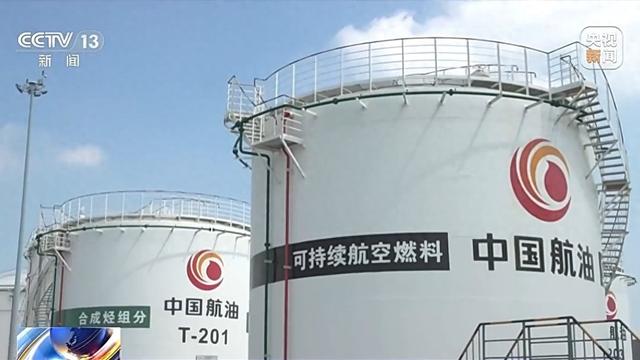
Core Viewpoint - The restructuring of China Petroleum & Chemical Corporation (Sinopec) and China National Aviation Fuel Group Corporation (CNAF) aims to enhance the integration of the aviation fuel industry chain, reduce supply costs, and promote a green and low-carbon transition in aviation energy supply [1][3]. Group 1: Industry Integration and Innovation - The merger will leverage Sinopec's oil product R&D technology and CNAF's market supply advantages, facilitating the integration of innovation within the aviation fuel industry chain [3]. - Currently, there is a disconnect between the R&D, production, sales, and application sectors in China's aviation fuel industry, which the restructuring aims to address [1]. Group 2: Green and Low-Carbon Transition - The restructuring is expected to support the high-quality development of sustainable aviation fuel, aiding the aviation industry's transition to a green and low-carbon model [3][5]. - Sustainable aviation fuel technology is recognized as a primary route for reducing carbon emissions in the aviation sector, which faces significant challenges in emission reductions [3]. Group 3: Sustainable Aviation Fuel Development - Sinopec is the first company in Asia to develop and commercialize bio-jet fuel production technology, and the merger will accelerate the R&D and application of sustainable aviation fuel technologies [5]. - The restructuring is anticipated to create new business models covering the entire sustainable aviation fuel industry chain, enhancing international competitiveness and contributing to carbon reduction in China's aviation sector [5][7]. Group 4: Market Potential - According to the International Air Transport Association, global sustainable aviation fuel consumption is projected to reach 6 million tons by 2025 and 18 million tons by 2030 [7]. - Sinopec has filled a gap in the application of domestic sustainable aviation fuel in local aircraft models, positioning itself as a leader in this emerging market [7].

2026央企重组“第一枪”打响,未来合并同类项“化学合成”成趋势
Bei Jing Ri Bao Ke Hu Duan· 2026-01-09 01:32
Core Viewpoint - The restructuring of China Petroleum & Chemical Corporation (Sinopec) and China Aviation Oil Group (China Aviation Oil) is a strategic move aimed at optimizing state-owned assets and enhancing core competitiveness in the energy sector, which is expected to significantly reshape the domestic aviation fuel market and the entire energy supply chain [1][4]. Group 1: Restructuring Details - The restructuring was approved by the State Council and is seen as a continuation of the trend towards consolidating state-owned enterprises (SOEs) to improve efficiency and competitiveness [1][5]. - China Aviation Oil, established in 1990 and a key player in the aviation fuel supply chain, controls over 98% of the civil aviation fuel market in China, ensuring stable sales through its extensive network [2][3]. - The integration aims to create a seamless connection between Sinopec's refining capabilities and China Aviation Oil's distribution network, enhancing supply chain stability and reducing operational risks [3][6]. Group 2: Market Implications - The merger is expected to eliminate redundant competition and create synergies between refining and aviation fuel supply, thereby increasing market control and resilience against risks [3][4]. - Industry experts suggest that this restructuring signals a shift in SOE reform towards more specialized and strategic consolidations, focusing on enhancing competitiveness in key sectors [6][7]. - The trend indicates a move from simple asset aggregation to a more sophisticated integration aimed at improving innovation and efficiency within the industry [7][8].
两大央企重组,影响多大?最新解读来了
天天基金网· 2026-01-09 01:29
Core Viewpoint - The merger between China Petroleum & Chemical Corporation (Sinopec) and China Aviation Oil Group is expected to enhance national aviation energy supply security and promote a green and low-carbon transition in aviation energy supply, aiming to create a world-class aviation energy supplier [2][3]. Group 1: Company Overview - Sinopec is the largest supplier of refined oil and petrochemical products in China, the world's largest refining company, and the second-largest chemical company, with a comprehensive energy industry chain [3]. - China Aviation Oil is the largest aviation fuel procurement, transportation, storage, testing, sales, and refueling service provider in Asia, with its main business covering five sectors: aviation fuel, petroleum, logistics, international, and general aviation [3]. Group 2: Market Potential - According to the latest report from Sinopec Economic and Technical Research Institute, the demand for aviation kerosene in China is projected to reach approximately 50 million tons by 2030, with an average annual growth rate of around 4% during the 14th Five-Year Plan period [3]. - Standard & Poor's predicts that China's aviation fuel consumption will grow to 75 million tons by 2040 [3]. Group 3: Synergies and Competitive Position - The merger is expected to create significant synergies by leveraging integrated refining and aviation fuel supply systems, reducing intermediate links, and lowering supply costs, thereby promoting high-quality development of the industry chain [4]. - Currently, China's aviation fuel production, sales, and refueling services are fragmented among different companies, which limits overall competitiveness compared to international integrated oil and gas companies [4]. Group 4: Green Transition - The merger will facilitate the high-quality development of sustainable aviation fuel (SAF) industry, with Sinopec being the first in Asia to have independent research and production technology for bio-jet fuel and commercial production capabilities [5]. - China Aviation Oil plays a crucial role in the promotion and ecological construction of SAF, and the merger will enhance collaboration in this area [5]. Group 5: Strategic Importance - This merger marks the first central enterprise-level restructuring case entering the 14th Five-Year Plan, aligning with the government's push for strategic and professional mergers and acquisitions to enhance quality [5].

金融界财经早餐:重磅利好!中国石化、中国航油官宣重组;广州剑指商业航天新一极;A股重要指数今天调整;Minimax今日登陆港交所;万科郁亮退休(1月9日)
Jin Rong Jie· 2026-01-09 01:28
Group 1: Industry Developments - The Chinese government is taking steps to regulate the rapidly growing power and energy storage battery industry, addressing issues such as irrational competition and blind construction that disrupt market order and sustainability [1] - The Ministry of Industry and Information Technology, along with other regulatory bodies, held a meeting to discuss the competitive order in the battery industry, emphasizing the need for governance to ensure sustainable development [1] - The solar photovoltaic industry is facing scrutiny from the market regulator, which has issued corrective measures to prevent monopolistic practices among major companies [2] Group 2: Company News - China Petroleum and Chemical Corporation (Sinopec) and China Aviation Oil have been approved for a merger, which is expected to enhance their competitive edge and reduce aviation fuel supply costs [5] - Vanke's executive vice president, Yu Liang, is retiring, marking the end of a 35-year career with the company, but this will not affect the board's operations or the company's daily business [10] - Minimax raised HKD 4.8 billion in its IPO, with a subscription rate of 1,837.17 times for retail investors, indicating strong market interest in AI-related companies [12] - Anta Sports has made an offer to acquire a 29% stake in Puma from the Pinault family, which would make Anta the largest single shareholder if successful [13] - Glencore and Rio Tinto have resumed talks for a potential merger, which could create the world's largest mining company valued at over USD 260 billion [13]

中国石化与中国航油实施重组 助力航空业绿色低碳转型
Huan Qiu Wang· 2026-01-09 01:24
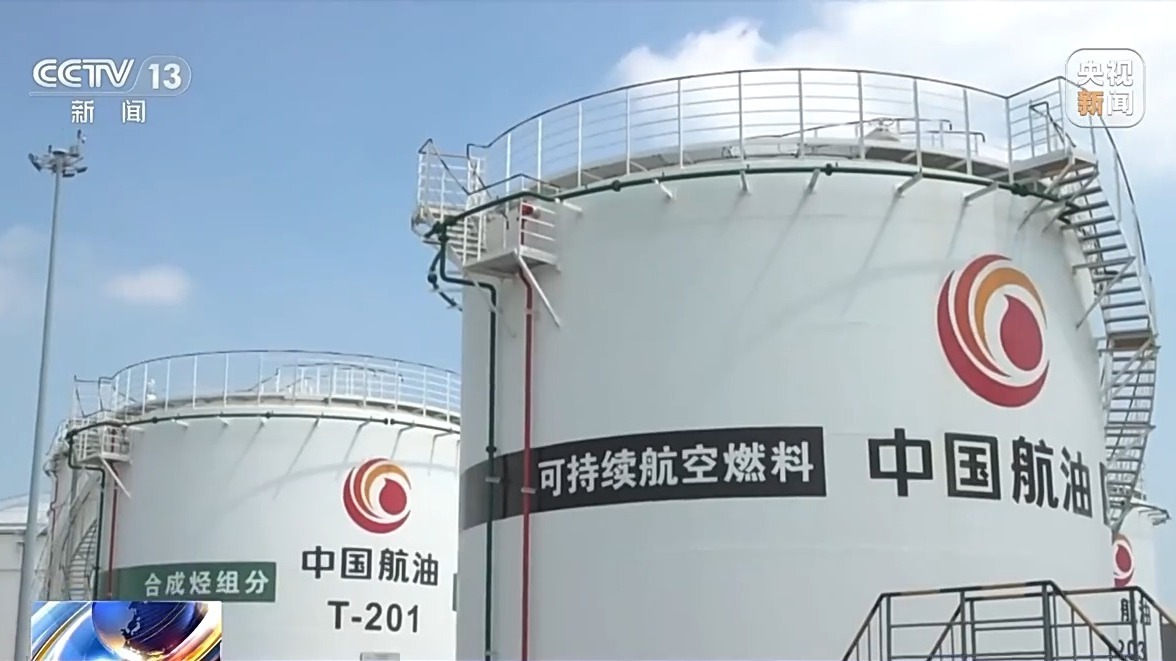
Core Viewpoint - The restructuring of China Petroleum & Chemical Corporation (Sinopec) and China National Aviation Fuel Group Corporation (CNAF) aims to enhance the integration of the aviation fuel industry chain, reduce supply costs, and promote a green and low-carbon transition in aviation energy supply [1][3]. Group 1: Industry Integration and Innovation - The merger will leverage Sinopec's oil product research and development capabilities alongside CNAF's market supply advantages, facilitating the integration of innovation within the aviation fuel industry chain [3]. - Currently, there is a disconnect between the research, production, sales, and application sectors in China's aviation fuel industry, which the restructuring aims to address [1]. Group 2: Green and Low-Carbon Transition - The restructuring is expected to support the high-quality development of sustainable aviation fuel, contributing to the aviation industry's green and low-carbon transition [3][5]. - Sustainable aviation fuel technology is recognized as a key pathway for reducing carbon emissions in the aviation sector, which faces significant challenges in emission reductions [3]. Group 3: Sustainable Aviation Fuel Development - Sinopec is the first company in Asia to develop and commercialize bio-jet fuel production technology, and the restructuring will accelerate the research, usage, and iteration of sustainable aviation fuel technologies [5]. - The global sustainable aviation fuel consumption is projected to reach 6 million tons by 2025 and 18 million tons by 2030, highlighting the growing demand for such fuels [7].
中国石化中航油官宣重组,抢占绿色航空战略高地
Xin Lang Cai Jing· 2026-01-09 01:21
中国石油化工集团有限公司与中国航空油料集团有限公司实施重组,是全球第一大炼油公司与亚洲最大航油服务商的一次历史性握手。 1月8日,经国务院批准,中国石油化工集团有限公司(以下简称"中国石化")与中国航空油料集团有限公司(以下简称"中航油")实施重组。 业内人士认为,这并非简单的企业合并,而是全球第一大炼油公司与亚洲最大航油服务商的一次历史性握手。两者的结合,将直接贯通从原油炼化到机场 加注的航空燃料全产业链,在保障国家能源安全动脉的同时,锁定航空业绿色转型的未来钥匙。 中国石化与中航油,就像产业链上的"超级生产者"与"核心主动脉"。中国石化作为全球炼油产能的领跑者,也是国内航煤生产的头号供应商,2023年其航 煤产量超过2600万吨。而中航油则是国内航空油料采购、储运、加注的绝对主导者,业务覆盖全国各大机场,是连接炼厂与飞机的桥梁。 但长期以来,我国航空燃料产业面临着"生产归生产、销售归销售"的格局,与国际大型一体化能源公司相比,整体竞争力有待提升。此外,国资委也一直 要求央企聚焦主责主业,实现业务资源整合协同。 中国石化与中航油的整合,正是这一政策导向的具体体现。过去,这两大巨头是紧密的上下游客户关系。此次 ...

宝城期货资讯早班车-20260109
Bao Cheng Qi Huo· 2026-01-09 01:18
1. Report Industry Investment Rating No information provided in the content. 2. Core Viewpoints of the Report - The global economy is facing various uncertainties and changes, with different trends in different sectors. The U.S. economy shows signs of a slowdown in growth momentum, while China's economy is expected to continue to recover, with consumption as the main driving force. The bond market is affected by policy and economic factors, and long - term bond yields may show a "first down then up" trend. The commodity market also has different performances in different varieties, such as the recovery of the lithium - battery industry and the rise of the black - series commodities [27]. 3. Summary by Directory Macro Data Overview - In Q3 2025, the U.S. real GDP had a quarterly - on - quarterly annualized rate of 4.3%, exceeding market expectations. The main reasons were the better - than - expected performance of household consumption and net exports. However, the resilience of business investment showed signs of weakening. Considering the impact of the government shutdown on Q4 GDP and the slowdown of the overall economic growth momentum, Q4 real GDP growth is expected to decline compared to Q3 [27]. - In China, in November 2025, indicators such as CPI, PPI, and social financing scale showed different trends. For example, CPI increased year - on - year, while PPI decreased year - on - year. The growth rate of fixed - asset investment decreased, and the growth rate of social consumption showed a certain degree of stability [1]. Commodity Investment Reference Comprehensive - China's export control of dual - use items to Japan aims to stop Japan's "remilitarization" and nuclear - possession attempts, and civilian trade will not be affected [2]. - On January 8, 2026, 39 domestic commodity varieties had positive basis, and 30 had negative basis. Among them, spot prices of nickel, tin, and cotton had the largest premiums over futures, while butadiene rubber, apples, and strong wheat had the largest discounts [2]. - Guangzhou Futures Exchange imposed a 3 - month trading restriction on 10 clients suspected of violating regulations in lithium carbonate futures trading [2]. - Zhengzhou Commodity Exchange adjusted the trading margin and daily price limit of the thermal coal 2701 contract and set a trading limit for non - futures company members and clients [3]. - In December 2025, the national futures market volume and turnover increased significantly year - on - year. The annual cumulative volume and turnover also showed growth [3]. - CME Group raised the performance margin of precious metals and lowered that of most natural gas contracts [3]. - The European natural gas and power trading market is about to reform, and ICE plans to extend the trading hours of relevant contracts to 22 hours a day [4]. Metals - After two years of adjustment, the lithium - battery industry is entering a new development stage, with a cyclical recovery covering the entire chain from lithium mines to materials to batteries [5]. - Gold investment remains popular. Industrial and Commercial Bank of China will raise the risk access level of personal gold accumulation business from January 12. Gold has become the world's largest reserve asset for the first time in 30 years, surpassing U.S. Treasury bonds [5]. - In 2025, global gold ETFs had a record - high annual capital inflow, with North America leading the way. The total asset management scale and holdings of gold ETFs more than doubled [5]. - As of January 7, 2026, the inventory of zinc, nickel, and tin in the London Metal Exchange increased, while that of lead, copper, and aluminum decreased [6]. - The position of the world's largest silver ETF, iShares Silver Trust, increased, and the silver inventory in the London vault also increased in December 2025 [7]. Coal, Coke, Steel, and Minerals - At the beginning of 2026, the black - series commodities in the commodity market rose, with the prices of coking coal and coke futures rising significantly. The spot market procurement sentiment also increased [8]. - Indonesia may approve a coal production quota of about 600 million tons in 2026 and adjust its nickel quota according to industry demand. The domestic nickel ore demand of Indonesian smelters is expected to increase [8]. - The U.S. government is considering investing in Amaroq's key mineral mining project in Greenland [8]. Energy and Chemicals - China National Petroleum Corporation and China National Aviation Fuel Group will be restructured, aiming to reduce costs and promote high - quality development of the industrial chain [9]. - The market regulatory authority has interviewed the China Photovoltaic Industry Association and six polysilicon leading enterprises to prevent monopoly behavior [9]. - The U.S. is strengthening sanctions against Russia, and China's normal economic and trade energy cooperation with Russia should not be interfered with [9]. - The U.S. has different policies towards Venezuela, including supervision, partial sanctions lifting, and aiming to increase Venezuela's oil production [10][11]. - As of January 2, 2025, the U.S. weekly natural gas inventory decreased more than expected [11]. Agricultural Products - Due to the decline in export sales reported by the U.S. Department of Agriculture, the trends of grain futures were different. Corn and soybean net exports decreased, while wheat exports increased [12]. - Brazil is expected to export 2.4 million tons of soybeans in January 2026, higher than the same period last year [12]. - The market is bearish on the future price of Japanese rice, with the 3 - month expected index reaching the lowest level since September 2021 [12]. Financial News Compilation Open Market - On January 8, 2026, the central bank conducted 9.9 billion yuan of 7 - day reverse repurchase operations, with a net investment of 9.9 billion yuan [13]. Important News - The Political Bureau Standing Committee of the CPC Central Committee emphasized the need to achieve a good start in 2026 and strengthen Party building [14]. - The Ministry of Commerce will assess and investigate Meta's acquisition of the artificial intelligence platform Manus and explained the export control of dual - use items to Japan [14]. - The deputy minister of the Ministry of Finance welcomed the London Stock Exchange Group to deepen cooperation with China [14]. - In December 2025, China's consumer market grew steadily, and high - value product exports continued to accelerate. During the New Year's Day holiday in 2026, consumer spending increased significantly [15]. - In the first quarter of 2026, local governments plan to issue more than 2 trillion yuan of local bonds, mainly for new infrastructure and other projects to boost investment and the economy [16]. - The market regulatory authority has interviewed the China Photovoltaic Industry Association and six polysilicon leading enterprises to prevent monopoly behavior [17]. - The four - department joint meeting pointed out the need to regulate the power and energy - storage battery industry to prevent over - capacity [17]. - In 2025, the trading volume and net financing of debt financing instruments supported by the Dealer Association exceeded 60% of the corporate credit bond market, and the outstanding scale increased by 10% year - on - year [17]. - In 2025, 23 insurance companies issued bonds worth 104.2 billion yuan, mainly due to capital replenishment needs and lower borrowing costs [17]. - JD Group is considering issuing dim - sum bonds with a potential scale of about 10 billion yuan [18]. - Yu Liang resigned from Vanke after 35 years [18]. - Gold has become the world's largest reserve asset, surpassing U.S. Treasury bonds [18]. - The U.S. Congress passed three government appropriation bills, moving forward to avoid a government shutdown [19]. - The U.S. Treasury Secretary and Fed officials have different views on interest - rate trends, with expectations of interest - rate cuts in 2026 [19]. - Many bond - related events occurred, including the resumption of trading of some bonds, debt defaults, and credit - rating adjustments [20]. Bond Market Summary - The inter - bank bond market in China has improved, with bond yields generally falling, and bond futures rising. The capital market is relatively loose [21]. - The exchange - traded bond market had different performances for different bonds, with Vanke bonds generally rising [22]. - The convertible bond market also had different trends, with some bonds rising and some falling [22]. - Most money - market interest rates rose, and different bond - issuing institutions had different bid - winning yields and multiples [23][24]. - European and U.S. bond yields showed different trends, with some rising and some falling [25]. Foreign Exchange Market - The on - shore RMB against the U.S. dollar rose, while the central parity rate of the RMB against the U.S. dollar depreciated slightly. The U.S. dollar index rose, and most non - U.S. currencies fell [26]. Research Report Highlights - CITIC Securities expects the U.S. real GDP growth in Q4 2025 to decline compared to Q3, and in China, consumption will continue to recover moderately, and long - term bond yields may show a "first down then up" trend [27]. - Yangtze River Fixed Income believes that the bond market is constrained by the "impossible triangle," and the bond market may have a phased repair opportunity after the supply pressure of ultra - long bonds is digested, possibly in the second half of Q1 2026 [27]. Stock Market News - The A - share market had a narrow - range consolidation, with the Shanghai Composite Index slightly falling but still having 15 consecutive positive lines. The Shenzhen Component Index and the ChiNext Index fell, while the Wind All - A Index rose. The trading volume was 2.83 trillion yuan. Some themes such as commercial space, brain - computer interface, and nuclear fusion were active, while the large - finance and non - ferrous metals sectors were weak [30]. - The Hong Kong stock market declined, with the Hang Seng Index, Hang Seng Tech Index, and Hang Seng China Enterprises Index all falling. The "world's first large - model stock" Zhipu rose more than 13% on its first - listing day. Southbound funds had a net selling of 4.9 billion Hong Kong dollars, while Xiaomi Group received a net purchase [30]. - As of January 7, 2026, the margin trading balance in the A - share market exceeded 2.6 trillion yuan for the first time, reaching a record high [31].
【新华解读】2026央企重组“第一枪”打响 未来合并同类项“化学合成”成趋势
Xin Hua Cai Jing· 2026-01-09 01:04
Group 1 - The core viewpoint of the news is that the restructuring of China Petroleum & Chemical Corporation (Sinopec) and China Aviation Oil Group (China Aviation Oil) is a strategic move aimed at optimizing state-owned assets and enhancing core competitiveness in the energy sector, which will significantly reshape the domestic aviation fuel market and the entire energy supply chain [1][4][5] - The restructuring aligns with recent trends in state-owned enterprise (SOE) reforms, focusing on core responsibilities and enhancing competitiveness through integration, which is expected to lead to a more efficient allocation of resources [3][6] - China Aviation Oil, as the only supplier of civil aviation fuel in China, controls over 98% of the market for aviation fuel at civil airports, and the integration with Sinopec is anticipated to create synergies that enhance market control and risk resistance [3][4] Group 2 - The restructuring is seen as a signal for future SOE reforms, emphasizing professional integration and resource optimization to achieve greater competitiveness in key sectors [5][6] - The trend of SOE restructuring is shifting from merely addressing overcapacity and reducing competition to focusing on upgrading emerging industries and enhancing supply chain resilience [7] - The integration is expected to facilitate a seamless connection between Sinopec's refining capabilities and China Aviation Oil's distribution network, thereby stabilizing fuel supply for the aviation industry [3][6]
中国石化与中国航油实施重组;广州规划攻关可重复使用火箭技术丨盘前情报
2 1 Shi Ji Jing Ji Bao Dao· 2026-01-09 01:03
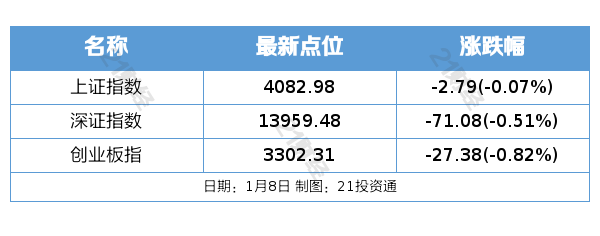
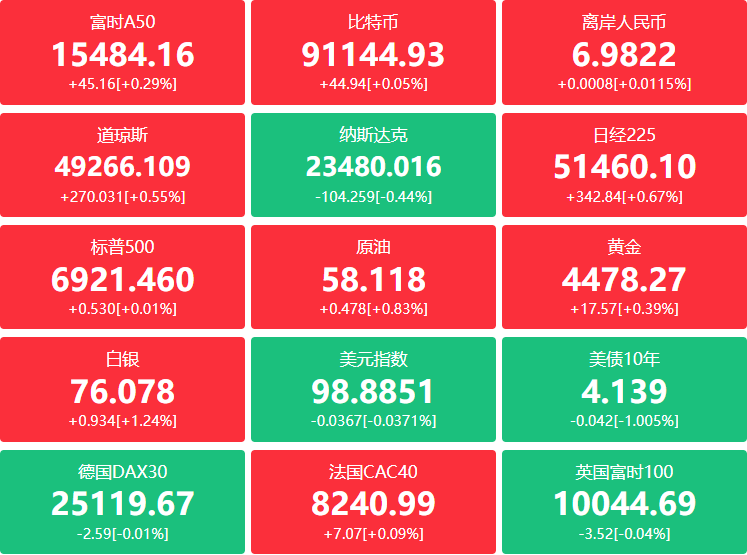
Market Overview - On January 8, the Shanghai Composite Index fell by 0.07%, the Shenzhen Component Index decreased by 0.51%, and the ChiNext Index dropped by 0.82%. The total trading volume in the Shanghai and Shenzhen markets was 2.8 trillion yuan, a decrease of 53.8 billion yuan compared to the previous trading day, marking the fourth consecutive day of trading volume exceeding 2.5 trillion yuan. Over 3,700 stocks rose, with 111 stocks hitting the daily limit. Key sectors showing strength included commercial aerospace, brain-computer interface, controllable nuclear fusion, and AI applications, while large financials, rare earth permanent magnets, and non-ferrous metals saw significant declines [1][2]. International Market - In the U.S. stock market on January 8, the Dow Jones Industrial Average rose by 270.03 points to close at 49,266.11, a gain of 0.55%. The S&P 500 increased by 0.53 points to 6,921.46, a rise of 0.01%, while the Nasdaq Composite fell by 104.26 points to 23,480.02, a decline of 0.44%. In Europe, the FTSE 100 closed at 10,044.69, down 3.52 points (0.04%), while the CAC 40 rose by 9.55 points (0.12%) to 8,243.47, and the DAX increased by 5.20 points (0.02%) to 25,127.46 [2]. Oil Market - International oil prices rose on January 8, with light crude oil futures for February delivery increasing by $1.77 to $57.76 per barrel, a rise of 3.16%. Brent crude oil for March delivery rose by $2.03 to $61.99 per barrel, a gain of 3.39% [3]. Corporate Developments - The Ministry of Commerce of China responded to the review of Meta's acquisition of the AI platform Manus, stating that enterprises must comply with Chinese laws and regulations when engaging in foreign investment and technology cooperation [4]. - China Petroleum & Chemical Corporation (Sinopec) and China Aviation Oil Holding Company announced a restructuring, which is expected to enhance the competitiveness of China's aviation fuel industry and support the green transformation of the aviation sector [5]. - Guangzhou's new plan aims to accelerate the development of strategic industries, including low-altitude economy and aerospace, with a focus on reusable rocket technology [6]. - Zhiyuan Technology is set to launch a new generation of foundational model GLM-5, with expectations of significant growth in the large language model market in the coming years [7]. - OpenAI introduced ChatGPT Health, targeting the rapidly growing AI healthcare market, which is projected to reach approximately $505.59 billion by 2033 [8]. Regulatory Actions - The State Administration for Market Regulation of China has conducted talks with six leading photovoltaic companies regarding anti-monopoly risks, emphasizing the need for compliance with regulations on production capacity and pricing [9]. - The Ministry of Industry and Information Technology has warned against irrational competition in the lithium battery industry, gathering major players to discuss regulatory measures [10][11]. Investment Insights - Xiangcai Securities suggests that long-term industrial upgrades in China may create a favorable policy environment for market stability, particularly benefiting sectors like insurance, agriculture, aerospace, and technology [12]. - Galaxy Securities highlights the investment opportunities in the "AI + manufacturing" sector, focusing on the entire value chain from upstream to downstream applications [12].