
玻璃

Search documents
统计称股民今年人均赚2万
2 1 Shi Ji Jing Ji Bao Dao· 2025-08-21 09:47
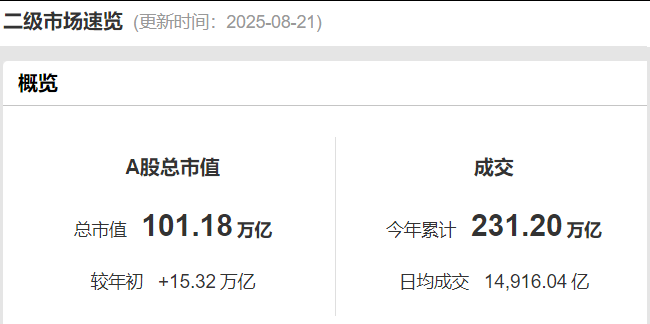
Market Overview - The A-share market has seen significant growth, with the Shanghai Composite Index reaching a nearly ten-year high, stabilizing above 3700 points [1] - The total market capitalization of A-shares has increased to 101.18 trillion yuan, marking a rise of 15.63 trillion yuan since the beginning of the year [1][3] Investor Performance - Individual investors hold approximately 33% of the shares, resulting in a net increase of 5.16 trillion yuan in market value, equating to an average profit of about 21,500 yuan per investor this year [3] - Over 1100 active equity funds have reached historical net value highs, with 98% of 4539 active equity funds yielding positive returns this year, averaging a return of 20.14% [4][5] Fund Dynamics - The recent performance of active equity funds has been particularly strong in the technology and pharmaceutical sectors, with 10 funds achieving over 100% returns this year [5][6] - Fund redemption pressures have eased, although there are still instances of net redemptions; some investors are opting to redeem funds due to perceived slow growth rather than profit-taking [7][9] Market Sentiment and Predictions - Concerns exist regarding potential market corrections following rapid gains, with historical patterns indicating possible declines after significant index increases [8][9] - Despite short-term concerns, long-term trends remain positive, with expectations of continued market growth and a lack of bubble conditions in the broader market [11][12] Investment Strategies - Fund managers are generally increasing their positions in anticipation of sustained market trends, particularly in technology sectors [12][13] - The current market is characterized by a structural bull market, with a focus on high-dividend and high-growth technology assets [14][15] Sector Focus - Investment interest is directed towards sectors such as AI, semiconductors, and traditional industries like banking and insurance, with a balanced approach recommended to manage potential volatility [16][17]

《金融》日报-20250821
Guang Fa Qi Huo· 2025-08-21 05:20
Report Industry Investment Rating No relevant content provided. Core Views The reports present a comprehensive overview of various financial markets, including stock index futures, treasury bond futures, precious metals, container shipping, and provide schedules of economic data releases. Each section details the latest market data, price changes, and relevant indicators, offering insights for investors to assess market trends and potential investment opportunities. Summary by Directory Stock Index Futures Spread Daily Report - The F spot-futures spread is -1.40, with a change of 5.78 from the previous day, and a 1-year historical percentile of 58.30%. Other spreads such as H spot-futures spread, IC and IM inter - period spreads also show different values and changes [1]. - Cross - variety ratios like CSI 500/SSE 300, CSI 200/CSI 50, etc., have their own latest values, changes, and historical percentiles [1]. Treasury Bond Futures Spread Daily Report - For basis, the TS basis has an IRR of 1.2502, a latest value of 0.0243, and a change of - 0.0023 from the previous day, with a percentile of 11.20% since listing. Similar data is provided for TF, T, and TL basis [2]. - Inter - period spreads for TS, TF, T, and TL show different values and changes, as well as their respective historical percentiles [2]. - Cross - variety spreads such as TS - TF, TS - T, etc., also have corresponding values, changes, and historical percentiles [2]. Precious Metals Spot - Futures Daily Report - Domestic futures closing prices: The AU2510 contract closed at 772.68 yuan/gram, down 2.38 yuan (-0.31%) from the previous day; the AG2510 contract closed at 9042 yuan/kg, down 145 yuan (-1.58%) [6]. - Foreign futures closing prices: The COMEX gold main contract closed at 3392.20 US dollars/ounce, up 33.30 dollars (0.99%); the COMEX silver main contract closed at 37.90 US dollars/ounce, up 0.57 dollars (1.51%) [6]. - Spot prices: London gold was at 3347.34 US dollars/ounce, up 31.82 dollars (0.96%); London silver was at 37.86 US dollars/ounce, up 0.48 dollars (1.28%) [6]. - Basis, price ratios, interest rates, exchange rates, inventory, and position data are also provided [6]. Container Shipping Industry Spot - Futures Daily Report - Spot quotes: MAERSK's Shanghai - Europe freight rate was 2364 US dollars/FEU, up 6 dollars (0.25%); CMA CGM's was 2913 US dollars/FEU, up 34 dollars (1.18%), etc. [8]. - Shipping indices: The SCFIS (European route) settlement price index was 2180.17, down 55.3 (-2.47%); the SCFIS (US West route) was 1106.29, up 24.1 (2.23%) [8]. - Futures prices and basis: The EC2602 contract was at 1532.0, down 3.4 (-0.22%); the basis of the main contract was 700.2, down 43.0 (-5.79%) [8]. - Fundamental data: Global container shipping capacity supply remained unchanged at 3289.97 FTEU; Shanghai port on - time rate was 32.58, down 1.99 (-5.76%) [8]. Overseas and Domestic Data/Information Report - Overseas data includes economic indicators such as eurozone 8 - month manufacturing PMI, consumer confidence index, and US initial jobless claims, etc. [9]. - Domestic data includes steel production, inventory, and utilization rate, as well as various commodity data such as coal, coke, and lithium carbonate [10].
国投安粮期货:国内经济增长稳中有进,流动性环境宽松,央行明确消费贷贴息、育儿补贴等扩内需
An Liang Qi Huo· 2025-08-21 05:15
Report Industry Investment Ratings No relevant content provided. Core Views of the Report - The domestic economic growth is stable with progress, the liquidity environment is loose, and corporate profit expectations are repaired. In the market, small and medium - cap stocks lead the rise, and the growth style is dominant. Attention should be paid to the short - term key pressure level fluctuations and use options to build hedging transactions [2]. - The crude oil market has a complex situation. The market speculates on the Fed's September interest rate cut, but there are concerns about US summer demand and OPEC+ may accelerate production increase. The medium - and long - term price center of gravity is still weak [3]. - The gold market is affected by macro - economic and geopolitical factors. The market expects the Fed to cut interest rates in September, but the strong economic data boosts the US dollar and weakens the gold's safe - haven premium. Attention should be paid to the support near $3311 per ounce [4]. - The silver price has fallen recently, affected by the cooling of geopolitical risk - aversion sentiment and investors' profit - taking. It is necessary to pay attention to the performance at the $37 per ounce integer mark [6]. - For chemical products, the cost of PTA is weakly supported by oil prices, and the supply - demand expectation is weak in the medium term, but there is an expectation of demand improvement. Ethylene glycol has a good fundamental situation and fluctuates with the cost end. The fundamentals of PVC, PP, plastic, etc. have no obvious improvement and fluctuate with market sentiment [7][8][9][11][13]. - In the agricultural products market, the corn price is under pressure due to factors such as abundant supply and weak downstream demand, but it rebounds in the short term. The peanut price is affected by the expected increase in planting area and is in a weak position in the short term. The cotton price is affected by domestic and foreign supply - demand situations and shows a weak shock [20][22][23]. - In the metal market, the copper market is affected by global and domestic factors, and attention should be paid to the direction choice after the convergence. The aluminum market is in a shock trend, and the alumina price is under pressure. The casting aluminum alloy follows the aluminum price to fluctuate, and the lithium carbonate price is affected by cost, supply, and demand and is dominated by sentiment in the short term [29][30][32][33][34]. - In the black market, the stainless - steel, rebar, and hot - rolled coil prices are in a weak shock in the short term due to factors such as cost support weakening and weak demand. The iron ore price may decline in the short term, and the coking coal and coke prices may also fluctuate downward [36][37][38][39][41]. Summary by Relevant Catalogs Macro - Domestic economic growth is stable with progress, the liquidity environment is loose, and corporate profit expectations are repaired. Small and medium - cap stocks lead the rise, and the growth style is dominant. Pay attention to short - term key pressure level fluctuations and use options to build hedging transactions [2]. Crude Oil - The market speculates on the Fed's September interest rate cut, and the weakening US dollar provides some support. However, there are concerns about US summer demand, and OPEC+ may accelerate production increase. The medium - and long - term price center of gravity is still weak. WTI main contract should pay attention to the support near $62 - 63 per barrel [3]. Gold - The market expects the Fed to cut interest rates in September with an 86.1% probability, but strong economic data boosts the US dollar and weakens the gold's safe - haven premium. Pay attention to the support near $3311 per ounce [4]. Silver - The silver price has fallen recently, affected by the cooling of geopolitical risk - aversion sentiment and investors' profit - taking. Pay attention to the performance at the $37 per ounce integer mark [6]. Chemicals PTA - The cost is weakly supported by oil prices, and the supply - demand expectation is weak in the medium term. The inventory days are decreasing, and the production capacity change is not significant. There is an expectation of demand improvement in the downstream. Pay attention to the breakthrough of the resistance level at 4800 yuan per ton [7]. Ethylene Glycol - The domestic supply turns loose after the restart of coal - to - ethylene glycol plants. The inventory has a slight increase, but imports may decrease. The downstream demand is gradually recovering. It fluctuates with the cost end [8]. PVC - The production capacity utilization rate has increased, and the demand is mainly for rigid needs. The social inventory has increased. The fundamentals have no obvious improvement and fluctuate with market sentiment [9][10]. PP - The production capacity utilization rate has a slight increase, and the output has increased. The downstream average start - up rate has increased, and the inventory has decreased. The fundamentals have no obvious driving force and fluctuate with market sentiment [11][12]. Plastic - The production capacity utilization rate has increased, and the downstream start - up rate has increased slightly. The inventory has changed from a downward trend to an upward trend. The fundamentals have no obvious improvement and fluctuate with market sentiment [13]. Soda Ash - The supply has increased slightly, the demand is weak, and the inventory has increased. The market is affected by many news, and it is recommended to use a wide - range shock thinking in the short term [14]. Glass - The supply has a narrow - range fluctuation, the demand is weak, and the inventory has continued to accumulate. Affected by environmental protection restrictions, it is recommended to use a wide - range shock thinking in the short term [16]. Rubber - The rubber price is affected by supply and demand. The supply is expected to be loose, and the downstream demand is affected by trade barriers. Pay attention to the resonance market with other domestic varieties and the pressure above the main contract [18]. Methanol - The futures price has increased, the inventory has increased, the supply has increased slightly, and the demand has decreased. There is a prominent supply - demand contradiction. The cost provides some support, and the price fluctuates in a range [19]. Agricultural Products Corn - The US corn production exceeds expectations, and the domestic supply is abundant. The downstream demand is weak, but it rebounds in the short term due to the influence of other agricultural product sectors [20][21]. Peanut - The domestic peanut planting area is expected to increase. The new peanuts are about to be listed, and the old - crop inventory is being consumed. The current supply - demand is weak, and the price is supported by the strength of the oil category [22]. Cotton - The US Department of Agriculture's report is positive, but the domestic new - year cotton supply is expected to be abundant. The short - term supply is tight before the new cotton is launched, but there is a negative impact from the expected increase in import quotas. The price is in a weak shock [23]. Soybean Meal - Internationally, it is affected by trade policies and weather. Domestically, the supply pressure is prominent, but there is an expectation of supply shortage in the fourth quarter. The price may test the upper pressure level in the short term [24]. Soybean Oil - The import cost provides support, and the domestic supply pressure is large. The demand is driven by festivals. The price is in a weak adjustment, and attention should be paid to the lower support level [25][26]. Live Pigs - The supply will remain high in the short term, and the demand is weak in the off - season. The price fluctuates weakly and may fluctuate in a range in the short term [27]. Eggs - The supply pressure is significant, and the egg - laying hen inventory is high. The short - term price is boosted by festival preparations, but the upward driving force is insufficient. The current futures price valuation is low [28]. Metals Shanghai Copper - The copper market is affected by global and domestic factors. The global inventory transfer is coming to an end, and domestic policies boost market sentiment. Pay attention to the direction choice after the convergence of the price triangle [29]. Shanghai Aluminum - The supply is stable, and the demand is affected by the off - season and high prices. The inventory has increased, and it may continue to fluctuate in the range of 20300 - 21000 yuan per ton [30][31]. Alumina - The supply is expected to be in surplus, and the demand is mainly for rigid needs. The inventory has increased. The main contract may be in a weak shock in the short term [32]. Casting Aluminum Alloy - The cost provides support, the supply is in surplus, and the demand is affected by the off - season. The inventory is at a relatively high level, and it follows the aluminum price to fluctuate [33]. Lithium Carbonate - The cost is strongly supported, the supply pressure has weakened, and the demand is resilient. The futures price has a flash - crash limit - down, and it may fill the previous gap in the short term [34]. Industrial Silicon - The supply has a slight increase, and the demand structure is differentiated. The fundamentals are under pressure and fluctuate with market sentiment in the short term [35]. Polysilicon - The supply is increasing, and the demand is under pressure. The price is in a wide - range shock in the short term [36]. Black Stainless Steel - The cost support has weakened, the supply has increased slightly, and the demand in the off - season is not good. The price is in a weak shock in the short term [36]. Rebar - The "anti - involution" policy effect is reflected, the cost support has weakened, the demand is weak in the off - season, and the inventory has increased. The price is in a high - level weak shock in the short term [37]. Hot - Rolled Coil - Similar to rebar, the cost support has weakened, the demand is weak in the off - season, and the inventory has accumulated. The price changes from a single - side rise to a high - level shock [38]. Iron Ore - The supply pressure has increased, the demand has weakened marginally, and the inventory is at a high level. The main contract may decline in the short term [39][40]. Coal - For coking coal, the supply recovery is slow, and the demand has weakened marginally. For coke, the demand is supported by high - level iron - water production, but the inventory removal rate has slowed down. The prices of coking coal and coke may decline in the short term [41].
大越期货玻璃早报-20250821
Da Yue Qi Huo· 2025-08-21 01:19
Report Summary 1. Report Industry Investment Rating No investment rating information is provided in the report. 2. Core Viewpoints - The glass industry has a weak fundamental situation, and it is expected to fluctuate weakly in the short - term, with a wide - range oscillatory operation in general [2][5]. - Although the glass supply has declined to a relatively low level in the same period, and the glass factory inventory has decreased due to downstream phased restocking, the sustainability of the inventory reduction is questionable [5]. 3. Summary by Relevant Catalogs Daily Viewpoints - **Fundamentals**: Glass production profit has recovered, the cold - repair speed of the industry has slowed down, the start - up rate and output have dropped to the historic low levels in the same period. Deep - processing orders are less than those in previous years, and the terminal demand is weak [2]. - **Basis**: The spot price of float glass in Hebei Shahe is 1080 yuan/ton, the closing price of FG2601 is 1162 yuan/ton, and the basis is - 82 yuan, with the futures at a premium to the spot [2]. - **Inventory**: The inventory of national float glass enterprises is 63.426 million weight boxes, an increase of 2.55% from the previous week, and the inventory is running above the five - year average [2][41]. - **Disk**: The price is running below the 20 - day line, and the 20 - day line is downward [2]. - **Main Position**: The main position is net short, and the short position increases [2]. - **Expectation**: Due to the weak fundamentals of glass, it is expected to fluctuate weakly in the short - term [2]. Influencing Factors - **Positive Factors**: Under the influence of the "anti - involution" policy, there is an expectation of capacity clearance in the float glass industry [3]. - **Negative Factors**: The real - estate terminal demand is still weak, and the number of orders of glass deep - processing enterprises is at a historical low in the same period; the capital collection of the deep - processing industry is not optimistic, and traders and processors are cautious, mainly digesting the original sheet inventory; the market sentiment of "anti - involution" has subsided [4]. Glass Futures Market - The closing price of the main contract decreased from 1196 yuan/ton to 1162 yuan/ton, a decrease of 2.84%. The spot price of Shahe Safety large - board decreased from 1084 yuan/ton to 1080 yuan/ton, a decrease of 0.37%. The main basis decreased from - 112 yuan/ton to - 82 yuan/ton, a decrease of 26.79% [6]. Glass Spot Market - The market price of 5mm white glass large - board in Hebei Shahe, the spot benchmark location, is 1080 yuan/ton, a decrease of 4 yuan/ton from the previous day [11]. Fundamentals - Cost Side No specific content about the cost - side analysis is available other than mentioning glass production profit. Fundamentals - Supply - The number of operating float glass production lines in the country is 223, with a start - up rate of 75.34%, and the number of operating production lines is at a historical low in the same period [21]. - The daily melting volume of national float glass is 159,600 tons, with the production capacity at the lowest level in the same period in history and showing a stable recovery [23]. Fundamentals - Demand - In June 2025, the apparent consumption of float glass was 463,400 tons [27]. - The real - estate terminal demand is weak, and the number of orders of glass deep - processing enterprises is at a historical low in the same period [4]. Fundamentals - Inventory - The inventory of national float glass enterprises is 63.426 million weight boxes, an increase of 2.55% from the previous week, and the inventory is running above the five - year average [2][41]. Fundamentals - Supply - Demand Balance Sheet - The report provides the annual supply - demand balance sheet of float glass from 2017 to 2024E, including data on production, exports, imports, apparent supply, consumption, differences, production growth rates, consumption growth rates, and net import ratios [42].
黑色建材日报-20250821
Wu Kuang Qi Huo· 2025-08-21 01:08
Report Summary 1. Investment Rating The report does not provide an industry investment rating. 2. Core Views - The overall atmosphere in the commodity market was weak yesterday, and the prices of finished steel products showed a weak and volatile trend. If the subsequent demand cannot be effectively restored, steel prices may not be able to maintain the current level, and the futures prices may gradually return to the supply - demand logic [3]. - For iron ore, although the current supply - side pressure is not significant, attention should be paid to the subsequent shipping progress. If the terminal demand continues to weaken, the short - term iron ore price may be slightly adjusted [6]. - For ferrosilicon and manganese silicon, in the short - term disordered market environment affected by emotions, it is not recommended for speculative funds to participate excessively. Hedging funds can seize hedging opportunities according to their own situations [8]. - For industrial silicon, it is expected to run weakly with fluctuations, and for polysilicon, it is expected to have wide - range fluctuations [14][16]. - For glass and soda ash, they are expected to fluctuate in the short term. In the long term, glass prices follow macro - emotions, and soda ash prices are affected by supply - side and market sentiment under the "anti - involution" logic [18][19]. 3. Summary by Category Steel - **Prices and Positions**: The closing price of the rebar main contract was 3132 yuan/ton, up 6 yuan/ton (0.191%) from the previous trading day. The closing price of the hot - rolled coil main contract was 3402 yuan/ton, down 14 yuan/ton (- 0.40%) from the previous trading day [2]. - **Fundamentals**: Rebar demand decreased significantly this week, inventory accumulation speed increased. Hot - rolled coil demand rebounded significantly, and inventory accumulation speed slowed down. Both rebar and hot - rolled coil inventories are in a marginal upward state, with high production and insufficient demand [3]. Iron Ore - **Prices and Positions**: The main contract (I2601) closed at 769.00 yuan/ton, with a change of - 0.26% (- 2.00), and the position changed to 44.04 million hands [5]. - **Supply - Demand**: Overseas iron ore shipments and arrivals increased. The daily average pig iron output increased. Port inventories increased slightly, and steel mill imported ore inventories increased significantly. The apparent demand for five major steel products continued to weaken [6]. Ferrosilicon and Manganese Silicon - **Prices**: On August 20, the manganese silicon main contract (SM601) closed down 1.32% at 5836 yuan/ton, and the ferrosilicon main contract (SF511) closed down 0.99% at 5622 yuan/ton [7]. - **Market Environment**: Affected by the "anti - involution" sentiment, the prices of related commodities, including ferrosilicon and manganese silicon, have dropped significantly. It is expected that the price will eventually return to the fundamentals after the sentiment fades [8]. Industrial Silicon and Polysilicon - **Industrial Silicon** - **Prices and Positions**: The main contract (SI2511) closed at 8390 yuan/ton, with a change of - 2.72% (- 235). The weighted contract position changed to 5.26445 million hands [11]. - **Fundamentals**: The problems of over - capacity, high inventory, and insufficient demand remain. The operating rate is expected to rise in August, and the demand side can provide some support, but the price is expected to run weakly with fluctuations [14]. - **Polysilicon** - **Prices and Positions**: The main contract (PS2511) closed at 51875 yuan/ton, with a change of - 0.74% (- 385). The weighted contract position changed to 3.37155 million hands [15]. - **Fundamentals**: The weekly output increased, and the inventory clearance speed was limited. The supply - demand situation is still weak. The price is expected to fluctuate widely [16]. Glass and Soda Ash - **Glass** - **Prices and Inventory**: On Wednesday, the spot price in Shahe was 1156 yuan, down 4 yuan from the previous day, and in Central China was 1060 yuan, down 30 yuan. As of August 14, 2025, the total inventory of national float glass sample enterprises was 63.426 million heavy boxes, a month - on - month increase of 2.55% [18]. - **Market Outlook**: In the short term, it is expected to fluctuate. In the long term, it follows macro - emotions, and the price may rise if there are substantial real - estate policies [18]. - **Soda Ash** - **Prices and Inventory**: The spot price was 1205 yuan, down 25 yuan from the previous day. As of August 18, 2025, the total inventory of domestic soda ash manufacturers was 1.8973 million tons, a month - on - month increase of 0.18% [19]. - **Market Outlook**: In the short term, it is expected to fluctuate. In the long term, the price center may gradually rise under the "anti - involution" logic, but the upward space is limited due to the supply - demand contradiction [19].
供需平稳,价格震荡运
Zhong Xin Qi Huo· 2025-08-21 00:45
Report Industry Investment Rating - The report gives a "neutral" rating, with most varieties expected to fluctuate, indicating that the market trend is uncertain in the short - term, and the expected price change is within plus or minus one standard deviation [102]. Core Viewpoints - The black building materials market is currently affected by factors such as the approaching peak - off - peak season transition, limited pre - event production restrictions, and inventory pressure. The overall market is in a state of shock, and the follow - up needs to focus on production restrictions and terminal demand [1][2][5]. - The price of steel products is expected to fluctuate in the short - term, and the supply and demand of steel products will be affected around the military parade. The specific situation of blast furnace production restrictions needs to be tracked [7]. - The iron ore market has stable supply and inventory, and the demand is at a high level. The negative driving force of the fundamentals is limited, and the price is expected to fluctuate [2][7]. - The fundamentals of scrap steel have no prominent contradictions. Although the profit of electric furnaces decreases due to the pressure on the price of finished products, the resources are still relatively tight, and the price is expected to fluctuate in the short - term [9]. - The coking coal market has short - term supply and demand tightness under supply disturbances, and the short - term disk still has support [2][11]. - The glass market has weak fundamentals, and the cost support is strengthened by the rise in coal prices. It is expected to fluctuate widely in the short - term, and the price may decline in the long - term [2][13]. - The soda ash market has an oversupply pattern, and the price is expected to fluctuate widely in the short - term and decline in the long - term to promote capacity reduction [2][15]. - The supply pressure of manganese silicon increases, and the price may decline in the long - term; the short - term price of ferrosilicon is expected to fluctuate, but there are hidden concerns in the long - term fundamentals [2]. Summary by Variety Steel - Core Logic: Low - price transactions are the main form, and the overall spot trading of steel products is average. Last week, steel mills had both resumption and maintenance, and the output of rebar and hot - rolled coils changed little. Rebar inventory increased significantly, and the demand continued to decline. The export orders of hot - rolled coils improved, and the domestic demand was resilient, with the inventory accumulation slowing down. The inventory of medium - thick plates and cold - rolled coils increased, and the apparent demand of the five major steel products declined and the inventory accumulated, showing off - peak season characteristics [7]. - Outlook: The fundamentals of steel products are marginally weakening in the off - peak season. The supply and demand will be affected around the military parade. The blast furnace production restriction situation needs to be tracked. The disk may fluctuate more violently, and it is expected to fluctuate widely in the short - term. The follow - up should focus on the production restriction of steel mills and terminal demand [7]. Iron Ore - Core Logic: The port trading volume increased. The overseas mine shipments increased month - on - month, and the arrival volume at 45 ports rebounded slightly, slightly higher than the same period last year. The total supply is relatively stable. The small - sample molten iron output remained stable, and the daily consumption of imported sinter decreased slightly. The iron ore ports accumulated inventory, the number of berthed ships decreased, and steel mills replenished inventory slightly [7]. - Outlook: The demand for iron ore is at a high level, the supply and inventory are stable, and the negative driving force of the fundamentals is limited. The price is expected to fluctuate in the future [7]. Scrap Steel - Core Logic: The arrival volume of scrap steel increased slightly week - on - week. The daily consumption of scrap steel in electric furnaces and blast furnaces increased, and the total daily consumption increased slightly. The factory inventory decreased slightly, and the available days of inventory decreased to a relatively low level. After the price cut by Shagang, the scrap steel prices in East China and other places followed the decline, while the prices in Hebei increased slightly [9]. - Outlook: The fundamentals of scrap steel have no prominent contradictions. Although the profit of electric furnaces decreases due to the pressure on the price of finished products, the resources are still relatively tight, and the price is expected to fluctuate in the short - term [9]. Coke - Core Logic: In the futures market, the market was calm and the disk fluctuated. In the spot market, the price remained stable. After the sixth round of price increase, the overall profit of coking enterprises turned positive, and the production increased slightly. The downstream steel mills had good profits and high production enthusiasm. The trading enthusiasm of traders decreased, and the steel mill arrivals improved. The upstream coking enterprises continued to reduce inventory, and the overall inventory pressure was not significant [10]. - Outlook: The expectation of production restrictions on coke is strong before the military parade, and the short - term supply is tight. The seventh round of price increase still needs time to be implemented. The follow - up needs to pay attention to the impact of production restriction policies on coking and steel enterprises [10]. Coking Coal - Core Logic: Some coal mines in the production area resumed production, but some mine points still had limited production. The short - term supply disturbance of coal mines will continue. The average daily customs clearance at the Ganqimaodu Port remained above 1,000 vehicles. The demand for coking coal is strong, and the downstream purchases on demand. Some coal mines have accumulated inventory, but there is no obvious inventory pressure due to a large number of pre - sold orders [2][11]. - Outlook: The supply disturbance continues, and it is difficult to have a significant increase in supply before the military parade. The short - term fundamentals have no prominent contradictions, and the short - term disk still has support [11]. Glass - Core Logic: After the decline in the glass disk, the sentiment in the spot market declined. The supply is expected to remain stable, and the upstream inventory has increased slightly. The increase in coal prices has strengthened the cost support, but the fundamentals are still weak [2][13]. - Outlook: The real - world demand is weak, but the policy expectation is strong. After the transaction of delivery contradictions, the far - month contract still has a premium. In the long - term, market - oriented capacity reduction is needed, and the price is expected to decline after returning to fundamental trading [13]. Soda Ash - Core Logic: The oversupply pattern of soda ash has not changed. The spot trading is still weak after the increase in the disk. The supply capacity has not been cleared, and the demand is relatively stable. The downstream replenishment sentiment is weak [2][15]. - Outlook: The price is expected to fluctuate widely in the short - term, and the price center will continue to decline in the long - term to promote capacity reduction [15]. Manganese Silicon - Core Logic: The terminal demand is weak, and the price of manganese silicon futures opened low and moved low. The raw material procurement by manufacturers before the military parade is almost over, the port trading atmosphere has cooled down, and the port ore price has declined slightly. The supply pressure is increasing, and the demand will decline slightly during the military parade [2]. - Outlook: The current inventory pressure is controllable, and the short - term price decline space is limited. In the long - term, the supply - demand relationship may become looser, and the price may decline [2]. Ferrosilicon - Core Logic: The terminal demand is weak, and the ferrosilicon futures opened with a gap down and then consolidated. The production of ferrosilicon is accelerating, and the demand for steelmaking will decline slightly during the military parade. The magnesium market has weak high - price transaction follow - up [2][17]. - Outlook: The current inventory pressure is not large, and the short - term price decline space is limited. In the long - term, the supply - demand expectation is pessimistic, and the price center will decline [17].
研究所晨会观点精萃-20250821
Dong Hai Qi Huo· 2025-08-21 00:44
Report Industry Investment Rating No relevant content provided. Core View of the Report The overall market sentiment has shown a mixed picture. Overseas, the global risk appetite has cooled to some extent, while in China, the risk appetite has increased due to policy stimulus expectations and the extension of the tariff truce period. Different asset classes have different short - term trends and investment suggestions, and various commodity sectors also face different supply - demand and price situations. [2] Summary by Related Catalogs Macro - finance - Overseas, the US dollar reduced its decline after the Fed meeting minutes showed only two policymakers supported last month's rate cut, and the global risk appetite cooled. In China, the economic data in July slowed down and fell short of expectations. The Chinese Premier indicated measures to boost consumption and stabilize the real estate market, and the Sino - US tariff truce was extended by 90 days, increasing domestic risk appetite. For assets, the stock index is expected to oscillate strongly at a short - term high, and it is advisable to be cautious when going long; the treasury bond is expected to oscillate and correct at a high level, and it is advisable to wait and see; for the commodity sector, black metals are expected to correct in the short term, non - ferrous metals to oscillate, energy and chemicals to oscillate weakly, and precious metals to oscillate at a high level, all requiring cautious observation. [2] Stock Index - Driven by sectors such as liquor, semiconductors, and small metals, the domestic stock market rose significantly. The economic data in July was weak, but policy stimulus expectations increased, and the short - term macro - upward driving force strengthened. The market's trading logic focuses on domestic incremental stimulus policies and trade negotiation progress. It is advisable to be cautious when going long in the short term. [3] Precious Metals - Precious metals rose on Wednesday. The Fed meeting minutes showed only two policymakers advocated rate cuts, and the probability of a 25 - basis - point rate cut in September was 83%. Weak employment data and a weakening US dollar index led to the rise of precious metals. The long - term positive logic of precious metals remains unchanged, and attention should be paid to entry opportunities at key points. [4] Black Metals - **Steel**: On Wednesday, the domestic steel futures and spot markets were flat, with prices slightly falling and low trading volume. Demand weakened, and inventories in some areas increased. Supply of rebar was relatively low, and that of plates was stable. There were rumors of production control in Cangzhou, and iron - water production may further decline. It is advisable to view the steel market with a weak - oscillation mindset in the short term. [4][5] - **Iron Ore**: On Wednesday, the futures and spot prices of iron ore continued to be weak. Although steel mill profits were high and iron - water production rebounded slightly last week, with the approaching of important events in early September, production - restriction policies may be further strengthened, and port transportation and ore handling volumes will be affected. The supply side increased, and port inventories were accumulating. Iron ore prices may weaken in the short term. [5] - **Silicon Manganese/Silicon Iron**: On Wednesday, the spot and futures prices of silicon iron and silicon manganese fell. Manganese ore prices continued to decline. Manufacturers were actively starting production, and some had plans to increase production. The开工 rate and daily output of both silicon manganese and silicon iron increased. It is advisable to view the ferroalloy market with a weak - oscillation mindset in the short term. [6] - **Soda Ash**: On Wednesday, the main soda - ash contract was weak. The supply - surplus pattern remained unchanged, with new installations expected to be put into operation in the fourth quarter. Demand was weak, and profits decreased week - on - week. Soda ash is likely to fall rather than rise due to high supply, high inventory, and weak demand. [7] - **Glass**: On Wednesday, the main glass contract was weak. Supply changes were small, demand was still weak in the real - estate industry, and although downstream deep - processing orders increased in mid - August, overall demand remained stable. Profits decreased as prices fell. Glass prices follow the real - world logic due to near - month delivery. [7] Non - ferrous Metals and New Energy - **Copper**: With the approaching of the Jackson Hole central bank meeting, the expectation of a rate cut has increased, which is short - term positive for copper prices. However, high tariffs and the slowdown of the US economy pose risks. Copper mine production is growing faster than expected, and domestic demand will weaken marginally. The strong copper price is hard to sustain. [8][9] - **Aluminum**: On August 19, the US added 407 product categories to the steel and aluminum tariff list. Aluminum prices fell slightly on Wednesday. The fundamentals of aluminum have weakened, with domestic social inventories increasing significantly and LME inventories also rising. Aluminum prices are expected to oscillate in the short term, with limited medium - term upside. [9] - **Aluminum Alloy**: The supply of scrap aluminum is tight, increasing production costs and causing losses for some regenerative aluminum plants. Demand is weak as it is the off - season. Aluminum alloy prices are expected to oscillate strongly in the short term, but the upside is limited. [10] - **Tin**: The combined开工 rate of Yunnan and Jiangxi decreased slightly. The supply of tin ore is tight but improving, and refined tin production has not decreased significantly. Demand is weak, and although inventory decreased this week, downstream procurement is still cautious. Tin prices are expected to oscillate in the short term, and the upside is restricted. [10] - **Lithium Carbonate**: On Wednesday, lithium carbonate futures hit the daily limit down. The prices of lithium carbonate and lithium ore decreased. The industry's profit situation has improved, and production enthusiasm is high. Lithium carbonate prices are expected to oscillate at a high level. [11] - **Industrial Silicon**: On Wednesday, the main industrial - silicon contract fell. The spot price decreased, and the futures price was at a discount. With the weakening of black metals and the oscillation of polysilicon, industrial silicon is expected to oscillate within a range. [11] - **Polysilicon**: On Wednesday, the main polysilicon contract fell slightly. Spot prices were stable, and the number of warehouse receipts increased, indicating increased hedging pressure. The photovoltaic industry is expected to regulate the market, and polysilicon prices are expected to oscillate at a high level, with a possibility of weakening later. [12][13] Energy and Chemicals - **Crude Oil**: EIA data showed a significant decrease in US crude oil and gasoline inventories last week, leading to a rebound in oil prices. However, Cushing inventory has increased for 7 consecutive weeks. Due to the uncertainty of the Russia - Ukraine peace talks and long - term supply increases, the long - term outlook for oil prices is still bearish, and short - term stability is expected. [14] - **Asphalt**: The processing margin of asphalt is approaching the previous low, but the crude - oil processing margin has rebounded slightly, providing some price support. The spot price has slightly recovered, but inventory de - stocking is limited. With the expected decline of crude oil prices due to OPEC+ production increases, asphalt is expected to remain in a weak - oscillation pattern. [14] - **PX**: The adjustment of upstream refinery capacity in China has strengthened the support for downstream chemicals. Although PX is in a tight supply situation in the short term, it is expected to oscillate as PTA device recovery is limited. [15] - **PTA**: The polyester sector rebounded due to capacity adjustment, and PTA was also lifted. Downstream demand has slightly rebounded, but processing margins are low, limiting supply. PTA prices are expected to oscillate narrowly, with the upside restricted by crude oil prices and terminal orders in September. [15] - **Ethylene Glycol**: The restriction on new capacity and excess raw - material capacity has supported ethylene glycol prices. Although port inventory has decreased slightly, factory inventory is still high, and supply is expected to increase slightly. With the recovery of terminal orders in August, ethylene glycol is expected to maintain an oscillation pattern. [16] - **Short - fiber**: The short - fiber price rose slightly due to sector resonance. Terminal orders have increased slightly, but inventory accumulation is limited. It is advisable to short on rallies in the medium term. [16] - **Methanol**: The price of methanol in Taicang followed the futures and strengthened, while the basis weakened. Inland demand increased as some methanol plants restarted, but port inventory increased due to imports and plant overhauls. The price is expected to oscillate and rise in the short term and maintain a weak - oscillation pattern in the medium term. [17] - **PP**: The supply pressure of PP has increased as device开工 rates have risen and new capacity is to be put into operation. Although downstream demand has increased slightly, there is no obvious peak - season stocking. With policy support, PP prices are expected to oscillate weakly in the 09 contract and attention should be paid to the 01 contract for peak - season stocking. [17] - **LLDPE**: The supply pressure of LLDPE remains high, and demand has shown a turning point. The 09 contract is expected to oscillate weakly, while the 01 contract is supported by policy expectations, and attention should be paid to demand, stocking, and policy implementation. [18] Agricultural Products - **US Soybeans**: The November soybean contract on the CBOT rose slightly. US soybean growers urged the government to reach a trade agreement with China, and the results of the Midwest crop inspection were mixed. [19] - **Soybean and Rapeseed Meal**: The pressure of full - stockpiling of soybeans and soybean meal in domestic oil mills has been relieved. Canadian rapeseed imports are restricted, but China's purchase of Australian rapeseed has eased the supply risk. The price of soybean and rapeseed meal has risen, and there is still a risk preference for rapeseed meal. [19] - **Soybean and Rapeseed Oil**: ICE rapeseed rebounded after two days of decline. The supply of domestic rapeseed oil is expected to shrink as port inventory decreases and imports are low. The cost of soybean oil is expected to be strong, with high short - term inventory pressure but improved supply - demand in the fourth quarter. [20] - **Palm Oil**: The prices of CBOT soybeans, soybean meal, Malaysian palm - oil futures, and international crude oil rose. The export of Malaysian palm oil in August 1 - 20 increased significantly, but the inverted soybean - palm oil price spread may affect future demand. [20] - **Corn**: The national corn price is slightly weak. With the listing of spring corn, sufficient supply, and the potential impact of state - reserve auctions and rice auctions, the corn market remains weak. [20] - **Pigs**: Pig prices may have a seasonal rebound from late August to September, but the amplitude is limited. The cost of secondary fattening has increased due to stricter transportation inspections. The spot price has stabilized, and attention should be paid to the consumption peak during the start of the school term. [21]
午评:主要股指调整 白酒及酒店餐饮板块领涨
Xin Hua Cai Jing· 2025-08-20 05:22
Market Overview - The Shanghai and Shenzhen stock markets opened lower on August 20, with the major indices initially dipping before rebounding after testing the 5-day moving average. The Shanghai Composite Index fell slightly, while the Shenzhen Component and ChiNext Index saw significant declines [1] - By midday, the Shanghai Composite Index was at 3725.22 points, down 0.06%, with a trading volume of approximately 623.7 billion yuan. The Shenzhen Component was at 11743.76 points, down 0.66%, with a trading volume of about 884.6 billion yuan. The ChiNext Index was at 2557.14 points, down 1.71%, with a trading volume of around 417 billion yuan [1] Sector Performance - During the opening, sectors such as photovoltaic, smart TVs, and aquaculture showed strong gains, while sectors like CPO, PCB, computing power, and fintech experienced notable declines [1] - After the opening, sectors including rare earth permanent magnets, liquor, and gaming saw significant increases, while warehousing logistics, wireless earphones, MicroLED, AI glasses, and aviation also showed substantial growth [1] - Near the midday close, the hotel and catering, semiconductor, and tourism sectors experienced significant rebounds, with liquor, hotel and catering, and small metals leading the gains during the morning session [1] Institutional Insights - According to Debon Securities, there are concerns about the sustainability of the "liquidity-driven market" and the potential for further movement beyond the 3700-point mark. They highlight three supporting factors for market continuation: 1. The low historical spread between stock and bond yields, combined with declining deposit rates, is driving retail investment, with new accounts in July up 70% year-on-year 2. Based on previous breakouts above 3600 points, projected peak index levels for the next one and three months are 3990 points and 4390 points, respectively 3. A "slow bull" market foundation is supported by a tripartite resonance of capital, fundamentals, and policies [2] - CITIC Securities notes that the rapid iteration of multimodal model technology is prompting film and television companies to enhance their AI technology integration across the content production chain, improving efficiency and reducing costs. Companies involved in micro-short dramas are leveraging these technologies as testing grounds for AI-generated content [2] Industry Recommendations - China Galaxy Securities recommends leading companies in the consumer building materials sector, anticipating demand recovery due to expected policy support, improved channel layouts, and product quality advantages. In the cement sector, they suggest that stricter supply controls may ease supply-demand conflicts, leading to price increases and profit recovery for regional leaders [3] - In the fiberglass sector, they recommend companies benefiting from demand recovery in emerging markets, with expectations for price increases in mid-to-high-end products and overall performance recovery for the year [3]
金融期货早评-20250820
Nan Hua Qi Huo· 2025-08-20 02:15
Report Industry Investment Ratings No relevant content provided. Core Views of the Report Macroeconomics - Domestically, although the economic growth rate is showing a marginal slowdown, there is no need for excessive anxiety. A package of economic - stabilizing policies are gradually taking effect, and fiscal expenditure is accelerating. The trend of future economic data remains uncertain and requires continuous tracking of high - frequency data [1]. - Overseas, the possibility of a September interest rate cut remains uncertain. Attention should be focused on changes in US economic data and the policy signals released by Powell's speech at the Jackson Hole Annual Meeting [2]. Financial Futures - **Stock Index**: The stock market is in a stage of long - short game. Yesterday, the stock market as a whole pulled back, and the pressure line of the index was not successfully broken. If the trading volume narrows in the future, the decline of small - cap indexes may also widen. Short - term attention should be paid to market sentiment and trading volume adjustment near key points [3]. - **Treasury Bonds**: The bond market showed a weak rebound on Tuesday. If the stock market continues to fluctuate, it will be beneficial for the bond market to stabilize. However, if the stock market rises after consolidation, it will suppress the bond market. It remains to be seen whether the bond market can bottom out [3]. - **Container Shipping**: The freight index (European Line) futures prices showed a trend of first decline and then rebound. EC is likely to continue to fluctuate, and some contracts may rebound at low levels [4][6]. Commodities Non - ferrous Metals - **Gold & Silver**: Medium - to long - term trends may be bullish, while short - term trends are weak. The strategy is to buy on dips [7][9]. - **Copper**: Prices are mainly in a range - bound state, and it is recommended to make low - level purchases [10]. - **Aluminum Industry Chain**: Aluminum prices are expected to fluctuate; alumina prices are expected to be weakly volatile; casting aluminum alloy prices are expected to fluctuate. It is advisable to consider long - alloy and short - aluminum arbitrage when the price difference widens [11][13]. - **Zinc**: Prices are in a weak state, and short - term trading is mainly range - bound. Consider selling the outer market and buying the inner market for arbitrage [13]. - **Nickel and Stainless Steel**: Prices continue to correct, but there is still fundamental support [14]. - **Tin**: Prices are mainly in a range - bound state, with a relatively strong bias [15][16]. - **Industrial Silicon & Polysilicon**: Polysilicon is expected to be in a range - bound and slightly bullish state, and industrial silicon will also be boosted [16][17]. - **Lead**: Prices have limited upside and downside potential and are mainly in a range - bound state [17]. Black Metals - **Rebar and Hot - Rolled Coil**: The fundamentals of steel are weakening, with supply increasing and demand decreasing, and inventory accumulation accelerating. Steel prices are expected to be in a range - bound and weakening state [20][21]. - **Iron Ore**: The market is trading on weak demand rather than production restrictions. Iron ore prices are expected to be in a range - bound state [21]. - **Coking Coal and Coke**: The coal - coke market may fluctuate widely with market sentiment. In the future, attention should be paid to the inventory changes of finished steel products [22][23]. - **Silicon Iron and Silicon Manganese**: Supply pressure is increasing, and prices may decline. It is recommended to wait and see [23][24]. Energy and Chemicals - **Crude Oil**: Geopolitical support is weakening, and fundamental bearish factors are accumulating. There is an increased risk of a medium - term downward break, and short - term geopolitical developments need to be tracked [25][26]. - **LPG**: The fundamentals have not changed significantly, and the current situation is mainly a game in the near - term contracts [26][28]. - **PTA - PX**: In the short term, the supply - demand contradiction is not significant, and it is recommended to widen the PTA processing margin on dips [29][31]. - **Methanol**: Wait for the opportunity to go long. It is advisable to consider laying out long positions in the far - month contracts after port cargo diversion or an increase in storage fees [32][33]. - **PP**: Prices are in a weak range - bound state. The future trend depends on demand changes [34][35]. - **PE**: Prices are in a range - bound state in the short term, and the future trend depends on the progress of downstream demand recovery [36][37]. - **Pure Benzene and Styrene**: Prices are in a range - bound state. For styrene, short - term unilateral short - selling should be cautious, and consider narrowing the price difference between pure benzene and styrene on rallies [37][39]. - **Fuel Oil**: Prices remain weak, and the short - term driving force is downward [39][40]. - **Low - Sulfur Fuel Oil**: The crack spread is strengthening, and it is recommended to wait and see in the short term [40][41]. - **Asphalt**: The price center has shifted downward. In the short term, the fundamentals have weakened, and in the long - term, attention should be paid to the progress of specific "anti - involution" measures for the asphalt industry chain [42][43]. - **Rubber & 20 - Number Rubber**: RU2501 is expected to be in a weak range - bound state. Pay attention to the support level around 15,500. Consider widening the price difference between deep - colored and light - colored rubber on dips [43][45]. - **Urea**: Prices are in a pattern with support below and pressure above, and the 09 contract is expected to fluctuate between 1,650 and 1,850 [46][47]. - **Glass, Soda Ash, and Caustic Soda**: - **Soda Ash**: The supply - demand pattern of strong supply and weak demand remains unchanged, and attention should be paid to the price fluctuations of coal and raw salt [47][48]. - **Glass**: The market is in a weak equilibrium state. Pay attention to policy instructions and short - term emotional changes [49]. - **Caustic Soda**: Pay attention to the improvement of downstream demand and the enthusiasm for downstream inventory replenishment [50]. - **Pulp**: It is recommended to wait and see in the short term [50][51]. - **Logs**: Prices are in a reasonable range - bound state, with limited possibility of significant price changes [51]. Summaries by Relevant Catalogs Macroeconomics - **Domestic**: The cumulative growth rate of the national general public budget from January to July turned positive for the first time, and stamp duty increased by 20.7%. Fiscal expenditure is accelerating, and economic - stabilizing policies are taking effect [1]. - **Overseas**: The possibility of a September interest rate cut in the US remains uncertain. The Jackson Hole Annual Meeting is an important window to observe policy trends [2]. Financial Futures Stock Index - **Market Review**: Yesterday, the stock index pulled back with reduced trading volume, and small - cap indexes had relatively smaller decline rates. The trading volume of the two markets decreased by 175.794 billion yuan [3]. - **Important Information**: From September 1, new conditions for personal pension withdrawals will be added [3]. - **Core Logic**: The index pressure line was not broken, and the large - cap index declined more. If trading volume narrows, small - cap indexes may also decline more [3]. Treasury Bonds - **Market Performance**: On Tuesday, bond futures fluctuated at a low level and finally closed up across the board, showing a weak rebound [3]. - **Core Logic**: The central bank made large - scale injections, and the bond market got a breather due to the stock market's consolidation. Whether the bond market can bottom out remains to be seen [3]. Container Shipping - **Market Review**: Yesterday, the container shipping index (European Line) futures prices first declined slightly and then rebounded [4][6]. - **Important Information**: Hamas made concessions on the cease - fire plan, and some shipping companies adjusted their European Line quotes [4][5]. - **Core Logic**: Geopolitical risks decreased, but the reduction in the decline of MSK's European Line spot - cabin quotes was positive for prices. EC is likely to continue to fluctuate [4][6]. Commodities Non - ferrous Metals - **Gold & Silver** - **Market Review**: On Tuesday, the precious metals market was in a weak state. COMEX gold 2512 contract closed at $3,358.9 per ounce, down 0.57%; US silver 2509 contract closed at $37.33 per ounce, down 1.84% [7]. - **Core Logic**: Market focus is on the Jackson Hole Annual Meeting. Long - term trends may be bullish, while short - term trends are weak [7][9]. - **Copper** - **Market Review**: The Shanghai copper index was in a range - bound state on Tuesday, with low trading volume and stable decline in open interest [10]. - **Core Logic**: Short - term prices are likely to continue to fluctuate, and the previous support level can be raised [10]. - **Aluminum Industry Chain** - **Market Review**: The previous trading day, the main contract of Shanghai aluminum closed at 20,545 yuan per ton, down 0.19% [10]. - **Core Logic**: Aluminum prices are expected to fluctuate; alumina prices are expected to be weakly volatile; casting aluminum alloy prices are expected to fluctuate [11][13]. - **Zinc** - **Market Review**: The previous trading day, the main contract of Shanghai zinc closed at 22,205 yuan per ton, down 0.69% [13]. - **Core Logic**: Supply is gradually shifting from tight to surplus, demand is weak, and there is a risk of short - term range - bound trading [13]. - **Nickel and Stainless Steel** - **Market Review**: The main contract of Shanghai nickel closed at 120,330 yuan per ton, down 0.37%; the main contract of stainless steel closed at 12,885 yuan per ton, down 1.07% [14]. - **Core Logic**: Prices continue to correct, but there is still fundamental support [14]. - **Tin** - **Market Review**: The Shanghai tin index strengthened in the afternoon on Tuesday, closing at 26.8 yuan per ton [14]. - **Core Logic**: Prices are mainly in a range - bound state, with a relatively strong bias [15][16]. - **Industrial Silicon & Polysilicon** - **Market Review**: On Tuesday, the main contract of industrial silicon futures closed at 8,625 yuan per ton, up 0.23% [16]. - **Core Logic**: Polysilicon is expected to be in a range - bound and slightly bullish state, and industrial silicon will also be boosted [16][17]. - **Lead** - **Market Review**: The previous trading day, the main contract of Shanghai lead closed at 16,825 yuan per ton, up 0.30% [17]. - **Core Logic**: Prices have limited upside and downside potential and are mainly in a range - bound state [17]. Black Metals - **Rebar and Hot - Rolled Coil** - **Market Review**: Prices are in a weak downward trend [20]. - **Important Information**: Steel mills adjusted scrap purchase prices, and some steel mills received environmental protection production restriction notices [20]. - **Core Logic**: Supply increases, demand decreases, inventory accumulates, and prices are expected to be in a range - bound and weakening state [20][21]. - **Iron Ore** - **Market Review**: Iron ore prices are in a weak state, with five consecutive days of decline [21]. - **Important Information**: There are vehicle restrictions and an increase in blast furnace maintenance in Hebei [21]. - **Core Logic**: The market is trading on weak demand, and iron ore prices are expected to be in a range - bound state [21]. - **Coking Coal and Coke** - **Market Review**: Prices are in a range - bound and declining state [21]. - **Important Information**: There are rainfall and high - temperature weather, and some steel mills received environmental protection production restriction notices [22]. - **Core Logic**: The market may fluctuate widely with sentiment, and attention should be paid to finished steel inventory changes [22][23]. - **Silicon Iron and Silicon Manganese** - **Market Review**: Supply is increasing, and prices may decline [23]. - **Core Logic**: Supply pressure is increasing, and prices may decline due to the game between strong expectations and weak reality [23][24]. Energy and Chemicals - **Crude Oil** - **Market Review**: Overnight, the crude oil futures prices declined slightly [25]. - **Important Information**: There are developments in the geopolitical situation and changes in oil - buying sources in India [25]. - **Core Logic**: Geopolitical support is weakening, and fundamental bearish factors are accumulating [25][26]. - **LPG** - **Market Review**: LPG futures prices declined slightly [26]. - **Important Information**: Some refineries had maintenance and restart operations [27]. - **Core Logic**: Fundamentals have not changed significantly, and it is a near - term contract game [26][28]. - **PTA - PX** - **Market Review**: PX - PTA prices are in a range - bound state [29]. - **Core Logic**: In the short term, the supply - demand contradiction is not significant, and it is recommended to widen the PTA processing margin on dips [29][31]. - **Methanol** - **Market Review**: The methanol 09 contract declined [32]. - **Core Logic**: Wait for the opportunity to go long after port cargo diversion or an increase in storage fees [32][33]. - **PP** - **Market Review**: PP prices are in a weak range - bound state [34]. - **Core Logic**: The future trend depends on demand changes [34][35]. - **PE** - **Market Review**: PE prices are in a range - bound state [36]. - **Core Logic**: The future trend depends on the progress of downstream demand recovery [36][37]. - **Pure Benzene and Styrene** - **Market Review**: Prices are in a range - bound state [37][38]. - **Core Logic**: For styrene, short - term unilateral short - selling should be cautious, and consider narrowing the price difference between pure benzene and styrene on rallies [37][39]. - **Fuel Oil** - **Market Review**: Fuel oil prices remain weak [39]. - **Core Logic**: The short - term driving force is downward [39][40]. - **Low - Sulfur Fuel Oil** - **Market Review**: The crack spread is strengthening [40]. - **Core Logic**: It is recommended to wait and see in the short term [40][41]. - **Asphalt** - **Market Review**: Asphalt prices have declined [42]. - **Core Logic**: In the short term, the fundamentals have weakened, and in the long - term, attention should be paid to the progress of specific "anti - involution" measures for the asphalt industry chain [42][43]. - **Rubber & 20 - Number Rubber** - **Market Review**: Rubber prices declined [43]. - **Core Logic**: RU2501 is expected to be in a weak range - bound state. Pay attention to the support level around 15,500 [43][45]. - **Urea** - **Market Review**: Urea prices rose [46]. - **Core Logic**: Prices are in a pattern with support below and pressure above, and the 09 contract is expected to fluctuate between 1,650 and 1,850 [46][47]. - **Glass, Soda Ash, and Caustic Soda** - **Soda Ash** - **Market Review**: The soda ash 2601 contract declined [47]. - **Core Logic**: The supply - demand pattern of strong supply and weak demand remains unchanged [47][48]. - **Glass** - **Market Review**: The glass 2601 contract declined [49]. - **Core Logic**: The market is in a weak equilibrium state. Pay attention to policy instructions and short - term emotional changes [49]. - **Caustic Soda** - **Market Review**: The caustic soda 2601 contract declined [50]. - **Core Logic**: Pay attention to the improvement of downstream demand and the enthusiasm for downstream inventory replenishment [50]. - **Pulp** - **Market Review**: The main contract of pulp declined [50]. - **Core Logic**: It is recommended to wait and see in the short term [50][51]. - **Logs** - **Market Review**: The main contract of logs declined [51]. - **Core Logic**: Prices are in a reasonable range - bound state, with limited possibility of significant price changes [51].
券商晨会精华 | 旺季来临叠加反内卷催化 关注建材布局机会
智通财经网· 2025-08-20 00:37
Market Overview - The market experienced a slight decline yesterday, with the three major indices showing minor drops. The Shanghai Composite Index fell by 0.02%, the Shenzhen Component Index by 0.12%, and the ChiNext Index by 0.17% [1] - The total trading volume in the Shanghai and Shenzhen markets was 2.59 trillion yuan, a decrease of 175.8 billion yuan compared to the previous trading day, marking the fifth consecutive day with trading volume exceeding 2 trillion yuan [1] - Sectors such as liquor, Huawei HiSilicon, CPO, and humanoid robots saw significant gains, while insurance, military, securities, and gaming sectors experienced notable declines [1] Investment Insights Rare Earths - Huatai Securities emphasizes the strategic importance of rare earths and anticipates a price increase, projecting that the price center for rare earths will continue to rise from 2025 to 2026. The strategic significance of rare earths has become more pronounced in the context of "de-globalization" [2] - The active bidding for praseodymium and neodymium metals that started in July reflects strong market bullish sentiment, suggesting that related companies' performance is expected to improve continuously [2] Solar Thermal Power - CITIC Construction Investment highlights the potential for solar thermal power to undergo a qualitative change in the energy storage era, noting its importance in building a new power system. The installed capacity of solar thermal power in China is projected to reach 838.2 MW by the end of 2024, with an additional 300 MW expected to be added from 2021 to 2024 [3] - The report indicates that the industry still has significant growth potential, despite historical fluctuations in installed capacity due to economic viability and policy uncertainties. Current pricing policies in Qinghai province suggest that solar thermal power is beginning to demonstrate economic feasibility [3] Building Materials - Galaxy Securities recommends focusing on opportunities in the building materials sector, anticipating a recovery in demand due to expected policy support and improved channel layouts. Companies with product quality and brand advantages are highlighted as potential leaders in the consumer building materials industry [4] - In the cement sector, stricter supply controls are expected to ease supply-demand conflicts, leading to a potential increase in cement prices and profitability for regional leaders [4] - For fiberglass, the report suggests that demand recovery driven by emerging markets and price increases for mid-to-high-end products could lead to a full-year performance recovery for leading companies [4]