
软件服务

Search documents
欧洲股市小幅走高 软件商达索系统暴跌8%
Xin Lang Cai Jing· 2026-02-16 13:20
Group 1: Market Overview - European stock markets rose on Monday, with the pan-European Stoxx 600 index increasing by 0.2%, and most sectors within the region also showing gains [3][11] - The CAC 40 index closed at 8,344.59, up 0.40%, while the FTSE 100 index rose by 0.24% to 10,471.76 [6][13] Group 2: Company-Specific News - Dassault Systèmes, a French software company, saw its stock price drop significantly by 7.8% after AlphaValue downgraded its rating from "Buy" to "Reduce" due to concerns over the company's AI monetization capabilities and a worrying loss of growth momentum [4][12] - National Westminster Bank's stock increased by 3.7% after announcing a £750 million ($1.02 billion) share buyback program [5][15] - Mining stocks faced declines, with Rio Tinto down nearly 2% following a fatal incident at its Simandou iron ore project in Guinea, and BHP falling by 2.6% ahead of its earnings report [16][17] Group 3: Economic and Geopolitical Context - The Munich Security Conference highlighted the need for increased defense spending in Europe, with leaders discussing a common nuclear defense shield [4][14] - Ukrainian President Volodymyr Zelensky stated that Ukraine would be ready to join the EU by 2027 and proposed that any peace agreement with Russia should include a timeline for EU membership [5][15]


刚刚,港股V型反转!科技股走强,MINIMAX涨超24%
Xin Lang Cai Jing· 2026-02-16 04:55
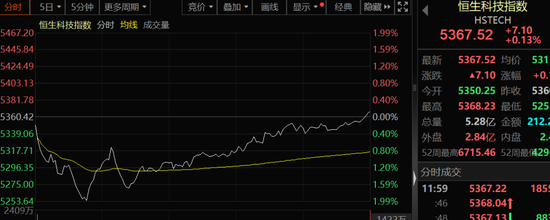
Market Overview - On February 16, the last trading day before the Spring Festival, Hong Kong stocks experienced a V-shaped rebound, with the Hang Seng Index rising by 0.52% after a drop of over 0.6% during the session [1][11] - The Hang Seng Technology Index increased by 0.13%, recovering from a decline of more than 1.9%, while the National Enterprises Index rose by 0.42% after a drop of over 0.8% [1][11] - Resource stocks led the gains, with Luoyang Molybdenum rising over 6%, and Zijin Mining and Ganfeng Lithium both increasing by over 4% [1][11] AI Application Sector - The AI application sector saw significant gains, with Haizhi Technology Group rising nearly 30%, MINIMAX-WP increasing by over 24%, and Maiyue Technology up by over 10% [3][13] - Other notable performers included Fubo Group, which rose by over 8%, and Zhipu, which increased by 4.74% [3][13] Precious Metals Sector - The precious metals sector, particularly gold stocks, showed strong performance, with Luoyang Molybdenum and Laopu Gold both rising over 6%, and Lingbao Gold increasing nearly 5% [6][16] - The international gold price rebounded above $5,000 per ounce after a significant drop the previous week [17][18] Oil and Gas Sector - The oil and gas sector also performed well, with CNOOC rising nearly 4%, and Sinopec Oilfield Services and CNOOC Services both increasing by over 2% [19][20] - The recent fluctuations in international oil prices are influenced by geopolitical tensions, particularly between the US and Iran, which have led to a premium on oil prices [20][21] Summary of Key Stocks - Notable stocks in the AI sector include: - Haizhi Technology Group: 29.59% increase [4][14] - MINIMAX-WP: 24.56% increase [4][14] - Maiyue Technology: 10.11% increase [4][14] - In the precious metals sector: - Luoyang Molybdenum: 6.35% increase [7][17] - Laopu Gold: 6.64% increase [7][17] - In the oil sector: - CNOOC: 4.21% increase [20]


大摩Q4持仓维持核心科技主线 苹果荣登榜首、指数ETF仓位下降
Zhi Tong Cai Jing· 2026-02-15 06:43
Core Insights - Morgan Stanley's Q4 holdings report indicates a strategy focused on maintaining core technology positions, reducing index exposure, and enhancing active selection capabilities [1] Group 1: Overall Holdings - Morgan Stanley's total holdings value for Q4 reached $1.67 trillion, a 1.2% increase from $1.65 trillion in the previous quarter [1] - The fund added 454 new stocks, increased positions in 4,007 stocks, reduced positions in 3,028 stocks, and completely exited 415 stocks [1] - The top ten holdings accounted for 22.15% of the total portfolio value [1] Group 2: Major Holdings - Apple (AAPL.US) became the largest holding with an increase of approximately 1.38 million shares [1] - Nvidia (NVDA.US) remained the second-largest holding with an increase of nearly 780,000 shares [1] - Microsoft (MSFT.US) dropped from first to third place but still saw an increase of about 980,000 shares [1] - Google Class A (GOOGL.US) was reduced by approximately 150,000 shares, while Google Class C (GOOG.US) was increased by 1.13 million shares, indicating a shift in stock type optimization [1] - Amazon (AMZN.US) was reduced by about 1.28 million shares, ranking fifth [1] Group 3: Sector Adjustments - In the technology sector, Meta (META.US) saw an increase of about 820,000 shares, while Tesla (TSLA.US) was reduced by 360,000 shares [2] - AMD (AMD.US) was reduced by 5.02 million shares, and Palantir (PLTR.US) was reduced by 103,000 shares [2] - Defensive and high-dividend sectors, such as healthcare and consumer staples, saw reductions in holdings, including Johnson & Johnson (JNJ.US), AbbVie (ABBV.US), and Walmart (WMT.US) [2][3] Group 4: New Positions and ETF Strategy - Morgan Stanley increased positions in JPMorgan (JPM.US), Uber (UBER.US), and gold ETF (GLD.US) [4] - New investments included Medline (MDLN.US), Total (TTE.US), Qnity Electronics (Q.US), Solstice (SOLS.US), and Dream Dragon (MICC.US) [4] - The decline in ETF positions suggests a preference for individual stock selection to achieve excess returns rather than relying on broad index exposure [5]


资金大撤离!美国关税,突生变数!140万亿资产承压,下一个风口在哪?
券商中国· 2026-02-15 05:56
Core Viewpoint - The narrative shift in the market is driven by Trump's "affordability" politics, which is reallocating funds from "Wall Street elites" to "ordinary people," leading to a rise in small-cap value stocks while tech giants face pressure [1][3]. Group 1: Economic Policies and Market Impact - Trump's administration plans to reduce certain tariffs, which have exacerbated the "affordability crisis" for American consumers and complicated cost calculations for businesses [2][3]. - The affordability crisis is causing a change in market narrative, with small-cap value stocks gaining traction and the narrative around artificial intelligence shifting from "awe" to "poverty," resulting in increased related debt [3]. Group 2: International Market Dynamics - According to a report by EPFR Global, international developed markets, including Europe and Japan, have attracted $104 billion this year, significantly surpassing the $25 billion inflow into U.S. funds, indicating a shift in investor focus [3]. - The U.S. trade policy is creating a "new world order," prompting investors to exchange U.S. assets for international ones, suggesting a transition from U.S. exceptionalism to global rebalancing [3]. Group 3: Stock Market Trends - Despite tax cuts, the S&P 500 index has lagged behind international peers, with the dollar index dropping over 10% since the end of 2024 [4]. - The current market environment is characterized by significant volatility due to the "AI disruption" affecting various sectors, including software services and logistics [4]. - The upcoming leaders in the market are expected to be emerging markets and small-cap stocks as U.S. exceptionalism gives way to global rebalancing [4]. Group 4: Investment Opportunities - After a period of intense selling, the valuation of internet companies is becoming increasingly attractive, suggesting potential investment opportunities as the market returns to a more rational pricing logic [5].


机遇与梦想,他们以这种方式“打开”中国
Zhong Guo Ji Jin Bao· 2026-02-15 05:00
【导读】"老外"在中国创业的梦想与实践故事 中国基金报记者 吴娟娟 近年来,不少外国人选择以一种更深入的方式"打开"中国——通过创业的形式进入中国市场。 有些人因留学经历与中国结缘,有些人则被中国庞大的市场潜力所吸引,决心在这里实现自己的梦想; 还有一些人是被中国的快速发展所吸引,激发了他们的好奇心。尽管他们选择创业的原因各不相同,但 似乎总有一种强大的力量促使他们在中国扎根,追寻自己的梦想。 在异国他乡创业,挑战显而易见。 然而,凭借对中国文化的浓厚兴趣、对中国市场的坚定信心,以及他们自身强大的信念和热情,这些外 国创业者踌躇满志,勇往直前。 春节前夕,记者采访了三位来华创业的外国人,了解他们在中国追梦的规划与经历。 春节后前往上海,开启创业征程 1993年,阿里·巴格切萨拉(Ali Baghchehsara)出生于一个知识分子家庭,父亲是土木工程师,母亲是 数学老师。 很小的时候,他就展现出不同寻常的一面。 在物理课本中学到"零线"和"火线"接触会导致短路时,8岁的他竟徒手将零线和火线接在一起。火花迸 发,房间的灯瞬间熄灭。他兴奋地大声喊道:"书上的物理知识是真的,妈妈!"妈妈有些生气——保险 丝被烧断了 ...

大摩Q4持仓维持核心科技主线 苹果荣登榜首、指数ETF仓位下降
美股IPO· 2026-02-15 04:09
Core Viewpoint - Morgan Stanley's Q4 2025 holdings report indicates a strategy focused on maintaining core technology positions, reducing index exposure, and enhancing active selection capabilities [1]. Group 1: Overall Holdings Summary - Morgan Stanley's total market value for Q4 is $1.67 trillion, up 1.2% from $1.65 trillion in the previous quarter [3][4]. - The fund added 454 new stocks, increased holdings in 4,007 stocks, reduced holdings in 3,028 stocks, and completely sold out of 415 stocks [3][4]. - The top ten holdings account for 22.15% of the total market value [4]. Group 2: Top Holdings and Changes - The top five holdings include Apple (AAPL) at 3.74%, NVIDIA (NVDA) at 3.6%, Microsoft (MSFT) at 3.5%, Alphabet Class A (GOOGL) at 2.28%, and Amazon (AMZN) at 2.23% [5]. - Apple has risen to the first position with an increase of approximately 1.38 million shares, while NVIDIA remains second with an increase of nearly 780,000 shares [4][6]. - Microsoft dropped from first to third but still saw an increase of about 980,000 shares [4]. Group 3: Sector Allocation and Adjustments - Morgan Stanley has not significantly reduced its allocation to the technology sector but has rebalanced internally, favoring companies with strong profit certainty and stable cash flows [7]. - The firm reduced its holdings in healthcare stocks such as Johnson & Johnson (JNJ), AbbVie (ABBV), and Thermo Fisher Scientific (TMO), as well as consumer staples like Walmart (WMT), Procter & Gamble (PG), and Coca-Cola (KO) [7]. - Energy stocks like ExxonMobil (XOM) and Chevron (CVX) were also reduced, reflecting a potential decrease in the attractiveness of defensive and high-dividend sectors as interest rate paths become clearer [8]. Group 4: New Purchases and Sales - Morgan Stanley increased positions in JPMorgan (JPM), Uber (UBER), and gold ETFs (GLD) [9]. - New purchases included Medline (MDLN), Total (TTE), Qnity Electronics (Q), Solstice (SOLS), and Dreamlong (MICC) [9]. - The top five purchases were Alphabet Class C (GOOG), Eli Lilly (LLY), Apple, Micron (MU), and Vanguard FTSE Developed Markets ETF (VEA) [10]. Group 5: ETF Exposure - The decrease in ETF positions indicates a preference for stock selection to achieve excess returns rather than relying on broad index exposure [11].





“杭州六小龙”上市新进展!群核科技IPO获证监会备案
证券时报· 2026-02-14 10:45
Group 1 - Manycore Tech Inc. (群核科技) is expected to become the first listed company among the "Hangzhou Six Little Dragons" as it progresses towards its IPO in Hong Kong [1] - The company plans to issue up to approximately 312 million shares for its overseas listing on the Hong Kong Stock Exchange [1] - Manycore Tech owns the largest spatial design platform globally, "CoolJia" and its overseas version "Coohom," along with the next-generation spatial intelligence solution platform "SpatialVerse" [3] Group 2 - The company aims to upgrade its strategy to focus on "spatial intelligence" by 2025, emphasizing three core areas: spatial editing tools, spatial data, and spatial large models [3] - As of June 30, 2025, Manycore Tech reported an adjusted net profit of 17.83 million yuan, indicating a turnaround to profitability [3] - The net proceeds from the IPO will primarily be used for international expansion, enhancing existing products, launching new products, domestic sales and marketing, investing in core technologies, and general corporate purposes [4] Group 3 - Other companies in the "Hangzhou Six Little Dragons" are also advancing their IPO processes, with Yushu Technology completing its A-share IPO guidance and Yundongchu in the guidance phase [4]

群核科技港股上市获证监会备案,拟发行不超过3.12亿股
Sou Hu Cai Jing· 2026-02-14 10:18
Core Viewpoint - Manycore Tech Inc. (群核科技) is progressing towards its IPO in Hong Kong, aiming to become the "global leader in spatial intelligence" after receiving approval from the China Securities Regulatory Commission [1][2]. Company Overview - Founded in 2011 by Huang Xiaohuang, Chen Hang, and Zhu Hao, Manycore Tech is a cloud-native spatial design software provider, with products widely used in residential, office, retail, and commercial projects [2]. - The company is part of the "Hangzhou Six Little Dragons," which includes other tech firms based in Hangzhou [1]. Financial Performance - Manycore Tech's subscription revenue reached 736 million RMB in 2024, a 14% increase year-over-year, accounting for over 97% of total revenue [4]. - The company reported a total revenue of 754.83 million RMB for 2024, up from 663.54 million RMB in 2023, reflecting an 11% growth [5]. - The gross profit margin improved from 72.7% in 2022 to 80.9% in 2024, indicating enhanced operational efficiency [5]. - As of June 30, 2025, the company achieved a revenue of 399.1 million RMB for the first half of the year, a 9% increase compared to the previous year [6]. Customer Base - Manycore Tech serves approximately 47,000 enterprise clients, with a net revenue retention rate of 102% for enterprise customers [4]. - The company also has a growing individual customer base, with over 432,800 personal clients by June 30, 2025 [4]. Investment and Funding - Manycore Tech has attracted investments from notable firms such as IDG Capital, GGV Capital, and Hillhouse Capital, among others [2]. Market Position - According to Frost & Sullivan, Manycore Tech is the largest spatial design software provider in China, holding a market share of approximately 23.2% as of 2024 [2].

AI正从美股增长引擎变成“估值粉碎机”?
财富FORTUNE· 2026-02-14 10:08
Core Viewpoint - The article discusses a significant downturn in the U.S. stock market, particularly the S&P 500 index, which fell by 1.4%, marking its largest drop since November of the previous year. This decline is attributed to fears surrounding AI's impact on various sectors, raising concerns that AI may no longer be a growth engine but rather a "valuation crusher" [1][3]. Group 1: Market Reactions - The S&P 500 index experienced a notable increase in abnormal stock fluctuations, with over 40 stocks showing deviations exceeding three standard deviations, indicating a potential collapse of market confidence [3]. - The logistics sector was heavily impacted, with C.H. Robinson experiencing an eight-fold standard deviation drop, leading to a "death spiral" of automated stop-loss orders and panic selling [3]. - Major tech companies, including Apple, Amazon, Microsoft, and Meta, were significant contributors to the index's decline, with Amazon hitting a nine-day losing streak, marking its longest since 2006 and entering a technical bear market [3][4]. Group 2: AI's Impact on Employment and Market Sentiment - A statement from Microsoft's AI CEO suggested that most white-collar jobs could be fully automated within 18 months, causing immediate market panic and a sell-off of stocks related to potentially disrupted industries [4]. - The market's fear extends to the return on investment for massive capital expenditures by tech giants, with a combined projected spending of $650 billion on AI infrastructure by Google, Meta, Microsoft, and Amazon, raising concerns about their financial health [4]. Group 3: Competitive Landscape and Pricing Power - Chinese AI companies have made significant advancements, launching competitive products that challenge the pricing and performance of existing models, which could reshape global investor expectations [5][6]. - The emergence of low-cost AI solutions, such as MiniMax's M2.5 model, threatens the pricing power of established tech giants, leading to a reevaluation of their market positions and business models [8]. - The article highlights a shift from a positive growth narrative to a negative cycle of demand shrinkage and profit contraction, as AI efficiency gains may lead to reduced overall employment [7]. Group 4: Future Market Outlook - Goldman Sachs warns that if the S&P 500 index falls below 6707 points, it could trigger systemic sell-offs amounting to $80 billion, indicating a fragile market environment [8]. - The current market situation serves as a "stress test" for business models in the AI era, determining which companies can adapt and which may struggle to maintain their competitive advantages [8].


2月第2周全球外资周观察:策略周报:节前南向资金加速流入港股
Guoxin Securities· 2026-02-14 07:50
Group 1: Northbound and Southbound Capital Flows - Northbound capital estimated net inflow of 3 billion CNY in the recent week, compared to a net outflow of 8.2 billion CNY in the previous week[1] - Southbound capital accelerated inflow into Hong Kong stocks, with a total of 26.7 billion HKD flowing into the market in the recent week[2] - Southbound capital outflow included 10.4 billion HKD from stable foreign capital and 25.1 billion HKD from flexible foreign capital[2] Group 2: Market Trends and Sector Performance - In the recent week, the top active stocks in the Northbound trading included Ningde Times with a total transaction amount of 20.4 billion CNY, accounting for 18% of the total trading amount for that stock[1] - In the Hong Kong market, significant foreign capital inflows were observed in sectors such as electrical equipment, food and beverage, and textiles[2] - In the Asia-Pacific market, Japan saw a net inflow of 248.7 billion JPY from overseas investors, while India experienced an outflow of 3.98 billion USD in January[2][3] Group 3: Global Market Insights - In December, the US equity market saw a net inflow of 32.2 billion USD from global mutual funds, up from 9.2 billion USD in the previous month[3] - European equity markets also experienced inflows, with net inflows of 1.74 billion USD, 0.97 billion USD, and 2.16 billion USD into the UK, Germany, and France respectively[3] - Cumulative net inflows into the US market since 2020 reached 723.7 billion USD[3]