石油

Search documents
天然气周报:海峡通行风险下降,原油内外价差可能修复-20260308
Guo Xin Qi Huo· 2026-03-08 01:38
1. Report Industry Investment Rating - Not provided in the report 2. Core Viewpoints - The domestic crude oil futures prices may experience high - level oscillatory adjustments in the short term. It is recommended to wait and see or focus on intraday short - term trading [52] 3. Summary by Directory 3.1 Market Review - **China INE Crude Oil Futures Main Contract Price Trend**: Data source is Boyiyun and Guoxin Futures [10][12] - **US WTI Crude Oil Futures Continuous Contract Price Trend**: Data source is Boyiyun and Guoxin Futures [13][15] 3.2 Crude Oil Supply - Demand Fundamental Analysis - **China's Crude Oil Monthly Output**: In December, China's above - scale industrial crude oil output was 17.8 million tons, a year - on - year decrease of 0.6%, with a daily output of 574,000 tons. From January to December, the output was 216.05 million tons, a year - on - year increase of 1.5%. Crude oil processing speeded up. Data source is WIND and Guoxin Futures [19][20] - **China's Crude Oil Monthly Import Volume**: In December 2025, China's crude oil import volume was 55.973 million tons, a year - on - year increase of 17%. From January to December, the cumulative import volume was 577.726 million tons, a year - on - year increase of 4.4%. Data source is WIND and Guoxin Futures [21][22] - **China's Refinery Operating Rate and Monthly Crude Oil Processing Volume**: In December, China's above - scale industrial crude oil processing volume was 62.46 million tons, a year - on - year increase of 5%, and the growth rate was 1.1 percentage points faster than that in November, with a daily processing volume of 2.015 million tons. From January to December, the processing volume was 737.59 million tons, a year - on - year increase of 4.1%. Data source is Zhuochuang Information and Guoxin Futures [24][26] - **INE Crude Oil Registered Warehouse Receipt Inventory and Downstream Refinery Product Inventory**: Data source is INE and Guoxin Futures [28][29] - **US Crude Oil Production and Downstream Refinery Operating Rate**: As of the week ending January 30, the US daily crude oil production was 13.215 million barrels, 481,000 barrels less than the previous week and 263,000 barrels less than the same period last year. The four - week average daily production as of January 30 was 13.599 million barrels, 1.3% higher than the same period last year. Since the beginning of this year, the average daily production has been 13.606 million barrels, 1.3% higher than the same period last year. Data source is Zhuochuang Information and Guoxin Futures [31][33] - **US Crude Oil Rig Count**: As of the week ending February 20, the number of active oil - drilling wells in the US was 409, the same as the previous week and 79 less than the same period last year. Data source is Zhuochuang Information and Guoxin Futures [34][36] - **US Crude Oil Inventory**: As of the week ending February 27, 2026, the total US crude oil inventory including reserves was 854.72 million barrels, an increase of 3.475 million barrels from the previous week; the commercial crude oil inventory was 439.279 million barrels, an increase of 3.475 million barrels; the gasoline inventory was 253.13 million barrels, a decrease of 1.704 million barrels; the distillate inventory was 120.78 million barrels, an increase of 429,000 barrels. The crude oil inventory in Cushing, Oklahoma was 26.463 million barrels, an increase of 1.564 million barrels. The US oil reserve remained stable at 415.441 million barrels. Data source is WIND and Guoxin Futures [38][40] - **US Crude Oil Inventory Change (EIA)**: Data source is WIND and Guoxin Futures [41][43] - **Saudi Crude Oil Production**: Data source is Zhuochuang Information and Guoxin Futures [44][46] - **OPEC Crude Oil Production**: Data source is Zhuochuang Information and Guoxin Futures [47][48] 3.3 Market Outlook - **Crude Oil Market Outlook**: The US crude oil and distillate inventories increased, while the gasoline inventory decreased last week. As of the week ending February 27, 2026, the total US crude oil inventory including reserves was 854.72 million barrels, an increase of 3.475 million barrels from the previous week; the commercial crude oil inventory was 439.279 million barrels, an increase of 3.475 million barrels; the gasoline inventory was 253.13 million barrels, a decrease of 1.704 million barrels; the distillate inventory was 120.78 million barrels, an increase of 429,000 barrels. The crude oil inventory in Cushing, Oklahoma was 26.463 million barrels, an increase of 1.564 million barrels. The US oil reserve remained stable at 415.441 million barrels. International oil prices have been rising due to armed conflicts in the Persian Gulf. On March 5, the Iranian military clarified that Iran did not block the Strait of Hormuz. Currently, Iran may mainly prevent US and Israeli - related vessels from passing. The risk of supply interruption in Asia has slightly eased. Saudi Arabia is also considering diverting its crude oil exports around the Strait of Hormuz. Data source is Zhuochuang Information and Guoxin Futures [50][51]
Rapid fuel price jump hits transportation hard
Yahoo Finance· 2026-03-08 01:30
Core Insights - Wholesale diesel prices have surged over 30% in the last week, while retail prices have increased by more than 14%, indicating a significant shift in the fuel market dynamics [2] - The recent oil market disruption is the most significant since the onset of the Russia-Ukraine conflict in early 2022 and follows OPEC's supply constraints in summer 2023 [4] - Fuel costs represent approximately 20-25% of total truckload transportation expenses, making rapid price increases a critical concern for both shippers and carriers [3] Industry Dynamics - Fuel is primarily a pass-through cost for trucking carriers, typically managed through a fuel surcharge linked to the weekly average diesel price published by the Department of Energy [5] - Many large fleets have agreements with fuel suppliers to purchase fuel in bulk at or slightly above wholesale prices, allowing them to remain competitive in a balanced market [6] - The spread between wholesale and retail diesel prices has decreased from approximately $1.02 to $0.68 per gallon, limiting carriers' ability to effectively pass on fuel costs [7]
美国考虑进一步解禁俄罗斯石油!中东断供威胁下 俄油成了香饽饽?
美股IPO· 2026-03-08 00:48
Core Viewpoint - The ongoing conflict in the Gulf region has significantly altered the dynamics of the global oil market, leading to increased demand for Russian oil, which was previously struggling due to sanctions and low prices [3][5][10]. Group 1: Impact of Gulf Conflict on Russian Oil - The recent escalation in the Gulf has transformed previously unsold Russian oil into a sought-after commodity, with the U.S. easing some sanctions to allow key buyers like India to purchase Russian crude [3][5]. - The price of oil and gas has surged, potentially providing higher profits for Russian producers, with WTI crude experiencing its largest increase since 1985 [3][6]. - Russian oil, which was previously sold at significant discounts, is now being offered at prices above the global benchmark Brent crude, indicating a reversal in market dynamics [5][8]. Group 2: Geopolitical Reactions and Economic Implications - Russian President Putin has expressed confidence in the energy sector, suggesting that Russia may halt gas supplies to Europe in response to the EU's plans to completely stop importing Russian gas [6][11]. - The conflict has led to a significant increase in oil and gas prices, with Brent crude rising nearly 30% since the onset of the conflict, which could alleviate financial pressures on the Russian economy [7][10]. - The situation has created a competitive environment for energy supplies, particularly in Asia, where countries like India, Japan, and South Korea are vying for resources, further complicating Europe's energy security [8][10]. Group 3: Market Dynamics and Supply Chain Challenges - Approximately 130 million barrels of Russian oil are currently at sea, with a portion already sold but a significant amount still awaiting buyers [9]. - The disruption in the Gulf has led to a bidding war for liquefied natural gas (LNG) between Europe and Asia, as both regions face supply challenges [10][11]. - The ongoing geopolitical tensions have made the threat of cutting off gas supplies to Europe more impactful, raising concerns about the continent's energy strategy and reliance on Russian resources [11].

暴跌94%!刚刚,霍尔木兹海峡突传大消息!
天天基金网· 2026-03-07 23:54
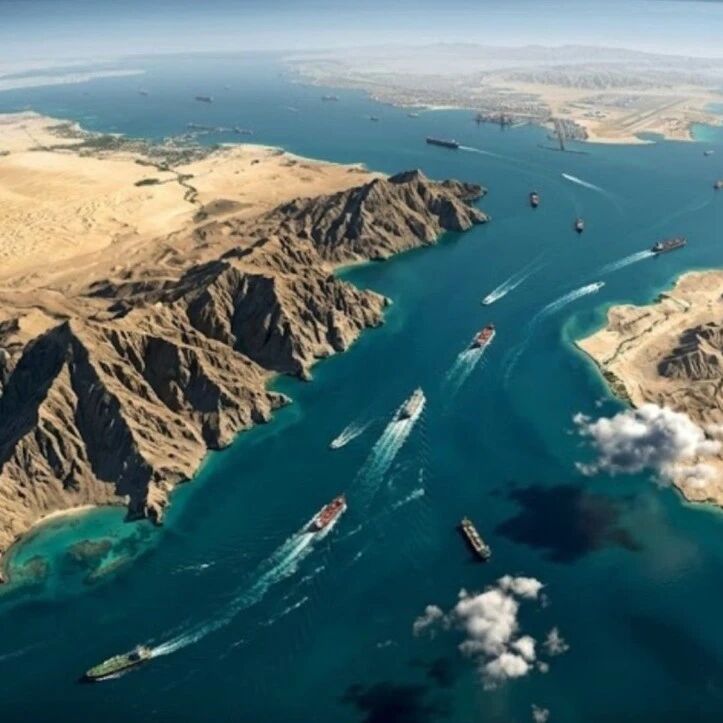
Core Viewpoint - The ongoing tensions in the Strait of Hormuz are significantly disrupting global energy markets, with oil prices expected to rise sharply if the situation does not stabilize soon [3][7]. Group 1: Current Situation in the Strait of Hormuz - The commercial traffic through the Strait of Hormuz has nearly come to a halt, with only about 6% of the historical average number of vessels passing through [5][4]. - Since the end of February, crude oil inventories have accumulated approximately 76 million barrels, with around 46 million barrels stored on tankers [5][8]. - Currently, about 411 tankers are reported to be stranded in the Persian Gulf, indicating a significant backlog in oil transportation [5]. Group 2: Oil Price Trends and Predictions - International oil prices have surged, with WTI crude futures rising by 12.21% to $90.9 per barrel, marking a weekly increase of 35.6% [5][6]. - Goldman Sachs warns that if the flow through the Strait does not normalize soon, oil prices could exceed $100 per barrel next week, and potentially reach $150 per barrel in the coming weeks [6][7]. Group 3: Factors Contributing to Price Risks - The decline in traffic through the Strait has exceeded expectations, with a 90% drop compared to the normal flow of 20 million barrels per day [8]. - The capacity for alternative pipeline routes is severely limited, with actual redirection only increasing by 0.9 million barrels per day, far below theoretical limits [8][9]. - The scale of the supply shock is unprecedented, with total disruptions in Persian Gulf oil supply reaching 17.1 million barrels per day, a 74% decrease from normal export levels [9].


高盛“撕报告”:如果霍尔木兹海峡未来几天没“如期恢复”,油价“巨大上行风险”迅速扩大!
美股IPO· 2026-03-07 16:03
Core Viewpoint - The oil price is at risk of exceeding $100 per barrel next week if there are no signs of recovery in the Strait of Hormuz flow within this week, and if the low flow continues throughout March, prices could surpass historical peaks from 2008 and 2022 [1][3]. Group 1: Reasons for Increased Oil Price Risk - Reason 1: The flow in the Strait of Hormuz has dropped significantly, with current daily flow down approximately 90% from normal levels, equating to a reduction of about 18 million barrels per day [4][5][6]. - Reason 2: The ability to redirect oil through alternative pipelines is severely limited, with actual redirection only increasing by about 0.9 million barrels per day, far below the theoretical capacity of 3.6 million barrels per day [7][8]. - Reason 3: Shipping companies are in a "wait-and-see" mode due to high physical risks in the Strait, indicating that the core issue is safety rather than economic costs [9][10]. Group 2: Supply Shock and Demand Destruction - Reason 4: The scale of the supply shock is unprecedented, with total supply disruptions in the Persian Gulf reaching 17.1 million barrels per day, which is 17 times the decline seen during the peak of Russian production cuts in April 2022 [12][13]. - The market is expected to price in "demand destruction" more rapidly than historical precedents due to the unprecedented scale of the shock and accelerated inventory consumption [13][14]. Group 3: Revision of Previous Optimistic Predictions - Goldman Sachs has revised its previous optimistic predictions, which were based on the assumption of a quick recovery in the Strait's flow, indicating that if no signs of normalization appear soon, oil price forecasts will be adjusted upwards [15][16]. - The actual flow is currently around 10% of normal levels, significantly lower than the previously assumed 15%, and the potential for rapid solutions is not guaranteed [16][17].
摩根大通:真正的油价冲击!中东原油“停产潮”即将来到
美股IPO· 2026-03-07 16:03
Core Viewpoint - The oil market is facing a significant asymmetric risk structure, with potential price fluctuations of approximately $10 downwards if diplomatic or military tensions ease, and a possible increase of $30 if production cuts spread across the Gulf region [1][5][36]. Group 1: Current Market Conditions - The ongoing situation in the Middle East is pushing the global oil market towards a real supply crisis, with the commercial shipping in the Strait of Hormuz nearly paralyzed, leading to rapid inventory accumulation [3][6]. - Goldman Sachs reports that oil flow through the Strait of Hormuz has plummeted by about 90%, indicating a potential supply shock of 17 times the peak reduction seen during Russia's cuts in April 2022 [7][5]. - Since late February, the Gulf region has accumulated approximately 76 million barrels of crude oil inventory, equivalent to about 4.5 days of the region's export volume, primarily concentrated in Saudi Arabia [9][10]. Group 2: Production Cuts and Supply Constraints - A regional "production cut wave" is approaching as some oil-producing countries are forced to reduce output due to rapidly filling storage tanks. Iraq has already cut supply by about 1.5 million barrels per day [24][23]. - Kuwait is under pressure to reduce its refinery operating rates by approximately 600,000 barrels per day, maintaining only the minimum production levels necessary for domestic consumption [25][26]. - If the current inventory accumulation continues, Kuwait may initiate upstream production cuts within four days, with the UAE also expected to signal supply constraints soon [26]. Group 3: Emergency Measures and Global Response - Various countries are preparing emergency measures in response to potential supply shocks, with Japan urging the government to consider releasing strategic oil reserves, and Thailand initiating an energy emergency plan [27][28]. - The U.S. government is currently not planning to utilize its strategic oil reserves but is evaluating multiple options, including providing insurance guarantees and naval escorts for oil tankers in the Strait of Hormuz [30][33]. - Recent adjustments in market pricing have occurred, with Russian Ural crude oil now trading at a premium to Brent for deliveries to India, reflecting the changing dynamics in the oil market [32].

美股关键指数飙升24%,专家预测油价或涨至150美元/桶
21世纪经济报道· 2026-03-07 15:20
Group 1 - The ongoing conflict between the U.S. and Iran is significantly impacting international oil prices, with reports of an Iranian attack on a Marshall Islands-flagged oil tanker, which Iran claims is a "U.S. asset" [1] - Kuwait Oil Company has implemented "preventive cuts" to oil production and refining due to the current regional situation, indicating readiness to resume normal production when conditions allow [1] - On March 6, international crude oil futures saw substantial gains, with WTI crude rising by 12.21% to $90.9 per barrel, marking a weekly increase of 35.6%, while Brent crude rose by 8.52% to $92.69 per barrel, with a weekly increase of 27.88% [1] Group 2 - The ongoing conflict has led to a decline in U.S. stock markets, with the Dow Jones down 0.95% and the Nasdaq down 1.59% on March 6, reflecting a broader trend of declines across major indices [3] - The Chicago Board Options Exchange Volatility Index (VIX) surged to its highest level since April of the previous year, reaching 29.49 points with a 24% increase, indicating heightened market volatility [3] - As the conflict escalates, Kuwait has begun reducing oil production due to rapidly depleting storage capacity, with Saudi Arabia and the UAE also nearing storage limits [4] Group 3 - Qatar has halted liquefied natural gas production, and it may take weeks to months to return to normal supply levels even if the conflict ceases immediately [4] - Energy export countries in the Gulf region may stop oil and gas production within weeks, with predictions that oil prices could soar to $150 per barrel and natural gas prices to $40 per million British thermal units if shipping through the Strait of Hormuz is disrupted [4] - Concerns are growing that without a swift resolution to military actions, the oil market could face a rapid collapse, potentially pushing prices above $150 per barrel [5]

地缘冲突过后,大类资产或如何演绎?
ZHONGTAI SECURITIES· 2026-03-07 13:57
Group 1 - The report discusses the impact of geopolitical conflicts on major asset classes, highlighting that short-term conflicts typically lead to a spike in volatility, with a dominant focus on "safe-haven trades" lasting about a month [6][9][10] - Historical examples illustrate that if military conflicts extend beyond two months, the supply gap in the oil market becomes persistent, leading to trend-like movements in safe-haven assets such as gold and U.S. Treasuries [9][10] - The report notes that prolonged conflicts can shift economic impacts from short-term supply shocks to broader global economic changes, as seen in the ongoing Russia-Ukraine conflict, which has led to significant adjustments in energy supply chains and pricing [10][12] Group 2 - The investment recommendations suggest that in the short term, the escalation of the U.S.-Iran conflict will primarily cause temporary fluctuations in the A-share market, benefiting sectors like oil and natural gas [17] - In the medium term, the core variable will be whether the conflict affects the Strait of Hormuz, leading to structural differentiation and increased volatility in the market, with beneficiaries including shipping, utilities, and military industries [17] - Long-term trends indicate that external geopolitical disturbances will not alter the A-share market's return to domestic economic fundamentals but will reinforce investment consensus on energy security, national defense, and core technology domestic substitution [17]
油价要失控?
虎嗅APP· 2026-03-07 13:30
Core Viewpoint - The article discusses the recent surge in oil prices due to geopolitical tensions in the Middle East, particularly the closure of the Strait of Hormuz, and explores the implications of potential oil price instability on global markets [2][4]. Group 1: Oil Price Dynamics - As of March 6, 2026, Brent crude oil prices reached $94.35 per barrel, nearing previous highs due to renewed conflict in the Middle East [2]. - Oil prices are not just a commodity price; they influence global inflation expectations, the Federal Reserve's policy path, and the re-pricing of global interest rates [4]. - A sustained rise in oil prices above $100 per barrel could lead to significant long-term impacts on global capital markets, transforming oil prices into a macroeconomic variable rather than just a short-term fluctuation [4][23]. Group 2: Supply and Demand Factors - Without geopolitical disruptions, oil prices struggle to maintain a sustained upward trend, as global economic slowdowns weaken oil demand growth [5][6]. - The current global oil supply is approximately 100 million barrels per day, with major producers including the U.S., Russia, and Saudi Arabia, which can quickly adjust supply in response to price changes [9][12]. - OPEC and OPEC+ play a crucial role in regulating oil supply, controlling about 45%-50% of global oil production, and have significant idle capacity to buffer against supply disruptions [12][16]. Group 3: Geopolitical Risks and Market Reactions - The ongoing conflict in the Middle East has led to supply disruptions, particularly affecting the Strait of Hormuz, through which nearly 20% of global oil consumption is transported [27]. - If the Strait remains closed, supply cuts could escalate, with predictions of forced production cuts reaching 330,000 barrels per day within a week, potentially rising to 470,000 barrels per day by the 18th day [28]. - The U.S. is considering military protection for oil tankers in the Strait, which may alleviate some market concerns regarding supply interruptions [28]. Group 4: Future Oil Price Projections - If the conflict is short-lived and the Strait reopens within two weeks, Brent crude prices are expected to fluctuate between $80 and $90 per barrel [29]. - However, if the conflict extends for 3-4 weeks, prices could exceed $100 per barrel, leading to significant market impacts across various sectors [29][30]. - The article suggests a diversified investment strategy to mitigate risks associated with potential oil price instability, focusing on sectors that may benefit from rising oil prices [30].

高盛“撕报告”:如果霍尔木兹海峡未来几天没“如期恢复”,油价“巨大上行风险”迅速扩大
华尔街见闻· 2026-03-07 10:56
Core Viewpoint - Goldman Sachs has revised its optimistic outlook on oil prices, indicating that the situation in the Strait of Hormuz is more severe than previously anticipated, with potential oil prices exceeding $100 per barrel if conditions do not improve soon [1][2][3]. Group 1: Current Situation and Predictions - The flow of oil through the Strait of Hormuz has dropped significantly, with current levels down approximately 90% from normal, equating to a reduction of about 18 million barrels per day (mb/d) [4][5]. - Goldman Sachs' previous expectation was that oil transport would recover to 70% of normal levels within two weeks, but the latest data suggests a much more dire situation [2][15]. - If the flow does not normalize soon, Goldman Sachs may revise its oil price forecasts upward, with extreme scenarios predicting prices could surpass historical peaks from 2008 and 2022 [2][16]. Group 2: Reasons for the Downward Revision - Reason 1: The actual decline in oil flow is worse than expected, with current levels at only about 10% of normal [5][15]. - Reason 2: The capacity for alternative pipeline rerouting is severely limited, with actual redirection only increasing by 0.9 mb/d, far below theoretical potential [6][7]. - Reason 3: Shipping companies are in a wait-and-see mode due to high physical risks in the Strait, rather than economic costs, which are still favorable for crossing [8][9]. - Reason 4: The scale of the supply shock is unprecedented, with total disruptions in the Persian Gulf reaching 17.1 mb/d, a figure significantly higher than previous historical declines [10][12]. Group 3: Market Uncertainty and Future Outlook - The duration of the conflict and its impact on oil flow remains uncertain, with estimates ranging from 10 days to over a month, contributing to market volatility [9]. - Goldman Sachs has outlined three potential paths for restoring flow, including a de-escalation of conflict, U.S. naval protection for tankers, and Iranian cooperation for safe passage [11][12]. - The rapid consumption of inventories and preemptive pricing of demand destruction are expected to occur before actual inventory levels hit critical lows, influenced by consumer behavior and export reductions from non-OECD countries [12][13].