
电子

Search documents
历史第二次!上证50指数,后市怎么走?
Zheng Quan Shi Bao Wang· 2026-01-24 00:35
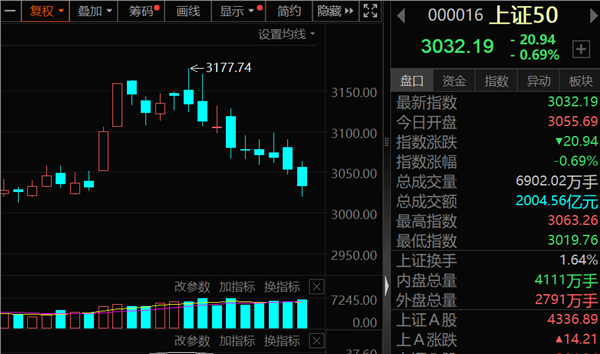
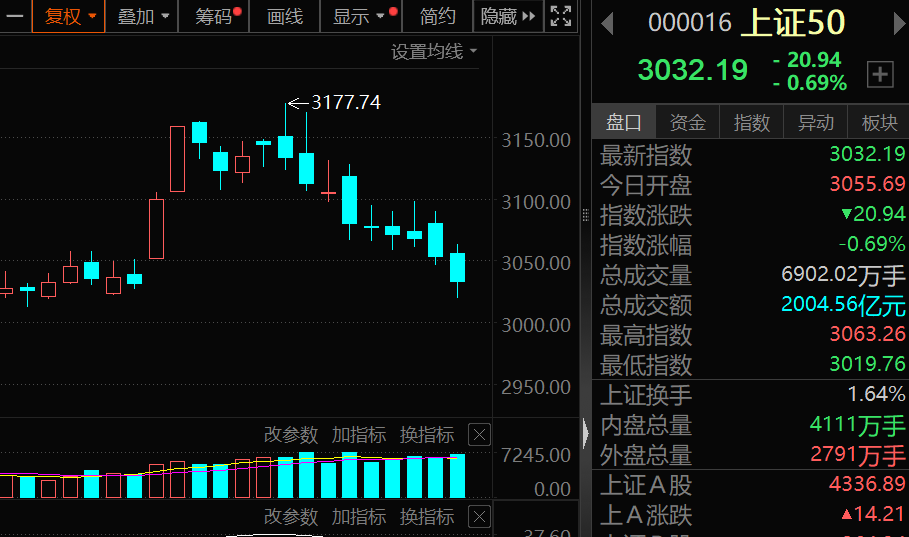
Core Viewpoint - The Shanghai 50 Index has experienced a rare nine consecutive days of decline, marking only the second occurrence in its history, with a total drop of 3.55% during this period [2][8]. Market Performance - As of January 23, the total market capitalization of the Shanghai 50 Index constituents exceeds 27 trillion yuan, accounting for over 20% of the total A-share market capitalization [2]. - The index's previous nine-day decline is compared to a similar event in 2013, which saw a cumulative drop of over 9% [2]. - The recent downturn has led to significant capital outflows from ETFs tracking the Shanghai 50 Index, with net outflows exceeding 41.9 billion yuan from January 13 to 23, primarily from the Huaxia Shanghai 50 ETF [4]. Historical Context - Historically, the Shanghai 50 Index has recorded 33 instances of consecutive declines lasting more than five days, with an average drop of nearly 8% in earlier years [6]. - The average decline during these periods has decreased over time, with the most recent occurrences since 2021 averaging a drop of 4.37% [6]. Future Outlook - Following a series of declines, there is a high probability of a rebound in the A-share market. Historical data indicates that after similar downturns, the Shanghai 50 Index has a greater than 78% chance of experiencing five or more days of gains within ten trading days [8]. - The recent nine-day decline is viewed as a result of style rotation and short-term sentiment release rather than a systemic deterioration of fundamentals [8]. Stock Performance - During the nine-day decline, over 80% of the Shanghai 50 Index constituents experienced at least five days of losses, with notable declines in stocks like Kweichow Moutai and Hengrui Medicine [10]. - Conversely, some stocks, including Langchao Technology and Zijin Mining, have shown resilience, with several companies expected to report positive earnings growth for 2025 [15][18]. - A total of 76 stocks in the electronic, power equipment, and non-ferrous metals sectors are projected to have positive earnings for 2025, with only 11 underperforming relative to the Shanghai Index's 23.4% increase since the beginning of 2025 [15].


罕见9连跌,历史第二次!上证50指数,后市怎么走?
Zheng Quan Shi Bao· 2026-01-24 00:16
最近,A股市场"冰火两重天",有色金属、国防军工、电子等行业轮番走强,而大盘蓝筹却持续阴跌。 截至1月23日,上证50指数遭遇9连跌;同期,富时中国A50期货亦走出9连跌行情;中证大盘蓝筹25指数表现同样疲软,1月12日至23日,仅有1 月15日微涨,自1月16日起,该指数6连跌。 上证50指数9连跌,历史第二次 截至1月23日,上证50指数成份股总市值超过27万亿元,占全部A股总市值比重超过两成,是大盘蓝筹板块的"晴雨表"。 复盘历史数据,上证50指数仅出现过两次9连跌,第一次发生于2013年5月29日至当年6月13日,区间累计跌幅超过9%;时隔12年,2026年1月13 日至23日的本轮调整,成为该指数历史上第二次9连跌,区间跌幅达3.55%。 伴随指数下行,跟踪上证50指数的ETF资金也大幅流出。1月13日至23日,跟踪上证50的ETF资金净流出额超过419亿元,其中华夏上证50ETF资 金净流出额接近416亿元,资金撤离迹象明显。 从历史走势来看,上证50指数共出现过33次连续5日以上(不含5日)下跌的行情。2010年及以前共11次,其间跌幅均值接近8%,其中2008年6月 3日至同年6月13日(连续 ...
特朗普政府考虑封锁古巴石油进口;原油大涨超3%,白银涨破100美元;巴西将对中国公民实施免签;特斯拉FSD将在中国获批?回应来了丨每经早参
Mei Ri Jing Ji Xin Wen· 2026-01-23 22:54
Group 1 - The U.S. CFTC released its weekly positions report, indicating market trends and investor sentiment [3] - U.S. Treasury Secretary Besant hinted at an announcement regarding the Federal Reserve Chair position around the Davos event [3] - Apple announced a price reduction of 1,000 yuan for its iPhone and other products in China from January 24 to January 27 [3] Group 2 - U.S. stock indices closed mixed, with the Dow down 0.58%, the Nasdaq up 0.28%, and the S&P 500 up 0.03% [4] - The precious metals sector saw significant gains, with silver rising over 4% and gold reaching a high of 4,990 USD per ounce [5] - European stock indices showed mixed results, with Germany's DAX up 0.18% and France's CAC40 down 0.07% [6] Group 3 - China's banking wealth management market reached a scale of 33.29 trillion yuan by the end of 2025, growing 11.15% from the beginning of the year [11] - The China Securities Regulatory Commission announced new guidelines for public fund performance benchmarks to enhance transparency and accountability [10] - The National Energy Administration projected that the national electricity market transaction volume would reach 6.6 trillion kWh by 2025, a year-on-year increase of 7.4% [14] Group 4 - The Chinese Ministry of Commerce held a roundtable with British-funded enterprises to explore new growth points in bilateral economic and trade relations [9] - Tesla's Full Self-Driving system is expected to receive approval in China soon, although reports of its imminent approval were deemed inaccurate [20] - Li Auto plans to close some low-efficiency stores to improve overall operational efficiency and focus on core markets [31]


12月份,泰工业领域信心出现了下降
Shang Wu Bu Wang Zhan· 2026-01-23 16:30
Group 1 - The industrial confidence index in Thailand dropped to 88.2 points in December from 89.1 points in November, due to concerns over the impact of the upcoming elections and a sharp decline in border trade with Cambodia and Myanmar [1] - The Thai government, led by Anutin, decided to dissolve the parliament after only 2.5 months of operation, disrupting various economic policies and delaying the second phase of the 'Khon La Khrueng Plus' co-payment scheme until a new government is formed [1] - The FTI chairman noted that the economic slowdown of major trading partners has reduced consumer purchasing power, leading to an unfavorable export outlook, while the government has failed to implement any economic stimulus measures [1] Group 2 - Concerns were raised by manufacturers regarding a climate change bill passed by the cabinet in early December, which proposes a carbon tax on certain products to support Thailand's goal of achieving net-zero emissions by 2050, 15 years earlier than previously committed [2] - The bill is expected to impact at least 14 industries, including steel, agribusiness, food processing, and electronics, and still requires parliamentary approval [2] - A TISI survey conducted in December revealed that the main concerns of 1,330 entrepreneurs included domestic economic conditions (62.8%), global economic developments (57.4%), exchange rate trends (50.4%), and energy prices (28.6%), while concerns about government policies (40.3%) and credit access (25.3%) were comparatively lower [2]
量化基本面系列之三:业绩预告与行业表现呈现分化
GF SECURITIES· 2026-01-23 15:38
[Table_Page] 金融工程|量化投资专题 2026 年 1 月 23 日 证券研究报告 [Table_Title] 业绩预告与行业表现呈现分化 量化基本面系列之三 [Table_Summary] 报告摘要: (如无特别说明,本文数据均来源于 wind,数据截至 2026/01/23) 2025 年业绩预告披露类型 | 业绩预告类型 | 公司数量 | 占比 | | --- | --- | --- | | 不确定 | 5 | 0.7% | | 扭亏 | 58 | 8.1% | | 略减 | 17 | 2.4% | | 略增 | 45 | 6.3% | | 续亏 | 247 | 34.4% | | 续盈 | 6 | 0.8% | | 预减 | 64 | 8.9% | | 预增 | 180 | 25.1% | | 首亏 | 95 | 13.2% | | 积极 | 289 | 40.3% | 数据来源:Wind,广发证券发展研究中心 2025 年业绩预告/快报/正式财报 | | 业绩预告/快报/ | 业绩预告/快报/ | 归母净利润 | | --- | --- | --- | --- | | 申万一级行业 | ...
公募基金资金流向哪些行业?:主动权益基金2025 四季度持仓解析
ZHONGTAI SECURITIES· 2026-01-23 15:35
- The report does not contain any quantitative models or factors for analysis, as it primarily focuses on the analysis of active equity funds' holdings, preferences, and structural changes in Q4 2025[3][6][7] - The report provides detailed insights into the number, scale, and allocation preferences of active equity funds, including their industry and sectoral adjustments, but does not include any specific quantitative models or factor construction methodologies[3][6][7] - The analysis highlights the changes in fund holdings and preferences, such as increased allocation to cyclical and financial sectors and reduced allocation to technology and healthcare, but no quantitative models or factors are discussed[44][48][49]






AI与消费电子抢产能-LowCTE布紧缺加剧-国产厂商迎来黄金窗口期
2026-01-23 15:35
Summary of Conference Call Notes Industry Overview - The conference call discusses the semiconductor and electronic materials industry, particularly focusing on the supply chain dynamics of T glass fiber cloth and CTE (Coefficient of Thermal Expansion) materials, driven by the surge in AI chip demand and competition among major tech companies like Apple, NVIDIA, and AMD [1][3][5]. Key Points and Arguments - **Supply Shortage of T Glass Fiber Cloth**: The demand for T glass fiber cloth has surged due to its applications in IC substrates and advanced packaging, particularly for AI chips and consumer electronics. This has led to a supply shortage, impacting major clients like Apple [3][4]. - **Increased Capital Expenditure by TSMC**: TSMC has raised its capital expenditure from $41 billion to nearly $56 billion, indicating a significant capacity increase expected in 2026, which will help meet high-performance computing demands [7]. - **CTP Market Imbalance**: The CTP (Carrier Tape) market is experiencing a supply-demand mismatch, with lead times for suppliers like Honghe Technology extending from 3 months to 6 months. This imbalance is expected to persist in the short term [8]. - **Future CTP Market Conditions**: The CTP cloth market is projected to remain tight in 2026, with limited incremental supply from major suppliers. Demand from sectors like servers and major tech companies is expected to continue outpacing supply, leading to ongoing shortages and price increases [9]. - **Key Suppliers in CTE Market**: Major suppliers in the CTE cloth market include Zhongtai Technology and Honghe Technology. Honghe has rapidly increased its CTE capacity, becoming a significant supplier in the aerospace sector [10]. - **Emerging Materials and Trends**: The conference highlights the anticipated growth of second-generation cloth driven by Google's VT machine solutions and Ruby architecture, with Q cloth expected to be launched on a large scale in 2027. Emerging materials like copper foil are also noted as areas of interest [2][11]. - **Price Increases in CTP Cloth**: Price increases in CTP cloth have been observed, with Japanese clients raising prices by 20% since January. This trend is likely to influence domestic manufacturers to adjust their pricing in response to strong demand and limited supply [13]. Additional Important Insights - **Competition Among Major Tech Firms**: The competition between top consumer electronics manufacturers and AI chip producers is intensifying, as companies like NVIDIA and Apple take measures to secure their supply chains [4][5]. - **Potential New Suppliers**: The entry of new suppliers into the market, such as Dongcai Technology and Honghe Technology, is being monitored to address the ongoing demand growth and supply constraints [6]. - **Future Growth Expectations for Zhongtai and Hongteng**: Zhongtai Technology is expected to enter a phase of healthy growth across its business segments, while Hongteng is projected to achieve significant production increases and profitability in the coming years [12].
招商红利量化选股混合A:2025年第四季度利润612.81万元 净值增长率3.55%
Sou Hu Cai Jing· 2026-01-23 15:21
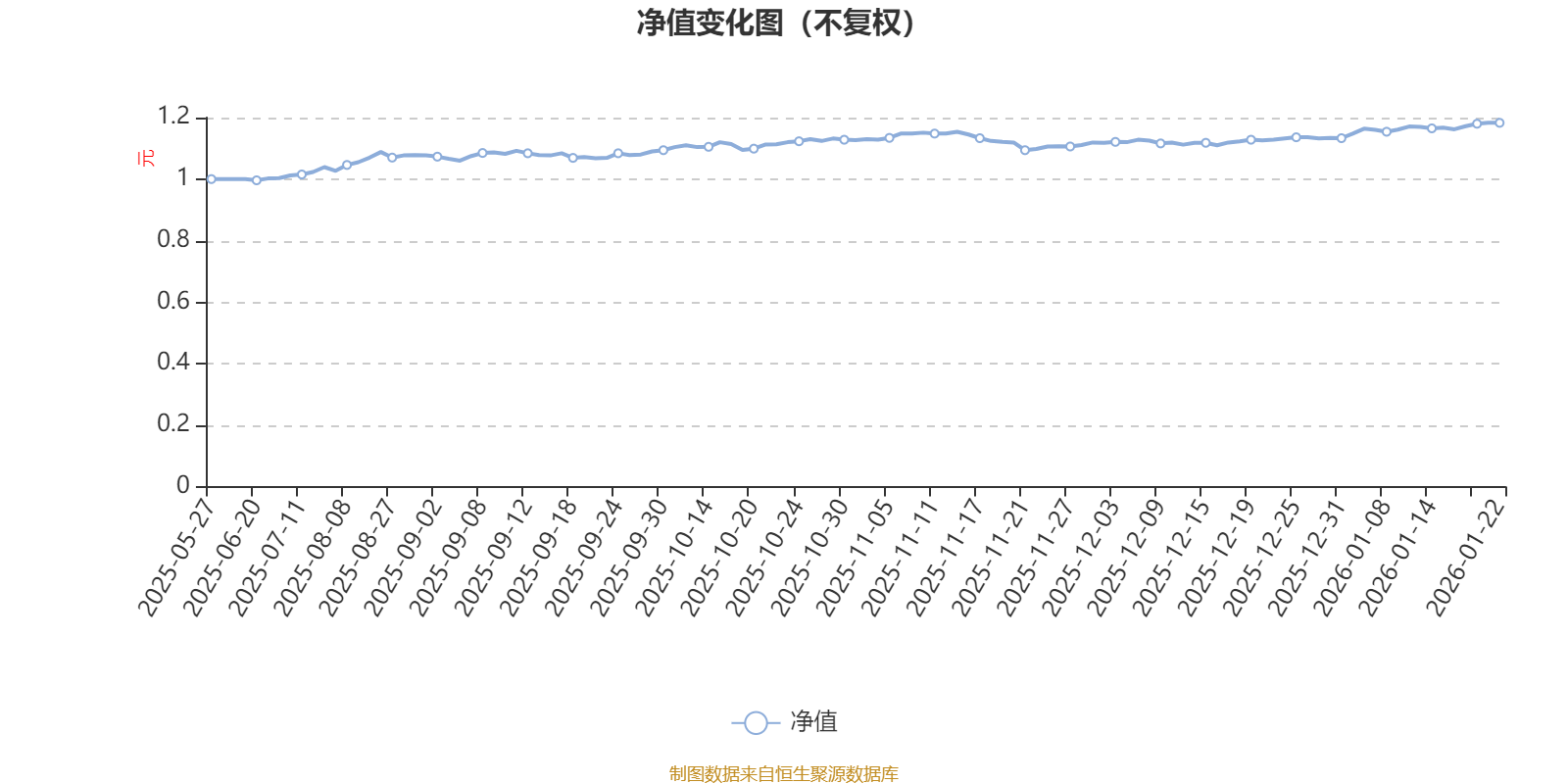
Group 1 - The core viewpoint of the article highlights the performance of the AI Fund, which reported a profit of 6.1281 million yuan in the fourth quarter of 2025, with a net value growth rate of 3.55% [3] - As of January 22, the fund's unit net value stands at 1.183 yuan, and the fund manager, Cai Zhen, oversees 13 funds [3] - The highest one-year return among the funds managed is 54.44% for the Zhaoshang CSI 1000 Enhanced Strategy ETF, while the lowest is 5.32% for Zhaoshang Anyang Bond A [3] Group 2 - The fund management indicated that the highest weight in their portfolio is in the banking sector, with a strategy to keep the allocation to the CSI Dividend Index below 3% [4] - The fund is currently overweight in the machinery and electronics sectors, while underweight in transportation and coal, based on growth potential considerations [4] - The top ten holdings of the fund as of the end of the fourth quarter of 2025 include BOE Technology Group, Sany Heavy Industry, Hikvision, Jiangsu Bank, Shanghai Bank, CRRC Corporation, Haier Smart Home, Ping An Insurance, Weichai Power, and Shanghai Rural Commercial Bank [4]
策略专题研究:人民币升值下的行业机会
Guolian Minsheng Securities· 2026-01-23 12:58
人民币升值下的行业机会 ——策略专题研究 分析师:邓宇林、包承超 研究助理:龚嫣然 报告日期:2026年1月23日 证券研究报告 * 请务必阅读最后一页免责声明 02 摘要 ➢ 风险提示:1)全球地缘政治出现重大变化,导致全球市场风险偏好急剧变化。2)市场流动性超预期变化。3)历史数据不代表未来。 证券研究报告 * 请务必阅读最后一页免责声明 1 ➢ 1、人民币升值对于A股有何影响?——在人民币升值周期内,无论人民币是否为被动升值,全A指数普遍呈现上行趋势。行业上,人 民币升值对于多数行业股价均有正向影响,其中钢铁、房地产、轻工和交运等行业靠前。风格上,多数区间成长风格强于价值风格, 大盘和小盘之间无明显占优风格。 ➢ 2、如何寻找人民币升值下的行业机会?——基本面视角。直接来看,人民币升值会降低原材料成本和债务成本,间接来看,人民币升 值会提升人民币购买力。1)进口依赖度高且海外营收占比相对较低的行业,人民币升值或能降低原材料成本,如有色、钢铁、煤炭和 农林牧渔。2)美元借款体量大的行业,人民币升值或能降低债务成本,如电子、交运、建筑装饰和家电。3)对于可选消费行业,人 民币升值或能带动业绩增长。 ➢ 3、 ...
2025Q4基金仓位解析:四季度基金调仓五大看点
GOLDEN SUN SECURITIES· 2026-01-23 12:56
投资策略 四季度基金调仓五大看点——2025Q4 基金仓位解析 1、总体配置:规模回落,仓位调降 2025 年四季度,主动偏股型基金规模小幅回落,其中持股市值规模回落 5.21%至 33843.12 亿元,基金资产总规模回落 3.63%至 40191.1 亿元,流通市值占比也由 2025 年三季度的 3.72%降至 3.44%。与此同时,权益仓位有所下修,其中整体法 视角下的权益仓位降低 1.40%,达到 84.21%;均值法视角下的权益仓位环比下行 0.99%,达到 82.19%。 2、2025 年四季度基金调仓五大看点: 看点 1:整体规模波动收窄,赎回压力转弱。2025 年四季度,市场整体维持高位 震荡,净值波动对基金规模的影响较三季度明显减弱。与此同时,经历了三季度浮 亏转正导致的大幅赎回后,四季度的基金赎回压力已明显转弱,估算结果显示四 季度的赎回拖累幅度较三季度大致环比减半。总体看,四季度基金赎回压力边际 转弱,叠加净值波动收窄,整体规模仅小幅回落。 证券研究报告 | 策略报告 gszqdatemark 2026 01 23 年 月 日 看点 2:创业板获集中加仓,刷新 2017 年以来的新高。2 ...

