半导体

Search documents
美国撤回AI芯片出口新规,全球算力“守门人”计划搁浅
制裁名单· 2026-03-13 23:47
Core Viewpoint - The U.S. Department of Commerce has officially withdrawn the controversial "AI Action Plan Implementation" rule, which aimed to shift AI chip export controls from "country-specific restrictions" to a "global licensing system," marking a significant setback for the Trump administration's efforts to reshape the global AI chip supply chain [1]. Group 1: Policy Shift - The rule was initially posted on February 26 and was in "pending review" status, but was formally withdrawn on March 13, just a day after the review deadline [2]. - The withdrawal is seen as part of a broader internal policy adjustment within the Trump administration, which had previously promised a "simplified" set of rules to replace the complex export framework established by the Biden administration [2]. Group 2: Proposed Global Gatekeeper Mechanism - The withdrawn rule aimed to position the U.S. as the "ultimate gatekeeper" of global AI computing power, expanding export controls to all countries rather than just around 40 [3]. - The proposed "tiered approval" mechanism included different requirements based on the scale of deployment: - Small deployments (<1,000 chips) would have a simplified review process and potential exemptions [4]. - Medium to large clusters (>1,000 chips) would require pre-approval and could face commercial model disclosures or on-site inspections [5]. - Large-scale deployments (>200,000 chips) would necessitate government involvement from the buyer's country, with approvals granted only to allies making "reciprocal investments" in the U.S. AI sector [6]. Group 3: Internal Conflicts and Market Reactions - Analysts suggest the withdrawal may stem from significant internal divisions within the U.S. government, particularly between the White House and the Department of Commerce [8]. - Pressure from the industry, particularly from major chip companies like NVIDIA and AMD, contributed to the withdrawal, as their stock prices fell following the announcement of the proposed rule [9]. - The inclusion of close allies in a strict approval system could strain diplomatic relations, conflicting with the Trump administration's "America First" strategy [10]. Group 4: Impact on the Global AI Industry - The withdrawal alleviates immediate tensions in the global AI industry, allowing it to return to a more familiar regulatory framework under the Biden administration [11]. - However, uncertainties remain as the Trump administration continues to seek a new export control framework that balances national security and commercial interests [11]. - For China, the withdrawal does not signify a relaxation of restrictions, as it remains on the "blacklist," and previous approvals for exports of advanced chips to China are still on hold [11].


比金价油价疯狂100倍!4万块一根的内存条,到底在割谁的韭菜?
电动车公社· 2026-03-13 16:05
Core Viewpoint - The article discusses the significant price increase in memory chips, which has affected various industries, including smartphones, computers, and automobiles, due to rising demand driven by AI developments and supply chain constraints [1][4][8]. Group 1: Memory Price Surge - The smartphone market has seen a collective price increase across multiple brands, with higher memory models experiencing the most significant hikes [1]. - In the computer sector, memory prices have skyrocketed, with high-end server memory reaching prices as high as 42,000 yuan (approximately 4.2 million) [4]. - The automotive industry is also feeling the impact, with memory price increases adding thousands of yuan to vehicle production costs [8]. Group 2: AI and Memory Demand - The surge in memory prices is linked to the growing demand for AI technologies, as companies like OpenAI are investing heavily in AI infrastructure [10][14]. - OpenAI's ambitious project, "Star Gate," aims to build ten super AI data centers with a total investment of $500 billion, significantly increasing the demand for memory chips [14][18]. - The memory required for AI applications is prioritized over consumer-grade memory, leading to a shortage in the latter [39][40]. Group 3: Supply Chain Challenges - Major memory manufacturers like Samsung and SK Hynix have reported that their production capacities for memory chips are fully booked until 2026, focusing on high-margin server memory [35][39]. - The current memory supply chain is strained, with manufacturers unable to meet the surging demand from AI projects, leading to inflated prices for consumer memory products [38][40]. - Despite the high demand and prices, manufacturers are cautious about expanding production due to the significant investment and time required to set up new production lines [46][48]. Group 4: Historical Context and Market Dynamics - The memory market has a history of cyclical price fluctuations, influenced by technological advancements and economic conditions [52][66]. - Past events, such as the 1997 Asian financial crisis and the 2008 global financial crisis, have shown how aggressive expansion by companies like Samsung can lead to market oversupply and subsequent price crashes [56][65]. - The current market dynamics suggest that the leading memory manufacturers are reluctant to expand production aggressively, possibly to avoid repeating past mistakes and to maintain high profit margins [66][72]. Group 5: Future Implications - The article raises concerns about the sustainability of the current AI investment boom, suggesting that many AI projects may not yield profitable returns, leading to potential market corrections [108][114]. - The potential for an AI bubble is highlighted, with warnings from industry leaders about the risks associated with over-investment in AI technologies [75][114]. - The future of AI and its impact on productivity and wealth distribution remains uncertain, with the possibility of either significant advancements or severe economic consequences [120][122].





半导体精品公众号推荐!
国芯网· 2026-03-13 14:01
Core Viewpoint - The article emphasizes the importance of focusing on high-quality information sources in the fragmented era of the semiconductor industry, suggesting that professionals should streamline their information intake to enhance efficiency and effectiveness. Group 1: Information Sources - The article recommends following five specific WeChat public accounts dedicated to semiconductor technology and industry insights, which are crucial for professionals in the field [1][3][5][7][9]. - It highlights that the "Global Electronic Market" public account has garnered attention from 500,000 industry professionals, indicating its significance as a resource [5]. - The "Semiconductor Industry Alliance" and "Semiconductor Full Industry Chain Alliance" are also mentioned as valuable platforms for industry networking and information sharing [9][11]. Group 2: Community Engagement - The article notes the existence of a WeChat group with 80,000 members, which is open for free access, promoting community engagement among semiconductor professionals [12]. - It provides a step-by-step guide for joining the WeChat group, emphasizing the ease of access to a larger network of industry peers [13][15].
板块内部分化,电子化学品表现优异
Yin He Zheng Quan· 2026-03-13 13:56
Investment Rating - The report maintains a "Recommended" rating for the electronic industry [1] Core Insights - The electronic sector is experiencing structural differentiation, with electronic chemicals performing exceptionally well [1] - The semiconductor equipment sector has seen a significant pullback, but the long-term outlook remains positive due to high industry demand [3] - The semiconductor materials and electronic chemicals sectors show strong resilience, driven by rising prices in storage chips and strategic value in upstream materials [3] - The integrated circuit packaging and testing sector has a negative performance this week, but expansion expectations remain unchanged [3] - The analog chip design sector has shown excellent performance, with major companies planning to raise prices, indicating a structural recovery [3] - The digital chip design sector has faced a decline, but upcoming product launches from major companies may act as a catalyst for growth [3] Summary by Sections Semiconductor Equipment - The sector has experienced a notable pullback, but the long-term growth logic remains strong, supported by stable performance expectations from domestic semiconductor equipment companies [3] Semiconductor Materials & Electronic Chemicals - This sector has demonstrated strong resilience, with strategic value highlighted by recent price increases from major electronic materials companies [3] Integrated Circuit Packaging and Testing - Despite a decline in performance, expansion plans for packaging and testing firms remain intact, with new facilities expected to enhance capabilities [3] Analog Chip Design - The sector has performed well, with price increases anticipated from leading companies, indicating a healthy recovery driven by demand in AI data centers [3] Digital Chip Design - The sector has seen a decline, but upcoming product launches are expected to provide a boost, with a shift towards inference computing in AI infrastructure [3] Investment Recommendations - The report suggests focusing on companies such as Cambrian, Haiguang Information, Zhongwei Company, Northern Huachuang, Tuojing Technology, Anji Technology, Dinglong Co., and Changdian Technology due to their strong positioning in the market [3]
电装向罗姆提出收购要约
36氪· 2026-03-13 13:35
Group 1 - Denso has made a tender offer to acquire all shares of semiconductor giant Rohm, with an estimated acquisition amount of 1.3 trillion yen, aiming to strengthen its position in the power semiconductor sector for electric vehicles (EVs) and data centers [4][5] - The acquisition reflects a shift from collaboration to consolidation in the semiconductor industry, as Japanese companies face overcapacity amid rising competition from Chinese firms [5][6] - Rohm is projected to report a loss of 50 billion yen for the fiscal year 2024, marking its first loss in 12 years, while it aims to return to profitability with an expected profit of 10 billion yen in fiscal year 2025 [6][7] Group 2 - Denso is pursuing a vertical integration strategy in semiconductor design and production, focusing on next-generation power semiconductors and those for autonomous vehicles [6][7] - The relationship between Rohm and Toshiba has been strained due to differing strategic directions, which Denso may leverage to facilitate the acquisition [6][7] - The importance of semiconductors in automotive applications is increasing, particularly for controlling essential functions and enhancing vehicle intelligence and electrification [7]

国民技术(02701):IPO申购指南
Guoyuan Securities2· 2026-03-13 13:35
Investment Rating - The report suggests a cautious subscription for the company [2]. Core Insights - The company is a platform-based integrated circuit design firm focused on providing control chips and system solutions for various smart terminals. It also operates in the lithium battery anode materials business, which diversifies its business model and drives revenue growth [2]. - According to data from Zhaoshang Consulting, the company ranks among the top three Chinese enterprises in the global 32-bit platform MCU market based on 2024 revenue. It holds the first position in the Chinese MCU market for built-in commercial encryption algorithm modules [2]. - The global MCU market is projected to grow from USD 19.8 billion in 2019 to USD 29.9 billion in 2024, with a compound annual growth rate (CAGR) of 8.6%. It is expected to continue growing at a CAGR of 9.9%, reaching USD 48.0 billion by 2029. Additionally, the shipment volume of lithium battery anode materials in China is expected to increase significantly from 0.3 million tons in 2019 to 2.1 million tons in 2024, with a CAGR of 47.6%, and is projected to reach 4.6 million tons by 2029 [2]. Financial Performance - The company's revenue remained relatively stable at RMB 1,195.4 million in 2022, RMB 1,036.8 million in 2023, and RMB 1,167.6 million in 2024. The gross profit decreased from RMB 426.0 million in 2022 to RMB 18.0 million in 2023, rebounding to RMB 182.4 million in 2024. The annual loss increased from RMB 18.9 million in 2022 to RMB 594.0 million in 2023, but was successfully narrowed by 56.9% to RMB 255.7 million in 2024 [3]. - The company's IPO price is set at HKD 10.8 per share, which is approximately 43% of the A-share closing price of RMB 22 per share on March 12, 2026, indicating a certain margin of safety in valuation. Considering market volatility and the company's profitability not yet turning positive, a cautious subscription is recommended [3].
'Temporary' oil spike still complicates Fed's rate path as inflation remains too high: Torsten Slok
Youtube· 2026-03-13 10:53
Economic Outlook - The US economy is currently experiencing three significant growth tailwinds: increased AI spending, an industrial renaissance focused on reshoring production, and government spending due to lower corporate and household taxes [1] - Inflation remains a challenge, currently at around 3%, which is above the Federal Reserve's target of 2%, complicating monetary policy [1] Oil Prices and Inflation - The rise in oil prices from $65 to $100 per barrel is projected to increase headline inflation by 0.7%, creating additional pressure on the Federal Reserve to adjust interest rates [1] - The national average price of gasoline has surpassed $3.50 per gallon, potentially posing a political issue for the current administration ahead of midterm elections [1] Global Trade and Energy Supply - The Strait of Hormuz is critical for global trade, and its current blockage is affecting the flow of goods, including essential inputs for various industries such as fertilizers and green energy [4][5] - The US, as a net oil exporter, may benefit from rising oil prices, while many other countries, particularly in Europe, are facing increased costs as net oil importers [3][4] - The disruption in LNG supply is particularly concerning for Europe, India, and parts of Asia, which rely heavily on natural gas, potentially leading to depleted reserves and economic risks [6][7]
印度芯片,起飞?
半导体芯闻· 2026-03-13 10:12
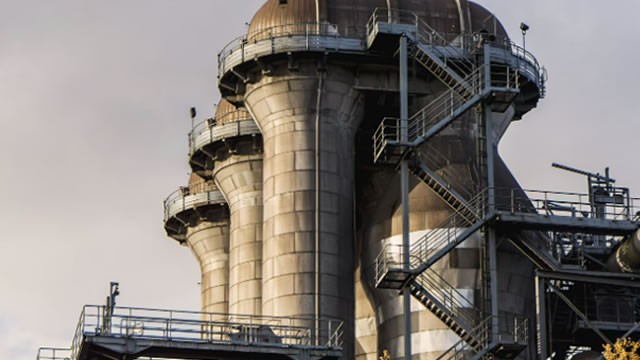
Core Viewpoint - The Indian semiconductor ecosystem is undergoing significant transformation, with expectations to reach a chip production capacity of 75 to 80 million units per day by the end of this year or early next year, driven by multiple semiconductor initiatives [1]. Group 1: Current Production and Facilities - Current activities in India are primarily focused on chip assembly and testing rather than wafer manufacturing, with Micron Technology's facility operating as an ATMP (Assembly, Testing, Marking, and Packaging) plant [2]. - Micron's facility will produce memory chips such as DRAM, NAND, and SSD, which are in high demand across various industries, including AI, smartphones, laptops, and automotive sectors [2]. - The initial chips produced will mainly fall within the 14nm to 28nm range, with wafers still being sourced from abroad [2]. Group 2: Upcoming Plans and Capacity - Kaynes Technology plans to assemble advanced power modules, including IGBT and other power components, and manufacture printed circuit boards for electronics, serving industries like automotive and defense [3]. - Tata Electronics is preparing to operate an OSAT facility in Assam, focusing on power components and multi-chip modules for industrial and automotive applications, with a potential capacity exceeding 50 million units per day [3]. - CG Power's semiconductor initiative will concentrate on integrated circuits for industrial and automotive applications, with a phased implementation aiming for a capacity of approximately 15 million units per day [3].
HBM,形势严峻
半导体芯闻· 2026-03-13 10:12
Core Insights - Meta has developed its own AI chips and plans to release a new chip every six months, but faces challenges in securing high bandwidth memory (HBM) due to ongoing supply shortages [1][2] - The company is negotiating long-term contracts with memory semiconductor firms to ensure a stable supply of HBM and other components necessary for its AI chips [1][3] - The demand for HBM is diversifying as companies like Google and Amazon move away from reliance on general-purpose AI chip suppliers, increasing the need for specialized integrated circuits (ASICs) [2] Group 1 - Meta's MTIA 300 chip integrates 216GB of HBM memory, while the upcoming MTIA 400 is expected to feature 288GB [1] - The bandwidth of the MTIA 450 is projected to double, and the MTIA 500 is expected to have a 50% increase in bandwidth compared to its predecessor [1] - The supply of HBM is constrained as major manufacturers like Samsung, SK Hynix, and Micron have limited capacity and existing contracts with companies like NVIDIA and AMD [2][3] Group 2 - The traditional DRAM shortage is severe, and HBM production capacity remains limited, complicating Meta's efforts to secure necessary supplies for large-scale AI chip production [3] - The increasing demand for HBM from a growing customer base, including Meta, is not being met by supply, posing challenges for memory manufacturers [2]
芯海实控人,股权被冻结
半导体芯闻· 2026-03-13 10:12
Core Viewpoint - The announcement from Chipsea Technology indicates that the shares held by the controlling shareholder, Lu Guojian, have been judicially frozen due to a dispute involving a former employee, Qiao Aiguo, which is unrelated to the company's operations [2][3]. Group 1: Shareholder Information - Lu Guojian holds 670,055 shares that are frozen, representing 1.68% of his total holdings and 0.47% of the company's total share capital [2]. - The freezing of shares is a result of a property preservation application made by Qiao Aiguo regarding a partnership dispute, and the shares will remain frozen from January 13, 2026, to January 12, 2029 [2][3]. Group 2: Impact on the Company - The frozen shares constitute a small percentage of Lu Guojian's total holdings and the company's total share capital, indicating that this event will not affect the company's control [3]. - There are no indications of non-operational fund occupation or illegal guarantees that would harm the company's interests, and the company does not foresee any impact on its daily operations [3]. Group 3: Background on Qiao Aiguo - Qiao Aiguo has a history of working in integrated circuit design, having held positions at various companies before joining Chipsea Technology in February 2009, where he served in multiple engineering roles [4].