咖啡

Search documents
X @外汇交易员
外汇交易员· 2025-08-22 07:15
刚刚星巴克中国业务股权出售再传进展。路透社引述消息报道,星巴克已要求一批入围的潜在竞标者(多达10家)在未来两周内提交对其中国业务股权的非约束性投标。消息称,星巴克自去年下半年以来已与一系列潜在买家进行了非正式谈判,并计划在年底前达成协议。目前星巴克尚未确定出手结构和股权规模,CEO Brian Niccol表示星巴克仍会致力于中国业务,希望保留有意义的股份。外汇交易员 (@myfxtrader):彭博:星巴克已对其中国业务可能引入的投资者进行了筛选,包括私募股权公司和科技公司在内的十几家公司入围第二轮。包括博裕、凯雷投资集团、殷拓、方源资本、KKR、高瓴和春华资本在内的一些私募股权公司,京东集团和腾讯控股均受邀参与。 ...
香港青年湾区创业:精品咖啡小品牌拓出大机遇
Xin Lang Cai Jing· 2025-08-22 03:48
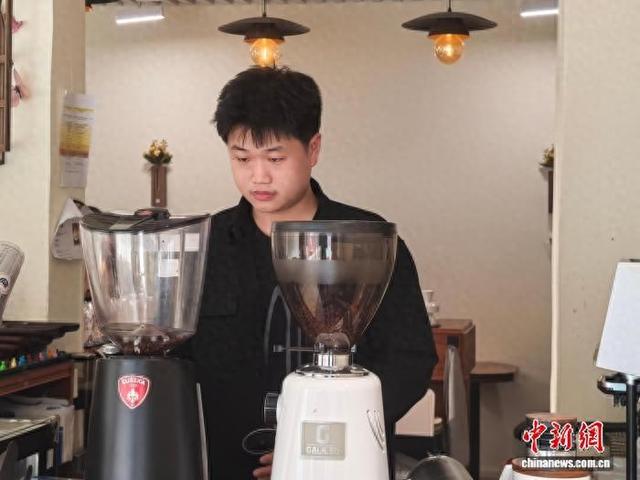
Core Viewpoint - The article highlights the entrepreneurial opportunities for Hong Kong youth in the Guangdong-Hong Kong-Macao Greater Bay Area, particularly through the establishment of a specialty coffee brand that has gained significant traction in the market [1][3]. Company Overview - The coffee shop, founded by Hong Kong youth Liang Haosi, operates under a unique interactive model where customers select coffee beans before choosing their drinks, enhancing the consumer experience [1][3]. - The brand emphasizes a philosophy of "natural, healthy, and sustainable," integrating Hong Kong flavors into its coffee and dessert offerings, showcasing an innovative approach to entrepreneurship in the region [3][6]. Market Potential - The Greater Bay Area is identified as a vast consumer market, providing unprecedented development opportunities for Hong Kong youth entrepreneurs [3]. - The coffee shop achieved a record of over 800 customer visits in a single day, indicating strong market demand and consumer interest [3]. Business Growth - Within a year, the coffee shop has expanded into a regional chain, opening multiple locations in cities like Guangzhou and Zhongshan, demonstrating rapid growth and scalability [6]. - The company utilizes AI systems for real-time data collection on production and equipment status, indicating a commitment to smart management practices [6]. Competitive Advantage - The establishment of direct sourcing channels for coffee beans and the creation of an in-house roasting facility have provided the brand with a differentiated competitive edge in the market [6].


星巴克基金会五年累投善款超4100万
Chang Jiang Shang Bao· 2025-08-22 00:05
Core Insights - The Beijing Starbucks Public Welfare Foundation celebrated its fifth anniversary, having invested over 41 million yuan in public welfare projects, benefiting approximately 200,000 people [1] - The foundation's first project, "Zhanxin Plan," will receive an additional donation of 2.4 million yuan over the next three years to support employment opportunities for youth with intellectual disabilities [1][2] - The foundation has established a comprehensive public welfare network that spans rural and urban areas, focusing on community development and cultural heritage [1][3] Summary by Sections - **Zhanxin Plan**: The second phase of the Zhanxin Plan will collaborate with the Haidian District Family Support Center for Individuals with Intellectual Disabilities, aiming to enhance the "school-enterprise-community-government" collaborative system and develop training courses for coffee and pastry chefs [2] - **Community Impact**: The "Future Star Community" project has reached over 200 communities, engaging more than 300,000 residents in local public welfare activities, while the "Star Embroidery Future" project has empowered 1,350 rural women [2] - **Future Plans**: The foundation aims to continue its long-term commitment to high-quality public welfare projects, creating professional and replicable models to support community prosperity in both rural and urban settings [3]

在澳大利亚体验清晨“咖啡狂欢”
Huan Qiu Shi Bao· 2025-08-21 22:47
Core Viewpoint - The rise of "morning coffee parties" in Seoul reflects a broader trend originating from Australia, where coffee culture is evolving to incorporate social and musical elements, providing a healthier alternative to traditional nightlife [1][2][4] Industry Trends - Australia has over 55,000 cafes, and coffee consumption is a significant part of daily life, with many Australians drinking three to four cups daily [1] - The number of nightclubs in Australia has decreased from 482 in 2017 to 355 in 2022, indicating a decline in traditional nightlife venues [3] Social Behavior Changes - Young Australians are shifting from nightlife to healthier social experiences, with "coffee parties" emerging as a popular alternative to nightclubs, driven by a desire for affordable and health-conscious socializing [2][4] - The trend of "soft nightclubs" is gaining traction, where traditional venues are being replaced by cafes and other establishments that offer social experiences without alcohol [4] Event Popularity - Events like "coffee parties" are attracting significant attendance, with one Sydney cafe's event growing from 50 participants to 400 in recent iterations, showcasing the increasing popularity of this new social format [4]
上海晴笠咖啡有限公司成立 注册资本50万人民币
Sou Hu Cai Jing· 2025-08-21 21:43
Core Viewpoint - Shanghai Qingli Coffee Co., Ltd. has been established with a registered capital of 500,000 RMB, indicating a new player in the coffee industry focusing on pre-packaged food sales and related services [1] Company Summary - The legal representative of Shanghai Qingli Coffee Co., Ltd. is Long Teng [1] - The company’s registered capital is 500,000 RMB [1] - The business scope includes general projects such as food sales (only pre-packaged food), internet sales of food (only pre-packaged food), wholesale and retail of edible agricultural products, and sales of commercial and service-specific equipment [1] Industry Summary - The establishment of Shanghai Qingli Coffee Co., Ltd. reflects the growing trend in the food and beverage sector, particularly in the coffee market, which is increasingly focusing on e-commerce and pre-packaged food sales [1] - The company is positioned to engage in various activities including enterprise management, consulting, and marketing planning, which are essential for navigating the competitive landscape of the food industry [1]
洪雅柳江:“就业帮扶+古镇村咖”激活发展新动能
Zhong Guo Jing Ji Wang· 2025-08-21 11:23
Core Insights - Employment assistance in Hongya County's Liujiang Town combines online and offline strategies to support unemployed individuals, enhancing local economic development [1][2] - The "1131" service package provides comprehensive support including policy interpretation, career guidance, job recommendations, and skills training, aimed at facilitating re-employment [1] - The emergence of the "Ancient Town Village Coffee" initiative has created new job opportunities for returning youth, contributing to the local tourism and cultural economy [2] Employment Assistance Strategy - Liujiang Town's government utilizes big data to identify unemployed individuals and engages in face-to-face communication to understand their needs [1] - The "1131" service package includes one policy interpretation, one career guidance session, three job recommendations, and one skills training or internship opportunity [1] Success Stories - A case study of Li Xin, who after receiving support, secured a job in a local guesthouse and became a key employee through skills training [1] - Fresh Jia Hong, a former flight attendant, successfully transitioned to running a coffee stall, benefiting from policy support and family assistance, achieving a monthly income exceeding 6,000 yuan [2] Economic Development - The "Ancient Town Village Coffee" not only provides employment but also promotes the integration of cultural tourism, enhancing the attractiveness of Liujiang Town [2] - Liujiang Town aims to continue its employment assistance efforts to further support rural revitalization and economic growth [2]
第一批“村咖”开不下去了
21世纪经济报道· 2025-08-21 09:36
Core Viewpoint - The "village coffee" trend, which initially thrived, is now facing significant challenges as many entrepreneurs struggle to maintain profitability and are forced to close their shops [4][5][6]. Group 1: Market Overview - The "village coffee" concept gained popularity as urban dwellers sought a connection to nature, leading to a rapid increase in the number of village coffee shops, with over 44,000 nationwide by October 2024 [5][6]. - In Anji County, Zhejiang Province, there are over 300 village coffee shops, generating an industry scale of 121 million yuan [5]. - Despite the initial excitement, many first-generation village coffee shop owners are now experiencing operational difficulties, with some reporting daily revenues as low as 300 yuan [6][10]. Group 2: Challenges Faced by Entrepreneurs - Many entrepreneurs entered the village coffee market without a clear understanding of the business requirements, leading to poor location choices and inadequate customer engagement strategies [8][10]. - The customer base for village coffee shops primarily consists of urban consumers seeking a temporary escape, but many shops are located in hard-to-reach areas, limiting foot traffic [10][11]. - The business model often results in seasonal fluctuations, with high customer volumes during weekends and holidays but low traffic on weekdays, creating a "feast or famine" scenario [10][11]. Group 3: Operational and Financial Hurdles - The low entry barrier for starting a coffee shop can be misleading, as hidden costs related to rural infrastructure can significantly impact profitability [12][14]. - Many entrepreneurs underestimate the costs associated with renovations and basic utilities, leading to budget overruns and financial strain [12][14]. - Effective marketing and customer acquisition strategies are crucial for survival, yet many village coffee shop owners lack the necessary skills and knowledge to attract and retain customers [15][16].

万亿咖啡赛道,挪瓦正在狂飙
东京烘焙职业人· 2025-08-21 08:33
Core Viewpoint - The coffee market in China is experiencing a structural slowdown, yet it maintains a growth rate of 15%. Companies need to enhance penetration rates to make coffee consumption more mainstream and daily [6][21]. Group 1: Market Performance - Starbucks China reported Q3 revenue of $790 million, a year-on-year increase of 8%, driven by health drink trends, new product offerings, and expansion into lower-tier cities [6]. - Competitors like Luckin, Kudi, and Lucky Coffee are also rapidly expanding, with each brand planning to open over a thousand new stores in 2024, achieving growth rates exceeding 30% [6]. Group 2: New Product Development - Nova has differentiated itself by focusing on health and low-sugar products, entering the sugar-free, low-calorie coffee segment, which aligns with current consumer health trends [7][8]. - The brand's fruit coffee line has become a significant revenue contributor, with health-oriented products accounting for over 50% of sales [8]. Group 3: Targeting Young Consumers - Nova targets young consumers aged 18-25, who are open to trying new products and value health and wellness [8][10]. - The brand's marketing strategies resonate with young people's preferences, leveraging collaborations with popular IPs to enhance brand visibility and engagement [11][13][15]. Group 4: Channel Expansion - Nova adopts a "rural encircling urban" strategy, focusing on lower-tier cities where coffee penetration is low and potential is high, aligning with the trend of young people returning to their hometowns [19][20]. - The brand has implemented a partnership model with convenience stores, resulting in significant sales increases and enhanced customer traffic [20]. Group 5: Future Growth Strategies - The future growth of the coffee sector hinges on three key areas: new products, targeting young demographics, and channel expansion into lower-tier markets [21]. - Brands must balance market cultivation patience with expansion efficiency, ensuring that health concepts align with the actual needs and preferences of consumers in these markets [21][22].

“全球南方”务实合作共御风险
Jing Ji Ri Bao· 2025-08-20 23:09
Core Viewpoint - China has approved 183 Brazilian coffee companies for a five-year export qualification, highlighting the deepening economic relationship between China and Brazil and showcasing China's commitment to high-level openness in international trade [1] Group 1: Market Opportunities - The Chinese market presents a significant strategic opportunity for Brazil's coffee industry, with coffee consumption in China growing at an average annual rate of approximately 20% over the past decade [1] - China's coffee industry is projected to exceed 313.3 billion yuan in 2024, reflecting an 18.1% year-on-year growth [1] - The approval of 183 Brazilian companies for export to China opens up a vast new market for Brazil's coffee sector and accelerates the shift of global coffee trade towards the East [1] Group 2: Supply and Demand Dynamics - The introduction of Brazilian coffee into China will provide consumers with a wider selection and effectively expand market supply [2] - China's domestic coffee production is unable to meet the entire demand, with a self-sufficiency rate of only 44% when excluding exports, indicating a significant supply gap [2] - The import of Brazilian coffee can meet the market's demand for high-cost performance coffee beans and stimulate the domestic industry to transition towards premium and differentiated products [2] Group 3: Bilateral Trade Relations - China remains Brazil's largest trading partner, with exports to China accounting for approximately 28% of Brazil's total export value in 2024 [2] - The upgrading of China's consumption structure and the acceleration of green transformation create new opportunities for Brazil in sectors such as food processing, green energy, and digital services [2] Group 4: Technological Collaboration - Deeper cooperation between China and Brazil is evident in the field of technological collaboration, aligning Brazil's "Accelerated Growth Plan" with China's new productivity development strategy [3] - Collaborative projects include the production of sustainable aviation fuel from sugarcane and the construction of the world's largest floating solar power plant in Brazil [3] - This model of "resource endowment complementarity + technological innovation collaboration" is pioneering a new paradigm for South-South cooperation [3] Group 5: Global Economic Outlook - The approval for Brazilian coffee exports reflects a bright future for an open world economy, with China and Brazil positioned at a historical high point in their relationship [3] - Both countries are encouraged to seize opportunities, enhance coordination, and create mutually beneficial cooperation outcomes, setting an example for solidarity and self-reliance among global South countries [3]
冠名综艺又联名挪瓦咖啡,谢添地离爆款还有多远
Bei Jing Shang Bao· 2025-08-20 13:30
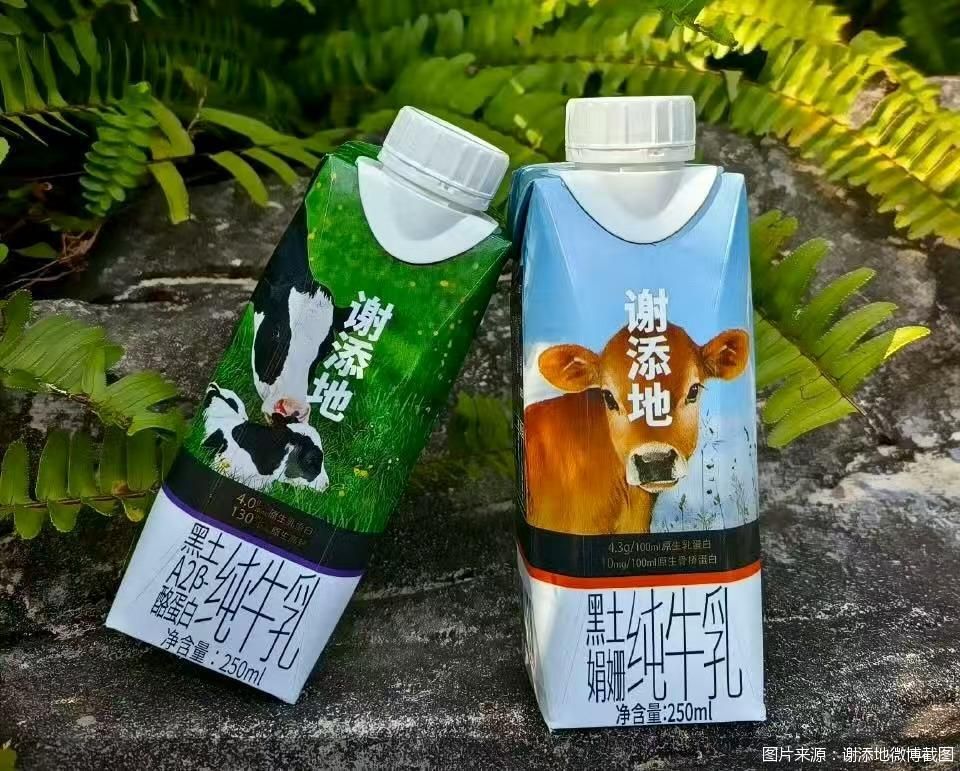
Core Viewpoint - Yuexiu Dairy's high-end brand Xietiandi is attempting to expand its national recognition through collaborations and product launches, but faces challenges in a highly competitive dairy market, impacting its revenue goals for the year [2][5]. Group 1: Product Launch and Strategy - Xietiandi has launched a new product, A2 Friendly Latte, in collaboration with the budget coffee brand Nova, aiming to attract consumers with a unique offering [3]. - The brand emphasizes its high-quality milk sourced from A2 cows and has introduced three main products: Black Soil Juan Shan, Black Soil A2, and Black Soil Organic, targeting different consumer segments [3][4]. - The new Black Soil Organic product is positioned as a high-cost performance option, with prices significantly lower than the premium Black Soil Juan Shan [4]. Group 2: Market Position and Challenges - Since the acquisition of Huishan Dairy, Yuexiu Group has set ambitious revenue targets, aiming for 100 billion yuan in revenue for Yuexiu Dairy by 2025, which poses significant challenges given the competitive landscape [5]. - The liquid milk market is experiencing oversupply, and Yuexiu Dairy faces competition not only from national giants like Yili and Mengniu but also from regional brands [5][6]. - Analysts suggest that Xietiandi's strategy of high pricing and premium positioning may not be sustainable in the current market, where many brands are engaging in price wars [6]. Group 3: Marketing and Brand Recognition - Xietiandi has gained significant exposure through exclusive sponsorships of popular TV shows, achieving a total exposure of 14.6 billion since October 2024 [4]. - Despite marketing efforts, the brand's performance remains mediocre, and analysts indicate that leveraging the coffee consumption trend may be a necessary strategy for growth [6].