
智能汽车

Search documents
追觅科技官宣造车,首款豪华电车对标布加迪威龙,已组建近千人团队;高德地图回应网传文旅业务解散内情;曝理想跨界做VR眼镜,官方回应
雷峰网· 2025-08-29 00:35
Group 1 - Chasing Technology officially announced its entry into the automotive sector, planning to launch its first ultra-luxury electric vehicle by 2027, directly competing with Bugatti Veyron [3][4] - The company has assembled a team of nearly 1,000 people for this project and aims to outperform competitors by at least 10%-20% in key metrics such as price, range, and performance [3] - Chasing Technology's automotive ambitions have been in the works for years, with the founding team having set a goal to enter the automotive industry during their university days [4] Group 2 - Meituan's CEO Wang Xing stated that the long-term profit margin target for food delivery is approximately 3%, with a goal of earning 1 yuan per order, emphasizing that subsidies are not a sustainable strategy [11] - In Q2 2025, Meituan reported a revenue increase of 11.7% to 918 billion yuan, but operating profit declined [11] - The company is committed to maintaining its market position despite intensified competition from new entrants like JD and Alibaba [11] Group 3 - Automotive Home has officially changed ownership, with a subsidiary of Haier Group becoming the controlling shareholder, acquiring approximately 43% of the shares for about 1.8 billion USD [12] - The new CEO has assured that there will be no layoffs as a result of this transaction, and the company will continue its normal operations [12] - The transaction marks a strategic shift for Automotive Home from an automotive vertical media platform to an automotive ecosystem platform [12] Group 4 - Didi announced a settlement of 740 million USD to resolve a collective lawsuit initiated by investors, aiming to avoid further disruptions to its business development [15] - The lawsuit stemmed from allegations that Didi provided misleading business information to investors in 2021 [15] Group 5 - JD.com is reportedly seeking a euro-denominated loan to finance its acquisition of German electronics retailer Ceconomy, valued at approximately 2.2 billion euros [16] - This acquisition is part of JD's strategy to expand its business footprint and narrow the gap with other Chinese e-commerce companies in overseas markets [16]

国产替代浪潮中的隐形冠军 | 豪威集团:视觉芯片的“车载之王”
Bei Jing Shang Bao· 2025-08-28 23:02
Core Viewpoint - The rise of companies like Cambricon reflects the inevitable trend of domestic substitution in the semiconductor industry, focusing on hard technology enterprises that excel in niche markets [1] Group 1: Company Transformation - Weir Shares, now known as OmniVision Group, underwent a significant transformation after acquiring Beijing OmniVision in 2019, which was a pivotal moment for the company's performance [2][3] - The acquisition allowed the company to shift its business structure from relying on consumer electronics to becoming a leader in automotive visual chips, marking a critical turning point in its growth trajectory [3][4] Group 2: Financial Performance - In 2024, the automotive segment's revenue reached 5.905 billion yuan, a year-on-year increase of 29.85%, contributing over 30% to the total revenue of the image sensor solutions segment [3][4] - The company reported a projected revenue growth of 13.49% to 15.97% for the first half of 2025, with net profit expected to increase by 39.43% to 49.67%, indicating strong performance in the automotive sector [6] Group 3: Market Position and Competition - OmniVision Group holds nearly 30% market share in the domestic automotive CIS sector, benefiting from high-resolution sensors and competitive advantages in low-light performance and power consumption [5][6] - The company is positioned as a leader in the automotive CIS market, having surpassed ON Semiconductor in sales for two consecutive years [5] Group 4: Challenges and Risks - The company's high share pledge by its controlling shareholder raises concerns about financial stability and control, which could impact its IPO process in Hong Kong [10][12] - Despite achieving revenue growth, the decline in R&D expenditure and the rising compensation for executives create a paradox that may undermine market confidence in the company's long-term growth potential [12][14]

“舱驾一体”加速上车:算力共享与成本博弈下,融合难题仍待解
Mei Ri Jing Ji Xin Wen· 2025-08-28 12:34
Core Insights - The rapid development of "integrated cockpit and driving" in the Chinese market is driven by the fusion of independent smart cockpit and smart driving functions, creating a powerful "central brain" for managing all intelligent features of vehicles [1][2] - The evolution of automotive architecture is becoming the core of transformation in the automotive industry, with a shift from distributed systems to centralized systems [2][3] Industry Trends - The automotive architecture is transitioning from a distributed system with multiple independent "brains" to a centralized system, leading to the emergence of three main forms: integrated driving and parking, integrated cockpit and parking, and integrated cockpit and driving [2] - The trend towards centralized computing is exemplified by the adoption of a single universal SoC (System on Chip) as the core of central computing, with Qualcomm's Snapdragon Ride Flex SoC being a key player in this new phenomenon [2][3] Technological Advancements - The advantages of "computing power sharing" and cost reduction are prompting more automakers to consider the "integrated cockpit and driving" solution, as the computing power of cockpit SoCs and driving SoCs continues to increase [3][4] - NIO's central computing platform, ADAM, can share up to 256 TOPS of computing power between driving and cockpit functions, enhancing operational efficiency [3] Challenges - The challenge of "system multi-domain parallelism" remains a significant hurdle for the "integrated cockpit and driving" approach, as the differing focuses of smart cockpit and smart driving systems complicate their integration [4][5] - The increasing number of display interfaces and the need for advanced human-machine interaction (HMI) further elevate the computing power requirements for AI technologies in vehicles [5][6] Future Outlook - Many players in the automotive industry are actively launching products related to "integrated cockpit and driving," with over ten Chinese automakers and ecosystem partners planning to adopt the new Snapdragon automotive platform [6][7] - While "integrated cockpit and driving" is currently a leading solution, it may not be the ultimate answer for future smart driving technologies, indicating a need for ongoing evaluation as advancements occur [7]


华为智能汽车杀入15万元以下市场
3 6 Ke· 2025-08-28 10:58
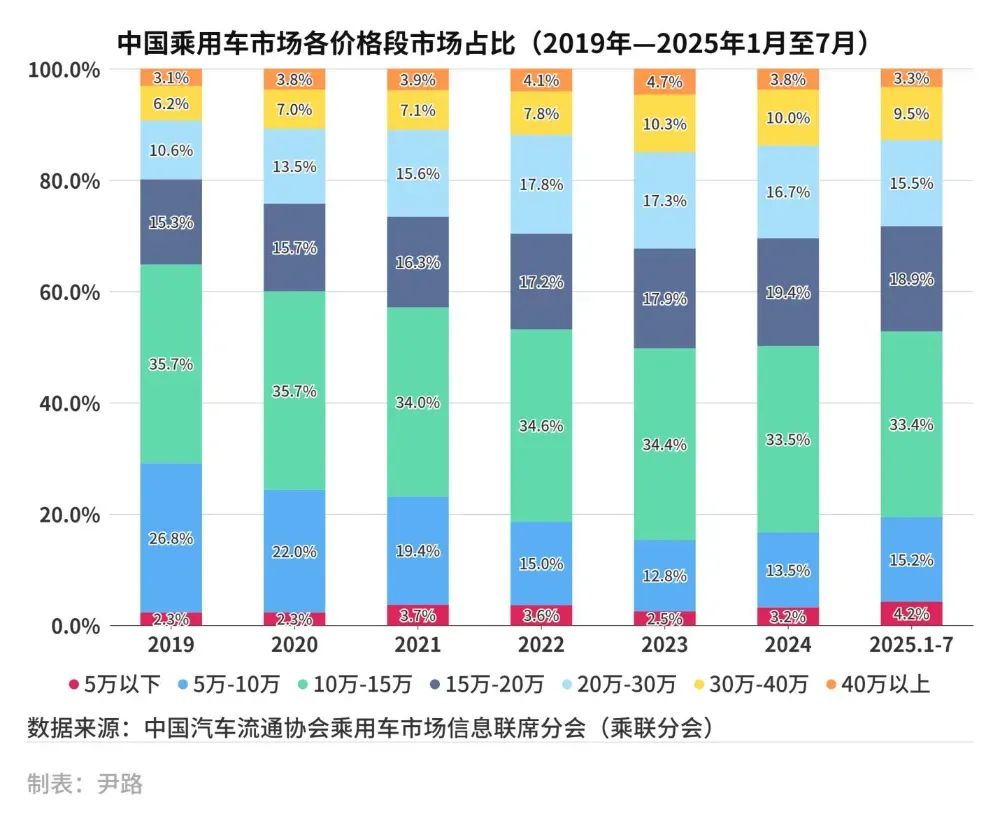
Core Insights - The penetration rate of intelligent assisted driving in China reached 50% in just five years, while the penetration rate of new energy vehicles took ten years to reach the same level [1] - Huawei's intelligent automotive solutions have now entered the mainstream price range of 150,000 to 200,000 yuan, with the launch of the Shangjie brand's first model priced at 169,800 yuan, which can drop below 150,000 yuan with subsidies [1][2] - The market share of Huawei's intelligent driving system in vehicles priced above 350,000 yuan has reached 50% [1] Market Dynamics - The shift from high-end to mainstream pricing is a strategic choice by Huawei to adapt to changes in the Chinese passenger car market, focusing on the 150,000 yuan price segment, which is crucial for many domestic brands [2][5] - The market structure for passenger vehicles is changing, with a notable decline in the market share of vehicles priced above 200,000 yuan, which dropped from 32.3% in 2023 to 28.3% in the first half of 2025 [9] Price Point Strategy - Huawei's intelligent automotive solutions have seen their price anchor drop from 300,000 yuan to 150,000-200,000 yuan, with intentions to further penetrate the 100,000-150,000 yuan segment [3][4] - The 10,000-20,000 yuan price range is identified as the largest incremental market for intelligent automotive solutions, with significant growth expected in this segment [12] Competitive Landscape - Huawei and CATL are the only companies in the Chinese automotive parts industry that can set prices, while other suppliers are engaged in price wars [1] - The competitive strategy involves offering flexible technology and cooperation models, allowing automakers to choose specific components based on their market positioning and cost requirements [13][14] Technological Advancements - Huawei's intelligent automotive solutions include five core technologies, and the company has achieved significant scale, with over 1 million vehicles equipped with its systems [13] - The rapid growth of intelligent systems in the 100,000-200,000 yuan price range is a key factor driving Huawei's strategy to penetrate this market [12]
何小鹏回应:与特斯拉市值差50倍合理吗?劝雷军造车是“害”他吗?
3 6 Ke· 2025-08-28 09:43
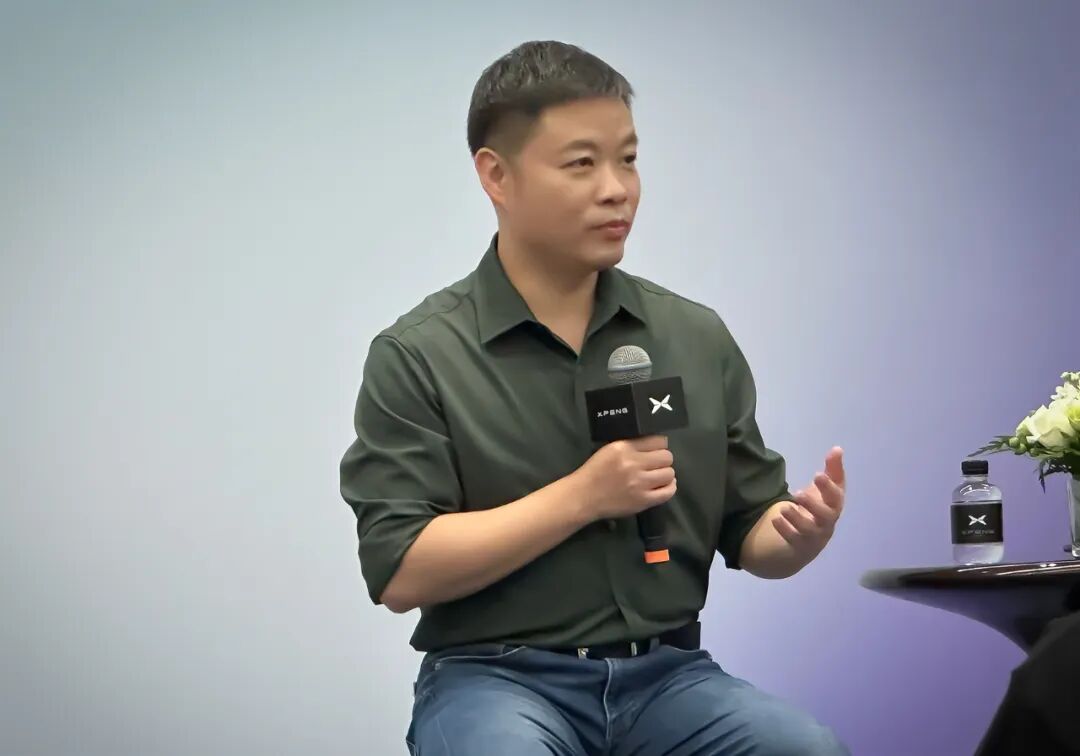
Core Insights - He Xiaopeng emphasized that urging Lei Jun to enter the automotive industry was not intended to harm him, highlighting the challenges of the sector [1] - The company claims to be the only one in China to have truly developed a Vehicle Level Automation (VLA) system, showcasing confidence in its technological advancements [1][18] - He Xiaopeng expressed optimism about the company's valuation changing significantly within six months as Robotaxi services are expected to launch [1][26] Product and Market Strategy - The new P7 model sold 10,000 units in just 7 minutes, indicating strong market demand [3] - The P7 is considered a crucial product for the company, with a focus on simplicity and cutting-edge technology [3][4] - The company aims to achieve top-three production capacity in its class for the P7, leveraging modular manufacturing improvements [4] Financial Performance and Cost Structure - He Xiaopeng discussed the challenges of profitability in the automotive sector, noting that traditional cost structures do not apply to electric vehicles, where battery costs account for 40%-50% of total expenses [7] - The company anticipates recovering previous losses within one to two years, thanks to its unique integration of software and hardware in smart vehicles [10] - The company plans to invest approximately 5 billion yuan annually in VLA development, emphasizing the need for substantial investment to achieve meaningful advancements [16] Technological Development - The company is transitioning from single-unit intelligence to group intelligence in its AI systems, with a long-term vision extending to 2027-2028 [10] - He Xiaopeng highlighted the importance of VLA and VLM (Vehicle Level Model) integration, suggesting that the latter will enhance task execution capabilities [20][22] - The company is utilizing both NVIDIA and domestic GPUs, with over 30,000 units deployed, to enhance AI capabilities [24] Competitive Landscape - He Xiaopeng acknowledged the significant valuation gap between the company and Tesla, attributing it to broader market trends and the company's potential yet to be fully realized [26] - The company believes that the automotive industry will see a differentiation in capabilities among competitors in the near future, driven by substantial investments in AI [22] Industry Insights - He Xiaopeng shared insights on the challenges of the automotive industry, likening it to a marathon where resilience is crucial for success [30][32] - The company recognizes the complexities of merging hardware and software effectively, which poses a greater challenge compared to purely digital companies [27]
组织及合作单位重磅亮相!2025智能汽车基础软件生态大会暨第四届中国汽车芯片大会将在重庆举办
中汽协会数据· 2025-08-28 09:01
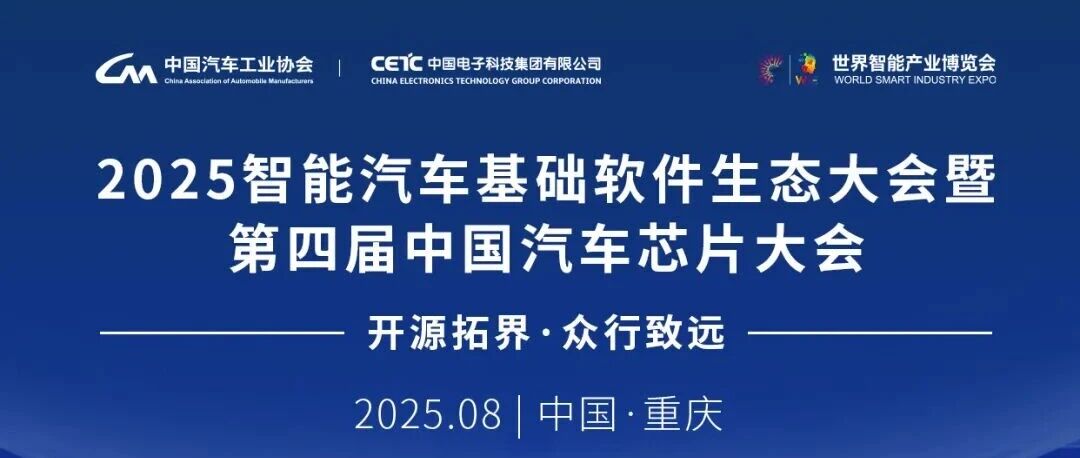
Core Viewpoint - The article highlights the upcoming 2025 Smart Automotive Basic Software Ecosystem Conference and the Fourth China Automotive Chip Conference, emphasizing the importance of collaboration among various industry players to advance the automotive technology landscape [1][9]. Group 1: Organizers and Support Units - The event is organized by the China Automotive Industry Association and CETC (China Electronics Technology Group Corporation) [1][4]. - The China Society of Automotive Engineers and CETC Chip Technology Group Co., Ltd. are among the supporting units [4][5]. - Various companies and organizations are listed as partners, including GigaDevice, Infineon, and several others, indicating a broad industry collaboration [6][5]. Group 2: Media and Promotion - Official media partners include Automotive Review and China Manufacturing, which will help promote the event [7]. - Additional media support comes from platforms like Sohu Auto and National Business Daily, enhancing the visibility of the conference [7].
投资策略专题:华为产业链,或为下一个“高低切”
KAIYUAN SECURITIES· 2025-08-28 06:35
Group 1 - The report emphasizes a positive market outlook driven by a "dual-wheel" strategy, highlighting the importance of technology as a priority [1][12][13] - The dual-wheel strategy consists of strong resilience in growth categories under global technological collaboration and a cyclical recovery driven by PPI [1][12] - The report suggests that maintaining a self-reliant approach while prioritizing technology is crucial in the current market environment [1][12] Group 2 - The overseas computing chain and Huawei's industrial chain are described as two sides of the same coin, forming a complementary relationship within the global computing ecosystem [2][15][20] - The overseas computing chain is recommended due to its high performance and strong earnings certainty, particularly in sectors like optical modules, PCBs, and liquid cooling [2][15] - Huawei's industrial chain is positioned as a leader in domestic substitution and a critical component of the current technology market [2][15][20] Group 3 - From a probability and odds perspective, Huawei's industrial chain is seen as having high value due to its significant importance, large domestic substitution potential, strong policy support, and continuous technological advancements [3][16][29] - The relationship between the overseas computing chain and Huawei's industrial chain is characterized by coexistence, complementarity, and rotation [4][38] Group 4 - Huawei's industrial chain encompasses six core businesses: smart devices, smart cars, chips, cloud computing, base station equipment, and digital energy, with a focus on chips and smart devices as key areas of growth [5][41] - The chip business is strategically positioned to break through technology import restrictions and is expected to benefit from the domestic AI computing infrastructure wave [5][41] - The smart device segment has shown strong recovery post-import restrictions, with significant growth expected in the smartphone supply chain [5][41][44] Group 5 - Huawei's industrial chain is deeply integrated into national strategies, receiving multi-dimensional policy support, which enhances its competitive edge in the technology sector [35][36] - Continuous advancements in areas such as the HarmonyOS, chip stacking technology, and smart automotive solutions are noted as significant progress for Huawei [36][37] - The report highlights that Huawei's industrial chain is in a rapid development phase, with substantial growth potential in emerging fields [37][38]
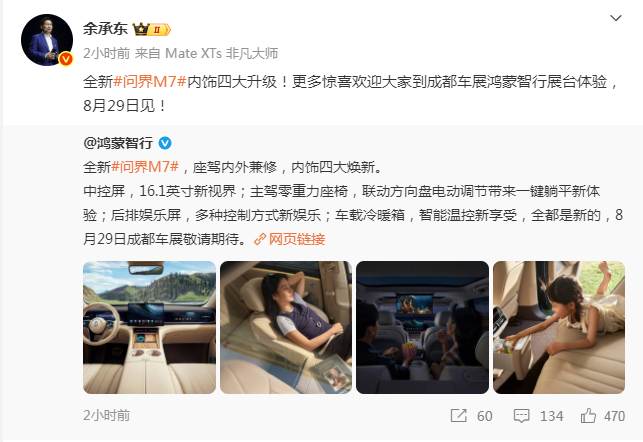
四大升级!余承东公布新问界M7内饰
Mei Ri Jing Ji Xin Wen· 2025-08-28 05:43
每经AI快讯,8月28日,华为常务董事、终端BG董事长余承东公布新问界M7内饰,配备16.1英寸中控 屏、主驾零重力座椅等。 ...
再落一子?华为注册“绝界”商标
Jing Ji Guan Cha Bao· 2025-08-28 05:30
Group 1 - Huawei successfully registered the "绝界" trademark on August 27, covering key areas such as automotive wheels, seats, electric vehicles, and hybrid/automated driving cars [1] - The registration is part of Huawei's ongoing trademark strategy, which includes over ten trademarks like "仙界," "天界," "君界," "峥界," and "江界," creating a robust brand protection framework [1] - The registration has dual strategic significance: defensive to avoid malicious trademark registrations amid intense competition in the smart automotive sector, and proactive to reserve naming space for advanced driving systems and potential niche markets [1] Group 2 - Huawei is deepening collaboration with car manufacturers through a three-tier cooperation model: providing basic hardware like motors and controllers, offering full-stack solutions for smart cockpits and autonomous driving under the HI model, and leading R&D and sales in the "智选" model [2] - The "智选" model has become a core driver of growth, with partnerships expanding rapidly after the successful validation with the Seres Aito brand, leading to collaborations with Chery, BAIC, Jianghuai, and SAIC [2] - The "鸿蒙智行" alliance aims to build a comprehensive brand matrix, targeting a price range from 150,000 to 1,500,000 yuan, with the youngest model, 尚界H5, set to launch in the fall [1][2]
华为靳玉志:我们不走VLA路线,WA才是自动驾驶终极方案
3 6 Ke· 2025-08-28 03:19
Core Insights - Huawei's automotive business has achieved significant milestones, including 1 million vehicles equipped with Huawei's QianKun intelligent driving system and over 1 million units of laser radar shipped as of July this year [1] - The company emphasizes a long-term strategic vision, having invested in the automotive sector since 2014, which has led to current profitability without setting explicit commercialization goals [1][4] - Huawei's CEO of the Intelligent Automotive Solutions BU, Jin Yuzhi, believes that focusing solely on commercialization can be counterproductive, advocating for a commitment to technology development and user needs [1] Automotive Business Performance - As of August, 28 models have been launched in collaboration with Huawei, including brands like Audi and Avita [1] - Cumulative mileage for assisted driving has reached 4 billion kilometers [1] - The company has adopted a full lifecycle management approach for its products, ensuring continuous upgrades and maintenance for users [5][16] Technology Strategy - Huawei prefers the World Action (WA) model over the Video Language Action (VLA) model for autonomous driving, believing WA is the ultimate solution for achieving true autonomous driving [3][10] - The WA model processes information directly through vision inputs, eliminating the need to convert data into language, which is seen as a shortcut [3][11] - Huawei has developed the WEWA model based on the WA architecture, which will be deployed in ADS 4.0 [4] Future Plans - Huawei aims to achieve Level 3 (L3) autonomous driving capabilities on highways and Level 4 (L4) pilot capabilities in urban areas by 2026, with plans for large-scale commercial use of L4 by 2028 [9] - The company is also working to transform smart cockpits into "digital nannies," integrating AI as an AI Agent [9] Pricing and Business Model - Jin Yuzhi asserts that there is no such thing as free services in the automotive industry, as costs are often transferred in different forms [4][15] - The pricing for assisted driving systems is justified due to the ongoing costs of iteration, maintenance, and over-the-air updates [5][15] - Users who initially purchase the first version of ADS benefit from continuous upgrades, making the long-term cost of ownership more favorable [16] Safety and Sensor Technology - Huawei's increase in sensor configurations, such as additional laser radars, is driven by a commitment to safety rather than merely increasing product pricing [17][18] - The company aims to enhance safety in various driving scenarios, including parking and urban driving, by improving system precision through advanced sensor technology [17][18]