美妆

Search documents
由攻转守!年末基金优选顺周期品种
券商中国· 2025-10-14 23:27
Core Viewpoint - The stock market experienced significant volatility after the National Day holiday, influenced by public funds realizing high-yield investments and a shift towards defensive strategies in the fourth quarter to secure annual performance [1][2]. Group 1: Market Dynamics - Public fund managers anticipate a shift to defensive strategies in Q4, as high valuation states in certain sectors have become apparent, leading to profit-taking in high-performing segments [2][4]. - Historical data from 2010 to 2024 indicates that sectors with high gains in the first three quarters typically underperform in Q4, prompting institutional investors to lock in profits or reposition towards lower-risk assets [2][6]. Group 2: Fund Manager Insights - Fund managers are accelerating portfolio adjustments in October, seeking balanced allocations, which may contribute to market corrections. The focus is on switching between high and low-performing sectors [4][5]. - The market is expected to experience a controlled adjustment, as traditional blue-chip stocks have not shown significant gains and remain below historical average valuations, suggesting that the broader market trend remains intact despite short-term fluctuations [5][6]. Group 3: Investment Strategies - In light of the fourth-quarter strategy shift, public funds are likely to favor cyclical sectors such as consumer goods, resources, and finance, while adopting a more cautious approach compared to the previous quarters [6][7]. - The performance of cyclical sectors, particularly in consumer and resource stocks, is anticipated to be strong, with new consumption trends like beauty and pet economies leading the charge [7][8]. - The dual-driven market structure of "technology" and "cyclical" is expected, with technology representing future growth and cyclical stocks benefiting from liquidity and policy improvements [8].

茱莉蔻启用“中国通” POLA集团放不下中国市场
Bei Jing Shang Bao· 2025-10-14 15:47
虽然销售额占比相对较小,但作为POLA集团旗下高端美妆领域重点布局品牌之一,茱莉蔻在内部占据 重要位置。业界猜测,此次POLA集团任命"中国通"执掌茱莉蔻,有意通过茱莉蔻品牌重新探索中国市 场增量。今年5月,POLA集团发布公告称,因集团在中国市场业务萎缩,董事会决议解散合并子公司 奥蜜思商贸(北京)有限公司。据公告,该子公司负责旗下护肤品牌奥蜜思(ORBIS)在中国大陆的销 售,但近三年累计亏损超15亿日元。在2025年中期财报中,POLA集团方面提到:"在海外业务方面, 由于亚洲部分地区(特别是中国)的不利影响,以及中国子公司清算决议的影响,海外业务的整体业绩 低于上年。" 对于中国市场,POLA集团渴望增长。此前在关闭子公司时,POLA中国对外表示:"集团始终视中国市 场为长期战略核心,目前所有专柜、线上渠道及合作平台均持续为消费者提供高品质产品与服务。未来 企业将进一步深化本土化创新,积极响应中国消费者需求。" 就人事变动及发展相关问题,北京商报记者致电POLA集团进行采访,但电话一直未接通。 知名日妆集团POLA ORBIS HOLDINGS宝丽奥蜜思控股集团(以下简称"POLA集团")近日宣布人事 ...
上美股份加速全球化布局
Zhong Zheng Wang· 2025-10-14 11:47
Core Insights - Up Beauty's core brand, Han Shu, has officially announced Wang Jiaer as its global spokesperson, marking his first endorsement of a domestic beauty brand [1] - In 2024, Up Beauty's founder and CEO, Lv Yixiong, stated that "Chinese beauty is entering a golden period for domestic brands" and established a new group strategy of "single focus, multiple brands, globalization" [1] - Han Shu achieved a revenue of 5.591 billion yuan in 2024, representing a year-on-year growth of 80.9% [1] - Han Shu's self-developed "环六肽-9" ingredient has been certified as the "global self-research环六肽 pioneer" by Sullivan [1] - Up Beauty's globalization strategy is accelerating its presence in countries such as Russia, Vietnam, and Indonesia through various cooperation models [1] Company Strategy - The announcement of Wang Jiaer as the global spokesperson is a significant step in Up Beauty's globalization strategy [1] - The new strategy aims to position domestic brands to compete alongside international brands on a global stage [1] - Up Beauty is committed to expanding its reach in the global beauty market with a determined approach [1]
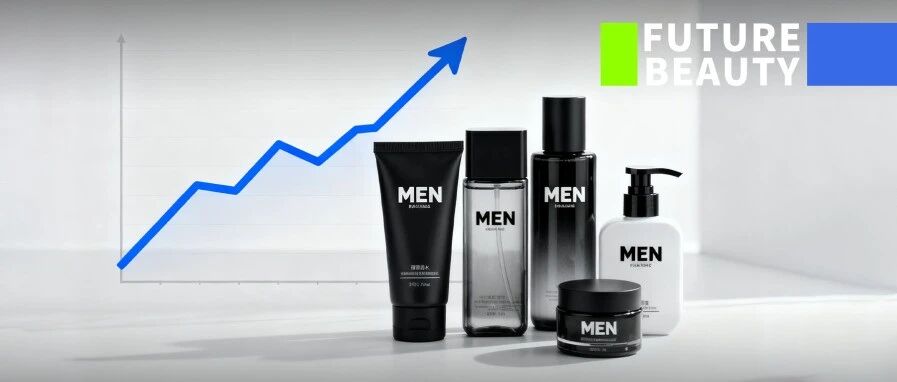
最高暴增229%!男士“美妆”的春天终于来了
FBeauty未来迹· 2025-10-14 11:43
Core Insights - L'Oréal China aims to reach 150 million consumers by 2030, with a focus on men aged 15 and above as a key demographic [3][4] - The men's beauty market is experiencing significant growth, with men's hair care sales soaring by 122.75% and men's foundation sales increasing by 228.78% in the first eight months of the year [3][8] - The competitive landscape is shifting, with traditional brands facing challenges while new entrants like KANS and SAZA are achieving rapid growth [4][15] Market Performance - In the first eight months of the year, the four main categories of men's beauty products generated a total transaction value of 60.35 billion yuan, with a year-on-year growth of 10.39% [9] - Men's facial care remains the largest segment, while men's hair care has emerged as a significant growth area, indicating a shift in consumer needs [10][13] - The top-performing categories include men's care sets, men's shampoo, and men's foundation, with the latter showing the highest growth rate [12][13] Brand Dynamics - The top 20 brands in the men's beauty market show a split, with 9 brands experiencing a decline in sales, while 4 brands, including KANS and SAZA, report over 50% growth [18][19] - L'Oréal leads the market, followed by brands like Ocean King and Left and Right Color, which are gaining traction through targeted marketing and product innovation [15][19] - The competition is intensifying as both domestic and international brands expand their offerings, with a focus on men's skincare and grooming products [20][21] Consumer Trends - There is a noticeable shift towards more sophisticated skincare needs among men, with increasing interest in anti-aging and multifunctional products [21][22] - The demand for men's makeup products is rising, with a reported growth rate exceeding 25% in men's makeup consumption [29] - Brands are responding to these trends by diversifying their product lines to include more advanced and multifunctional offerings [36] Future Outlook - The men's beauty market is expected to continue evolving, with a focus on brand differentiation and comprehensive product offerings [35][36] - As competition intensifies, brands will need to enhance their research and development capabilities to meet the growing and changing demands of male consumers [36] - The market is poised for further growth, driven by shifts in consumer attitudes towards beauty and grooming among men [36]
业绩承压下“断臂求生”?科蒂或分拆价值12亿美元大众彩妆业务
Xin Jing Bao· 2025-10-14 11:31
Core Viewpoint - Coty Inc. is undergoing a significant strategic restructuring, focusing on a comprehensive evaluation of its mass beauty business to maximize long-term value and optimize asset allocation [1][2] Group 1: Business Overview - Coty Inc. was founded in 1904 in Paris and operates a range of iconic brands across fragrance, makeup, skincare, and body care, selling in over 120 countries [2] - The mass beauty segment, valued at $1.2 billion, includes brands such as CoverGirl, Rimmel, Sally Hansen, and Max Factor, with a nearly $400 million revenue contribution from Brazil [2][3] Group 2: Financial Performance - For the fiscal year ending June 30, 2025, Coty reported net revenues of $5.893 billion, a year-over-year decline of 3.68%, and a net loss of $381 million, compared to a profit of $76.2 million in the previous year [4] - The mass beauty segment experienced a revenue drop of 8% year-over-year, generating $2.073 billion in the same fiscal year [4][5] Group 3: Market Challenges - The mass beauty business has faced ongoing challenges, including a significant decline in the U.S. market, exacerbated by retailer inventory reductions and overall market pressures [4][5] - Coty has recorded a continuous decline in mass beauty revenues over four consecutive quarters, with Q1, Q2, and Q3 revenues of approximately $555 million, $554 million, and $470 million, respectively, reflecting year-over-year decreases of 3%, 8%, and 9.4% [6] Group 4: Organizational Changes - Coty is implementing organizational changes to integrate its high-end beauty and mass fragrance businesses, which together account for 69% of the company's sales [3][4] - The company has appointed Gordon von Bretten as president of the mass beauty division to explore potential in mass cosmetics, skincare, and personal care, while leading the strategic review [6]

自然堂冲击港股IPO,国货美妆腰部老品牌能否突围?
2 1 Shi Ji Jing Ji Bao Dao· 2025-10-14 09:53
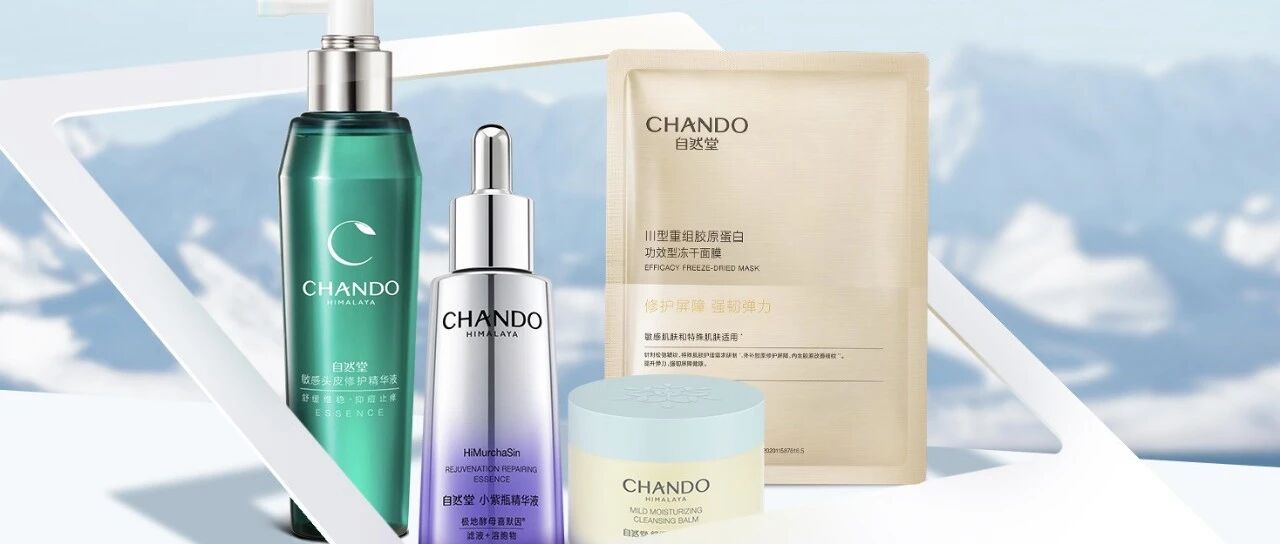
Core Viewpoint - The recent IPO application by Naturando Global Holdings Limited marks a significant move in the Chinese beauty market, reflecting both the company's ambition to prove its strength in the capital market and the competitive pressures faced by mid-tier beauty brands in a saturated market [1][6]. Company Overview - Naturando, established 25 years ago, has submitted its IPO application to the Hong Kong Stock Exchange with a valuation exceeding 7.1 billion RMB, backed by investments from L'Oréal (442 million RMB) and Cahua Capital (300 million RMB) [1][2]. - The company has positioned itself as the third-largest domestic cosmetics group in China, with annual revenues exceeding 4.5 billion RMB [1][3]. Financial Performance - Naturando's revenue figures for 2022 to 2024 are reported as 42.92 billion RMB, 44.42 billion RMB, and 46.01 billion RMB, with a revenue of 24.48 billion RMB in the first half of 2025 [3]. - The gross profit margins have shown a steady increase, from 66.5% in 2022 to 70.1% in the first half of 2025 [3]. Brand Portfolio - The company has developed a diverse brand portfolio, including Naturando, Pofuyan, Chunsummer, Meisu, and Jichu, covering various categories such as skincare, makeup, personal care, men's grooming, and children's care [3]. - Naturando remains the most recognized brand, contributing over 94% of total revenue from 2022 to 2025 [3]. Shareholding Structure - The Zheng family, as the founders, have structured the shareholding to protect their interests, with a complex offshore holding setup ensuring control over the company [4][5]. Market Position and Competition - The beauty industry in China is highly fragmented, with the top five domestic cosmetics groups holding only about 10.1% market share, indicating low concentration [7]. - Naturando's revenue growth rate of 3.6% for 2024 is significantly lower than competitors like Mao Geping and Lin Qingxuan, highlighting the need for enhanced growth strategies [7]. Industry Trends - The domestic beauty market is experiencing a shift, with local brands capturing approximately 55.2% market share by 2024, indicating a growing preference for domestic products among consumers [8]. - The competition is intensifying, with brands engaging in a "scientific arms race" to enhance their research and development capabilities, which is crucial for capital investment [8].
四大“超级周期”与“制度改革”--韩国股市的涨幅才开始?
Hua Er Jie Jian Wen· 2025-10-14 08:28
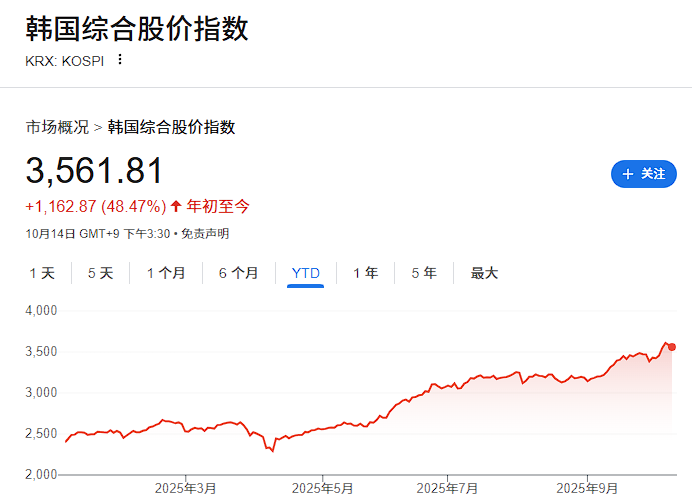
Core Viewpoint - The KOSPI index in South Korea has risen nearly 50% in 2025, with Morgan Stanley analysts suggesting this is just the beginning, driven by structural growth factors despite short-term trade tensions [1] Group 1: Market Performance - The KOSPI index has increased nearly 50% year-to-date, outperforming other Asian markets, with the MSCI Korea index up 65% compared to the 27% rise in the Asia-Pacific index [1] - Morgan Stanley has raised its KOSPI target from 3250 to 3800 points, with a bullish scenario suggesting it could reach 4200 points [4] Group 2: Sector Analysis - The technology sector is expected to benefit significantly from the AI expansion, with analysts noting that the storage chip industry is entering a new upcycle driven by AI, with supply constraints supporting price increases [5] - Major companies like Samsung Electronics and SK Hynix are projected to be the primary beneficiaries, with potential stock price increases contributing to a 5.3% rise in the KOSPI index [6] Group 3: Super Cycles Driving Growth - Morgan Stanley identifies four super cycles driving structural growth in the Korean economy: AI technology diffusion, defense industry, power infrastructure, and the Korean Wave culture [7] - The defense sector is experiencing increased demand due to geopolitical risks and modernization needs, with European countries committing to higher defense spending [7] - The power infrastructure sector is expanding globally, with Korean manufacturers gaining orders in major projects due to competitive costs and advanced technology [7] - The Korean Wave culture, particularly in beauty products and instant noodles, is seeing significant growth, with beauty exports to Europe up 59% year-on-year [7] Group 4: Government Reforms - The execution of government reform agendas is becoming a focal point for the market, with expected reforms related to stock buyback rules and key tax reforms [8] - Proposed changes to the dividend tax rate are expected to be set below 30%, and stock buyback rule reforms are anticipated, though the timing remains uncertain [10]
长城基金储雯玉:科技赛道仍具韧性
Xin Lang Ji Jin· 2025-10-14 07:49
Group 1: Technology Sector Insights - Embracing technology narratives has been key for investors seeking high returns this year, despite significant volatility in popular sectors [1] - The market is experiencing a shift from overheated trading and high valuations to areas with better cost-performance ratios, which is a long-term spontaneous behavior [1] - The technology sector, despite high valuations, remains strong in industrial trends and is considered one of the sectors with a high probability of positive returns [1] Group 2: Consumer Sector Analysis - The overall performance of the consumer sector has been weak, but new consumption areas are generating investment opportunities [2] - The demand for a better quality of life remains unchanged, and the evolving consumer demographics and product offerings are revealing growth potential in various niche markets [2] - Key areas of focus for future investments include trendy toys, pet food, beauty products, household cleaning items, health supplements, and snacks [2] Group 3: Hong Kong Market Characteristics - The Hong Kong market is primarily driven by institutional investors, which influences its unique pricing logic and market ecology [2] - There are stricter requirements for fundamentals in the Hong Kong market, often necessitating tangible performance indicators like orders or revenue to see good stock performance [2] - The high proportion of institutional investors leads to greater liquidity requirements for individual stocks, causing many small-cap stocks to be overlooked due to insufficient trading activity [2] Group 4: Investment Focus Areas - In the Hong Kong market, the focus is on scarce assets such as domestic technology internet giants and leading companies in the AI application field [2] - Attention is also directed towards undervalued Hong Kong stocks that are trading at a discount compared to their A-share counterparts, particularly in the financial and resource sectors [2]
自然堂闯关IPO:家族绝对控股,研发严重“偏科”,代言人陷入风波
凤凰网财经· 2025-10-14 07:43
Core Viewpoint - Natural Hall, a Chinese beauty brand, has submitted its IPO application to the Hong Kong Stock Exchange, marking its entry into the capital market after 24 years of operation. However, the company faces challenges due to its heavy reliance on marketing over research and development, which has led to significant risks and volatility in its financial performance [1][2][3]. Financial Performance - Revenue growth has slowed, with figures of 4.292 billion, 4.442 billion, and 4.601 billion yuan for 2022, 2023, and 2024 respectively, indicating a year-on-year growth of approximately 3.5% in 2024. The first half of 2025 saw revenue of 2.448 billion yuan, a year-on-year increase of 6.43% [3][4]. - Net profit has shown instability, with figures of 139 million, 302 million, and 190 million yuan for the same years, reflecting a significant increase of 117% in 2023 but a decline of 37.1% in 2024 [3][4]. - Gross margin has improved from 66.5% in 2022 to 70.1% in the first half of 2025, but net profit margin remains low at 3.2%, 6.8%, 4.1%, and 7.8% for the respective years [4][5]. Marketing vs. R&D Investment - The company has heavily invested in marketing, with expenditures of 2.445 billion, 2.406 billion, 2.717 billion, and 1.347 billion yuan from 2022 to the first half of 2025, accounting for over 50% of total revenue each year [6][7]. - In contrast, R&D investment has been significantly lower, totaling only 348 million yuan over the same period, which is just 13% of the marketing expenditure in 2024. The R&D expense ratio has decreased from 2.8% in 2022 to 1.7% in the first half of 2025 [6][7][8]. Brand Reputation Risks - The reliance on celebrity endorsements has exposed the brand to risks, particularly highlighted by recent controversies involving its global skincare ambassador, Yu Shuxin, which could impact brand reputation during the IPO process [9][10][16]. - Consumer complaints have accumulated to 1,627 on third-party platforms, with many reporting allergic reactions to products, raising concerns about product safety and customer satisfaction [16][18]. Corporate Governance and Family Control - The company is primarily controlled by the Zheng family, holding approximately 87.82% of voting rights, which raises concerns about corporate governance and minority shareholder rights [20][24]. - Despite bringing in external investors like L'Oréal and Jia Hua Capital, the Zheng family maintains absolute control, which may affect the company's ability to modernize its governance structure in response to market expectations [24][26].
消费洞察集锦 | 2025年第八期
凯度消费者指数· 2025-10-14 07:33
Group 1 - The article presents insights from the 2025 Consumer Insights Compilation, focusing on four main topics: "Consumer Landscape," "Growth Drivers," "Channel Evolution," and "Innovation Breakthroughs," aimed at identifying "certain growth" amidst variables [1] - The Worldpanel Consumer Index has released the "2025 Beauty Brand Footprint Ranking," revealing the true brand choices of Chinese beauty consumers and analyzing the deeper logic behind consumer decision-making in the beauty market [1] - The article also highlights specific categories such as health supplements, frozen dumplings, and the fragrance economy within non-food categories, providing an in-depth analysis of their development trends to help brands identify potential market growth points [1]