新能源车

Search documents
能源锂电集体走强,科创板新能源 ETF(588960)盘中涨幅达3.14%
Mei Ri Jing Ji Xin Wen· 2025-08-11 07:08
Core Viewpoint - The news highlights the significant activity and growth in the new energy vehicle (NEV) sector, particularly in the context of rising stock prices for related ETFs and companies, indicating a strong competitive landscape in China's NEV market [1] Group 1: Market Performance - The Sci-Tech Innovation Board New Energy ETF (588960) saw an intraday increase of 3.14%, while the Lithium Battery ETF (5561160) rose by 2.70% [1] - Key component stocks such as Electric Wind Power surged over 16%, and Wanrun New Energy increased by more than 9% [1] Group 2: Industry Data - According to the Passenger Car Association, the retail penetration rate of NEVs in China reached 54.0% in July, up by 2.7 percentage points year-on-year [1] - BYD led the market with a monthly sales figure of 344,000 units, while competitors like Leap Motor, Xpeng, and Hongmeng Zhixing reported record-breaking growth [1] Group 3: Future Outlook - Industry reports suggest an improvement in the passenger car market fundamentals, with expectations for a positive trend as new models are set to launch [1] - Upcoming key models include the all-new Wanjie M7, Geely Galaxy A7, M9, Leap B01, Xiangjie S9T, Tesla Model YL, and Wanjie M8 pure electric vehicles [1] Group 4: ETF Composition - The Sci-Tech Innovation Board New Energy ETF (588960) closely tracks the Shanghai Stock Exchange Sci-Tech Innovation Board New Energy Index (000692.SH), with a daily fluctuation limit of 20% [1] - The index comprises 50 large-cap stocks from the photovoltaic, wind power, and NEV sectors, reflecting the overall performance of representative companies in the new energy industry on the Sci-Tech Innovation Board [1]
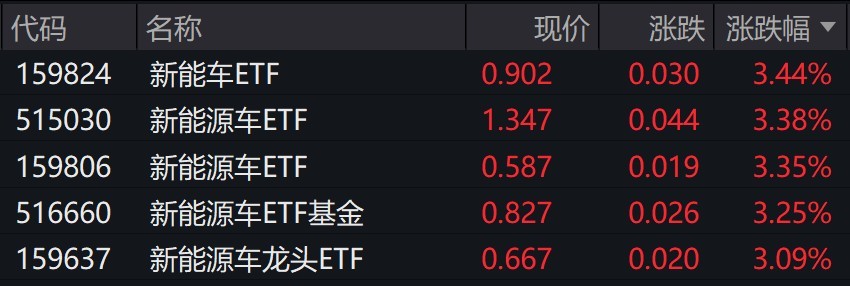
停产消息催化,锂矿概念强势上涨,新能源车ETF(515030)涨超3%
Mei Ri Jing Ji Xin Wen· 2025-08-11 06:57
Group 1 - A-shares indices collectively rose on August 11, driven by news catalysts, with significant gains in lithium-related sectors including lithium mining, lithium iron phosphate batteries, and lithium batteries [1] - The New Energy Vehicle ETF (515030) increased by 3.15%, with major holdings such as Shengxin Lithium Energy and Tianqi Lithium Industries hitting the daily limit, while companies like New Zhonbang and Defang Nano saw gains exceeding 12% and 11% respectively [1] - The mining operations in the Jiangxia Wokou area by CATL have been suspended since August 10, with no immediate plans for resumption, which may lead to price stabilization in lithium carbonate, a key upstream product in the industry [1] Group 2 - According to AVIC Securities, "involution-style" competition has led to a continuous price war, significantly reducing industry profitability and compromising quality, ultimately affecting sustainable development [2] - In June, 17 major automotive companies committed to a payment term of no more than 60 days to suppliers, indicating a shift towards better financial practices [2] - The electric vehicle price war is expected to ease, allowing the industry to transition from a focus on price to a focus on quality, with potential recovery in profit margins across the supply chain [2]






涨超3.3%!宁德时代锂矿停产,中证新能源车指数狂飙
Xin Lang Cai Jing· 2025-08-11 06:19
另一方面,新能源车行业的技术迭代正在加速。天弘中证新能源车基金经理祁世超指出,半固态电池已 进入量产装车阶段,部分车企开始小规模交付。技术突破从研发转向实际应用,进一步增强了市场对行 业未来发展的信心。 从基本面来看,新能源车行业近期呈现多重积极信号。当前碳酸锂价格企稳反弹,缓解了中游电池制造 商的成本压力;政策层面,"反内卷"导向明确,低端产能扩张受限,行业竞争格局有望优化;此外,海 外市场需求保持强劲,一定程度上抵消了国内增速放缓的影响。 2025年8月11日,中证新能源车指数(399976)呈现强劲上涨态势。截至13:40,指数涨幅达3.36%,成 分股中德方纳米、新宙邦、盛新锂能等个股表现亮眼,涨幅均超10%。 此次新能源车板块的上涨主要受两方面因素推动: 一方面,宁德时代宜春锂矿项目因采矿许可证到期暂停开采,市场对锂资源供应短期收紧的预期升温。 受此影响,碳酸锂期货价格全线涨停,主力合约价格突破8万元/吨,刷新近三个月以来的新高。这一事 件不仅直接提振锂矿板块,更带动新能源车全产业链估值修复。 对于投资者而言,当前新能源车板块的估值已回落至历史较低水平,中长期配置价值逐渐显现。投资者 可通过天弘中证 ...
锂矿股集体爆发,新能源车相关ETF涨超3%
Mei Ri Jing Ji Xin Wen· 2025-08-11 06:05
Group 1 - Lithium mining stocks experienced a collective surge, with Tianqi Lithium and Ganfeng Lithium hitting the daily limit, and Yiwei Lithium rising by 6% [1] - The impact on the market led to a rise of over 3% in related new energy vehicle ETFs [1] - On August 11, all lithium carbonate futures contracts hit the daily limit, indicating strong market demand [2] Group 2 - CATL announced on August 11 that it has suspended mining operations at its Yichun project due to the expiration of its mining license on August 9 [2] - Analysts suggest that this suspension will significantly benefit the supply-demand balance of lithium carbonate, potentially creating a supply gap of several thousand tons in a month [2] - The supply disruption, combined with the traditional inventory replenishment season, is expected to provide substantial short-term rebound potential for lithium prices, which may lead to a recovery in prices and profitability across the lithium battery industry chain [2]

全方位对比及债市影响剖析:“反内卷”政策能否复制供给侧改革?
Soochow Securities· 2025-08-11 03:34
1. Report Industry Investment Rating - No industry investment rating information is provided in the report. 2. Core Viewpoints - The "anti - involution" policy is compared with the supply - side reform in 2016 - 2017. Both aim to address supply - demand mismatches through capacity reduction, but there are differences in background, industries covered, policy measures, implementation cycles, and outcomes [14]. - The "anti - involution" policy is expected to have a longer implementation cycle and a more profound impact. It focuses on long - term mechanism building and is likely to achieve more sustainable and healthy results [50]. - Regarding the impact on the bond market, the "anti - involution" policy is unlikely to change the long - term bullish trend of the bond market. In the short term, there is adjustment pressure on bond interest rates due to a slight rebound in commodity prices, but a demand - driven bearish trend is unlikely. In the long run, if the policy can increase corporate profits and drive up factor prices, it may lead to an upward inflection point in bond interest rates [51][63]. 3. Summary by Directory 3.1 "Anti - involution" Policy Context Review - In 2024, the Central Political Bureau Meeting first proposed "preventing 'involution - style' vicious competition." On July 1, 2025, the Sixth Meeting of the Central Financial and Economic Commission incorporated "anti - involution" into the national economic governance framework, accelerating policy implementation. Subsequently, various industries issued implementation opinions, such as the China Cement Association, the Ministry of Industry and Information Technology for the photovoltaic industry, and 33 construction central enterprises [10][11]. 3.2 "Anti - involution" and Supply - side Reform Comprehensive Comparison 3.2.1 Background Motivation - Supply - side reform in 2015 was due to the transition from high - speed to medium - high - speed economic growth, with severe over - capacity in traditional industries like coal and steel, and diminishing marginal effects of demand - side stimulus [15]. - The "anti - involution" policy since 2022 is because PPI has been in the negative range again, and over - capacity is more concentrated in emerging industries such as photovoltaic, lithium - battery, and new - energy vehicles. "Involution" is a structural and institutional over - capacity, threatening the long - term health of industries [17][21]. 3.2.2 Key Industries - The "anti - involution" policy covers a wide range of industries, including traditional industries related to real - estate and infrastructure, emerging industries, and downstream consumer - related industries. The policy focuses on the "new three items" (new energy, semiconductors, high - end equipment) [24]. - The supply - side reform in 2016 - 2017 focused on upstream raw - material industries, mainly addressing over - capacity in traditional industries led by state - owned enterprises. In contrast, the "anti - involution" policy is more extensive, emphasizing emerging industries in the middle and lower reaches, with more private enterprises involved [28]. 3.2.3 Policy Measures - The supply - side reform in 2016 - 2017 used "three removals, one reduction, and one supplement" as the main policy tools, featuring administrative means, quantified targets for key industries, supplementary measures, and demand - expansion policies such as shantytown renovation monetization [34]. - The "anti - involution" policy currently mainly uses market - based means such as industry self - discipline, with milder administrative intervention and an emphasis on institutional building. Its ultimate goal is to build a new development pattern and promote high - quality development, and it is unlikely to be accompanied by large - scale demand - expansion policies [39][40]. 3.2.4 Policy Implementation Cycle and Outcomes - The supply - side reform had a short implementation cycle of about 2 years, with significant and rapid results. It led to a substantial increase in capacity utilization, commodity prices, and industrial profits, and had a "first positive, then negative" impact on interest - rate bonds [42][43]. - The "anti - involution" policy may have a longer implementation cycle. It focuses on long - term mechanism building and is expected to achieve more sustainable and healthy results through market - based and legal means [50]. 3.3 "Anti - involution" Impact on the Bond Market Outlook - The impact of the "anti - involution" policy on interest - rate bonds is mainly transmitted through factors such as expectations, commodity prices, monetary policy, and the demand side. Currently, the demand side is weak, and monetary policy remains loose [51]. - It is predicted that the year - on - year PPI will gradually recover to around - 1.5% within the year but will not turn positive immediately. In the short term, there is adjustment pressure on bond interest rates due to a slight rebound in commodity prices, but a trend - driven bear market is unlikely. In the long run, if the policy can increase corporate profits and drive up factor prices, it may lead to an upward inflection point in bond interest rates [63].
小鹏汽车-W涨超7% 全新P7小订不到7分钟破万 机构看好公司销量提升
Zhi Tong Cai Jing· 2025-08-11 02:42
此外,小鹏汽车董事长何小鹏8日在微博发文表示,今天工信部官网公示了小鹏首款超级电动车型小鹏 X9,它将会在第四季度正式推出。长江证券认为,智能驾驶持续领先,随着渠道变革和营销体系加 强,叠加强势新车周期,公司销量快速提升。MONA M03和P7+开启公司新车周期。规模提升、平台和 技术降本效果将进一步体现,叠加软件盈利的商业模式拓展以及出海持续增长,公司未来盈利具备较大 弹性。 小鹏汽车-W(09868)涨超7%,截至发稿,涨7.18%,报85.05港元,成交额15.87亿港元。 消息面上,8月6日晚,全新小鹏P7正式亮相。新车基于小鹏汽车与大众合作开发的平台打造,搭载使 用了机器人IRON手腕结构的三轴灵动屏、87英寸AR-HUD(增强现实抬头显示系统)等配置。据悉,新车 是当前在售小鹏P7的换代车型,没有公布预售价,将于本月晚些时候正式上市。当晚,小鹏汽车董事 长、CEO何小鹏发文称,预售6分37秒,小订突破10000台。 ...
新能源车ETF(159806)涨超2.1%,新能源车行业供需向好
Mei Ri Jing Ji Xin Wen· 2025-08-11 02:41
Group 1 - The core viewpoint of the news highlights the growth and investment in the new energy vehicle (NEV) sector in China, with significant developments from major players like Changan Automobile and the introduction of new models [1] - Changan Automobile plans to launch over 50 new energy products in the next five years, with an investment of 200 billion yuan in the new automotive sector [1] - The NEV ETF (159806) has risen over 2.1%, reflecting positive market sentiment towards the NEV industry [1] Group 2 - New models such as the Ledo L90 and Li Auto i8 have been launched, with the Ledo L90 utilizing a 900V high-voltage architecture and supporting NIO's charging and battery swap system [1] - The Li Auto i8 supports a 5C charging rate, with the number of supercharging stations reaching 3,000 [1] - In July, new energy vehicle sales showed a divergence among new forces, with Leap Motor achieving a monthly sales record of 50,000 units, while other brands like AITO, XPeng, and Xiaomi also saw month-on-month growth [1] Group 3 - Heavy-duty truck sales in July increased by 42% year-on-year, primarily driven by the vehicle replacement policy [1] - The overall industry is experiencing growth in domestic demand by 11% and export growth by 13% [1] - The NEV ETF tracks the CS New Energy Vehicle Index, which includes companies across the entire NEV supply chain, reflecting the performance of representative and growth-oriented enterprises in the sector [1]
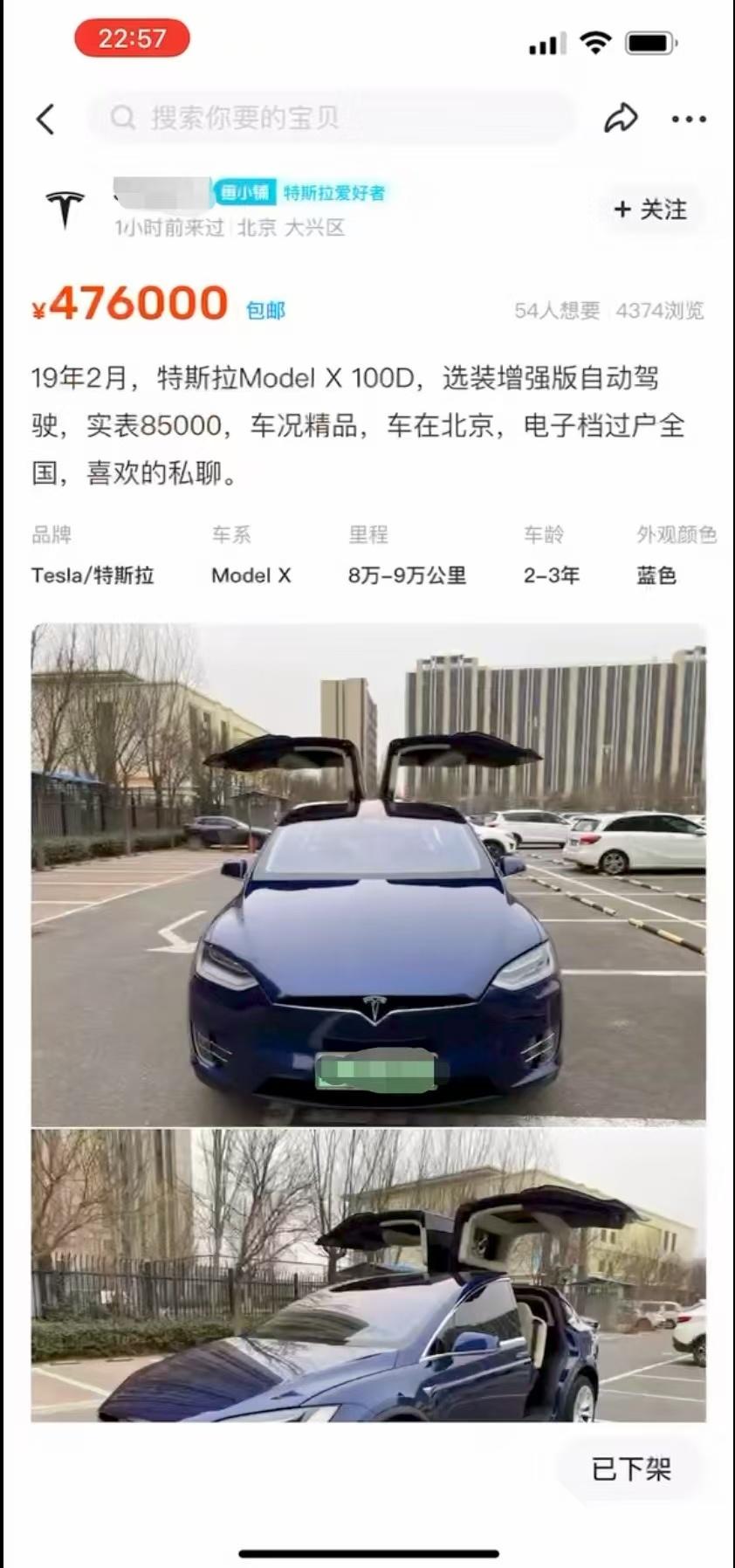
花46万“捡漏”精品特斯拉,故障频出车主发现买的是“全损”车,法院判决:退一赔三
Qi Lu Wan Bao· 2025-08-11 02:36
Core Viewpoint - The case highlights the risks associated with purchasing used cars, particularly those with hidden damages and the importance of transparency in transactions. The seller was found guilty of fraud for concealing critical information about the vehicle's condition, leading to significant financial repercussions for the buyer [1][15][16]. Group 1: Incident Overview - In February 2022, a buyer, Mr. Zhao, purchased a 2019 Tesla Model X with a mileage of 85,000 kilometers for 462,000 yuan, believing it to be in excellent condition [2][6]. - After experiencing multiple mechanical failures within nine months, Mr. Zhao discovered that the vehicle had been declared a total loss by the insurance company due to a severe accident in 2021 [9][10]. Group 2: Seller's Defense - The seller, Mr. Yu, claimed he was not a professional used car dealer and had informed Mr. Zhao about the vehicle's prior damage, arguing that the term "total loss" used by insurance companies did not equate to a significant safety issue [11][12]. - Mr. Yu presented evidence of the vehicle's auction history and argued that the price difference indicated the vehicle's condition was known to the buyer [11][12]. Group 3: Legal Proceedings - The court found that Mr. Yu had intentionally concealed critical information about the vehicle's total loss status, constituting fraud under consumer protection laws [15][16]. - The initial ruling mandated Mr. Yu to refund the purchase price of 462,000 yuan and pay an additional 1,386,000 yuan as punitive damages, totaling three times the purchase price [15][16]. Group 4: Final Judgment - The appellate court upheld the initial ruling, emphasizing that Mr. Yu's actions were not merely an oversight but a deliberate attempt to mislead the buyer regarding the vehicle's true condition [16]. - The court reiterated that the classification of the vehicle as a total loss significantly impacts its market value and safety, which the seller failed to disclose [15][16].

宁德时代锂矿停产释放反内卷重磅信号,资金跑步入场?新能源车龙头ETF(159637)获2800万份净申购
Xin Lang Cai Jing· 2025-08-11 02:29
Group 1 - The core viewpoint of the articles highlights the significant impact of the suspension of mining operations at the Ningde Jiangxiawo mine on lithium supply in China, indicating a potential tightening of the lithium market and a shift towards supply-demand balance [2][3] - The Jiangxiawo mine, which has a full production capacity of approximately 100,000 tons, accounts for one-third of Jiangxi's lithium production capacity, and its closure could lead to a supply gap of several thousand tons per month in the third quarter [2][3] - The suspension is seen as a sign of stricter regulation on lithium mining in Jiangxi, which may lead to further reductions in lithium supply across the region [2] Group 2 - The solid-state battery sector is gaining attention, with the upcoming China Solid-State Battery Technology Industry Development Conference potentially catalyzing further investment in the industry [3] - Recent advancements in solid-state battery technology, including the launch of the first automotive-grade solid-state battery production line and breakthroughs in energy density, are expected to drive industry growth [3] - The valuation of the new energy vehicle sector is currently at 23.5 times, indicating over 84% room for recovery compared to the average since 2020, making it an attractive investment opportunity [4]
企业盈利回暖与投资机遇共振信号显现
Shang Hai Zheng Quan Bao· 2025-08-10 13:40
Group 1 - The central political bureau meeting emphasized the need to deepen the construction of a unified national market and optimize market competition order, which is crucial for improving corporate profitability and reshaping capital market valuations [1] - The phenomenon of "involution" in industries such as steel, photovoltaic, chemicals, and new energy vehicles has led to profit losses due to blind pursuit of scale expansion, resulting in resource waste and pressure on overall profitability [1] - Early government support through policies like electricity price discounts and credit support was beneficial during the industry cultivation phase, but reliance on such policies in the mature phase can lead to disorderly competition [1] Group 2 - The A-share market shows generally low valuations for related industries, primarily due to excessive competition obscuring clear profit prospects for investors, who are waiting for industry bottoming out [2] - Policy guidance is expected to break the current situation, with orderly governance underpinned by policy likely to shorten the adjustment process, accelerating the timeline for corporate profit recovery and valuation rationalization [2] - Traditional industries like steel and cement have entered a mature phase with stable profitability, while emerging sectors like photovoltaic and new energy equipment, despite being in a growth phase, may release greater capital appreciation potential following optimization of competition order [2]