
有色金属

Search documents
期铜收高 受助于逢低承接买盘【2月18日LME收盘】
Wen Hua Cai Jing· 2026-02-21 02:03
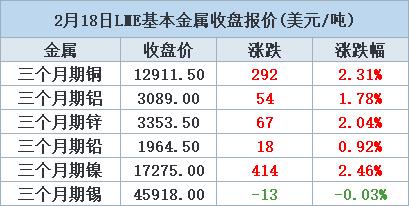
Group 1 - The core viewpoint of the article indicates that copper prices have rebounded after hitting a one-week low, driven by investors taking advantage of lower prices in a light trading environment [1][2]. - On February 18, LME three-month copper rose by 2.31% or $292, closing at $12,911.50 per ton, with an intraday high of $12,941 [2][3]. - Other base metals also saw increases, with three-month aluminum up 1.78%, zinc up 2.04%, lead up 0.92%, and nickel up 2.46%, while tin experienced a slight decline of 0.03% [3]. Group 2 - The Shanghai Futures Exchange was closed for the Lunar New Year, leading to a lack of participation from Chinese traders, the largest consumer of metals [4]. - Copper prices have fallen approximately 12% since reaching a record high of $14,527.50 on January 29, attributed to rising inventories [5]. - Analyst Tom Price noted that during holiday periods, market volatility tends to increase, prompting opportunistic buying [6]. Group 3 - LME copper inventories have increased for 12 consecutive days, reaching 224,625 tons, the highest level in 11 months, with notable increases in inventories at New Orleans and Kaohsiung [7]. - The U.S. warehouses account for nearly 18% of the total available copper inventory in LME warehouses, while the COMEX copper inventory stands at 538,122 tons [7]. - Price highlighted concerns regarding simultaneous increases in inventory and copper prices, indicating potential issues in the market, alongside a decline in U.S. copper consumption over the past year [8]. Group 4 - The LME spot copper contract is trading at a discount of $97 per ton compared to the three-month forward contract, suggesting a lack of immediate demand for copper [9]. - Goldman Sachs anticipates that if the U.S. implements a strategic stockpiling plan that reduces copper availability, there could be upward pressure on copper prices, potentially exceeding their forecast of $11,200 per ton for Q4 2026 [9]. - The World Bureau of Metal Statistics reported a global refined copper production of 2,721.23 million tons and consumption of 2,682.71 million tons for the year 2025, indicating a surplus of 38.51 million tons [9].

金属全线飘红 期铜走高,因最高法院裁定特朗普关税违法【2月20日LME收盘】
Wen Hua Cai Jing· 2026-02-21 01:47
Group 1 - The U.S. Supreme Court ruled that the Trump administration's large-scale tariff policy was illegal, leading to a rise in prices of base metals like copper and aluminum on the London Metal Exchange (LME) [1][3] - On February 20, LME three-month copper rose by $155 or 1.21%, closing at $12,964.0 per ton, while three-month aluminum increased by $35 or 1.14%, closing at $3,102.5 per ton [3] - The ruling is expected to reduce short-term risks to global trade flows and industrial demand, which is beneficial for base metals, although some industry-specific tariffs remain in effect [3] Group 2 - LME copper inventory reached 235,150 tons, the highest since March 2025, with a 65% increase in inventory levels this year [4] - The market experienced fluctuations, initially pressured by a strong dollar, rising LME inventories, and weak demand outlook due to the Chinese New Year holiday, but later rebounded due to positive market sentiment following the Supreme Court ruling [2][4] - Despite the positive sentiment, the potential for alternative trade measures and remaining specific tariffs may limit the upside for metal prices [3]

开年多只FOF涨幅亮眼,金属相关ETF成业绩表现重要支撑
Huan Qiu Wang· 2026-02-21 01:00
进一步来讲,近期受宏观事件影响,有色金属板块调整幅度较大,但中期来看,由于供需缺口未弥合, 大宗商品板块企稳后仍将上行。本轮大宗商品上涨的核心逻辑,包括地缘政治博弈、Al+工业升级带来 的刚性需求、结构性供需缺口等均未发生实质性改变;随着短期情绪恐慌释放、资金拥挤度回落至合理 区间,板块将重新回归基本面驱动,中期上行趋势仍具持续性。(南木) 从持仓结构来看,上述多只绩优FOF均配置了金属相关ETF,成为业绩表现的重要支撑。例如,截至 2025年底,国泰行业轮动重仓持有多只有色金属ETF,包括多只黄金产业主题ETF,如华夏中证沪深港 黄金产业股票ETF、永赢中证沪深港黄金产业股票ETF、国泰中证沪深港黄金产业股票ETF,以及嘉实 中证稀有金属主题ETF、万家中证工业有色金属主题ETF、广发中证稀有金属主题ETF等。 再者,中信建投睿选6个月持有同样重仓配置多只黄金产业相关ETF,并持有前海开源金银珠宝C、万家 中证工业有色金属主题ETF等品种。国泰民安养老2040三年Y主要持有多只中证沪深港黄金产业股票 ETF及前海开源金银珠宝C;前海开源裕源则重仓前海开源金银珠宝A及国泰黄金ETF。 业内人士分析指出,开年以 ...
在短期波动中把握被“错杀”品种的布局机会 | 策马点金
Qi Huo Ri Bao· 2026-02-20 23:43
Core Viewpoint - The global commodity market in 2025 exhibited a clear structural differentiation, with precious metals leading the market, while non-ferrous and new energy metals also performed well. The year 2026 is expected to see a moderate economic recovery and a more accommodative liquidity environment, with investment strategies focusing on selecting sectors and controlling pace as key to success [1][3]. Group 1: Economic Outlook - The global economy is projected to recover moderately in 2026, with an upward trend in the global manufacturing cycle and a stable domestic economy despite differentiation. Inflation and corporate profits are likely to rise moderately [3]. - The Federal Reserve's interest rate cuts are expected to lower global short-term rates, further enhancing the upward potential of the global manufacturing cycle [3]. Group 2: Market Characteristics - The core feature of the capital market in 2026 will be a multi-dimensional "K" type differentiation, characterized by strong external factors versus weak internal factors, old versus new economy, AI versus non-AI, and supply bottlenecks versus supply elasticity [3][4]. - Precious metals and non-ferrous metals are anticipated to be the main asset allocation varieties in 2026 [3][4]. Group 3: Precious Metals - The allocation value of precious metals continues to rise, making them one of the main varieties for 2026. The ongoing geopolitical uncertainties and the U.S. strategic shift towards Europe and South America are expected to enhance gold's safe-haven and allocation value [4]. - The growth in gold ETFs, particularly in European countries, reflects the increasing allocation value of gold [4]. Group 4: Non-Ferrous Metals - The pricing logic of non-ferrous metals is undergoing reconstruction, with a likely upward trend in price centers in 2026. Demand from sectors such as new energy, data centers, and infrastructure investment is driving this change, while traditional real estate demand is declining [4]. - Major countries, led by the U.S. and China, are focusing on resource and key mineral reserves, which will significantly alter short-term supply-demand balance and drive non-ferrous metal prices higher [4]. Group 5: Black and Energy Chemical Sectors - The black metal sector is expected to present limited investment opportunities in 2026, with a tendency towards oscillation due to significant supply elasticity in the industrial chain [5]. - The energy chemical sector offers opportunities primarily in the stock market, with a focus on left-side interventions as capacity cycles peak. The polyester industry is noted for its relatively better fundamentals [5]. Group 6: Geopolitical Factors - Despite an overall optimistic outlook for the commodity market in 2026, a single upward trend is unlikely. Geopolitical disturbances are identified as a key factor influencing market rhythm, with a pattern of "seasonal price increases and actual declines" expected to continue [6][7]. - Geopolitical conflicts may create short-term panic, leading to indiscriminate declines in asset valuations, but these are not expected to evolve into systemic risks. Investors are encouraged to seek out undervalued assets during these periods [7].
中国产业转移不再划算东南亚,1300万吨电解铝产能从北方迁往西部,终于享受自家红利
Sou Hu Cai Jing· 2026-02-20 13:38
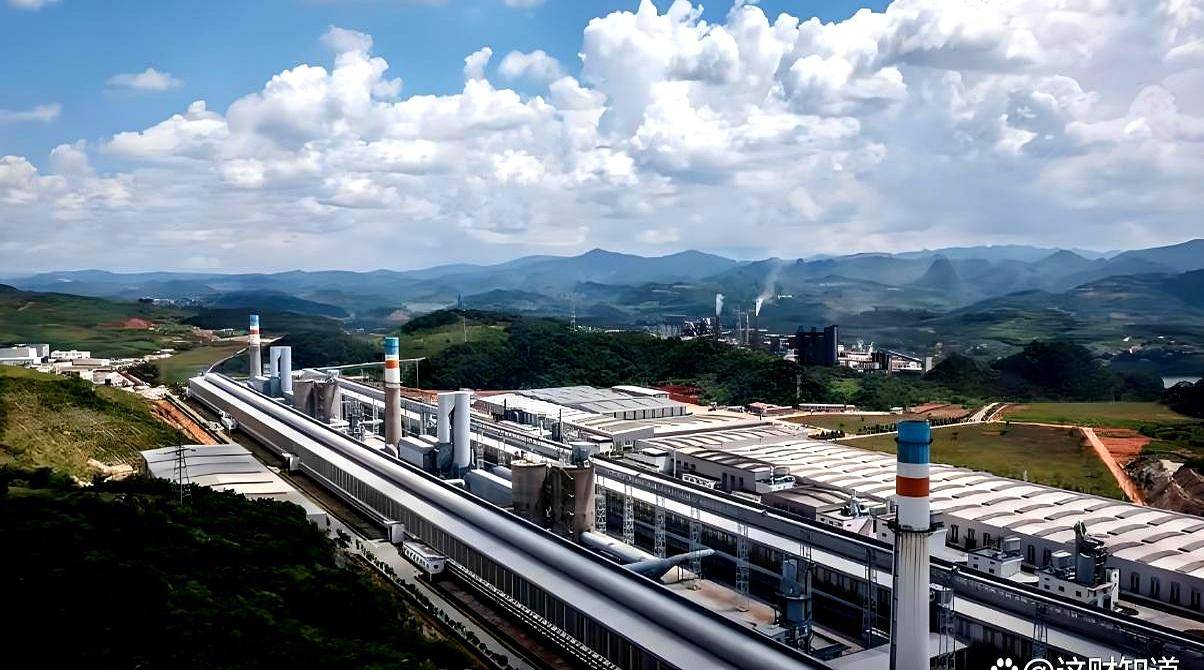
Core Viewpoint - China's aluminum products are becoming more fashionable and environmentally friendly, and the country is not relocating factories to Southeast Asia as it did in the past, but rather revitalizing its own manufacturing capabilities [1][3]. Industry Dynamics - The global electrolytic aluminum production capacity has seen a significant shift, with 13 million tons moving from northern regions like Shandong and Henan to the greener valleys of Yunnan and Sichuan, which is comparable to the total production of North America [1][6]. - China's strategy focuses on maintaining control over its aluminum industry, emphasizing national strategic security and the dominance of the industrial chain, rather than outsourcing high-energy-consuming industries [3][4]. Environmental and Economic Factors - The shift to Yunnan is driven by the availability of renewable energy sources, such as hydropower, which accounts for over 90% of the energy used, resulting in lower electricity costs (20% cheaper than Shandong) and minimal environmental pressure [6][8]. - The carbon emissions from aluminum produced using Yunnan's hydropower are significantly lower, at 1.8 tons of CO2 per ton of aluminum, compared to over 13 tons from coal-fired power [8][9]. Market Opportunities - By 2025, China is projected to export 750,000 tons of aluminum products to Europe, where the carbon tariffs could cost over €24.4 million annually if produced using coal power, while the green aluminum from Yunnan would easily meet standards and command higher prices [9][10]. - The aluminum production value in Wenshan is expected to exceed 100 billion yuan by 2025, with the region becoming a leading hub for aluminum production in China [11][12]. Infrastructure and Logistics - The rapid growth of the aluminum industry in Wenshan is evident, with an annual growth rate of 50%, surpassing many coastal development zones, although logistical challenges exist due to high demand and limited infrastructure [12][14]. - The transition to Yunnan involves rebuilding supply chains, talent pools, and infrastructure, which poses challenges but also highlights the strong coordination capabilities of Chinese enterprises and local governments [14][16]. Strategic Outlook - As international dynamics become more complex, China aims to tighten control over its industrial chain and leverage its green aluminum industry to break through carbon barriers imposed by Europe and the U.S., turning these challenges into opportunities [16][17].
绿科科技国际(00195.HK):预计中期净利润不少于6000万港元
Ge Long Hui· 2026-02-20 11:52
Core Viewpoint - Green Technology International (00195.HK) anticipates a significant increase in profit for the first half of 2025, projecting at least HKD 60 million compared to HKD 15.8 million in the first half of 2024, primarily due to rising tin prices and sales volume [1] Financial Performance - The company expects a profit attributable to owners for the first half of 2025 to be not less than HKD 60 million, a substantial increase from HKD 15.8 million in the first half of 2024 [1] - For the fiscal year ending December 31, 2024, the profit attributable to owners is also expected to increase by at least 100% compared to HKD 68.4 million in the same period of 2023 [1] Market Factors - The primary driver for the profit increase is attributed to higher tin prices and sales volume compared to the first half of 2024 [1] - The growth in profit is partially offset by an increase in foreign exchange losses [1]
绿科科技国际(00195)发盈喜 预期中期股东应占溢利将取得不少于6000万港元
智通财经网· 2026-02-20 10:36
于截至2024年12月31日止年度(2024财政年度),本公司拥有人应占溢利亦预期将较2023年同期的6840万 港元增加不少于100%。 绿科科技国际(00195)发布公告,董事会预期与截至2024年6月30日止六个月(2024年上半年)的拥有人应 占溢利1580万港元相比,本集团于2025年上半年的拥有人应占溢利将取得不少于6000万港元。增长的主 要原因为锡价及销量较2024年上半年有所上升,导致回顾期间毛溢利大幅增加。该增长部分被汇兑亏损 增加所抵销。 ...
【环球财经】东京股市下跌 日经225指数跌1.12%
Xin Hua Cai Jing· 2026-02-20 08:50
Market Overview - The Tokyo stock market experienced declines on February 20, with the Nikkei 225 index closing down by 1.12% and the Tokyo Stock Exchange Price Index down by 1.13% [1] - The decline was influenced by escalating geopolitical risks in the Middle East, which led to a comprehensive drop in the three major U.S. stock indices overnight [1] Market Dynamics - The Tokyo stock market opened lower and faced pressure throughout the day, with significant selling activity observed [1] - The market was further impacted by the news that Blue Owl Capital, a U.S. private credit firm, restricted redemptions from its funds, causing additional market turbulence [1] Investor Behavior - Following a substantial increase of over 900 points in the Nikkei index over the previous two trading days, investors opted to lock in profits ahead of an upcoming three-day holiday, leading to increased profit-taking activities [1] - The Nikkei index closed down by 642.13 points at 56,825.70 points, while the Tokyo Stock Exchange index fell by 43.61 points to 3,808.48 points [1] Sector Performance - Among the 33 industry sectors on the Tokyo Stock Exchange, most sectors experienced declines, particularly in securities and commodity futures trading, transportation machinery, and airline transportation [1] - Conversely, sectors such as non-ferrous metals, petroleum and coal products, and pharmaceuticals saw gains [1]
新疆新鑫矿业A股上市计划推进,行业政策与财务表现引关注
Jing Ji Guan Cha Wang· 2026-02-20 07:51
Company Progress - The company is advancing its A-share listing plan, with the board approving the issuance of A-shares in September 2025 and initiating IPO counseling in October 2025 [1] - In 2025, the company plans to start a 1.5 million tons mining and selection technology reform and electrolytic cell environmental improvement project, aiming to double production and output value over three years [1] Industry Policy and Environment - Indonesia has mandated the world's largest nickel mine, Weda Bay, to reduce ore quotas by 70%, which has led to an increase in nickel futures prices on the London Metal Exchange [2] - If Indonesia's policy results in a nickel supply-demand gap, nickel prices may experience significant rebound potential, indirectly affecting the nickel-focused operations of the company [2] Financial Performance - The company's mid-2025 financial report indicates a net profit decline of approximately 50% year-on-year, primarily due to falling nickel prices and rising costs [2] - The company's stock price has shown significant volatility from January to February 2026, with a drop of 5.26% on January 5 and a rise of 7.66% on February 11, although there are no clear institutional rating recommendations [2]
牛市未央,但逻辑已换
Jing Ji Guan Cha Bao· 2026-02-20 02:04
Group 1 - The core viewpoint of the articles highlights a significant shift in investment behavior among residents, moving from traditional bank deposits to diversified financial products such as bank wealth management, stocks, and gold, driven by declining deposit rates [1][2][3] - In 2025, gold emerged as a standout asset, achieving a price of over $4,300 per ounce with a 65% annual increase, while silver also performed well, rising by 129.83% due to demand in green energy sectors [5][6] - The A-share market experienced a notable recovery, with the Shanghai Composite Index rising from a low of 3,096 points to over 4,000 points by October 2025, driven by technological advancements and institutional support [6][15] Group 2 - The global economic landscape in 2025 was characterized by a slowdown in growth and geopolitical tensions, yet capital markets saw a bull run in commodities, particularly in gold and silver, while the bond market remained stable [2][3] - Institutions surveyed indicated a strong preference for equities, with 70.80% believing stocks would be the most valuable asset in 2025, a significant increase from 46.15% in 2024 [1] - The investment strategy for 2026 is expected to focus on managing uncertainty, with a continued emphasis on A-shares and gold as primary assets [2][10] Group 3 - The outlook for 2026 suggests that the bull market may continue, with expectations of a weaker dollar and ongoing demand for precious metals, particularly gold and silver, which are projected to reach prices of $6,300 to $6,600 per ounce by the end of 2026 [9][10] - The anticipated increase in the Chinese yuan's value may influence foreign investment behavior, with a gradual appreciation expected to support market liquidity [10][12] - Analysts predict that the investment landscape will shift towards a more balanced approach, focusing on corporate earnings recovery and technological advancements as key drivers for market performance in 2026 [13][14]