
电动汽车

Search documents
美国被反击,全世界集体沉默,为什么越被打压,中国反而越稳?
Sou Hu Cai Jing· 2025-11-28 12:32
Group 1 - The trade war initiated by the U.S. under Trump's administration has intensified, with significant tariffs imposed on Chinese electric vehicles and solar batteries, leading to increased costs for American companies and consumers [2] - Despite the tariffs, China's exports of photovoltaic components and batteries have seen substantial growth, with a 25% increase in solar component exports and a 23% increase in battery exports in the first half of the year [2] - In response to U.S. sanctions, China has implemented export controls on rare earths and permanent magnets, which are critical for high-tech and defense applications, potentially impacting U.S. military capabilities [4][6] Group 2 - The U.S. has faced challenges in its manufacturing sector, with the manufacturing purchasing managers' index dropping below 48, indicating contraction, while China maintains a strong position in the global supply chain, particularly in the renewable energy sector [8] - China's dominance in the global supply chain is evident, with 90% of the global market share in the renewable energy sector, and significant export figures, including $52 billion in electric vehicle exports and $7.6 billion in battery exports in the first eight months [8] - The response from other countries to China's export controls has been muted, as many nations rely on Chinese markets and materials, with significant trade volumes between China and "Belt and Road" countries [12][14] Group 3 - The U.S. strategy of "friend-shoring" has not yielded the expected results, as countries like Vietnam and India face logistical challenges and infrastructure bottlenecks, while China continues to strengthen its supply chain resilience [16][20] - China's Belt and Road Initiative is expanding, with investments in green energy projects and mineral supply chains, indicating a long-term strategy to enhance its global trade network [18][22] - The resilience of China's supply chain is attributed to its comprehensive policies and strong partnerships, positioning it favorably in the face of U.S. trade pressures [22]

普京:中国产电动汽车更好更便宜 欧洲汽车工业正崩溃
Xin Jing Bao· 2025-11-28 08:36
Group 1 - The core viewpoint is that Russian President Putin claims Chinese products, particularly electric vehicles, are more competitive than European products, indicating a shift in market dynamics [1] - Putin states that the European automotive industry is in decline, suggesting significant challenges for European manufacturers [1] - He compares the economic situations of Asia and Europe, asserting that the European economy is "shrinking" [1] Group 2 - Putin emphasizes that the economic issues in Europe are a natural development and are not directly related to the situation in Ukraine, indicating a broader context for the economic challenges faced by Europe [1]
广东外贸“十四五”成绩单:规模居全国首位,出口“含新量”攀升
2 1 Shi Ji Jing Ji Bao Dao· 2025-11-28 08:25
Core Insights - Guangdong's foreign trade has achieved significant growth during the "14th Five-Year Plan" period, surpassing 8 trillion and 9 trillion yuan in total trade value, marking historical highs [1] - The province's contribution to national foreign trade growth has increased from 17.8% in 2021 to 38.4% in 2024, solidifying its role as a key player in China's foreign trade [1] Trade Market Expansion - Guangdong has diversified its trade markets, with ASEAN becoming its largest trading partner, reaching an import-export scale of 1.45 trillion yuan in 2024, a growth of 33.5% [2] - Exports to emerging markets such as Latin America, the Middle East, India, Russia, and Central Asia have seen substantial increases, with growth rates of 76.8%, 55.1%, 70.8%, 103.6%, and 208.9% respectively [2] - Trade with countries involved in the Belt and Road Initiative reached 3.48 trillion yuan, growing by 36.4% and accounting for 38.3% of Guangdong's total trade [2] Trade Structure Optimization - General trade has become increasingly significant, with a 46.1% growth in general trade imports and exports, contributing to a 6.3 percentage point increase in overall trade growth [2] - The number of private enterprises engaged in import-export activities rose from 77,000 to 123,000, a 60.7% increase, with their trade value growing by 48.2% [2] Export Dynamics - The export of electric vehicles and lithium batteries has surged, with growth rates of 31 times and 1.3 times respectively, reflecting a shift towards advanced manufacturing and green low-carbon industries [3] - The export scale of integrated circuits, computers, and ships has increased by 77.5%, 70.3%, and 1.7 times compared to the end of the "13th Five-Year Plan," enhancing Guangdong's share in national exports of these products [3] - Self-branded products now account for 21.1% of total exports, up 2.6 percentage points from 2020, indicating a strong global presence of "Guangdong manufacturing" [3] Import Trends - The demand for imports has shifted towards new and high-quality products, with significant growth in the import of integrated circuits, semiconductor manufacturing equipment, and computers, showing increases of 27.1%, 190.3%, and 132.2% respectively [3] - There has been a notable rise in imports of agricultural products and pharmaceuticals, with growth rates of 26.7% and 27.4% respectively, reflecting the increasing domestic consumption needs [3]
制造业劳动生产率,中美孰高孰低?
Cai Jing Wang· 2025-11-28 08:13
Core Viewpoint - The article presents a paradox where China's manufacturing sector exhibits strong global competitiveness despite academic reports indicating its labor productivity is significantly lower than that of the United States. The author argues that the methodology used in these studies is flawed, leading to incorrect conclusions about China's labor productivity [1][15]. Methodological Issues - Traditional methods of measuring labor productivity through value-added calculations can obscure differences in product quality and types, leading to inaccurate comparisons between countries [2]. - The classification differences between U.S. and Chinese manufacturing statistics contribute to misleading productivity comparisons. U.S. statistics include companies that do not manufacture products, while China only includes actual manufacturers [3][4]. - The use of purchasing power parity (PPP) indices to compare value-added across countries may not accurately reflect price differences, complicating productivity assessments [5]. Industry Comparisons - The research focuses on five key industries: shipbuilding, steel, electric vehicles, solar photovoltaic components, and cement. It finds that Chinese workers' per capita output is 2 to 3 times that of their U.S. counterparts, while nominal value-added is about 20% lower due to price differences [7][8]. - In the cement industry, China's per capita output is slightly higher than that of the U.S., but its nominal value-added is only 28% of the U.S. level, primarily due to significant price disparities [8]. Labor Productivity Metrics - The analysis indicates that in shipbuilding, steel, and electric vehicles, China's labor productivity is superior when measured by physical output. For instance, in shipbuilding, China's per capita output is 2.5 times that of the U.S. [16]. - The average nominal wage for Chinese workers is significantly lower than that of U.S. workers, which is attributed to the overall lower wage levels in China rather than lower productivity [8][15]. Trade Barriers and Their Impact - Trade barriers, such as tariffs, inflate domestic prices in the U.S., leading to higher nominal value-added figures without necessarily improving labor productivity [9][11]. - The structural price differences between the U.S. and China further complicate productivity comparisons, particularly in industries like electric vehicles and pharmaceuticals [12][13]. Global Competitive Advantage - China's manufacturing sector is increasingly moving up the value chain, focusing on high-end manufacturing while outsourcing low-end production to countries with lower wages. This strategy enhances China's global competitiveness [17]. - The article suggests that the U.S. should focus on expanding its advantages in high-tech sectors rather than attempting to regain lost ground in general manufacturing, which may lead to adverse economic outcomes [17].

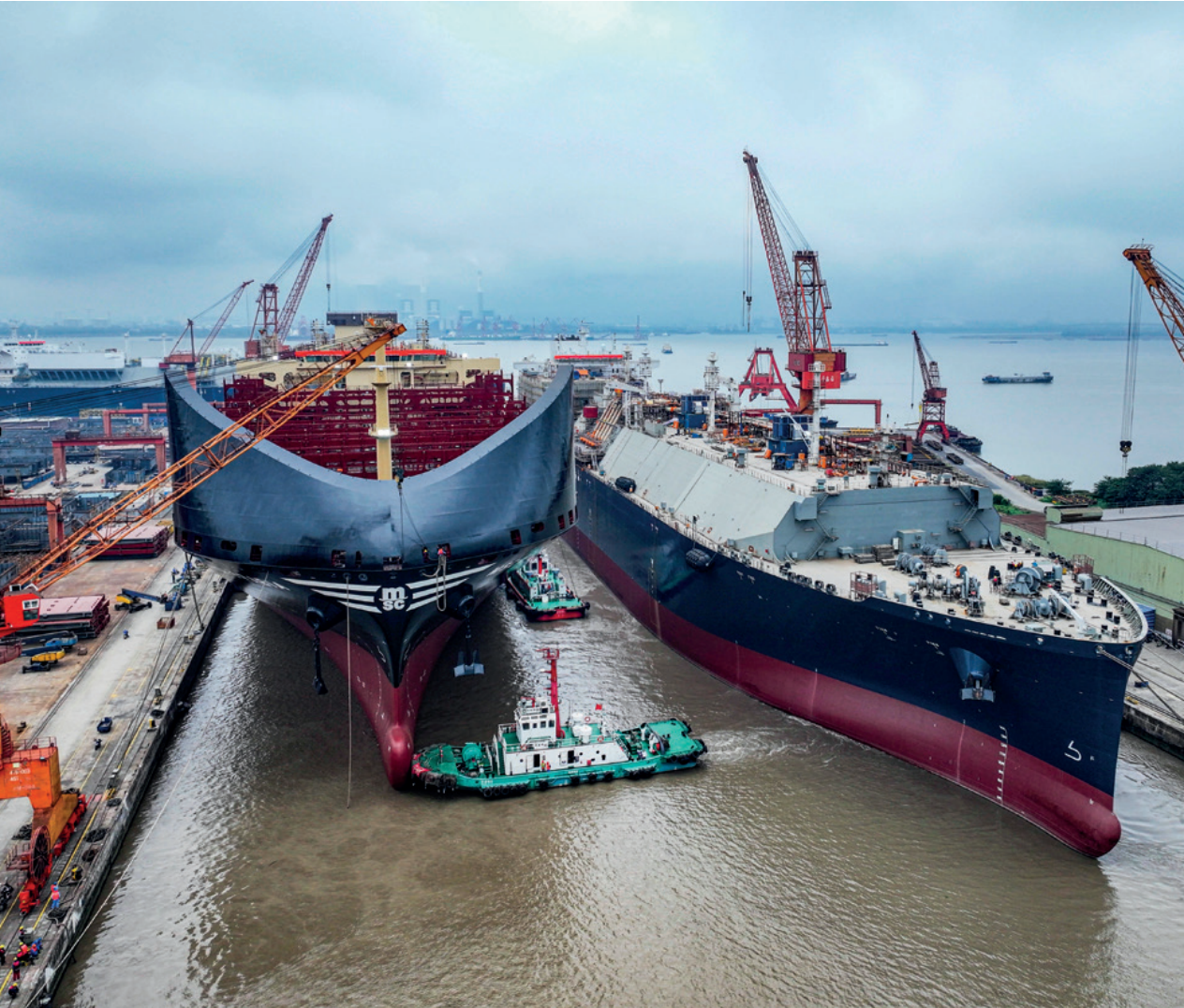
普京夸赞中国电动汽车:比欧洲的更好、更便宜
Di Yi Cai Jing· 2025-11-28 06:59
Group 1 - The core viewpoint is that Russian President Putin highlighted the emergence of more competitive products in China compared to Europe, specifically mentioning electric vehicles as a prime example [1] - Chinese-made electric vehicles are noted to be of higher quality and lower price than their European counterparts, indicating a shift in competitive dynamics in the automotive industry [1]
特斯拉前高管:我们拆解中国电动汽车后发现“妙招”,已应用到自家车型中
Guan Cha Zhe Wang· 2025-11-28 02:13
Core Insights - Tesla has been learning from Chinese electric vehicle manufacturers, including disassembling their vehicles to gain insights that have influenced popular models like the Model 3 and Model Y [1][3] - Jon McNeill, former Tesla executive, highlighted the advanced component reuse techniques employed by Chinese manufacturers like BYD, which extend beyond traditional practices in the automotive industry [3][5] - The reuse of components is crucial for automakers aiming to efficiently scale production and reduce costs, a strategy that has been effectively implemented by Tesla and other vertically integrated companies [5][6] Group 1 - Tesla has disassembled Chinese electric vehicles to learn about component reuse, which has been applied in its own models [1][3] - McNeill noted that BYD has taken component reuse to new heights, saving significant costs even on parts not visible to customers [3][5] - This approach differs from the common practice of platform sharing, where multiple models use the same chassis or underlying architecture [4] Group 2 - McNeill pointed out that traditional automakers like Toyota use different components for each model, contrasting with the standardization seen in Chinese manufacturers [5] - The ability to reuse components is essential for automakers looking to expand production and lower costs, especially for emerging companies [5][6] - Ford's CEO Jim Farley experienced a "wake-up call" after disassembling Tesla and Chinese EVs, prompting a major restructuring of Ford's electric vehicle strategy [6]

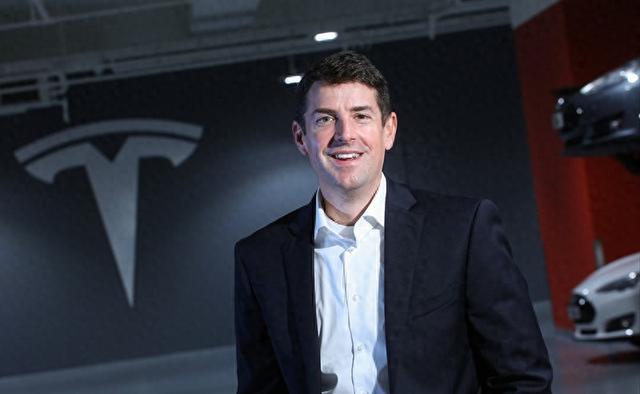
“拆开中国电动汽车一看:哇!这招学到了”
Guan Cha Zhe Wang· 2025-11-28 01:50
Core Insights - Tesla has been learning from Chinese electric vehicle manufacturers, including disassembling their vehicles to gain insights that have influenced popular models like the Model 3 and Model Y [1][3] - Jon McNeill, former Tesla executive, highlighted that Tesla adopted the practice of reusing components across different models, which has been a significant factor in improving production efficiency [1][4] Component Reuse - Chinese manufacturers, particularly BYD, have advanced the reuse of components to a new level, allowing for significant cost savings even in parts not visible to customers [3][5] - This practice of component reuse is not unique to Chinese manufacturers but is more extensively applied by them compared to traditional automakers like Toyota, which uses different components for each model [5][6] Industry Implications - The ability to reuse components is crucial for automakers aiming to scale production efficiently and reduce costs, especially for emerging companies [5][6] - Ford's CEO Jim Farley acknowledged the need for reform within Ford after realizing the competitive edge of Tesla and Chinese EVs, leading to the establishment of a new electric vehicle division [6]

理想宣布26年量产自主品牌5C电池!
起点锂电· 2025-11-27 10:18
Core Viewpoint - The article discusses the strategic developments of Li Auto in the electric vehicle battery sector, particularly focusing on its self-research and production of batteries to enhance safety, performance, and supply chain stability [3][5][6]. Group 1: Event Information - The 2025 (10th) Starting Point Lithium Battery Industry Annual Conference and Lithium Battery Golden Ding Award Ceremony will be held on December 18-19, 2025, at the Venus Royal Hotel in Shenzhen, with an expected offline attendance of over 2000 and online viewership of 30,000 [2]. Group 2: Li Auto's Battery Strategy - Li Auto aims to regain its leading position in range-extended products by 2026, with a focus on optimizing luxury quality and user experience in its upcoming L series models [3]. - The company has established a joint venture, Shandong Li Auto Battery Co., Ltd., with a registered capital of 300 million RMB (approximately 42 million USD), to focus on self-research and mass production of lithium batteries [3][4]. - Unlike its previous collaboration with CATL, the new partnership with Sunwoda allows Li Auto to lead the design and production processes, branding the batteries as "Li Auto Batteries" [4]. Group 3: Research and Development - Li Auto's battery R&D team has grown to over 200 members, with the company president closely monitoring progress every two weeks to ensure alignment with production timelines [4]. - The battery supply strategy includes a dual approach of "purchasing + self-research joint venture," primarily sourcing from CATL while collaborating with Sunwoda for self-researched battery projects [4]. Group 4: Market Positioning and Consumer Trust - The shift to self-researched batteries will provide Li Auto with greater control over battery specifications, allowing for customized development that aligns with vehicle performance needs [5]. - By producing its own batteries, Li Auto aims to reduce costs and enhance pricing power in a competitive market, while also addressing consumer concerns regarding non-CATL batteries [6]. - The trend of automakers developing their own batteries is becoming prevalent in the industry, with companies like Tesla, Volkswagen, and NIO also pursuing similar strategies [6].


大国五年丨逐“绿”向“新”,塞北的风点亮湾区的灯!
Xin Hua She· 2025-11-27 02:00
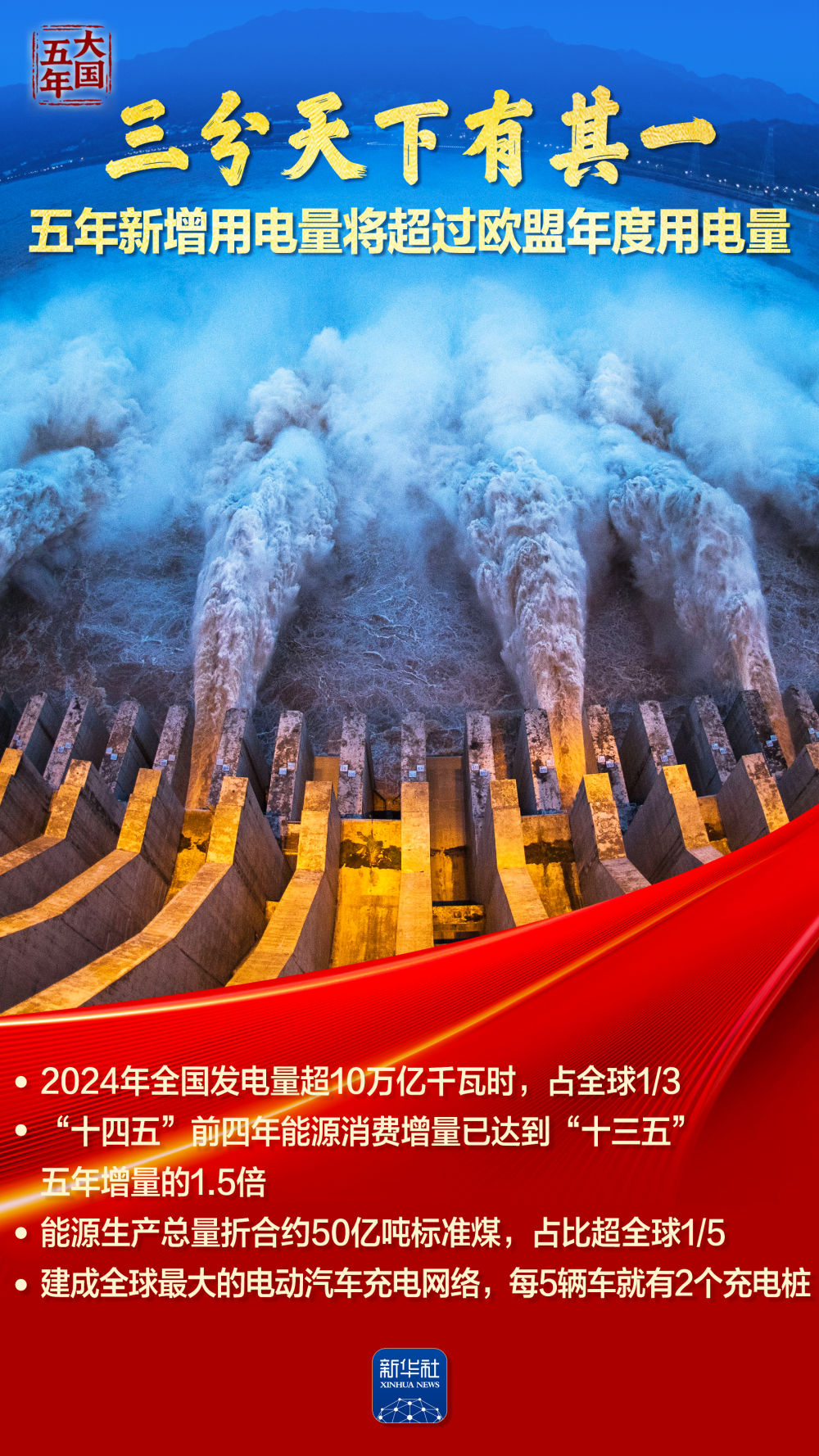
Core Insights - The article highlights China's significant progress in energy transition during the "14th Five-Year Plan" period, emphasizing the shift towards renewable energy and the establishment of a unified national electricity market. Group 1: Energy Production and Consumption - The total energy production in China is approximately 5 billion tons of standard coal, accounting for over 20% of global production [5] - Renewable energy generation capacity has increased from 40% to around 60% [7] - Non-fossil energy consumption in the national energy mix increases by 1 percentage point annually [7] - During the "14th Five-Year Plan," the energy consumption increment has reached 1.5 times that of the previous five years [3] Group 2: Renewable Energy Development - New energy generation accounted for nearly 50% of the total new power generation capacity [14] - As of mid-2023, the installed capacity of new energy storage reached approximately 95 million kilowatts [9] - Wind and solar power generation has reached a scale of over 100 million kilowatts in annual new installations [26] Group 3: Market Dynamics - The volume of electricity traded in the market has increased from 10.7 trillion kilowatt-hours in the "13th Five-Year Plan" to 23.8 trillion kilowatt-hours [12] - The proportion of market-traded electricity in total electricity consumption has remained stable at over 60% for four consecutive years [12] - Each 3 kilowatt-hours of electricity consumed includes 2 kilowatt-hours generated through market transactions [12] Group 4: Investment and Infrastructure - Cumulative central budget investment has reached 25 billion yuan, driving over 800 billion yuan in investments in rural power networks [23] - The annual investment in the energy sector has consistently exceeded 4 trillion, 5 trillion, and 6 trillion yuan [25] - The share of private enterprises in electricity infrastructure construction has surpassed 85%, with an annual growth rate of over 15% [25] Group 5: Environmental Impact - Cumulatively, China has reduced carbon emissions by approximately 4.1 billion tons for other countries during the "14th Five-Year Plan" [7] - By 2024, the production and consumption scale of hydrogen energy in China is expected to exceed 36 million tons, ranking first in the world [9] - The proportion of non-fossil energy generation is projected to reach 1.5 times that of 2020 levels by 2024 [29]
美联储褐皮书:总体而言,根据十二个联邦储备区的大多数报告,经济活动自上次报告以来变化不大,不过有两个地区指出出现了温和的下滑,有一个地区报告了温和的增长。消费者总体支出进一步下降,但高端零售支出仍保持韧性。一些零售商指出,政府停摆对消费者购买产生了负面影响。在联邦税收抵免到期后,汽车经销商报告电动汽车(EV)销量下降。旅游业和旅游活动报告显示最近几周变化不大,一些联系人指出消费者在非必要支出上持谨慎态度
Hua Er Jie Jian Wen· 2025-11-26 19:05
Core Insights - The Federal Reserve's Beige Book indicates that overall economic activity has not changed significantly since the last report, with two districts noting a moderate decline and one district reporting moderate growth [1] - Consumer spending has decreased overall, although high-end retail spending remains resilient [1] - Some retailers have reported that the government shutdown has negatively impacted consumer purchasing behavior [1] - Following the expiration of federal tax credits, auto dealers have reported a decline in electric vehicle (EV) sales [1] - The tourism industry has shown little change in recent weeks, with some contacts noting that consumers are cautious about non-essential spending [1]