电商

Search documents
8点1氪丨携程回应因涉嫌垄断行为被立案调查;茶颜悦色没喝就“消失”半杯,内部人士回应;老干妈回应“味道变了”
3 6 Ke· 2026-01-15 00:06
Group 1 - Coca-Cola has abandoned the plan to sell Costa Coffee due to the private equity buyer's offer not meeting expectations, marking another setback for the company during its ownership of the struggling UK coffee chain [5] - In 2025, China's automotive industry is projected to produce and sell 34.53 million and 34.40 million vehicles respectively, representing year-on-year growth of 10.4% and 9.4%, maintaining its position as the world's largest automotive market for 17 consecutive years [6] - Ctrip has received a notification from the State Administration for Market Regulation regarding an investigation into alleged monopolistic behavior, and the company will cooperate fully with the regulatory authorities [1] Group 2 - JD Logistics plans to offer a cash option to Debon shareholders worth approximately RMB 3.797 billion as part of a proposal to withdraw Debon's shares from the Shanghai Stock Exchange [4] - Audi's global vehicle deliveries in 2025 are expected to be around 1.623 million units, a decrease of 2.9% compared to the previous year [8] - Baoneng Group's chairman has filed a complaint against local authorities regarding alleged illegal actions in a case involving Qoros Auto, claiming that the assets involved are significantly undervalued [9] Group 3 - Tesla has implemented new rules for its supercharging stations, including a more user-friendly fee structure for overstaying and an extended grace period for drivers [10] - Amazon plans to appeal a reduced antitrust fine in Italy, arguing that the accusations of market dominance are unfounded [10] - The U.S. government announced a 25% tariff on certain imported semiconductors and related products, effective from January 15 [18]


华尔街见闻早餐FM-Radio | 2026年1月15日
Sou Hu Cai Jing· 2026-01-14 23:24
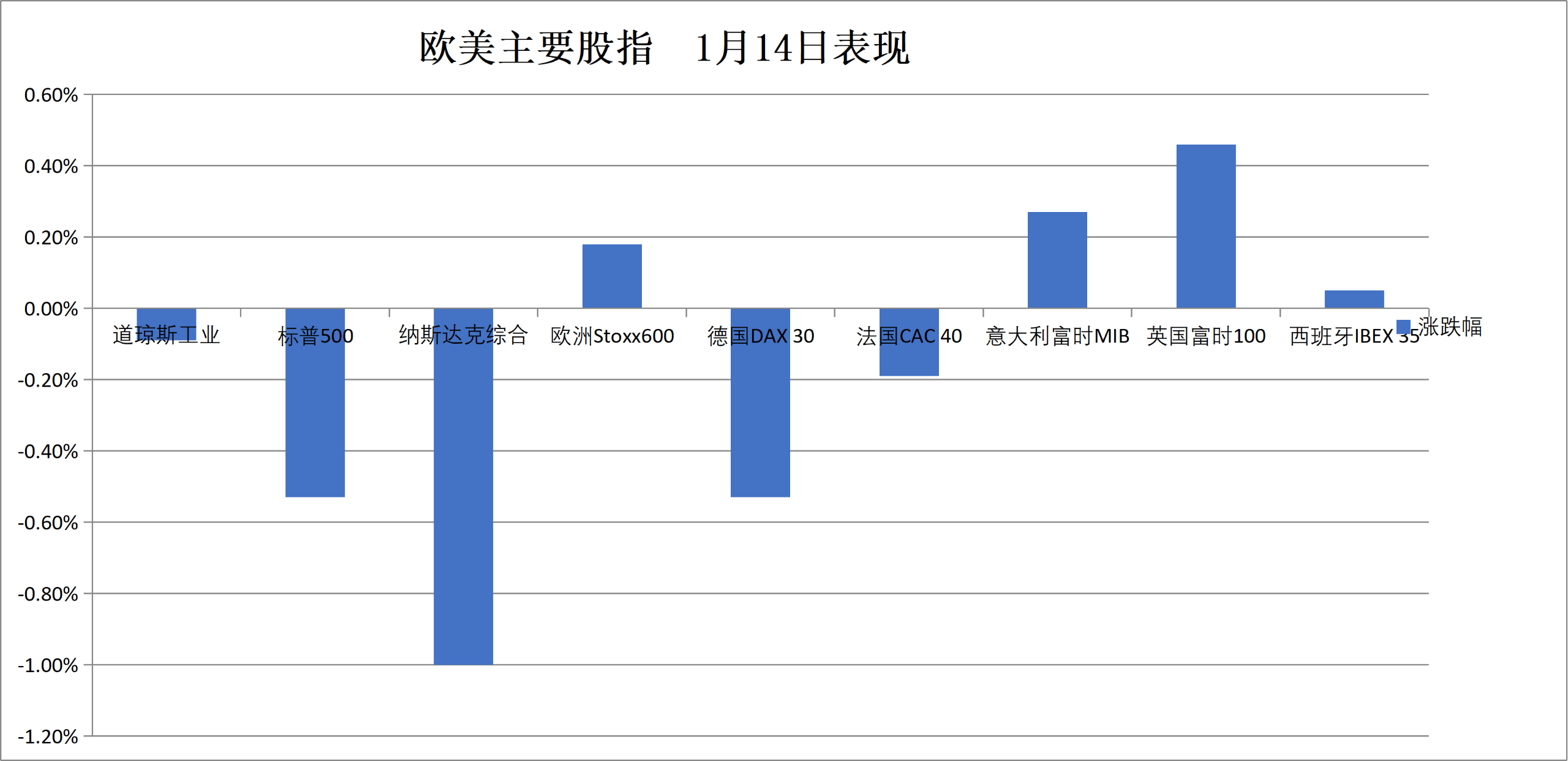
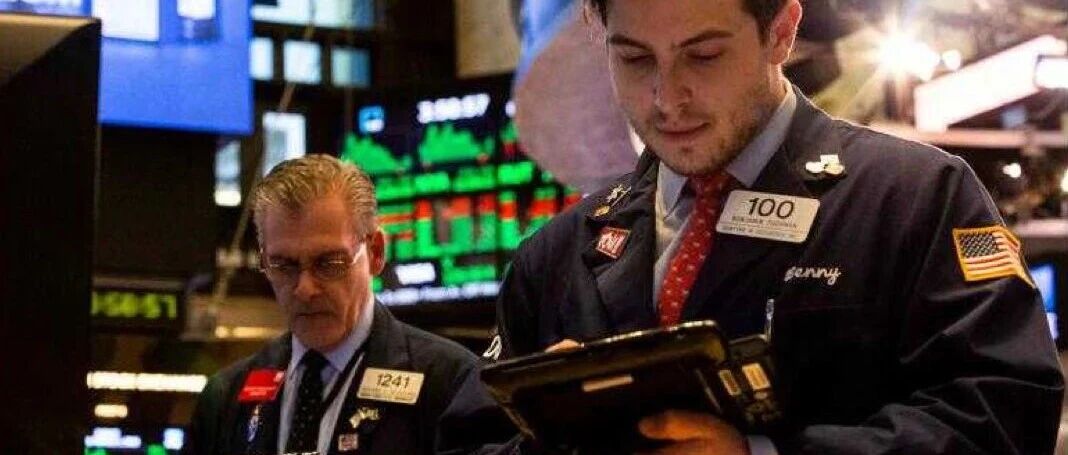
Market Overview - The three major US stock indices experienced their first consecutive declines since 2026, with the Nasdaq dropping by 1%, marking its largest decline in nearly a month. The tech sector dragged down the market, with all "Big Tech" companies, including Microsoft, Amazon, and Meta, falling over 2% [1] - Despite better-than-expected Q4 earnings, Bank of America and Citigroup saw declines of nearly 4% and over 3%, respectively, while Wells Fargo, with weaker profits, dropped over 4% [1] - Chinese stocks, particularly Trip.com, fell by 17% [1] - US and UK government bond prices rose, with the 10-year UK bond yield hitting a 13-month low and the 10-year US bond yield reaching a one-week low [1] - The US dollar index fell after nearing a four-week high, while the Japanese yen rebounded after warnings from Japan's finance minister about potential market intervention [1] - Cryptocurrency prices continued to rise, with Bitcoin surging nearly 4% to break $97,000, reaching a nearly two-month high [1] - Precious metals saw significant gains, with gold and silver hitting historical highs, and copper and tin also reaching record levels [1] Key News - China's foreign trade accelerated in December, with exports in USD terms increasing by 6.6% year-on-year and imports rising by 5.7%. Steel exports reached a record high, and rare earth exports surged by 32% year-on-year [3][19] - The Shanghai and Shenzhen stock exchanges raised the minimum margin requirement for financing from 80% to 100%, aimed at reducing market leverage [3][20] - The US Supreme Court failed to make a ruling on Trump's tariff policy, maintaining the Nasdaq's 1% decline [4] - US retail sales unexpectedly rose by 0.6% in November, driven by strong automotive and holiday spending [4][22] - The US PPI rose to 3% year-on-year in November, with energy costs being a significant factor [4][22] - The Federal Reserve's Beige Book indicated overall economic improvement, with most regions reporting stable employment levels and moderate price increases [5][23] Company Developments - Alibaba announced a product launch event for its AI application, "Qianwen," scheduled for January 15, aiming to enhance its capabilities in various life scenarios [9][40] - Baidu is considering upgrading its secondary listing in Hong Kong to a "dual primary listing" to attract mainland capital [32] - 澜起科技 plans to raise $900 million through an IPO in Hong Kong, driven by AI infrastructure demand, with a valuation of $22 billion [32] Industry Trends - The semiconductor industry is witnessing significant developments, with a focus on flexible electronics and intelligent sensing technologies [38] - The AI sector is rapidly evolving, with Alibaba's Qianwen app expected to integrate various services, enhancing its operational capabilities [39] - The automotive industry is advancing towards high-level autonomous driving applications, with plans for large-scale implementation by 2027 [40]



智通ADR统计 | 1月15日
智通财经网· 2026-01-14 22:41
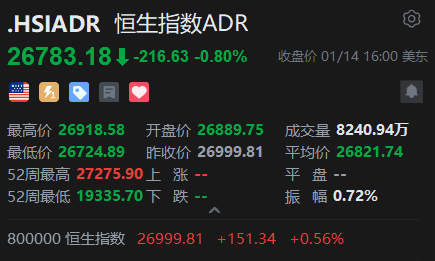
Market Overview - The Hang Seng Index (HSI) closed at 26,783.18, down by 216.63 points or 0.80% as of January 14, 16:00 Eastern Time [1] - The index reached a high of 26,918.58 and a low of 26,724.89 during the trading session, with a trading volume of 82.41 million [1] Major Blue-Chip Stocks Performance - HSBC Holdings closed at HKD 127.501, up by 0.39% compared to the Hong Kong close [2] - Tencent Holdings closed at HKD 632.594, down by 0.06% compared to the Hong Kong close [2] Stock Price Movements - Tencent Holdings (00700) latest price is HKD 633.000, with an increase of HKD 5.500 or 0.88%, but its ADR price is HKD 632.594, showing a decrease of HKD 0.406 [3] - Alibaba Group (09988) latest price is HKD 169.000, up by HKD 9.100 or 5.69%, with an ADR price of HKD 165.595, down by HKD 3.405 [3] - HSBC Holdings (00005) latest price is HKD 127.000, up by HKD 0.600 or 0.47%, with an ADR price of HKD 127.501, up by HKD 0.501 [3] - Other notable movements include Meituan (03690) down by 3.24% and Ctrip Group (09961) down by 6.49% [3]





中国企业出海的新特点、新趋势
Shang Hai Zheng Quan Bao· 2026-01-14 17:51
Group 1: New Characteristics of Chinese Enterprises Going Abroad - Since 2018, Chinese enterprises have formed a new wave of going abroad characterized by unprecedented diversity in participants, including large corporations, small and medium-sized enterprises, and individual entrepreneurs, with destinations spanning across continents [1][2] - The industries involved in this wave are comprehensive, including both low-end and high-end sectors such as new energy vehicles and fintech, as well as manufacturing and service industries like telecommunications and food and beverage [2][3] - The scale of going abroad is substantial, with a large number of enterprises and significant investment, which can rapidly enhance the industrial levels of many smaller and developing economies [3] Group 2: Impact and Trends of Chinese Enterprises Going Abroad - The trend of Chinese enterprises going abroad is expected to significantly influence the global economic landscape, forming supply chains led by Chinese companies and promoting the internationalization of Chinese standards and rules [4][5] - Many developing countries are likely to achieve rapid industrial upgrades and infrastructure improvements, altering their competitive positions in regional and global economies [5] - Chinese enterprises are poised to become the main force in large-scale industrial transfers and cross-border investments in the coming period, marking a shift from the previous patterns of labor-intensive manufacturing transfers by developed countries [5][6] Group 3: Strategic Support for Enterprises Going Abroad - A comprehensive strategic support framework is necessary for enterprises going abroad, which includes innovative methods to protect their legal rights and asset security, as well as a reassessment of cross-border capital flows [8][9] - Regulatory and policy measures should be employed to guide and support Chinese enterprises in their international endeavors, ensuring compliance and sustainability while protecting their interests [9][10] - Financial services must be provided comprehensively to meet the diverse needs of both large and small enterprises going abroad, with a focus on creating a robust financial service ecosystem [12][15]
【环球财经】土耳其2025年并购交易规模创新高 外资流入近70亿美元
Xin Hua Cai Jing· 2026-01-14 16:40
Group 1 - The total value of mergers and acquisitions (M&A) in Turkey for 2025 reached 466.1 billion lira (approximately 11.81 billion USD), marking the highest annual level since the Turkish Competition Authority began reporting in 2013 [1] - Foreign-led M&A transactions accounted for the largest share, with 55 deals involving Turkish companies totaling 277.5 billion lira (about 7 billion USD), representing the second-highest annual foreign investment scale in Turkey's history [1] - In domestic transactions, the technology sector ranked first in deal volume, with 25 transactions in software development, consulting, and related IT services [1] Group 2 - The largest disclosed M&A deal in Turkey for 2025 was the acquisition of a vehicle inspection station project by the MOI consortium for 1.72 billion USD [2] - The second-largest deal involved Apollo Global Management acquiring a 3% stake in the Trans-Anatolian Natural Gas Pipeline (TANAP) for 1 billion USD [2] - Uber's acquisition of an 85% stake in the Turkish e-commerce platform "Trendyol Go" for 700 million USD ranked third among the largest transactions [2]
AI照骗横行电商 货不对板谁之过
Xin Lang Cai Jing· 2026-01-14 16:31
Core Viewpoint - The rise of AI-generated images in e-commerce has led to a surge in consumer disputes, as many products do not match the highly polished promotional images, resulting in a gray industry exploiting low-cost technology for deceptive advertising [4][5][9]. Group 1: Consumer Complaints - Numerous consumers have reported receiving products that significantly differ from the AI-generated images used for marketing, leading to feelings of frustration and betrayal [5][7]. - A notable case involved a consumer who ordered a plush toy based on an AI-generated image, only to receive a poorly made version that did not resemble the advertised product [5]. - Data from the Wuxi Consumer Rights Protection Committee indicated that there were 127 complaints related to smart service consumption in the third quarter of 2025, many of which involved disputes over AI-generated promotional materials [8]. Group 2: Gray Industry Formation - The low cost of creating AI-generated images has attracted unscrupulous merchants who can produce high-quality promotional content without the need for traditional product development processes [9]. - Some online platforms are selling AI tools that allow merchants to generate realistic product images quickly, significantly reducing marketing costs compared to hiring models and photographers [9]. Group 3: Legal Implications - The use of AI-generated images without proper disclosure may violate consumer rights and advertising laws, potentially leading to penalties for businesses [10][11]. - New regulations effective from September 1, 2025, require clear labeling of AI-generated content used for commercial purposes, and failure to comply could result in legal consequences [10]. Group 4: Recommendations for Governance - A collaborative approach involving regulators, platforms, industries, and consumers is essential to address the issues surrounding AI-generated promotional images [12]. - Regulatory bodies should establish clear guidelines for the use of AI-generated content in e-commerce, while platforms must enforce stricter compliance measures and improve dispute resolution processes [12]. - Industry self-regulation is crucial, with associations encouraged to create ethical standards for AI technology use in e-commerce [12].

美股集体下跌,携程重挫18%,“妖镍”直线急升,加密货币反弹,超13万人爆仓
2 1 Shi Ji Jing Ji Bao Dao· 2026-01-14 15:45
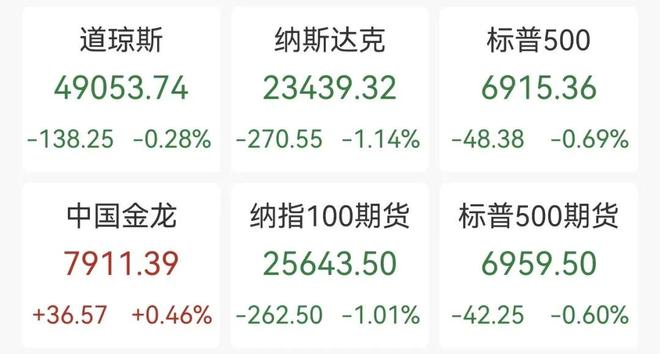
Market Overview - The US stock market experienced a collective decline, with the Nasdaq index dropping over 1% as of 23:00 [1] - The Dow Jones, Nasdaq, and S&P 500 indices closed at 49,053.74, 23,439.32, and 6,915.36 respectively, with declines of 0.28%, 1.14%, and 0.69% [2] Technology Sector - The technology sector saw significant losses, particularly in chip stocks, with ARM falling nearly 5% and other major companies like Nvidia and Marvell Technology declining around 2% [2][3] - The "big seven" tech companies in the US all experienced declines [2] Chinese Stocks - Several popular Chinese stocks faced downturns, with Ctrip initially plunging 18% due to an investigation by the market regulator for alleged monopolistic behavior [4] - Other Chinese companies like Dada Group and New Oriental also saw declines of over 3% [4] Precious Metals - Silver prices surged, breaking through $92 per ounce, marking a 28.6% increase year-to-date [5][6] - Gold prices also rose, reaching over $4,640 per ounce, with a 7.32% increase since the beginning of the year [6] Cryptocurrency Market - The cryptocurrency market rebounded significantly, with Bitcoin rising over 4% and Ethereum nearly 6% [8] - Over 130,000 traders faced liquidation in the past 24 hours, indicating high volatility [8][10] Economic Indicators - Despite lower-than-expected CPI data, the US stock market declined, reflecting concerns over political uncertainty, potential inflation rebound, and high valuation levels in the market [12][13] - The current valuation levels of US stocks, particularly in the tech sector, are perceived as high, leading investors to lock in profits and shift towards defensive strategies [13]
美股科技股集体下跌
第一财经· 2026-01-14 14:56
Group 1 - The U.S. stock market opened lower on January 14, with the Dow Jones down 0.21%, the Nasdaq down 0.82%, and the S&P 500 down 0.55% [1] - Technology stocks experienced a broad decline, with Nvidia, Tesla, Google, and AMD all falling over 1%, while Apple and Netflix also saw decreases [3] - Chinese concept stocks showed mixed performance, with Ctrip falling over 18% due to an investigation by the market regulatory authority, while Pinduoduo dropped over 4%. In contrast, Bilibili rose over 5% and Alibaba increased by over 2% [3] Group 2 - Ctrip Group's stock (TCOM.O) fell by 18.42%, with a market capitalization of 44.1 billion and a price-to-earnings ratio of 10.0 [4] - Bank stocks generally declined, with Wells Fargo and Bank of America both dropping over 3% [3] - Gold stocks surged, with Coeur Mining and AngloGold both rising nearly 3% [3]
阿里巴巴-W(09988):FY26Q3前瞻点评:AI驱动阿里云继续加速,电商基数影响略承压
Orient Securities· 2026-01-14 13:59
Investment Rating - The report maintains a "Buy" rating for Alibaba [5][11] Core Insights - AI-driven growth in Alibaba Cloud is expected to continue, while e-commerce faces pressure with flash sales showing steady loss reduction. The company's large consumption strategy is progressing in a coordinated manner [4][10] - The forecast for Alibaba's revenue for FY2026-2028 is adjusted to 1,030.7 billion, 1,143.2 billion, and 1,251.8 billion CNY respectively, with adjusted net profits of 91.6 billion, 135.8 billion, and 176.1 billion CNY [4][14] - The target price is set at 207.7 HKD, based on a market capitalization of 35,656 billion CNY [4][14] Revenue and Profit Forecast - For FY2026, total revenue is projected at 1,030.7 billion CNY, with a year-on-year growth of 3.45%. The adjusted net profit is expected to be 91.6 billion CNY, reflecting a decrease of 13.21% year-on-year [13][15] - The revenue from Alibaba Cloud is anticipated to reach 434.9 billion CNY in FY26Q3, representing a year-on-year increase of 37.0% [10][15] E-commerce Performance - The e-commerce segment is projected to generate 1,054.8 billion CNY in FY26Q3, with a year-on-year growth of 3.4%. However, the growth rate is expected to slow down due to high base effects and policy impacts [10][15] - The flash sales segment is estimated to incur a loss of approximately 21.5 billion CNY in FY26Q3, with a single average loss of 3.7 CNY [10][15] Cloud Intelligence Group - The Cloud Intelligence Group is expected to accelerate further, driven by AI demand, with external revenue showing significant growth [10][15] - The report highlights Alibaba's unique position as the only full-stack AI cloud provider in China, which is expected to enhance its revenue and profit potential [10][15] Other Business Segments - The AIDC segment is projected to continue reducing losses, with an expected loss of 1.89 billion CNY in FY26Q3 due to increased investment in promotional activities [10][15] - The report emphasizes the potential for Alibaba's C-end AI applications to drive user growth and enhance the overall AI ecosystem [10][15]
收到绿包 请配合监管查看
Datayes· 2026-01-14 12:50
Core Viewpoint - The article discusses recent regulatory measures in the A-share market aimed at cooling down excessive market activity, particularly by increasing the margin requirement for financing transactions from 80% to 100% to protect investors and manage leverage levels [2][3][5]. Regulatory Measures - The increase in financing margin requirements is intended to reduce leverage and protect investor rights, applicable only to new financing contracts [3]. - The market reacted with significant sell orders on major stocks, indicating a cautious sentiment among investors [5]. Market Reactions - Major stocks like China Merchants Bank saw sell orders exceeding 6.5 billion yuan, with several other stocks also experiencing large sell orders [5]. - Analysts suggest that while the measures may alter the pace of market growth, they do not fundamentally change the overall bullish trend of the market [5]. Industry Highlights - The article highlights the performance of various sectors, noting that the healthcare sector showed strength with stocks like Nuo Si Ge and Pu Rui Si rising over 10% [14]. - Alibaba's upcoming AI application launch is expected to stimulate the AI sector, with several related stocks experiencing significant price increases [10][14]. Financial Performance - Alibaba's cloud revenue is projected to grow by 35% year-on-year in the upcoming quarter, reinforcing its leading position in the market [14]. - The article mentions that the silver market has reached a historic high, with prices surpassing $90 per ounce, indicating strong demand in various industries [12]. Stock Market Overview - The total trading volume in the three markets reached 39,872.20 billion yuan, marking an increase of 2,881.10 billion yuan from the previous day, with over 2,700 stocks rising [14]. - The article notes that 111 stocks hit the daily limit up, reflecting a robust market sentiment despite regulatory interventions [14].