家电

Search documents
大消费行业周报:2025年社零首破50万亿,关注细分赛道机会-20260125
Ping An Securities· 2026-01-25 11:09
Investment Rating - The industry investment rating is "stronger than the market," indicating that the industry index is expected to outperform the market by more than 5% in the next six months [28]. Core Insights - The total retail sales of consumer goods in 2025 are projected to exceed 50 trillion yuan, highlighting significant growth potential in the consumer sector [4][10]. - The report emphasizes the importance of focusing on specific segments within the consumer industry, such as tourism, beauty, jewelry, media, and food and beverage, which are expected to show resilience and growth [4][10]. Summary by Relevant Sections Social Services - The tourism sector is expected to continue its recovery, with leading companies responding effectively to changing consumer demands, particularly as the Spring Festival approaches [4]. - The beauty industry is experiencing steady growth, with a focus on companies that can quickly adapt to market dynamics [4]. - The jewelry sector presents investment opportunities, particularly for brands that can increase market share and maintain strong performance [4]. Food and Beverage - Alcohol - Major liquor companies are experiencing a deeper decline in net profits compared to previous quarters, but leading firms are expected to enhance market share through effective brand management [4]. - The report identifies three key investment lines: high-end liquor with stable demand, mid-range liquor with national expansion, and local real estate liquor [4]. Food and Beverage - General - The at-home dining market, represented by companies like Guoquan, shows significant growth potential, with a focus on product, channel, and supply chain advantages [4]. - The restaurant sector is entering a peak season with the upcoming Spring Festival, and supply chain conditions are stabilizing [4]. Key Company Announcements - China Duty Free Group is expanding its international retail market presence through a strategic partnership with LVMH, which includes a significant acquisition [12]. - Meili Tianyuan is forecasting a revenue increase of at least 16% in 2025, driven by both external acquisitions and strong internal growth [15]. - Longzi Co. is expecting a net profit of 9-10.5 billion yuan for 2025, indicating a positive outlook despite some adjustments in financial reporting [15].
从孵化到长红:天猫升级新品全链路 开启180天长效扶持
Zheng Quan Ri Bao Wang· 2026-01-25 10:47
Core Insights - The NEWty 2026 Tmall Super New Products Festival highlighted the impressive growth of new products in 2025 and announced key support measures for high-quality new products in 2026, including six major new product awards and a special recognition for women [1][11] Group 1: Growth Data and Brand Performance - Tmall has established itself as the primary launch platform for new products, with over 16 million quality new products launched in 2025, achieving a historical high in new product scale [2] - The overall transaction growth for new products reached 34%, with over 30,000 quality new products achieving sales exceeding one million, reflecting the platform's strong incubation capabilities [2] - Notable brands shared their successful new product strategies, such as Adidas, which saw a sales increase of over 25 times through its new series and Tmall's global launch [2] Group 2: Award Recognition and Brand Innovation - Several brands received awards for their outstanding innovation and marketing performance, including Duck Duck, which achieved over 100 million in sales during Tmall Super Brand Day [3] - Talanis was recognized for its innovative children's running shoes, becoming the first children's shoe brand on Tmall to surpass 100 million in sales [3] - Mao Ge Ping's "Earth Eye Shadow" series achieved over 300 million in exposure during Tmall Super Brand Day, earning the title of "Cultural Creativity Brand of the Year" [3] Group 3: Consumer Engagement and Marketing Strategies - Disney and Shanghai Disneyland won the "Consumer Choice Brand of the Year" for their collaboration on the "Zootopia 2" movie and related experiences [4] - Xiaojia's innovative marketing strategies led to record sales during its 10th anniversary campaign, with its new product ranking first in category sales [4] - Shaoyin's collaboration with Tmall Super Brand Day resulted in a 100% year-on-year sales increase, showcasing effective marketing innovation [4] Group 4: Recognition of Industry Leaders - The Tmall Annual Business Person Award was established to honor individuals who significantly shape the Chinese consumer market, with three notable winners recognized for their contributions [7] - Gao Dekang from Bosideng, Adrian Siu from Adidas, and Jasmine Xu from Procter & Gamble were awarded for their leadership and innovation in their respective fields [7][8] Group 5: Women's Empowerment Initiatives - The festival included special awards focusing on women's empowerment, recognizing brands that integrate commercial practices with support for women's growth [9] - The "Annual Women's Power Brand" award was given to brands like Erdos Group and Estée Lauder for their initiatives supporting women's development [9] - The "Annual Women's Power Award" was awarded to Ma Xiaoyu from L'Oréal China for her efforts in promoting women's rights and empowerment in the industry [9] Group 6: Future Initiatives and Support Measures - Tmall announced its core support measures for high-quality new products in 2026, aiming to enhance resource investment and increase traffic to ensure successful product launches [11] - The platform plans to utilize algorithms to identify target audiences for new products and leverage global marketing events to boost product visibility [11]
家电周报:亿田智能发布2025年业绩预告,石头科技发布新品-20260125
Shenwan Hongyuan Securities· 2026-01-25 09:28
Investment Rating - The report maintains a positive outlook on the home appliance industry, particularly on leading companies in the white and black goods sectors, highlighting their low valuations, high dividends, and stable growth potential [2][3]. Core Insights - The report identifies three main investment themes: 1. **Dividend and Growth**: Leading companies in the white and black goods sectors are characterized by low valuations, high dividends, and stable growth, providing a high safety margin and significant price elasticity. The impact of the trade-in policy is expected to continue positively into 2026 [2][3]. 2. **Technological Transition**: Key upstream component manufacturers are diversifying into emerging technology sectors such as robotics, data center temperature control, and semiconductors, seeking cross-industry transformation [2][3]. 3. **Market Demand**: Both domestic and international markets show promising demand, with established companies expanding production bases globally to mitigate trade fluctuations and capture growth in emerging markets [2][3]. Sales Data Summary - **Air Conditioning**: In December 2025, online retail sales volume was 720,000 units, a year-on-year decrease of 38.5%, while offline sales volume was 162,000 units, down 42.9%. The average online retail price decreased by 4.2% to 2,981 yuan per unit, and the offline average price fell by 20.1% to 3,801 yuan per unit [2][3][35]. - **Kitchen Appliances**: - **Range Hoods**: Online sales volume was 443,000 units, down 16.8%, while offline sales were 57,000 units, down 32.1%. The online average price increased by 14.4% to 1,739 yuan per unit, while the offline average price decreased by 14.4% to 3,813 yuan per unit [3][41]. - **Dishwashers**: Online sales volume was 49,000 units, down 10.2%, and offline sales were 5,000 units, down 44.2%. The online average price decreased by 1.1% to 4,245 yuan per unit, while the offline average price increased by 1.4% to 7,990 yuan per unit [3][41]. Company Updates - **Yitian Intelligent**: Forecasts a net loss of 186 to 152 million yuan for 2025, compared to a profit of 26.54 million yuan in 2024 [5][11]. - **Roborock Technology**: Launched new products including the G30S Pro and P20 Ultra, featuring advanced cleaning technologies and high efficiency [5][12]. - **Stock Performance**: The home appliance sector outperformed the CSI 300 index, with notable gains from companies like Aojiahua (10.1%) and Hisense Visual (5.7%) [5][6][8]. Macro Economic Environment - As of January 23, 2026, the USD to RMB exchange rate was 6.9929, reflecting a decrease of 0.51% since the beginning of the year [46][48]. - In December 2025, the total retail sales of consumer goods reached 45,135.90 billion yuan, a year-on-year increase of 0.86% [48][49].





文化与科技跨界对话 “卡萨帝非遗守护之旅”在亳州启动
Zhong Guo Jin Rong Xin Xi Wang· 2026-01-25 09:10
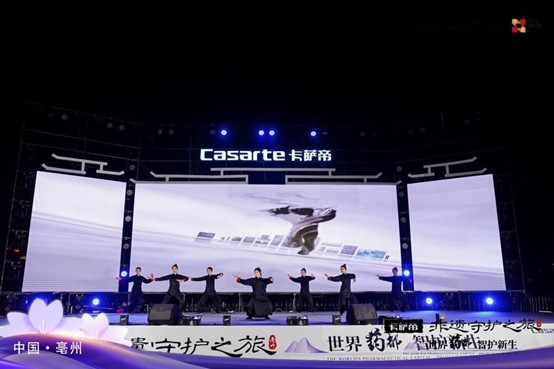
Group 1 - The event "World Pharmaceutical Capital, Smart Care for Newborns" was launched in Bozhou, Anhui, aiming to bridge traditional culture and smart technology, responding to national policies on consumption and home appliance upgrades [1][3] - Bozhou's rich cultural heritage, including intangible cultural assets like Hua Tuo's Five Animal Play, provides a strong foundation for cultural innovation and transmission [3] - The event featured performances showcasing traditional crafts, allowing attendees to experience the unique charm of intangible cultural heritage [3] Group 2 - Haier's high-end home appliance brand Casarte aligns its brand philosophy of "using technology to care for quality life" with the wisdom embedded in traditional crafts, promoting a policy of "replacing old appliances with new ones" alongside cultural revitalization [3][5] - The "Smart Guardian Interactive Exhibition Area" attracted many citizens, demonstrating how advanced technology in home appliances integrates into daily life, making technology more tangible [5] - The event successfully merged consumption promotion with intangible cultural heritage, injecting cultural innovation into the local market and enhancing the appeal of traditional culture [5]

固收专题报告:追风不如乘风
ZHONGTAI SECURITIES· 2026-01-25 08:53
Report Industry Investment Rating - The industry rating is "Overweight", expecting a gain of more than 10% relative to the benchmark index in the next 6 - 12 months [19] Core Viewpoints of the Report - Since the beginning of 2026, the A - share market style has changed from unilateral upward movement to high - frequency rotation. It is better to hold the core main line firmly than to chase the market in high - frequency rotation. The AI industry chain remains the market consensus, and the current market cooling is a "slope adjustment" rather than a "trend end" [3] - The acceleration of industry rotation is a benign spread of funds from "point" to "surface". The market is seeking a pricing balance between technology and prosperous industries [3] - The net inflow of industry ETFs has increased, showing a configuration pattern of "cycles as shields and technology as spears". It is recommended to adopt a "dumbbell - shaped" configuration strategy [3] Summary by Directory Market Focus Always on the Main Line, AI Industry Chain Remains the Consensus - From the perspective of trading volume proportion, industries such as electronics, computers, and national defense and military industry have always been at the core of the market. Even with short - term disturbances, the electronics sector's trading volume proportion remains at a high level of 17% - 20%, and that of national defense and military industry has gradually recovered, indicating strong capital stickiness [3][8] - The current market cooling is a "slope adjustment" rather than a "trend end". The high concentration of the chip structure proves that the AI industry chain is an investment main line with in - depth consensus, and high activity provides strong resilience and upward elasticity [3][8] Liquidity Spillover, the Advantage of "Technology + Prosperity" Portfolio Highlights - As the market enters the adjustment period, liquidity begins to spread from high - consensus varieties to prosperous industries with catch - up logic. When the technology main line adjusts, funds flow to industries such as chemicals, non - ferrous metals, and banks [10] - This shows that it is not the ebb of the main line but the natural spread of liquidity from "point" to "surface". The market is seeking a pricing balance between technology and prosperous industries [11] - Since the beginning of the year, some sectors have shown high weekly and year - to - date excess returns. The strategy of holding the AI bottom position and combining bull - market varieties has a higher winning rate than blind rotation [12] ETF Fund Flows: Driven by the Resilience of Prosperity and Technology - Although the broad - based ETFs are still experiencing net outflows (the weekly outflow of CSI 300ETF is 724.2 billion yuan), the industry ETFs are in a state of net buying, with a cumulative net inflow of 78.82 billion yuan [13] - There has been a significant pulsed inflow of funds into the non - ferrous sector without siphoning other sectors. The technology sector also has a large net inflow, especially software and satellite sub - industries, showing a configuration pattern of "cycles as shields and technology as spears" [14] It's Better to Be Part of the Wind Than to Chase It - The main line of this bull market is clear, with technology being the best offensive variety. It is recommended to adopt a "dumbbell - shaped" configuration and hold firmly [3][17] - One end of the "dumbbell" is the technology main line, including storage, equipment, advanced packaging, AI applications, commercial aerospace, and robots. The other end is the prosperous cyclical sectors such as non - ferrous metals and chemicals, and also pay attention to stable sectors like home appliances and transportation [3][17]
澳柯玛(600336.SH):2025年度预亏1.7亿元至2.2亿元
Ge Long Hui A P P· 2026-01-25 08:45
Core Viewpoint - The company, Aucma (600336.SH), is expected to report a significant increase in losses for the fiscal year 2025, with projected net profit attributable to shareholders ranging from -170 million to -220 million yuan, compared to the previous year [1] Financial Performance - The anticipated net profit excluding non-recurring items for 2025 is estimated to be between -192 million and -242 million yuan [1] - The company has experienced a decline in overall revenue and a decrease in gross profit, leading to an expanded operating loss [1] Strategic Initiatives - The company is actively implementing the "Internet + Full Cold Chain" development strategy, which has resulted in good growth in revenue and profit from the smart cold chain industry [1] - Aucma is accelerating its "going out" strategy, focusing on localized marketing, global key account expansion, and the internationalization of its own brand, achieving positive progress [1] Market Challenges - The smart home appliance sector has faced several adverse factors, including insufficient effective demand in the domestic market, diminishing marginal effects of the "old-for-new" national subsidy policy, fluctuations in bulk raw material prices, and intensified industry price competition [1] - Due to these challenges, the company's operational performance has not met expectations [1] Asset Management - The company has conducted impairment tests on various assets, including receivables, prepayments, and inventory, based on a principle of prudence, and has provisioned for impairment on assets showing signs of impairment [1]

澳柯玛:预计2025年净利润约为-1.7亿元至-2.2亿元
Mei Ri Jing Ji Xin Wen· 2026-01-25 07:49
Group 1 - The company Aucma expects a net profit attributable to shareholders of approximately -170 million to -220 million yuan for the fiscal year 2025, indicating a significant increase in losses compared to the previous year [1] - The main reason for the performance change is the implementation of the "Internet + Full Cold Chain" development strategy, which has led to good growth in revenue and profit from the smart cold chain industry [1] - The company is accelerating its "going out" strategy, focusing on localized marketing, global key account expansion, and the overseas development of its own brands, resulting in steady growth in overseas revenue from electrical products [1] Group 2 - The smart home appliance industry faced several adverse factors during the reporting period, including insufficient effective domestic demand, diminishing marginal effects of the "old-for-new" national subsidy policy, fluctuations in bulk raw material prices, and intensified industry price competition [1] - These negative factors have impacted the company's overall revenue, leading to a decline in gross profit and an expansion of operating losses [1]
澳柯玛:预计2025年净利润亏损1.7亿至2.2亿元
Xin Lang Cai Jing· 2026-01-25 07:37
Core Viewpoint - The company expects a significant increase in net loss for the fiscal year 2025, projecting a loss of approximately 170 million to 220 million yuan, compared to a loss of 48.53 million yuan in the same period last year [1] Financial Performance - The projected non-recurring net profit is estimated to be between -192 million to -242 million yuan [1] - The overall revenue is expected to decline, with a decrease in gross profit and an expansion of losses [1] Industry Challenges - The smart home appliance industry is facing challenges due to insufficient domestic market demand, diminishing policy effects, fluctuations in raw material prices, and intense industry competition [1] - The company has made provisions for asset impairment related to these challenges [1]
“广货”为什么行?靠粤企“向新求质”,靠硬核科技创新,靠制造向智造跃迁
Sou Hu Cai Jing· 2026-01-25 05:49
Group 1: Overview of Guangdong Products - The "Guangdong Products Going Global" initiative is gaining momentum as the Spring Festival approaches, with a focus on promoting local goods both online and offline [3] - Guangdong products, ranging from traditional items like Guangzhou flower arrangements to innovative industrial and biopharmaceutical products, are becoming a significant part of the consumer market [3] - The success of Guangdong products is attributed to rich innovation stories and significant industry transformations [3] Group 2: Drone Industry - Guangdong's drone industry, exemplified by Chengzhi Intelligent, has seen significant growth, with products sold in over 50 countries [6] - Chengzhi Intelligent focuses on developing various drone payloads for emergency rescue and public safety applications, showcasing strong innovation and quality [7] - The company's products gained popularity through word-of-mouth and social media, highlighting the importance of innovation in global marketing [7] Group 3: Lighting and Home Appliances - The lighting industry in Zhongshan is evolving with a focus on customization and technology, moving from standardized to tailored products [10] - Companies are addressing market challenges by innovating and finding user pain points, demonstrating a commitment to quality and technological advancement [11] - The success of these companies is attributed to their ability to adapt and innovate within traditional sectors [11] Group 4: Biopharmaceutical Industry - The Guangdong biopharmaceutical sector is undergoing a transformation, moving from traditional herbal medicine to cutting-edge technologies that influence global health guidelines [13][15] - Companies like Dabo Biotech and Shiyao Mingfu are facing challenges in funding and regulatory processes, emphasizing the resilience required in the industry [14] - The government is responding to industry needs with new policies aimed at facilitating the development of innovative drugs [14] Group 5: Floral Industry - Guangzhou's floral industry is a significant economic contributor, with a market size exceeding 30 billion yuan and annual exports over 1.2 billion yuan [18][19] - Local representatives and businesses are actively promoting the floral industry, showcasing its potential for growth and innovation [20] - The collaboration among various stakeholders, including farmers and tech developers, is vital for sustaining the industry's vitality [20] Group 6: Film and Entertainment Industry - Guangdong's film industry is recognized as a leading market in China, supported by innovative practices in cinema operations and audience engagement [23] - The province's policy support for cultural industries has fostered a thriving environment for film production and creativity [24] - Recent successes in animation and film highlight the advancements in technology and storytelling within the Guangdong entertainment sector [24]

每经品牌100指数周跌1.29%,成分股四川长虹周线实现三连阳
Mei Ri Jing Ji Xin Wen· 2026-01-25 04:35
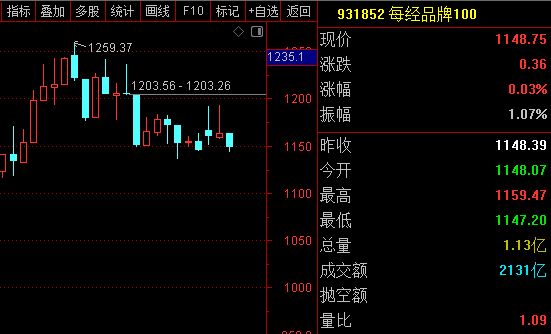
Market Overview - Recent theme investment has narrowed, and the ETF market continues to experience net outflows, indicating that investor sentiment has not fully recovered [1] - The brand index has shown volatility, with a weekly decline of 1.29%, closing at 1148.75 points [1] - Major indices showed mixed performance: Shanghai Composite Index rose by 0.84% to 4136.16 points, Shenzhen Component Index increased by 1.11% to 14439.66 points, while the ChiNext Index fell by 0.34% [1] Company Performance - TCL Electronics saw a significant weekly increase of 24.77% [3] - Weichai Power maintained strong performance with a weekly rise of 12.33% [3] - Other companies such as Baidu Group-SW, China National Heavy Duty Truck Group, China Merchants Shekou, Sichuan Changhong, Poly Developments, China National Offshore Oil Corporation, and Sinopec all experienced weekly gains exceeding 5% [3] - China National Offshore Oil Corporation's market value increased by 983.87 billion yuan, approaching the 1 billion yuan mark [3] Technological Advancements - Zhejiang Weile Company is expected to see steady improvements in profitability and profit margins due to ongoing enhancements in technology and operational capabilities [5] - Sichuan Changhong is focusing on AI technology, which has improved home air quality and unlocked new consumer potential [5] - At the 2026 International Consumer Electronics Show, Sichuan Changhong and Qualcomm launched the new AT TV Q10Light, featuring AI subtitle translation capabilities [5] - The Changhong Cloud AI model, the first in the home appliance sector to be nationally registered, enhances smart TV functionalities, enabling voice interaction and personalized content retrieval [5]