
铀

Search documents
再论稀土-钨-铀战略价值
2026-03-22 14:35
Summary of Key Points from Conference Call Records Industry Overview - The conference call discusses the strategic value of rare earths, tungsten, and uranium, highlighting their market dynamics and investment opportunities in the context of geopolitical tensions and macroeconomic conditions [1][2][3][4]. Tungsten Market Insights - Tungsten concentrate prices have stabilized around 1.03 million CNY per ton, driven by war narratives and consistent demand for ammunition and inventory replenishment [1][2]. - Despite a price increase of 7 to 8 times over the past year, the demand driven by war-related consumption is expected to sustain the high price levels for the next 2-3 years [2][3]. - The supply side is anticipated to see some incremental increases in 2026-2027, but these are unlikely to offset the demand driven by military spending [2][3]. - Companies to watch include Zhongtung High-tech and Xiamen Tungsten, which have resource growth expectations, as well as China Uranium and CGN Mining, which are entering a favorable valuation range [1][3]. Rare Earth Market Dynamics - After the Spring Festival in 2026, prices for praseodymium and neodymium oxide have retreated due to increased downstream operating rates and the conclusion of proactive inventory replenishment [3]. - Despite the price drop, processing fees for medium and heavy rare earths remain strong, indicating a scarcity in the smelting segment rather than at the mining level [3]. - The long-term upward trend in rare earth prices remains intact, supported by strong demand in high-tech sectors and overseas inventory replenishment needs [3]. - Key companies to consider include Northern Rare Earth, China Rare Earth, and Shenghe Resources, particularly in the context of macroeconomic hedging against geopolitical uncertainties [3]. Uranium Market Analysis - The spot price of natural uranium has stabilized around $86, with a backwardation situation compared to the long-term price of approximately $90 [4]. - 2026 is projected to be a pivotal year for the uranium industry, marked by capital expenditure expansion, inventory replenishment, and price increases [4]. - The adjustment in stock prices is attributed to both commodity price pressures and valuation concerns, but companies like China Uranium and CGN Mining are expected to enter a highly favorable valuation range if stock prices continue to adjust [4]. - Investment opportunities are highlighted in the context of the upcoming nuclear power projects in China, with a focus on the strong resource growth potential of CGN Mining [4]. Additional Considerations - The overall sentiment in the tungsten market remains cautious, with a focus on the balance between supply and demand amid ongoing geopolitical tensions [2][3]. - The rare earth sector is seen as a macro hedge against the backdrop of de-globalization and U.S.-China relations, emphasizing the importance of strategic resource allocation [3].
国泰海通 · 晨报260226|银行、有色
国泰海通证券研究· 2026-02-25 14:22
Group 1: Core Insights - The article highlights a significant increase in short-term loans from large banks, while credit growth in small and medium-sized banks is slowing down [1][4]. - The article discusses the impact of the Spring Festival on deposit fluctuations, noting a year-on-year increase of 3.5 trillion yuan in unit deposits, with a notable shift of personal deposits from small to large banks [2][4]. - The investment strategy for the banking sector in 2026 focuses on identifying targets with potential for growth, banks with convertible bond expectations, and maintaining a dividend strategy [5]. Group 2: Liability Side - Unit deposits saw a year-on-year increase of 3.5 trillion yuan, with demand for current deposits rising by 2.5 trillion yuan and a decrease in time deposits by 912 billion yuan, attributed to the Spring Festival's timing [2]. - Personal deposits experienced a year-on-year increase of only 3.3 trillion yuan, with current and time savings deposits decreasing by 1.9 trillion yuan and 398.7 billion yuan respectively, indicating a migration trend from small to large banks [2]. - Non-bank deposits increased by 2.9 trillion yuan, with large banks contributing 2.2 trillion yuan and small banks 646.1 billion yuan, driven by a low base effect from regulatory changes [2]. Group 3: Asset Side - Total loans decreased by 489.3 billion yuan year-on-year, with large banks and small banks seeing reductions of 213 billion yuan and 276.3 billion yuan respectively, reflecting subdued credit demand and increased pressure on small banks [4]. - Short-term loans saw a significant increase of 347.8 billion yuan, with large banks experiencing a rise of 419.7 billion yuan, driven by both corporate and consumer short-term loans [4]. - Bond investments increased by 205.7 billion yuan year-on-year, with large banks increasing by 376 billion yuan and small banks decreasing by 170.3 billion yuan [4][5].


国泰海通|有色:关注企稳后的布局机会
国泰海通证券研究· 2026-02-09 13:58
Group 1: Precious Metals - The core viewpoint emphasizes the importance of macroeconomic factors on metal prices, particularly in a tight supply-demand balance, with monetary policy, macro expectations, geopolitical dynamics, and supply disruptions being critical influences [1] - Recent adjustments in precious metal prices are attributed to a decline in risk appetite, influenced by disappointing earnings reports from US tech stocks and expectations of a strong dollar and Federal Reserve's balance sheet reduction [1] - China's central bank continued gold purchases in January, and the increase in gold ETF holdings will support gold prices [1] Group 2: Copper - Ongoing macroeconomic pressures are impacting copper prices, with expectations of strategic reserves providing some support [2] - The establishment of a "copper concentrate strategic reserve" aims to enhance resource control and mitigate overseas supply disruptions, while AI-driven infrastructure demands are expected to support copper prices [2] - Despite macroeconomic pressures, copper prices are anticipated to stabilize due to strategic premium support [2] Group 3: Aluminum - Aluminum prices are under pressure due to a combination of macroeconomic factors and seasonal demand weakness, with a decline in processing rates observed [2] - The ISM services PMI in the US returned to expansion, but lower-than-expected ADP employment figures contributed to price fluctuations [2] - Social inventory trends indicate a continued accumulation during the off-season [2] Group 4: Tin - Tin prices are experiencing downward pressure due to macroeconomic factors and reduced funding, but there is resilience in downstream purchasing as prices decline [2] - Increased activity in the Indonesian tin market and supply recovery in Myanmar may lead to marginally looser supply conditions [2] Group 5: Energy Metals - Demand for lithium remains strong despite a four-week inventory reduction, with expectations of preemptive battery demand due to changes in export tax policies [3] - The cobalt sector faces high prices due to tight raw material supplies, while companies are extending their reach into downstream markets to enhance competitive advantages [3] - Rare earth prices, particularly for praseodymium and neodymium oxides, are rising due to tight supply-demand dynamics [3] Group 6: Strategic Metals - Tungsten prices are on the rise due to long-term contracts and supply-demand dynamics, with a notable increase in prices across the industry [3] - The uranium market is seeing long-term contract prices reach a ten-year high, driven by rigid supply and ongoing nuclear power development [3]

能源金属行业周报:碳酸锂价格短期或继续上行,看好价格重估背景下的关键金属全面行情
HUAXI Securities· 2026-01-26 00:45
Investment Rating - The industry rating is "Recommended" [3] Core Views - Short-term raw material supply tightness is expected to support nickel prices, with LME nickel spot price reaching $18,630 per ton, up 5.70% from January 16 [1] - The cobalt market is anticipated to see continued price increases due to structural supply tightness, with electrolytic cobalt priced at 438,000 yuan per ton, down 3.74% from January 16 [2][5] - Domestic antimony supply remains tight, supporting antimony prices, with average prices for antimony ingots at 160,500 yuan per ton [6] - Lithium carbonate prices are expected to continue rising, with a market average of 171,100 yuan per ton, up 8.36% from January 16 [8][19] - Supply uncertainties in the rare earth market are expected to support prices, with significant legislative changes in Vietnam impacting global supply [20] - Tin prices are supported by uncertainties in overseas supply, with LME tin prices at $54,200 per ton, up 9.66% from January 16 [11][21] - Tungsten market supply-demand imbalance is notable, with white tungsten concentrate prices at 535,500 yuan per ton, up 5.93% from January 16 [13][22] - Uranium supply tightness is expected to persist, with global uranium prices at $63.51 per pound, significantly higher than historical lows [14][15] Summary by Sections Nickel and Cobalt Industry - Nickel prices are supported by supply constraints, with Indonesia's nickel mining production quota expected to be reduced to 250-260 million tons [1][16] - Cobalt supply is projected to remain tight, with Congo's export quotas confirmed to extend into 2026 [2][17] Antimony Industry - Antimony prices are supported by long-term supply tightness, with domestic production facing seasonal disruptions [6][18] Lithium Industry - Lithium carbonate prices are expected to remain strong due to demand support and ongoing supply constraints, with significant price increases noted [8][19] Rare Earth Industry - Legislative changes in Vietnam are tightening global rare earth supply, with China maintaining a dominant position in the market [20] Tin Industry - Tin prices are supported by uncertainties in overseas supply, particularly from Myanmar and Congo [11][21] Tungsten Industry - The tungsten market is experiencing a supply-demand imbalance, with prices expected to rise further due to limited new supply [13][22] Uranium Industry - Uranium prices are supported by ongoing supply tightness and geopolitical factors affecting production [14][15]
能源金属2026年度投资策略
2025-12-29 15:51
Summary of Key Points from Conference Call Records Industry Overview - **Energy Metals Sector**: The focus is on lithium, nickel, cobalt, tungsten, uranium, and rare earths, with significant insights into market dynamics and future projections for these metals [1][3][19][20]. Lithium Market Insights - **Supply and Demand Dynamics**: The lithium carbonate market is experiencing a reversal in supply and demand, driven by unexpected growth in energy storage demand and supply-side adjustments, leading to price increases. Futures prices reached 130,000 CNY [1][2]. - **Future Projections**: By 2026, lithium carbonate supply is expected to be around 2.05-2.1 million tons, with limited capacity elasticity. Demand is primarily driven by power batteries (15-20% growth) and energy storage (50% growth) [1][4][6]. - **Price Expectations**: A price increase to over 150,000 CNY is likely, contingent on supply release pace and demand acceptance. Current prices are around 120,000-130,000 CNY [1][8][9]. - **Investment Opportunities**: The lithium sector is viewed as a priority investment, with potential for over 50% upside based on projected average prices [9]. Nickel Market Insights - **Supply Concentration**: The nickel market is characterized by high supply concentration, with significant impacts from Indonesian policy adjustments on nickel ore supply. Price recovery is anticipated due to these adjustments [10][11]. - **Future Supply Dynamics**: The RKA b policy adjustments are expected to tighten supply by 10-15%, improving the industry's excess supply situation [11]. Cobalt Market Insights - **Supply Shortages**: The cobalt market is benefiting from export quotas from the Democratic Republic of Congo, which could lead to substantial shortages and support price increases. The market is expected to have a tendency to rise due to confirmed shortages [3][12][13]. Tungsten Market Insights - **Long-term Supply Issues**: The tungsten market faces long-term supply challenges due to declining ore grades and environmental constraints. Strategic metal export controls are exacerbating supply tightness, leading to price increases [3][14][17]. Uranium Market Insights - **Demand Growth**: The uranium market is benefiting from increasing nuclear power demand, with steady natural demand and limited supply. Prices are expected to remain high, with a focus on the performance of major companies in the sector [3][19]. Rare Earths Market Insights - **Market Challenges and Opportunities**: The rare earths sector is influenced by international relations and domestic policies, with recent price recoveries following a decline. Key areas of focus include export controls and demand from emerging technologies [3][18]. Overall Market Outlook - **Positive Metal Market Projections**: The overall outlook for metal markets in 2026 is optimistic, driven by improved supply-demand dynamics and increased demand in niche sectors. Investment opportunities across various metal sectors are expected to be favorable [20].
年终盘点之大宗商品:能源疲软,贵金属“疯牛”!2026年“淘金热”行情转向有色?
智通财经网· 2025-12-29 14:22
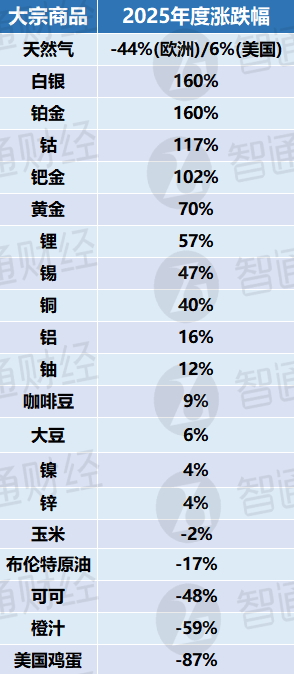
Key Insights - The global commodity market in 2025 shows a clear divergence, with energy and agricultural prices declining while precious metals (like gold and silver) and industrial metals (like copper) continue to rise and reach new highs. This situation is influenced by changes in global demand, geopolitical tensions, monetary policy adjustments, and the development of the new energy industry. This divergence is expected to persist into 2026, with energy prices anticipated to further decline due to oversupply, while precious metal prices are projected to continue rising [1]. Energy - The global crude oil market in 2025 experienced significant volatility, with Brent crude prices fluctuating between $60 and $70 per barrel by year-end. Geopolitical tensions and policy changes were key drivers of price movements, with prices peaking at $83 per barrel early in the year due to U.S. sanctions on Russia [3][5]. - In the second half of 2025, the market shifted from being geopolitically driven to one characterized by oversupply and weak demand, leading to a downward trend in oil prices. OPEC+ adjusted its strategy from production cuts to phased increases, while U.S. production reached historical highs, resulting in rapid inventory accumulation [5][6]. - For 2026, the oil market is expected to face severe oversupply pressures, with Brent crude prices projected to drop further. Analysts predict a price range of $56 to $60 per barrel, with some forecasts suggesting a potential dip to $51 per barrel in early 2026 [7]. Natural Gas - The global natural gas market in 2025 showed a "high then low" pattern, with prices initially rising due to cold weather and geopolitical factors but later declining as new U.S. production came online and demand slowed in Asia [8][10]. - In 2026, the market is expected to transition from a "tight balance" to "periodic oversupply," driven by increased LNG production from the U.S., Qatar, and Canada. Despite ample supply, demand is projected to rise by 2%, providing some price support [10]. Uranium - The uranium market in 2025 transitioned from "de-bubbling" to "structural support," with prices rebounding from a low of approximately $63 per pound to around $81-83 per pound by year-end. This was driven by renewed demand from nuclear power and AI data centers [11][13]. - For 2026, expectations are for uranium prices to accelerate upward, with forecasts suggesting prices could reach $91 per pound, with some estimates as high as $135 per pound due to increasing demand and supply constraints [14]. Precious Metals - Precious metals experienced a "historic rally" in 2025, with gold prices rising approximately 70% and silver prices soaring over 160%. This was fueled by central bank purchases, ETF inflows, and a low-interest-rate environment [15][17]. - For 2026, major financial institutions predict continued bullish trends for gold, with average prices expected to range from $4,500 to $5,000 per ounce, driven by central bank strategies and concerns over U.S. dollar credit [18][19]. Industrial Metals - The industrial metals market in 2025 was characterized by extreme differentiation, with copper prices reaching historical highs due to demand from AI data centers and global grid upgrades. Copper prices exceeded $12,700 per ton [21]. - In 2026, copper and tin are expected to remain strong, with copper potentially reaching $15,000 per ton, while tin prices may rise to $44,000 per ton due to ongoing supply constraints [28]. Agricultural Products - Cocoa prices fell significantly in 2025 after reaching a peak in 2024, while coffee prices exhibited a high-level fluctuation, with expectations for a return to balance in 2026 as supply improves [25][27]. - For 2026, cocoa is expected to see a surplus of about 150,000 tons, leading to price declines, while coffee prices are projected to drop significantly due to increased production in Brazil and Colombia [29][32].
有色能源金属行业周报:短期锂价或维持震荡,战略金属价值重估背景下看好锑钴钨锡等金属-20251214
HUAXI Securities· 2025-12-14 05:36
Investment Rating - The industry rating is "Recommended" [3] Core Views - Short-term lithium prices are expected to remain volatile, with a positive outlook on antimony, cobalt, tungsten, and tin due to a reassessment of strategic metal values [1][2][7] - Supply concerns in the nickel market are supported by the lack of new approvals from Indonesia's RKAB, which may lead to price stabilization [1][28] - The cobalt market is expected to see continued price increases due to structural supply tightness, with Congo's export regulations impacting availability [2][5][16] - Antimony prices are anticipated to converge towards higher overseas prices due to export controls and tight domestic supply [6][17] - The lithium market is experiencing a strong demand backdrop, with expectations of continued inventory depletion supporting prices [7][17] - The rare earth market is tightening due to Vietnam's export ban, which is expected to support prices [9][18] - Tin prices are supported by ongoing supply concerns from overseas sources, particularly from Myanmar and Congo [11][20] - Tungsten prices are expected to remain supported due to supply constraints and regulatory controls [12][21] - The uranium market is facing supply tightness, which is likely to support prices amid geopolitical uncertainties [14][22] Summary by Sections Nickel and Cobalt Industry Update - Nickel prices are under pressure due to stable demand but cautious purchasing from smelters, with LME nickel closing at $14,420 per ton, down 2.04% [1][28] - Cobalt prices are expected to rise further, with Congo's export regulations causing supply constraints [2][5][16] Antimony Industry Update - Domestic antimony prices are lower compared to international prices, but supply tightness is expected to support future price increases [6][17] Lithium Industry Update - Lithium carbonate prices have increased, with a strong demand outlook from the electric vehicle sector [7][17] Rare Earth Industry Update - Vietnam's recent export ban on rare earths is expected to tighten global supply and support prices [9][18] Tin Industry Update - Tin prices are supported by supply concerns from Myanmar and Congo, with LME tin prices rising to $41,905 per ton [11][20] Tungsten Industry Update - Tungsten prices are expected to remain high due to supply constraints and regulatory measures [12][21] Uranium Industry Update - The uranium market is facing supply tightness, with prices supported by geopolitical factors and production delays [14][22]


美国再下一城,特朗普稀土包围战略初具雏形,这次选在中国大后方
Sou Hu Cai Jing· 2025-11-08 08:47
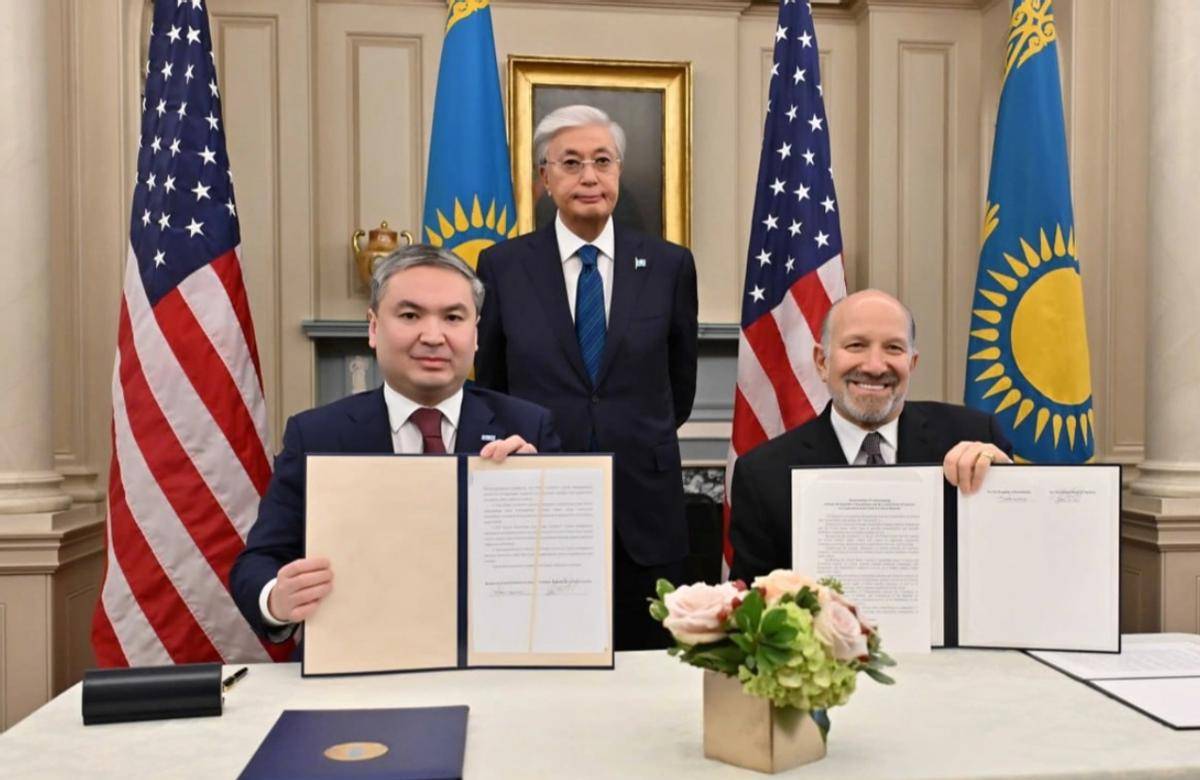
Core Viewpoint - The article discusses the strategic efforts by the U.S. to establish a non-China-dependent rare earth supply chain, focusing on Kazakhstan as a key partner in this initiative [1][5]. Group 1: U.S. and Kazakhstan Cooperation - The U.S. and Kazakhstan signed commercial cooperation agreements worth over $17 billion, including a memorandum on critical minerals [1][5]. - Kazakhstan is rich in resources, being the world's largest uranium producer and possessing nearly 2.6 million tons of rare earth elements [3]. - The U.S. recognizes that Kazakhstan produces 19 of the 50 critical minerals it identifies, including tungsten, which is essential for military applications [3]. Group 2: Geopolitical Implications - The U.S. aims to create a "rare earth encirclement" around China by securing partnerships with countries like Kazakhstan and Uzbekistan [5]. - Kazakhstan's strategic shift towards the U.S. is influenced by the need to diversify its alliances post the Russia-Ukraine conflict, seeking to balance Russian influence [5][6]. - The cooperation with the U.S. could significantly impact geopolitical dynamics in Central Asia, potentially serving as a strategic wedge against China and Russia [6]. Group 3: Resource Development and Economic Opportunities - Kazakhstan seeks to leverage its rich resources through U.S. partnerships to enhance its economic position and technological capabilities [6]. - The country has joined the U.S.-led Abraham Accords, indicating a move towards normalizing relations with Israel and further integrating into U.S. strategic frameworks [6].
当前时点,如何看待金属煤炭行业?
2025-10-09 02:00
Summary of Key Points from Conference Call Records Industry Overview: Precious Metals and Coal Precious Metals Industry Key Insights on Gold Market - The gold price recently surpassed $4,000, driven primarily by significant ETF inflows led by overseas investors, contrasting with the previous two years where China dominated gold purchases [2][3] - The expectation of U.S. interest rate cuts has lowered investor return expectations for U.S. equities, prompting a shift of cyclical funds into gold as a safe haven [2][4] - Economic data deterioration and government shutdowns have further fueled gold price increases, with historical patterns indicating that gold prices tend to rise during government shutdowns [2][3] - Short-term gold price trends are expected to continue upward until mid-November, influenced by interest rate cut expectations and economic data fluctuations [4] - Long-term projections suggest that gold may experience a decade-long mid-cycle phase, with at least three more years of upward movement anticipated [4] Valuation of Gold Stocks - Gold stocks are currently undervalued, with expectations that A-share company valuations will return to historical median levels of 25-30 times earnings following the recent price surge [6] - The recent performance of leading companies like Zijin Mining has positively impacted the overall market sentiment for gold stocks [5][6] - A significant revaluation opportunity is anticipated for the gold sector, particularly in the A and Hong Kong stock markets, as confidence in the sector improves [6][7] Copper Industry - Global copper supply is tightening, with increased demand from new sectors such as AI, suggesting a positive outlook for major Chinese copper companies like Zijin Mining and Jiangxi Copper [8] - Recent price increases in copper, driven by U.S. economic data and government investments, indicate a bullish trend for the copper market [8] Aluminum Industry - The electrolytic aluminum sector is expected to see favorable conditions in the latter part of the interest rate cut cycle, with a significant recovery anticipated as the economy stabilizes [9][10] - The aluminum-copper price ratio is at historically high levels, indicating potential for correction as economic recovery signals emerge [11] Coal Industry - Coal port inventories have risen significantly during the holiday period, leading to a slight decline in coal prices due to reduced purchasing activity [26][27] - Despite high inventories, strict production checks in regions like Shaanxi are expected to support coal prices moving forward [27][28] - Optimistic projections for coal prices in Q4 2025 are based on potential cold weather and supply constraints, with expectations for prices to exceed forecasts [28][29] - Current valuations for coal companies are low compared to historical averages, suggesting potential for significant upside if economic stimulus measures are implemented [29][30] Conclusion - The precious metals sector, particularly gold, is poised for continued growth driven by macroeconomic factors and investor sentiment, while the copper and aluminum industries are also showing positive trends. - The coal market, despite current inventory pressures, is expected to benefit from regulatory measures and seasonal demand, presenting investment opportunities in the sector.
供需逆转,铜价中枢有望上移 | 投研报告
Zhong Guo Neng Yuan Wang· 2025-09-30 02:02
Group 1: Precious Metals - The main trend of gold and silver continues to rise, with COMEX gold increasing by 1.89% and COMEX silver by 6.92% this week [1][2] - The strong performance of precious metals is supported by robust US GDP data, which led to a temporary adjustment followed by a recovery in upward momentum [2] - The expectation of a slow bull market for gold with decreasing volatility in the future is noted, alongside a positive outlook for the precious metals sector due to ongoing de-dollarization and ETF inflows [2] Group 2: Copper - Supply disruptions are expected to elevate the price center for copper, with Freeport Indonesia lowering its Q4 copper production guidance to "negligible levels" and reducing the 2026 annual production forecast by 35% [2] - The global electrolytic copper balance may reverse by late Q4 2025 or early Q1 2026, with domestic consumption expected to rise as the peak season approaches, potentially boosting copper prices [2] Group 3: Aluminum - The outlook for aluminum prices remains positive despite a slight decline of 0.24% this week, with expectations of increased downstream consumption due to seasonal factors [3] - The impact of US aluminum tariffs is considered limited, and the long-term view suggests that the price center for electrolytic aluminum may continue to rise as inventories are depleted [3] Group 4: Lithium - Lithium prices have seen a slight increase driven by pre-holiday stocking, with demand expected to maintain high growth due to significant contracts signed by major companies [4] - The supply-demand balance for lithium is anticipated to improve marginally, with strategic importance highlighted by government discussions regarding lithium projects [4] Group 5: Uranium - Uranium prices have surged to $83 per pound, primarily due to continued purchasing by SPUT funds, indicating the start of an upward cycle [4] - The fourth quarter is historically a peak procurement season, with expectations for sustained price increases as nuclear power operators begin to purchase [4] Group 6: Cobalt - Cobalt prices are expected to maintain an upward trend following the implementation of export bans in the Democratic Republic of Congo, despite initial market reactions [4] - The market is adjusting to the new policies, with significant price increases observed across various cobalt products, indicating a tightening supply situation in China [4]