《原则》

Search documents
这是一份「含马量」极高的书单,赞美伟大的马
后浪研究所· 2026-02-11 08:22
Group 1 - The article emphasizes the significance of horses in civilization, highlighting their role in connecting war, trade, and power throughout history [9][11] - It presents a curated reading list themed around "horses," showcasing various books that explore the cultural, historical, and philosophical implications of horses [4][5] - The reading list includes diverse genres, from historical accounts to fictional narratives, illustrating the multifaceted relationship between humans and horses [3][4] Group 2 - The book "Horses and the Creation of Civilization" by David Chaffetz discusses how horses redefined human history and their importance as a strategic resource for empires [9] - "Longxi to the West, Rome to the East" by Edward Berman presents the Silk Road as a "horse road," emphasizing the strategic value of horses in the Tang Dynasty [11] - "The Litchi of Chang'an" by Ma Boyong narrates a thrilling story involving the transportation of litchis, showcasing the challenges faced by horses in ancient China [15] Group 3 - "The Disaster of No Cause" by Dick Francis, a suspense novel set in the horse racing world, reflects the author's deep understanding of the industry [14] - "Chinese Monsters" provides insights into mythical creatures, including horses, from Chinese folklore, appealing to readers interested in cultural heritage [19] - "The Story of Chess" by Stefan Zweig uses the metaphor of the horse in chess to explore deeper psychological themes [28] Group 4 - "The Count of Monte Cristo" by Alexandre Dumas is highlighted as a classic novel that intertwines themes of revenge and redemption, featuring a protagonist with a strong connection to horses [42] - "The Principles" by Ray Dalio, while a success guide, is rooted in the author's personal failures, offering valuable lessons applicable to various fields [59] - "The Great Failure" by Wu Xiaobo chronicles the stories of once-thriving companies that faced downfall, providing insights into the business landscape [55]


李辉文:国家为何破产?——与达利欧商榷宏观叙事的微观陷阱
3 6 Ke· 2026-01-22 04:47
Core Insights - Ray Dalio's new book "Why Nations Fail" attempts to elevate financial market experience into historical philosophy, aiming to provide a universal theoretical framework for understanding the rise and fall of individuals, companies, nations, and civilizations [1][2] - The book is set against a backdrop of high global debt and geopolitical instability, with the goal of helping decision-makers and investors predict the future more accurately [1][2] Summary by Sections Framework of the Book - Dalio introduces the "Big Debt Cycle" framework to explain the underlying logic of national debt crises, offering a practical window into global economic turmoil from a market practitioner's perspective [2][3] - The framework consists of five core components: goods, services, and investment assets; currency used to purchase these assets; credit issued to buy these assets; debt liabilities formed through credit transactions; and debt assets like deposits and bonds [4][7] Stages of the Big Debt Cycle - The Big Debt Cycle includes five stages: 1. **Sound Money Stage**: Low net debt levels and stable currency, leading to productivity growth that generates sufficient income to repay debt, exemplified by the U.S. economy during the Bretton Woods system from 1945 to 1971 [6] 2. **Debt Bubble Stage**: Debt growth outpaces income growth, leading to asset bubbles and widening wealth gaps, as seen in the U.S. before the 2008 financial crisis [6] 3. **Peak Stage**: The bubble bursts, causing simultaneous contractions in debt, credit, market transactions, and macroeconomics [8] 4. **Deleveraging Stage**: Following the bubble's collapse, painful adjustments occur until debt levels align with income [8] 5. **Big Debt Crisis Dissipation Stage**: A new balance is achieved, initiating a new debt cycle [8] Methodology and Appeal - Dalio's narrative relies heavily on analogies, data visualization, and historical case studies, simplifying complex economic systems into understandable "machines" for prediction and decision-making [8][9] - The book's value lies not in providing definitive answers but in exposing collective confusion and thought processes regarding crises in the current era [2][9] Critiques and Considerations - The book has been critiqued for equating national debt with corporate debt, overlooking fundamental differences, particularly for countries with reserve currency status like the U.S. [10][11] - Dalio's discussion of cycles is more descriptive than explanatory, lacking deeper theoretical insights into why different societies experience these stages differently [12][13] - The selection of historical cases may introduce bias, potentially sacrificing unique historical contexts for the sake of universal patterns [14][15] - Dalio's policy recommendations may underestimate the complexities of political processes and the unique impacts of technological changes on economic structures [16][17] Conclusion - Dalio's work is recognized for its systematic and model-driven approach to integrating historical economic insights into contemporary debt discussions, prompting broader reflection and understanding [22][23] - The book serves as a "high-level financial popularization" and a case study in crisis thinking, encouraging critical engagement rather than passive acceptance [24][25]
一定要大量读书,投资理财入门的5本经典好书,强烈推荐
Sou Hu Cai Jing· 2025-12-30 09:09
Group 1 - The core idea of the articles emphasizes the importance of understanding investment principles and human behavior to achieve long-term success in investing [3][4][6] - The concept of "Mr. Market" is highlighted, illustrating that investors should not be swayed by short-term market fluctuations but should focus on the intrinsic value of quality companies [6][10] - The significance of maintaining a rational and patient approach in investing is reiterated, as many investors tend to forget these principles during critical moments [4][6] Group 2 - "The Intelligent Investor" by Benjamin Graham distinguishes between investment and speculation, stressing the need for a rational approach based on thorough analysis of a company's intrinsic value [15][16][17] - The book emphasizes the psychological factors that can lead to poor decision-making, such as greed and fear, which are common pitfalls for investors [17] - The importance of understanding the long-term potential of investments rather than chasing short-term gains is a key takeaway [15][17] Group 3 - "Principles" by Ray Dalio focuses on the importance of facing reality and understanding causal relationships in decision-making, which is applicable not only in investing but also in personal growth [19][20][21] - The book encourages the development of a decision-making system that minimizes subjective biases and promotes learning from mistakes [21][22] - Dalio's perspective on failure as a necessary component of progress is a crucial insight for investors [22][23] Group 4 - "Value Investing" by Bruce C. Greenwald provides a comprehensive overview of the evolution of value investing and introduces a dynamic framework for modern market conditions [25][26] - The book clarifies that true value comes from a company's economic structure rather than merely buying cheap stocks, emphasizing the importance of competitive advantages and industry structure [26][27] - The concept of "margin of safety" is discussed in depth, highlighting the need for investors to account for uncertainties in their valuations [28][29]
螺丝钉双十一福利:囤书的好机会来啦~
银行螺丝钉· 2025-11-07 06:15
Core Viewpoint - The article highlights the annual Double Eleven shopping festival, emphasizing the opportunity for consumers to purchase books at discounted prices, particularly in the investment and finance category [1][2]. Discount Benefits - The company has prepared special purchasing benefits for the Double Eleven event, including a discount of 120 yuan for purchases over 300 yuan, with coupons available on the product page [5]. - The promotional period is from November 9, 2025, at 20:00 to November 11, 2025, at 24:00 [5]. Selected Books for Investment and Finance - The company has selected six notable investment and finance books for this promotion, including: 1. **"Active Fund Investment Guide"** - A comprehensive introduction to active funds, covering what they are, how to buy and sell them, and investment strategies [11]. 2. **"Index Fund Investment Guide"** - Suitable for beginners, this book discusses 256 mainstream index funds in China and provides investment strategies for ordinary investors [13][14]. 3. **"Ten Years to Financial Freedom through Regular Investment"** - This book details the concept of regular investment, making it ideal for working professionals with steady cash flow [17]. 4. **"Long-Term Stock Market Secrets"** - A globally bestselling book updated with nearly 30 years of new data, emphasizing that stocks are the best long-term wealth accumulation method [19][20]. 5. **"Trillion Index"** - A narrative on the history of index funds, featuring stories of investment masters and industry elites [25]. 6. **"Patient Capital"** - This book illustrates the journeys of long-term investment pioneers, providing insights into managing family assets [26][27]. Additional Recommendations - The article also mentions various other financial and investment-related books, categorized into different themes such as professional investment, wealth thinking, and workplace improvement, providing a comprehensive reading list for interested individuals [49][75][80].

雷军、张一鸣们赚钱的秘密:不是勤奋,而是这件事
Sou Hu Cai Jing· 2025-08-16 04:52
Group 1 - The core idea is that understanding and cognitive ability are crucial for identifying and seizing business opportunities in a changing economic landscape [1][3][7] - The statement emphasizes that many individuals fail to earn significant wealth not due to lack of effort, but because they do not comprehend the logic of making money [3][10] - Successful entrepreneurs like Lei Jun and Zhang Yiming exemplify the importance of recognizing trends and understanding market dynamics before launching their ventures [9] Group 2 - The article highlights that reading is the fastest way to enhance cognitive abilities and understand complex business models [5][12] - It points out that those who do not read often remain trapped in their own limited perspectives, missing out on opportunities [8][15] - Knowledge of specific areas such as supply chains, financial cycles, and content algorithms is essential for success in e-commerce, investment, and self-media [13]

桥水创始人达里奥退休,揭秘全天候策略,该怎么用? | 螺丝钉带你读书
银行螺丝钉· 2025-08-09 14:03
Core Viewpoint - The article discusses Ray Dalio's investment strategies, particularly the All Weather strategy, and how his life experiences shaped his investment philosophy [3][5][8]. Group 1: Ray Dalio's Background and Investment Journey - Ray Dalio graduated high school in 1966 and invested heavily in the stock market, but faced significant losses during the market downturn in the late 1960s [13][14]. - After suffering losses in the stock market, Dalio shifted his focus to commodities, particularly gold, during the 1970s bull market [16][20]. - The price of gold surged from $37 per ounce in 1971 to a peak of $850 per ounce in 1980, leading to substantial profits for Dalio initially [18][20]. - However, by the early 1980s, gold prices collapsed, and Dalio's heavy investment in commodities resulted in significant losses [21][24]. Group 2: Development of the All Weather Strategy - Dalio's investment losses prompted him to diversify his portfolio, leading to the creation of the All Weather strategy, which aims to balance risk across various asset classes [27][28]. - The All Weather strategy involves allocating different assets, including stocks, bonds, gold, and real estate, based on their risk profiles [29][30]. - This strategy is also known as the "risk parity" strategy, where each asset class contributes equally to the overall portfolio risk [32][31]. Group 3: Performance and Implementation of the All Weather Strategy - The effectiveness of the All Weather strategy improves with a broader range of asset classes, particularly those with low correlation [41][44]. - Bridgewater Associates, Dalio's firm, offers both private and public versions of the All Weather strategy, with the private fund generally performing better [45][46]. - In 2025, Bridgewater launched a public ETF for the All Weather strategy in the U.S. market [47]. - The All Weather strategy has also been applied in the Chinese market, with a similar ETF strategy yielding approximately 60% returns over nine years [50][51]. Group 4: Advantages and Usage of the All Weather Strategy - The All Weather strategy is recognized for its stability and strong risk management, especially during periods of high asset valuation [61][62]. - It serves as a robust investment approach during the late stages of bull markets when single assets may experience significant volatility [64].

书界也卷?投资人下海写书成风——一场从华尔街到外滩的资本写作狂欢
Qi Lu Wan Bao· 2025-07-29 10:18
Core Insights - The recent trend of investment professionals publishing books reflects a significant shift in the venture capital landscape, indicating a move towards knowledge sharing and resource monetization [1][11] - The surge in book publications by investors since 2020 is driven by factors such as fundraising anxiety, the need for cognitive premium, and generational shifts among limited partners (LPs) [11][12] Group 1: Publishing Trends - Notable figures in the investment community, such as Zhang Lei from Hillhouse Capital and Shen Nanpeng from Sequoia Capital, have published influential works, marking a new era of investment literature [2][5] - The success of Zhang Lei's book "Value," which sold over a million copies in its first week, set a precedent for how investment books can leverage private traffic and institutional backing for marketing [2][12] - The strategy of using books as tools for brand building and influence has been widely adopted across various investment firms, creating a new paradigm for knowledge dissemination [2][3] Group 2: Impact of International Examples - The trend of investment professionals writing books can be traced back to influential works from Wall Street, such as Ray Dalio's "Principles," which not only achieved high sales but also established a template for personal branding among investors [5][6] - Books like "Principles" and "Zero to One" have significantly influenced investment discourse and practices, demonstrating the power of narrative in shaping industry perspectives [5][6] Group 3: Domestic Evolution - In China, the approach to writing has evolved from value investing to narrative-driven strategies, with local investors focusing on storytelling to engage audiences [7][9] - The emergence of books like "The Logic of Wealth" by Wei Feng aims to provide a framework for wealth creation, targeting younger audiences and addressing the challenges of information overload in the digital age [9][10] Group 4: Fundraising Dynamics - The increase in the number of VC/PE firms in China has led to heightened competition, making the ability to tell compelling stories and demonstrate thought leadership essential for successful fundraising [11][12] - The publication of books has become a critical component of an investor's credibility, with LPs increasingly seeking evidence of an investor's influence and narrative capabilities during the evaluation process [11][12] Group 5: Future Implications - The phenomenon of investment professionals writing books is seen as a form of "thought IPO," where the dissemination of investment philosophies can convert LPs into believers in those ideas [13] - The long-term impact of this trend on the investment landscape remains to be seen, but it is clear that the intersection of investment logic and publishing is reshaping the industry [1][13]
【有本好书送给你】瑞·达利欧:未来5年,如何在世界巨变中生存?
重阳投资· 2025-07-23 06:37
Core Viewpoint - The article emphasizes the importance of reading and understanding historical patterns, particularly in the context of economic cycles and debt crises, as outlined in Ray Dalio's book "Why Nations Fail: Big Cycles" [9][12][55]. Group 1: Debt Cycle Insights - The global economy is currently at a critical point in the "death spiral" of debt, with debt-to-GDP ratios in major economies like the US, China, Japan, and Europe reaching historical highs [12][34]. - Dalio warns of a 65% probability of a global debt restructuring crisis within the next five years, which could severely impact the dominance of the US dollar [12][34]. - The long-term debt cycle typically spans about 80 years, leading to significant debt bubbles and their eventual collapse, which is often exacerbated by excessive credit creation [15][16]. Group 2: Five Forces Shaping the Future - The five key forces influencing the future include debt cycles, internal and external order and chaos cycles, natural forces, and human creativity, particularly technological advancements [19][28][29]. - The internal order and chaos cycle reflects political fluctuations that can lead to significant changes in governance, typically occurring over an 80-year period [22][23]. - Technological advancements, especially in artificial intelligence, are expected to have a profound impact on various sectors, but they may not be sufficient to counteract the negative effects of debt and geopolitical tensions [30][37]. Group 3: Future Projections - The next five to ten years are anticipated to be a period of significant change, with many currently rising nations, companies, and individuals potentially facing decline [32][35]. - There is a high risk of simultaneous debt tightening and economic recession in the coming years, particularly in major economies that are heavily indebted [33]. - The rise of populism and political extremism is likely to lead to major political shifts, often towards more authoritarian regimes, as seen in various countries [35][36]. Group 4: Principles for Navigating Change - Dalio emphasizes the importance of understanding one's position within economic cycles and adhering to timeless principles to navigate uncertainty [38][40]. - Key principles include identifying and mitigating worst-case scenarios, diversifying risks, and fostering cooperation among individuals to achieve optimal outcomes [43][49][53]. - The article suggests that maintaining awareness of potential risks can provide a sense of security and freedom to pursue greater achievements [48].

几乎零差评!含金量超高的5本经典投资类好书,读完猛涨格局
Sou Hu Cai Jing· 2025-07-06 13:58
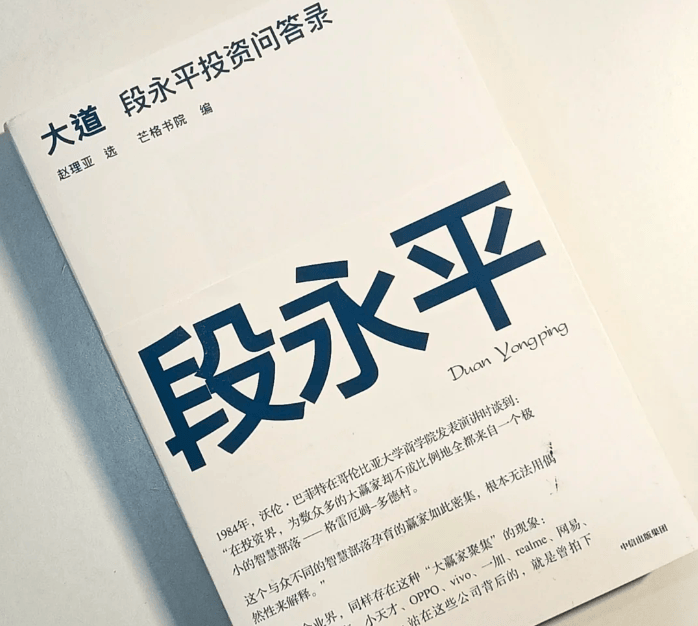
Group 1 - Investment is often perceived as a game for the highly intelligent in the financial sector, but everyone engages in "investment" daily through time, energy, attention, and money [1][2] - Notable figures like Duan Yongping, Naval Ravikant, Warren Buffett, and Steve Jobs have found the underlying logic of life, which has contributed to their legendary status [2][3] Group 2 - Duan Yongping is recognized as both an investor and entrepreneur, having made significant contributions to companies like NetEase during its financial crisis, where he bought shares at a low price and achieved over 100 times profit [4][5] - The book "The Way of Investment: Duan Yongping's Q&A" compiles his insights on investment, business management, and personal philosophy, making it accessible to a broad audience [6] Group 3 - "The Navalmanack" by Eric Jorgenson is a recommended book that distills Naval Ravikant's thoughts on wealth and happiness, emphasizing the importance of time freedom and reducing desires for true happiness [8][9] - The book serves as a guide for those feeling lost in their pursuit of wealth and meaning, encouraging readers to focus on learning rather than mere credentials [11] Group 4 - "The Intelligent Investor" by Benjamin Graham is considered the "bible of value investing," providing a framework for rational investment decisions and distinguishing between investment and speculation [13][14] - Graham's principles emphasize buying assets significantly below their intrinsic value to create a margin of safety, which is crucial for long-term investment success [15] Group 5 - "Zen and the Art of Investment" by Li Guofei combines Zen wisdom with investment principles, introducing the "Four Powers" model: willpower, focus, innovation, and insight, which are essential for successful investing [17][18] - The book highlights the importance of self-awareness and long-term thinking in both investment and life [19][20] Group 6 - "Principles" by Ray Dalio offers a decision-making framework based on his extensive experience in investment and management, emphasizing the value of pain and reflection for personal growth [21][22] - Dalio's principles advocate for extreme transparency and systematic thinking, which can help individuals make better decisions and achieve greater control over their lives [22]
达利欧最新预测:未来5年,世界的五大巨变
Sou Hu Cai Jing· 2025-07-03 20:52
Group 1 - Ray Dalio, founder of Bridgewater Associates, emphasizes that the world operates under five major forces: debt/money/economic cycles, internal order and chaos cycles, external order and chaos cycles, natural forces, and human creativity [3][6] - The next 5-10 years are expected to witness significant changes in major orders, as outlined in Dalio's new book "Why Nations Fail: Big Cycles" [6][28] - The current phase of the debt cycle is nearing its end, with a high probability of significant restructuring or monetization of debt assets within the next 5-10 years [7][9] Group 2 - Internal political volatility is expected to lead to a shift from democracy to authoritarianism within 3-5 years, driven by deepening political divisions and dissatisfaction with democratic processes [10][11] - The transition from democracy to authoritarianism often occurs within the framework of democratic rules and can escalate quickly [12][14] - The U.S. is experiencing significant political challenges, with a small percentage of the population holding a disproportionate amount of wealth and power, leading to societal instability [15] Group 3 - The international order is shifting from a cooperative multilateral approach to a more confrontational unilateral one, with increasing tensions between the U.S. and China [17][20] - The dynamics of alliances are changing rapidly, with historical examples showing that loyalty is often secondary to victory [18] - The U.S. is attempting to reverse its relative decline while engaging in various forms of conflict with China, including trade and technology wars [20][21] Group 4 - The frequency and cost of natural disasters are expected to rise due to human impact on the environment, population density, and global connectivity [21] - Countries with heavy debt burdens may struggle to allocate resources for disaster prevention and response, leading to increased domestic conflicts and migration pressures [21] Group 5 - The potential for exponential growth in GDP and life expectancy is linked to advancements in artificial intelligence and technology [23][28] - The competition between the U.S. and China in technology development, particularly in AI and semiconductor production, is intensifying [24][26] - The ability to effectively utilize new technologies will create significant disparities in performance among nations and companies [24][25]