中证细分化工产业主题指数

Search documents
新春开工领涨!鹏华周期类ETF矩阵解锁石油化工复苏新机遇
Zhong Jin Zai Xian· 2026-02-25 08:55
Core Viewpoint - The A-share market experienced a strong start to the new year, particularly in the cyclical sectors, with the oil and petrochemical sector leading the gains at 5.53% [1] Group 1: Market Performance - The oil and petrochemical sector topped the Shenwan first-level industry rankings with a 5.53% increase, while the basic chemical sector ranked third with a 3.45% increase [1] - Institutional consensus indicates a positive outlook for cyclical assets post-holiday, with expectations of a market rebound supported by policy expectations and liquidity [1] Group 2: Investment Opportunities - Key investment themes include the "anti-involution" concept driven by improved supply-demand dynamics and industry profit recovery, with a focus on sectors benefiting from price increases such as precious metals, oil and petrochemicals, and basic chemicals [1] - The global landscape shows increased macro risks due to geopolitical tensions and tariff policies, prompting a focus on "weak dollar assets" like precious metals, non-ferrous metals, and oil and gas [1] Group 3: ETF Performance - Penghua Fund's oil ETF (159697) is the first in the market to track the National Oil and Gas Index, covering key companies in the oil and gas industry, with a one-year increase of 31.43% compared to the 19.34% rise of the CSI 300 index [2] - The chemical ETF (159870) tracks a refined chemical industry index, achieving a one-year growth of 51.79%, effectively capturing structural opportunities in the transition from traditional capacity to high-end and new energy materials [2] Group 4: Liquidity and Market Acceptance - As of February 13, 2026, the oil ETF (159697) and chemical ETF (159870) ranked first in their respective categories with sizes of 1.828 billion and 35.533 billion, indicating strong liquidity and market recognition [3] - These ETFs provide investors with low-cost, high-transparency, and risk-diversified investment tools, addressing the complexities and risks associated with direct investments in cyclical stocks [3]
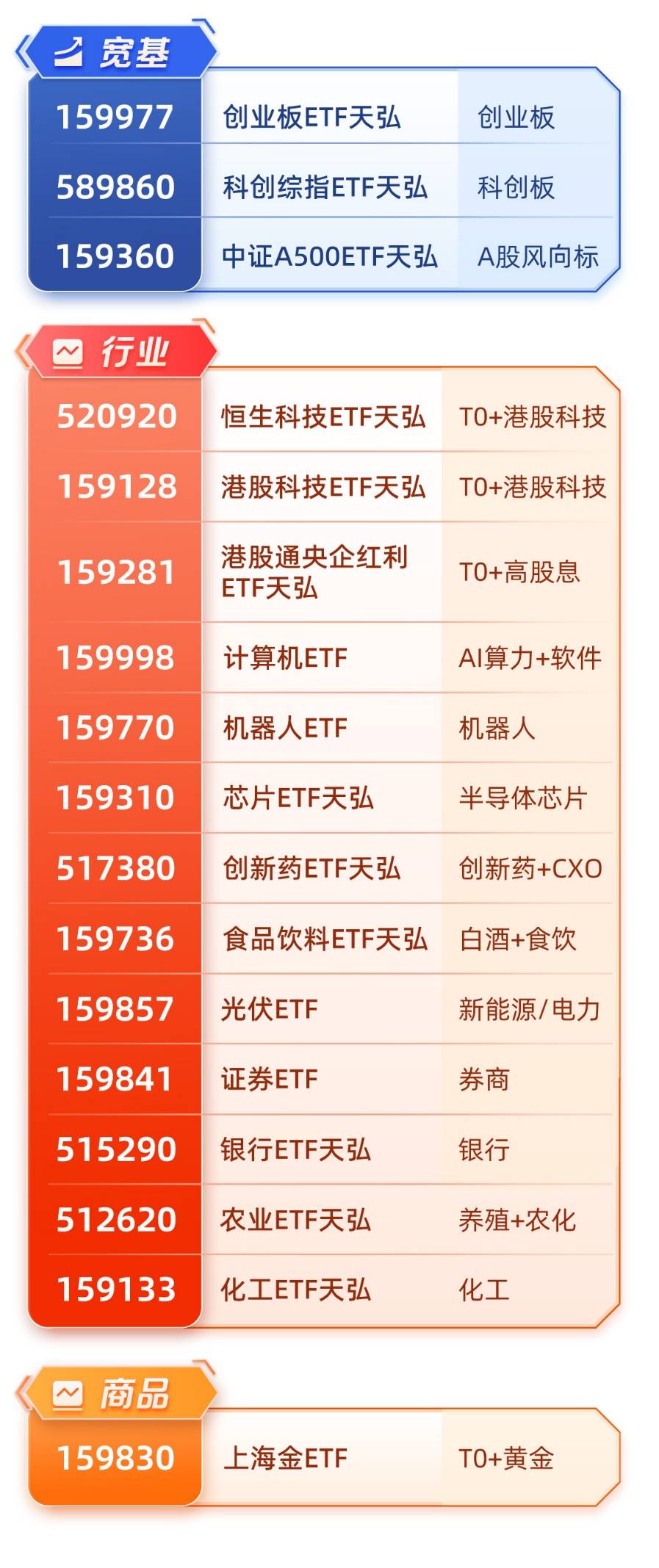
化工ETF天弘(159133)盘中逆势获净申购8500万份,连续23日“吸金”累超17亿元, 机构:化工投资资金侧、供给侧逻辑迎来加强
2 1 Shi Ji Jing Ji Bao Dao· 2026-02-02 06:04
(文章来源:21世纪经济报道) 化工ETF天弘(159133)跟踪的是中证细分化工产业主题指数,该指数全面覆盖化工各个细分领域,包 含磷化工、氟化工、磷肥、钾肥等行业龙头。化工ETF天弘(159133)以及联接基金(C类015897)可 一键分享化工板块整体机遇。 国盛证券表示,供给格局改善,化工行业迎来估值修复。自2025年7月"反内卷"热潮以来,化工板块迎 来持续上涨。2025年Q4以来伴随化工ETF的发行、双碳政策发布,化工投资资金侧、供给侧逻辑迎来加 强。 2月2日,三大指数集体下跌,中证细分化工产业主题指数下跌5.15%,该指数成分股中,恩捷股份、天 赐材料飘红。 相关ETF方面,化工ETF天弘(159133)截至发稿成交额超6800万元,换手率近3%,溢折率0.05%,盘 中频现溢价交易;Wind金融终端数据显示,该ETF盘中获净申购达8500万份。 资金流向方面,该ETF上个交易日(1月30日)净流入额为2.77亿元,截至上个交易日,已连续23个交 易日获资金净流入,累计净流入额超17亿元。该ETF最新流通份额为19.7亿份,最新流通规模为24.27亿 元。 ...
金融工程:AI识图关注石化、化工和有色
GF SECURITIES· 2026-02-01 04:30
Quantitative Models and Construction Methods 1. Model Name: Convolutional Neural Network (CNN) for Price-Volume Data Modeling - **Model Construction Idea**: The model leverages convolutional neural networks to analyze standardized graphical representations of price-volume data, aiming to predict future price trends and map learned features to industry thematic indices[79][81] - **Model Construction Process**: - Standardize price-volume data into graphical formats for each stock within a specific time window[79] - Apply convolutional neural networks to extract features from these graphical representations[79] - Map the extracted features to thematic industry indices, such as the CSI Petrochemical Industry Index, CSI Subdivision Chemical Industry Theme Index, and others[81] - **Model Evaluation**: The model effectively identifies industry themes based on price-volume data and provides actionable insights for sector allocation[79][81] --- Model Backtesting Results 1. CNN Model - **Thematic Indices Configured**: - CSI Petrochemical Industry Index (h11057.CSI)[81] - CSI Subdivision Chemical Industry Theme Index (000813.CSI)[81] - CNI Oil & Gas Index (399439.SZ)[81] - CSI Oil & Gas Resources Index (931248.CSI)[81] - CNI Nonferrous Metals Index (399395.SZ)[81]
金融工程:AI识图关注石化、化工、机床、半导体和有色
GF SECURITIES· 2026-01-25 07:48
- The report introduces a quantitative model based on Convolutional Neural Networks (CNNs) to analyze price-volume data and predict future prices. The model standardizes price-volume data into graphical representations and maps learned features to industry theme indices, such as the CSI Petrochemical Industry Index, CSI Subdivision Chemical Industry Theme Index, CSI Machine Tool Index, CSI Semiconductor Material Equipment Theme Index, and CSI Nonferrous Metals Index[78][80][81] - The construction process of the CNN model involves transforming individual stock price-volume data within a specific window into standardized graphical charts. These charts are then input into the CNN for feature extraction and prediction modeling. The learned features are subsequently applied to identify and allocate industry themes[78][80] - The evaluation of the CNN model highlights its ability to capture complex patterns in price-volume data and effectively map these patterns to industry themes. This approach provides a novel perspective for quantitative investment strategies[78][81] - Backtesting results indicate that the CNN model's latest configuration suggests a focus on themes such as petrochemicals, chemicals, machine tools, semiconductors, and nonferrous metals. Specific indices include the CSI Petrochemical Industry Index, CSI Subdivision Chemical Industry Theme Index, CSI Machine Tool Index, CSI Semiconductor Material Equipment Theme Index, and CSI Nonferrous Metals Index[80][81]
【广发金工】AI识图关注石化、化工、机床、半导体和有色
广发金融工程研究· 2026-01-25 07:29
Market Performance - The Sci-Tech 50 Index increased by 2.62% over the last five trading days, while the ChiNext Index decreased by 0.34%. The large-cap value index fell by 1.64%, and the large-cap growth index dropped by 1.34%. The Shanghai 50 Index declined by 1.54%, whereas the small-cap index represented by the CSI 2000 rose by 3.33%. The building materials and oil & petrochemical sectors performed well, while banks and telecommunications lagged behind [1]. Risk Premium and Valuation Levels - As of January 23, 2026, the static PE of the CSI All Share Index minus the yield of 10-year government bonds indicates a risk premium of 2.46%, with a two-standard deviation boundary at 4.68%. The valuation levels show that the CSI All Share Index's PETTM is at the 84th percentile, with the Shanghai 50 and CSI 300 at 72% and 73%, respectively. The ChiNext Index is close to 63%, while the CSI 500 and CSI 1000 are at 70% and 68%, respectively. The ChiNext Index's valuation is relatively at the historical median level [1]. ETF Fund Flow - In the last five trading days, ETF funds experienced an outflow of 326.5 billion yuan, while the financing balance increased by approximately 6.5 billion yuan. The average daily trading volume across the two markets was 27.727 billion yuan [2]. Industry Themes and Indices - The latest thematic allocation includes sectors such as petrochemicals, chemicals, machine tools, semiconductors, and non-ferrous metals. Specific indices mentioned are the CSI Petrochemical Industry Index, CSI Sub-segment Chemical Industry Theme Index, CSI Machine Tool Index, CSI Semiconductor Materials and Equipment Theme Index, and the National Non-ferrous Metals Index [2][3]. Long-term Market Sentiment - The report includes observations on the proportion of stocks above the 200-day long-term moving average, indicating market sentiment trends [13]. Financing Balance - The report tracks the financing balance, which is a critical indicator of market liquidity and investor sentiment [16]. Individual Stock Performance - A statistical distribution of individual stocks based on their return ranges since the beginning of the year is provided, highlighting performance variations across different stocks [18]. Oversold Indices - The report notes instances of indices being oversold, which may present potential buying opportunities [20].


化工ETF(159870)盘中净申购1.37亿份,冲刺连续8天净流入
Sou Hu Cai Jing· 2026-01-12 03:13
Group 1 - The chemical sector is experiencing a capital inflow, with the chemical ETF (159870) seeing a net subscription of 137 million units, marking eight consecutive days of net inflow [1] - The core logic of the chemical industry is that capital expenditure has ended, with operating rates still at 80% to 90%. The trend remains positive despite internal competition, as only the chemical sector can achieve a healthy reduction in competition [1] Group 2 - Chemical stocks are currently in the first phase of a three-phase cycle, where EPS and commodity prices have bottomed out, indicating significant potential for future price increases [2] - Seasonal demand in the chemical industry is pronounced, with low inventory levels and strong spot market performance, suggesting that profitability will recover significantly during peak seasons [2] Group 3 - The chemical sector's leading companies are expected to see profit margins improve due to increased industry concentration and capital expansion from 2022 to 2025, which could lead to record high profits [3] - The current price-to-book (PB) ratios for leading companies differ from previous cycles, indicating potential for higher returns on equity (ROE) if leverage ratios return to historical levels [3] Group 4 - As of January 12, 2026, the CSI sub-industry chemical theme index (000813) shows mixed performance among its constituent stocks, with notable gains from companies like Guangwei Composite and Lanxiao Technology [3] - The top ten weighted stocks in the CSI sub-industry chemical theme index account for 45.31% of the index, including major players like Wanhua Chemical and Yanhua Co. [4]
【广发金工】AI识图关注化工、非银和卫星
广发金融工程研究· 2026-01-04 08:57
Market Performance - The Sci-Tech 50 Index decreased by 0.59% and the ChiNext Index fell by 0.82% over the last five trading days, while the large-cap value index rose by 0.01% and the large-cap growth index declined by 0.39% [1] - The Shanghai Stock Exchange 50 Index increased by 0.20%, and the small-cap index represented by the CSI 2000 rose by 1.09%, with defense and military, as well as oil and petrochemical sectors performing well, while telecommunications and comprehensive sectors lagged [1] Valuation Levels - As of December 31, 2025, the static PE ratio of the CSI All Share Index is at the 82nd percentile, with the Shanghai 50 and CSI 300 both at 75%, and the ChiNext Index close to 58% [1] - The CSI 500 and CSI 1000 are at 62% and 64% respectively, indicating that the ChiNext Index's valuation is relatively at the historical median level [1] Fund Flows - In the last five trading days, ETF inflows amounted to 25.6 billion yuan, and the margin trading balance increased by approximately 23.8 billion yuan, with an average daily trading volume of 208.23 billion yuan across the two markets [2] Thematic Investment - The latest thematic allocation includes sectors such as chemicals, non-bank financials, and satellite communications, specifically focusing on sub-indices like the CSI Sub-Industry Chemical Index, the National Index for Commercial Satellite Communications, and the CSI 300 Non-Bank Financial Index [2][3] AI and Machine Learning Insights - A convolutional neural network (CNN) model has been utilized to analyze charted price and volume data, mapping learned features to industry thematic sectors, indicating a trend towards AI-driven investment strategies [11]

化工ETF嘉实(159129)涨2.56%,化工行业或迎周期拐点向上
Jin Rong Jie· 2025-12-30 07:02
Group 1 - The Shenzhen Component Index rose by 0.67%, and the ChiNext Index increased by 0.54%, with the chemical sub-index up by 2.37% [1] - Individual stocks such as Hengli Petrochemical surged over 6%, and Juhua Co. rose more than 3%, with Wanhu Chemical and Salt Lake Potash also seeing gains [1] - The chemical ETF by Jiashi (159129) increased by 2.56%, with a trading volume of 20.62 million yuan and a turnover rate of 2.86% [1] Group 2 - China Galaxy Securities forecasts a negative growth in capital expenditure for the chemical industry starting in 2024, with supply expected to contract due to the "anti-involution" trend and accelerated exit of outdated overseas capacity [1] - The "14th Five-Year Plan" emphasizes expanding domestic demand, which, combined with the onset of a U.S. interest rate cut cycle, is expected to open up demand for chemical products [1] - The chemical industry has been in a down cycle for approximately 3.5 years, but with continued decline in capital expenditure and faster exit of outdated capacity, the industry is expected to enter a low growth phase [1] - The industry is anticipated to reach a cyclical turning point by 2026, transitioning from valuation recovery to earnings growth, referred to as the "Davis Double-Click" [1] Group 3 - The Jiashi Chemical ETF tracks the CSI Sub-Segmented Chemical Industry Theme Index, which selects 50 large-scale, liquid chemical listed companies from the Shanghai and Shenzhen markets [2] - The top ten weighted stocks in the index include Wanhu Chemical, Salt Lake Potash, Tianci Materials, Cangge Mining, Juhua Co., Hualu Hengsheng, Duofu Du, Hengli Petrochemical, Baofeng Energy, and Yuntianhua, collectively accounting for over 45.41% of the index [2]
化工ETF(159870)上涨1%,机构称化工白马中游环节产品已处于行业盈利底部区间
Xin Lang Cai Jing· 2025-12-26 02:13
Group 1 - The chemical industry has experienced a prolonged downturn since 2022, with companies now positioned at the bottom of the profitability cycle, indicating significant potential for recovery as production capacity has expanded since 2020 [1] - Wanhua Chemical's core businesses, including polyurethane and fine chemical new materials, are expected to see substantial production increases by 2025, with growth rates of 131%, 255%, and 381% compared to Q1-Q3 2020 [1] - Hualu Hengsheng's production in organic amines, fertilizers, and new energy materials is projected to grow by 45%, 109%, 161%, and 57% respectively by 2025, with significant profitability improvements anticipated through technological upgrades [1] Group 2 - Longbai Group's titanium dioxide and titanium concentrate production is expected to increase by 68% and 58% respectively by the first half of 2025, with significant capacity expansions underway [2] - Boyuan Chemical's production of soda ash and sodium bicarbonate is projected to grow by 388% and 59% respectively by the first half of 2025, with new projects contributing to future growth [2] - Xingfa Group's production in specialty chemicals, pesticides, fertilizers, and organic silicon is expected to grow by 75%, 51%, 131%, and 118% respectively by 2025, indicating strong market demand [2] Group 3 - As of December 26, 2025, the CSI Sub-Industry Chemical Theme Index has risen by 1.04%, with notable increases in stocks such as Guangwei Composites and Duofu Du, reflecting positive market sentiment [3] - The CSI Sub-Industry Chemical Theme Index is designed to track the performance of major listed companies in the chemical sector, with the top ten weighted stocks accounting for 45.41% of the index [3]

新能源需求高景气,化工行业供需格局将迎好转!化工ETF天弘(159133)昨日资金申购超2100万份,盘中交易价格连续3天创上市以来新高!
Sou Hu Cai Jing· 2025-12-25 01:29
Group 1 - The chemical ETF Tianhong (159133) has reached a new high in trading price for three consecutive days, with a turnover rate of 6.45% and a transaction volume of 35.77 million yuan [1] - The underlying index, the CSI Sub-Industry Chemical Theme Index (000813), has increased by 1.55%, with constituent stocks such as Hengyi Petrochemical (000703) rising by 9.24%, Shengquan Group (605589) by 5.37%, and Luxi Chemical (000830) by 5.24% [1] - The Tianhong chemical ETF has seen significant capital inflow, with a single-day subscription of 21.5 million units, bringing its total size to 563 million yuan, a record high since its inception [1] Group 2 - Lianhong Xinke has successfully launched its 1.3 million tons/year MTO and 200,000 tons/year EVA plants, producing qualified products as of December 10, and its 4,000 tons/year lithium battery additive VC plant on December 22 [2] - The lithium battery electrolyte industry is experiencing accelerated growth due to the continuous increase in the electric vehicle market and the explosive demand for energy storage [2] - According to Everbright Securities, the chemical industry is entering a peak period for new capacity, but the actual peak has passed, leading to a reduction in capital expenditure and an improvement in supply-demand dynamics [2]