
动画电影《哪吒之魔童闹海》

Search documents
滕贞甫:文艺工作者要跳出“小圈子”
Liao Ning Ri Bao· 2026-02-25 00:57
Group 1 - The core viewpoint emphasizes the importance of promoting traditional Chinese cultural works to a global audience, highlighting the need for innovative presentation methods to attract younger audiences [1] - The "14th Five-Year Plan" provides direction for traditional culture to "go global," with classic literary works and myths representing significant cultural heritage [1] - Challenges identified include a shortage of scriptwriters, lack of reliable partners, and insufficient funding, which hinder the adaptation of traditional cultural themes [1] Group 2 - A proposal titled "Promoting the Global Reach of Chinese Traditional Arts" was submitted by the National Committee members, which was selected as a good proposal for 2025 [2] - The proposal suggests practical measures such as policy support in project funding, awards, and broadcasting to enhance the international dissemination of traditional arts [2] - There is a call for cultural works to reflect the spirit of Chinese culture while maintaining artistic and aesthetic qualities, warning against cultural distortion driven by technology [2]
一马当先赴春光
Xin Lang Cai Jing· 2026-02-24 20:22
Core Viewpoint - The article emphasizes the importance of innovation, responsibility, and practical efforts in driving high-quality development in Chengdu, particularly in the context of the new year and the strategic goals set for the "14th Five-Year Plan" [3][4][9]. Group 1: High-Quality Development - Chengdu held a meeting to promote high-quality development of key industrial chains, involving 64 major enterprises to discuss industrial transformation and collaboration [3]. - The city is characterized by a vibrant atmosphere, with active production and innovation taking place in various sectors, reflecting a strong commitment to development [3][4]. Group 2: Strategic Positioning - Chengdu is positioned as a core city in the Chengdu-Chongqing economic circle and plays a significant role in national strategies, enhancing its integration into broader development goals [4]. - The city aims to better serve national strategies and elevate its development status as part of its overall planning for the "14th Five-Year Plan" [4]. Group 3: Innovation and Creativity - Chengdu has a historical legacy of innovation, from ancient achievements to modern advancements, showcasing a culture that encourages pioneering efforts [5][6]. - The city is committed to maintaining a strong focus on innovation as a key development strategy, encouraging exploration of new methods and solutions to overcome challenges [6][7]. Group 4: Practical Efforts and Responsibility - The article highlights the necessity of practical actions and a strong work ethic in achieving both individual and collective goals, emphasizing that success is rooted in diligent efforts [7][8]. - The call for unity in action among various sectors and individuals is crucial for harnessing collective strength to drive progress [8].
一起“阅”入美好生活
Xin Lang Cai Jing· 2026-02-01 06:56
Group 1 - The implementation of the "National Reading Promotion Regulations" aims to build a "book fragrance society," which is a significant step towards a better life [1] - The article emphasizes the importance of reading in enhancing personal and industry value, highlighting examples of individuals who have successfully integrated reading into their lives and careers [1] - The "Shanghai Reader" series not only praises the enthusiasm of readers but also focuses on sharing their unique reading methods and experiences, contributing to the construction of a book fragrance society [1] Group 2 - Reading helps individuals understand others, traditions, and the world, as illustrated by the life of the poet Li Qingzhao, whose work "Jinshi Lu" provides deeper insights into her life and struggles [2] - The pursuit of knowledge through reading is framed as a pathway to a better life, encapsulated in the phrase "love reading, read good books, and read wisely," which should become an internalized lifestyle for the public [2] - The exhibition "情比金坚" at the Shanghai Library highlights the significance of Li Qingzhao's contributions to the field of epigraphy, reinforcing her identity as a lifelong seeker of knowledge [2]
电影IP走强走远有何“良方”?
Jing Ji Ri Bao· 2026-01-02 02:57
Group 1 - The animated film "Zootopia 2" achieved a box office of 1.9 billion yuan in China within five days, setting a global opening record for animated films [1] - The film's success has boosted sales of theme park tickets and related merchandise, with Shanghai Disneyland launching multiple ticket products linked to the film, which remain in high demand despite several rounds of additional sales [1] - China's film industry is transitioning from a focus on box office revenue to a copyright-driven economy centered on film IP licensing, linking various consumer sectors [1] Group 2 - The development of film IP in China is showing new trends, including the revival of classic IPs through modern storytelling techniques, which helps to bridge generational gaps and extend the life of these IPs [2] - There is an unprecedented breadth of cross-industry collaboration, where film IPs are not just simple branding but create an ecosystem that integrates with tourism, gaming, and retail, enhancing the film industry's reach [2] - The emotional economy is driving deeper connections between products like collectibles and film IPs, shifting from aesthetic ties to emotional connections [2] Group 3 - The upstream creative sector should adopt an "IP-first" approach, focusing on the deep exploration and modern reinterpretation of traditional Chinese cultural resources during the script development phase [3] - The midstream distribution sector should promote the transformation of cinemas into comprehensive cultural spaces that integrate viewing, socializing, and retail, facilitating emotional consumption [3] - The downstream operational sector needs to break down industry barriers and establish a collaborative ecosystem with tourism and education, while improving copyright protection and value assessment systems [3]
深度复盘2025消费大变局:政策与市场双轮驱动下的品牌重塑与科技共生
Sou Hu Cai Jing· 2026-01-01 10:13
Core Insights - The article emphasizes the importance of consumption as a key driver of economic growth in China, highlighting that it is a primary focus of government policy for 2025, aiming for a unique development path characterized by stability and progress [1][14]. Macroeconomic Context - In 2025, consumption's contribution to economic growth reached 53.5%, an increase of 9 percentage points from the previous year, showcasing its stability amid pressures on investment and exports [3]. - From January to November, the total retail sales of consumer goods grew by 4.0% year-on-year, with service retail sales leading at a growth rate of 5.4% [3]. Trends in Consumption - **Smart Replacement Trend**: The introduction of long-term special government bonds and local subsidies has led to a surge in sales from old-for-new consumption, exceeding 2.5 trillion yuan, marking a significant reduction in consumption barriers [4]. - **Emotional Value Rise**: A notable 56.3% of Generation Z consumers are willing to pay for emotional experiences, indicating a shift from functional consumption to products that resonate emotionally [7]. - **Channel Revolution**: Online retail sales of physical goods approached 26%, with live e-commerce and instant retail reshaping consumption dynamics, particularly in previously underserved county markets [10]. - **Supply-Side Awakening**: The light industry and manufacturing sectors are proactively creating new demand by eliminating low-value capacity and adopting smart manufacturing technologies [11]. Expert Perspectives - A leading brand expert highlights that the 2025 consumer market signifies a new cycle of "brand technology," where successful companies leverage both hard technology and emotional appeal to thrive in a competitive landscape [12]. - The expert stresses that digital transformation is essential for survival in the market, advocating for deep integration of technological innovation throughout the product lifecycle to elevate "Chinese manufacturing" to "Chinese branding" [12]. Conclusion - The article concludes that the "steady progress" in the consumer market is a result of effective policy and market vitality, suggesting that the future of China's consumption landscape will continue to evolve through structural reforms and the emergence of new productive forces [14].

2025,他们与中国同行
Xin Lang Cai Jing· 2025-12-31 20:03
Group 1 - In 2025, China is perceived as a sincere partner sharing development opportunities and leading cultural trends, while also being a responsible major power [1] - The launch of DeepSeek's AI model R1 in January 2025 allows for cost-effective AI applications, significantly lower than mainstream products, enabling African startups to develop solutions for local challenges [2][3] - The deployment of a Chinese-made smart robotic dog in Iraq's oil fields enhances inspection efficiency and supports the digital transformation of the energy sector [3] Group 2 - The Shanghai German Center reports a significant increase in business visitors and delegations in 2025, highlighting China's advantages in industrial costs, skilled labor, and supply chain systems [4] - Several German companies announced new investments in China, including Siemens Medical and Bosch, indicating a trend of foreign enterprises establishing R&D bases in China [5] - The success of the animated film "Ne Zha" in international markets showcases the global appeal of Chinese culture, with adaptations made for different audiences [6][7] Group 3 - Increased foreign visits to China in 2025 reflect the country's modernization and appeal, with visitors expressing surprise at the development levels in western regions [8] - The Chinese rescue team's efforts in Myanmar after a devastating earthquake demonstrate China's commitment to international humanitarian assistance [10] - Brazilian media representatives emphasize the growing friendship and cooperation between China and Latin America, highlighting the importance of fair and respectful partnerships [11]
回眸2025:文化如水浸润民心
Xin Lang Cai Jing· 2025-12-27 03:17
Core Insights - The construction of a culturally strong nation by the end of 2025 is guided by precise policy direction and vibrant innovative practices, creating a path that balances contemporary significance with public welfare [1] Group 1: Cultural Welfare Initiatives - The "Our Chinese Dream - Culture into Thousands of Homes" initiative launched in Ganzhou, Jiangxi, marks the beginning of grassroots cultural welfare activities for the year, featuring high-quality performances [2] - The "Rural Cultural Revitalization Plan" is being fully implemented, with ongoing activities such as traditional opera performances and intangible cultural heritage workshops deeply rooted in local communities [2] - Innovative integration models, such as the "Cultural Night School" in Suzhou offering 108 courses in community business districts, and the establishment of 100 park libraries in Shenzhen, are creating multifunctional public cultural spaces [2] Group 2: Modern Expression of Traditional Culture - Traditional festivals like Spring Festival and Dragon Boat Festival are revitalized through creative activities and social media, transforming from mere rituals to participatory cultural practices among the youth [3] - The "Guochao" trend has expanded from consumerism to aesthetic orientation and cultural identity, influencing various sectors including fashion, home decor, and film, showcasing the younger generation's conscious recreation of Eastern aesthetics [3] - Technology plays a crucial role in activating tradition, with examples like VR technology for restoring murals and AI systems generating personalized paper-cut portraits, making traditional culture interactive and experiential [3] Group 3: Cultural Export and Global Influence - The "Thousand Sails Going to Sea" initiative by the Ministry of Commerce supports the upgrade of cultural exports from single product output to a systematic dissemination of value and industrial ecology [3] - Successful cultural exports like the animated film "Ne Zha" and the game "Black Myth: Wukong" highlight the global market appeal of traditional cultural IPs, demonstrating their strong attraction [3] - A comprehensive export matrix encompassing official and grassroots efforts, classical and trendy elements, and content and products is forming, enhancing the international influence of Chinese culture and injecting robust cultural momentum into high-quality development [3] Group 4: Integration of Culture and Tourism - The integration of culture and tourism is becoming a key engine for cultural prosperity and economic growth, with policies in regions like Fujian and Guangdong fostering new consumption scenarios and identifying cultural tourism as a pillar industry [4] - Innovative examples include the "Su Super" league in Jiangsu, which creates a fusion ecosystem of events, IP, and consumption, and the rise of "reverse tourism" directing visitors to small towns and rural areas for immersive experiences [4] - Digital cultural stations like "Taiwen Station" in Taizhou utilize AR and AI technologies to revitalize historical districts, showcasing the potential of technology in enhancing cultural experiences [4] Group 5: Cultural Development and Public Engagement - By 2025, the construction of a culturally strong nation aims to transform grand narratives into tangible public experiences, ensuring that development benefits every ordinary person [4] - The increase in cultural venues and activities reflects a growing cultural consciousness and confidence among the populace, rooted in and serving the people, fostering a shared cultural development path [4]
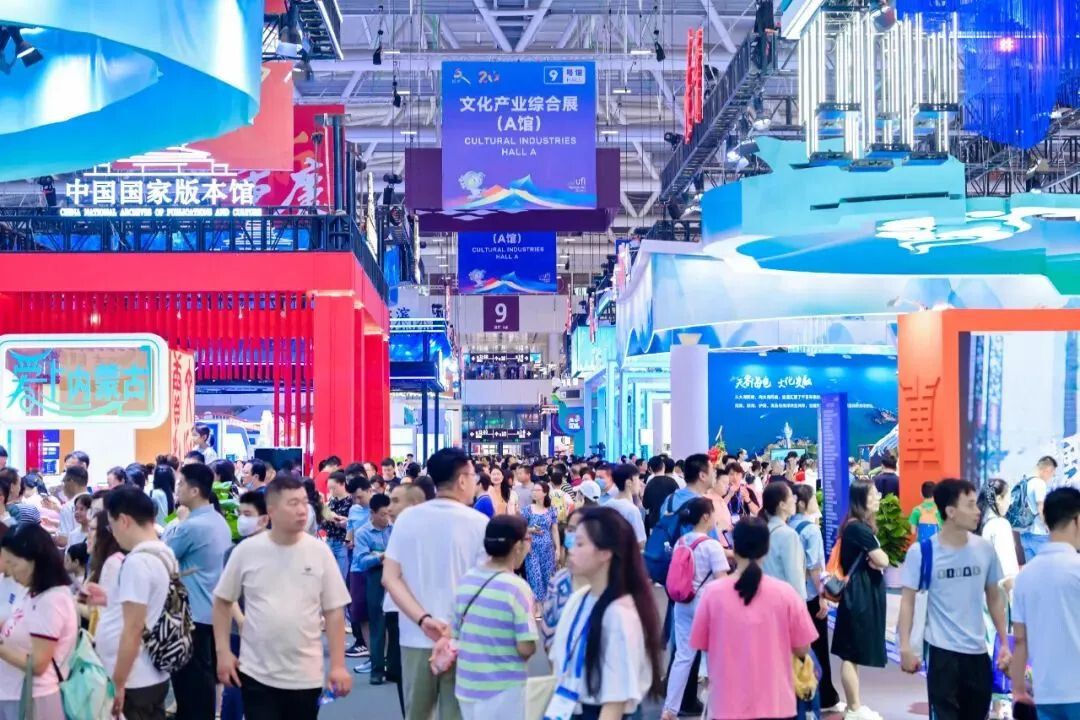
镜观·回响丨中华文化迸发赋能发展之力
Xin Hua Wang· 2025-10-08 08:48
Group 1 - The core idea emphasizes the importance of cultural development for national prosperity and the enhancement of cultural confidence in China [1][7] - Under the guidance of Xi Jinping's cultural thought, China is pursuing a modern path that balances material and spiritual civilization [7] - The integration of culture and tourism is creating new economic highlights and shaping new urban and rural images [8] Group 2 - Heilongjiang Province is leveraging its ice and snow resources to develop a booming "ice+" industry, contributing to high-quality economic growth [10] - Grassroots sports events in Guizhou, such as "Village Super" and "Village BA," are merging sports, ethnic culture, and tourism consumption, driving rural revitalization [11] - Xinjiang's tourism has surged following the airing of the drama "My Alashan," with visitor numbers increasing by 60.81% and tourism revenue rising by 88.25% [11] Group 3 - Jiangsu's Xuzhou County is promoting cultural tourism through various activities during the National Day and Mid-Autumn Festival, effectively stimulating holiday economic vitality [13] - The scenic area of Wangxian Valley in Jiangxi attracted 3.1 million visitors in 2024, generating 528 million yuan in tourism revenue and creating over 2,000 direct jobs [14] - The "Astronomy Town" in Guizhou is enhancing local employment and entrepreneurship through its tourism model, with significant visitor numbers and revenue reported [14] Group 4 - The traditional craft of porcelain making in Jingdezhen is being revitalized through cultural and creative industry transformations [17] - The musical instrument industry in Wuqiao County has developed into a cluster of over 150 enterprises, generating 2.38 billion yuan in revenue in 2024 [19] - Yunnan's Pu'er City is integrating coffee culture with tourism, creating diverse experiences that attract visitors [20] Group 5 - The "Digital Dunhuang" immersive exhibition utilizes VR technology to enhance visitor engagement with cultural heritage [34] - Suzhou is advancing "digital gardens" to create immersive experiences that showcase its unique garden culture [36] - The Five Streams Intangible Cultural Heritage Park in Hunan is using digital technology to promote traditional crafts and attract more visitors [37] Group 6 - The 2025 China Cultural Tourism Industry Expo in Wuhan showcased new cultural tourism products and attracted over 2,000 domestic exhibitors [39] - The rise of the Chinese trendy toy industry, exemplified by Pop Mart, has seen its market scale grow from 6.3 billion yuan in 2015 to 60 billion yuan in 2023 [30] - Chongqing's drone light shows have become a popular attraction, significantly boosting local restaurant traffic during performances [32]

人民日报头版头条点赞四川:蜀道新歌
Ren Min Ri Bao· 2025-08-25 01:46
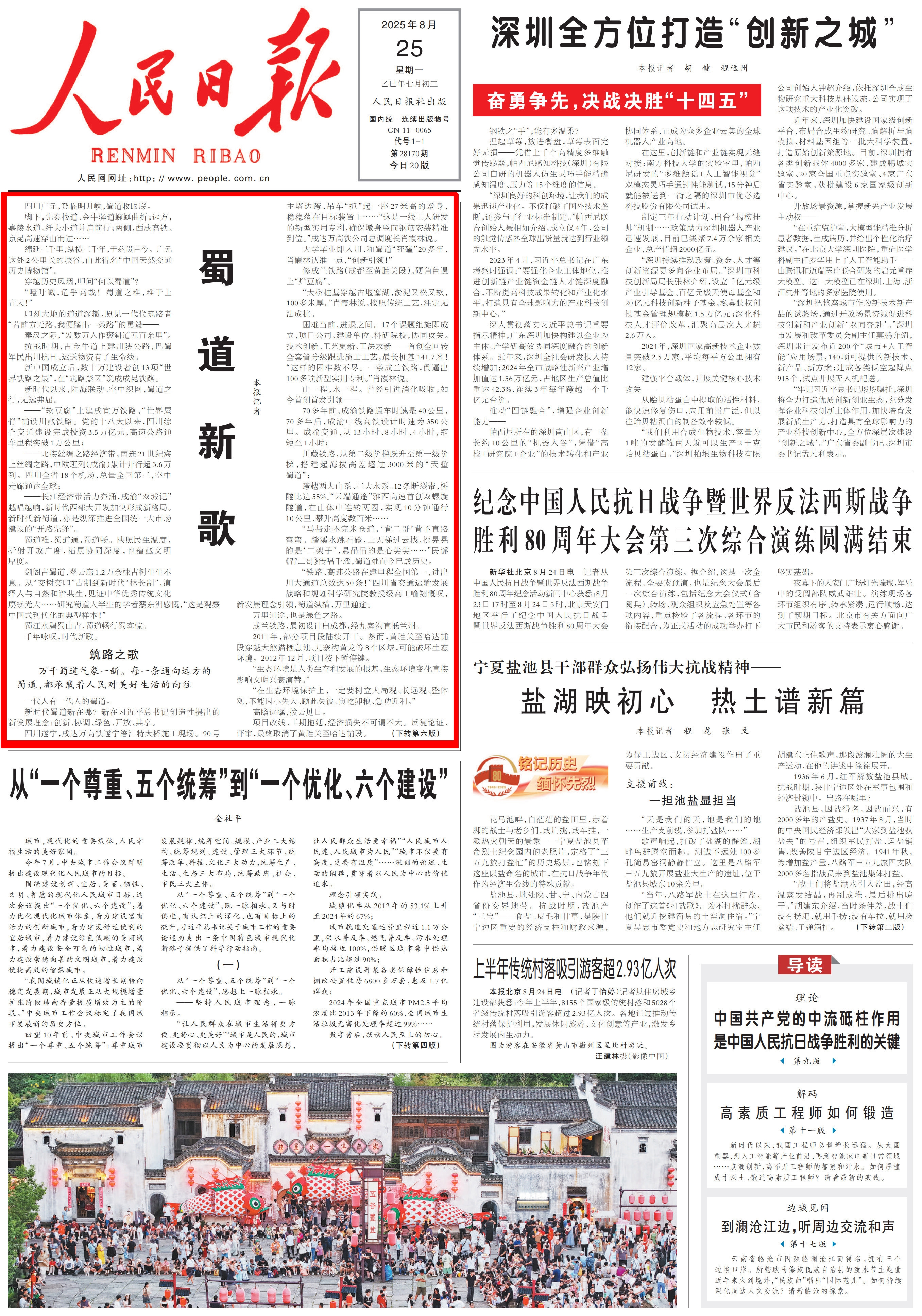
Core Viewpoint - The article "New Song of Shu Road" highlights the transformation of Sichuan's transportation infrastructure from the historical challenges of "Shu Road" to a modern, interconnected network that supports economic growth and regional integration [1][5]. Group 1: Historical Context - The article traces the historical significance of the Shu Road, emphasizing its evolution from ancient pathways to modern transportation systems, showcasing the resilience and innovation of builders throughout history [3][28]. - Key milestones include the construction of the Baoshan Road during the Qin and Han dynasties and the establishment of the Chengdu-Chongqing Railway, which marked significant advancements in transportation [29][30]. Group 2: Modern Infrastructure Development - Since the 18th National Congress, Sichuan has invested 3.5 trillion yuan in comprehensive transportation construction, with over 10,000 kilometers of expressways completed [32]. - The region has established 50 major transportation corridors, with the Chengdu-Chongqing economic circle becoming a national model for integrated development [44][70]. Group 3: Economic Integration and Growth - The Chengdu-Chongqing economic circle's GDP increased from 6.3 trillion yuan in 2019 to 8.7 trillion yuan in 2024, reflecting significant economic growth and regional collaboration [70]. - The establishment of the cross-provincial tax collection service center in the Gaotong New District exemplifies efforts to streamline administrative processes and enhance economic cooperation between Sichuan and Chongqing [60][66]. Group 4: Environmental Considerations - The article emphasizes the importance of ecological protection in infrastructure projects, highlighting the need for sustainable development practices that consider long-term environmental impacts [51][54]. - The construction of the Chengdu-Lanzhou Railway faced challenges due to environmental concerns, leading to project modifications to protect sensitive ecosystems [51][52]. Group 5: Future Prospects - The article concludes with a vision for the future of the Shu Road, emphasizing its role as a "pioneer" in promoting a unified national market and facilitating international trade [5][81]. - The development of logistics and transportation networks is expected to enhance the region's competitiveness in global markets, particularly through initiatives like the China-Europe Railway Express [81][85].
把握消费提质升级新趋势
Jing Ji Ri Bao· 2025-08-15 22:43
Core Insights - China's position as the world's second-largest consumer market remains solid, with the penetration rate of the new energy vehicle market exceeding 50% and significant growth in various sectors, indicating vast opportunities and potential for investment [1] - The Ministry of Commerce's report on consumption during the 14th Five-Year Plan highlights four key themes: expansion, quality improvement, renewal, and openness, with an average annual growth of 5.5% in retail sales of consumer goods over the past four years, expected to surpass 50 trillion yuan this year [1] - The average annual contribution of consumption to economic growth is around 60%, with a notable increase in service consumption, which is projected to be a major driver of consumption upgrade during the 15th Five-Year Plan [2] Group 1 - The retail sales of consumer goods are projected to exceed 50 trillion yuan this year, with an average annual growth rate of 5.5% over the past four years [1] - The average annual growth rate of residents' service consumption expenditure is 9.6%, with its share in total consumption expenditure rising by 3.5 percentage points to 46.1% [1] - The per capita disposable income and per capita consumption expenditure of residents have increased from 32,000 yuan and 21,000 yuan to 41,000 yuan and 28,000 yuan, respectively, over the past four years [2] Group 2 - The shift from goods consumption to service consumption is expected to be a primary development direction for consumption upgrade during the 15th Five-Year Plan [2] - Improving the consumption environment is a systematic project that involves infrastructure construction, market regulation, consumer rights protection, and credit system development [2] - Enhancing consumer willingness to spend requires multi-faceted collaboration and measures, including market order regulation and the establishment of efficient consumer rights protection channels [2]