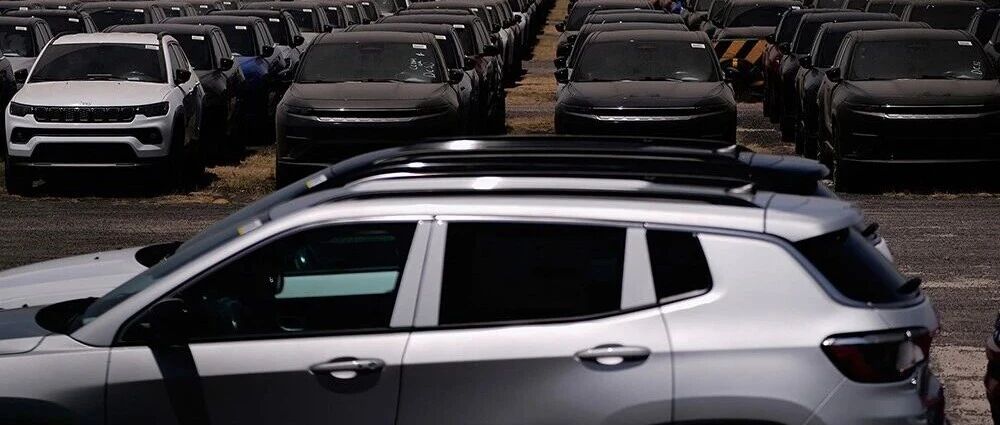
奔驰GLB

Search documents
奔驰C级:门店全款优惠53000,白色以外的颜色很少卖
车fans· 2026-03-10 00:29
Core Viewpoint - The Mercedes-Benz C-Class is positioned as an accessible luxury vehicle, appealing to younger buyers who aspire to own a prestigious brand without the high costs associated with higher-end models like the E-Class or S-Class [1]. Sales Performance - In a local four-tier city, the dealership experiences a daily foot traffic of 6-8 groups, with over 50% of visitors interested in the C-Class, making it the primary sales model [2]. - Last month, the dealership sold 17 units of the C-Class, with a commission range of 1500-2500 for the sales staff. The current inventory includes around 20 units, predominantly in white, with the C200 and special editions being less popular [3][10]. Customer Demographics - The typical C-Class buyer is younger, aged between 20-35, often comprising white-collar workers who view the purchase as a reward for their hard work [5]. - A notable customer example includes a 30-year-old woman who specifically sought the C260 model, demonstrating a clear preference for the vehicle despite being offered alternatives [5]. Competitive Landscape - The C-Class is often compared with competitors like the Audi A4L and BMW 3 Series, with customers typically having a budget of around 300,000 yuan and being flexible regarding body styles [7]. - Key selling points for the C-Class include its interior quality, brand prestige, and competitive features, particularly the 2.0T engine shared with the E-Class, enhancing its appeal [7]. Customer Preferences - The most popular configuration is the white exterior with a black interior in the sport version, accounting for 70-80% of sales. Other colors, particularly blue, have struggled to sell [10]. - Customers express dissatisfaction with the complexity of the vehicle's technology and the rear space, which is seen as a disadvantage [15]. Pricing and Discounts - Current discounts on the C-Class are around 50,000 yuan, with the dealership able to offer up to 53,000 yuan in incentives [16]. - Financing options include a 4% interest subsidy on loans, which is reflected in the final pricing [14]. Maintenance and After-Sales - Maintenance costs are structured with A service at 2,000 yuan for every 10,000 kilometers and B service at 5,000 yuan for every 20,000 kilometers, adhering strictly to the service schedule [18]. - Customers are advised to avoid external maintenance services during the warranty period to ensure quality and reliability [19].


狂降27万!宝马神车伤透3亿中产
商业洞察· 2026-03-05 09:18
Core Viewpoint - The luxury car market, particularly for brands like BMW, is experiencing significant challenges, including price cuts and declining sales, indicating a shift in consumer preferences and market dynamics [5][9][21]. Group 1: BMW's Market Performance - BMW has adjusted the suggested retail prices for 31 models, with 24 models seeing price cuts exceeding 10% and some over 20%, including a maximum reduction of 301,000 yuan for the i7 M70L [7]. - In 2025, BMW's global deliveries reached 2,463,715 units, a slight increase of 0.5%, but in China, deliveries fell to 625,527 units, a decline of 12.5% [9]. - This marks the second consecutive year of declining sales in China, with a total drop of approximately 200,000 units compared to the peak of 825,000 units in 2023 [11]. Group 2: Competitive Landscape - The Chinese luxury car market is highly competitive, with brands like Audi and domestic manufacturers gaining ground, leading to BMW losing its market share in key segments [12][13]. - BMW's core models, such as the 5 Series and X5, have seen significant drops in sales, with the 5 Series selling fewer than 8,000 units and the X5 around 5,000 units [12]. - The decline in sales has resulted in over 50 BMW dealerships closing or losing authorization, indicating a severe impact on the dealership network [14]. Group 3: Price Wars and Brand Perception - The luxury car segment is facing a price war, with brands like Mercedes and Audi also slashing prices to maintain market share, which could harm their brand image [22][21]. - The drastic price reductions have led to concerns about the perception of luxury brands, as consumers may associate lower prices with diminished quality [22][19]. - The overall decline in the luxury car market is reflected in the sales figures for major brands, with Mercedes, BMW, and Audi experiencing significant year-over-year declines [19]. Group 4: Transition to Electric Vehicles - The luxury car manufacturers are under pressure to transition to electric vehicles, but many are struggling to adapt, with some brands retracting previous commitments to phase out internal combustion engines [30][31]. - BMW is attempting to accelerate its electric vehicle offerings, such as the iX3, and is engaging in partnerships to enhance its technological capabilities [34][32]. - The future success of these brands will depend on their ability to innovate and meet changing consumer expectations in a rapidly evolving market [35].


BBA大降价给谁带来压力了?五大品牌销售:基本没感觉
车fans· 2026-03-02 00:31
Core Insights - The article discusses the current state of the luxury car market, particularly focusing on the pricing strategies of brands like BMW and Mercedes-Benz, highlighting significant discounts and customer reactions to these changes [2][5][12]. Group 1: Pricing and Discounts - BMW's 7 Series has notable discounts, with the 740 model offering over 300,000 yuan off, while the 735 model sees discounts around 220,000 yuan, reflecting a competitive pricing strategy influenced by domestic electric vehicle pressures [2]. - The Mercedes-Benz E-Class has reported discounts of up to 110,000 yuan, although the actual discounts have been consistent around 100,000 yuan, indicating that promotional pricing may not always reflect true market conditions [5][6]. - Audi's A6L and A4L models are also seeing significant discounts, with A6L priced at approximately 318,000 yuan after a 30% discount, and A4L at around 217,000 yuan after similar reductions [10][11]. Group 2: Market Trends and Customer Behavior - The luxury car market is experiencing a slowdown, with many customers currently in a wait-and-see mode, leading to a longer decision-making process for purchases [9][18]. - There is a growing trend of customers expressing dissatisfaction with current pricing, often waiting for further reductions before making a purchase, which is affecting sales dynamics [9][18]. - The article notes that while electric vehicles are gaining traction, the overall market may see a slight rebound in prices if inventory levels are managed effectively by dealers [7][12]. Group 3: Competitive Landscape - The competition among luxury brands is intensifying, with domestic brands gaining market share, prompting traditional luxury brands to reassess their pricing and product strategies [16]. - The article suggests that despite price reductions, the competitive edge will largely depend on product quality and features rather than just pricing strategies [16][18]. - There is an indication that some dealerships are transitioning to new automotive brands due to high inventory and sales pressure from traditional luxury brands, which may reshape the competitive landscape [11][12].
德国总理访华,带着大众、奔驰、宝马的CEO来“取经”
3 6 Ke· 2026-02-26 02:57
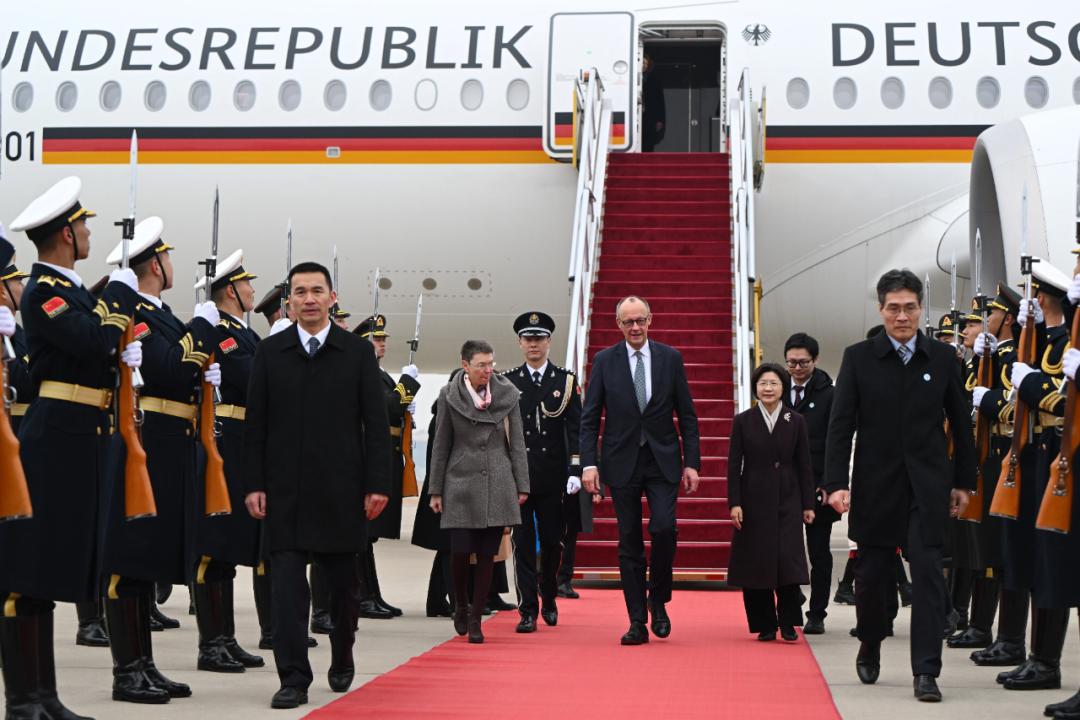
Group 1 - The recent visit of German Chancellor Merz to China highlights the growing importance of China in the global economic landscape, particularly for Germany [1][8] - Accompanying Merz is a high-profile economic delegation consisting of around 30 executives from leading German companies in sectors such as automotive, chemicals, pharmaceuticals, and machinery [2] - In 2025, Germany's trade volume with China is projected to reach €251.8 billion, marking a 2.1% increase year-on-year, with China surpassing the US as Germany's largest trading partner [2] Group 2 - Despite the impressive trade figures, there are structural concerns, as a study indicates that Germany's automotive exports to China are expected to plummet by two-thirds by 2025 compared to 2022 [2] - Major German automakers are experiencing significant declines in sales in China, with Volkswagen's deliveries down 7% to 2.69 million units, BMW down 12.5% to 625,500 units, and Mercedes-Benz down 19% to 575,000 units [2] - The market share of German luxury cars has decreased from a peak of 24.2% in 2019 to an estimated 15.4% in 2025, with domestic brands rapidly gaining ground in the premium segment [3] Group 3 - In response to declining sales, German automakers are increasing their investments in China, with projected investments exceeding €7 billion (approximately 57.7 billion RMB) in 2025, the highest since 2021 [4] - The strategy of German car manufacturers is shifting from "producing in China" to "researching in China" and "creating for China," indicating a fundamental change in their operational approach [4][6] - Collaborative efforts with Chinese companies are seen as essential for reducing R&D cycles and costs, which are critical for survival in the competitive automotive industry [6][7] Group 4 - The establishment of a research and development center by Volkswagen in Hefei, which can develop vehicles throughout their entire lifecycle, exemplifies the shift towards localized innovation [7] - The deepening partnerships with local firms, such as Mercedes-Benz's investment in local tech and BMW's collaborations for battery supply and AI, are reshaping the automotive landscape [7] - The visit of top executives from major German automakers underscores the necessity of establishing a strong presence in China, as success in this market is crucial for global competitiveness [8]
放出1000辆,“中年人的一代神车”直降10万元
Mei Ri Jing Ji Xin Wen· 2026-02-25 22:23
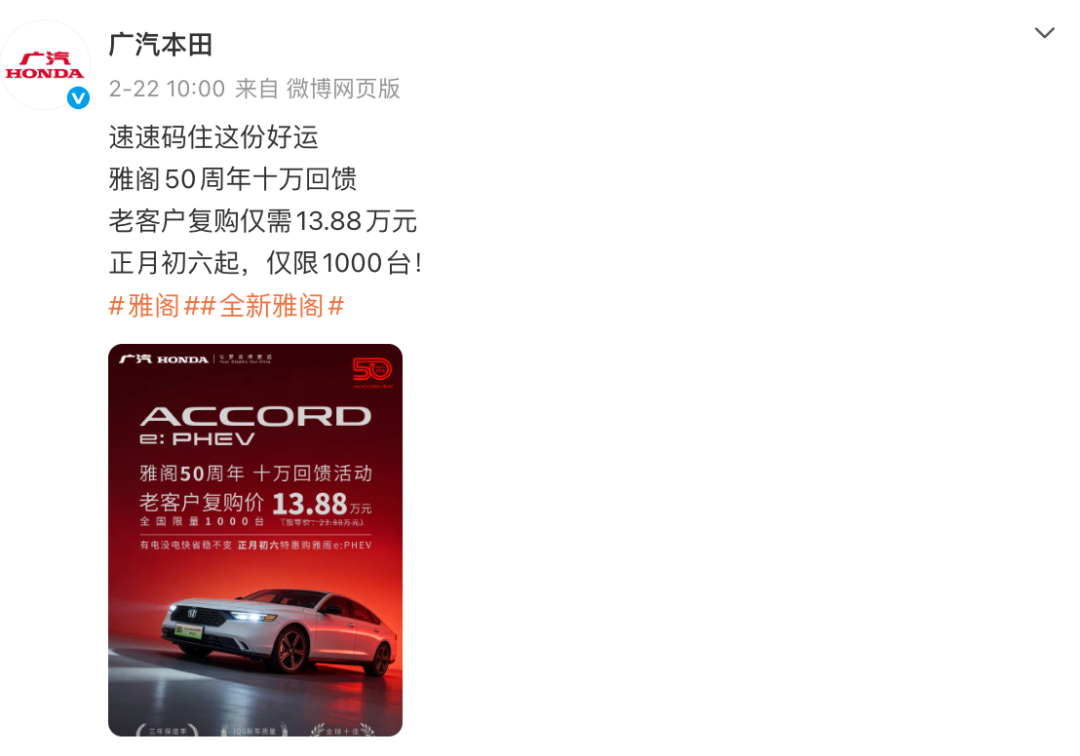
Group 1 - The Honda Accord has significantly reduced its price to celebrate its 50th anniversary, with a discount of 100,000 yuan, bringing the price down to 138,800 yuan for the e:PHEV model, marking the highest price drop since its launch [1] - In January 2026, the Accord's sales were approximately 13,800 units, a month-on-month decrease of 27%, ranking 6th in the mid-size car segment, primarily driven by its gasoline version [5] - The Accord and similar models like the Camry have historically been popular among middle-aged consumers due to their reliability and low maintenance costs, but are now facing price reductions due to increasing penetration of electric vehicles [5] Group 2 - The automotive market remains competitive in the 100,000 to 150,000 yuan price range, with various manufacturers, including Tesla and NIO, offering low-interest financing options to stimulate consumer demand [8] - In January, the automotive consumption index in China was reported at a historical low of 31.1, indicating weak consumer confidence [9] - The sales of mid to high-end electric vehicles have increased, driven by new trade-in policies that provide higher subsidies for these models [9] Group 3 - GAC Toyota has launched the fuel vehicle Wildlander AIR version with a limited-time cash subsidy of 22,000 yuan, alongside other promotional offers [10] - Nissan's new version of the Tianlai Hongmeng cockpit is also offering a limited-time discount of 21,000 yuan [16] - Luxury brands like BMW, Mercedes-Benz, and Audi are providing substantial discounts, with some models seeing reductions of up to 270,000 yuan, indicating aggressive competition for market share [17][18]
放出1000辆 “中年人的一代神车”直降10万元!
Mei Ri Jing Ji Xin Wen· 2026-02-25 16:48
Group 1 - GAC Honda announced a significant price reduction for the Accord e:PHEV model, celebrating its 50th anniversary, with a price drop of 100,000 yuan to 138,800 yuan, marking the highest discount since its launch, limited to 1,000 units [1] - The Accord, once referred to as a "car for the middle-aged generation," has seen a decline in sales, with January 2026 retail sales at approximately 13,800 units, a 27% month-on-month decrease, ranking 6th in the mid-size car segment [6] - The automotive market remains competitive, particularly in the 100,000 to 150,000 yuan price range, as traditional fuel vehicles face pressure from increasing penetration of electric vehicles [6] Group 2 - The automotive consumption index in China was reported at a historical low of 31.1 in January [7] - To stimulate consumer demand, several automakers, including Tesla and NIO, have introduced low-interest financing options and extended loan terms to attract buyers, particularly targeting young consumers with limited budgets [10] - The market is witnessing a shift towards mid to high-end electric vehicles, driven by new trade-in policies that offer higher subsidies for these models, as evidenced by the sales distribution among different vehicle classes [11] Group 3 - Dongfeng Nissan launched four new models, including a new version of the Sylphy, with limited-time discounts of up to 10,000 yuan [15] - Premium brands like BMW, Mercedes-Benz, and Audi are also offering substantial discounts, with reductions reaching up to 270,000 yuan for certain models, indicating aggressive competition for market share [16][17]
上海楼市重磅新政,非沪籍大松绑;传飞天茅台出厂价涨130元;宝马降价27万上热搜;美国公司指控中企“偷”模型,马斯克嘲讽|| 大件事
Sou Hu Cai Jing· 2026-02-25 08:51
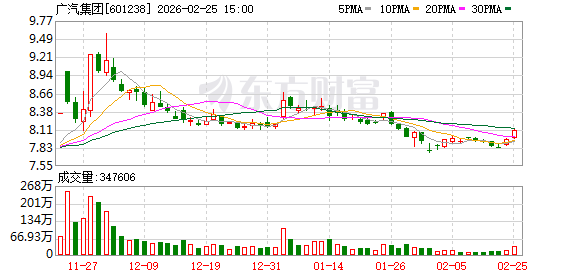
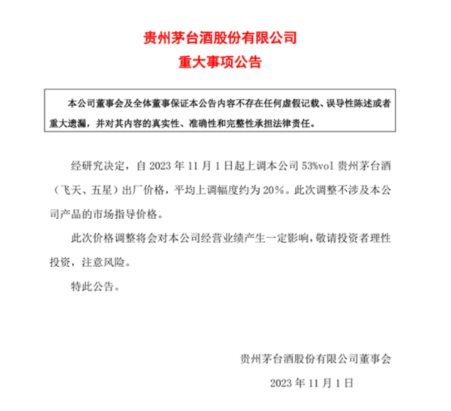
Group 1: Guizhou Moutai Price Adjustment - Recent rumors suggested that the factory price of Feitian Moutai increased from 1169 yuan to 1299 yuan per bottle, which attracted market attention [3] - Guizhou Moutai's representative denied the rumors, stating that any price adjustments would be disclosed as significant events [3] - The last official price adjustment occurred on November 1, 2023, with an average increase of about 20%, while the market guidance price remains at 1499 yuan per bottle [5] - Analysts believe that the price increase rumors may stem from stock market activities, as the date mentioned coincides with the first trading day of A-shares [6] - Feitian Moutai's revenue is crucial for the company's performance, accounting for 85.29% of total revenue in 2024, with a projected growth rate of 15.28% [6] Group 2: Shanghai Real Estate Policy Changes - On February 25, 2024, Shanghai's housing authorities announced new policies to optimize the real estate market, effective from February 26 [7] - The new policy reduces the social insurance or income tax payment duration required for non-local residents to purchase homes from three years to one year [11] - Non-local residents with a residence permit for over five years can now purchase one property in the city without needing to provide proof of social insurance or tax payments [11] - The maximum loan amount for first-time homebuyers using housing provident funds has been increased from 1.6 million yuan to 2.4 million yuan, with potential increases for families with multiple children [14] - In 2023, Shanghai's real estate market saw a decline in new housing starts by 31.8% and a decrease in residential sales area by 9.7% [14] Group 3: Luxury Car Price Reductions - The BMW 7 Series has seen a price reduction of approximately 270,000 yuan, trending on social media [15] - Luxury fuel vehicles are experiencing significant discounts, with brands like Mercedes-Benz and Audi offering substantial price cuts on various models [16] - The market share of fuel vehicles has decreased from 72% to 45% over the past three years, attributed to the rise of domestic electric vehicles [16] - Predictions indicate that luxury car prices may continue to drop by 10%-15% in the first half of 2026 due to competition from electric vehicles [17] Group 4: Yacht Industry Developments - Liu Qiangdong announced the establishment of a yacht brand, Sea Expandary, with a personal investment of approximately 5 billion yuan [19] - The brand aims to make yachts more accessible, targeting a price point of around 100,000 yuan for entry-level models [19] - The Chinese yacht market is rapidly growing, with new registrations accounting for 54.7% of the total number of yachts [20] Group 5: AI Industry Controversies - Anthropic accused three Chinese AI companies of conducting "distillation attacks" on its Claude model, claiming over 16 million interactions through 24,000 fake accounts [21] - The accusations have been met with skepticism, with critics questioning Anthropic's data sources and the legitimacy of its claims [22] - Elon Musk criticized Anthropic's allegations, suggesting that they themselves have engaged in data theft [23]

热搜第一!新年BBA车价大降,宝马7系降价约27万,网友:直接卖个标得了
Xin Lang Cai Jing· 2026-02-25 02:49
Core Viewpoint - The luxury car market in China is experiencing significant price reductions, particularly for brands like BMW, Mercedes-Benz, and Audi, driven by government and manufacturer subsidies, as well as increased competition from domestic electric vehicles [3][5]. Group 1: Price Reductions - BMW 530Li's guide price is 525,000 yuan, with a terminal price of 357,000 yuan, reflecting a discount of 160,000 yuan, which is over 30% [3][5]. - The BMW 7 Series has discounts reaching up to 270,000 yuan [3][5]. - Mercedes-Benz E-Class has a maximum discount of 135,000 yuan, while the GLB starts at 144,900 yuan [3][5]. - Audi A6L has a price drop of 151,000 yuan to 276,900 yuan, and the A3 has fallen to the 100,000 yuan range [3][5]. Group 2: Market Dynamics - The decline in sales for BBA (BMW, Benz, Audi) brands in China is attributed to the rise of domestic electric vehicles, leading to frequent price cuts [3][5]. - Consumer sentiment reflects skepticism about the value of luxury vehicles, with comments suggesting that the brand name alone may not justify the high costs associated with maintenance and repairs [4][6].

美国关税重创墨西哥汽车业,中国车企趁机抄底,特朗普急眼了!
Sou Hu Cai Jing· 2026-02-18 06:48
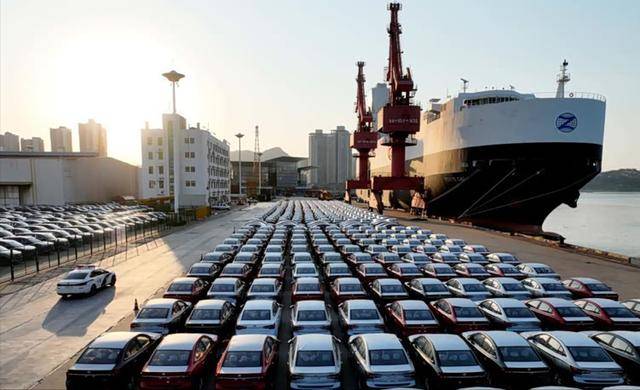
Core Viewpoint - Mexico is cautiously accepting the expansion of Chinese automotive companies, following a more welcoming stance from Canada, which presents a challenge for the U.S. as Chinese brands extend their reach into North America [1] Group 1: Market Dynamics - Mexico ranks as the 4th largest exporter and 7th largest producer of light vehicles globally, heavily reliant on the U.S. market, with projections indicating that 2.8 million out of 4 million vehicles produced in 2024 will be exported to the U.S. [3] - The Nissan-Mercedes-Benz plant in Aguascalientes, Mexico, is a target for acquisition by Chinese automotive firms, with the plant's production capacity historically underutilized at less than 60% [3] - The plant's closure is part of Nissan's broader strategic realignment, influenced by tariffs imposed by the U.S. on Mexican-made vehicles [3][4] Group 2: Impact of Tariffs - The imposition of a 25% tariff on Mexican-made vehicles by the Trump administration has significantly impacted Mexico's automotive industry, leading to a projected decline in exports to the U.S. by nearly 3% in 2025 [3][4] - If current tariffs persist, Mexico could see a more substantial drop in automotive exports by 2026, resulting in the loss of approximately 60,000 jobs in the automotive sector by 2025 [4] Group 3: Chinese Automotive Expansion - Chinese automotive brands are rapidly expanding globally, with projections indicating that by 2025, their total global sales will reach 30.42 million vehicles, surpassing Japan for the first time [5] - In Mexico, the market share of Chinese automotive brands is expected to rise from 0% in 2020 to nearly 10% by 2025, positioning Mexico as a strategic hub for Chinese companies targeting the North American market [5] Group 4: Geopolitical Considerations - Mexican officials are concerned that a successful acquisition by Chinese firms could provoke a strong reaction from the U.S., leading to private discussions about delaying such investments until trade negotiations with the U.S. are concluded [5][6] - Recent tariff adjustments by Mexico, aimed at balancing trade deficits, have strained economic relations with China, despite the intention to boost domestic production [6]
中国车企,正加快进军美国左邻右舍
财富FORTUNE· 2026-02-15 13:04
Core Viewpoint - Mexico is cautiously accepting the expansion of Chinese automotive companies in the country, following a more welcoming stance from Canada, which presents a challenge for the U.S. as Chinese automotive brands extend their industrial layout into neighboring territories [1]. Group 1: Chinese Automotive Companies' Expansion - Two major Chinese automotive companies have reached the final selection stage to bid for the Nissan-Mercedes-Benz factory in Mexico [3]. - A total of four Chinese automotive companies are involved in the bidding process, but they have not disclosed any information regarding the matter [4]. - The Nissan-Mercedes-Benz factory in Aguascalientes, Mexico, has a designed annual capacity of 230,000 vehicles but has never operated at full capacity, with a utilization rate below 60% [4]. Group 2: Impact of Tariffs on the Mexican Automotive Industry - Mexico is the world's fourth-largest exporter and seventh-largest producer of light vehicles, heavily reliant on the U.S. market, with 2.8 million out of 4 million vehicles produced in 2024 expected to be exported to the U.S. [4]. - The imposition of a 25% tariff on cars produced in Mexico by the Trump administration has led to a projected decline of nearly 3% in exports to the U.S. by 2025 [4]. - The chairman of the Mexican Automotive Industry Association (AMIA) warned that if current tariffs persist, exports to the U.S. could see a more significant drop by 2026, resulting in a loss of 60,000 jobs in the automotive sector by 2025 [5]. Group 3: Strategic Implications for Chinese Brands - The growth of the Chinese automotive industry has fueled ambitions for global market expansion, with projections indicating that by 2025, Chinese brands will sell 30.42 million vehicles globally, surpassing Japan for the first time [7]. - In Mexico, the market share of Chinese automotive brands is expected to rise from 0% in 2020 to approximately 10% by 2025 [7]. - Mexico serves as a strategic hub for Chinese companies to penetrate the North American market, with local investments creating much-needed jobs [7]. Group 4: Trade Relations and Tariff Adjustments - The Mexican government has raised tariffs on imports from countries without free trade agreements, including China, with rates reaching up to 35% [9]. - The core purpose of the recent tariff increases appears to be to appease the Trump administration, which has led to heightened tensions in Mexico-China trade relations [9]. - Recent direct talks between Chinese and Mexican officials indicate ongoing discussions about bilateral trade relations amidst the backdrop of Chinese automotive companies bidding for the factory [9].