工业有色ETF(560860)

Search documents
量化择时周报:缩量信号近在咫尺,重回科技与周期-20260208
ZHONGTAI SECURITIES· 2026-02-08 10:43
Quantitative Models and Construction Methods Model Name: Industry Trend Allocation Model - **Model Construction Idea**: This model aims to identify industry trends and allocate investments accordingly[5][8][10] - **Model Construction Process**: - The model uses various indicators to assess industry trends, including market performance, valuation levels, and risk appetite. - It incorporates signals from different sub-models such as the Mid-term Distress Reversal Expectation Model, TWO BETA Model, and Performance Trend Model. - The Mid-term Distress Reversal Expectation Model waits for reversal signals in industries like liquor and real estate. - The TWO BETA Model recommends the technology sector and monitors opportunities in commercial aerospace. - The Performance Trend Model focuses on the computing power industry chain and oversold sectors like non-ferrous metals and chemicals. - **Model Evaluation**: The model is effective in identifying industry trends and making allocation recommendations based on various market signals[5][8][10] Model Name: Timing System - **Model Construction Idea**: This model aims to distinguish the overall market environment and provide timing signals for investment decisions[5][8][9] - **Model Construction Process**: - The model uses the distance between the long-term moving average (120 days) and the short-term moving average (20 days) of the WIND All A Index. - The latest data shows the 20-day moving average at 6787 and the 120-day moving average at 6338, with a difference of 7.08%. - The model also considers the market trend line, which is currently around 6780 points, and the profitability effect, which is -1.44%. - The model suggests that the market is in a shock pattern and monitors short-term risk appetite changes. - **Model Evaluation**: The model provides clear signals for market timing based on moving averages and other indicators[5][8][9] Model Backtesting Results - **Industry Trend Allocation Model**: - **PE Valuation Level**: 90th percentile, indicating a high level[8][10] - **PB Valuation Level**: 50th percentile, indicating a medium level[8][10] - **Position Recommendation**: 70% for absolute return products with WIND All A as the stock allocation subject[8][10] - **Timing System**: - **Moving Average Distance**: 7.08%, greater than the absolute value of 3%[5][8][9] - **Market Trend Line**: Around 6780 points[5][8][9] - **Profitability Effect**: -1.44%, indicating a temporary end to the upward trend[5][8][9] Quantitative Factors and Construction Methods Factor Name: Mid-term Distress Reversal Expectation Model - **Factor Construction Idea**: This factor aims to identify potential reversal signals in distressed industries[5][8][10] - **Factor Construction Process**: - The model monitors industries like liquor and real estate for reversal signals. - It uses various market indicators to assess the likelihood of a reversal. - **Factor Evaluation**: The factor is useful for identifying potential investment opportunities in distressed industries[5][8][10] Factor Name: TWO BETA Model - **Factor Construction Idea**: This factor aims to recommend sectors with high growth potential, such as technology[5][8][10] - **Factor Construction Process**: - The model focuses on the technology sector and monitors opportunities in commercial aerospace. - It uses market performance and other indicators to make recommendations. - **Factor Evaluation**: The factor is effective in identifying high-growth sectors and making investment recommendations[5][8][10] Factor Name: Performance Trend Model - **Factor Construction Idea**: This factor aims to identify sectors with strong performance trends[5][8][10] - **Factor Construction Process**: - The model focuses on the computing power industry chain and oversold sectors like non-ferrous metals and chemicals. - It uses performance indicators to make recommendations. - **Factor Evaluation**: The factor is useful for identifying sectors with strong performance trends and making investment recommendations[5][8][10] Factor Backtesting Results - **Mid-term Distress Reversal Expectation Model**: - **PE Valuation Level**: 90th percentile, indicating a high level[8][10] - **PB Valuation Level**: 50th percentile, indicating a medium level[8][10] - **TWO BETA Model**: - **PE Valuation Level**: 90th percentile, indicating a high level[8][10] - **PB Valuation Level**: 50th percentile, indicating a medium level[8][10] - **Performance Trend Model**: - **PE Valuation Level**: 90th percentile, indicating a high level[8][10] - **PB Valuation Level**: 50th percentile, indicating a medium level[8][10]
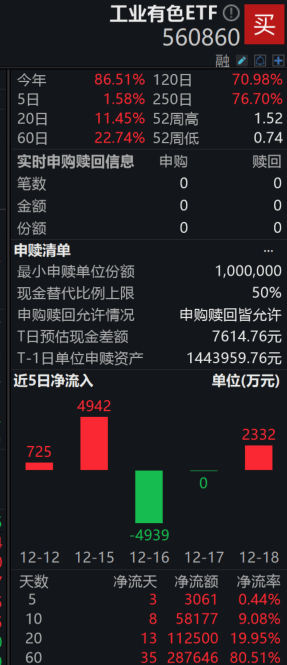
连续10日涌入34亿元!工业有色ETF(560860)逆势收涨1.49%,前十大持有人险资占6席
Sou Hu Cai Jing· 2026-01-15 11:18
Core Viewpoint - The industrial non-ferrous ETF (560860) has shown strong performance, driven by rising prices of industrial metals like copper and aluminum, and increasing institutional investment interest, indicating a positive outlook for the sector. Group 1: Market Performance - As of January 15, the industrial non-ferrous ETF (560860) has seen a significant increase, with a year-to-date rise of 15.93%, outperforming the non-ferrous metal index (000819) which rose by 13.77% and gold stocks (931238.CSI) which increased by 14.49% [6][9] - The ETF has experienced a net inflow of 3.4 billion yuan over the last 10 trading days, totaling over 6 billion yuan in the past 60 days, bringing its total size to 12.965 billion yuan [1] Group 2: Institutional Investment - Institutional investors' share in the industrial non-ferrous ETF (560860) has risen from 41% at the end of 2024 to nearly 60% by mid-2025, reflecting growing confidence in the sector [3] - The top ten holders of the ETF account for over 48% of its total shares, with six being insurance institutions, indicating strong institutional support for the industrial non-ferrous metal sector during the economic recovery [4] Group 3: Sector Dynamics - The industrial non-ferrous ETF (560860) is heavily weighted towards copper (29.2%), aluminum (26.7%), and rare earths (15.3%), which together make up nearly 70% of the ETF, highlighting its focus on manufacturing-related metals [11] - The demand for key materials like aluminum and copper is expected to rise due to rapid advancements in AI, semiconductors, and robotics, with domestic robot production projected to grow by 33.39% year-on-year from March to October 2025 [6] Group 4: Supply and Demand Factors - The current low inventory levels of copper and aluminum, combined with a cyclical production recovery, are expected to support prices and enhance industry outlook [9] - The recent government policy restricting the approval of mining projects without self-built mines or tailings disposal facilities further emphasizes the scarcity and potential value of the industrial non-ferrous ETF (560860) [13]

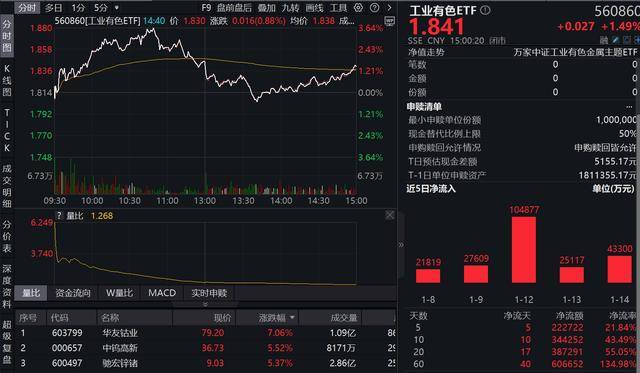
铜铝期货齐涨,工业有色ETF(560860)高开!近10日“吸金”近27亿
Sou Hu Cai Jing· 2026-01-14 02:33
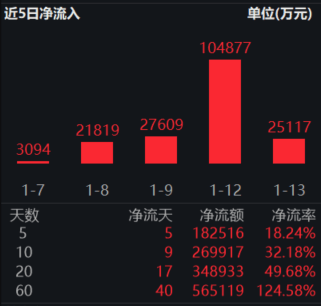
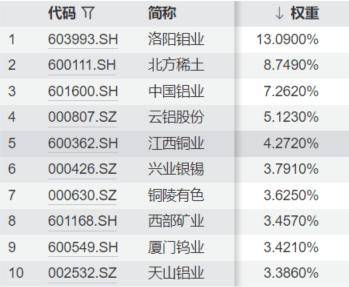
Group 1 - Domestic copper and aluminum futures prices have risen significantly as of January 14, 2026, indicating a positive trend in the industrial metals market [1] - The Industrial Nonferrous ETF (560860) closely tracks the CSI Industrial Nonferrous Metals Theme Index, which includes leading companies in copper, aluminum, and rare earths, attracting substantial capital inflows [1][3] - The fund experienced a net inflow of 250 million on January 13, with a total of 1.825 billion in net inflows over the past five trading days, and nearly 2.7 billion in the last ten days [1] Group 2 - The CSI Industrial Nonferrous Metals Theme Index comprises 30 leading companies in the industrial nonferrous metals sector, with copper (34.4%), aluminum (21.8%), and rare earths (13.6%) making up nearly 70% of the index as of January 9 [5] - The top ten constituent stocks of the index include major players such as Luoyang Molybdenum, Northern Rare Earth, and China Aluminum, collectively accounting for 56.18% of the index [7] - The Industrial Nonferrous ETF (560860) is the only ETF product tracking the CSI Industrial Nonferrous Metals Theme Index, providing investors with an efficient solution to invest in this sector [7]






规模迅速站上120亿!“工业属性纯粹”的工业有色ETF(560860)为何成为资金持续追逐的焦点?
Sou Hu Cai Jing· 2026-01-13 09:43
Core Insights - The industrial metal ETF (560860) has seen significant capital inflows, with a total of 1.88 billion yuan in the last five trading days and 2.5 billion yuan in the last ten days, indicating strong market confidence [1] - The ETF's assets under management have rapidly increased, surpassing 10 billion yuan on January 6 and reaching over 12 billion yuan by January 12 [1] Group 1: ETF Performance and Market Position - The industrial metal ETF (560860) is the only product tracking the CSI Industrial Nonferrous Metals Theme Index, filling a gap in the industrial nonferrous metal sector [2] - The ETF focuses on high-demand industrial metals, with the top three metals—copper (34.4%), aluminum (21.8%), and rare earths (13.6%)—accounting for approximately 70% of the index [2] - The top ten constituent stocks of the ETF include leading companies in the industrial metal sector, with a combined weight of 56.18%, featuring companies like Luoyang Molybdenum (13.09%) and Northern Rare Earth (8.75%) [2][3] Group 2: Investment Opportunities - The ETF provides a one-stop efficient solution for investors looking to gain exposure to the industrial metal sector, benefiting from cyclical and policy-driven opportunities [3]
资金涌入热门板块 有色与卫星ETF规模攀升
Zhong Guo Zheng Quan Bao· 2026-01-11 20:49
Core Insights - The A-share market has seen a vibrant performance with multiple sectors experiencing significant rallies, particularly in the ETF market where several products have surpassed the 10 billion yuan threshold [1][2] ETF Market Performance - The Industrial Metals ETF (560860) managed by Wanji Fund reached a record scale of 100.07 billion yuan on January 6, 2026, marking its entry into the "100 billion ETF club" after a 100.38% increase in 2025, ranking it among the top ten ETFs in the market [1] - The Color Metals ETF (516650) under Huaxia Fund also crossed the 100 billion yuan mark, achieving a scale of 100.27 billion yuan by January 9, 2026, with continuous inflows during the first five trading days of the year [2] Market Trends and Influences - The current market behavior is characterized as typical for the end of the year and beginning of the new year, aligning with historical trends of spring or year-end rallies in the A-share market, driven by increased institutional trading [1] - The manager of the Industrial Metals ETF highlighted that the industrial metals sector is significantly influenced by the anticipated Federal Reserve interest rate cuts, with pricing heavily reliant on microeconomic data [2] Satellite ETF Growth - The Satellite ETF (159206) managed by Yongying Fund saw rapid growth, reaching 117.69 billion yuan by January 9, 2026, becoming the first satellite-themed ETF to exceed 100 billion yuan in scale [3] - The manager of the Satellite ETF anticipates 2026 to be a pivotal year for China's commercial space industry, with numerous policy initiatives and plans set to catalyze growth in satellite communication and related sectors [4] Future Outlook for Satellite Applications - The Satellite ETF manager noted that satellite communication will serve as a foundational technology for 6G communication and will support various emerging sectors such as autonomous driving and IoT [5] - Major domestic smartphone manufacturers are launching new models with satellite connectivity features, and telecom operators have received licenses for satellite internet services, indicating significant future capital expenditures in this area [5]
11月CPI或增美联储鸽派声音,国际铜、铝期价上涨,工业有色ETF(560860)放量涨超2%,场内溢价频现,近10日“吸金”超5.8亿
Sou Hu Cai Jing· 2025-12-19 06:44
Group 1 - The market experienced a slight increase on December 19, with the non-ferrous metals sector leading the gains, including copper, aluminum, and rare earths, with Yun Aluminum rising over 60% [1] - The Industrial Non-Ferrous ETF (560860) saw a trading volume exceeding 3.1 billion, surpassing the total from the previous day, indicating active trading with frequent premiums in the market [1] - The Industrial Non-Ferrous ETF has attracted significant capital, with over 5.8 billion raised in the last 10 days, over 11 billion in the last 20 days, and over 28 billion in the last 60 days, bringing its latest scale to 69.88 billion [1] Group 2 - Internationally, U.S. inflation showed unexpected easing, with the November core CPI rising by 2.6%, the lowest since 2021, providing the Federal Reserve with substantial room to consider interest rate cuts [3] - LME metal futures generally rose, with LME copper increasing by 41 USD to 11,778 USD/ton and LME aluminum rising by 10 USD to 2,916 USD/ton [3] - In the rare earth sector, Chinese authorities have communicated policies to exporters, with some exporters meeting the basic requirements for applying for general licenses, indicating a potential increase in exports [3] Group 3 - According to Guotai Junan Securities, copper is expected to see dual positive catalysts from its financial and commodity attributes, with increased demand and inventory pressures due to insufficient supply [3] - Aluminum is anticipated to break out of its three-year price range due to strong demand and low inventory, entering a phase of significant upward movement driven by demand catalysts [4] - The Industrial Non-Ferrous ETF closely tracks the CSI Industrial Non-Ferrous Metals Theme Index, covering leading strategic resources such as copper, aluminum, and rare earths, providing opportunities for investors to capitalize on cyclical and policy-driven benefits [4]


中小金融机构更危险了?
表舅是养基大户· 2025-12-03 13:33
Group 1 - The core viewpoint of the article emphasizes the orderly promotion of mergers and acquisitions among small financial institutions, indicating a trend towards consolidation in the financial sector, with 2025 potentially marking the beginning of a significant clearing of financial institutions [1][2][7]. - The article highlights various recent cases of consolidation across different financial sectors, including the merger of CICC with Dongxing and Xinda in the securities industry, and the acquisition of Jun Kang Life by Fuze Life initiated by Shandong state-owned assets [5][6]. - It notes that the clearing of small financial institutions is fundamentally due to an oversupply of financial resources, driven by the need to manage risks, leading to a trend where stronger institutions will dominate [7][8]. Group 2 - The article discusses the current state of the private equity industry, noting a lack of new standout private equity firms emerging, as many have faced challenges in maintaining their platforms and sales channels [6]. - It suggests that the long-term outcome of clearing excess homogeneous supply will optimize resource allocation across society, which is beneficial in the mid to long term [8]. - The article advises investors to be cautious about the risks associated with smaller institutions and to seek those with differentiated advantages for sustainable growth [9].

大幅溢价!停牌
Zhong Guo Zheng Quan Bao· 2025-12-03 12:28
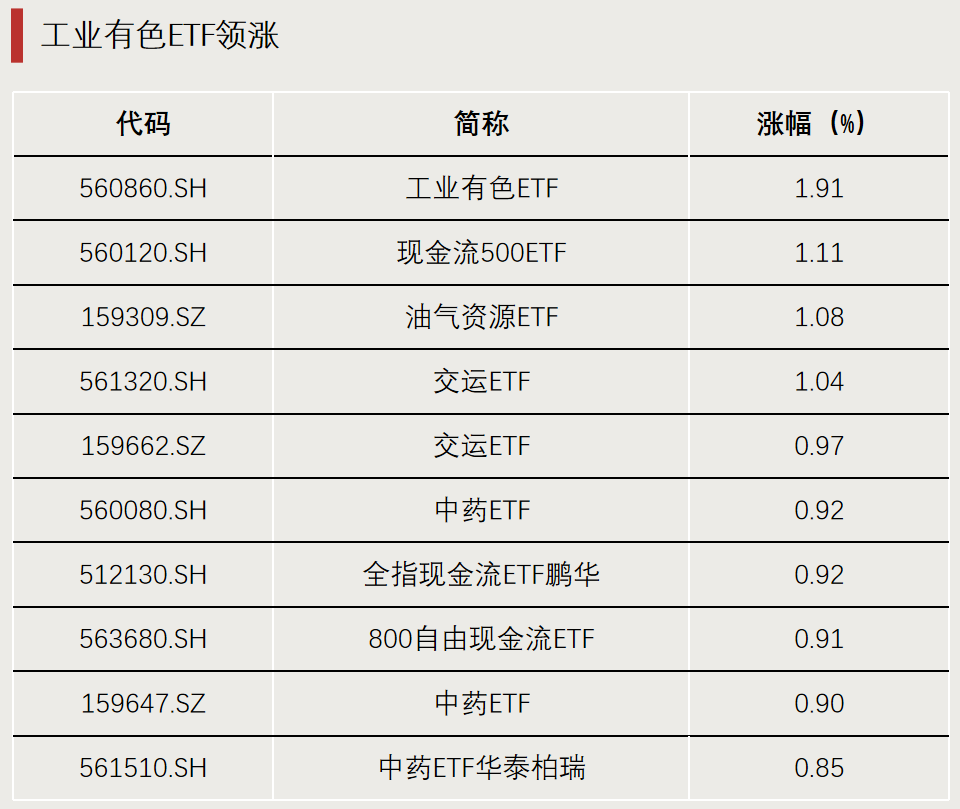
Core Viewpoint - The A-share market experienced fluctuations on December 3, with a notable performance from cross-border ETFs, particularly the Nasdaq Technology ETF, which faced a significant premium in its secondary market price, leading to a temporary suspension of trading [1][2]. Group 1: ETF Performance - On December 3, nine cross-border ETFs ranked among the top ten in terms of gains [2]. - The Industrial Nonferrous ETF (560860) led the A-share ETFs with a gain of 1.91%, followed by other ETFs related to cash flow and transportation [3][4]. - The online consumption ETF recorded the largest decline at -2.74%, with several technology-related ETFs also experiencing significant drops [5]. Group 2: Fund Flows - As the year-end approaches, there is a lack of consensus on investment direction, but the technology sector remains favored, with several technology-related ETFs among the top net inflows on December 2 [6]. - The top net inflows included the Science and Technology Artificial Intelligence ETF and the Robotics ETF, indicating strong interest in technology investments [7]. Group 3: Bond ETFs Activity - Bond-related ETFs showed active trading, with a total trading volume of 354.33 billion yuan on December 3, where eight out of the top ten ETFs by trading volume were bond-related [8]. - The Silver Hua Daily ETF had the highest trading volume at 15.08 billion yuan, reflecting the ongoing interest in bond markets amid market fluctuations [9]. Group 4: Market Outlook - The attractiveness of Hong Kong dividend assets has increased, with expectations of support for the market from domestic growth policies despite uncertainties surrounding the Federal Reserve's interest rate decisions [11]. - Key investment directions in A-shares include technology innovation, consumption upgrades, and high-end manufacturing, aligning with global industrial restructuring trends [11].
万家基金旗下工业有色ETF (560860)最新规模突破61亿元创历史新高,工业金属或迎宏观与基本面共振时刻
2 1 Shi Ji Jing Ji Bao Dao· 2025-12-03 03:01
Group 1 - The non-ferrous metal sector showed active performance on December 3, with the CSI Industrial Non-Ferrous Metals Theme Index rising by 1.66%, and stocks such as Tianshan Aluminum rising over 5% [1] - The Wanji Fund's Industrial Non-Ferrous ETF (560860) increased by 1.70%, with a trading volume exceeding 75 million yuan, and frequent premium trading observed [1] - The Industrial Non-Ferrous ETF (560860) saw a net inflow of over 280 million yuan on the previous trading day, with a circulating scale reaching 6.167 billion yuan and a circulating share of 4.365 billion shares, both hitting historical highs [1] Group 2 - Since November, copper prices have shown resilience, not significantly declining with macro fluctuations, and reached a historical high at the end of November due to factors such as the Chinese copper raw material negotiation group and expectations of interest rate cuts by the Federal Reserve [2] - Analysts predict a potential supply shortage for copper by 2026, driven by frequent disruptions in copper mine supply, expected easing of refined production capacity pressure, and ongoing interest rate cut trades, indicating the possibility of a super cycle for copper prices [2] - Wanji Fund highlights the rise of passive investment and index-based investment as important choices for asset allocation, with a focus on developing market-required tool-type products, including various ETFs covering broad-based, industry themes, Smart Beta, and bonds [2]

单日大涨8%!场内这只唯一的工业有色ETF值得关注
Sou Hu Cai Jing· 2025-10-10 01:29
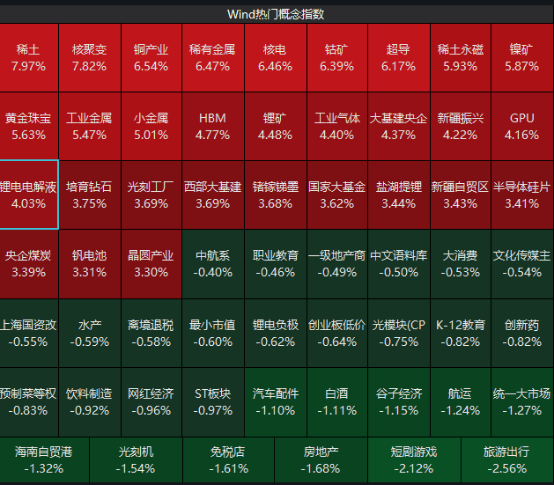
Core Viewpoint - The market experienced a strong opening on October 9, with the Shanghai Composite Index surpassing 3900 points, reaching a ten-year high, driven by significant gains in the rare earth, nuclear fusion, and copper sectors. Group 1: Market Performance - The Shanghai Composite Index broke through 3900 points, marking a ten-year high [1] - The rare earth sector surged by 7.97%, while the copper industry rose by 6.54% [1] - The industrial non-ferrous index saw a daily increase of 8.35% [2] Group 2: Key Indices and Trends - The CSI Industrial Non-Ferrous Metals Theme Index (H11059.CSI) includes significant resources such as copper (31.72%), aluminum (19.23%), and rare earths (18.13%) [2] - The index has recently surpassed previous highs, indicating an upward trend in the market [3] Group 3: Positive Factors for Investment - Demand is expected to rise due to the Federal Reserve's interest rate cuts, which weaken the dollar and boost demand for industrial metals like copper and aluminum [4] - Supply disruptions, particularly from the Grasberg copper mine, are anticipated to create a significant supply gap, with an estimated loss of nearly 600,000 tons of copper by the end of 2026 [6][7] - Recent price increases for copper, with LME prices reaching $10,800 per ton, are attributed to reduced supply from major copper-producing countries [9] - Domestic "anti-involution" policies are expected to limit new capacity and phase out outdated production, potentially improving profit margins in the smelting sector and driving industry value reassessment [11]