搜索广告

Search documents
国泰海通晨报-20260320
GUOTAI HAITONG SECURITIES· 2026-03-20 02:49
Macro Research - The report indicates that tariffs and geopolitical risks continue to disrupt US inflation expectations, with the Federal Reserve's short-term concerns about inflation outweighing worries about stagnation, leading to suppressed rate cut expectations and increased volatility in US stocks and bonds [2][4] - It is anticipated that the rate cut expectations may rise again in the second half of the year, contingent on the stabilization of tariffs and geopolitical risks, as well as the weakening job market [4][5] Overseas Technology Research - Google - Google's search advertising remains strong, with AI enhancing advertising space; the Gemini 3 series is currently leading the market, and the Flash model aids in price competition for consumer-facing products [2][7] - Revenue forecasts for FY2026E-FY2028E have been adjusted to $464.2 billion, $526.6 billion, and $587.4 billion respectively, with GAAP net profits projected at $146.4 billion, $172.2 billion, and $194.0 billion [7] - The report assigns a target price of $383 based on a 32X PE valuation for 2026, maintaining a "buy" rating [7] Real Estate Research - Beike-W - Beike is actively developing non-housing businesses to mitigate cyclical risks, focusing on cost reduction and efficiency improvements while increasing shareholder returns [2][9] - The adjusted net profit forecasts for 2026-2028 are estimated at 5.216 billion, 5.735 billion, and 7.423 billion yuan, with a corresponding reasonable value of 54.08 yuan per share [9][10] - The report highlights the importance of the 3P model in Beike's business, with its share of net income increasing from 11.3% in 2021 to 20.0% in 2025 [10]
2026年第27期:晨会纪要-20260224
Guohai Securities· 2026-02-24 02:55
Group 1: Weichuang Electric / Automation Equipment - The company is strengthening collaborations to promote technological innovation and market expansion in the robot-driven component business [4] - Plans to establish a joint venture in Thailand with Zhejiang Rongtai to expand the smart robot electromechanical integration market, with both parties holding 50% shares [4] - The company aims to deepen industry demand and continue global expansion, focusing on regions like Asia, Africa, and Latin America while enhancing product offerings [5] - Revenue projections for 2025-2027 are estimated at 1.977 billion, 2.444 billion, and 3.108 billion yuan, with net profits of 288 million, 346 million, and 419 million yuan respectively [6] Group 2: Lenovo Group / Computer Equipment - Lenovo reported FY2026Q3 revenue of approximately 22.204 billion USD, an 18% year-on-year increase, with a net profit of 546 million USD, down 21% year-on-year [7][8] - The adjusted net profit increased by 36% year-on-year, driven by efficiency optimization and a high-end product mix [8] - The Infrastructure Solutions Group (ISG) is undergoing strategic restructuring, expected to accelerate the return to profitability in FY2027 [9] Group 3: Shipping and Ports Industry - National import and export total reached 45.47 trillion yuan in 2025, with a 3.8% year-on-year growth [13] - Container throughput at major coastal ports reached 31.198 million TEUs, a 7% year-on-year increase [15] - The Baltic Dry Index (BDI) rose by 135.95% year-on-year, indicating a significant increase in dry bulk shipping rates [19] Group 4: Google-A / Overseas - Google reported Q4 2025 revenue of 113.828 billion USD, an 18% year-on-year increase, with a net profit of 33.455 billion USD, up 30% year-on-year [25] - Search advertising revenue grew by 17% year-on-year, driven by AI innovations enhancing user experience and monetization efficiency [26] - Google Cloud revenue surged by 48% year-on-year, reaching 17.7 billion USD, with a significant increase in annual recurring revenue [27] Group 5: Yutong Technology / Packaging Printing - The company plans to acquire 51% of Huayan Technology for 449 million yuan, aiming to enhance its capabilities in precision manufacturing [32][34] - The acquisition is expected to leverage industry synergies and empower the second growth curve, focusing on high-profile clients like Google and Samsung [34] - Revenue projections for 2025-2027 are estimated at 19.069 billion, 21.001 billion, and 23.077 billion yuan, with net profits of 1.608 billion, 1.798 billion, and 1.980 billion yuan respectively [34] Group 6: NetEase-S / Gaming - NetEase reported Q4 2025 revenue of 27.5 billion yuan, a 3% year-on-year increase, with a net profit of 6.2 billion yuan, down 28.8% year-on-year [36][37] - The gaming segment showed resilience with a revenue of 22 billion yuan, driven by strong performance from popular IPs and new game launches [38] - The company is focusing on AI-driven strategies to enhance operational efficiency and optimize its business structure [39] Group 7: Aidi Pharmaceutical / Biopharmaceuticals - The company is advancing its international product launch and received GMP certification from Tanzania, facilitating entry into the African market [43] - Revenue for 2025 is projected at 721 million yuan, a 72.57% year-on-year increase, with a focus on HIV innovative drug sales [43] - Multiple new drug pipelines are actively progressing, with significant clinical trial approvals received [44] Group 8: Meituan-W / Local Life Services - Meituan is projected to achieve total revenue of 916 billion yuan in Q4 2025, with a core local business revenue of 648 billion yuan, reflecting a competitive landscape [45][46] - The company is strategically increasing investments in marketing and rider incentives to enhance operational efficiency amid fierce competition [46] - Long-term growth potential is anticipated through refined operations in instant delivery and overseas expansion [49] Group 9: Huahong Semiconductor / Semiconductors - Huahong Semiconductor reported Q4 2025 revenue of 660 million USD, a 22.4% year-on-year increase, with a wafer shipment of 1.45 million pieces [50]




谷歌(ALPHABET)-A(GOOGL.O):25Q4财报点评:云收入强劲增长,26年资本开支接近翻倍
Guoxin Securities· 2026-02-07 07:14
Investment Rating - The investment rating for Alphabet Inc. (GOOGL.O) is "Outperform" [7] Core Insights - The company reported a strong revenue growth of 18% year-over-year, reaching $113.8 billion in Q4 2025, with a net profit of $34.5 billion, reflecting a 30% increase [2][13] - Google Cloud revenue surged by 48% year-over-year to $17.7 billion, with a backlog of $240 billion, indicating robust demand and growth potential [3][11] - Capital expenditures (CAPEX) for Q4 2025 were $27.9 billion, up 113% year-over-year, with expectations for 2026 CAPEX to reach $175-185 billion, nearly doubling from the previous year [4][12] Revenue Overview - Total revenue for Q4 2025 was $113.8 billion, with a GAAP gross margin of 60% and an operating profit margin of 31.6% [2][13] - Service revenue was $95.9 billion, with search advertising revenue at $63.1 billion, up 17% year-over-year, and YouTube ad revenue at $11.4 billion, up 9% [10][14] Cloud Performance - Google Cloud's operating profit margin improved to 30.1%, with significant growth in new customer acquisition and existing customer spending exceeding initial commitments by over 30% [3][11] - Nearly 75% of Google Cloud customers are utilizing vertically optimized AI solutions [3][11] Capital Expenditure Plans - The company plans to significantly increase its capital expenditures, with a forecast of $175-185 billion for 2026, representing a year-over-year increase of 91%-102% [4][12] Financial Projections - Revenue projections for 2026 and 2027 have been raised to $471.8 billion and $543.3 billion, respectively, with net profit estimates adjusted to $145.4 billion and $165.4 billion [4][6]
兴业证券维持谷歌-A买入评级
Ge Long Hui· 2025-12-11 12:25
Core Viewpoint - The company maintains a "Buy" rating for Google-A, highlighting that the Q3 2025 performance exceeded expectations, driven by AI advancements in search advertising and cloud services [1] Financial Performance - Q3 2025 revenue from search advertising increased by 15% due to AI integration [1] - Cloud business revenue grew by 34%, contributing significantly to overall performance [1] - Operating profit surged by 85%, indicating strong operational efficiency and profitability [1] Order Backlog and AI Development - The backlog of orders reached $155 billion, reflecting a 46.2% quarter-over-quarter increase, showcasing robust demand [1] - The AI capabilities have been effectively implemented, with Gemini's Monthly Active Users (MAU) skyrocketing to 650 million [1] Future Projections - The company anticipates a compound annual growth rate (CAGR) of 17.2% for net profit from 2025 to 2027, indicating strong long-term growth potential driven by AI [1]

全球广告市场预测:电商媒体超越电视广告,传统搜索暂时抵挡AI冲击
Jing Ji Guan Cha Bao· 2025-12-09 08:58
Group 1: Core Insights - In 2025, global e-commerce media ad revenue is expected to surpass television advertising for the first time, reaching $178.2 billion compared to $171.1 billion for TV ads [1] - The share of TV ad revenue from video streaming is projected to increase from 26.2% to 29.5% [1] - WPP and Madison & Wall have raised their advertising spending growth forecasts for 2026 due to better-than-expected performance in global and U.S. ad markets [3] Group 2: Search Advertising Resilience - Despite the rise of AI in search, traditional search ad budgets remain strong, with global spending expected to reach $244.9 billion in 2025, a 10.2% increase [2] - Traditional search advertising is anticipated to maintain mid-to-high single-digit growth over the next decade [2] - AI is reshaping consumer product discovery rather than significantly impacting advertisers' search budget allocations [2] Group 3: Advertising Market Growth Expectations - WPP forecasts an 8.8% growth in global advertising revenue for 2025, up from a previous estimate of 6% [3] - Madison & Wall predicts an 11% growth in U.S. advertising spending for 2025, significantly higher than the earlier forecast of 3.6% [3] - The growth in advertising is expected to peak in the first half of 2026, driven by events like the Winter Olympics, before gradually slowing down [3] Group 4: Preparing for the AI Era - The advertising industry is on the threshold of the "AI era," with many platforms investing in AI infrastructure to support advertising products [4] - AI is creating efficiencies in workflows, supply chains, and product development, allowing for more budget allocation towards media investments [4] - AI-driven media buying platforms are becoming increasingly centralized, combining creative, optimization, and measurement functions [4] Group 5: WPP's Strategic Framework - WPP Media has introduced the "Advertising Intelligence Future Framework," which evaluates companies based on data assets, AI and technology capabilities, distribution, transaction capabilities, and content and media [5] - This framework aims to provide guidance and strategic direction for advertisers in the AI era, emphasizing the central role of AI in transforming the global advertising ecosystem [5]
Yandex Ads全球业务发展总监Ilya Marin:CTV 如何重塑视频广告
Cai Jing Wang· 2025-12-08 05:18
Core Insights - Yandex Ads is a leading advertising technology platform in the Russian-speaking region, leveraging a 64% market share in Russia and over 170 million global monthly active users to connect Chinese enterprises with Russian-speaking audiences [1] - The platform has been focusing on video advertising and cross-screen marketing capabilities, particularly in the rapidly growing Connected TV (CTV) sector, which is becoming a vital area for advertisers [1][2] - Recent upgrades to Yandex Ads include enhanced cross-platform mobile app promotion features, allowing advertisers to reach users across mobile, desktop, and smart TV screens from a single interface [1] Group 1: CTV Market Dynamics - CTV is defined as a diverse set of scenarios where users can watch quality video content through connected devices, offering a blend of television-level engagement and digital measurement capabilities [2] - Russia is recognized as one of the most mature CTV markets, with a strong broadcasting tradition and an active online video ecosystem [3] - The emergence of a "single seller" model for CTV advertising inventory is being discussed, which could simplify media procurement for large advertisers but may also lead to reduced competition and innovation [3][4] Group 2: Advantages and Risks of Centralization - The advantages of a centralized sales model include simplified media procurement processes, accelerated standardization of measurement metrics, and predictable cross-channel advertising inventory packages [4] - However, risks include potential monopolization, leading to increased pricing power for sellers, reduced innovation, and a regression to less effective advertising practices [4][5] Group 3: Lessons for Chinese Advertisers - Key lessons from the Russian CTV market include maintaining competitive vitality in technology and creative innovation, investing early in measurement systems, and recognizing that advertisers have alternative options if CTV becomes too rigid or expensive [5][6] - A healthy CTV market requires transparency in pricing and operations, standardized and auditable measurement metrics, open APIs for data access, and space for experimentation with new formats and interactive experiences [6] Group 4: Recommendations for Chinese Brands - Chinese advertisers should view CTV as part of their performance marketing strategy, focusing on key performance indicators (KPIs) that link CTV exposure to actual results [8] - Collaborating with platforms that understand both the Chinese and local markets is crucial, as each region has unique ecosystems and user behaviors [8] - Testing should begin with clear hypotheses to guide creative content and measurement frameworks, rather than entering the market solely based on trends [8]
净亏112亿、广告收入跌19%,百度交出史上最差季度报
Sou Hu Cai Jing· 2025-11-27 12:33
Core Insights - Baidu's third-quarter report revealed a significant revenue decline of 7% year-on-year, marking the largest single-quarter drop in its history, with a net loss of 11.2 billion yuan [2][3] - Despite a 50% increase in AI-related revenue to 10 billion yuan, this growth was insufficient to offset the decline in traditional business segments, particularly online marketing, which saw a 19% drop [2][3][6] - The company is facing intense competition from rivals like ByteDance and Alibaba, leading to a painful transition period for its AI strategy [2][4] Revenue Performance - Baidu's core search advertising revenue fell by 19%, indicating a fundamental challenge to its traditional business model [3] - In contrast, the overall Chinese internet advertising market grew by 6.4% during the same period, with competitors like Tencent and Bilibili experiencing revenue growth of 21% and 23% respectively [3][4] Market Position and User Behavior - Advertisers are shifting their budgets towards platforms that offer shorter conversion paths, such as e-commerce and short video platforms, which has led to Baidu's marginalization [4] - User search habits are changing, with more users opting for platforms like Xiaohongshu and Douyin for information, resulting in Baidu's media position index dropping to ninth place [5] Cost Structure and Profitability - Baidu's revenue costs increased by 12% year-on-year, with sales and administrative expenses rising by 14%, primarily due to investments in AI cloud infrastructure [5][6] - The rising costs are squeezing profit margins, as the company spends more to generate revenue, making it difficult for AI business growth to compensate for losses in traditional advertising [6] Strategic Execution Challenges - Baidu's historical tendency to lag behind competitors in execution, despite early recognition of AI's potential, has hindered its ability to capitalize on its technological advancements [7][9] - The company has struggled to transform its AI capabilities into competitive consumer products, with its AI applications showing slow growth and low user engagement compared to rivals [7][8] Future Directions - Baidu is attempting to pivot towards an "Orion AI Engine" to shift its search model from traditional link retrieval to task-oriented solutions, aiming to maintain relevance in the AI era [8] - The company must transition from an advertising-centric model to one focused on user value and product experience to avoid further marginalization [9]



欧盟对美国说“不”:欧洲数字监管不容谈判,不换钢铝关税减免
第一财经· 2025-11-25 07:57
Core Viewpoint - The article discusses the ongoing negotiations between the U.S. and the EU regarding steel and aluminum tariffs, with the U.S. linking tariff reductions to the EU's technology regulation policies, which the EU firmly rejects [3][6][11]. Group 1: U.S.-EU Trade Negotiations - The U.S. Secretary of Commerce, Gina Raimondo, indicated that the U.S. would consider reducing the 50% tariffs on EU steel and aluminum if the EU relaxes its technology regulations [3][6]. - The EU's stance is that its digital regulatory rules are non-negotiable, aimed at ensuring market fairness and consumer protection [3][4]. - The U.S. has expressed dissatisfaction with the EU's slow progress in fulfilling commitments made in a previous trade agreement, particularly regarding energy purchases [9][10]. Group 2: Digital Regulation in the EU - The EU's Digital Markets Act and Digital Services Act impose strict regulations on major tech companies, including prohibitions against abusing market dominance and misuse of user data [8][9]. - The EU maintains that its digital regulations are not discriminatory and apply to all companies, regardless of their headquarters [12][14]. - The EU's strict regulatory approach is seen as a means to protect consumer rights and promote local industry, as the region lags behind the U.S. in digital technology [14]. Group 3: Implications for Tech Companies - U.S. officials believe that easing EU regulations could attract significant investment, potentially amounting to hundreds of billions or even up to one trillion dollars [9]. - The EU has recently imposed substantial fines on major U.S. tech companies, indicating a rigorous enforcement of its digital regulations [12][13]. - The EU's commitment to maintaining its regulatory framework reflects its limited leverage in global trade negotiations, emphasizing the importance of regulatory authority as a competitive advantage [14].



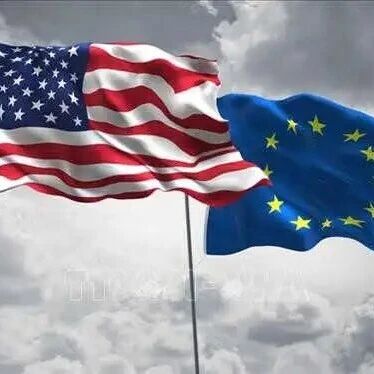
欧盟对美国说“不”:欧洲数字监管不容谈判 不换钢铝关税减免
Di Yi Cai Jing· 2025-11-25 05:02
Core Viewpoint - The EU has firmly rejected the US proposal to link the reduction of steel and aluminum tariffs to the relaxation of technology regulations, emphasizing the importance of its digital regulatory framework for market fairness and consumer protection [1][6]. Group 1: US-EU Trade Relations - The US Secretary of Commerce, Gina Raimondo, indicated that a favorable steel and aluminum agreement would require the EU to ease its technology regulations [1]. - The EU is concerned that over 400 products are affected by the 50% steel and aluminum tariffs, which could undermine the trade agreement reached in July [2]. - The EU Trade Commissioner stated that the EU has made progress in fulfilling its commitment to purchase $250 billion worth of energy products from the US over the next three years [5]. Group 2: Digital Regulation - The EU's Digital Services Act and Digital Markets Act are central to its technology regulation, aimed at ensuring accountability and preventing anti-competitive behavior among major tech companies [3][2]. - The EU maintains that its digital regulations are not negotiable and are designed to protect consumer rights and promote fair competition [1][6]. - The EU has imposed significant fines on major tech companies, including a €2.95 billion fine on Google, indicating its strict enforcement of digital regulations [6]. Group 3: EU's Stance on Negotiations - The EU insists on its legislative sovereignty and will not use its technology regulations as bargaining chips in trade negotiations [1][7]. - An EU official emphasized that steel tariffs and digital technology regulations are completely unrelated issues [7]. - The EU's strict regulatory approach is seen as a means to protect its market and promote local industry development, given its lag behind the US in digital technology [7].
欧盟对美国说“不”:欧洲数字监管不容谈判,不换钢铝关税减免
Di Yi Cai Jing· 2025-11-25 04:53
Core Viewpoint - The EU firmly rejects the US proposal to link steel and aluminum tariff reductions to the relaxation of technology regulations, emphasizing that these are separate negotiation agendas [1][2]. Group 1: US-EU Trade Relations - The US Secretary of Commerce, Gina Raimondo, stated that the US would lower tariffs on EU steel and aluminum by 50% if the EU eases its technology regulations [1]. - The EU has expressed concerns over the impact of the 50% tariffs on over 400 products and the potential for the US to impose higher tariffs in the future, which could undermine the existing trade agreement [4]. - The EU Trade Commissioner, Valdis Dombrovskis, noted that the EU has made progress in fulfilling its commitment to purchase $250 billion worth of energy products from the US over three years [8]. Group 2: EU's Digital Regulations - The EU's Digital Services Act and Digital Markets Act are not part of the trade negotiations with the US, as they are seen as essential for ensuring market fairness and consumer protection [5][6]. - The Digital Markets Act imposes strict regulations on major internet companies, including prohibitions on abusing market dominance and using user data without consent, with penalties of up to 10% of annual revenue for violations [5]. - The EU has been criticized for its stringent digital regulations, which some argue may hinder competition and innovation within the region [11]. Group 3: Ongoing Negotiations and Challenges - The US is increasingly frustrated with the slow progress of the EU in implementing the trade agreement reached in July, particularly regarding steel and aluminum tariffs [8]. - The EU maintains that its digital regulations are not discriminatory and apply equally to all companies, regardless of their headquarters [10]. - The EU has faced scrutiny over its regulatory approach, with concerns that it may be overly restrictive and could stifle the growth of its digital economy [11].