
石英纤维布

Search documents
基于织布机和铂金视角:如何看待玻纤电子布的提价弹性及持续性
Changjiang Securities· 2026-01-27 08:55
Investment Rating - The report maintains a "Positive" investment rating for the fiberglass industry [13]. Core Insights - The fiberglass industry is currently at a relative bottom of the cycle, with price elasticity for 2026 projected as follows: AI specialty electronic cloth > ordinary electronic cloth > ordinary coarse yarn. The report is optimistic about the performance elasticity brought by price increases in electronic cloth [3][46]. - The demand for AI specialty electronic cloth remains high, driven by the AI boom, leading to a tight supply situation and price increases. The Low CTE and Low-Dk second-generation cloths are expected to face even larger supply gaps [8][20]. - Ordinary electronic cloth is expected to continue to see price increases due to capacity constraints in weaving machines, with a supply gap anticipated to persist into 2026 and widen in 2027 [10][43]. Summary by Sections AI Electronic Cloth - The demand for Low CTE electronic cloth is expected to grow significantly, with projections of 6.7 million meters in 2025, 18 million meters in 2026, and 33.6 million meters in 2027, driven by AI computing chip packaging and high-end consumer electronics [32]. - The report highlights that the Low CTE electronic cloth is critical for advanced packaging in AI applications, with current supply being scarce and domestic companies beginning to fill the gap [8][36]. - The year 2026 is anticipated to be pivotal for the application of quartz cloth and the second-generation Low-Dk cloth, with demand expected to exceed 50 million meters [26]. Ordinary Electronic Cloth - Ordinary electronic cloth prices are expected to rise due to a recovery in demand and limited new capacity, with prices increasing from 3.4 CNY/m in early 2025 to 4.1 CNY/m by January 2026 [10][38]. - The supply of weaving machines is a critical constraint, with a projected gap in machine availability starting in 2025 and expected to widen in subsequent years [10][50]. - The report notes that the price of ordinary electronic cloth is likely to continue its upward trend due to these supply constraints [10][46]. Platinum Price Impact - The significant increase in platinum prices, from 230 CNY/g in January 2025 to 672 CNY/g in January 2026, is expected to raise investment costs in the fiberglass sector by over 40%, potentially constraining supply [11][36]. - The report emphasizes that the rising costs associated with platinum will particularly impact smaller electronic cloth manufacturers [11].


中建材两大玻纤龙头激励落地,彰显经营信心
Changjiang Securities· 2026-01-05 14:06
Investment Rating - The investment rating for the industry is "Positive" and is maintained [8] Core Insights - The two leading fiberglass companies in China, China Jushi and China National Materials, have announced stock incentive plans, reflecting their operational confidence [2][6] - China Jushi plans to grant up to 34.53 million restricted stocks, accounting for 0.86% of its total share capital, with a first grant of 31.08 million shares at a price of 10.19 CNY per share, which is about 60% of the current stock price [13] - China National Materials plans to grant 15.4 million stock options, representing 0.92% of its total share capital, with a first grant of 13.93 million options at an exercise price of 36.65 CNY per option, close to the current stock price [13] - The fiberglass yarn market is expected to stabilize and show upward momentum, with ordinary electronic cloth showing elasticity due to increased demand driven by AI applications [13] - The demand for Low-Dk electronic cloth is projected to grow significantly, with total demand expected to reach approximately 1.1 million, 2.2 million, and 3.2 million meters from 2025 to 2027 [13] Summary by Sections Stock Incentive Plans - China Jushi's stock incentive plan includes performance targets for net profit growth, with compound annual growth rates of no less than 38.5%, 27.0%, and 22.0% from 2026 to 2028 [13] - China National Materials' stock option plan also includes performance targets, with compound annual growth rates of no less than 107.0%, 73.0%, and 62.5% from 2026 to 2028 [13] Market Outlook - The fiberglass yarn prices are expected to stabilize, with a slight upward trend anticipated in 2026 due to limited new production capacity and a recovery in overseas demand [13] - The ordinary electronic cloth market is expected to see higher price increases due to the shift towards high-end products driven by AI technology [13] AI Special Electronic Cloth - The industry is poised for an upgrade with the increasing demand for Low-Dk electronic cloth, which is essential for high-frequency and high-speed PCBs [13] - The transition to M9 materials in AI PCBs is expected to drive significant growth in high-end special electronic cloth applications [13]
建材周专题2025W52:AI特种电子布升级趋势明确
Changjiang Securities· 2025-12-31 13:49
Investment Rating - The industry investment rating is "Positive" and is maintained [8] Core Insights - The report highlights a clear trend in the upgrade of AI special electronic fabrics, with Low-Dk electronic fabrics being a core material for high-frequency and high-speed PCBs. The demand logic is driven by the growth in AI server volumes, increased usage per server, and enhanced value from material upgrades. The transition to M9 materials in AI PCBs is expected to significantly boost the scale of high-end special electronic fabrics [3][6] - The report outlines three main lines for 2026: the stock chain, the African chain, and the AI chain. The stock chain focuses on optimizing demand and clearing supply varieties, with a notable shift in consumer demand towards renovation, expected to reach nearly 70% by 2030. The African chain emphasizes the undervalued growth potential in the African market, while the AI chain looks at the industrial upgrade of special electronic fabrics [6][4] Summary by Sections Cement Market - The cement market is experiencing a seasonal decline in shipments, with an average shipment rate of 41% among major cement enterprises, down 0.8 percentage points from the previous period. Prices are being maintained in most regions, although some areas are seeing price increases [4][18] - The average national cement price is reported at 358.71 yuan/ton, remaining stable compared to the previous period but down 61.77 yuan/ton year-on-year [19] Glass Market - The float glass market is showing a weak trend, with prices slightly declining and inventories increasing. The average national glass price is 61.64 yuan per weight box, down 0.35 yuan from the previous period and down 12.98 yuan year-on-year [33][30] - The production capacity of float glass has slightly decreased, with 216 out of 265 production lines operational, and a daily melting capacity of 154,105 tons, which is a reduction of 900 tons from the previous week [30][32] Special Electronic Fabrics - The report emphasizes the significant upgrade trend in Low-Dk electronic fabrics, with expected total demand for Low-Dk electronic fabrics projected at approximately 110 million meters in 2025, 220 million meters in 2026, and 320 million meters in 2027. The demand for Low-Dk second-generation fabrics is expected to reach 60 million meters in 2026 and 130 million meters in 2027 [3][6] Future Outlook - The report suggests focusing on three main lines for 2026: the stock chain, the African chain, and the AI chain. It recommends companies such as Sanhe Tree, Rabbit Baby, and Oriental Yuhong for their optimal business models and growth potential [6][4]


AIInfra升级浪潮中的材料革命:电子布、铜箔、树脂构筑AIPCB介电性能核心壁垒
中银证券· 2025-12-23 09:00
Investment Rating - The report rates the industry as "Outperform" [1] Core Insights - The AI infrastructure upgrade wave is driving a revolution in materials, with electronic cloth, copper foil, and resin forming the core dielectric performance barriers for AI PCBs [1][3] - The demand for low dielectric materials is critical for AI PCB design, as GPU and ASIC manufacturers are actively enhancing chip efficiency and interconnect bandwidth [3][13] - The market for AI-related materials is expected to experience rapid growth, with projected global market sizes for HDI boards and high-layer boards reaching approximately $3.098 billion in 2025 and $3.891 billion in 2029 [1][3] Summary by Sections Investment Recommendations - Quartz fiber cloth and low-dielectric electronic cloth are recommended for investment in companies such as Feilihua, Zhongcai Technology, and Honghe Technology. HVLP copper foil investments should focus on Defu Technology, Longyang Electronics, and Tongguan Copper Foil. High-frequency and high-speed resin investments are recommended for Dongcai Technology and Shengquan Group [3] Industry Trends - The AI industry is shifting focus from training to inference, leading to increased demand for AI infrastructure. Major cloud vendors are ramping up capital expenditures to meet this demand, with Alibaba and Tencent expected to spend a total of approximately 380 billion RMB over the next three years [13][14] - The performance requirements for PCBs are evolving, with AI servers requiring more layers and tighter line widths compared to traditional servers. The layer count for AI servers typically ranges from 20 to 30 layers, while traditional servers range from 8 to 22 layers [42][44] Material Innovations - The core materials for M8.5 and M9 PCBs/CCLs are expected to reach a critical point of development, with Nvidia's Rubin server anticipated to adopt advanced materials combinations for its PCB solutions [1][3] - Low dielectric constant (Low-Dk) and low dielectric loss (Low-Df) materials are essential for reducing signal loss and maintaining signal integrity in AI PCBs [1][3]


建材行业深度报告:传统玻纤盈利改善,特种布受益AI高景气
Ping An Securities· 2025-11-17 11:15
Investment Rating - The report maintains an "Outperform" rating for the building materials industry [1]. Core Views - The traditional fiberglass industry is experiencing a price recovery and improved profitability, while the specialty fabric sector is benefiting from high demand driven by AI technology [4]. - The report highlights the structural recovery of the fiberglass industry in 2025, with a focus on the resilience of demand in key sectors such as wind energy and automotive [3][4]. Summary by Sections Traditional Fiberglass - The industry is set to undergo three rounds of slight price recovery starting in 2024, with a structural rebound in profitability expected in 2025. The demand for roving is driven by high growth in wind power installations and positive trends in new energy vehicles and home appliances, although construction and export demand remain weak [3]. - By the end of 2025, the domestic roving capacity is expected to increase by 460,000 tons per year, but the growth rate of capacity is anticipated to slow down due to more rational competition among companies and reduced capital expenditures in recent years [3][4]. - The profitability of listed fiberglass companies is projected to improve significantly, with a reported net profit of 4.79 billion yuan in the first three quarters of 2025, a year-on-year increase of 49% [9]. Specialty Electronic Fabrics - The demand for specialty electronic fabrics is experiencing a boom due to the rapid development of AI and high-frequency communication technologies. The strong growth in AI computing power is driving the demand for high-performance PCBs and chip packaging substrates [3][4]. - The global AI server shipment is expected to grow at a CAGR of 28.8% from 2022 to 2026, with significant increases in the demand for low dielectric electronic fabrics that meet the high-performance requirements of AI servers and switches [3][52]. - Domestic companies are rapidly catching up in the specialty electronic fabric market, with significant capacity expansions planned. For instance, China National Materials Technology plans to expand its production capacity by 94 million meters annually by 2025 [3][4]. Investment Recommendations - The report suggests focusing on companies such as China National Materials Technology, Honghe Technology, China Jushi, Feilihua, and International Composites, which are well-positioned to benefit from the recovery in the fiberglass industry and the growth in specialty electronic fabrics [4].
石英股份20250901
2025-09-02 00:42
Summary of Quartz Co. Conference Call Company and Industry Overview - The conference call focuses on Quartz Co., which operates in the semiconductor quartz sand and quartz glass materials industry [2][4] - The global demand for semiconductor-grade quartz sand is approximately 30,000 tons, valued between 3 billion to 4.5 billion RMB [2][6] - Quartz Co. has been certified by major overseas equipment manufacturers, positioning itself as one of the few qualified suppliers globally [2][8] Key Insights and Arguments - The semiconductor quartz materials market is expected to grow at a compound annual growth rate (CAGR) of 10% from 2025 to 2030, potentially reaching a market size of 24 billion RMB by 2030 [2][10] - Quartz Co. aims to increase its market share to 20%, with long-term profit potential estimated at 1.6 billion RMB, corresponding to a market capitalization of approximately 30 billion RMB [2][11] - For 2025, the revenue from semiconductor quartz glass materials is projected to be between 500 million to 600 million RMB, with a net profit margin of 35% to 40%, resulting in an estimated profit of around 200 million RMB [2][11] Competitive Landscape - In the high-temperature diffusion segment, Quartz Co. competes with major players like Mattson and Heraeus, while in the low-temperature etching segment, it competes with six other companies including Mattson and Heraeus [2][4][9] - Currently, only three companies can supply verified semiconductor-grade quartz sand, including Quartz Co., which has recently gained certification [8][9] Market Dynamics - The global market for semiconductor-grade quartz sand is approximately 30 billion to 45 billion RMB, with prices ranging from 100,000 to 150,000 RMB per ton [6][12] - The market for photovoltaic-grade high-purity quartz sand is around 70,000 to 80,000 tons, with Quartz Co. facing challenges due to reduced demand and increased competition [5][14] - The company expects to recover sales in the photovoltaic segment, projecting sales of 30,000 to 40,000 tons by 2030, with profits estimated between 300 million to 600 million RMB [5][14] Future Growth Expectations - The semiconductor quartz sand market is anticipated to grow to 40,000 tons by 2030, with Quartz Co. expected to capture 35% to 40% of this market, translating to revenues of 1.5 billion RMB and net profits of 750 million RMB [3][13] - The company is positioned to fill gaps in the domestic semiconductor supply chain, especially as domestic high-purity silicon sand still relies on imports [18] Additional Considerations - Quartz Co. is involved in multiple business areas, including electric light sources, optical fibers, and optics, which may contribute to its overall valuation [15] - The relationship between Yaoshi Technology and Quartz Co. is noted, as both companies may have synergistic effects in certain business areas [17] - The company’s strong product competitiveness and favorable competitive landscape make it a potential long-term investment opportunity [19]

中银证券研究部2025年8月金股
Bank of China Securities· 2025-08-04 05:44
Core Insights - The report highlights that the recent improvement in supply-demand policies is expected to partially reverse the current unfavorable economic situation, driven by increased domestic demand from projects like the Yaxia Hydropower Station and ongoing "anti-involution" policies [4][10] - The cyclical stocks have shown strong performance recently, with the market's expectations for price improvements rapidly increasing, indicating a potential continuation of market valuation support in the short term [4][10] - The report emphasizes that the current market environment is characterized by ample liquidity, which, combined with the low valuation levels of cyclical sectors, has contributed to the rapid upward movement of these stocks [4][10] Stock Recommendations - The August stock selection includes: SF Express (transportation), Satellite Chemical (chemicals), Anji Technology (chemicals), Heng Rui Medicine (pharmaceuticals), Bairen Medical (pharmaceuticals), Beijing Renli (services), Feiliwa (electronics), Industrial Fulian (electronics), Pengding Holdings (electronics), and Hehe Information (computers) [10][11] - The report notes that the July stock selection achieved an absolute return of 9.64%, outperforming the market benchmark (CSI 300) by 6.10 percentage points, with individual stocks like Jitu Express-W and Shenghong Technology yielding returns of 57.23% and 42.94%, respectively [6][10] Industry Analysis Transportation Sector - SF Express reported a steady growth in Q1 2025, with a net profit of 2.234 billion yuan, a year-on-year increase of 16.87%, driven by an improved product matrix and service competitiveness [12][13] Chemical Sector - Satellite Chemical achieved a record high net profit in Q4 2024, benefiting from stable raw material prices and increased sales margins, with a sales gross margin of 27.11% [14][15] - Anji Technology experienced rapid revenue growth in 2024, with a gross margin of 58.45%, attributed to market expansion and product diversification [17][18] Pharmaceutical Sector - Heng Rui Medicine's overseas licensing agreements have contributed to significant revenue growth, with Q4 2024 net profit increasing by 107.20% year-on-year [20][21] - Bairen Medical's revenue growth was driven by the successful launch of its first interventional valve product, which significantly boosted its performance in 2024 [22][23] Service Sector - Beijing Renli has a strong market presence in the human resources industry, with a broad service offering and a robust client base, positioning it for continued growth [25][26] Electronics Sector - Feiliwa is expanding its production capacity in quartz fiber cloth, targeting the growing demand in the PCB market, with a projected CAGR of 12% from 2024 to 2029 [27][28] - Industrial Fulian's cloud computing business has shown significant growth, with revenue from AI servers increasing by over 150% [31][32] - Pengding Holdings is expected to achieve steady revenue and profit growth in the first half of 2025, driven by cost control and product structure optimization [33][34]
中银晨会聚焦-20250728
Bank of China Securities· 2025-07-28 01:09
Key Points - The report highlights a selection of stocks for July, including companies such as 滨江集团 (Binjiang Group) and 顺丰控股 (SF Holding) as part of the recommended investment portfolio [1] - The macroeconomic analysis indicates a gradual appreciation of the RMB against the backdrop of easing trade policy uncertainties between the US and China, which enhances the competitiveness of Chinese exports [2][6] - The report notes a slight decrease in the overall activity of mergers and acquisitions in the A-share market, with a total of 66 disclosed transactions amounting to 5233.44 billion RMB, indicating a trend towards structural reorganization despite a decrease in the number of major deals [12] - In the nuclear fusion sector, significant advancements have been made in China's nuclear fusion technology, which is expected to benefit from ongoing investments and the development of related industrial chains [13][15] - The report discusses the emergence of a new market for AI Infra catalyzed quartz fiber cloth, with the company 菲利华 (Philips) leveraging its full industry chain advantages to gain a first-mover advantage in the electronics fabric sector [17][18]




中银证券:给予菲利华买入评级
Zheng Quan Zhi Xing· 2025-07-27 09:26
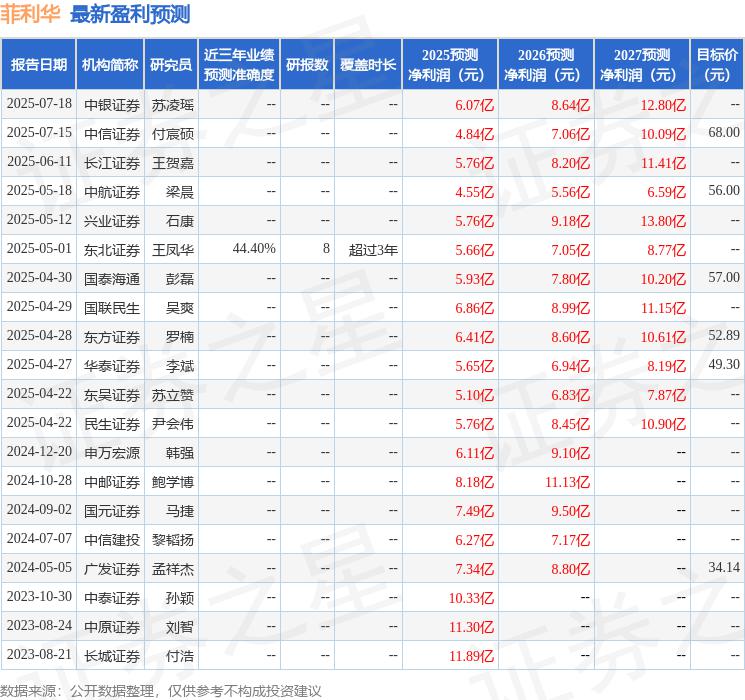
Core Viewpoint - The report highlights the potential of Feiliwa (300395) in transforming its technological advantages into a first-mover advantage in the quartz fabric market, supported by a stock incentive plan that reflects the company's confidence in its future growth [1][2]. Group 1: Market Opportunity - Feiliwa is entering the blue ocean market of electronic fabrics by leveraging its full industry chain advantages in quartz fibers, particularly in aerospace and semiconductor applications [2][4]. - The global PCB market in the server/data storage sector is projected to grow from $10.9 billion to $18.9 billion from 2024 to 2029, with a CAGR of 12%, indicating a significant demand for quartz fabric due to its excellent dielectric properties [3]. Group 2: Technological Edge - Feiliwa has a 60-year history in quartz technology, making it one of the few manufacturers capable of mass-producing quartz fibers, which are critical for high-precision applications [4]. - The company has developed a second-generation ultra-low loss quartz electronic fabric, directly competing with international giants like Shin-Etsu Chemical [4]. Group 3: Stock Incentive Plan - The stock incentive plan aims to motivate 255 core technical and sales personnel by granting 1.6881 million shares at a price significantly below the market price, with performance targets tied to net profit growth [5]. - The plan is designed to enhance employee engagement and operational efficiency, reflecting the company's commitment to its core talent [5]. Group 4: Financial Projections - Feiliwa's projected EPS for 2025, 2026, and 2027 are 1.16, 1.65, and 2.45 yuan, respectively, with a total market capitalization of approximately 39.7 billion yuan as of July 25, 2025 [6]. - The corresponding PE ratios for these years are expected to be 65.4, 46.0, and 31.1 times, indicating a strong growth outlook [6].


菲利华(300395):技术优势转化为石英布从“0→1”先发优势,股权激励彰显信心
Bank of China Securities· 2025-07-27 09:21
Investment Rating - The report maintains a "Buy" rating for the company, with a market price of RMB 76.10 and a sector rating of outperforming the market [2][4]. Core Insights - The company is leveraging its technological advantages to transition quartz fabric from "0 to 1," establishing a first-mover advantage in the emerging AI Infra market. The company is expanding into the electronic fabric sector, supported by its full industry chain capabilities and a strong commitment to core talent through stock incentives, reflecting confidence in future growth [4][9]. Financial Projections - The company is projected to achieve EPS of RMB 1.16, 1.65, and 2.45 for the years 2025, 2026, and 2027, respectively. The total market capitalization is approximately RMB 39.74 billion, with corresponding PE ratios of 65.4, 46.0, and 31.1 for the same years [6][11]. - Revenue forecasts indicate a growth trajectory with expected revenues of RMB 2,318 million in 2025, RMB 3,366 million in 2026, and RMB 5,052 million in 2027, reflecting growth rates of 33.1%, 45.2%, and 50.1% respectively [8][10]. Market Position and Strategy - The company has a 60-year history in quartz technology, positioning itself as a leading supplier in aerospace and semiconductor sectors. It is one of the few manufacturers capable of mass-producing quartz fiber, which is critical for the electronic fabric market. The company is actively expanding its production capacity to capture opportunities in this blue ocean market [9][10]. - The stock incentive plan aims to bind 255 core technical and sales personnel, granting 1.6881 million shares at a price significantly below the market price, with performance targets based on net profit growth over the next three years [9][10].