
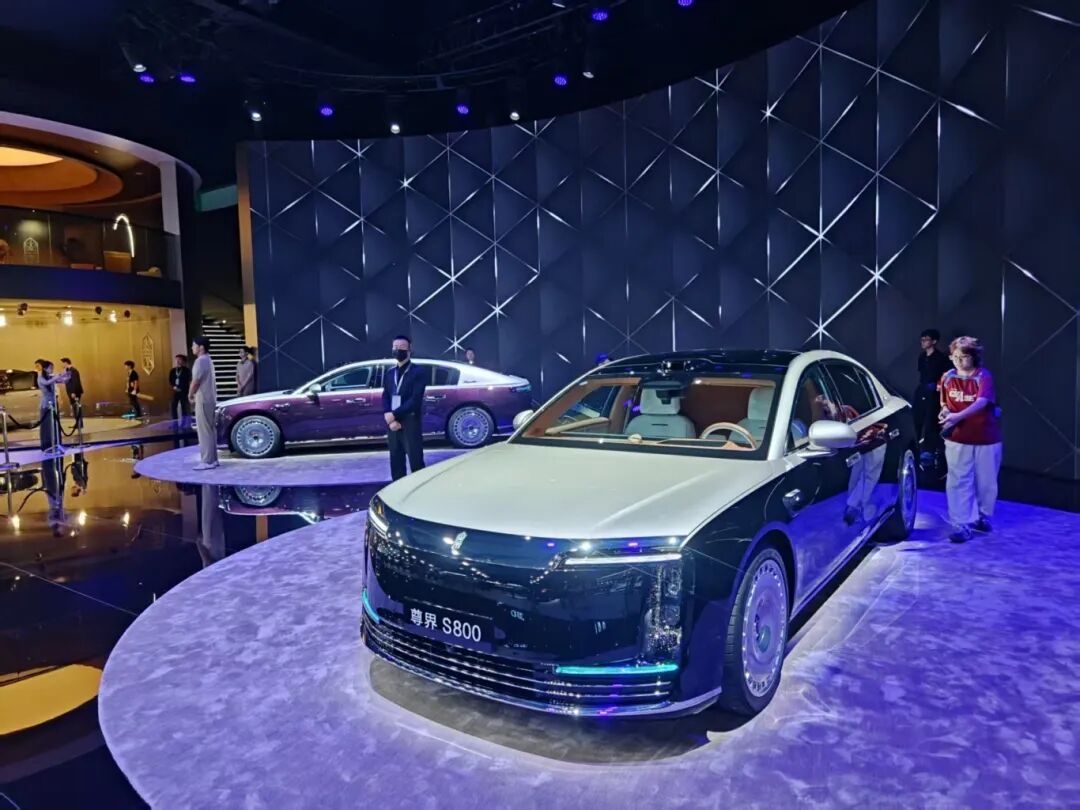
鸿蒙智行尊界S800

Search documents
春节营销迎来「最猛一战」:千问豆包正面硬刚、机器人百花齐放、华米OV各玩花活
Sou Hu Cai Jing· 2026-02-25 14:38
Core Insights - The longest Spring Festival holiday has ended, leading to a significant marketing battle among tech companies, particularly in the AI sector [2][10] - Alibaba's ecosystem, including Alipay and its AI applications, has aggressively promoted its services during the holiday, spending tens of billions on marketing [2][13] - ByteDance's Doubao app has also engaged in substantial marketing efforts, leveraging high-profile events like the Spring Festival Gala to enhance visibility [14][17] Group 1: Alibaba's Marketing Strategy - Alibaba and Ant Group launched a marketing campaign with a budget of several billion yuan, promoting the Qianwen and Afu apps [2][10] - The Qianwen app saw a daily active user (DAU) surge to 73.52 million shortly after the launch of a 3 billion yuan free order card initiative [6][10] - The campaign included various user incentives, such as a 25 yuan free order card and ongoing promotional activities, which received positive feedback from users [2][10] Group 2: ByteDance's Response - ByteDance's Doubao app utilized the Spring Festival Gala to showcase its AI capabilities, distributing over 100,000 tech products and cash red envelopes [14][17] - Doubao's user engagement reached 1.9 billion interactions on New Year's Eve, maintaining a strong user base despite competition from Alibaba [17][22] - The app's marketing strategy focused on expanding its user base through partnerships and showcasing its AI hardware capabilities [14][17] Group 3: Other Competitors - Baidu initiated a cash red envelope campaign to boost the usage of its Wenxin assistant, demonstrating its commitment to AI integration [27][28] - Tencent's Yuanbao app launched a cash giveaway campaign, achieving over 50 million daily active users during the promotion [28][33] - New entrants in the robotics sector, such as追觅 and MOVA, showcased their products during the Spring Festival Gala, aiming to increase brand recognition and market presence [38][40] Group 4: Future Outlook - The marketing strategies employed during the Spring Festival are expected to influence ongoing competition in the AI and tech sectors as companies prepare for upcoming events like MWC 2026 [62][63] - The emphasis on AI applications and hardware integration indicates a shift towards a more technology-driven consumer landscape [62][63]


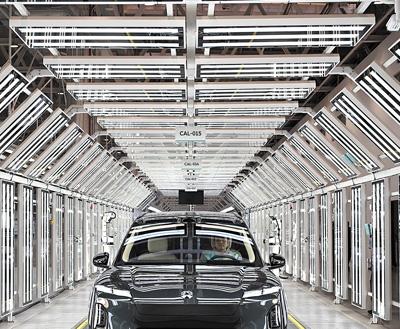
汽车产业竞争力源自硬实力
Ren Min Ri Bao· 2026-01-15 09:10
Core Viewpoint - The continuous advancement of electrification technology, accelerated application of cutting-edge technologies, and the implementation of anti-involution measures have led to sustained growth in China's automotive production and sales, reflecting the strong resilience and dynamic momentum of the economy under pressure [7]. Group 1: Automotive Production and Sales Growth - China's automotive production and sales have maintained a scale of over 30 million units for three consecutive years, ranking first globally for 17 years [7]. - In 2025, the production and sales of new energy vehicles (NEVs) are expected to reach 16.626 million and 16.49 million units, respectively, representing year-on-year growth of 29% and 28.2% [9]. - NEVs accounted for 47.9% of total new car sales in 2025, indicating a significant shift towards electric vehicles [9]. Group 2: Technological Advancements in Electrification - By 2025, the average range of pure electric passenger vehicles in China is projected to approach 500 kilometers, with fast-charging technology allowing for 80% charge in 15 minutes [8]. - The introduction of solid-state batteries is moving towards mass production by 2027, and a unique "super electric hybrid technology" is being widely adopted [9]. - Exports of NEVs are expected to reach 2.615 million units in 2025, doubling year-on-year, with passenger vehicle exports at 2.532 million units and commercial vehicle exports at 83,000 units [9]. Group 3: Advancements in Intelligent Driving - R&D investment in intelligent driving technology has reached 10 billion yuan, with Huawei's ADS 5 transitioning from technical validation to mass production adaptation [10]. - Over 60% of new passenger vehicles sold in China are equipped with L2-level assisted driving features, and the first L3-level conditional autonomous driving vehicles have received approval [10]. - The automotive industry is becoming a key carrier for the commercialization of advanced technologies such as semiconductors and artificial intelligence [10]. Group 4: Industry Transformation and Anti-Involution Measures - Anti-involution measures have been implemented to address issues like price wars and unfair competition, leading to a 4.4% profit growth in the automotive industry from January to October 2025 [11]. - The industry is shifting from resource-dependent, low-cost competition to a focus on technological innovation and value upgrading, with flagship models gaining market recognition [11]. - High-end domestic brands such as AITO, Li Auto, and Zeekr have seen sales growth exceeding 40% year-on-year in 2025 [11].
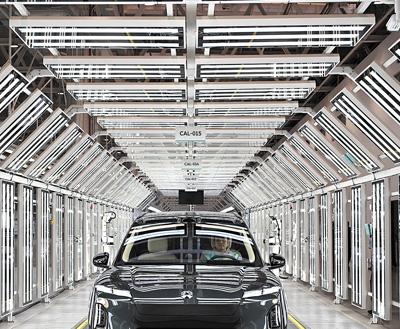
产销连续3年保持3000万辆以上规模 汽车产业竞争力源自硬实力
Xin Hua Wang· 2026-01-14 23:37
Core Insights - The continuous advancement of electrification technology and the rapid application of cutting-edge technologies have led to sustained growth in China's automotive production and sales, reflecting the resilience and dynamic momentum of the economy [1][7]. Group 1: Automotive Production and Sales - China's automotive production and sales have maintained a scale of over 30 million units for three consecutive years, ranking first globally for 17 years [7]. - In 2025, the production and sales of new energy vehicles (NEVs) are projected to reach 16.626 million and 16.49 million units, respectively, representing year-on-year growth of 29% and 28.2% [8]. Group 2: Technological Advancements - The average range of pure electric passenger vehicles in China is expected to approach 500 kilometers by 2025, with fast-charging technology allowing for 80% charge in 15 minutes [8]. - The integration of various technological routes, including electric, hydrogen fuel, and synthetic fuels, is advancing, with China's "super electric hybrid technology" becoming a successful example for reverse technology export to multinational automotive companies [8]. Group 3: Export Growth - In 2025, the export of NEVs is expected to reach 2.615 million units, doubling year-on-year, with passenger vehicle exports at 2.532 million units and commercial vehicle exports at 83,000 units, showing growth rates of 100% and 86.8%, respectively [9]. Group 4: Intelligent Manufacturing and Automation - BYD's factory demonstrates advanced manufacturing capabilities, achieving a vehicle production time of 51 seconds per unit, supported by nearly a thousand industrial robots and a fully automated welding rate of 100% [7]. - The market for L2-level assisted driving vehicles has surpassed 60% of new car sales, with the first L3-level conditional autonomous driving models receiving approval [10]. Group 5: Industry Transformation and Profitability - Measures to combat "involution" in the automotive industry, such as halting price wars and improving payment terms, have led to a profit growth of 4.4% in the automotive sector from January to October 2025, accelerating to 7.5% by November [11]. - High-quality supply and brand upgrades are being emphasized, with several flagship models gaining market recognition, including the Hongmeng Zhixing's Zun Jie S800 and the AITO series [11].
产销连续3年保持3000万辆以上规模 汽车产业竞争力源自硬实力(经济聚焦)
Ren Min Ri Bao· 2026-01-14 21:55
Core Insights - The continuous advancement of electrification technology and the application of cutting-edge technologies have led to sustained growth in China's automotive production and sales, reflecting the resilience and dynamic momentum of the economy [1] Group 1: Automotive Production and Sales - China's automotive production and sales have maintained a scale of over 30 million units for three consecutive years, ranking first globally for 17 years [1] - The production and sales of new energy vehicles (NEVs) are projected to reach 16.626 million and 16.49 million units respectively in 2025, with year-on-year growth of 29% and 28.2%, making up 47.9% of total new car sales [2] Group 2: Technological Advancements - The average range of pure electric passenger vehicles in China is expected to approach 500 kilometers by 2025, with rapid adoption of 800V high-voltage silicon carbide platforms and fast-charging technology [2] - The integration of various technological routes, including electrification, efficient internal combustion engines, hydrogen fuel, and synthetic fuels, is advancing, with China's "super electric hybrid technology" becoming a successful example for reverse technology export [2] Group 3: Export Growth - In 2025, China's NEV exports are expected to reach 2.615 million units, doubling year-on-year, with passenger vehicle exports at 2.532 million units and commercial vehicle exports at 83,000 units, showing significant growth [3] Group 4: Intelligent Driving and Automation - Huawei's ADS 5 is transitioning from technology validation to mass production, with over 1 million units equipped and a user engagement rate exceeding 95%, indicating a shift towards large-scale deployment of autonomous driving technology [4] - The proportion of new passenger vehicles with L2-level combined auxiliary driving functions has exceeded 60%, with the first L3-level conditional autonomous driving models receiving approval [4] Group 5: Industry Transformation and Profitability - Measures to combat "price wars" and improve industry standards have been implemented, leading to a 4.4% profit growth in the automotive industry from January to October 2025, accelerating to 7.5% by November [6] - The industry is transitioning from resource-dependent, low-cost competition to a focus on technological innovation and value upgrading, with high-end domestic brands seeing over 40% year-on-year sales growth [6] Group 6: Future Outlook - The Chinese automotive industry is expected to continue its high-quality development and maintain stable market operations in 2026, supported by the smooth transition of new policies [7]
“尊界失速”复现原理,江淮汽车报案
3 6 Ke· 2025-09-01 03:17
Group 1 - The article discusses the controversy surrounding the Hongmeng Zhixing Zun Jie S800 ultra-luxury car, which has gained significant attention due to a reported incident of sudden deceleration while driving [3][4] - A video surfaced showing the vehicle's speed dropping from 75 km/h to around 30 km/h and then rising again, leading to discussions about the vehicle's quality and the identity of the video creator [3][4] - The incident prompted a response from Jianghuai Automobile, which claimed that false information was being spread online, damaging the company's reputation, and announced legal action to protect its rights [9][10] Group 2 - The police in Hefei have launched an investigation following a report from Jianghuai Automobile regarding the dissemination of over 3,000 false statements about the company, specifically related to the Zun Jie S800 incident [10] - The identity of the video creator has been linked to a supplier that previously lost a project bid related to the Zun Jie S800, raising questions about potential motives behind the video [12][14] - The article highlights the increasing complexity of the automotive market in China, where various marketing tactics and misinformation can disrupt consumer perception and industry reputation [14]

“华为系”新车扎堆发布,产业链关注度有望升温
Xuan Gu Bao· 2025-08-31 14:49
Group 1 - The Chengdu International Auto Show, which opened on August 29, is the first major auto exhibition in the second half of the year, injecting new momentum into the autumn car market sales season [1] - Huawei's automotive sector is gaining attention, with multiple new models launched, including the flagship model Zun Jie S800 and several others from the Hongmeng Zhixing brand [1] - A total of 28 models equipped with Huawei's technology or components have been launched in the market, covering various brands and vehicle types, with prices ranging from 150,000 to over 1 million yuan [1] Group 2 - Company Silyus has established a partnership with Huawei, creating a new benchmark in the high-end smart electric vehicle market, with key products including the Wanjie M9, Wanjie New M7, and Wanjie New M5 [2] - Yihua Co. has collaborated with Huawei's automotive business unit in areas such as 5G T-Box, new energy BMS, OBU, and ADAS [2] - Junsheng Electronics, a leader in smart cockpits and safety systems, provides domain controllers for Hongmeng Zhixing [3]
兵器装备集团汽车业务将分立为独立央企,鸿蒙智行尊界S800上市72小时订单破2600 台
Xinda Securities· 2025-06-08 05:45
Investment Rating - The industry investment rating is "Positive" [2] Core Insights - The State Council has approved the separation of the China Weapon Equipment Group, with its automotive business becoming an independent central enterprise, changing the controlling shareholder of Changan Automobile [3][8] - The Hongmeng Zhixing Zun Jie S800 has received over 2,600 orders within 72 hours of its launch, with a price range of 708,000 to 1,018,000 yuan [3][8] - Shenzhen has released the first nationwide open autonomous driving technology guidelines, establishing evaluation principles and requirements for road testing [3][8] - Xiaoma Zhixing has partnered with Shenzhen Xihu Group to create a fleet of 1,000 L4 autonomous vehicles [3][8] - The IM LS7, a flagship SUV from Zhiji Automobile, has officially launched in Mexico, targeting the high-end electric vehicle market [3][8] - Geely's Galaxy A7 has been unveiled, featuring a range of over 2,100 km and a hybrid system [3][8] - Yiwei Lithium Energy is making progress in solid-state battery production, aiming for breakthroughs by 2026 [3][8] - NIO plans to enter seven European markets between 2025 and 2026, launching five models [3][8] Market Performance - The A-share automotive sector underperformed the broader market, with a decline of 0.09% compared to a 0.88% increase in the CSI 300 index [5][12] - The passenger vehicle sector's PE ratio has slightly increased, while the commercial vehicle sector's PE ratio has decreased [16] Key Data Tracking - Steel prices have slightly decreased, while aluminum and natural rubber prices have shown slight increases [17][18] - The container shipping price index from China to North America has significantly increased [25]




新鲜早科技丨余承东称可能不会有第六“界”;京东外卖将扩招至15万全职骑手
2 1 Shi Ji Jing Ji Bao Dao· 2025-06-03 02:20
Group 1: Industry Developments - Huawei's Yu Chengdong stated that the HarmonyOS Intelligent Driving may not have a sixth "realm," emphasizing the difficulty of managing multiple realms effectively [2] - HarmonyOS Intelligent Driving announced a record delivery of 44,454 vehicles in May, with a significant increase in pre-orders for the Zun Jie S800 model, which reached 1,600 units within 24 hours of its launch [3] - JD.com announced plans to expand its delivery rider workforce to 150,000, having already surpassed 100,000 riders ahead of schedule, with daily order volume exceeding 25 million [5] Group 2: Company News - Xiaomi's President Lei Jun responded to criticisms, highlighting that the company delivered over 28,000 units of the SU7 model in May and is preparing for mass production of the YU7 model [4] - Neuralink, a brain-computer interface company founded by Elon Musk, completed a $650 million Series E funding round, with plans for more human clinical trials [13] - Green通科技 announced plans to acquire at least 51% of Jiangsu Damo Semiconductor Technology Co., aiming to expand into the semiconductor sector [14] Group 3: Technological Innovations - Galaxy General released the world's first product-level end-to-end embodied FSD model, TrackVLA, which can navigate complex environments autonomously [6] - Microsoft announced that all USB-C ports on Windows 11 devices will support data, charging, and display functions, simplifying user experience [7] - A Chinese research team achieved a breakthrough in quantum direct communication, successfully establishing a 300-kilometer quantum communication network [10] Group 4: Corporate Actions - Shunluo Electronics announced that its chairman plans to reduce holdings by up to 13.37 million shares [15] - Gaoling Information decided to terminate a major asset restructuring plan due to a lack of consensus among transaction parties [16]
观车 · 论势 || 从电动化迈向智能化 中国汽车引领变革 ——2025上海车展深度观察
Zhong Guo Qi Che Bao Wang· 2025-04-29 01:19
Core Insights - The 2025 Shanghai International Auto Show, themed "Embrace Innovation, Win the Future," highlights China's automotive industry's shift from electrification to intelligence, reshaping the global competitive landscape [1] Technological Trends - Breakthroughs in new energy technologies were showcased, including the mass production of solid-state batteries with energy density exceeding 400Wh/kg and 800V high-voltage platforms becoming standard [1] - The Ideal i8 supports ultra-fast charging, allowing for 400 kilometers of range in just 10 minutes, while GAC's hydrogen fuel cell vehicles achieve over 800 kilometers of range [1][2] - Driving assistance technologies are entering mass production, with various companies integrating advanced systems, making them standard across both new and traditional automotive brands [2] Market Competition Landscape - Chinese automakers are leveraging technological advantages to penetrate the high-end market, with significant sales growth in electric vehicles priced above 300,000 yuan, which increased by 12 percentage points year-on-year [3] - Traditional automakers are accelerating their transition to electric platforms, with many adopting local technologies and enhancing their offerings with advanced driving assistance systems [3] New Forces and Brand Dynamics - The market is witnessing a polarization among new entrants, with leading companies establishing ecological barriers while weaker brands face financial challenges [4] - User experience is evolving, with vehicles transforming into smart terminals, featuring multi-modal interactions and personalized environments [4] Industry Implications - The Shanghai Auto Show signals a new era, with Chinese brands leading in multiple fields, a shift in supply chain roles, and an upgrade in user experience [4] - The automotive market is expected to see a significant increase in the share of L2+ level vehicles, projected to reach 65%, indicating a growing emphasis on advanced driving assistance features [4]