
Ke Ji Ri Bao

Search documents
13万年前南极高速绕极流导致冰盖消融加剧
Ke Ji Ri Bao· 2025-11-14 01:26
Core Insights - The research conducted by Hainan University's marine carbon and nitrogen cycle team reveals that during the last interglacial warm period approximately 130,000 years ago, the southern boundary of the Antarctic Circumpolar Current (ACC) flowed at three times the modern speed and shifted southward by over five degrees, leading to increased melting of the Antarctic ice sheet [1][2] Group 1: Research Findings - The Antarctic Circumpolar Current is the largest ocean current on Earth, crucial for global heat transport, carbon cycling, and nutrient exchange between oceans [1] - The research utilized sediment core samples from the Scotia Sea, drilled at depths of 3000-4000 meters, employing a novel method to analyze particle size distribution, which indicated that the flow speed of the ACC during the last interglacial was three times that of today [1] - The study found that the southward shift of the ACC's southern boundary was over 600 kilometers, correlating with peaks in Earth's orbital eccentricity, which intensified the melting of the Antarctic ice sheet, resulting in global sea levels being 6-9 meters higher than present [1] Group 2: Implications for Climate Research - This discovery prompts a reevaluation of the relationship between ancient and modern climate systems, challenging the previous belief that current climate changes mirror those of the last interglacial period [2] - The research indicates that differences between the two periods arise from variations in solar radiation due to changes in Earth's orbital parameters, which significantly affected the strength and distribution of westerly winds driving the ACC [2] - The study suggests that with current and future low values of Earth's orbital eccentricity and precession, the ACC may shift northward, potentially counteracting the southward movement caused by climate warming, providing a critical benchmark for predicting future global climate changes [2]
在计算机展览会感受智趣生活
Ke Ji Ri Bao· 2025-11-14 00:43
Group 1: Robotics and AI in Gaming - The interactive chess area at the exhibition was a major attraction, featuring multiple chessboards and a strong AI opponent that adapts to the player's skill level, with capabilities comparable to professional players in Go [2] - The chess-playing robot developed by Shanghai Yuanluobo Intelligent Technology Co., Ltd. utilizes a visual recognition system and precise mechanical arms, allowing it to dynamically adjust its strategy based on the opponent's skill level [2] - A children's chess robot designed for ages 3 to 12 was also showcased, supporting four types of chess games, indicating a focus on early education in gaming [2] Group 2: AI in Music Creation - The AI music creation tool, Tunee, allows non-professionals to easily create music by simply describing their feelings or stories, significantly lowering the barriers to music composition [3] - Tunee can generate lyrics, melodies, and even a personalized music video, showcasing its comprehensive functionality [3][4] - An intelligent guitar equipped with LED lights provides real-time visual guidance for beginners, enhancing the music learning experience [4] Group 3: MR Technology in Education - The MR glasses developed by Shenyang Jinran Technology Co., Ltd. transform any location into a virtual laboratory, allowing users to conduct experiments safely without the constraints of a physical lab [5] - The MR system includes 43 designed experimental courses that record user actions and generate performance reports, helping students identify areas for improvement [5][6] - Feedback from a school using the MR glasses indicated increased student interest and better understanding of experimental concepts [6]
智能手表监测压力靠谱吗
Ke Ji Ri Bao· 2025-11-14 00:43
Core Insights - The popularity of smartwatches during the recent "Double Eleven" shopping festival is attributed to their upgraded health monitoring features, particularly stress testing, which has become a major selling point [1] - However, there are concerns regarding the accuracy of these stress monitoring capabilities, as users report discrepancies between their actual stress levels and the readings provided by the devices [1] Smartwatch Monitoring - Most consumer-grade smartwatches assess stress primarily through heart rate variability (HRV), which reflects the autonomic nervous system's regulation [2] - HRV decreases under stress due to sympathetic nervous system activation and increases during relaxation due to parasympathetic dominance [2] - Smartwatches collect heart rate data and analyze it through algorithms to estimate the user's stress level, presenting it as a stress score [2] Discrepancies in User Experience - Factors such as physical conditions and lifestyle choices can lead to significant fluctuations in HRV, causing misinterpretations of stress levels by smartwatches [3] - Common scenarios include stable HRV readings after late-night activities leading to a false sense of well-being, or decreased HRV due to physical exertion or caffeine intake resulting in incorrect stress overload alerts [3] - The use of a one-size-fits-all model in these devices fails to account for individual differences in HRV baselines, leading to inaccurate assessments [3] Professional Medical Testing - Professional stress assessments utilize a multi-dimensional approach rather than relying on a single indicator, incorporating various physiological metrics [4] - The recognized physiological indicators for stress include autonomic nervous system metrics (like HRV), endocrine indicators (such as cortisol), immune indicators, and neurotransmitter levels [5] - Standardized testing protocols are essential, adhering to guidelines from organizations like the World Health Organization (WHO) to ensure accurate assessments [5] Stress Management Guidelines - Long-term exposure to stress can negatively impact health, making self-awareness of stress levels crucial for management [6] - Individuals can monitor their stress through physical symptoms, emotional states, and cognitive behaviors, seeking professional help if symptoms persist [6] - Effective stress relief strategies include simple, sustainable practices like light exercise, deep breathing, and engaging in hobbies to alleviate stress [7]
新反应器让废旧电池“再生”出锂原料
Ke Ji Ri Bao· 2025-11-14 00:21
Core Insights - Researchers at Rice University have developed a new type of reactor that efficiently converts lithium from waste batteries into high-purity lithium hydroxide, paving a cleaner and more economical path for lithium resource recovery [1][2] Group 1: Technology and Process - The new electrochemical reactor simplifies the recycling process by directly generating high-purity lithium hydroxide from lithium ions in discarded cathodes, significantly reducing the number of processing steps [1] - The reactor has a compact design, measuring only 20 square centimeters, and has successfully operated for 1,000 hours while processing 57 grams of industrial black waste [1] - The purity of the recovered lithium hydroxide exceeds 99%, with an average recovery rate close to 90% [1] Group 2: Energy Efficiency - The technology demonstrates excellent energy efficiency, consuming only 103 kilojoules of energy per kilogram of waste in one mode, which is significantly lower than traditional acid leaching processes [1] - In another mode, the energy consumption is just 536 kilojoules per kilogram [1] Group 3: Versatility and Supply Chain Resilience - This method is applicable to various battery types, including lithium iron phosphate, lithium manganese oxide, and nickel manganese cobalt materials [1] - The reactor can even process complete lithium iron phosphate electrodes attached to aluminum foil without the need for scraping or pre-treatment, enhancing supply chain resilience [2]
首个AI控制器完成卫星在轨姿态调整验证
Ke Ji Ri Bao· 2025-11-14 00:20
Core Insights - The development of the world's first artificial intelligence (AI) attitude controller for satellites by scientists at the University of Würzburg represents a significant advancement in the autonomy of space systems [1][2] - The AI controller was successfully validated on a nanosatellite named InnoCube, demonstrating its ability to perform complete attitude maneuvers within a short time frame [1] - The project utilizes deep reinforcement learning technology, allowing the neural network to autonomously learn control strategies in a simulated environment, which is a departure from traditional fixed algorithms [1] Group 1 - The AI controller executed a complete attitude maneuver during a 9-minute satellite transit, adjusting the satellite's position with precision [1] - The innovative approach automates the parameter tuning process that traditionally takes months, enabling the controller to adapt to real environmental changes without manual calibration [1] - High-fidelity simulations were conducted on the ground before uploading the mature algorithms to the satellite, ensuring reliability in real space conditions [1] Group 2 - InnoCube serves as a platform for testing new concepts directly in orbit, highlighting its role in advancing space technology [2] - The wireless satellite bus SKITH, which replaces traditional wiring with wireless data transmission, reduces weight and potential failure points in the control system [2] - The validation of this AI controller opens new prospects for deep space exploration, where intelligent autonomous control systems will be crucial for spacecraft survival in interplanetary or deep space missions [2]
柔性晶硅-钙钛矿叠层电池效率达29.8%创世界纪录
Ke Ji Ri Bao· 2025-11-13 15:13
科技日报记者 王禹涵 近日,记者从隆基绿能科技股份有限公司获悉,该公司联合苏州大学、西安交通大学等研究团队研发的商业尺寸硅片级柔性叠层电池效率达29.8%,获德国 弗劳恩霍夫太阳能研究所认证,成为全球首个获权威认证的该类型电池效率世界纪录。该成果于11月10日在《自然》杂志在线发表。 晶硅-钙钛矿叠层电池技术通过融合两种半导体材料的优势,将理论效率大幅提高,是公认的新一代光伏技术。然而其商业化一直面临柔性与稳定性难以兼 顾的核心难题。 传统观念认为单晶硅是刚性脆性材料,研究团队通过将硅片厚度降至60微米,使其具备柔韧性,弯曲半径低于2厘米也不会破裂,但钙钛矿功能层在弯曲时 易分层失效的问题,仍制约着其实际应用。 为此,研究团队创新构建了"疏松加致密"的双层SnOx缓冲层结构,其中疏松层能像弹簧床垫一样吸收机械应力,致密层则确保高效的电荷传输。这一设计 有效化解了应力缓冲与高效传输的矛盾。 基于该技术,研究团队研制出厚度仅60微米的超薄全硅片柔性叠层器件,不仅实现了近30%的转换效率,还可实现对折,弯曲半径达1.5厘米,重量不到4.4 克,单位重量功率高达1.77瓦/克。实验室小面积器件效率经美国国家可再生能源 ...



高算力时代 需以DDR5“换挡”驱动存储产业破局
Ke Ji Ri Bao· 2025-11-13 10:38
Core Insights - The storage chip market is experiencing an unusual price inversion, where the older DDR4 memory is priced higher than the more advanced DDR5, with DDR4 32GB RDIMM prices exceeding $290, a rise of over 300% since the beginning of the year, while DDR5's price increase is less than half of that [1] - The price discrepancy is driven by deep-seated supply and demand issues, as many domestic data centers continue to use DDR4-compatible CPU platforms, while major DRAM manufacturers are phasing out DDR4 production [1][2] - The shift towards DDR5 is being propelled by AI applications, with DDR5 now accounting for over 90% of the global server DRAM market, but the domestic ecosystem is lagging in adaptation [2][3] Supply and Demand Dynamics - Major storage companies like Samsung and SK Hynix are focusing production on DDR5 and high-bandwidth memory for AI, leading to a continuous reduction in DDR4 production lines [2][4] - Some distributors are stockpiling DDR4 inventory, causing irrational price increases, with some transactions exceeding a 50% premium, indicating a departure from normal pricing mechanisms [2] Industry Challenges - The transition to DDR5 requires comprehensive support from CPUs, motherboards, and software, which poses a challenge for domestic manufacturers [3] - If the industry remains reliant on DDR4 technology, it risks falling behind in the global AI computing competition, as DDR4's price advantage has diminished due to its rising costs [4][3] Strategic Recommendations - Industry stakeholders are urged to recognize the opportunity presented by the transition to DDR5 rather than struggling in the distorted DDR4 market [5]
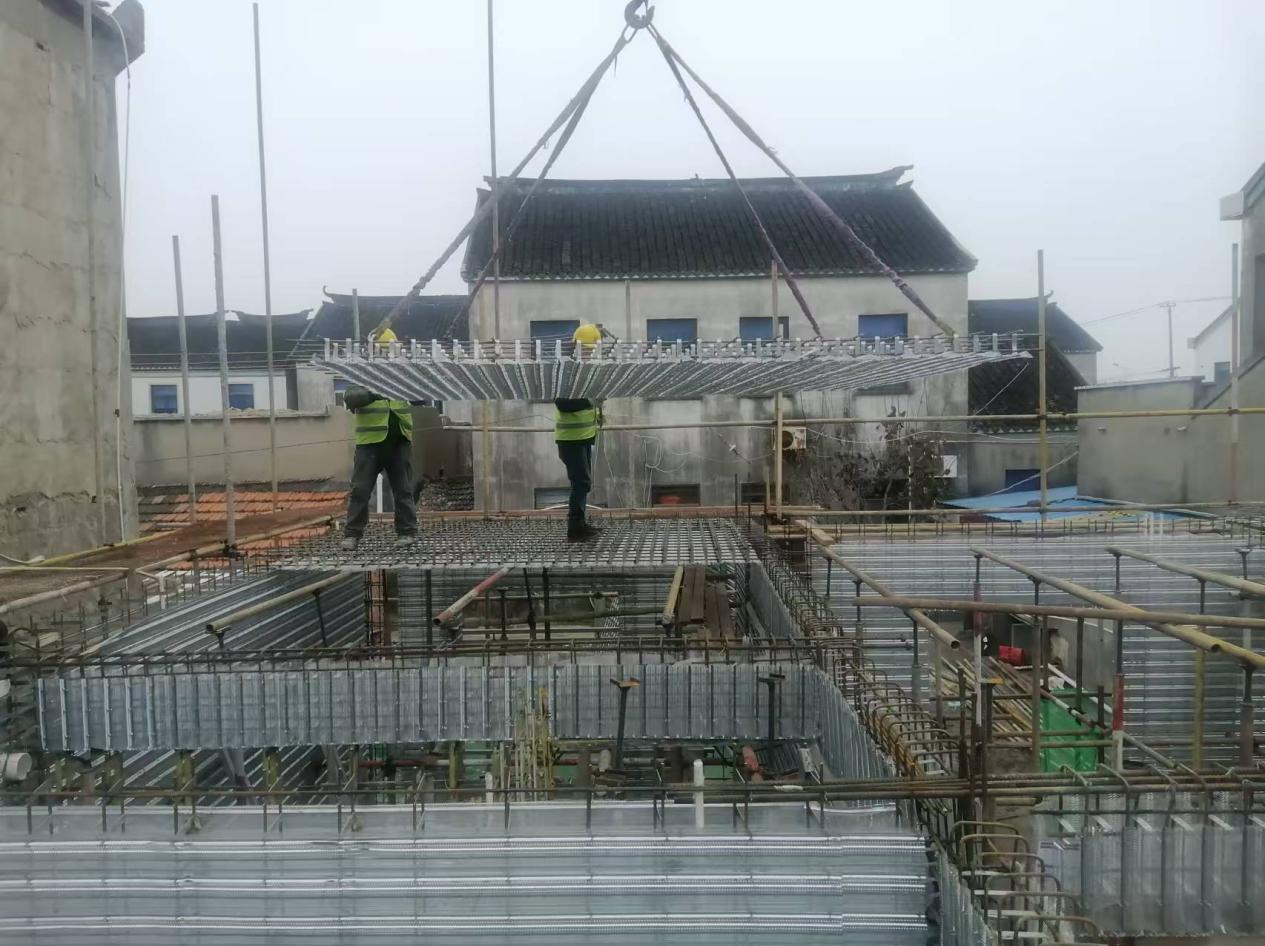
全球人居环境论坛年会举行 LP低碳智能建造技术获评“绿色智能技术产品范例”
Ke Ji Ri Bao· 2025-11-13 06:56
Core Insights - The 20th Global Forum on Human Settlements (GFHS) was held in Geneva, Switzerland, where Chinese company Abok Building Materials (Kunshan) Co., Ltd. received the "New Sustainable City and Human Settlements Award" for its LP Low-Carbon Intelligent Construction System [1] - The "New Sustainable City and Human Settlements Award" was established in 2005 to recognize innovation and leadership in sustainable urban and human settlement practices, with 19 projects awarded this year, 9 of which are from China [1] - The LP Low-Carbon Intelligent Construction System re-engineers traditional construction methods by transferring key processes to factory settings, utilizing specialized equipment and robots for standardized production, and employing AI algorithms for comprehensive process control [1][2] Industry Impact - The LP system's robots operate at approximately 9 times the efficiency of human labor, reducing construction cycles by about 40%, while enhancing quality consistency, safety, and management efficiency [2] - The LP system emphasizes "full-process green manufacturing," utilizing clean energy and photovoltaic systems, achieving "zero wastewater and low energy consumption" in production, and reducing material waste by approximately 10% [4] - Buildings constructed using the LP system can reduce carbon emissions by about 20% over their entire lifecycle compared to traditional construction methods, according to calculations from Tongji University [4] Collaborative Efforts - Abok Building Materials has established partnerships with universities such as Tongji University and Southeast University to create industry-academia-research centers and has contributed to local standards for prefabricated construction technologies [4] - The LP system has been implemented in regions including Jiangsu, Shanghai, and Sichuan, and is being exported internationally, forming an integrated output system of "technology + equipment + standards + training" [4]
黑龙江佳木斯测试无人快递配送
Ke Ji Ri Bao· 2025-11-13 04:47
Core Insights - The launch of autonomous delivery vehicle road testing in Jiamusi marks the city as the first in Heilongjiang Province to implement unmanned express delivery applications [1] - The testing involves five planned routes and six autonomous vehicles, focusing on validating smart logistics scenarios [1] Group 1: Testing Details - The testing includes two vehicles purchased by China Post's Jiamusi branch for point-to-point transport testing between the postal center and Hongqi delivery department [1] - The route covers major urban roads and residential areas, allowing comprehensive evaluation of vehicle stability and safety in complex scenarios such as traffic light changes and intersection turns [1] Group 2: Technology and Safety - The autonomous vehicles are equipped with a multi-sensor fusion perception system and high-precision positioning technology, provided by New Stone Technology (Beijing) Co., Ltd [1] - The technology has been validated through extensive testing, achieving "zero errors" and "zero accidents" in previous missions, while adhering to local regulations and establishing a robust safety assurance system [1] Group 3: Strategic Implications - This testing initiative is a proactive effort to cultivate new growth momentum and build new development advantages for the local economy [1] - It also supports the modernization of urban governance and the construction of smart cities [1]
辽宁大连海关:政策创新围着企业需求转
Ke Ji Ri Bao· 2025-11-13 04:36
Core Insights - The establishment of the Liaoning Free Trade Zone in 2017 has led to significant innovations by Dalian Customs, enhancing operational efficiency and reducing costs for businesses [1][2] - Dalian Customs has implemented over 50 innovative measures, with several being recognized at the national level, contributing to a substantial increase in the region's foreign trade [1][2] Group 1: Innovations and Efficiency - The "cloud series" innovations by Dalian Customs have improved customs clearance efficiency by over 60%, allowing for a fully paperless process [2] - The electronic certification platform has issued over 400,000 certificates, covering 23 categories of products and accounting for over 90% of export certification business [2] - The introduction of electronic import food inspection and quarantine certificates has reduced clearance time by 50% [2] Group 2: Industry-Specific Initiatives - Dalian Customs has pioneered the "bulk commodity + reform" initiative, facilitating the import and export of key commodities like iron ore and liquefied natural gas [3] - The "zero delay" supervision in the semiconductor industry allows for 24-hour rapid flow of high-precision raw materials [3] - The AI-driven vehicle identification system at the Dalian Free Trade Zone has enabled a "second-level registration" process for exported vehicles, significantly streamlining operations [3] Group 3: Cost Savings and Long-term Growth - The new regulatory model for lithium battery packaging has saved companies approximately 130 million yuan by allowing for the reuse of packaging without the need for re-inspection [4] - Customized clothing export growth has been supported by intelligent regulatory models and preferential tax matching under free trade agreements [5] - Dalian Customs aims to continue focusing on strategic enhancements within the free trade zone to drive high-quality foreign trade development in Liaoning [5]